Celebrate with the tried and true

BRAHMS & BEETHOVEN

Australian Chamber Orchestra

Concert Hall, Queensland Performing Arts Centre

Monday February 17, 2024

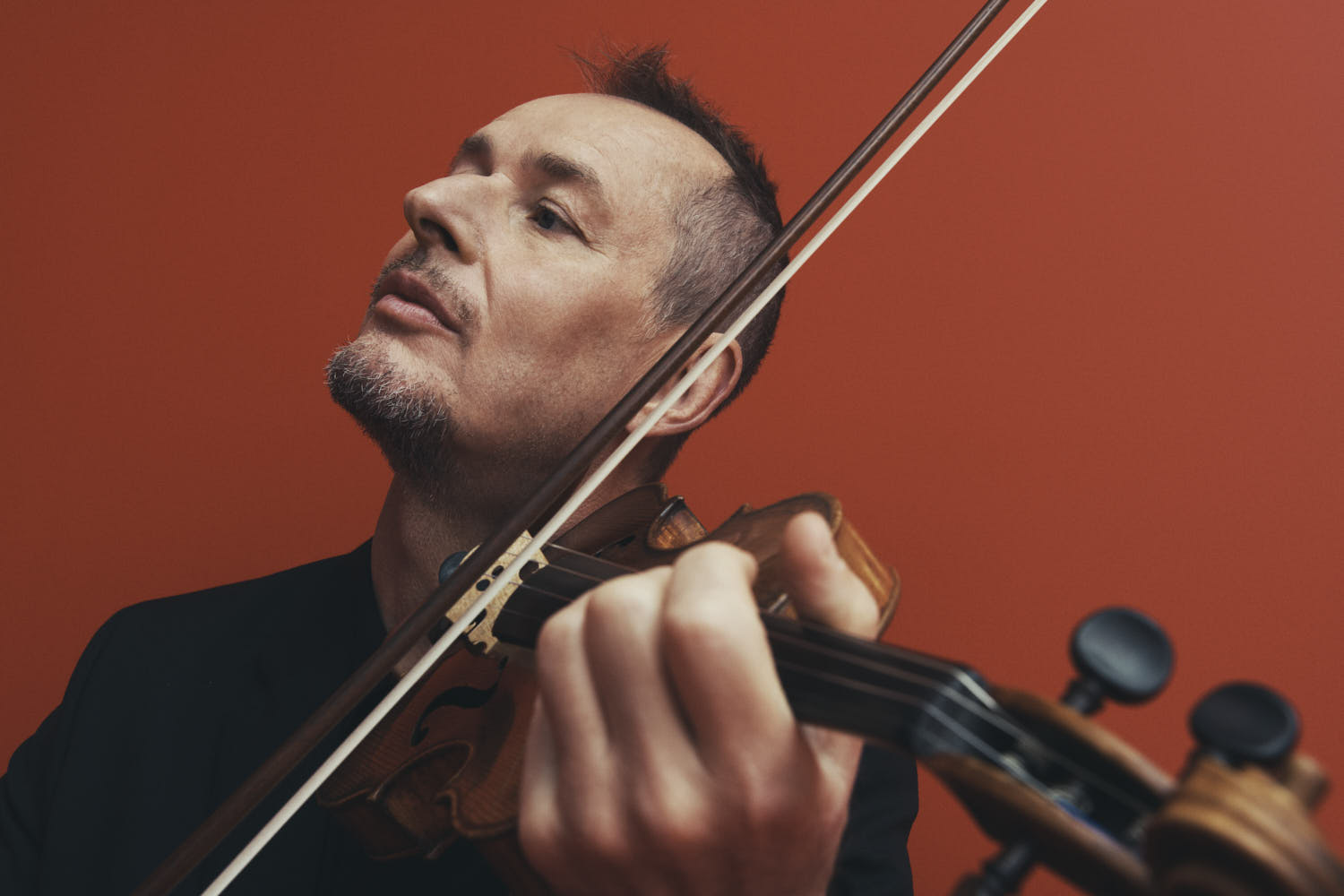
Richard Tognetti

You could see this program as a retrograde step in the Australian Chamber Orchestra‘s ongoing path of achievement. Presenting two repertoire standards like the Brahms Violin Concerto and Beethoven’s A Major Symphony doesn’t put many demands on audiences who would/should be familiar with both masterpieces. Of course, in this case you’re bound to hear exceptional readings of these scores, the ACO being what it is – one of the country’s leading ensembles in terms of skill and interpretative talent.

This was the tenth and final expounding of this double feature, the climax of a tour that took in the three eastern state capitals with a detour to Newcastle along the way. So the accomplishment level was as good as it was going to get. Adding to sixteen core members of the orchestra, artistic director and soloist Richard Tognetti had enlisted the assistance of an extra seven violinists, four more violas, two supplementary cellos and two double bass guests. This practically doubled the string body but such reinforcement proved necessary, given that all players were using gut strings.

The recruited flutes weren’t playing metal instruments, as far as I could tell; oboes, clarinets and bassoons all looked contemporary from my seat. The trumpets appeared orthodox but at least two of the horns were employing crooks and the other one of the four that I could see had an instrument whose middle workings looked unfamiliar to me – neither valved nor crooked. So it seemed that what we heard was something of a mixed bag, although the resulting sound complex favoured the woodwind and brass (as you’d expect).

Among the guests were musicians from the Adelaide, West Australian,, Queensland, Melbourne, Dresden Festival, Age of Enlightenment and Canada’s National Arts Centre Orchestras. Thomas Chawmer from the Orava Quartet was one of the violas, and six of the other string players were from the ACO’s Emerging Artists of 2025 ranks. You’d think this made for a sort of uneasy agglomeration but the whole complex sounded highly polished and assured in its work, probably more impressive in the symphony because Tognetti spent a good deal of his time directing rather than leading his first violins.

Of course, he had his hands fuller when treating with the concerto, across which he produced one of the most refined interpretations I’ve heard live. A thoroughly seasoned performer, Tognetti knows better than most where to find a balance between assertion and reticence, even if this interpretation was pre-ordained towards the latter. Even so, that brave opening flourish from the solo after the ritornello to the first movement registered as imposingly dynamic even if you missed the steely insistence of the quasi-cadenza upward-shooting spirals before this lone voice settles into its beneficent variants on the opening theme.

As the performance continued, I tried to recall when I’d last heard the ACO and Tognetti achieving a similar sound spectrum. It’s faded in the memory but I think it must have been when they were presenting another of the great concertos where solo detailed work, especially when lodged in the lower strings, dissipated into the accompaniment which was, above all, considerate. Because of this infrequency of bite, you had to concentrate with high attention to follow the opening movement’s argument, compensating for the murmuring activity by fleshing out what you know must have been there.

It’s a marvellous expanse, that first Allegro, relieved in this performance by a departure from the usual Joachim cadenza. Tognetti put together an amalgam of his own from those supplied by Busoni, Hugo Heermann and Auer. He adopted the Busoni venture of having a timpani accompany the soloist for a fair way into the novelty, and later brought in the strings for some preliminary chords prior to the return to normal at bar 527. Whatever the traces of Heermann and Auer, I wasn’t quick (or familiar) enough to pick them up but the demonstration proved to be technically spectacular, probably more so than the original.

When it came to the Adagio, we moved onto a different place, more subtle than that usually displayed in orthodox readings. The initial 30-bar wind chorale sounded seamless, the clarinets enjoying pride of place being positioned above their woodwind peers. The soloist’s unveiling of that spine-tingling initial sentence made for an ideal representation of the composer’s lyrical genius and the movement promised a fully burnished outpouring – until some clown’s mobile phone went off, the idiotic alarm tinkling out the opening bar to Handel’s Arrival of the Queen of Sheba.

Tognetti paused, then took up the reins again without complaint, even if some of us were seething at this redneck lack of consideration or concern. Further, I suspect a few of us found it hard to re-enter the calm unfolding of this movement’s later stages without being distracted by an inner rage. For which reason, maybe, the giocoso conclusion came over as more aggressive than expected, the soloist’s line slashing and curvetting turn and turn about, the pulse fluctuating without a sign of discomfort right up to the Poco piu presto gallop to Brahms’ warm-hearted conclusion.

I’m pretty sure that the ACO has played the Beethoven symphony before and that I heard it about a decade ago in Melbourne’s Hamer Hall. As far as I can see, the ensemble hasn’t recorded it but might consider doing so, given the finely-spun detail with this group populated by many ad hoc players. As I’ve said, Tognetti spent much of his time exhorting the ensemble, mainly by indicating swathes of sound rather than bow-pointing to individuals or groups. Did he need to offer such encouragement to a set of musicians that were very well played-in to this score? The results were indubitably successful, so no argument.

But there’s not much to report. The work unfolded with very few flaws; an odd horn bleep and some not-quite-right wind group entries, plus a few moments where the strings were in danger of being out-weighed. Still, the Allegretto moved at a brisk pace, not handled as a lugubrious funeral march; the following scherzo ‘s repetitions came close to wearing out their welcome, as usual, but the players’ briskness of attack took the edge of the composer’s wearing insistence.

Finally, that jubilant Allegro con brio rort rounded off the night with elegant bravura, some novel dynamic points set out for the more jaded among us, and an irresistible drive from the strings that lasted up to Beethoven’s peremptory final bark. I, for one, left the QPAC building with feelings of gratitude and elation – a welcome change from the usual sensation of having been aurally battered into submission. After this genuflection to the tried and true, and having attracted a substantial audience, the ACO will proceed with its birthday celebrations by following more challenging paths, this double-bill definitely being the year’s most conservative Brisbane program.

Soft blasts from the past

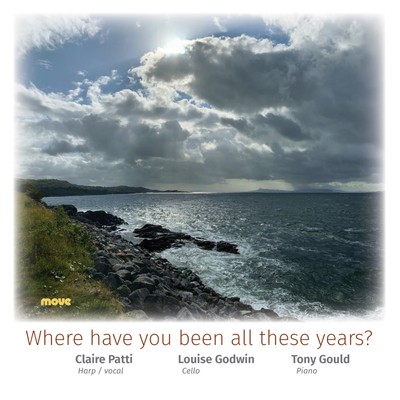
WHERE HAVE YOU BEEN ALL THESE YEARS?

Claire Patti, Louise Godwin, Tony Gould

Move Records MD 3469

There’s something disarming about this album which is a collection of songs/folk-songs – several of them well-known – performed as trios, duets and solos by Claire Patti (harpist and singer), Louise Godwin (cellist but not employed as much as she could have been), and Tony Gould (pianist and the heaviest participant in this amiable exercise). I say ‘well-known’, but that might only apply to that generation that boasts Gould and me (he is my senior by a few years). The Skye Boat Song, My love is like a red red rose, Londonderry Air, The Last Rose of Summer, Black is the colour of my true love’s hair and Molly Malone were standard articles of faith in my youth and all enjoy a re-working here.

As well, you will come across a few that ring bells in the memory, if not very clamorous ones: Carrickfergus, Strawberry Lane and Ae fond kiss. Gould and Co. have included an Irish lyric that I’ve never come across – Tha M’aigne fo ghuraim (This gloom upon my soul) – and an English traditional song that none of those great 19th-into-20th century collectors seems to have bothered with: Sweet Lemany. Not to mention a Scottish tune that sounds more promising than its reality in She’s sweetest when she’s naked. Then there’s Idas farval (Ida’s farewell), written by Swedish musician Ale Carr, and Jag vet en dejlig rosa (I know a rose so lovely) which is a traditional tune, also from Sweden; I suspect that both of these spring from Godwin’s interest in that Scandinavian country’s music. From left field comes A little bit of Warlock, which sets some pages from the Capriol Suite, namely the Pieds-en-l’air movement.

The ensemble beginsn with Sweet Lemany, which may have origins in Cornwall, Ireland, or Suffolk; it has certain traits that argue for an Irish genesis. But the setting is original,, first in in that Godwin maintains a one-note pedal throughout, pizzicato and keeping to a mobile rhythmic pattern. Patti sings with a light, refreshing timbre while Gould informs the piece with subtle inflections and brief comments/echoes. For all that, Patti sings four of the five verses available in most editions.

Gould takes the solo spot for William Ross’ Skye Boat Song and, apart from a winsome introduction, sticks to the well-known tune right up to the final bars where the straight melody is subsumed in a brief variant. Most interest here comes from following the executant’s chord sequences which follow an unexceptionable path throughout a mildly meandering interpretation. Gould gives brief prelude to My love is like a red red rose before Patti sings the first two stanzas. Godwin offers a cello statement, before the singer returns with the final two stanzas and an unexpectedly open concluding bar. Gould occasionally offers a high trill to complement Patti’s pure line. And the only complaint I have about the vocal line is the singer’s odd habit of taking a breath after the first few syllables of the third line in most of the stanzas.

Carr’s sweet if repetitive lyric is a sort of waltz with three-bar sentences/phrases, in this case giving the melody first to the cello, then the harp, before the cello takes back the running. The piece’s form is simple ternary and we certainly are familiar with the melody’s shape before the end. More irregularity comes in the Swedish traditional song from the 16th century with its five-line stanzas, here handled as a kind of elderly cabaret number by Patti and Gould, whose support is a supple delight beneath Patti’s somewhat sultry account of what textually should be a love song but musically sounds like a plaint.

The Warlock movement, here a piano solo, gets off to a false start and Gould can be heard saying that he’ll start again. For the most part he is content to follow the (original?) Arbeau melody line and reinforce the British arranger’s harmonization with some slightly adventurous detours along the path. A variant appears shortly before the end but the executant eventually settles back into the format and plays the final two Much slower bars with more delicacy than the original contains. Patti sings two stanzas of the three that make up the ‘standard’ version of Carrickfergus and invests the song with an infectious clarity of timbre, especially at the opening to the fifth line in each division with Gould oscillating between the unobtrusive and mimicking the singer when she moves into a high tessitura.

A harp/cello duet treats James Oswald’s She’s sweetest when she’s naked, which has been described as an Irish minuet (whatever that is). The only peculiarity comes with a change of accent to slight syncopation, first seen in bars 3 and 5 of the first strophe. Patti plays the tune through twice, then Godwin takes the lead for another run-through. Some laid-back ambling from Gould prefaces the Danny Boy reading for solo piano, with just a trace of Something’s Gotta Give before we hit the melody itself. The pianist does not cease from exploration and offers some detours to the original line, as well as a couple of sudden modulations to restatements in a refreshed harmonic setting. For all that, the Air remains perceptible across this investigation, the CD’s longest track.

Staying in Ireland, Gould gives an alluring prelude to The Last Rose of Summer before Patti starts singing Moore’s lines. Godwin has a turn at outlining the original Aisling an Oigfhear melody before the singer returns with the second stanza, then omitting the third, with Gould providing a postlude that puts the first phrase in an unexpected harmonic context. As with all the vocal items on offer, this is quiet and unobtrusive, some worlds away from the habitual thrusting treatment demonstrated by generations of Irish tenors bursting into the role of Flotow’s Lyonel.

Across the sea to Scotland’s Black is the colour of my true love’s hair which Gould opens through some sepulchral bass notes before giving the melody unadorned and unaccompanied before moving into a fantasia that harks back to its source material before resolving into another re-statement of the melody and a reappearance of the opening’s repeated tattoo. This version is comparable in colour to some of the more conscientious American folksingers who have recorded versions of this work, making a slightly unsettling celebration of what is a love-song in a minor key (mode!?) context.

Back across the sea to the island, Godwin plays Tha M’aigne fo ghuraim as a solo, punctuated by sudden turns and grace notes; at well under two minutes, the CD’ shortest track but probably its most obvious and characteristic in terms of its country of origin. Another piano solo, Gould gives us a preamble before playing Strawberry Lane through straight once, then almost doing the same thing again before following his pleasure at the end of the second stanza. Of course, he returns to the melody en plein air near the end but concludes with a reminiscence of his earlier elaboration and an unsatisfying tierce to finish.

Another Burns lyric, if a despondent one, in Ae fond kiss brings Patti’s calm delivery into play once again. She sings all the stanzas except No. 2 in the set of six. Gould offers a mid-flow interlude which, I suppose stands in for the missing lines but the song’s delivery suggests a rather odd 3/4 rhythm as opposed to the more bouncy original 6/8. But the executants’ restraint is put to happy employment throughout. Molly Malone brings up the rear and is another piano solo where Gould plays the stanzas’ sextet several times, giving less space to the three chorus lines. It’s plain sailing through this very familiar melody, the pianist content to follow the air’s contour.

Not everything on this diverting disc works ideally. Some of Gould’s chords sound like abrupt breaks in an otherwise placid flow, some notes don’t sound, and Godwin’s cello seems uncomfortable on one track. Still, you’ll find plenty of material here to entertain and over which you can reminisce – which is clearly (for me, at least) the whole point of the exercise.

Diary March 2025

VIVALDI VESPERS

Brisbane Chamber Choir/Chamber Players

Queensland Conservatorium, Griffith University

Sunday March 2 at 3 pm

This has me beat: I can’t find a mention in the composer’s catalogue of any Vespers setting. But there they are on YouTube – a Vespers for St. Mark from which comes the well-known Beatus vir setting; and a Vespers for the Blessed Virgin with a friendly Domine ad adiuvandum. You can get a recording (presumably of one of them) from the Ex Cathedra ensemble. There’s even a putative vespers available of how an imaginary service for the Feast of the Assumption might have sounded if Venetian composers had clubbed together for such a celebration. Whatever the foundation for this event, the Brisbane Chamber Choir and Brisbane Chamber Players (who are they?) will work together under the choral body’s founding director Graeme Morton with two soloists taking front-and-centre: soprano Sara Macliver and countertenor Michael Burden (know the former, of course; looked up the latter who is a Sydney product, it seems). Well, it could be a revelation but, I suspect, mainly for those of us who know only the Magnificat and Gloria. Students can attend for $15; if you’re under 30, it’s $50; with your concession card, the price is $70; the cost for a full adult is $90. Whatever category you fall into, there’s the extraordinary bonus of no booking/handling fee.

JESS HITCHCOCK & PENNY QUARTET

Musica Viva Australia

Queensland Conservatorium, Griffith University

Tuesday March 4 at 7 pm

This combination is new to me and, I suspect, won’t be familiar to Musica Viva audiences, although the Penny Quartet members are well-known quantities as individuals: violins Amy Brookman and Madeleine Jevons, viola Anthony Chataway, and cello Jack Ward. Vocalist Jess Hitchcock hasn’t come my way before, but she’s one of those multi-discipline musicians who sings opera and jazz, as well as writing her own music. Indeed, she appears in this recital as singer and song-writer but, to give it a twist, she is giving us arrangements of eleven of her own songs as organized by a bevy of young Australian composers. Tack on to that a composition by Caroline Shaw, the Pulitzer Prize-winning American composer who is here represented by Plan and Elevation: The Grounds of Dumbarton Oaks: a musical depiction for string quartet of five aspects/features in the famous estate. As for the song arrangers, they are Ben Robinson, Matt Laing, May Lyon, James Mountain, Iain Grandage, Harry Sdraulig, Holly Harrison, Isaac Hayward, Alex Turley and Nicole Murphy. I don’t know any of the songs but wait for their unveiling with high expectations. Entry prices range from $49 to $125 and there’s a transaction fee of $7, which I don’t believe was the practice in previous years but someone has finally hit on the usual way to screw the consumer.

LA CENERENTOLA

Opera Queensland

Concert Hall, Queensland Performing Arts Centre

Tuesday March 4 at 7 pm

To my mind, this is a stand-out Rossini work which appeared as a transient jewel in the national company’s repertoire many years ago and which I saw at the Vienna Opera sometime around 1982 – one of the few unalloyed pleasures I’ve experienced in that city’s opera house. It’s a sparkling construct, capped off with the heroine’s finely graduated Non piu mesta with the Ramiro/Dandini Zitto, zitto, piano, piano duet a true delight. We have here a concert version, I think, because of the venue but a director (Laura Hansford), costumiers (Karen Cochet and Bianca Bulley) and a lighting designer (Christine Felmingham) are included in the performance personnel. Richard Mills conducts a partly unfamiliar cast: Mara Gaudenzi (Angelina), Petr Nekoranec (Don Ramiro), Samuel Dundas (Dandini; well I know this baritone and believe I’ve seen him in this role), James Roser (Don Magnifico), Shaun Brown (Alidoro), Sarah Crane (Clorinda), and Hayley Sugars (Tisbe). The Queensland Symphony Orchestra appears, as does the Opera Queensland Chorus. Full adult tickets range from $75 to $149; the concession rate is small and students pay the same. Never forget the $7.50 charge for the organizers being unable to handle credit cards without smashing the consumer around the head.

This performance will be repeated on Saturday March 8 at 1:30 pm.

THE BIRTH OF BEL CANTO

Opera Queensland

City Tabernacle Baptist Church

Wednesday March 5 at 7 pm

You get few indications of what exactly will be presented from the Opera Queensland site. You get much more information on the website of One Equal Music, the choral ensemble that is at work on this occasion. Apparently, bel canto begins with Renaissance madrigals by Monteverdi, Gesualdo, Strozzi (the recently discovered and extravagantly lauded female composer of the Baroque) ‘and others’ who, according to the OEM pages, are Verdelot, Lotti, Luzzaschi, Fresobaldi, de Wert, d’India and De Monte. From the organization’s ten or eleven members, we have six singers participating, sopranos Louise Prickett and Cara Fox , alto Eleanor Adeney, tenor Tomasz Holownia, bass James Fox. The ensemble, founded and directed by husband-and-wife team Adeney and Holownia, will be accompanied by an unnamed cellist and harpsichordist. A full adult admission is $65, with a reduction of $6 – count them – for concession card holders and students; children get in for about half-price. Still, as far as I can see, there’s no booking fee; must be the venue which is warding off that ever-menacing mammon of iniquity.

PETITE MESSE SOLENELLE

Opera Queensland and The University of Queensland

St Stephen’s Cathedral, 249 Elizabeth St.

Friday March 7 at 7 pm

It’s anything but little, as the composer well knew. When he got around to orchestrating it, the truth came out as the forces employed were very substantial. But this appears to be the original version for four soloists who emerge from the choir of twelve, two pianos and a harmonium. As this is a collaboration with the University of Queensland, the pianists are two of that institution’s staff: Anna Grinberg and Liam Viney. But it doesn’t stop there: the singers come from the University of Queensland Chamber Singers, the UQ Singers, and the Lumens Chamber Choir – which seems a lot to populate a chorale force of a dozen strong. Graeme Morton will play the organ (the cathedral doesn’t run to the more humdrum instrument?) and the whole will be conducted by Richard Mills. Recorded performances range from a bit over an hour to 80-85 minutes; lots of interpretative leeway, one would guess, but this reading is scheduled for 90 minutes uninterrupted. Ticketing follows the same process as for the Bel Canto recital: adults need $65, concession and student entrance is $59, a child gets in for $33. There’s no booking fee but it costs you $1.15 if you want your ticket)s) mailed.

RED DIRT HYMNS

Opera Queensland

Opera Queensland Studio, 140 Grey St., South Bank

Saturday March 8 at 7:30 pm

With this opus, composer Andrew Ford is providing us with secular hymns; I don’t know how many or specifically who is going to perform them. The poets involved are Sarah Holland-Batt, John Kinsella, and Ellen van Neerven. As for the performers, all that you can glean from Opera Queensland is that students are involved, and they come from the Jazz Department of the Queensland Conservatorium at Griffith University. Still, I’m puzzled by the genre promoted by Ford. A hymn is a song of praise, at bottom. It’s usually addressed to God or a deity of some kind. What we have here are praises of the everyday – ‘the shape of a vase or desire by a river bank at dusk’ are two projections from the OQ website. So the term has been distorted just a tad. When this kind of re-appraisal comes up, I automatically think of Brahms and the German Requiem where the Latin format is ignored and the composer sets a plethora of Biblical texts to do with death. But the construct doesn’t ignore the fundamental requirements for a requiem. I can imagine someone writing encomia to the things of this world, but hymns? Still, we’re in for a hefty dose of Australiana, if the red dirt descriptor is any indication. Anyway, Patrick Nolan is directing the event, so there’ll be a certain amount of staging involved, and the music director is Steve Newcomb who is, among other things, the Head of Jazz at the Queensland Conservatorium. The evening lasts for 80 minutes without interval and admission prices follow the same path as for previous OQ recitals across this month: $65 full adult, $59 concession and student, $33 a child, with no extra fees bar $1.15 if you want your ticket(s) mailed.

BARBER & PROKOFIEV

Queensland Symphony Orchestra

Concert Hall, Queensland Performing Arts Centre

Friday March 14 at 11 am

One of our favourite violinists, Canadian James Ehnes returns to Australia where he’s playing the 1939 Barber concerto: a suitable choice, just before the performer’s country becomes the 51st state, Mind you, Brisbane is the only city on Ehnes’ tour where he plays this work; the rest of the time, it’s Brahms pretty much all the way with a few Vivaldi and Mozart detours in Melbourne and Ballarat. All very nice, even if the American concerto isn’t long; but that leaves more time for encores, doesn’t it? The concert begins with conductor Jessica Cottis directing Matthew Hindson‘s Speed from 1997 which could be giving us a musical image of a racing car meet, or possibly the sensation of just driving quickly, or it could be an imaginative foray into the world of drug-taking. The frenetic pulse coming from a ‘synthetic’ drum-kit, this piece lasts for about 18 minutes, according to its publisher. Which makes it double the length of the Australian composer’s better-known Rush from 1999. Finishing this presentation comes the first movement of Prokofiev’s Symphony No. 5, the only one of the seven that is potentially familiar these days to a discerning concert-goer. I’ve heard the No. 1 Classical all too often, and this one rarely. The others? Never. I suppose the reason behind having only the one movement played this morning is because this event forms part of the QSO’s Education series – and a little learning is more than enough in this era of ignorance. Adult prices for tickets range from $80 to $115, with the usual sliding scale for concession, student and child entry. You’ve still got to pay the $7.50 fee for broaching the Concert Hall doors.

This program will be repeated on Saturday March 15 at 7:30 pm, the only difference being that the QSO will play all of Prokofiev’s symphony. Full prices here move between $100 and $140, which means that three movements of Prokofiev are worth $20/$25 on the current Queensland market. And the $7.50 booking slug still applies.

JAMES ROSER & ALEX RAINERI – AN DIE MUSIK – SCHUBERT’S ART OF SONG

Opera Queensland

Opera Queensland Studio, 140 Grey St., South Bank

Friday March 14 at 7 pm.

These musicians won’t be hard-pressed for material. Fresh from his appearances as Don Magnifico in the company’s La Cenerentola , baritone James Roser takes on a selection of Schubert lieder, accompanied by Opera Queensland’s go-to accompanist, Alex Raineri. From the promotional material, we are hinted towards Wohin?, Der Lindenbaum, Rast, and ‘the harmonic pangs of unrequited love’ – which last covers a hell of a lot of Schubert territory. As well, patrons are probably justified in expecting the recital title’s setting of Franz von Schober’s verses. As for the rest of this hour-long program, you just have to trust to the discernment of the performers. I’m not that crazy about placing faith in many musicians who are faced with a white program slate, but I think that Raineri would have enough discretion to balance the well-known with some rarities. Ticket prices follow the same path as for the other recitals this month: $65 full adult, $59 concession and student, $33 per child – with the bonus of not having to front up the cash for any extra charges, except for $1.15 if you want your ticket(s) mailed.

This program will be repeated on Saturday March 15 at 2 pm.

TREE OF LIFE

Collectivo

Thomas Dixon Centre, 406 Montague Rd., West End

Saturday March 15 at 1:30 pm

The Collectivo ensemble is a mobile group, its participants moving in and out according to programmatic requirements. This first recital for the year features the Sydney Symphony Orchestra’s concertmaster Andrew Haveron, oboe Tania Frazer (Collectivo’s artistic director), soprano Eden Shifroni, piano Vatche Jambazian, and cello Rachel Siu They’re beginning with Arvo Part‘s Fratres of 1977, probably played in the violin/piano combination. Then Shifroni sings two well-known arias: Lascia ch’io pianga from Handel’s 1711 opera Rinaldo, and Mozart’s Ach, ich fuhl’s lament from Pamina in Mozart’s The Magic Flute of 1791. Frazer comes on board with Schumann’s Romance No. 1 from the Op. 94 group of three, written in 1849. Just before interval, Shifroni returns for a selection of Debussy songs. So far, so varied; Yggdrasil would be pleased. No rest for the singer when we return as she says goodbye with Caccini’s (Vavilov’s) 1970 Ave Maria, just before Haveron and Jambazian combine for Franck’s epic Violin Sonata of 1886. The exercise concludes with a piece by Argentinian/Israeli clarinettist Giora Feidman called The Klezmer’s Freilach, released in 1998 and a brilliant sample of this branch of Jewish popular music; I’m assuming all the instrumentalists will join in this work to provide a rousing finale. It’s a regular two-hour recital with an interval and tickets cost a flat $74.50; there’s a transaction fee of $5 which is better than some but much worse than others.

LISZT & VERDI

Brisbane Chorale

St. John’s Cathedral, 373 Ann St.

Sunday March 30 at 2:30 pm

Conducted by Emily Cox, the Brisbane Chorale works through four gems of the repertoire, accompanied by organist Christopher Wrench. First up comes Liszt’s Via Crucis, a musical Stations of the Cross for soloists, four-part choir and organ written in 1878/9. This is a solid sing, lasting about an hour. We change from the funereal to the celebratory with Verdi’s Te Deum from the Quattro pezzi sacri, this extract dating from 1895/6 and lasting about 15 minutes (Verdi allowed for 12 only). It asks for two four-part choirs with a short soprano solo and you’d have to guess that Wrench will substitute for the original’s orchestra. Brahms’ Geistliches Lied of 1856 calls for a four-part choir with organ support. At a little over five minutes long, the piece interests for its contrapuntal severity and a combination of warmth and gloom. Finally, the Chorale contributes another five minute-plus delight with Faure’s Cantique de Jean Racine from 1864/5 when the composer was a student at the Ecole Niedermeyer. This also follows the Brahms lied‘s pattern of asking for a four-part choir and organ. Tickets cost $60 full price, $53 Centrelink concession, and $22 for a full-time student. The add-on handling fee is only $1.25, which at least is among the more piddling rates of extortion for using a credit card.