THROUGH TROPICAL STARS
David Joseph
Move Records MD 3467
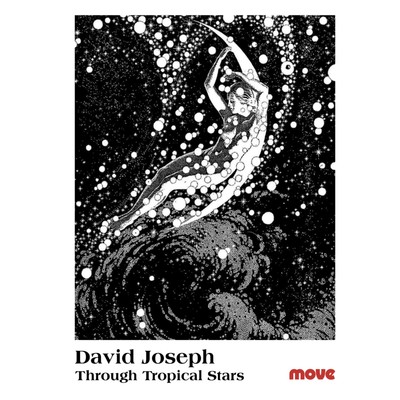
There’s something enigmatic about the music of David Joseph. If it weren’t for Move Record’s initiative, I would know very little about his contribution to Australian music. As it is, any material you come across is deficient in detail. For example, the opening work on this disc, a Concertino for flute, viola and percussion dates from 1988 but doesn’t appear in the Australian Music Centre’s catalogue of Joseph’s works. Likewise, the concluding piece, The Afternoon of 1991 for piano trio, is absent from the same list. Slightly less confusing is the attribution of the title track for two flutes to 1977 on the CD, but 1978 in the AMC’s listing. Ditto for the String Trio No. 2 (CD 1991, catalogue 1990) and a Sonata for clarinet and 2 percussionists (1978 according to the CD, but 1979 in the catalogue demi-raisonne).
Not that such discrepancies will keep anyone awake at nights, but they speak of a certain slovenliness in the provision of accurate information. As for performers, the Concertino boasts members of Sydney’s Seymour Group before that ensemble ceased operations in about 2006; flute Christine Draeger, viola John Gould, percussion Ian Cleworth and Rebecca Lagos (or is it Graeme Leak{e}?) as announced on the CD’s sleeve?). Jennifer Newsome and Zdenek Bruderhans perform Through tropical stars, while Nigel Sabin clarinet and Cleworth with Ryszard Pusz present the sonata. A group appropriately called the String Trio Holland consists of violin Josje Ter Haar, viola Susanne van Els, and cello Job Ter Haar. As for the brief The Afternoon, that features the untraceable Trio Classico comprising violin Urs Walker, cello Regula Hauser Menges, and piano Stefan Fahmi.
As you can see from the dates of each work listed above – 1977 (1978), 1978 (1979),1988, 1990 (1991), 1991 – Joseph’s compositions on this CD are not fruits of the composer’s time spent in Benalla where he has worked as a lawyer for nearly the last 25 years. It would seem that his musical creativity has come to a halt – a lume spento. Nevertheless, these five tracks from the past remind us of the individual voice that Joseph spoke and the sheer attractiveness of his vocabulary. By the way, all offerings on this CD are from live performances – at the Seymour Centre, Elder Hall in the University of Adelaide, Melba Hall at the University of Melbourne, and St. Peter’s Church, Zurich.
What the Concertino offers is a garden scene, albeit a furiously active one where the bird-life approaches the manic in its opening strophes, vivified by a rapid semiquaver flute pattern and viola flutterings above campanile, vibraphone and marimba backing. Every so often, we reach a hiatus point and the motivic matter changes, if the textures remain pretty constant, as does the level of action. When you think things are slowing down (the use of quaver triplets), the flute stirs itself into fresh flights and the percussion mimics the frenzy. For all that, the atmosphere is a benign one and it is conceivable that Joseph is presenting a kind of promenade where a change of vista prompts an alteration in texture.
Still, the soundscape is a consistent one with recognizable patterns enjoying a transmutation process and the ensemble working as a well-oiled rhythmic machine, punctuated by a cadenza flight from Draeger and Gould towards the conclusion . Just when you think the piece is descending into a twilight phase, the initial energy and textures reappear, although the final bars offer a kind of placid resolution. It seems to me that Joseph is most concerned with exercising a timbral palette which he varies most obviously by changing his percussion instruments. This results in an effervescent kaleidoscope of colours to which all four participants contribute in almost equal measure.
According to the AMC site, Through tropical stars is meant to last about twelve minutes; Newsome and Bruderhans get through it in under nine. It’s not intended to be another ‘bird’ piece and in some ways it isn’t, having a wider scope than mere avian imitation. But there are passages where you can’t escape the querulous nature of bird chirrups and competing calls, circling around each other in close imitation. One player uses piccolo, concert flute and alto flute; the other sticks to concert flute throughout. While the work is a dazzling exhibition piece for its interpreters, its atmospheric character suggests a natural world abuzz with growth and light: a brilliant tandem ride of coruscations, here articulated with admirable interdependence.
Something like the Concertino, Joseph’s Sonata works hard to present textural and timbral interplay/contrast. It certainly exploits Sabin’s flexibility and rapid recovery in its initial stages where a dialogue between clarinet and marimba displays a mastery of quick-fire articulation. A chain of sustained wind notes takes us a short space away from the initial chattering, but not for long; when the clarinet is occupied with delivering a high pedal note, both marimba and xylophone indulge in a furious clash of lines.
It makes for an experience that is heavy in events. If a score were available, I’m sure the interconnections and inner references would become clearer but, as it is, you just surrender to the aural avalanche-with-recesses that prevails at the end, despite the sudden emergence of some moments of what pass for rest in this active work. Percussionists Cleworth and Howell are no shrinking violets but take over the running, occasionally drenching the clarinet in powerful mallet work as the score drives towards its affirmative conclusion.
With the string trio, despite the CD leaflet’s stipulation that it is a nature portrait similar to the Concertino, we are in a different landscape where abrasive chords serve as fulcrum points, demanding attention right from the opening. True, you hear whistles and throbbings that might represent wildlife red in tooth and claw, alternating with compulsive motor rhythms that bear witness to the ongoing influence of Stravinsky’s early years. Again, the composer utilises obsessive motives and near-splenetic bursts of repeated chords to animate his intended ambience.
As with its precedents on this CD, the trio deals with patterns that can be transformed or just repeated till the next one appears. What is different is the sense of menace as we move through a sound world that is packed with percussive-sounding bursts. The burbling and twittering has gone and we find ourselves in a world of menace and uncertainty which eventually fades to an uncertain final querulousness: the first piece on this album that ends, like Petrushka, with a question.
The last track, and the latest of Joseph’s works represented here, The Afternoon is a brief vignette that intends to acquaint the listener with the sad quietude of approaching twilight. In fact, the piece succeeds very well in following a path into quiescence, the final words given to the piano after a process that maintains Joseph’s practice of exploiting brevities, even if these ones present themselves with more angularity than we’ve heard so far.
For recordings that were made some time ago – 46 years in two cases, 34 years the most recent – the quality of these tracks is remarkably clear, in particular the final one from Zurich where Walker’s violin and Fahmi’s piano have a fine, piercing character that makes every note resonate. And it serves as an attractive envoi to this series of one-movement scores that remind us of the intellectual and emotional appeal of the music created by this remarkably gifted writer.
 O'Connell the Music