Finely balanced Italian-Spanish sojourn

SCARLATTI KEYBOARD SONATAS – INGENUITY AND DELIGHT

James Brawn in Recital Volume 3

MSR Classics MS 1829

Following the nine discs in his survey of the complete Beethoven piano sonatas, British-born musician James Brawn is keeping himself occupied with a new entry for his ‘In Recital’ series on the MSR Classics label. The first in the set, recorded in 2012, featured some Bach, Liszt, Rachmaninov and Mussorgsky’s Pictures at an Exhibition the main work. Three years later came the second in the series, a double album with a fuller scope through Scarlatti, Bach, Mozart, Beethoven, Schubert, Chopin, Liszt, Brahms, Grieg, Scriabin, Rachmaninov, Prokofiev, and Gershwin.

This year, the third of the series has appeared and the focus is pretty concentrated on Domenico Scarlatti. Brawn takes us through 21 of the 555 in the (so far?) accepted canon, two of them revenants from his 2015 marathon: K. 159 in C Major (La Caccia) and K. 380 in E Major (Le Cortege). Many of us would have made our first acquaintance with this composer through the 25 Sonate per clavicembalo edited by Alessandro Longo in a Ricordi publication that I came across in the late 1950s. Brawn plays nine of the sonatas in that volume, including the two referred to above from his ‘In Recital Volume 2’ double-album.

Tagged on at the end, he presents a small-scale sonata by Domenico’s father Alessandro – the shortest track on the disc at 1’33” – and a more substantial sonata in G minor by Pater Scarlatti’s friend, Johann Adolph Hasse. A bit of a problem is the uncertain provenance of the Alessandro Scarlatti D minor Sonata, labelled Arioso. The piece is two lines in its substance, as are many of Domenico’s works: a simple tune above a walking bass. Brawn repeats the first half but not the second, although not much is gained by hearing any of this bagatelle twice.

The Hasse work is often listed as an attribution to the composer, possibly because the composer’s other sonatas are generally not stand-alone movements like this Largo. Still, it has a more mobile bass line than the elder Scarlatti’s piece and actually gravitates towards a wealth of right-hand thirds. Brawn plays repeats of both halves and gives us a gentle, measured account of a pre-Domenico piece that a reasonably competent pianist could probably negotiate successfully at sight.

As for the CD’s major consideration, Brawn opens with No. 1 in the Kirkpatrick numbering system, a D minor here subtitled Toccata. Well, it moves briskly and you come across some of those passages where both hands touch the same note in quick succession (bars 7, 8,11, 15,17, 26 and 27) but it’s more a toccata in the sense of rapidity of manipulation – and Brawn is excellently even-handed throughout – rather than the usual Baroque idea of a series of quick flurries and contrasting sections.

Another D minor follows, K. 9 and it’s one from the Longo 25 Sonate collection, here named Pastorale, which must refer to the musette moments at the end of both halves. This is a transparent view of the work with Brawn treating it as a bit of an amble but adding a sudden pianistic interest to the second half by semi-arpeggiating the left-hand chords across bars 27 to 32 and allowing himself room to breathe after some semiquaver runs; not that any of these raise the interpretation’s placid temperature.

We’re still in the minor (B) with K. 27, which is a fine exercise in hand-over technique, where the left hand plays top note in a chord. This is reliably achieved by Brawn who efficiently skewers these isolated notes, at the same time giving some crotchet weight to notes beginning semiquaver chains of four in passages following the main gauche uppermost bars. The style is outwardly calm, with an undercurrent of mobile gravity.

Once again, we revert to D minor for K. 32, yclept Aria. This one-page sonata has a first half of 8 bars, a second section of 16 and it barely modulates: all the Cs in it but four (in a passing flirtation with F Major) are sharpened. The work proceeds with gravity, a slow minuet, but imbued with grace and without melodrama. Sticking with the same tonality, Brawn next presents K. 34, Larghetto. This is a more progressive minuet, with a first half of twelve bars which modulates to A minor, the conclusion to both halves notable for a flattened supertonic which, in this harmonic context, is a slight shock to the predicting system.

At Track 6, we hit A Major, K.96, subtitled La Caccia and another Longo album favourite. As even small-scale Scarlatti enthusiasts know, this sonata has a variety of tests: repeated notes expressly marked Mutandi i deti, 18 instances of rapid left-hand over, double octave passages in both hands, a splash of Tremolo di sopra, and some pauses that offer no respite. I felt a slight dip in bars 26, 28, 30 and 32 where Brawn appears to offer a small hesitation before the demi-semiquaver duplets in each bar; it’s as if he’s determined to observe the letter of the law and give the upward flourishes extra space to resonate. Also, he sustains the tenor A through bars 103 to 108 the first time round but doesn’t bother in the repeat, following the pattern written at the same place in the second half where the Ds are struck at the beginning of each bar. The work is buoyant enough, if dynamically restrained.

Would you believe, we return to D minor for K. 141? It sports the title Toccata with some relevance because it’s in part a study in rapidly repeated right-hand notes that features in the Longo collection although there’s no indication in my edition that you have to change your fingers while repeating those groups of six notes (Longo prescribes an alteration of 3-2-1, which I suspect Brawn follows). It also features some of those brusque left-hand chords which involve both 4th and 5th above the bass note, a strident rasgueado suggestion that Puyana delivered with incredible punch. And this piece is also distinguished by its requirement for both hands to cross in both halves. This pianist appears to miss nothing, even if the repeated notes sometimes seem on the verge of disappearing.

The A minor K. 149 is new to me and a delight for its inventiveness as Scarlatti leaves his first idea alone in the second half and deals with a figure that presents as an adjunct in the first segment. The references back to prior material demonstrate the felicity and flexibility of the composer’s thought but the sonata radiates that extraordinary combination of power and elegance that distinguished the best of these pieces.

Another favourite from Longo’s album is the K. 159, which also has here the sobriquet La Caccia and is a much easier piece to handle than K. 96 in D Major. Brawn follows some performers in omitting one of bars 14, 15 and 16 in the sonata’s first part, then one of bars 53, 54 or 55 later on, although I can’t find an edition where this liberty is edited in. He also imitates those who repeat the first half’s top note tonic triad elements that are written in all editions I can find, doing the same across bars 18 to 20 in the second half at bars 57 to 59 which I can’t find anywhere even if it is an obvious act of balance. For all that, this is an engaging negotiation of one of the composer’s most attractive keyboard canters.

Speaking of Puyana, one of the sonatas that he transformed into a percussive nightmare for the rest of us is the A minor K. 175 with its plethora of dissonant left hand chords. Brawn splays these at the opening, once again suggesting a flamenco guitar attack but his reading is controlled and light in dynamic; this lets you relish the offered contrast between determined arpeggio material at the start and an unexpectedly gentle bounce at the rapid left-hand cross that comes out of nowhere at bar 85 to provide some contrasting bouts of light-hearted euphony.

The following A Major K. 208 is labelled Cantabile (in my edition, Adagio e cantabile) and is another unknown, moving from slow crotchets, through syncopation, to semiquaver runs in its first sentence, all over a steadily insistent crotchet bass in 4/4 time. It does have a singing quality although on paper the upper line looks jerky; another welcome discovery. A further A Major, K 209, is partnered with this gentle lyric; a complete opposite in atmosphere as it’s a chattering non-stop (initially) linear dialogue, mainly in two voices but succumbing to the necessity for chords to embroider a pretty breathless impetus. Here is some delicious playing, especially in the last 17 bars of each half where the rattling along settles into a pleasurable comfort zone while staying in one uninterrupted major tonality.

I found the Sonata in E minor K. 291 mechanical, in spite of Brawn’s vigorous interpretation which dealt with some ordinary material by bathing it in dynamic contrasts. An insistence on its opening pattern of four quavers followed by six crotchets, allied to a predictable modulation sequence reminded me of Browning’s mocking, ‘Oh Galuppi, Baldassaro, this is very sad to find!’ where the note-spinning leads nowhere in the end. You might say something similar about the next, K. 322 in A Major except that the primary subject melds into further material with particular ease in a work that is essentially a simple two-line construct (and the lower a functional grave procession of subsidiary minims), graced with a stretch of nine uplifting final bars in each half that seem to come through on its own recognizances. Brawn handles this work with a muted determination that still finds the benignity across those codas to each section.

Bouree is how this pianist typifies K. 377 in B minor and it does have lashings of that driving bass mobility you can find in some of Bach’s works using that form. Once again, this is a two-line (almost completely) sonata but blessed with a bass line having a mind of its own with the occasionally-exercised ability to take over the running. The pace is steady, not inclined to give way to any inept dancers and an ideal sample of Brawn’s clarity of articulation, thanks to the absence of any deadening sustaining pedal.

Having reached K. 380 in E Major, we come across one of Scarlatti’s most famous sonatas and a favourite of every aspiring pianist. Brawn gives it an aggressive edge at the start, the ornaments in bars 2, 4, 6 and 8 a tad more martellato than usual. In fact, many another player comes to this work as to a fairly slow minuet, milking those horns of Elfland that begin in bars 19 to 21 for as many Romantic atmospherics as possible. This musician gives a suggestion of echoes but never faintly blowing, and he ploughs through the ‘working’ bars 50-56 at full steam without pulling any punches – an approach he in fact proposes in the first statement of the piece. It’s called Le Cortege on this CD: taken literally, it’d have to be being performed at one of your no-nonsense military funerals.

A fair few of us would know K. 430 in D Major from Tommasini’s ballet of 1917 for Diaghilev’s Ballets Russes: seven Scarlatti sonatas arranged under the title of The Good-Humoured Ladies. It sounds less of a flurry on the piano, in keeping with the direction on my score: Non presto ma a tempo di ballo. This reading is active enough but measured, in line with the frequent moments of rhythmic and harmonic insistence (bars 19-26, 30-38, 72-80, 84-92) and an inbuilt, frequent ‘kick’ as in the right hand’s first three notes.

Brawn goes a touch more affective for the Sonata in F minor K. 466 which has an actively participating left hand. The construct has traces of a two-part invention format, although the right hand introduces new triplet matter that is not handed to the bass until the opening of the sonata’s second part. But this musician sees the opportunity for added sensitivity and inserts small pauses before hitting the first note/chord of several bars. So it becomes a small-scale, soulful vignette with its own brand of melancholy and a reminder that this composer wasn’t ever just a dry figure, playing Toccatas, stately at the harpsichord.

Le Cortege is again the name appended to K 491 in D Major; it’s now plain that this cortege is probably referring to a stately progress in court from one room to another; rather like the movement of Prince Andrew from Royal Lodge to his new two-up/two-down residence in Luton. This also is a well-known work, notable for its triple call to arms in the opening bar and two abrupt changes of key – in the first half from a dominant-suggesting A Major to a momentary C Major setting; in the second, after the same A Major halt, an abrupt switch to F Major. Of particular note are Brawn’s parallel semiquaver thirds at the end to each half of the work – admirably even and crisp underneath the legato.

Second-last in this celebration of the great keyboard master-composer is the Pastorale in C Major, K. 513, which appears in the much-afore-mentioned 25 Sonate edited by Longo.. Brawn plays through the opening saraband deftly enough, negotiating handily the change in speed that comes with the bass G octave drones, and we enter an aristocrat’s view of the bucolics at their dance. He doesn’t repeat this set of pages but launches into the concluding 3/8 Presto with enthusiasm and does repeat that section with only a slight ponderousness across bars 47 to 49 for inexplicable reasons.

Finishing in style, Brawn plays the quicksilver E Major K. 531 which is another element in the Longo collection. He calls it Tarantella. Well, it is and it isn’t; the metre’s right but the material is too well-bred to set the piazza (or plaza) on a roar. It is given an admirable lightness, noticeable particularly in a well-positioned dynamic level for the left hand which has a significant role on the first page in sustaining the vaulting nature of this sonata’s arpeggio-rich main theme. The headlong progress is halted by several fermate but the communication of Scarlatti’s well-being and felicity sends us off, after this final expert demonstration, more than content with Brawn’s informed expertise.
Coming down to earth

CELEBRATING 500 YEARS OF PALESTRINA

Ensemble Gombert

Our Lady of Victories Basilica, Camberwell

Saturday October 25, 2025

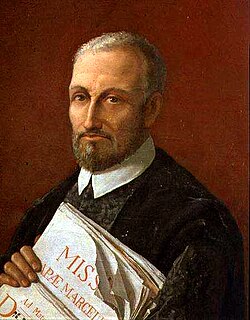
Giovanni Pierluigi da Palestrina

Non sum qualis eram bonae, as the poet said. None of us is, I suppose, but it was a bit of a surprise to find that the Ensemble Gombert is not how I remembered it from about six or seven years ago when I last heard the group live. Yes, there were moments in this Palestrina celebration that brought back recollections of he group’s finest outings, usually in the warmer surrounds (certainly better lit) of the Xavier College Chapel rather than the pre-Vatican II semi-gloom of this Camberwell monument to times long past.

Even without the benefit of a program, it was obvious that the group had changed in personnel. The long-lasting top soprano duo of Deborah Summerbell and Carol Veldhoven has disappeared, and was I mistaken in thinking that only Fiona Seers from those golden years was still singing with this company’s sopranos on Saturday afternoon? I recognized none of the altos but that could be a momentary sight defect due to the prevailing penumbra. Sadly, that group suffered an irreparable loss in the premature death of Belinda Wong during 2021. Among the tenors, I couldn’t see Peter Campbell or Tim van Nooten; only Vaughan McAlley remains of the old guard and he left his position in the ranks to conduct this performance (most of it), as the Gomberts’ founder and artistic guru John O’Donnell was indisposed. I couldn’t see Andrew Fysh in the basses, but then the male lines were reduced to six singers: an economy that was clearly felt in several parts of the program.

To commemorate this great church composer, the Ensemble sang four of his motets and one of the larger-scale masses, Benedicta es, which has two alto and two bass lines, as well as your soprano and tenor blocks. But the afternoon began with the Tu es Petrus motet which also calls for six lines: two sopranos, alto, two tenors and a bass in my edition, although others specify one tenor and two bass parts. I’m not sure how the ‘male’ lines were accomplished with so few singers to go round, or whether some altos took on the second tenor/first bass, although it should have been obvious from bar 8 when the low voices respond to the opening strophe from the sopranos and altos.

It made a brave opening, the reading as full-bodied and steady as any Papacy-endorsing post-Reformation enthusiast could want, the added bonus that we heard the motet’s second part Quodcunque ligaveris, which is so often left out on recordings, even by choirs that have big reputations. Still, this is familiar ground for the Gomberts who made a good deal out of this sample of Catholic affirmative action from 1572.

Next came Ad te levavi. part of a collection published in 1593 and calling for two tenor lines. At this stage, it seemed a good idea to try and work out how many voices had been allocated to the various vocal strata; I believe that the Ensemble for this performance comprised sic sopranos, six altos, three tenors and three basses. With tenor McAlley conducting, this meant either a weakening of volume in one of the tenor lines, or the group possessed a versatile bass-baritone. Or the group simply coped as best as possible.

Things were back to manageable for Senex puerum: five voices, two of them sopranos. I believe that we heard the secunda pars, the verse starting Hodie beata virgo; again, something that is lacking from the few recordings I’ve traced of this particular motet. Then, on to the familiar with Assumpta est Maria where McAlley moved back to the tenors for this motet which asks for two sets of them, as well as two soprano lines. Again, I believe the group sang the second verse, beginning Quae est ista although any vehemence at the phrase terribilis ut castrorum escaped me. The new conductor, whose first name was Luke (maybe not: McAlley has a lot to learn about projection while speaking to an audience, one of the tricks being not turning your head sideways at critical points in addresses), continued with the stolid pace set by the main podium protagonist, so that the metre sounded over-emphatic as Palestrina’s lines were regimented, far from fluent.

And so to the substantial mass. This followed the afternoon’s performance pattern of rather strong downbeats at the expense of fluid inter-meshing and a thin tenor output – I don’t know why as both basses sounded muddy in the opening Kyrie and the upper male line enjoyed unexpected exposure. But the following Gloria produced some fine ‘Gombert’ passages, mainly from the three female lines at points like Domine Deus Rex and an unexpectedly buoyant Quoniam.

Even so, it struck me once more how little attention is given to plosive consonantal sounds by this group which can produce some enthralling polyphonic meshes but which relies on its listeners to be familiar with texts or, more usually, follow them in the organization’s programs, which were also graced with an account of the music to be performed from O’Donnell. Still, I suppose most of the Gomberts’ adherents would be familiar with the words to the Ordinary of the Mass, especially those of us worshippers who suffered it in silence for many years.

Like the Gloria, this Credo interpretation was devoid of drama, with not much to differentiate the Et incarnatus, Crucifixus, and Et in Spiritum divisions, apart from a small lessening of contrapuntal interlay in the second of these where Palestrina’s texture drops its bass lines. For all that, the afternoon’s most impressive work came with the long notes of the composer’s Et vitam, followed by the elevating five-note rising scale aspiration and response from all five parts across a jubilant Amen.

In the Sanctus/Bendictus double, I enjoyed the Pleni sunt interlude for the score’s three middle voices; this proved to be clear (as you’d expect) but also emotionally positive, albeit in a restrained mode. Fortunately, the Hosanna and its repeat came over with excellent mobility to the point where you could ignore the customary chugging action of the ensemble’s style of attack.

Not much remains in this memory of the hard-worked first Agnus Dei. The second did not proceed as usual to the dona nobis pacem strophes but was sung in plainchant by the men before reverting back to Palestrina for the third run with his optimistic final 20 ‘bars’ that steady the triple metre to the prevailing quadruple in a final passage of high consolation.

Only at the end did you appreciate what a sustained bout of singing had been presented by the Gombert voices whose pitch had barely wavered throughout this mass. Certainly, the Ensemble gave us a worthwhile homage to Palestrina in this (possibly) 500th anniversary of his birth, even if I missed the piercing certainty of its former soprano and bass singers. On this occasion, we heard some splendid moments of choral splendour, if not as many as the choir used to produce in its pre-COVID outings.

A company in fine fettle

Katya Kabanova

Victorian Opera

Palais Theatre, St. Kilda

Thursday October 16

Desiree Frahn

Janacek’s opera is fundamentally a nasty piece of social realism that, if you don’t indulge in a bit of suspended disbelief, borders on the ludicrous, even allowing for cultural differences. The central figure is a remarkably simple-minded semi-mystic who gradually goes off the rails. Her husband Tichon has no spine and gives in to his mother at every turn. This woman, Kabanicha, acts in a manner that is irrational, temperamentally fitful and spiteful in turn, but she has the last word. Katya’s lover Boris is enslaved to his uncle Dikoj by an unbelievable clause in a will that will eventually grant him his legacy and he quits Katya for Siberia with lots of resignation but no compunction about her mental state.

The only wholesome characters are Katya’s foster-sister Varvara and her lover, the schoolteacher Kudrjas; both of them decamp to Moscow on an impulse just before the opera’s crisis but have been content with themselves throughout the work’s duration, the plot covering roughly a fortnight. Indeed, despite giving Kudrjas the opera’s opening lines and having Varvara provide a happy foil to Katya, Janacek gets rid of them with singular rapidity, using just a few lines in Act 3, so he can get back to the main plot and involve us in his suicidal catastrophe.

First and foremost, this was a vital, engrossing production from Victorian Opera which operated on a difficult-to-sustain presentation grid but carried all before it, thanks to the calm hand of director Heather Fairbairn who calculated a clear path through the work with only a few mis-steps. It would be hard to fault the excellence of the central septet of characters – Desiree Frahn (Katya), Antoinette Halloran (Kabanicha), Andrew Goodwin (Boris), Michael Petruccelli (Tichon), Adrian Tamburini (Dikoj), Emily Edmonds (Varvara), and Douglas Kelly (Kudrjas).

Just as impressive in its fluent consistency was the Australian National Academy of Music Orchestra which gave an idiomatically satisfying account of Janacek’s elastic score, finding in it a wealth of melodic infectiousness that had evaded my experiences of the work on disc and video. This was my one and only experience of the opera live and I doubt that it will be staged in Melbourne again in my lifetime. But it stands as a significant milestone in the company’s long catalogue of exercises, mainly because of its highly professional standard of accomplishment.

Much of the work’s impact came from the four main singers who gave us well-rounded personalities with all their imperfections intact. Just as much credit must be give to conductor Alexander Briger whose control of the orchestral fabric and coordination with his singers was exemplary, particularly when you consider the score’s often aphoristic nature, if punctuated by startling bursts of splendour. Yes, the ANAM musicians are on the cusp of professional lives and have developed their skills to a high level, yet the breadth of timbral control from the Palais pit and the quick responsiveness from all quarters impressed across the opera’s length, notable as the work was performed without interval.

One of the more deliberately obtrusive elements of the production was the presence of a roving camera which followed the characters through their stresses and projected their faces onto the set’s backdrop. What might have become a distraction of irritating proportions turned into an intense by-product of the onstage drama, giving us a rare chance to observe the characters’ powers of expression. This device proved most striking in the various stages of Katya’s stream of confessions and depressions, the tender naivete of this particular Boris, and an extraordinary portrayal of Kabanicha who became a glamorous, seductive figure rather than the tight-lipped hypocrite that you’d anticipate and expect.

Still, the production’s overall arch was dominated by Frahn’s heroine, a remarkably vivid outline of the young woman’s rapid fall to desperation, to despair, to guilty love, finally to self-destruction. This singer made a vivid experience of the long Act 1 scene II aria beginning with the birds metaphor Povidam, proc lide neletaji to the ecstatic conclusion to her dream a jdu – za nim! Later, her will-she-won’t-she duet with Goodwin culminated in a powerful cry of Zivote muj, mirrored by the tenor but with less anguish: a haunting passage in pages that speak of enthralment and the tragedy to come.

The night’s crowning moments came in the final scene where Katya is distracted and falling into an emotional gulf. This solid near-solo starting with Ne! Nikdo tu neni!, winding through the woman’s bouts of self-recrimination and imagination, her final words with Boris and the soul-destroying awareness at her death of peace and beauty – Tak ticho, tak krasne! – came across with telling pathos and an emotional depth, the like of which you rarely experience in a near-contemporary opera (1921).

Goodwin sang a finely-shaped Boris, semi-distressed at his own fecklessness in the face of his uncle’s bullying (the least effective interchange in his role) but an ardent lover in Act 2 and the model of soulful regret in his last appearance. This is a voice that graces every character it takes on with solid technique and resonant power, particularly at full stretch. Petruccelli made a fine Tichon, able to push back with vigour but turning into a weak reed when faced with his mother’s demands and his wife’s anxious pleas.

This Kabanicha wasn’t the ill-favoiured shrew that you find in most productions, as Halloran is far too glamorous to become the usual ill-tempered trial. As she should, Halloran dominated the awful conclusion to Act 1 where Tichon instructs his wife in subservience to her mother-in-law. But her attitude towards Katya was closer to toying with the defenceless rather than torturing with spite. As well, there was a hint of a fully-returned Oedipal fixation as she adjusted her son’s neckwear prior to his Kazan trip; well, it seemed that way to me, thanks to the camera’s proximity to both singers.

Tamburini made as much as he could of Dikoj’s two main appearances. The uncle is unpleasant to an extreme, particularly in his first appearance with Boris in tow when he lambasts the young man with a sort of personal vigour. If my memory is correct, he knocked Boris to the ground in this scene, which isn’t in the libretto but helped to underline the man’s viciousness. Later, in his confession of misplaced charity to Kabanicha, we came to one of the production’s odd spots when the woman beat him with his own walking stick across the backside – which suggested a weird kind of prostitute-client relationship between the two. I know Ostrovsky’s play that Janacek used as his source was meant to hold a mirror up to bourgeois hypocrisy but this seemed to be more of a ludicrous action than a didactic one.

Edmonds and Kelly enjoy the score’s happiest music, both in Act 1 and in the garden scene of Act 2; both gave us full-voiced, open-hearted depictions of two young people both beyond redemption and well past it. Michaela Cadwgan enjoyed her opening dialogue with Kelly, her Glascha less of a sourpuss than expected. Kuligin gets to work only at the start of Act 3 in discussing the storm with Kudrjas and then bringing Katya’s body in at the opera’s end; Bailey Montgomerie gave us a solid, imposing baritone voice capable of cutting through the mesh with his final line.

Responsible for both set and costume design, Savanna Wegman opted for a look that might have been favoured in provincial Russia-by-the-Volga in the 1860s, at least in terms of the costumes with plenty of earth colours, apart from a svelte dress for Kabanicha. Apart from this last, the characters looked muted and/or bleached; no objections from this quarter as such dressing seemed to fit the work well. As for the set, this was a pair of scaffolding constructs filled in with crossed wire, ragged cloth draped from the upper reaches, the whole collapsing to ground level for those final scenes by the river. Oddly enough, this precarious-looking arrangement made an exemplary ambience for the work’s proceedings, conveying a flimsiness or messy transparency which served as a mirror of both the social apparatus in play and the heroine’s deterioration.

While you eventually had no problem with the roving camerapersons hovering around the dramatis personae, the occasional (two of them?) appearance of young girls/wraiths dressed in white who moved slowly on to and off the stage did jar; I assume they were manifestations of previous or future Katyas but their emergence was meant to serve as a silent chorus to the young woman’s situation. Also, a filmed sequence of a young girl rushing along a riverside during the 99 bars of prelude to the swelling Act 1 opened us to a world of activity and a scene that the actual staging could hardly live up to.

These niggles aside, this night’s experience made for engrossing opera. Yes, it was a novelty for many of us, I suspect, and it enjoyed a freshness of interpretation that comes with a young and enthusiastic corps in both pit and on stage working hard to get things right, especially the singers whose enunciation of the Czech text presented as remarkably fluent and able. If I don’t see another Katya Kabanova, I have this production couched comfortably in the memory as a lodestone and as a fine instance of how formidable local productions can be.

Diary November 2025

THE MUSIC OF JOE HISAISHI

Melbourne Symphony Orchestra

Hamer Hall, Arts Centre Melbourne

Thursday November 6 at 7:30 pm

Further blurring the distinction between music worth listening to and music that is over-esteemed for its utilitarian value comes this concert, the first of several renditions of the same content. Joe Hisaishi has become a well-known composing commodity for his contributions to cartoon films from Studio Ghibli, the famous Japanese animation centre. Productions such as My Neighbour Totoro (1988), Spirited Away (2001) and Kiki’s Delivery Service (1989) are spoken of by aficionados with the kind of reverence that was once given to Jacques Tati or the pre-1944 works of the Disney studio. Still, there’s no accounting for lack of taste and the Melbourne Symphony Orchestra‘s powers obviously think they’re onto a winner with this visit to the fecund composer’s output, even if the event comes with a caveat: Hisaishi himself will not be attending (whoever said he would?). I assume you won’t be getting visual stimulation even though a gaggle of films are mentioned in the publicity; as well, there will be some ‘straight’ concert-hall compositions. Guest pianist is Aura Go, the whole musical excursion under the direction of Nicholas Buc, and a pair of podcasters – Andrew Pogson and Dan Golding – will be bringing insights under an educationally promising title: Art of the Score. As a mark of this exercise’s popularity, the organisers have inserted a whole new hearing to the originally scheduled three. It’s good money-making, too: full adult prices range from $98 to $170, concession holders and children pay $5 less, and the always-with-us AI forces will get their pound of sashimi with the Hall’s regulation $7 transaction fee.

This program will be repeated on Friday November 7 at 7:30 pm, and on Saturday November 8 at 1 pm and 7:30 pm

INCANTATION

Affinity Quartet

Primrose Potter Salon, Melbourne Recital Centre

Friday November 7 at 2 pm

Celebrating its tenth anniversary, the Affinity Quartet has retained the services of two founding members in cello Mee Na Lojewski and second violin Nicholas Waters. The ensemble’s first violin, Shane Chen, has enjoyed a peripatetic career, joining the Affinities last year; violist Josef Hanna is probably familiar from appearances in the ranks of the Melbourne Chamber Orchestra and, at one stage, enjoying a membership stint in the Flinders Quartet. All of which is to point out the newly-minted nature of this group, even if most of them have known each other for some time. This afternoon, the musicians present an hour-long recital beginning with Mozart’s Adagio and Fugue in C minor from 1783, then 1788, which lasts between six and seven minutes and is always impressive for its unexpected rigour. Then, in line with the ensemble’s bent for the contemporary, we hear French-British soprano/composer Heloise Werner’s Incantation in 4 parts of 2023, about which I know nothing except that it’s a few minutes longer than Mozart’s adagio/fugue double. Finally, the ensemble offers Debussy in G Minor, written in 1893 and part of an early compositional chain that has ensured the composer’s popularity with audiences and musicians, for whom this work has more attractions than most others of its time. A standard ticket is $55, a concession is $45, and you then have to cope with the sliding scale transaction fee in operation at the MRC of anywhere between $4 and $8.50, the final sum possibly dependent on your independently-assessed moral worth.

This program will be repeated at 6 pm.

THE VOICE OF THE VIOLA: FIONA SARGEANT

Melbourne Symphony Orchestra

Elisabeth Murdoch Hall, Melbourne Recital Centre

Saturday November 8 at 7:30 pm

After an out-of-town tryout in Nunawading, this program hits the city with some of the Melbourne Symphony Orchestra‘s forces, headed by Fiona Sargeant who has been a core viola member of the body for many years. This evening, she heads Hindemith’s viola concerto Der Schwanendreher, written in 1935 and central to the instrument’s 20th century repertoire (or any century’s, really; can you think of anything earlier, other than Walton and Berlioz?). It calls for a woodwind septet, a brass quintet, timpani, harp, a cello group of four and three basses, so that Sargeant has a clear acoustically-exposed run across its slightly-less-than-half-an-hour length. Sticking with Germany, the violist then leads some more reduced forces in the Brahms Serenade No 2 of 1859 which asks for the usual woodwind octet plus a piccolo who has to stick around for the finale only, a pair of horns, and a string force without violins but more numerous than the prescribed number in Hindemith’s work. This is benign, optimistic music – a forward-looking delight throughout. In which regard it makes an ideal match with the swan-turner work. Standard tickets cost between $57 and $105, concession rates are the usual whopping $5 cheaper, and the MSO imposes its flat $7 booking fee on every order for your delight and pleasure.

COCTEAU’S CIRCLE

Australian Chamber Orchestra

Elisabeth Murdoch Hall, Melbourne Recital Centre

Saturday November 15 at 7:30 pm

He got around, did Jean Cocteau, making his presence felt in many corners of France’s artistic world from World War I to his death in 1963. Apart from his collaboration with Stravinsky for Oedipus rex in 1927, the poet’s other contribution to 20th century music came early with his 1917 scenario for Satie’s Parade ballet. For the rest, he was friendly with some members of Les Six and tonight’s program features music by three of them: Tailleferre, Poulenc and Milhaud. As well, Richard Tognetti and his Australian Chamber Orchestra will play some Debussy, and works by Lili and Nadia Boulanger. All mates together, you’d think, sinking the hard stuff at Le boeuf sur le toit. Yes, I’m sure some of them did but it’s hard to reconcile Debussy with Cocteau, especially given the dismissive criticism that followed the great composer’s death. Still, we’ll have the ACO working through these as-yet unidentified works, including some Satie, with guests soprano Chloe Lankshear and Le Gateau Chocolat (George Ikediashi) as maitre d’. The event is directed by Yaron Lifschitz from Brisbane’s Circa company, so we can but hope for general acrobatics being part of the fun. Tickets enjoy the usual extraordinary range in cost – from $30 to $192, depending on your age (student=$30, adult in a top seat=$192), or simply your financial standing. And then there’s the surrealist transaction fee of anywhere between $4 and $8.50, also dependent on how much you’re prepared to fork out for your ticket. Welcome to Melbourne’s arts world, comrade.

This program will be repeated on Sunday November 16 in Hamer Hall, Arts Centre Melbourne at 2:30 pm, and again at the Elisabeth Murdoch Hall in the Melbourne Recital Centre on Monday November 17 at 7:30 pm.

CARMEN

Opera Australia

Regent Theatre

Saturday November 15 at 7:30 pm

You can’t accuse our national Sydney company of over-exerting itself for the Melbourne ‘season’. We’re going to get that famous old two-hander in Gluck’s Orpheus and Eurydice, complete with Circa ensemble distractions, the which production I saw in Brisbane about five years ago from the state company. We’re currently enduring The Barber of Seville in Elijah Moshinsky’s 30-year-old production. Now it’s time for nine presentations of Bizet’s great masterpiece which grips your musical attention from first bar to last. Danielle de Niese and Sian Sharp alternate in the title role, as do Abraham Breton and Diego Torre as Don Jose, and Phillip Rhodes and Luke Gabbedy sharing Escamillo. Micaela is the sole responsibility of Jennifer Black, Richard Anderson portrays Zuniga, the Remendado/Dancairo pairing is presented by Virgilio Marino and Alexander Hargreaves respectively, Nathan Lay gives us Morales, while the Frasquita and Mercedes duo will be sung by Jane Ede and Angela Hogan. Your conductor is Clelia Cafiero, director Anne-Louise Sarks, set and costume design Marg Horwell, choreographer Shannon Burns – an all-female off-stage panel of responsibility. I hear from colleagues that the world of Merimee’s Spain has been updated from its 19th century origins; well, we’ve had Otto Preminger’s Carmen Jones film since 1954 so nothing should surprise. Tickets range from $71 to $295 and move through six levels of desirability. You pay $9.80 as an ‘order fee’, which is well beyond any such charge I’ve come across in this country; but then, the company would be using a highly developed form of digital accounting – that myriad number of foreign guests have to be paid for somehow, don’t they?

This performance will be repeated on Monday November 17 at 7:30 pm, Tuesday November 18 at 7:30 pm, Wednesday November 19 at 7:30 pm. Thursday November 20 at 7:30 pm, Friday November 21 at 7:30 pm, Saturday November 22 at 12:30 pm, Monday November 24 at 7:30 pm and Tuesday November 25 at 7:30 pm

PIOTR ANDERSZEWSKI

Musica Viva Australia

Elisabeth Murdoch Hall, Melbourne Recital Centre

Tuesday November 18 at 7 pm

This notoriously self-critical pianist is concluding the year’s national cycle for Musica Viva Australia with as eclectic a program as you can imagine, outside the challenging confrontations provided by those artists with a dedication to the living contemporary. Piotr Anderszewski hits the regular repertoire, although not with well-worn material. For instance, he begins with selections from the last four compendia for piano by Brahms: the seven Fantasies Op. 116, the Three Intermezzi Op. 117, the Six Pieces Op. 118, and the Four Pieces Op 119, all of them published in 1892 and 1893. Our exponent is playing twelve of them – a little over half the number available. If his preceding appearances in Europe and Shanghai are any indication, these will take up the evening’s first half. Then he picks out some more blocks from Bach’s Well Tempered Clavier Book 2 of 1742; in Shanghai, he’s playing two – the E Major and the G sharp minor, both of which appear on his recording of 2021 where he performs half of the 24. Then comes the Beethoven Sonata in A flat Op. 110 of 1821 which, despite its many meanderings, only lasts about 20 minutes. This is an Anderszewski favourite as he’s recorded it three times – 1996, 2004, and 2008; as far as I can see, no other sonata by this composer appears in his discography. Standard tickets cost $65, $92, $125, or $153; students and concession holders pay $56, $80, $110, or $135; Under 40s can get in for $49, but not in the top rank seats; and, if you’re in a group of 10 plus, you pay between $2 and $3 more than students and concessionaires. You’ll have to dig a little bit extra for the $4 to $8.50 transaction fee which is the Recital Centre’s idea of a progressive tax.

RYMAN HEALTHCARE SPRING GALA: JOYCE DIDONATO

Melbourne Symphony Orchestra

Hamer Hall, Arts Centre Melbourne

Thursday November 20 at 7:30 pm

Judging from her discography, American soprano Joyce DiDonato has recorded lots of Berlioz: Les Troyens, Benvenuto Cellini, La Damnation de Faust, Romeo et Juliette. She has also sung the female lead in Beatrice et Benedict. Further, she has offered Les nuits d’ete at various points in her substantial career. So you’d anticipate a highly informed interpretation tonight of the six-part song cycle from 1841 that follows the requisite Romantic love journey from a lilting Villanelle to the mature rhapsody of L’ile inconnue. As is the norm these days, DiDonato will sing the complete work; you rarely get obedience to the composer’s direction that the labours be shared, the problem yet again exacerbated by flying in the face of an absence of the soprano voice in Berlioz’s stipulations. Still, it’s a bright light in an otherwise populist night, proceedings opening under Jaime Martin conducting his Melbourne Symphony Orchestra in Rossini’s William Tell Overture of 1829 – the composer’s last operatic gasp. And if that piece’s final galop isn’t enough for you, there’s a double Respighi in store: the 1917 effervescent Fountains of Rome will be succeeded by the Pines of Rome that concludes with your best Mussolini-celebrating Fascist march of 1924, complete with flugelhorns, saxhorns and organ (a difficult commodity to source in Hamer Hall). Your standard tickets range from $81 to $138, concession card holders paying $5 less, never forgetting the $7 transaction fee that continues to beggar belief for what you get: nothing but a carried-over expense from the ticket-sellers.

his program will be repeated on Saturday November 22 at 7:30 pm

NIGHTINGALE

Melbourne Chamber Orchestra

Elisabeth Murdoch Hall, Melbourne Recital Centre

Thursday November 20 at 7:30 pm

For this program, the Melbourne Chamber Orchestra takes on a guest director in harpsichordist Donald Nicholson who asks his players to jump all over the repertoire, the soloist (apart from himself) an often overlooked member of any ensemble. Naturally enough, there’s some dashes of old music by way of Purcell’s Fantasia upon one note (written about 1680) which has the tenor viol playing Middle C throughout while everybody else – the other four lines – enjoy themselves. Nicholson proposes himself as soloist for the Bach Harpsichord Concerto in D minor BWV 1052, which modern scholars opine was originally an organ concerto from about 1723-4. Whatever its gestation, it remains the most familiar of the composer’s keyboard concertos. Giving the program its title is Barbara Strozzi’s L’usignolo, which is probably the composer’s four-voice madrigal, Quel misero usignolo, her Op. 1 No. 5 published in 1644. Corelli brings things to a close with the Concerto Grosso No 4 in D, one of the more popular components from the mighty Op. 6 collection of about 1680/90. As for the odd concerto, that features the MCO’s double bass Emma Sullivan who takes the solo string line in Henry Eccles’ Sonata in G minor, originally published in 1720 as part of a miscellany of violin works, themselves of dubious provenance as Eccles simply took other composers’ works for his own use. As well, the orchestra plays two Australian works: first, Colin Brumby’s 51-year-old The Phoenix and the Turtle for harpsichord and strings, taking no flight at all from Shakespeare’s poem; then a new work by Melody Eotvos which also involves Nicholson’s instrument and the MCO strings. Normal ticket prices run $72, $98, $124, and $144; seniors and concession holders pay $52, $78, $109, and $129; Under 40s pay $40 for the lower two of the four price divisions; students and children get in for $30; groups of 10+ are up for a variable rate between full and concession. And there’s the sliding scale transaction fee of between $4 and $8.50 if you pre-order, or you can chance it and show up at the box office before the performance.

This program will be repeated on Sunday November 23 at 2:30 pm.

EPIC DIVA

Selby & Friends

Primrose Potter Salon, Melbourne Recital Cntre

Wednesday November 26 at 2 pm

Finishing the year in expansive form, the Selby and Friends enterprise this time around involves four musicians, as opposed to the usual piano trio structure. Pianist and director Kathryn Selby hosts violinist Elizabeth Layton, cellist Julian Smiles, and a fresh face in violist Isabella Bignasca. All combine for a set of three piano quartets, the first offering giving the program its title. This work is by Matthew Hindson, is 13 years old, and springs from 1970s disco; no surprise, given the composer’s penchant for fossicking in popular culture. This is followed by Faure No. 2 in G minor of 1886 which shares one feature with the Australian composer’s piece in that it opens with the strings playing in unison. Actually, there are more unison passages in the first movement but the general trend is towards a rich blend of timbres in warm harmonic language that pivots around its home-key effortlessly. And don’t get me started on the piano-led scherzo. Finally, the musicians take on the mighty Brahms No. 2 in A of 1861, the longest of the composer’s chamber works and a formal triumph; for once, the exposition repeat is a model of melodic fluency, bringing to your attention vital points that you might have missed the first time around. And the work entire is a rebuttal of those who find the composer gloom-laden. Adult tickets cost $81, seniors $79, concession holders and students pay $63 – and you have the MRC’s individual $4-to-$8.50 booking fee to contend with if you book online.

This program will be repeated at 7 pm.

NEW WORLDS: JAIME CONDUCTS CHEETHAM FRAILLON AND DVORAK

Melbourne Symphony Orchestra

Hamer Hall, Arts Centre Melbourne

Thursday November 27 at 7:30 pm

Even with the kindest of considerations, that title’s pairing is strikingly uneven. I know that the Melbourne Symphony Orchestra has a good deal of time for Deborah Cheetham Fraillon, who was its composer in residence for 2020 and then took on a five-year stint as the orchestra’s First Natives Creative Chair. Tonight, we hear the premiere of a new work commissioned by the orchestra: Treaty. I think most of us can guess the nature of this composition, and possibly its intent, given the composer’s catalogue. Another indicator is that it features didgeridoo player William Barton. Don’t think Westphalia; forget Versailles; this concordat relates to Victorian citizens over the coming weeks, but also to all of us in this country and our pitifully Trump-indebted response to the Voice referendum. But then, in an extraordinary imbalancing act, Jaime Martin takes his musicians into optimistic territory with the night’s other offering: Dvorak’s 1893 Symphony No. 9 From the New World. Well, that particular world was inured to fighting political corruption by the time the composer put in his few years there, but the music of his work is uplifting and very familiar to all of us. Standard tickets range from $51 to $139; concession holders pay $5 less; anyone under 18 gets in for $20. Everybody pays the inevitable transaction fee of $7 when ordering – a little extra that gnaws away at your sense of justice even while you’re coughing it up.

This program will be repeated in Costa Hall, Geelong on Friday November 28 at 7:30 pm and back in Hamer Hall on Saturday November 29 at 2 pm.