And again I say, rejoice

GEORGE DREYFUS . . . LIVE!

George Dreyfus and Paul Grabowsky

Move Records 3300

Dreyfus

Next year, George Dreyfus will turn 90.   On the current Australian music scene, he regards himself as a true rara avis, in that he seems to be one of only a few survivors from that halcyon period when this country discovered best European practice and the creaking shackles of musical composition  –  as taught by transplants from British academia  – started to buckle.   Unarguably, many of the Bright Young Things of that Golden Age from the 1950s to the 1970s have passed on: Don Banks, Ian Bonighton, Bruce Clarke, Ian Cugley,  Ian Farr, Eric Gross, Keith Humble, Richard Meale, James Penberthy, Peter Sculthorpe, George Tibbits,  Felix Werder and Malcolm Williamson.   And their own near-predecessors have definitely left us – John Antill, Clive Douglas, Peggy Glanville-Hicks, Raymond Hanson, Robert Hughes, Dorian Le Gallienne and Margaret Sutherland.

But some of the Dreyfus-contemporary  generation are still loitering, like Alison Bauld, Anne Boyd, Peter Brideoake, Colin Brumby, Nigel Butterley, Barry Conyngham, Ross Edwards, Helen Gifford, David Lumsdaine, Larry Sitsky and Martin Wesley-Smith.   Admittedly, some are lingering quietly, outwardly content after the highs and lows of careers in composition.   Dreyfus can not be numbered among these but is still writing, still revelling in every performance of his own work, still kicking against the pricks.

The alphabetical lists above follow the contents page of a volume to which Dreyfus refers in his notes for this CD: ‘James Murdoch‘s piss-weak 1972 Australian Composers picture book’  –  about which, more later.   If I were to follow Frank Callaway and David Tunley’s study published six years later, Australian Composition in the Twentieth Century, the well-gone group would extend to Edgar Bainton, Arthur Benjamin, Moneta Eagles, George English, Felix Gethen, Alfred and Mirrie Hill, Dulcie Holland and William Lovelock;  John Exton and Eric Gross  would feature among the BYTs, while Jennifer Fowler and Donald Hollier are survivors.

Andrew Ford’s Composer to Composer (1993) casts an extra-Australian net but the locals he includes number the very-much-alive Gerard Brophy, Moya Henderson and Liza Lim.

All of which is to say that Dreyfus is not starved for company but he is, of all the composers listed above and still at work, the oldest  –  in many cases, by more than a decade.

This CD is a re-release of a 1978 LP, so it’s offering nothing new except the opportunity to drink old wine from a new jar.   The works – all short – cover the period from 1957 to 1978, the largest number coming from the 70s  .  .  .  as you’d expect.   Dreyfus himself plays bassoon and sings enthusiastically; for the nostalgic among us, memories come seeping back, encouraged by the composer who starts off with his most famous creation: the title theme to Rush, a TV series set on the Ballarat Goldfields brought to vivid life in a hurtling, catchy tune which is actually infiltrated by little quirks that come across loud and clear in this reduced version for two instruments.

The following track also features an early success: the main theme to a children’s TV series, The Adventures of Sebastian the Fox, which had the significant advantage of being singable.   And so it was, by flocks of engrossed young admirers.  After this comes a sort of lucky dip of pieces that can be handled by two performers, among which is a heavy representation from film scores, a form that the composer found most congenial: the main title from the ABC commissioned Marion of 1973; the theme of Ken Hannam‘s post-World War One film Break of Day; another 1976 creation in music for another film,  Let the Balloon Go.   This same productive year also saw the appearance of Power Without Glory, a 26-episode serialisation from the ABC of Frank Hardy’s controversial novel.   Dreyfus provided the score for this ambitious undertaking; and there’s a small scrap called Peace, the lone survivor of a Film Australia production in 1969 called Sons of the Anzacs.

Dreyfus and Grabowsky give these samples of the composer’s music without flourishes, the amiable melodies scaled down in effect from the lavish treatment they are given on a composer-conducted CD The film music of George Dreyfus, Move Records MD 3098 which holds them all.

As for the singing, Dreyfus treats us to his Ballad for a Dead Guerrilla Leader, a segment of his opera The Gilt-Edged Kid which was commissioned in 1969 by the national opera company but never performed by it: God knows why – this extract is falling over itself with accessibility and, when you consider the thousands of dollars lavished on models of local-grown tedium that appeared on Opera Australia’s playlists in later years, you have to wonder about the perceptual frameworks of the apparatchiks involved and their selection criteria.

The earliest track on the CD is Das Knie,  part of the early (1957) nine-part setting of some Galgenlieder by Christian Morgenstern.   Song of the Standard Lamp comes from a 1975 collaboration between Dreyfus and Tim Robertson, The Lamentable Reign of Charles the Last, written for that year’s Adelaide Festival.   Finally, Dreyfus sings his Three Ned Kelly Ballads, with texts by film-maker Tim Burstall but, like the other sung works, without their original accompaniment. Dreyfus’ vocal quality is best described as honest rather than burnished by years of training and Grabowsky’s keyboard contributions support his collaborator without attracting much attention.

Apart from the Ballads, the longest work on offer is Deep Throat, a work of no little oddity.   Offended by Murdoch’s evaluation of his Symphony No. 1, Dreyfus put together a short two-page score (reprinted in the CD’s accompanying leaflet) consisting of scraps from Murdoch’s commentary given a mundane vocal setting alongside scraps from other sources – Mahler, Bruckner, Beethoven, the composer’s own symphonies  –  the most dismissive of Murdoch’s statements coming in for special repetition.   The score comes complete with performing instructions which basically amount to open slather, to the point where players can introduce whatever they feel is fitting, i.e. any other symphonic scraps that strike a performer’s fancy; Dreyfus himself brings in a bit of Tchaikovsky’s F minor Symphony.

Deep Throat is a satire, poking fun at the aleatoric practices of mid-20th century advanced composers and charlatans alike.   The humour is far from subtle but the sense of anger is obvious enough.   As you’d expect, the work isn’t meant to travel far outside the world of contemporary Australian composition in the late 1970s.   Far more interesting is to re-visit Dreyfus’s Symphony No. 1 with Murdoch’s pallid observations in mind; here, the composer’s justification rings with resonant force, particularly throughout the powerful Moderato finale.

At the end of the CD, what you have enjoyed is a small retrospective; even for its time, it was light-on in content and length (a bit over 33 minutes).   It’s unlikely that even as well-disposed a company as Move Records has the resources to re-issue some of Dreyfus’ sterling works, like the Symphony No. 1, From Within Looking Out, Jingles, The Seasons, the Noverre Wind Quintet, the Sextet for Didjeridu and Wind Instruments,   And what of the operas that have been produced successfully overseas – Rathenau and Die Marx Sisters, both of them over 20 years’ old and not a note of them heard here?   Furthermore, I haven’t mentioned (so far) other small gems like Larino, Safe Haven, Lawson’s Mates or Waterfront that have enriched that ever-stretching shelf that holds the Dreyfus catalogue.

This brief remembrance of things past is welcome yet it can’t help but bring to mind a larger canvas, one that deserves re-viewing and so shining a light on the major role that Dreyfus played during a strikingly productive era in this country’s serious music life, a time that many of us recall with affection and respect.

Pastoral power

THE PROSPECT AND BOWER OF BLISS

Tall Poppies TP 240

Jo Selleck

This disc holds two song cycles by Melbourne composer Johanna Selleck, both different in atmosphere and performance modes.   The shorter composition, in four parts, uses texts extracted from Aphra Behn’s A Voyage to the Isle of Love, set for soprano and piano. here interpreted by Merlyn Quaife (for whom the cycle was composed) and Caroline Almonte.   Graeme Ellis‘s Seven Tanka also uses Quaife as well as soprano Judith Dodsworth, with Arwen Johnston‘s percussion and Anne Norman‘s shakuhachi as instrumental support.

The Behn poems are part of The Prospect and Bower of Bliss segment of the large poem, Selleck setting the first four of its six stanzas.   The opening ‘Tis all eternal Spring around takes a measured approach to the happy verses, Almonte’s piano setting up a slow-paced pattern over which Quaife’s line roams across a wide compass, coming back to the opening line’s statement from time to time, a sort of thread linking the poet’s placid descriptions of burgeoning nature.    Fountains, wandering Banks, soft rills begins pictorially enough with a fragile figure high in the piano, the voice also used deftly to suggest sparkling textures, before the performers move to a lower compass when Behn turns her attention to forests and earth.   This setting is fragmentary, interrupted by a series of long pauses,  Selleck bringing her setting to an ecstatic climax before returning to that opening delicacy before arriving at a firm salutation to the poet’s Bower of Bliss.

For the third song, The verdant banks no other prints retain, begins in a plain-speaking B flat Major tonality, the forward movement from the keyboard suggestive of a rhythmically unsteady country dance.   The text introduces human beings onto a scene that has been focused so far on a lush natural world and both composer and poet bring the atmosphere down to earth with a set of pages that come close to suggesting a British folk-song setting, especially the reprise in C Major at the work’s centre.    Above everything else, you appreciate the easy lustiness of the lines and their straightforward musical setting: a mostly successful juxtaposition of sophistication and simplicity.

The final piece, A thousand gloomy Walks the Bower contains, returns to the same world as the second song, Almonte’s piano proposing a shadowy aura of soft dissonance while the vocal line meanders and, after reaching a climax, subsides into silence.   The movement is slow and close to meditative, suggesting the depletion that comes after the Bower’s purpose has been achieved.   This is the longest of the cycle’s parts, almost equal to its combined predecessors.   But it is a finely graduated sequence where the temptation to word-paint is almost entirely resisted and the evanescent conclusion is emotionally soothing and intellectually apposite.

Behn’s lyrics centre on love; to this over-reactive mind, erotic passion rather than courtly interchanges.  The bucolic scenes set a calmly sensual scene and, if the poet is not the most mellifluous of her generation’s creators, her intentions are pretty clear, particularly in her insistence on concluding each stanza with the word ‘ravishing’.   Quaife emphasizes this imagery of sexual passion in the suggestive portamenti on the sequence Gazing, sighing, pressing, dying in connection with a ravisht swain  –  the only solid human figure in the setting’s scenario.

The work offers a stimulating exercise in giving a modern voice to a 334-year-old poem, Selleck handling her text with unexpected ease, finding her own metre in the verses and not afraid to halt the process and reflect for a moment – on ‘gloomy Walks’, for example.   She keeps her interpreters harnessed to the work but the impression is of a gently spreading ambience, not an adherence to rhythmic and harmonic discipline.   Further, this set of pages speaks an individual language, one that suggests certain influences, but these hints rarely solidify into certainty; like the music itself, they remain possibilities.

Judith Dosworth emerges fairly soon after Quaife in the first of Ellis’s Seven Tanka where Selleck follows a pretty substantial tradition of Australian composers engaging with Asia –  if you allow that the tradition is less than 70 years old.   The two sopranos alternate and intertwine with Norman’s shakuhachi, these three lines  armed with a set of ‘effects’ like short notes that fall downwards, sustained tones that eventually take on vibrato (as those sadly under-prepared and untrained children do on television talent shows), remote pianissimi.   Other colours emerge from Johnston’s percussion, which seems to consist mainly of vibraphone and a touch of marimba.

That distant thunder offers a more dramatic scena, complete with a straight duet passage for the singers.   Johnston employs cymbals, bells and what sounds like a water gong and a light tam-tam as Selleck depicts the poet’s active imagery.   Next, Grey before the first dawn is a slow threnody in which the singers begin by keeping pace with each other, note for note, while the shakuhachi operates on several levels – as an orthodox Western flute, using noteless breaths, sliding off the note – and, like its predecessor, has an elongated postlude.   The force of Red wine of maple takes you by surprise.   It’s another of Selleck’s direct-speaking pieces, the sopranos striding through the lyric with loads of colour from Johnston’s keyed percussion and metal sheet; then, just when you think the lyric is ending jubilantly (although with an unhappy low note from Dodsworth at the end of the final line, The cracking of winter calls), the voices return softly, suggesting that the wine has had a less-than-happy effect.

Soft marimba wood-block sounds and quavering shakuhachi vocalisms set a sonorously suggestive scene before the voices enter on Long crane free feathered, in which the instrumental work is of striking interest for its complexity, in particular the hard-pressed Johnston who produces some remarkable juxtapositions and superimpositions.   The moon is gliding finds singers and Norman making great play with the first line’s last word; in fact, ‘gliding’ is the first word you hear, and the last.    While the outer parts of this setting have lots of slow eliding and imitation, the central line, Scattered with starlight, brings into play some brisk, consonantial vocal vaulting.   Selleck is also not afraid to have Quaife and Dodsworth articulate a straight descending sequence based on a harmonised C Major arpeggio; but the composer’s vocabulary is a catholic quantity and the tonal sits comfortably alongside advanced flourishes and an unclogged impressionist palette.

The final tanka, Five white stones unite, finds the vocalists working in canon on a striding march-suggestive melody; but the canon is not strictly observed.   As you can hear in other tracks on this CD, the composer bends patterns and expectations; not disturbingly so that you lose track of her sequences, but offering intriguing variants from the predictable.   The singers work through the lines twice and then the instrumentalists play a lengthy postlude, loaded with some brisk percussion commentary and Norman’s plangent sounds eventually ending on a muffled gasp.

In these Seven Tanka, Selleck has written a clear-voiced and idiomatic setting of poems that were written in traditional Japanese format.   The use of Norman’s instrument takes the listener into that country’s musical atmosphere, as do Johnston’s various percussion underpinnings  –  bass drum/timpani standing in for the dayko, not to mention the suggestive small chimes that get an occasional airing.    But you experience little sense of self-consciousness; the resources employed are not used simply for Oriental mimicry.   As with her Behn cycle, Selleck has a firm artistic personality, a writer hard to typecast as belonging to any particular compositional methodology.

This CD is not lavish with its contents – the total running time is 46′ 43″.   But it’s well worth attention for the excellence of the participants and the chance of hearing a pair of song cycles by a highly expressive voice in the cluttered ranks of Australian composers.   As well, its executants are all female and that’s something of a rarity in contemporary chamber music-making.

Take my breath away . . . sometimes

BACH VIOLIN CONCERTOS

Australian Chamber Orchestra

Hamer Hall

Sunday April 2 and Monday April 3, 2017

Johann-Sebastian-Bach

A congenial combination of Haydn and J. S. Bach provided the fodder for Richard Tognetti‘s ACO concerts over the weekend.   Playing to indubitable strengths, the ensemble presented three Bach concertos: that for solo violin in E Major BWV 1042, which some of us may know better as a keyboard work; the overwhelming D minor Concerto for Two Violins BWV 1043, fixed firmly in this backward-gazing mind by the inspired recording of David and Igor Oistrakh from the early 1960s; and the Concerto for Three Violins BWV 1064R, reconstructed from the Three Keyboards pseudo-original, but by whom I’m not sure – there’s an edition by Christopher Hogwood but the arranger could easily have been someone less familiar/eminent  .  .  .  like Wilfried Fischer (probably not).

Interwoven with the concertos came some smaller gems.  Tognetti began Sunday afternoon with the Preludio of the Violin Partita in E Major which he himself arranged, taking the semiquaver-stacked solo himself and leaving the ACO strings to pizzicato an accompaniment that struck me as having its basis in the organ-fronting Sinfonia score to the composer’s Cantata No. 29 where Bach indulged in yet another piece of recycling.   In the middle of the program’s second part, room was made for principal cellist Timo-Veikko Valve to perform the Sarabande from the E flat Suite straight, without any accompaniment.

The pair of Haydn symphonies were early: No. 22 in E flat, called The Philosopher for no apparent reason, and No. 27 in G Major.   Both were written within 15 years of Bach’s death but have little relationship with the Bach scores, except as possible commentaries on why the senior composer’s work fell into neglect as a less contrapuntally fixated generation took over the reins.

The Preludio lollipop worked as a throat-clearer, I suppose, its non-stop onward rush a test of left-hand dexterity in negotiating scales and arpeggios interspersed with some interest-raising leaps; Tognetti dispatched it with brisk authority.   More solid matter emerged in the solo concerto and on this wider canvas you could appreciate the violinist’s manipulation of what looks so four-square on the page.   Taking Eliot to heart, Tognetti does not cease from exploration but treats Bach’s bare bones with flexibility – not just inserting ornamentation but investing those long phrases with something close to rubato, just not as obviously following the wait/catch-up process that the term entails. In fact, it’s not just a case of being flexible, but more a pliable quality and, if the distinction seems non-existent, the only explanation I can offer is that you can hear that Bach’s solo line is being manipulated but it comes across as unforced, as part of the performer’s approach: not trying it on but treating the linear contour with respect for its organic elements.

In this work, Tognetti was more able to demonstrate this originality of approach, something that amounts to affection for the composer’s product informed by a fine array of dynamic shades and juxtapositions where the soloist could take familiar passages and re-animate them with unexpected differentiations of attack, in particular eschewing the sawing heftiness of many interpretations that emphasize the composer’s harmonic insistence rather than the chromatic subtleties that come between those solid tutti passages.   He might have been following a similar pattern in other works, but this was one where harpsichordist Joao Rival swapped his harpsichord continuo for a chamber organ in the Adagio movement, supporting the momentarily placid ACO strings – nine violins excluding Tognetti, three violas, three cellos and Maxime Bibeau‘s bass.

Later, principal violin Helena Rathbone joined her artistic director for the second solo part in that urgent double violin concerto and again the central players eschewed heft for sinuosity. as in the long intertwining exposed passage in the first Allegro from bar 58 to bar 84, or in the light application of two double-stop passages in the finale where both players pulled back and exposed the orchestral movement, rather than churning out their chords fortissimo.

It would be difficult to find a more affecting interpretation of this work’s central Largo where the pliability of tempo was a shared quantity between Tognetti and Rathbone but the players eschewed that  non-stop mimicry that you expect to hear in these pages.   By contrast, the last Allegro showed the ACO at its most exhilarating, with plenty of bite in attack and lots of brisk work near the nut in a reading that contrasted the linear clarity of its precedent with a fast-paced aggression.   An odder unexpected touch came with the first movement’s concluding tierce de Picardie where probably every other version I’ve heard is content to leave the violas with their F natural.

The last performed of these concertos, that for three violin soloists, brought Satu Vanska to the front as third-line specialist.   This sounded the most virtuosic of the program’s offerings with loads of exposure for each principal either in solo, duo or trio format. with some mini-cadenzas thrown in.   Both outer movements came across with loads of vim and gusto, all concerned obviously enthusiastic about the score’s emotional spaciousness, even in the plangent B minor Adagio.   Vanska eventually enjoyed the limelight in a rapid-fire moment of sustained exposure during the Allegro assai but the principal trio impressed chiefly by dovetailing and curvetting around each other with eloquent elegance.

The Haydn G Major Symphony in three brief movements brought some super-numeraries to the stage in braces of oboes and horns.   Not that this slight piece tests anybody except in clarity.   Unfortunately, the horn work generated an occasional blooper which, in this transparent score, makes more of an impact than usual.   Despite the repeats, this symphony is quickly accomplished and, if the speeds were on the rapid side, that’s fine as there isn’t much ground for meditation.   The E flat Major work sticks out from the ruck by asking for a pair of cor anglais rather than oboes; Michael Pisani from the Melbourne Symphony Orchestra and visitor Dmitry Malkin from the Jerusalem Symphony made a well-matched pair, offering antiphonal interplay with the Sydney Symphony’s Ben Jacks and Stephane Mooser  on horns in the initial ceremonial Adagio.  The ACO itself bounded through the work’s three following segments with as much finesse and dedication as they had shown throughout the program, but I have to confess that the second movement’s Presto repeats made for dutiful listening rather than the totally elevating experience that previous program components had brought about.

Lost in translation

THE PRINCESS AND THE PEA

Victorian Opera

Playhouse, Arts Centre Melbourne

March 25, 2017

Princess

                                                                                   Olivia Cranwell

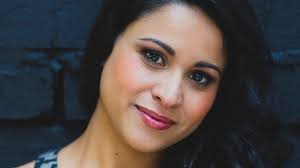
After a few hours’ post-performance reflection, you’re left with the sense that there’s not much to Ernst Toch and Benno Elkan‘s treatment of Hans Christian Andersen’s fable.   It barely lasts for 40 minutes, the characterisations offer no dark shadings or suggestions of internal depth, Toch has composed very few long stretches of work for his vocal septet, and the musical vocabulary itself is a puzzling amalgam of tongues, when it’s not just satirising operatic conventions.

Director Libby Hill set the story in a TV studio, starting out well enough with all the usual feverish off-camera action and the semi-histrionics of technical crew and acting/singing cast.  Candice MacAllister‘s set comprises little more than a raised platform for the central action with a square frame surround to mark the screen’s limits; then, matters eventually spill off this acting area and towards the front-of-stage, although the differentiation between the story and its peripheral framework is broken pretty close to the start when studio gofer Olivia Cramwell is prevailed upon to play the Princess and two technicians (cameraman and director), Michael Lampard and Michael Petruccelli, also take on participatory roles as courtiers.

Conductor Fabian Russell controls an active pit with only a few obvious misfires to be heard from his pretty small instrumental force: string quartet with double bass, two flutes and one each of the other woodwind, no trombone but one each of the other brass, percussion and timpani.  The only recording I’ve come across of this work involves a pretty full-sounding orchestra (Berlin Chamber Symphony) but what you lose in depth (in the Playhouse?!), you gain in clarity from the singers.

Here, the production was blessed in a fine cast of extroverts.  Veteran Jerzy Kozlowski gave us a befuddled but booming King; as his consort, Kathryn Radcliffe worked particularly well as the tale’s fly-in-the-ointment figure who casts doubts on the Princess’s aristocratic background; as you’d expect in this era of Disney’s Beauty and the Beast, James Egglestone pranced and preened through the Prince’s part, albeit with a fine ringing heldentenor attack; Lampard and Petruccelli backed the rest of the principals with exuberantly forward baritone/tenor duet force in the few stretches where they were required to sing – usually ensembles.

Dimity Shepherd began the piece as a TV Host, explaining the plot and what was happening with all the smiling artificiality of a Playschool adult; then, she entered the action as the courtier with a good idea to test the Princess, and here is where she took centre-stage for a long tract, explaining her scheme with enthusiastic drive and a no-holds-barred dynamic.  Cranwell also presented a forward-stepping heroine, vim-filled and energetic in both movement and vocal flexibility.

You could have no complaint about the company’s singing, then.   But what they sang was another matter.   For reasons that escape me, the opera was given in German; hence the necessary plot guidance from Shepherd-as-Host and some sporadic signpost explanations projected on the front walls.   All this would have been fine, except that pretty well every adult there had a child (or children) in tow.   Some adults believe in the child’s innate ability to cope with the unfamiliar; I don’t and this occasion bore out my misgivings.

For the young audience members, the only times the show came to life were when the characters were arranging the multiple mattresses for the Princess’s bed – a whack in the face here, a crotch-splitting intrusion there – and when the Princess herself re-arranged the bed so that she could get a decent night’s sleep, turning the mattresses into a pratfall-generating slippery slide, albeit one made of fabric.   At these points, the laughs came  out spontaneously.

But the little boy behind me typified the prevailing pre-adolescent puzzlement.   ‘What’s she saying?’; ‘Why did he do that?’ ; ‘Where are they going?’ – a ceaseless interrogative litany which eventually descended into kicking (his own seat, fortunately) and pleas for sustenance.   Of the mother, who betrayed her ignorance every time she opened her mouth (and she adjusted her volume to match her child’s with no attempt to shut the brat up), it boots me not to speak.   Not unexpectedly, my perfectly-behaved grand-daughter found this theatre convention-disruptive counterpoint more intriguing than what was in front of her.  I understand that an English version of Elkan’s libretto exists; why it wasn’t used remains one of the mysteries.

In terms of production values, this piece was rather bare-boned.   The principals had fairy tale-suggestive costuming; the TV crew wore modern dress/studio uniforms.   But the set was as plain as for a Beckett monodrama.  Consequently, the work depended on its singers and, when you can’t understand them, it’s a big ask of pre-ten-year-olds to stay focused.   A lot more slapstick might have helped; the score is perky and jerky enough in its bemusing fusion of Weill, Prokofiev and Stravinsky to support a lot more running around.

The Princess and the Pea was presented three times on the one day only in the Arts Centre and would seem to have been made for touring.   I don’t know what the young of Yackandandah or Yarrawonga would make of this entertainment; for quite a few, it would be a long 40 minutes.

Scotch hall favours the brave

MAGIC OF FLUTE AND HARP

Wilma & Friends

Ian Roach Hall, Scotch College

Sunday March 19, 2017

Yinuo

                                                                                        Yinuo Mu    

In the acoustic clarity of Scotch College’s music auditorium, violinist Wilma Smith began her annual recital series on Sunday afternoon with an interesting program that involved a group of fine musicians.   Not that the music was intriguing because it was new; the second half comprised Beethoven’s early Serenade for flute, violin and viola while the recital finished with a luxurious masterpiece that rarely gets an airing because of the difficulties in assembling the necessary instruments: Ravel’s Introduction and Allegro for harp, string quartet, flute and clarinet.

Well, perhaps claiming infrequency of performance due to unusual personnel is only half the matter.  The score is an exercise in restraint and shading balance where the harp occupies central position in the action but depends on the associated pair of woodwind to observe the dynamic decencies.

Having brought the Melbourne Symphony Orchestra’s harpist Yinuo Mu on board for the event, Smith used her talents to the full.   Mu took part in four of the five program constituents, thereby being the most hard-worked of the recital’s participants.   Not that you had any impression of stress; this musician was as elegantly energetic in the Ravel as she was at the opening where I think most of us were hearing, for the first time, Eugene GoossensSuite for flute, violin and harp.   Written in 1914 but published mid-war in 1917, this three-movement work beguiles with its lush, non-saccharine impressionistic colour washes.   With Smith on violin and the flute of Andrew Nicholson, this novelty impressed for an unaffected elegance; if not big on development, the three movements – Impromptu, Serenade, Divertissement – progressed by ramping up their activity level, the last movement a fast-paced gem of mild athleticism, its outer sections straddling a slower interlude with an unexpectedly Elgarian tang.

Goossens made full use of the information available to him through his harpist sisters, Marie and Sidonie, so that the instrument’s contributions fitted in to the prevailing texture and dominated it in turn.   This composer made a considerable impression during his Sydney years when he was conducting the Sydney Symphony Orchestra and directing the Sydney Conservatorium – a one-man (is there any other kind?)  fiefdom, taken over after his disgrace by a relative mediocrity.    Not that the impression he made was necessarily positive all the time: his own opera Judith might have given exposure to a young Joan Sutherland but its performances in Sydney were not resoundingly successful; despite his outstanding reputation with modern scores, his interpretations of orthodox repertoire could often irritate for their accelerated tempi.   But this Suite shows an emotional command and sensitivity that was finely delineated by these expert interpreters.

Joseph Jongen‘s Deux pieces en trio for flute, cello and harp brought Anna Pokorny to the stage.  Another late flower of Impressionism, these short bagatelles threw up some exquisite passages of play – a fine soaring passage at the octave for flute and cello in the Assez lent and, later, a similar moment in the temperamentally contrasted Allegro moderato.

Conte fantastique by Andre Caplet, a friend of Debussy, asks for harp and string quartet but, on this occasion, the double bass of Alexander Arai-Swale was added to the mix; I couldn’t see that he did much but reinforce Pokorny’s cello but it’s possible that I might have missed more subtle input.   Compared to its predecessors on this program, Caplet’s score verges on the adventurous, but Mu’s instrument is the main protagonist in this extended scene illustrating part of Poe’s The Masque of the Red Death short story.   The score engages in grinding harmonic clusters and angular melodic gestures as the composer follows the story of a dissipated dance/orgy, complete with ominous clock chimes, before Death appears to level the revellers.   For this extended scene, Smith took second violin while Zoe Freisberg did sterling service as first desk and Imants Larsens from the Adelaide Symphony generated a firm tenor line with his viola.   Even if you were not addicted to program music, this piece proved engrossing – for its swirling range of colours, the urgent excitement of its progress, and the confidence of all involved, especially Mu who capped the experience with a chameleonic, driving cadenza that led into the concluding six bars.

Beethoven’s Serenade brought Smith, Nicholson and Larsens together in a combination of high interest, chiefly for the equanimity of the collaboration despite the sparseness of the composer’s texture.  Nicholson’s flute remained impressive throughout the recital; his attack precise, articulation spot-on, all informed by a fluent approach to rhythm. Smith and Larsens complemented each other, the mellow violin contrasting with a more deliberate viola.   But the ensemble impressed right from the unisons and rapid interplay of the Entrata before an amiable reading of the Tempo ordinario d’un menuetto, gifted with two splendid trios.   Despite the difficulty of keeping one’s nose clean during the transparent Andante con variazioni, you had to listen hard to detect any pitch problems in those mellifluous pages, while the final two rapid movements showed an admirable deftness, especially in the infectious repetitions of the final Allegro‘s Mozartian main theme where violin and viola engaged in some subtle and unexpectedly courteous interweaving.

As for the concluding Ravel, Mu contributed a supple texture to the mix, taking her time with the interpolated cadenzas and showing an awareness of her primacy; after all, Ravel wrote the piece as a demonstration of the Erard’s new 1905 chromatic instrument.  The composite sound of the septet in this hall’s acoustic acquired a remarkable warmth, even in soft shimmering passages for the string quartet, but the outstanding feature of this version was an absence of hysteria or whipping-up of excitement through forcing the pace.  The Allegro followed its path with a poise that the composer would have appreciated, notably Mu’s solo two bars after Number 11, the explosion at the tres anime  point at Number 17, and the gradual acceleration 18 bars from the end.  Rather than over-pointing the work’s elation, these players opened windows on to its transparency and festively rhapsodic sparkle.

April Diary

Sun April 2

BACH VIOLIN CONCERTOS

Australian Chamber Orchestra

Hamer Hall at 2:30 pm

That’s mainly what Richard Tognetti and his cohorts are offering: three of the violin concertos.  As far as I can work out, the man himself is soloist in the E Major No. 2, the one that starts with three chords and was later transposed by Bach for harpsichord soloist. Then, I think Tognetti will collaborate with Helena Rathbone in the D minor Double Concerto, forever associated in my memory with Oistrakh father and son – a performance that defies improvement.   Adding Satu Vanska to the mix, the Three Violin Concerto emerges, a reconstruction of the Three Harpsichords Concerto  BWV 1064.  And Tognetti offers some arrangements – the rapid-fire Preludio from the E Major Violin Partita and the E flat Cello Suite’s Sarabande.  Putting some Classical-era flesh into the stew are two Haydn symphonies  –  The Philosopher No. 22 and the G Major No. 27, both written about a decade-and-a-bit after Bach’s death; presumably inserted here on the principle that you can have a bit too much Bach.

This program will be repeated on Monday April 3 at 7:30 pm.


Friday April 7

MATTHEW McDONALD: ON THE DOUBLE

Australian National Academy of Music

South Melbourne Town Hall at 7:30 pm

This musician is principal with the Berlin Philharmonic, so he’d be expert in knowing what his instrument can do beyond Bottesini show-pieces and the Mahler Symphony No. 1 slow movement.  He begins with Mozart’s marvellous flight of fancy, the Serenata Notturna with a bass forming part of the concertino.  The evening concludes with Stravinsky’s Pulcinella Suite, which has a prominent bass role in the 7th movement, Vivo.  In the centre comes Francaix’s Mozart new-look, a 1981 bagatelle for bass and wind instruments based on the Don Giovanni serenade, Deh vieni alla finestra.  Then McDonald centres the solid four-movement Divertimento concertante by Nino Rota.  As well, he outlines some tangos arranged by bassist Peter Grans called Memories from the City of Turku which, in the version I’ve seen, involves only a quartet of basses.


Sunday April 9

FIERY FINGERS AND LILTING LOVE SONGS

Team of Pianists

Rippon Lea at 6:30 pm

Beginning its yearly series at the National Trust mansion in Elsternwick, the Team hosts a vocal quartet  –  soprano Cleo Lee-McGowan, mezzo Shakira Dugan, tenor Michael Petruccelli, bass Daniel Carison – in the Brahms Neue Liebeslieder Walzer which I haven’t heard live for many years.   In fact, I can’t recall the singers from the last time but I’m pretty sure that TOP musicians were involved at that recital in the unusual surrounds of 101 Collins Street’s foyer/atrium.  The piano four-hands accompaniment on this night will be provided by senior partners Max Cooke and Darryl Coote.  One of the Team’s products, Kevin Suherman, will play some piano solos: the first two Chopin Scherzi, Rachmaninov’s arrangements of Kreisler’s Liebeslied and Liebesfreud, and Carl Vine’s Five Bagatelles of 1994, the year of Suherman’s birth.  Cooke and Coote are also playing Debussy’s Petite Suite in its original four-hands version.


Wednesday April 12

EMMA MATTHEWS

Elizabeth Murdoch Hall

Melbourne Recital Centre at 7:30 pm

Appearing here in the MRC’s Great Performers series, the Australian soprano is working in collaboration with UK pianist/conductor/repetiteur Richard Hetherington.  She starts out well enough with three Schubert lieder (Gretchen am Spinnrade, Du bist die Ruh, An die Musik), followed by a bit of Richard Strauss in Morgen!   But then the operatic temptation proves too much.   She has programmed Bellini’s Ah, non giunge (La Sonnambula), the Mad Scene from that same composer’s Hamlet, Donizetti’s O luce di quest’ anima (Linda di Chamounix),  Bernstein’s Glitter and Be Gay (Candide),  Lehar’s Meine Lippen sie kussen (Giuditta). Victor Herbert’s Art is calling for me (The Enchantress), Kern’s All the Things You Are (Very Warm for May), and a stand-alone from Flanders and Swann: A word on my ear.  It’s rather like the sort of program that Sutherland used to give: a potpourri  with thrilling moments, although I never warmed to arias with piano accompaniment.  What do I know? This will probably be a house-full night.


Friday 14 April

ST. JOHN PASSION

Melbourne Bach Choir and Orchestra

Melbourne Recital Centre at 3 pm

Last year about this time, the Bach-centric organization presented a fine interpretation of the St. Matthew Passion.  So why not essay another main pillar of the Easter season in the composer’s liturgical chain?   Again, conductor Rick Prakhoff has acquired the services of Andrew Goodwin as his Evangelist – a standout artist in this genre.  Warwick Fyfe resumes the Christus role.  Lorina Gore returns for the soprano arias; Henry Choo takes on the tenor contributions once more; Jeremy Kleeman is turning up for his second year with bass responsibilities.   As well, Prakhoff’s choir is a formidable group, well prepared and capable of striking empathy with those intensely moving chorales that punctuate the work.  As last year, the concert is being given on Good Friday; it shouldn’t make a difference to your reception, but somehow it does.  I’m hoping for another red letter performance along the same lines as in March 2016.


Friday April 21

CARMINA BURANA

Melbourne Symphony Orchestra

Hamer Hall at 8 pm

Here is the Big Daddy of 20th century choral works, Carl Orff’s percussive and modernist version of medieval Latin/German/Provencal poems, involving three soloists, three choirs and a massive orchestra.  The opening strophes are part of the lexicon of modern advertising, very familiar to audiences the world over.  The music is very attractive, packed with singable melodies and striking illustrative effects, although its modernity has always been a vexed question: it occupies a layer of popular barbarism some streets away from the worlds of more serious composers, and these Carmina are the only pieces by the composer that you hear these days.  Soprano soloist is Eva Kong, the much-tested tenor is John Longmuir, and Warwick Fyfe sings the baritone part.  All are artists with Opera Australia. Yu Long from the China Philharmonic, Shanghai Symphony and Guangzhou Symphony Orchestras conducts and the MSO Chorus is assisted by the National Boys Choir.  As a filler, the MSO will play Ravel’s Daphnis and Chloe Suite No. 2, beginning with a magical Daybreak scene and ending in one of music’s most erotically suggestive General Dances.

This program will be repeated on Saturday April 22 at 8 pm and on Monday April 24 at 6:30 pm.


Saturday April 29

IN HONOUR OF LIFE: 20TH CENTURY SELECTIONS

Ensemble Gombert

Xavier College Chapel at 5:30

To begin a rather shorter year than usual in its Xavier series, this exemplary vocal group is taking on some unusual near-contemporary works, leaving till last one of the greatest in Frank Martin’s Mass for Double Choir, last sung here in July 2016 by the Choir of Trinity College Cambridge in a perception-sharpening, elegant interpretation.  Leading up to this challenge, John O’Donnell takes his singers through American composer/conductor Steven Sametz’s in time of, an e e cummings setting in its 1997 a cappella version for that fine group Chanticleer; Sametz is the only writer on this program who is still alive.  English musician John McCabe is represented by his double-choir Motet of 1979 to verses by the Irish poet John Clarence Mangan; this musician’s compositions are rarely heard here – in fact, my main memory of him is as a pianist working through Hindemith’s Ludus Tonalis in the great days of the Port Fairy Music Festival under the late lamented Michael Easton. Welsh composer Mervyn Burtch’s Three Sonnets of John Donne sets some familiar lines in Batter my heart, Oh my blacke Soule! and Death be not proud – all in a simple SATB format.  Czech composer Antonin Tucapsky’s In honorem vitae suite of five madrigals on texts by Horace is also written for 4-part choir.


Sunday April 30

BEYOND BAROQUE

Melbourne Chamber Orchestra

Melbourne Recital Centre at 2:30 pm

Principal violist with the Melbourne Symphony Orchestra Christopher Moore will be the soloist here with the Telemann Concerto in G Major and a reconstruction by Wilfried Fischer of Bach’s E Major Keyboard/Violin Concerto (see above the Australian Chamber Orchestra on April 2/3).  Director William Hennessy surrounds these with a C. P. E. Bach Sinfonia in E minor, arranged for strings alone and called by the strange sobriquet Fandango, which I can’t hear in it.  Another Telemann piece, the Volker-Ouverture, is bracketed with the composer’s viola concerto; the overture-suite gives mini-pictures of the French (by means of two minuets), Turks, Swiss, Muscovites, and Portuguese before throwing the game away and ending with musical portraits of non-nationalistic types in Les boiteux (hobblers) and Les coureurs (runners).   Spreading the family joy around will be eldest son W. F. Bach’s Sinfonia in F Major which adds a pair of minuets to the normal three-movement structure.

This program will be repeated on Thursday May 4 in the Deakin Edge, Federation Square at 7:30 pm


Respectful treatment of an old favourite

H.M.S. PINAFORE

Melbourne Opera

Athenaeum Theatre

March 14, 15 17, 18 and April 22, 2017

 Melbourne-Opera-H.M.S.-Pinafore-starring-David-Gould-and-Claire-Lyon-editorial

                                                                         David Gould and Claire Lyon

I was aware of Gilbert and Sullivan operas from school days.   Indeed, G&S productions were my secondary school’s solitary cultural product, so I got to know intimately the chorus workings of Patience, Iolanthe, The Mikado and The Gondoliers at a young age.   Later, as a teacher/repetiteur, I  came across the Savoy Operas once more at a school where, again, the solitary musical effort was expended on an annual production.   So, as well as the ones named above, I became familiar with the full range – several of them three or four times over – with the exception of Utopia Limited and The Grand Duke.

Without denigrating these youthful activities, I have to admit that much of the time involved with productions was spent marshalling Year 12 young women and men to get through their choruses with something resembling four-part harmony intact, as well as watching other elders instruct and negotiate endless hours of choreography practice and handle the easily-bruised egos of minor-age principals in negotiating vocal lines outside their natural abilities.   Still, an inside knowledge of Sullivan’s scores has broken through several social/personal barriers in my time.

What you miss out on when dragging half-willing adolescents into the worlds of Lady Sangazure and Sir Ruthven Murgatroyd is Gilbert’s brilliant satire.   Yes, the easy laughs we have always with us but the critiques that the librettist offered of his own civilization get left by the wayside in the pursuit of colour and movement.   So the continual commentaries on aristocracy, capital, religion, feminism, racism and psychological frailty get overlooked or are given lip service in favour of belting out the rousing choruses, the arias and ensembles that everybody loves.

Fortunately, Melbourne Opera has entered into their opening H.M.S. Pinafore production for 2017 with persuasive gusto and, alongside giving the music its proper due, the company ensures that Gilbert’s biting commentary on ‘station’, jack-in-office stupidity and sacred cows is given prominence at every point.   It’s been a while since I’ve seen a production that keeps these underpinning themes at the forefront; not even the national company’s recording with Anthony Warlow, David Hobson and Tiffany Speight hones in on the script as well as this version from director/choreographer Robert Ray.

I can’t compete with true G&S aficionados in this city like Jim Murphy and the late David Thomas with the scores and libretti (and movements!) at their fingertips, but I can tell the appropriate – not necessarily the D’Oyly Carte – thing from the ersatz, modernised presentations that stretch an opera’s possibilities.   For Melbourne Opera, Ray has kept the faith; even more than this, he has restored Captain Corcoran’s solo (or is it a duet?), Reflect, my child, as well as the original recitative setting of the work’s final dialogue.   He has also constructed stage pictures that are spot-on – sailors in the right gear, the sisters/cousins/aunts straight out of My Fair Lady‘s Ascot scene, plenty of braid on Sir Joseph and credible billowing skirts on Buttercup.

As most musicians know, Sullivan’s scores don’t require a superlative technique but they depend on variety of attack to ameliorate plenty of jog-trot rhythm and – like the stage operations – the pit needs to be synchronous with the singers; no Wagner-type half-beat elisions and delays can succeed in this crisp, open music.   Conductor Greg Hocking controlled a pretty stalwart band, notable for a competent string group whose bowing was generally uniform, and a reliable double sextet of winds.   Only a few points showed hesitation, and these were traditional trouble-spots for both chorus and principals.

Another benefit emerged in this chorus, both genders singing with loads of vim and purpose.   I’d forgotten what a joy it is to hear the women’s entry of Gaily tripping into the double chorus before the First Lord’s appearance: a combination of elements that sets you up for similar delights in the later operas.   The MO women proved a fine counterweight to the hefty sailors, who were blessed with some fine tenors.   Ray had positioned them all carefully enough with few signs of cramped movement although the Athenaeum stage is not large.  Still, Gregory Carroll‘s bright ship-deck design with a raised quarter-deck platform  tucked into a stage corner gave the performers some latitude.

The company enjoyed the services of some excellent soloists just itching to get into their work.  David Gould sang an unusually powerful Sir Joseph Porter; he observed all that functionary’s effeteness and pattered through a good deal of ‘business’, but his bass didn’t stay on the quarter-strength level of some interpretations I’ve seen, attacking upper-register notes with chorus-reflecting power.   He found a fine balance in David Rogers-Smith‘s Captain Corcoran, the bluffest of characters with Gilbert’s wickedly interposed layer of uncertainty and self-abasement in the presence of an upper-class bully.   His low tenor was well-pitched to the theatre’s acoustic and the orchestral challenges; further, he gave a welcome energy to I am the Captain of the Pinafore and subtle strength to the Fair moon, to thee I sing aria that opens the work’s second act – although something of a miscalculation occurred with an oddly soft attack on the final note.

As Josephine, Claire Lyon contrived to be both agile and soulful, maintaining momentum and clarity of production (apart from an over-exerted top B flat) for Sorry her lot and later that dramatic spoof, The hours creep on apace, resisting the temptation to overdraw the aria’s word-pictures.   On top of this, she has that admirable talent of knowing her responsibilities in an ensemble – duet, trio, riding above a chorus – and  exerting control over her dynamic superiority.   An irrelevance, but perhaps the most amusing part of the performance came when a young boy’s voice sang out ‘Hello, Mummy’ between Lyon’s Act 2 scena and the rollicking trio; I assume the lad was intimately connected to the cast.

Ralph Rackstraw, the opera’s working-class hero with an unknown silver spoon waiting for him in the wings, is often played for laughs, the tendency being to assume the manner of Errol Flynn in The Sea Hawk.   Paul Biencourt did it straight, albeit with a pronounced lower-deck accent that dropped – as it should – for the singing and his verbose proposal to Josephine.   Despite living up to his name in physique, the tenor generated a ringing and secure colour for his opening madrigal: dreamy if not soppy by nature but treated here with a sensible discipline.   Andrea Creighton played a fine Buttercup, a character who has to hit melodramatic heights at every turn.   As with the rest of this cast, she managed to err on the side of the angels when faced with her character’s plethora of asides and gave excellent value in the Things are seldom what they seem with Rogers-Smith, following the set moves of advance and retreat but projecting the catchphrases with fittingly amusing enigmatic force.

Jodie Debono made a personable Hebe, managing not to turn into an instant termagant when she eventually got Sir Joseph’s hand; Finn Gilheany‘s Bill Bobstay matched Rogers-Smith in assertive projection and Peter Hanway worked through the light responsibilities of the Carpenter with a matching heartiness.  Rounding out the crew was the Dick Deadeye of Roger Howell, who seems to have been singing for as long as I’ve been alive and has lost nothing along the way in energy, characterization skills and accurate delivery.   He kept up a fine line in angularity and curmudgeonliness but still has a splendidly rich texture, as in his Kind Captain duet with Rogers-Smith.

Ray had also added Rule Britannia to the final scene, an interpolation by Sullivan for Queen Victoria’s Jubilee in 1897.   It probably made more of an impression at the time but these days, by the time you’ve heard A British tar and various reprises of He is an Englishman!, the nationalistic paint is reeking pretty thickly.

Nevertheless, this reading of Pinafore is thoroughly enjoyable for any spectator, indoctrinated Savoyard or someone fresh to the field.   Sullivan’s music maintains its elevating high spirits across the years (nearly 140) and Gilbert’s acerbic take on Victorian England’s pretensions and foibles cuts even more sharply with the benefit of our hindsight.   No wonder the old crone of Balmoral detested him.

An earthbound magic

THE SLEEPING BEAUTY

Victorian Opera

Playhouse, Arts Centre Melbourne

March 11, 14, 15, 17 and 18, 2017

Sleeping Beauty

                                                                                         The King

Much has been made of the costumes and puppets in this new production from our state company; plenty of effort has been liberally expended on this area, each of the central characters having a ‘front’ figure manipulated by puppeteers as well as a singer in modern-day mufti to sing Respighi’s notes.  This conceit is sustained right up to the end when the figures of Beauty and her Prince appear for the final hurdles, each pretty much en clair apart from some masks that disappear post-kiss.

Joe Blanck‘s designs for these manipulated figures are a random collection, the best of them that for the King.   Some of the others are depressing to look at, reminiscent of the trolls in Peter Jackson’s first The Hobbit film; among these I’d include the Ambassador and his Trumpeter, and the Old Lady who holds the fatal spindle that brings on the story’s central disaster.   Having noted this unsettling quality to some figures, and the disturbing Japanese ghost shape allotted to the benevolent Blue Fairy, I’ll allow that others have a Saturday-arvo-pantomime appeal, like the sprightly chorus of frogs at the opera’s start, the spry Jester-in-the-form-of-a-cat, and the plot-recapping Woodcutter who takes the shape of a lumbering, stage-dominating tree.

It all makes for a mobile scene sequence; for the most part, the story unfolds visually quite well, apart from the lengthy action for birds on flexible poles during the first pages and the following florid duet for Nightingale and Cuckoo, as well as the unavoidable longueur as the castle goes to sleep for four centuries.

Of more importance, the company’s musical work maintains a high level throughout the work, with only a few bumps along the way.   Conductor Phoebe Briggs and director Nancy Black have elected to run the three acts into a single sitting; not that such a move is a disadvantage to anyone as the cast exposure shifts all the time and any orchestral tutti sticks out obviously in this voice-focused composition.

I think that the company has opted for the original 1922 scoring which calls for a celesta and harpsichord.   But Tom Griffiths could also be heard on piano, which instrument comes from the 1934 revision.   Whichever it is, the band – made up largely of guest musicians – played this lyrically attractive neo-Romantic music with lashings of sentiment at the right spots, the body gifted with a clean brass trio and a small group of well-attuned strings.

As for the singers, their position was quite favourable.   Uncluttered by costumes and heavy make-up, leaving all the physical work to the puppeteers, they could concentrate on vocalising and remain assured that most people were not watching them.   The Nightingale/Cuckoo duet that begins the opera in a lush field of impressionism found Zoe Drummond and Shakira Tsindos sharing the labour – and the pages are not easy; although not asking for dynamic projection, they do hold an amount of fioriture that is high and exposed.  Timothy Newton made a clear and definite Ambassador, although he couldn’t avoid being handed a pretty bland characterization to deal with.  Elizabeth Barrow‘s Blue Fairy enjoyed a fair amount of exposure – responding to the Ambassador’s request, presiding over the gift-granting to the Princess, then ameliorating the curse.- keeping a calm control over another high line, albeit one that tended to legato delivery.

The first familiar voice I heard was Timothy Reynolds singing the Jester, then later appearing as the cameo American, Mister Dollar, in Act 3.    A secure technique and vocal personality made his appearances welcome, especially as both were amusingly carried off in a production that occasionally tried too hard.   As the maleficent Green Fairy, Juel Riggall did a great line in irrational rage, her part not actually musical but full-bore declamation.   Singing the King, baritone Raphael Wong managed to match his bluff vocal colour with the benign if gruff-looking puppet figure – another escapee (one of the dwarves?) from The Hobbitt.   Sally Wilson sang two roles, the Queen and the Cat, but the first proved vocally uninteresting, notably in the Act 2 crisis, while the feline impersonation sounded over-loud and overdrawn.   Another two-role singer, the experienced mezzo Liane Keegan gave fine service as the Old Lady with the spindle, and had much less to do in the (normally soprano) part of the Duchess whom the Prince discards once he gets a whiff of the sleeping Princess.

Another familiar voice emerged in Act 2 with Jacqueline Porter lighting up the stage by means of a sparkling salute to spring as the Princess, bounding wilfully into the spinning process, sinking into a coma with suitably failing vocal strength, then rounding out her night in a shapely love duet.   Becoming a regular in the Victorian Opera lists, Carlos E. Barcenas sang a charming, ardent Prince, holding his own against a very active puppeteer (Vincent Crowley?) whose Douglas Fairbanks athleticism was well-matched by the tenor’s vehement but controlled power.   Finally, Stephen Marsh blazed out the Woodcutter’s solo with a beefiness that suited the physical proportions of his arboreal manifestation, a broad passage of play that succeeded mainly through Marsh’s ability to make the already known assume an unexpected interest – although a good deal is owed to Gian Bistolfi‘s lines at this point.

At the end, the work was greeted with general acclaim even if it was difficult to categorize what we’d experienced – if you wanted to.  It’s definitely an opera, full to the brim with splendid vocal writing and some superb moments for orchestra, notably at hiatus points in the action and least of all when Respighi satirises the dance music of his own age.   But then, it’s an opera and also a mime-show.   Blanck’s puppets are the stage’s focus and, with that in mind, the production might have gained by having the singers do their work from the pit, as I think was done in the original presentations by the Teatro del Piccoli ; in this space, not much would have been lost.   As things turned out, the schizoid depiction of most characters left you a touch bewildered at points where the verbal action ratcheted up a notch or three.

And what of the vision behind the presentation?   The set remained pretty staid, with some tapered drums and circular platforms providing the framework for activity.   Philip Lethlean‘s lighting plan veered to the gloomy until Act 3.  Yet the guiding spirit was certainly to amuse; no secret messages emerged – no ironic hints at subtle meanings or underlying depths to the characters.   What you see here is all there is – a relief when you consider what Helden-direktoren inflict on us under the slimmest of pretexts.   Sung in Italian, with translations projected on side walls, the performance makes clear efforts to cater for all audience members.

Yet the work remains earthbound; the magic isn’t calculated to generate wonder and the stage-pictures show few signs of adventurousness.   However, this is an enterprise well worth visiting, if only because you’ll never see this Sleeping Beauty performed live again, I should imagine, and the musical values on show in this presentation are solid.

Movement at the station

YOUTH AND THE DANCE

Selby & Friends

Deakin Edge, Federation Square

Thursday March 9, 2017

Grace Clifford

                                                                                    Grace Clifford

Kathryn Selby began her subscription series in Melbourne with some depressing news, the most significant part being that she will be leaving the Deakin Edge space at Federation Square for another venue yet to be determined. Apparently, the Square authorities will not permit reservations longer than a year in advance, not even from regular clients – which flies in the face of sensible business practice but what would you expect from this white elephant?   Selby has been on this path before following her move from Melba Hall at Melbourne University (which now won’t hire to any ‘outsiders’ – don’t you just love exclusivist purity?) and her options are few and far between, especially as the new venue of necessity must stock a piano.   We can all think of spaces but those fit for the purpose are close to non-existent.    You’d automatically think of the Recital Centre and its Salon, but the audience for Selby & Friends recitals is usually larger than can be accommodated in that room.

The less important matter was that one of the series sponsors, Cleanskins Wine, was unable to provide interval drinks since an Edge/Square regulation requires the presence of security officers to police the disorderly inebriates who frequent chamber music recitals and Selby can no longer afford to pay for such functionaries.   Not that this bothers some of us; if I have an interval drink these days, I tend to nod off before the final work’s second movement.   But it’s an aspect of conviviality that many others relish and, for the life of me, I can’t recall these public guardians actually doing anything constructive during the time that the ensemble has been appearing in the venue.

This all took some time to get through before Selby invited her guests onstage.   Both violinist Grace Clifford and cellist Clancy Newman have appeared previously as Friends and so are accustomed to the venue and their host.   Thursday night began with that most agreable of young works by Beethoven, the E flat Trio Op. 1 No. 1 and, from the initial bars, Selby took control as expected.   Beethoven gives most of the interest in all four movements to the keyboard and, whether I was sitting in a hot spot or the tuner had somehow heightened the piano’s resonance, the piano part dominated proceedings with an unexpected force.   In fact, the two strings have few chances to shine and stayed recessed, even though Selby was discreet in segments where her content is figuration-work.

Still, both Clifford and Clancy came into their own during the A flat Adagio, typified by sterling collaborative support after the home-key return at about bar 90.   While the Scherzo began as evenly balanced in dynamic, both strings effaced themselves to wallpaper status in the Trio where admittedly they have little to do but drone.   And, as anticipated, the real interest of the finale emerged through the vim and bounce from Selby, exemplified in her ability to colour even brief phrases and in her talent at working animation into the wide-ranging lines that Beethoven created.

For the Saint-Saens Trio No. 1 in F, we heard a good deal more vehemence from Clifford, although she and Clancy presented their work in a guarded manner, not extroverted enough for the first movement’s inbuilt melodic surges, nor a balance for the piano’s quicksilver flights and style of delivery.   In her pre-performance address, Clifford referred to the hurdy-gurdy imitation found in the last pages of this trio’s Andante and she contrived successfully to raise the spectre of Schubert’s Leiermann at several points in pages that proved one of the recital’s high-points, made all the more bracing by all three interpreters treating these pages briskly.   Most of the third movement Scherzo worked very well, the only question-mark coming in the coda with its sur deux cordes instruction to the violin; carried out properly, I’m sure, but the results sounded uncomfortable.   I blame Berlioz.

Saint-Saens gives free play to his inventiveness in the trio’s last movement which has Beethovenian proclamations, page after page of semiquavers for the keyboard, a chorale moment or two, and a concluding molto allegro gallop. This material involved the string players more satisfactorily; even so, you still felt some reserve, an unwillingness to hurl themselves into the fray.   In other words, a neat interpretation but not one where sheer enthusiasm left you unaware of the formal cracks.

Dvorak in E minor, the Dumky, finished this night which had been further elongated by a preliminary set of observations from Newman and a long interval; some patrons had to creep out before the final movements, I suspect for public transport reasons.   The reading proved engaging, the performers keeping an eye on each other in a score packed with abrupt bursts of action and deliberate contrasts of slow melodic arches and abrupt bursts of folk-inflected angst.    Clifford experienced a bowing error during her first exposed statement in the initial Lento but this was a small lapse in pages that gave Clancy his first sustained exposure of the evening.   The violinist’s subdued support in the following Poco adagio made a subtle backdrop for the cellist’s moody announcement of the melodic content but Clifford sparkled in the pendant Vivace, although Selby let fly in both furioso sections.

The fourth movement, the Andante with muted strings, turned out to be the interpretation’s high-point, crowned with a luminously fine Allegretto coda – understated but eloquently shaped.   During the following Andante moderato/Allegretto scherzando, the problem of balance again reared up when Selby’s ringing upper register drowned out the strings’ obvious efforts, although the concluding Moderato proved exemplary.   Reassuringly, the final two movements progressed easily, the musicians functioning as an integrated ensemble with lots of regard for the nationalistic fervour with which Dvorak suffused this popular work.

So, the night lived up to its title with two pretty youngish pieces from Beethoven and Saint-Saens, complemented by a welter of dances strung out across the length of the Dvorak gem.   If the trio combination on this night might not have impressed as balanced throughout all three works, you couldn’t complain  about the level of expertise.

Next in the series on May 24 will begin a half-hour later than usual  –  8 pm  –  to allow Sydney Symphony Orchestra concertmaster Andrew Haveron sufficient time to get from Sin City to the Deakin venue.   Selby’s cellist will be the Australian Chamber Orchestra’s principal, Timo-Veikko Valve, and the program comprises a striking set of arrangements: Haydn’s Miracle Symphony No. 96, revamped for piano trio by the impresario Salomon for whom the composer wrote this work, and quite a few others; a version of Ravel’s Le tombeau de Couperin  from Matt van Brink – the four orchestral pieces, not the full piano solo set; and Beethoven’s Triple Concerto with the original’s solo instruments doing all the work in a transcription by Carl Reinecke.

Light and leisurely

RINGING THE STRINGS

Concordia

Move Records MCD 557

concordia

It’s been a while since I heard a mandolin, let alone an ensemble of them.   Not surprising as the instrument appears rarely in serious music endeavours.   Like everyone else (except mandolin aficionados), for a long time I associated the instrument with Neapolitan love-songs and popular lyrics in the pre-Pavarotti era when tenors were real musicians despite their preference for musical schmaltz  –  Santa Lucia, Torna a Surriento and a whole catalogue of sloppy Tyrrhenian flim-flam.

Yet, every so often, the instrument appeared where you least expected.   Thanks to a fellow student, I found it, in my early student days, lodged in Schoenberg’s Serenade Op. 24, playing up to the stringent aesthetic that infects the work. Then it appeared in Mahler’s Symphonies 7 and 8, as well as Das Lied von der Erde.   Webern employed it sparingly in his Five Pieces for Orchestra Op. 10; Stravinsky also called for it in the ballet Agon.   But its most common appearance for most of us comes in Deh vieni alla finestra from Don Giovanni.   And that short catalogue of original music for the instrument takes no account of the significant Vivaldi and Paisiello concertos that, in these latter days, the master-mandolinist Avi Avital has resurrected for us during his recent tours with the Australian Brandenburg Orchestra.

So, for an instrument that gets typecast as a step below the guitar but a cut above the ukulele, the mandolin has endured a lot of downtime.   On this disc from the Concordia Mandolin and Guitar Ensemble, the main source of material is Michelle Nelson, the organization’s composer in residence, who provides a tarantella, a three-part suite and a five-part sequence of Midsummer Bagatelles.   These are original compositions, but Nelson also supplies arrangements of Faure’s violin/piano Op. 16 Berceuse and Erik Satie’s Valse-ballet.

The other components of this rather brief disc (47 minutes) are Sculthorpe‘s Little Suite for Strings, A travers la Hongrie (Hungarian Journey) by French master-mandolinist Francois Menichetti, and East-West, the first movement of Sydney composer Stephen Lalor‘s World Music Suite.   In all, the CD has 16 tracks, which works out to about 3 minutes each; so the emphasis is on instant impact and congenial melody.

You get this right from the opening Kangarella where Nelson tries an Italian/Australian fusion, giving the spotlight to piano accordionist Juliette Maxwell for a catchy dance putting a neat chromatic-flavoured tune inside the 6/8 tarantella rhythm.   Faure’s miniature has gained an extra two bars of harmless introduction and then lost much of its original torso.

It’s hard to object to the arrangement of Satie’s defenceless Waltz-ballet; Maxwell’s accordion has a starring role, which only reinforces the highly suggestive La Ronde atmospherics, and the additions at start and end are undisturbingly cosmetic.   The CD’s title work by Nelson is the previously mentioned and amiable tripartite suite: an Allegretto where the Concordia guitars and mandolins generally treat the straightforward plain-speaking material together; Barcarolle and Waltz, probably more latter than former, and somewhat tedious because the main rhythmic cell is repeated over-conscientiously in the movement’s first section; a Rondo conclusion showing some moments of awkward negotiation in its initial allegro pages, while the central grazioso lives up to its title with some fetching tremolo work even though several of the bridging modulations in the last section are clumsy in construction.   Nelson binds the suite together by making her final movement’s main melody a variant of that which dominates the opening Allegretto.

Sculthorpe’s 1983 suite – another Nelson arrangement –  suits the Concordia personnel remarkably well, right from the opening Sea Chant with its simple folksy tune treated with calm discretion, through the appealing and whimsical Little Serenade that makes a virtue of the mildest of syncopations, to the most well-known of these pieces: the Left Bank Waltz – slightly asymmetric in phrasing and, in its scene-setting owing so much to Satie, Auric and Monsieur Hulot.  It might have something to do with the arranger’s skill but this trio of pieces sounds idiomatic in this performing context and very deftly carried off, even in the last pages of the Waltz where inspiration flags.

Nelson’s Bagatelles open with A Foggy Morn, which is actually a placid waltz-rhythm piece that sets up the English bucolic backdrop that inspired this cycle.   Strawberry Fair  is a jig with a perfectly proportioned central theme at its start and finish with some harmless central padding.   In Bullocks may graze safely, you’d expect a Bach reference or two, but the atmosphere is one of noon-time torpor and a slow-moving melodic arch that doesn’t go very far and moves in simple steps.    A Midsummer Dance gives a fairly good imitation of a 6/8 country frolic; again, the tune is simplicity itself, as is the harmonic vocabulary.   Midsummer Nocturne, the longest of the five pieces in the set,  is more of a lullaby with some gently rocking underpinning and welcome interludes from the ensemble’s guitars.

To conclude come two showpieces.  Menichetti’s Hungarian frolic begins with a nicely calculated lassu before making the inevitable turn to fast 2/4-Liszt Rhapsody motion.   In later pages, the piece reproduces so many tropes of Zigeuner compositions that the listener feels quite at home with what is basically Central European kitsch, especially when the tempo moves into a fast waltz, then the necessary friska coda.   Lalor’s piece features the solo mandolin of Michelle Wright and is suggestive of much music you hear on both sides of Aegean, with a powerful suggestion of massed bouzoukia and a more diatonic-than-usual use of the oud, the band operating in a modally inflected D minor framework at the score’s centre before reverting to the opening major optimism.

Concordia’s musical director Basil Dean has a dedicated band of performers to work with and the music heard on this CD is fairly well carried out by them all, if some tracks seem more stolid than exhilarating.   Here is a good deal of easy listening, the works selected for their charm and felicitous adaptability to the mandolin/guitar forces available.  While there are no Schoenbergian shocks, this CD is amiably honest in its prime intention of entertaining.