Smooth if occasionally heavy

ROCOCO CELLO

Melbourne Chamber Orchestra

Melbourne Recital Centre

Sunday March 5, 2017

li-wei-quin

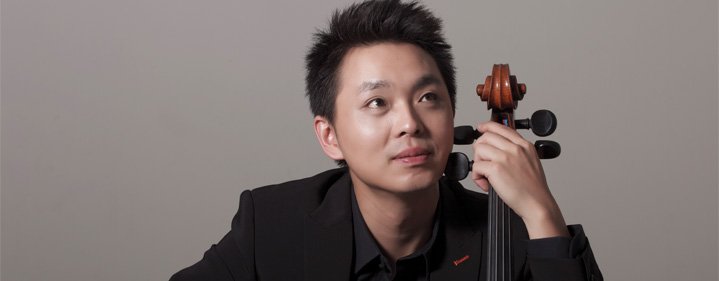
                                                                                       Li-Wei Qin

In a program for the MCO’s true believers, Sunday afternoon’s concert didn’t have much rococo about it, strictly speaking.   Popular cellist Li-Wei Qin fronted the Tchaikovsky Variations on a Rococo Theme but it’s a stretch to call the tune itself anything but a Classical/Romantic fusion.   The rest of the afternoon featured Mozart’s Idomeneo Overture with its pendant Chaconne and Pas seul de Mr le Grand, the Haydn G Major Symphony No. 88 and C.P.E. Bach’s A Major Cello Concerto Wq 172 which came closest to the rococo classification but sits some decades outside it temporally and at least a generation past it intellectually.

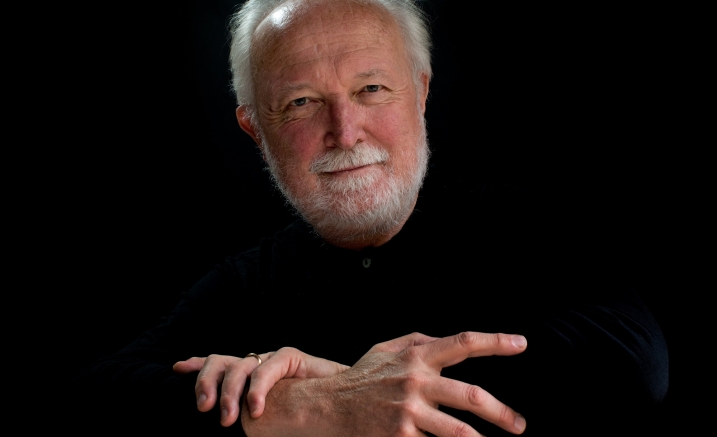
Michael Dahlenburg conducted three of these works, leaving the Bach concerto’s direction in the experienced hands of leader William Hennessy, the orchestra’s presiding eminence.   With the Idomeneo bracket, the main impression was of jubilation, the score representing a celebration of the organization’s start to another year’s work.   For a pretty straightforward work, you had to hand it to Dahlenburg: he showed a confident awareness of the spacious sound he wanted and he cued impeccably – nothing unnecessary or over-pointed.   His forces responded with plenty of zeal and an invigorating bounce from the strings; the only flaw I heard was a muffed horn note in about bar 44 of the Pas seul. But the reading proved excellent, well calculated to open an opera seria distinctive for its polish and subtle melodic content.

Li-Wei gave an object lesson while performing Emanuel Bach’s benign concerto with its agreable angularity of line and sudden harmonic jolts.   In front of only 14 strings, the soloist had no difficulty in projecting  a resonant timbre throughout, the only strident note emerging in the middle of the first movement’s development with an over-emphatic conclusion to a hectic passage featuring a plethora of semiquavers; relief to get there unscathed, I suppose.

In the program, this work’s second movement was billed as Largo maestoso.   Well, that’s half-right – it’s a largo but mesto, and con sordini.   Despite its misnaming, the performance proved admirable in shape and steady progress.  Later, the finale came over with infectious vigour, a real bite to the violins’ triple and quadruple stops with all concerned applying just enough tension to the composer’s sudden halts in the action.

For the Haydn symphony, Dahlenburg returned and led a remarkably clean operation, with few glitches from the brass quartet and a fine amplitude of colour in the opening Adagio.   I found the accents and/or sforzandi too heavy in the Menuetto, even more so in the Allegretto/Trio.   And, while you could hear every note sound clearly in the final Allegro, a continuation of the sparkling opening bars would have been more exhilarating than the rhythmic variations and heftiness that took over before the movement was far advanced.

The Tchaikovsky Rococo Variations is one of the repertoire’s gems, without a doubt, but you’re lucky to strike a reading that satisfies; too often, the sense of effort is almost palpable and most executants over-strain at their work when a simple delineation of the notes would serve the composer much better.   I last head Li-Wei perform this some years ago – with the Melbourne Symphony Orchestra, I think – and that reading proved a trial because the soloist seemed uncomfortable in his work.  This time around, the outcome was much more convincing, in some part due to the (obvious) chamber quality of the fabric where the wind choir, especially in their recurring post-variation commentary, were very exposed.

Li-Wei offered a lucid view of the solo line, happy to reserve his warmest colour for the Variation III Andante sostenuto which he lavished with an all-embracing vibrato and a disciplined rubato both here and in the minore Andante Variation VI, still having plenty of powder dry for the preceding cadenza.   A wonky harmonic aside, this was a top-notch interpretation, full of the milk of Tchaikovsky’s kindness yet capable of brisk drive and a confident despatch of the technical fireworks.   During the later stages, the clarinet duo dominated the woodwind choir on occasions, their support drowning out the more melodically important matter carried by oboes and flutes.   But, more importantly, Dahlenburg exerted a flexibility of phrase-shaping in most parts of the score that did justice to this amiable music.

All this and Harvey too

CONCERTO FOR PIANO AND TOY BAND

Adam Simmons Creative Music Ensemble

fortyfivedownstairs

Friday March 2 to Sunday March 5, 2017

adam-simmons

                                                                                   Adam Simmons

Not exactly an unknown entity in Melbourne, Adam Simmons and his Creative Music Ensemble have made creative jazz their playing field   The group is an octet – well, it was for this latest venture: three saxophones, two trumpets, trombone, double bass and drums. A combination that you might think would be top-heavy, but the range is pretty wide, especially when you hear the leader on sopranino sax and the high reaches gained by Gemma Horbury and Gavin Cornish with their trumpets.   For this one-work program, Simmons had also gained the collaboration of master-pianist Michael Kieran Harvey, soloist for his concerto.

Despite the coy disclaimers and reservations semi-articulated at the start of Thursday night’s performance by Simmons himself, this is a real concerto, one where the spotlight shines on the piano and the ensemble alike.   The composer has divided his score into three parts, topped, tailed and divided by a fragmented Confucian quote that had me bamboozled right from the start.   It refers to ‘the Grand Master of Lu’, whom I confused with the contemporary exponent of the True Buddha School, Lu Sheng-Yen  .  .  .  but it’s not him at all.   The quotes from the Grand Master refer to ‘the Ancients’ Music’ and its character; moreover, the cited performance descriptors have direct relevance to what the listener hears – a ‘strict unison’, an expansion of permitted ‘liberty’, then a ‘harmonious, brilliant, consistent’ tone that sustains itself to the music’s end.

All of which tends to project Simmons’ work onto a high plane of operations, moving up that major transcendental musical scale to enlightenment.   Except that this particular music is well-grounded in our worldly plane.   Right from the start, the concerto confronts the listener physically with the ensemble blasting away on a unison note in ever-mobile rhythmic patterns; an avalanche of unanimity scarred, of course, by intonative imperfections that you suspect are intentional.    After this pounding prelude, Harvey entered with a lengthy solo of compressed rigour, taking up on the variegated matter that followed the ensemble’s initial fanfare.

Simmons has constructed a real score, notated with, I suspect, some improvisatory insertions as the concerto moves forward, witnessed by the leader’s signals to stop playing after a sufficiently hectic climax has been constructed. Further, in the best Classical/Romantic fashion, you are presented with passages that fuse Harvey’s ever-mobile piano with the ensemble.   The composer has varied his output with some delicate arabesques serving as a relief from tension, the piano generating a neo-impressionist sound world, best exemplified at the stage where the other instrumentalists inflated balloons and placed them on the strings of Harvey’s grand, then removing and popping them.

The only miscalculation came right at the end when a tremendous fabric was constructed that had the saxophone trio heading a generous sonic wall with Harvey pounding out chord clusters, then hand-smashes, finally employing both arms to belt out welters of noise across the keyboard.   Simmons halted this abruptly; there was a blackout, and the audience burst into applause – excited or relieved, take your pick.   But the end of the concerto  – the final Confucian quote – was yet to come: a recited line and some muted valedictory fragments.

You can’t blame the listeners.  Most of them have been bred to a musical experience that demands a reaction after an exciting (for which, read ‘loud’) build-up ending with any form of cadence, orthodox or simply curt.   You see it year after year at the Myer Bowl free concerts by the Melbourne Symphony Orchestra where applause breaks out after every concerto or symphony first movement.   It’s a relief from tension, possibly, or a willingness to extend or participate in the energy an audience has witnessed.   In the case of this work, the clapping and yips of excitement were inevitable.

Another query came as you had to grapple mentally with the toy band nomenclature.   For a long time, the players did nothing out of the ordinary.   Eventually, toys were brought into play – rattles, toy trumpets and saxophones, tops, clappers, rubber fish/ducks/chooks, musical ratchets.   From memory, these took over at two specific points and acted as palate-cleansers before the players returned to their regular sound-sources.   You’d assume that these interludes fleshed out the philosophical underpinning that supported Simmons’ piece and, indeed, all his music.

I find it hard to comment on the concept that asks of art that it be useful.   Simmons is dedicated to this aesthetic and there’s much to commend it.   But, at present, I’m unclear as to what end the usefulness is being directed.  Towards the listener?  The creator?  The performers?  The state?  All of these?  And, most difficult of all, who determines whether or not the work has achieved its aim?  Of course: the critic.

Harvey played with that combination of refinement and vehemence we have come to anticipate on each of his appearances.   While the final full-body bout made marvellous theatre, the earlier sections where the keyboard writing’s content was digitally complex and dynamically sharp-edged yielded the more engrossing experiences, the pianist’s control and informed vitality as remarkable to watch as to hear.   Further, Harvey is one of the few pianists I know who can sit on the cusp of formal, fully-written composition and extemporisation, leaving you uncertain in which arena he is actually operating.

Simmons is fortunate in his ensemble, as well as in Harvey’s participation.   The front line sax trio with Simmons himself continuously bobbing with delight, a relatively reserved Cara Taber on alto and Gideon Brazil‘s ebullient tenor made an intriguing study in contrasts of all kinds; Herbury is one of the most enthusiastic trumpeters you’ll ever see, partnered by Cornish who can be just as strident in timbre.   Bryn Hills produced a highly mobile trombone line, very adept in the concerto’s more rhythmically complicated stanzas, with Howard Cairns‘ bass an amiable, bemused support.  The best compliment you can pay Hugh Harvey on drums is that he knows his place and that isn’t just drowning everyone else but rather offering a sturdy, right-on-the-beat reinforcement without attention-grabbing flourishes.

At a time when really adventurous musical events are rare, this night was a breath of fresh air, leaving you elated with its accomplishment.   Inevitably, it brought to mind other writers and other experiences, although some of the concerto’s more brutalist pages suggested nobody more than Xenakis.   Yet the innate flexibility of structure and obvious coherence took me a long way back to the jazz experimental forays of the 1950s and 1960s – not just in the United States, but also here when Barry McKimm, Robert Rooney and Sid Clayton were playing in a new style that fused freedom and discipline.   Simmons’ concerto operates on a similar plane of invention but has a novel edge through the composer’s appealing delight in his own good-humoured aggression.

Small packages

MOZART MARATHON

3MBS

Hawthorn Arts Centre

Sunday February 26, 2017

goldner-string-quartet

                                                                             Goldner String Quartet

A whole day of Mozart?  It would have delighted my one-time colleague on The Age, Kenneth Hince, who thought that the composer had a direct link to the Holy Ghost and would rarely allow any fault to be found in his (Mozart’s) work – although even he admitted that some of the minor dance music and divertimenti weren’t to be taken seriously, just as Mozart himself regarded them: note-spinning money-earners.

For the occasion, 3MBS assembled a fine array of local and interstate musicians to present six programs, each of 90 minutes’ duration and all of an internal variety that would have pleased the appetites of the radio station’s listeners more than musicologists.   For example, the day’s first offering comprised a piano solo, a piano trio, a piano quartet, the Oboe Quartet and a cello sonata movement by the younger surviving son, Franz Xaver.  Participant numbers fluctuated as the afternoon wore on, with a piano concerto in the third program, the Turkish Violin Concerto and the Clarinet Concerto in the pre-dinner event; inevitably, the Eine kleine Nachtmusik serenade finished the journey but in string quintet form involving players from the Melbourne Chamber Orchestra.

Nearly every program had a piano solo segment, usually a sonata or one of the last two fantasies.   Choral music emerged in a bracket from the 3MBS Choir under Michael Leighton Jones.  But aficionados enjoyed mainly chamber works, the few I heard coming from sensible musicians.   For instance, the opening gambit was the B flat Piano Trio K. 502 with Elyane Laussade handling the keyboard, Melbourne University’s Head of Strings Curt Thompson on violin, and 3MBS Board Chairman Chris Howlett providing the cello line.   For an ad hoc ensemble, these players produced a fairly comfortable reading if not over-endowed with polish.   Howlett had the easiest task but Laussade and Thompson worked competently in more exposed positions.

Hoang Pham kicked off the piano solos with the D minor Fantasy, a well-known quantity for every pianist and given with little deviation from the expected path; probably more stolid than it needed to be but outlined with exemplary neatness.  The Melbourne Symphony Orchestra’s principal Jeffrey Crellin headed the Oboe Quartet, escorted along his way by violin Markiyan Melnychenko, viola Simon Oswell and cello Josephine Vains.   Although this was another ensemble fabricated for the occasion, its members worked effectively together, Melnychenko presenting just enough of a challenge to Crellin’s dominant timbre to keep the work from tedium.  Still, it’s a slight product, benevolent and summery, and this reading met its uncomplicated requirements without fuss.

The Franz Mozart piece was an Andante espressivo from the composer’s solitary E Major Cello Sonata, the movement itself in B minor with a young performer, Charlotte Miles, coping with the notes supported by an unidentified accompanist.  It would take a more assured musician to make something memorable from these few pages but Miles and her associate gave it some gusto, although nothing of its melodic content lived in the memory a few seconds after it stopped.

Finishing the first program, the Australia Piano Quartet gave an intelligent account of the G minor K. 478 work.   Although these musicians have played at the Melbourne Recital Centre, I can’t remember encountering them there. According to what I have learned about them, the violinist of the group is Rebecca Chan, currently serving as an assistant leader in the Philharmonia Orchestra; her place for this work was taken by Sydney Symphony Orchestra concertmaster Andrew Haveron.   The remaining regular personnel are: a welcome constant on the MRC scene, pianist Daniel de Borah; the APQ’s artistic director, cellist Thomas Rann; and violist James Wannan, also a notable expert on viola d’amore.  The group gave an excellent reading of this splendid score: professional in attack, confident across all lines, the ensemble constantly malleable in phrasing and reliable in delivery.

Half an hour’s break, and Benjamin Martin opened the next recital with the Rondo in A minor.  Again, the performance proved unexceptionable, finding an appealing level of moderated melancholy in the bagatelle’s main recurring theme and plenty of fluent action in the episodes.  You might have expected more regularity in the trills, like those dominating bars 134-5 but Martin negotiated the piece’s mildly action-packed pages with tact and a refined delicacy to the sotto voce concluding six bars.  Tenor Andrew Goodwin, accompanied by de Borah, then sang two of the most well-known arias for his voice: Dies Bildnis from Act 1 of The Magic Flute, and Don Ottavio’s Dalla sua pace, originally written to replace Il mio tesoro –  nowadays, both arias are sung in Don Giovanni productions, fleshing out the nondescript character musically if not emotionally.   These were a pleasure to hear, Goodwin’s vocal colour typified by a strong and evenly applied line which shows an exemplary responsiveness to Mozart’s lyrical phrasing and the emotional points of da Ponte’s texts.   Has this singer been seen/heard in opera here?   He’s a gift to any company with enough nous to sign him on.

Laussade returned for Mozart’s A minor Sonata K. 310.   She left out the first movement exposition’s repeat, but then so did most of the other sets of performers I heard.   The work seemed to present some memory problems, a few fumbles coming at points that are not technically challenging, mostly in the concluding Presto where the texture is too spare to hide any flaws.   Finally, the Goldner Quartet which we so rarely hear live in this city treated us to the Dissonance K 465 in C Major.  These players have 22 years of uninterrupted mutual experience without any change of personnel, so their readings present as uncommonly fluent, the linear inter-twining negotiated with unflappable confidence and a remarkable, if expected, mutual dynamic awareness.

To be honest, I would have preferred to hear not just this one, but an entire program of Mozart quartets from the Goldners.  For that matter, it might have been useful to hear all the piano pieces – sonatas, fantasies and rondo – in one hit.   But then, the rest of the day’s programs involved music that is hard (impossible?) to partner with anything: the Gran Partita, the Clarinet Quintet, the Piano and Wind Quintet K 452 – works that suck the air from their surroundings. Yet, for all the programmatic leaping around, 3MBS patrons were able to enjoy juxtaposed greater and lesser products of an unparalleled musical genius.   I’m only sorry I couldn’t stay for more than these first two recitals but it seemed pretty plain that the audiences on Sunday were getting more than their money’s worth, whether they stayed for only one stanza of play or for the complete six.

Oratorio as barely-disguised opera

HANDEL’S MESSIAH

Australian Brandenburg Orchestra

Melbourne Recital Centre

Saturday February 25 and Sunday February 26, 2017

carton

                                                                               Lucia Martin-Carton

That heading is saying nothing new.  The rationale behind oratorios was that they served as opera substitutes in 17th century Italy when the Church got sniffy about theatrical productions in Lent and Holy Week, apparently wanting the season’s drama to be altar-centric rather than having attention stolen by vocally florid musicians.   While the borderline between the two forms has become fuzzy, especially in an oratorio that follows a narrative, a work like Handel’s Messiah doesn’t attract theatrical treatment.  It doesn’t tell a story but jumps all over the Bible; the emotional world depicted is fitfully operatic, although gifted performers can refute that observation.   Performance tradition falls heavily on the side of Victorian decorum; after the monster 19th century versions with massive choirs and orchestras, the 20th century reaction has reverted to the original bare-bones score and the employment of slender resources with a preference for period instruments and all the concomitant problems of dynamic restraint and accuracy of articulation.

Paul Dyer and staging director Constantine Costi, in the latest ABO series concerts, are mounting the oratorio as a series of set scenes; the remarkable achievement is that they’ve carried this out with a minimal number of misfires and, at several points, the interpretation achieves an irresistible force, exciting to experience and a successful mirror of the composer’s inbuilt drama.   Dyer is fortunate, as usual, in his band which, as far as I could hear, worked through the score with determination and accuracy, only a few passages in danger of lagging because the conductor insisted on lurching between his harpsichord continuo position, a podium, and front of stage to encourage a perfectly competent Australian Brandenburg Choir.

On which point, this was a night for the singers.   While the ABO players – 25 in number at full strength – negotiated this not-over-difficult score with aplomb, responding to their conductor’s idiosyncratic dynamic vaults and linear foregrounding, the choir (and soloists, of course) operated in front of them.   The trumpet solo for Part the Third’s great bass aria enjoyed sprightly treatment from Leanne Sullivan, the few uncertain notes barely noticeable alongside singer David Greco‘s fierce approach.   Only some percussion effects raised question marks: a gratuitous suspended cymbal  making a strange commentary somewhere in this night’s Scene 3, and a timpani line in Why do the nations that I’ve never heard before.   Also, I’m still puzzled as to why concertmaster Shaun Lee-Chen had to stand in front of the orchestra to lead How beautiful are the feet.

At the start, what struck you about the singers was the prominence of the altos; all males, their pushing power in And the glory of the Lord dominated the texture, right from their initial statement on.   Mind you, that often served as a revelation: all too often, you strain to hear what that particular line is doing.   For much of the time, the singers used music, but this segment was sung from memory, as were a few other key choruses, including a jubilant Hallelujah with the participants stretched across the stage front.   What impressed even more was the absence of passengers; every one of the 28 singers knew his/her responsibilities and worked through the chord sequences and quick-fire fugato passages with full commitment.   Dyer also calculated what forces he needed, keeping certain choristers silent in some lighter-textured, faster-moving pages.   But the body’s security and inbuilt brio was the major contributor to this night’s success, its changes of position and grouping keeping the balance of sonorities a moveable feast.

All four soloists are young and were encouraged to blaze through their arias and recitatives.  Tenor Kyle Bielfield set the oratorio moving with a vigorous Ev’ry valley that had its fair share of fioriture and an octave displacement for a particular low note that didn’t suit his powers of projection.   The interpretation was far from the pallid run-through we usually encounter, Bielfield determined to dominate the prevailing sound scape and infuse his work with interest.  Later, his Thy rebuke/Behold and see sequence proved much more persuasive, even if the singer transferred some of his pop music practices by inserting breaths at phrase-breaking points.

Greco made a benign impression with his Thus saith the Lord, keeping his semiquaver chains in time and projecting with vehemence across his range.   Unlike most of his colleagues, he kept any interpolated decorations reasonable, conserving his energy in For behold darkness/The people that walked in darkness, then breaking out and treating Why do the nations as a Rage aria – powerful, blazing with temperament but you wondered how long he could sustain his force.   A lordly breadth informed The trumpet shall sound and served as a cogent lead-in to the final two glorious choruses.

It was hard not to admire countertenor Nicholas Spanos right from the start for a shapely reading of But who may abide and a little later on a careful negotiation of the bouncy O thou that tellest.  His upper reaches are penetrating, not too hoot-filled, and he has no qualms about changing register for the lower passages in Handel’s probing alto solos.   He showed uncommon taste in the tense spaciousness of He was despised with its wrenching silences and he found just the right element of calm suppleness for the first half of He shall feed his flock.

Soprano Lucia Martin-Carton made her mark here when she sang with William Christie’s Les Arts Florissants as part of Le Jardin des Voix nearly two years ago in this hall, one of 2015’s most memorable nights of music-making.  On this night, with Handel’s arias she showed again a piercing clarity and ideally-centred pitch through the Nativity sequence where, for once, the series of consecutive recitatives rushed past.   Martin-Carton’s English has its oddities of pronunciation and she alone of the soloists had to use a score  –  for I know that my Redeemer liveth.   Yet her work proved gripping to watch and hear, especially in her version of Rejoice greatly where she seemed to channel temperamentally a variety of heroines – Aida, Thais, Delilah, Salome.   In a quasi-staged Messiah, this singer stood out for her realization of its drama, her biting clarity juxtaposed with a caressing lilt.

Some tableaux succeeded very well.   Spanos brought on a red scarf for the Crucifixion pages, using it to blind Bielfield as representing this section’s Christ-as-Victim focus.   Other stage work left me cold, including the use of dry ice and an unfathomable lighting grid.   But the presentation had an admirable fluency in its entrances and exits for the singers and the final Worthy is the Lamb/Amen choruses with the soloists taking part instead of sitting immobile and impassive proved majestic – when are they not? – but also moving: an all-in-together generosity resulting in a splendid sound that almost compensated for the omission of several parts of the score.

Dyer and Costi reshaped the oratorio into four segments: Darkness to Light, which ends at the For unto us a child is born chorus; The Dream, concluding at He shall feed his flock; after interval, Shame and Mourning, culminating in How beautiful are the feet; and Ecstatic Light which started with Why do the nations.   It’s a deft thematic organization, in certain ways more satisfying than the original tripartite construct.   But I missed the jog-trot of His yoke is easy, the buoyant agility of Lift up your heads, the vehemence of Thou shalt break them, and – yet again – that neglected and solitary duet, O death, where is thy sting?

Regrets to one side, Dyer and the ABO achieved their aim in giving life and a refreshing vigour to this venerable masterwork that has degenerated in status to a seasonal inevitability.   For those of us who experience Messiah as a duty or as an annual musical labour, this night re-awakened interest without torqueing the score, making it serve as an excuse for interpretative excess.   The concert also served to remind us how much a man of theatre the composer was; bearing that in mind,  I doubt if anyone could accomplish the same results with the St. Matthew Passion.   Yet, in this world where the impossible and improbable have become commonplace, it has probably been done already.

March Diary

Wednesday March 1

THE ROMANTICS

Seraphim Trio

Melbourne Recital Centre at 7 pm

It’s been quite a while – well, a year –  since I heard this piano trio in action.  To their credit, the musicians persist in presenting recital series despite their involvement in full-time careers: pianist Anna Goldsworthy at the Elder Conservatorium, cellist Timothy Nankervis among the Sydney Symphony Orchestra cellos, and violist Helen Ayres doing guest duties with the London Philharmonic.   For this Salon appearance, the program is mainstream: Beethoven’s Ghost and Mendelssohn in D minor.  Fine, although the musicians are falling back on repertoire that is all-too-familiar to them and to their audience, works that the trio has been playing throughout its 23-year-long career.  This is the second of a four-part series in which each recital holds two masterpieces;  I suppose dealing with old friends saves on rehearsal time.


Thursday March 2

CONCERTO FOR PIANO AND TOY BAND

Adam Simmons

fortyfive downstairs at  7:30 pm

You’d think that a toy band was just that – something like the extraneous instruments in that popular symphony by Leopold Mozart/Michael Haydn/Anybody Else.  But no: the name refers to an all-embracing Creative Music Ensemble headed by Adam Simmons who attempts in this time-honoured form to fuse the worlds of jazz and serious music, as well as melding a few other juxtapositions of what could be regarded as opposites.   The composition is to last an hour but the implications are that Busoni/Alkan-style concentration is not part of the experience.  The soloist will be Michael Kieran Harvey, one of this country’s more expert apologists for challenging musical experiences.

This program is repeated on Friday March 3 and Saturday March 4 at 7:30 pm, and on Sunday March 5 at 3 pm.


Thursday March 2

ROCOCO CELLO

Melbourne Chamber Orchestra

Deakin Edge, Federation Square at 7:30 pm

Starting off with a modified bang, the MCO hosts Li-Wei Qin, a fine cellist who is always a pleasure to hear in live performance.  The players are being conducted by Michael Dahlenburg, himself a graduate from the organization’s cello desks.  Li-Wei takes on the Variations on a Rococo Theme by Tchaikovsky: a killer of a piece that tests technique and interpretative skill pretty sorely, to the point that successful performances are rare.  Also programmed is C. P. E. Bach’s Concerto in A, although whether the major or minor one is unclear from my source.   For relief, the MCO plays the Idomeneo Overture and Chaconne/Pas seul by Mozart, and Haydn’s Letter V Symphony No. 88 in G.

This program will be repeated in the Melbourne Recital Centre on Sunday March 5 at 2:30 pm.


Friday March 3

JURASSIC PARK

Melbourne Symphony Orchestra

Hamer Hall at 7:30 pm

Last year, the final film/live-soundtrack MSO events made a big deal of promoting the first 2017 experience in the same mould: Spielberg’s first Jurassic Park adventure.  It’s possible that I saw this epic the whole way through; if so, I’ve forgotten the most important plot element – who gets killed.   Slightly less significant, I can’t recall anything of John Williams’score – not even the main title, which is the composer’s finest achievement in many another blockbuster.   Still, the orchestra can always rely on success with these music-fore-fronting occasions as Melbourne’s public regularly packs out each session.   A boost for the coffers and, of course, the chance to be associated with a familiar eye-catching poster.   But the best thing I find in these performances  –  so different to the theatre experience  –  is that nobody talks and the Arts Centre ushers (most of them) keep a sharp eye out for idiots with iPhones who want to take pictures of – the pictures!

This program will be repeated on Saturday March 4 at 1 pm and 7:30 pm.


Saturday March 4

2017 OPENING CONCERT: ENIGMA

Australian National Academy of Music Orchestra

South Melbourne Town Hall at 7:30 pm

Into the second year of his stint as chief conductor of the Adelaide Symphony Orchestra, Nicholas Carter is visiting ANAM to direct an all-English program that features two favourites and a couple of rarities.   Clearly, the night’s apex comes in Elgar’s sterling sequence of variations, the composer’s first international success.   For a bit more retrospective entertainment, Carter will take the Academy’s strings through Vaughan Williams’ Fantasia on a Theme of Thomas Tallis which should resonate to pleasurable effect in the Town Hall’s wooden environment.   A tad more contemporary, Britten’s 1940 Sinfonia da Requiem, a memorial to the composer’s parents, is rarely heard live, even though it is Britten’s major purely orchestral composition.  The evening begins with Thomas Ades’s Three Studies from Couperin: Les amusemens, Les tours de passe-passe, and L’ame-en-peine – all concluding pieces from the 7th, 13th and 22nd ordres of the Pieces de clavecin, and all finely honed arrangements to challenge their young interpreters.


Thursday March 9

YOUTH  AND THE DANCE

Selby & Friends

Deakin Edge, Federation Square at 7:30 pm

Three works by relatively youthful writers begin Kathryn Selby’s recital series.  They don’t come much younger than Beethoven’s E flat Piano Trio Op. 1 No. 1, dating from when the composer was about 23 and here sustaining an untroubled aural landscape.  The F Major Piano Trio Op. 18 by Saint-Saens is attractively rustic in its inner movements and comes from the composer’s 28th year; young for a man who lived to be 86.  And the figure of an Old Reliable lurches forward in Dvorak’s Dumky, coming from the composer’s 49th year and based on dance, if not exactly youthful (he died aged 62).   Selby’s partners/friends for these three scores are violinist Grace Clifford, back for a while from the US, and American cellist Clancy Newman who has become a Selby regular.


Thursday March 9

MSO PLAYS MAHLER 7

Melbourne Symphony Orchestra

Hamer Hall at 8 pm

Beavering enthusiastically through his cycle, Sir Andrew Davis is drawing close to an end with this one, the last of the central set of non-vocal symphonies.  With its two Nachtmusik movements and a powerful central nightmare, this score presents a musical imagist’s paradise, although the outer movements push against this with firmly argued declamation.   But the sounds of mandolin, guitar, cowbells and that oddity, the Tenorhorn, support the claims for this work being of more than usually high orchestrational, travelogue-coloured interest.  As well,  the MSO Chorus puts in an appearance for David Stanhope’s 1999 The Heavens Declare, a setting of part of Psalm 19 and probably – in its text, at least – more suitable as a prelude to the next symphony in Davis’ Mahler pilgrimage.

This program will be repeated on Friday March 10 in Costa Hall, Geelong at 7:30 pm minus Stanhope’s The Heavens Declare, and back in Hamer Hall on Saturday March 11 at 2 pm with the Stanhope score restored.


Saturday March 11

THE SLEEPING BEAUTY

Victorian Opera

Playhouse, Melbourne Arts Centre at 7:30 pm

The production is being presented at 7:30 pm on Tuesday March 14, Wednesday March 15, Friday March 17, and at 1 pm on Saturday March 18.

This is an opera: La bella dormente nel bosco, written by Respighi and premiered in 1922. Composed for a marionette company, the work calls primarily for puppets, as well as for singers – a large slew of them – and an orchestra light on wind.   The composer revised it for a ‘normal’ production (children instead of marionettes) 12 years later, and a further revision followed Respighi’s death, that one overseen by his widow.   The VO is clearly mounting the original with puppets constructed by Joe Blanck, while the vocalists and instrumentalists are intended to be off-stage or in the pit which in the Playhouse is better suited to something like Into the Woods  .  .  .  still, the original scoring is pretty light. Phoebe Briggs, the company’s Head of Music, conducts.   As a novelty, they don’t come more refreshing than this work.  The cast includes Carlos E. Barcenas, Kirilie Blythman, Liane Keegan, Jacqueline Porter and Timothy Reynolds.


Sunday March 12

HOANG’S GRAND TRIO

Hoang Pham Productions

Melbourne Recital Centre at 5 pm

I’m all for the enterprising artist who takes his career into his own hands and have admiration for pianist Hoang Pham who has set up his own company, as well as taking on work from other quarters.  To begin his operations for this year at the MRC, he has acquired the services of veteran violinist William Hennessy and another young entrepreneur on the Melbourne scene, cellist Christopher Howlett.   The trio is taking on three cornerstones of the repertoire, without any apparent detours into distracting byways.   Rachmaninov’s G minor, the Elegiaque in one movement, is followed by another G minor gem, Smetana’s Op. 15 written as a memorial to his daughter Bedriska who had died recently from scarlet fever.   Finally,  we enjoy that acme of trios, Beethoven’s warm-heartedly aristocratic Archduke in B flat where equable performers like these can hardly go wrong.


Tuesday March 14

Daniil Trifonov

Melbourne Recital Centre at 7:30 pm

Starting this year’s Great Performers series sponsored by the Recital Centre itself, Trifonov is known (well, to me) for competition wins: First Prize at the Rubinstein in 2011 , Gold Medal and Grand Prix at the Tchaikovsky in the same year.   Since then, he’s been busy enough recording and touring; this night’s appearance comes nine days after his 26th birthday,and follows a pretty tight schedule of appearances in Sydney and Perth as recitalist and concerto soloist, so he isn’t wasting any time.  Tonight he plays a Schumann group – the Kinderszenen and Kreisleriana with the hefty Op. 7 Toccata in the middle.   Then comes a selection from the 24 Preludes and Fugues by Shostakovich, and the Three Movements from Petrushka, which Stravinsky organised for Arthur Rubinstein although the redoubtable pianist never actually sat down and recorded them properly.   Trifonov is setting out to show his gifts across the spectrum, from the deceptively simple Schumann scenes to the dexterous leaps and scrappy brouhaha of the great ballet.


Friday March 17

MSO PLAYS TCHAIKOVSKY

Melbourne Symphony Orchestra

Hamer Hall at 8 pm

Speaking of Daniil Trifonov, here he is in concerto-fronting guise, the MSO under Sir Andrew Davis supporting him in Rachmaninov No. 1, a work you rarely hear live these days.   Still, Trifonov will have performed it three times with the Sydney Symphony Orchestra (and played there the same solo recital program outlined above), as well as performing the Tchaikovsky Concerto No. 1 in Perth, before he hits Melbourne.   Davis brackets this voluble effusion with Strauss’s Till Eulenspiegel and the Tchaikovsky Pathetique Symphony No. 6, which offers you a range from brilliantly scored buffoonery to wrenching depression, all in the space of two hours.  A sad state when a not-exactly-unknown concerto offers the only glimmers of originality on this menu.

This program is to be repeated on Saturday March 18 at 8 pm and on Monday March 20 at 6:30 pm.


Friday March 24

THE LAST NIGHT OF THE PROMS

Melbourne Symphony Orchestra

Hamer Hall at 8 pm

The last part of this occasion doesn’t need spelling out.  Sir Andrew Davis will direct –  as he did for many years in London – the usual Proms rabble-rousing roster of Wood’s Fantasia on British Sea Songs, Arne’s Rule Britannia (with an as yet unnamed soprano and the MSO Chorus), Elgar’s Pomp and Circumstance March No. 1 interrupted by the non-obligatory chorus, and probably a run-through of Parry’s Jerusalem, possibly followed up with an all-in You’ll Never Walk Alone.   There’s a bit of home-grown nationalism on display in Grainger’s Irish Tune from County Derry and Country Gardens (English).   A rousing opening to the night comes through Berlioz’s Le Corsaire Overture (as misplaced here as the Roman Carnival was at the otherwise all-Russian program that started this year’s free Myer Bowl concerts).   But the interesting content arrives with the superb Song of Summer tone poem by Delius, some Facade scraps by Walton, and a completely out-of-the-box resurrection of John Ireland’s Piano Concerto of 1930 which I, along with many another spectator, will be hearing live for the first time.

This program will be repeated on Saturday March 25 at 8 pm.


Saturday March 25

MESSIAEN

Australian National Academy of Music

South Melbourne Town Hall at 7:30 pm

Having a formidable Messiaen expert in residence has caused the ANAM authorities to dedicate a night to the Vingt regards sur l’enfant-Jesus.  It’s not clear exactly what is going to happen because the participants will include Hill himself, but also an unknown quantity of ANAM pianists.   Fair enough: the work, in its proper form, lasts for two hours and, although we’ve seen some pianists carry out the whole task by themselves, it speaks volumes for Hill’s pedagogy that he is sharing this labour with his charges.  There’s no denying that the Vingt regards can induce transcendent illumination and mental delight, but it can irritate to breaking-point many listeners who find it impossible to enter the dense and clangorous sound-world of this remarkable composer.  No, not easy listening but well worth the effort.


Thursday March 30

MSO AND THE AUSTRALIAN STRING QUARTET

Melbourne Symphony Orchestra

Melbourne Recital Centre at 8 pm

Since the first violin of the Australian String Quartet is Dale Barltrop, who is also one of the MSO’s concertmasters, it’s not surprising to see the chamber music ensemble appearing as guests in this program.  The problem comes in finding a work for string quartet and orchestra; there are less than you’d expect but Barltrop & Co. have revived Matthew Hindson’s 15-year-old The Rave and the Nightingale, which takes its fanciful flight from Schubert’s final G Major String Quartet and suggests what Schubert could have been writing if he were our contemporary.   Apparently, he might have chosen the path of popular music because he wrote so many songs  –  a finding that suggests an imaginative vault I find hard to negotiate.  Still, to each his own fantasy and Hindson follows the implied Granados’ avian scene-stealer with some coloristic solo violin work  .  .  .  and the piece is 15 minutes long.   Stravinsky’s Dumbarton Oaks Concerto in E flat for five winds and ten strings would seem to be the sole program component that ventures outside the night’s dominant instrumental format and it lasts about as long as Hindson’s piece.  The evening’s major work is real Schubert, his Death and the Maiden String Quartet No. 14   –   the predecessor to the work that Hindson’s Rave/Nightingale employs.  This scorching D minor masterpiece will be offered in orchestral guise, which I assume implies strings only in the well-ploughed Australian Chamber Orchestra pattern.

The program will be repeated in Robert Blackwood Hall, Monash University on Friday March 31 at 8 pm.


A classic up close

MONTEVERDI VESPERS OF 1610

Ensemble Gombert

Melbourne Recital Centre

Monday February 13, 2017

john-odonnell

                                                                                   John O’Donnell      

Fitting the Vespers into the smaller of the Recital Centre’s spaces made for a pretty solid challenge.   John O’Donnell used a version of the score that I’ve not heard before which does without the rich orchestral fabric of the full-scale version, reducing all Monteverdi’s support potential to a chamber organ, from which the body’s founder directed his 22-strong choir.   In the Salon, we were all well-involved with the performance and quite a few faces that present as mere blips in the distance at Xavier College Chapel – the Gomberts’ usual theatre of action – took on added interest; not simply for being distinctive but also for the physical exertion involved in their labour, here seen at close range.

As you’d expect, the advantages of proximity for Monday night’s audience were balanced by some benefits for the singers.   Primarily, the pressure involved in making the five psalms’ linear and chordal interplay resonate was alleviated by the fact that projection could be achieved with less strain than is required in a large church space.  Yes, you lost an initial surge of excitement which bursts out at the opening to the full version where the composer revisits his Orfeo prelude with a massive instrumental array (as most performances present it) contesting with the choral forces.   But every note carried and made its mark, and the choral fabric impressed for its lucidity: lines that usually get lost in the mesh could be discerned, even in pages like the 10-part Nisi Dominus.

In general, this performance succeeded most fully in the large-frame movements where all present were involved.   The early Dixit Dominus and Laudate pueri impressed for the vivid power of the dozen female voices while the tenor thread in Lauda Jerusalem came over with a quietly resonant consistency, although the concluding doxology to this movement turned out to be the performance highlight for me, particularly striking for the precision of the off-beat entries during the last Amen pages.

The last time I heard this work, at the opening to the 2014 Organs of the Ballarat Goldfields Festival, conductor Gary Ekkel used soloists of some stature for the motet/concerto movements that interleave the psalms of these vespers. O’Donnell followed his usual practice of giving all solo lines to his Gombert members; although the choir was slightly expanded in size for this occasion, as far as I could tell everyone took part in the choral movements.

Much of the night’s weight fell on tenor Tim van Nooten who expounded the solo Nigra sum, shared the Duo Seraphim with Vaughan McAlley (and, later, with Peter Campbell) and took on the main burden of Audi coelum.  His voice is hard to characterise: clean and carrying, not aggressive in attack, holding something of a countertenor’s detachment but without any stridency.  The only noticeable problem – and that appeared mainly in his early solos – was a running-out of breath, so that the endings of certain phrases verged on the dangerously tenuous.

Carol Veldhoven, one of the Gombert veterans, worked impressively with Katherine Lieschke in the Pulchra es motet, and with commendable security in the concluding Magnificat a 6 where the same pair made a fair fist of Monteverdi’s echo effects.  The bass soloist in the Laetatus sum psalm was competent and professional, but I couldn’t recognize him, even at close quarters.

Still, the individual singers gave the impression of being under stress during their moments of exposure; nothing came easy and, although correctly dutiful for the most part, they were at their most effective when moving back to reinforce the general population.

In this version, as well as missing the initial splendour of dotted-rhythm energy, you also do without the Sonata sopra Sancta Maria which comes close to the end and is one of the full work’s least effective movements despite (because of?) its simplicity.  And the concluding Magnificat on this night was negotiated rapidly – the second of the two available, I believe.   Yet the reading made for a satisfying and involving experience, drawing you in by the sheer grittiness of music-making being carried out within arm’s reach.  You might have reservations about the soloists’ assurance but this choir in full flight has a vehemence and informed impulse that engrosses and can often enthral.

Oldest profession finds a new expression

‘TIS PITY

Victorian Opera

Melbourne Recital Centre

Saturday February 4  to Wednesday February 8, 2017

meow

                                                                                     Meow Meow

Following the success of last year’s The Seven Deadly Sins production, Victorian Opera has decided to mount its own brand of cabaret-with-a-message, a showcase for the multiple talents of the company’s director Richard Mills who has provided both words and music. Not that much is given away about the nature of this new creation;  the company makes a virtue of keeping its gestational cards very closely guarded.   In its simplest form, this operatic fantasia charts the history of the prostitute from ancient times onward, doing so by means of a series of vignettes.

Given the subject matter, it’s fair to assume that Mills is citing John Ford’s tragedy in his title.   Understandably, despite the shenanigans and circus-style razzmatazz played out at the start and lasting for a substantial part of the work, the production’s 70 minutes’ length ends in a sombreness that reflects the play’s tenor.   Some days after the premiere, it’s still difficult to come down firmly on a sustainable evaluation of the creator’s intentions.

‘Tis Pity opens with a petit fanfare, as bold and brassy as any extroverted page from Les Six, chanteuse Meow Meow and tenor Kanen Breen setting up a whirlwind of clownish, frantic action before settling into the chain of episodes that constitute the work’s body, each change of era signalled by a brisk mood-changing blurt.   While the opening scenes are clearly signposted on large screens positioned on the Murdoch Hall’s back wall above Orchestra Victoria, the distinction between historical periods appears to break down the closer we get to the our own times.

Meow Meow works very hard to differentiate between the types of sirens from ages past, but the message is clear that ‘fallen’ women were (and are) more sinned against than sinning.   Musically, the fantasia puts few strains on the singer’s compass; rather, her endurance is tested as the action becomes more helter-skelter and, at two climactic points, her amplification system fails to carry over the OV brass at full pelt.  Breen’s tenor enjoys equal projection as he carries out his MC/Chorus role with athletic, angular enthusiasm. Both these principals are assisted by a trio of male dancers – Alexander Bryce, Thomas Johansson, Patrick Weir –  who move the set, act as dressers, do a bit of singing and offer a non-gender specific ambience that fluctuates from old-fashioned camp to menacing military slog.

Mills sets up a sort of thesis pretty quickly, first siting his Ever-Womanly in the Greece of Solon, that Athenian law-giver who, according to certain authorities, stabilised sexual conduct in his time – and for centuries after –  by setting up statutes that governed brothels.   The Roman Empire, I faintly remember, was represented by Ovid, the poet of instruction to both sexes on how to seduce each other.   The Dark Ages (unless I have things out of sync) brought up the shade of Tertullian, a Church Father who chastised all women as representing Eve, the original sinner.   Matters calmed down with the Middle Ages and Villon’s Ballade des dames du temps jadis – the night’s highpoint for me and its lyrical core – then smartened up for a post-Renaissance scrap from Rochester and a light-hearted description of the emergence of syphilis as an international scourge.

From about this point, the vignettes blended into a real fantasia, centuries passing in a blur of words and musical pastiche before climaxing at a point where the three dancers, with heads down, stamped out a rhythm while a moving screen packed with words from European languages referring to sex and its many professional executants scrolled over the hall’s back wall, the whole scene bringing to mind sadomasochism, military campaigns of rape and the dehumanising face of eroticism when it’s reduced to an automatic procedure, a reflex rather than a revel.

The libretto has something for all, its literary borrowings and allusions a consistent pleasure in a time when wit is often employed without wisdom.  The score, in essence, is a series of numbers, many of them imitations rather than parodies of dances from the early 20th century decades.  Mills is quite happy to give his singers a broad, lyrical vocal line or six to relieve the tension of concentrating on the quick-delivery one-liners.   Intentional or not, the enterprise brings to mind the world of the Cabaret film with Breen a rather unnerving Joel Grey figure who is not simply an introducer and observer but who becomes completely wrapped up in the historical/moral review.   Meow Meow changes costume and emotional address with remarkable skill, embracing the parodic aspect of the earlier vignettes and becoming more agitated in manner and vocal effort as the outline of prostitution’s history nears our times and the commentary rises in grim power.

At the end, ‘Tis Pity leaves you ambivalent.   While the choreography and prop/costume manipulation demonstrate director Cameron Menzies‘ deftness of craft, the moments that impress most tellingly are relatively static, where the author (who also conducted) pulls back the dramatic pace and the singers can concentrate on singing their lines without stage-business interference.   Not that the activity is distracting on a large scale, but there come moments when you would prefer less bounding across the stage or up and into the tinsel-protected bowels of the central mobile staircase.

And what is the moral?  After such a wide-ranging commentary, what is the summary lesson?  The courtesan we have always with us, from Lilith and Eve onward up to the mobility of relationships in our times where all our sophistication simply underlines the no-nonsense commercialism of the profession with, as in Solon’s day, the religious establishment’s accusations of sin or wrong-doing not worth considering.   Mills gives a consistently sympathetic portrayal of women, even in his penultimate vision of the New Age Amazon who may dress up as a valkyrie but is still suffering exploitation in a different guise.

You get no definite answers, more an inbuilt suggestion that, in commercial sex particularly, kindness and emotional generosity should not be impossible elements.   A large part of Meow Meow’s sharply insightful skill lies in proposing the observance of humaneness across the sexes without any descent into preaching.

Children dear, was it yesterday . . . ?

CYBEC 21ST CENTURY AUSTRALIAN COMPOSERS CONCERT

Melbourne Symphony Orchestra

Saturday January 28, 2017

brett                                                                                         Brett Kelly

Not quite yesterday – in fact, almost a year ago.  But the time has flown since the last Cybec Foundation concert in which four young composers heard their original creation performed by competent professionals.   On Saturday, the process was repeated involving another quartet of fresh-faced enthusiastic creators introducing their scores with the by-now anticipated mixture of diffidence and brashness, information and burbling, jargon and deliberation – all set in motion by interviewer/conductor Brett Kelly who gave the composers a forum to engage with us verbally, then through their music.

As with last year’s field, this crop proved a mixed one.  But that’s not saying much: from my experience, the Cybec events offer markedly differing tongues, even if the conversationalists are constrained to operate with the same array of sound-colours.   This year, the available forces numbered 25 players – one each of the woodwind except for two clarinets, pairs of trumpets and horns with a trombone and tuba, pairs of strings with a solitary double bass, piano, harp and three percussion.  And each participant enjoyed the services of a mentor to help shape the work;  not that this assistance was at all obvious as the young composers all displayed an idiosyncratic voice, if their mastery of form presented as veering to the rudimentary.

Saturday night began with Sydney-based Cassie To‘s The Reef, a series of sound pictures dealing with this country’s marine wonder and celebrating its current breadth and vitality with a lavishness that would have admirably supported an Attenborough wild-life special.  The piece’s progress presented as a set of contrasting episodes, polemical brass-dominated passages set alongside smaller-framed paragraphs like the harp+flute+strings passage at the work’s conclusion that brought the first of the Sea Interludes from Peter Grimes Sea to mind.  Still, originality in the score’s harmonic structure proved difficult to find with an emphasis on diatonic straightforwardness amounting to insistence and, although flourishes and intimations of nature’s majesty abounded, individual touches in orchestration came around pretty infrequently.  As a homage to the Great Barrier Reef, the work made the proper gestures and succeeded in suggesting the current structure’s majesty of scale as a whole alongside its fragility   A pity To couldn’t confront us with a canvas projecting the mental bankruptcy of those who sponsor the Adani development which currently menaces the treasure that she has memorialised.

After this, Stephen de Filippo‘s Static Anxiety moved into a different form of representation, psychological rather than geographical.   The proposed stasis is represented by a sustained note that shifts between instruments and methods of articulation across the score’s span – an A, possibly?   On top of this fulcrum, the Western Australian composer involves his players in tachisme, dollops of sound coming from all quarters in an instrumental web of considerable sophistication that demonstrates de Fliippo’s consciousness of the value and worth of each strand in the overall complex.  This is music that is not so much up-to-date but of its time, packed with energy; very few young writers would be capable of depicting in such a sustained fashion the title’s intimations of mental fragility and nervousness operating above a sanity-inspiring ground.

Alongside this chameleonic continuum, Brisbane-based Connor D’Netto‘s Singular Movement impressed for its inbuilt firmness of statement.   The composer is comfortable in employing recognizable melodies that amplify themselves by slow accretion.  This work’s central section involves a deft rhythmic moto perpetuo, first for strings, then for a wind/brass combination while a long, slow-moving arch emerges from the bass layers of the sonic mesh.   D’Netto, for all this middle segment’s zappy energy, develops an argument with his material, albeit one that is deliberately limited in its breadth, and at the end its grinding power of motion and statement is reduced to a strangely affecting, inaudible pianissimo.   For reasons I can’t quite fathom, the name that kept on suggesting itself was Roy Harris, that hard man of early American modernism who also favoured building sonorous blocks from simple material, although without D’Netto’s spiky jauntiness.

Last cab off this particular rank was Melbournian Ade Vincent‘s The Secret Motion of Things which found its impetus in Francis Bacon’s 1627 utopian novel, New Atlantis.  The composer is preoccupied with Bacon’s account of disinterested but benign scientific experimentation in his mythical settlement of Bensalem, and he proposes a musical exploration of what such progress entails for our times where each year brings about unpredictable developments and changes in our lives.   So , while Vincent is treating tangible (scientific) intangibles (philosophy)  –  he’s not alone in that  –   he sensibly refrains from producing a frenziedly busy sound scape or a po-faced Hymn to Optimism.  Yes, the core of the work is highly mobile, both racy and pacy, but what impresses is a deftness in handling orchestral timbres which in this case, given the small number of strings at work, remains disarmingly lucid, marrying mass timbre with individual dynamic masterfully.  Mind you, the boom-bash unisons of the final pages seem theatrical and unnecessary, given the work’s emotional context, but perhaps the sense of definite accomplishment they propose to this listener would sound more convincing with greater forces involved.

The outcome of this event is the usual one: two of these scores will be performed during the MSO’s Metropolis series, at the concert on Saturday May 6 conducted by Brett Kelly in the Melbourne Recital Centre.   Which of them merits this distinction is in the hands of an expert committee but I’d be surprised if Static Anxiety missed out on selection.

February Diary

A few Melbourne Symphony Orchestra concerts have been left off the list, mainly because they don’t raise my jaded eyebrows.  The organization is handling a good deal of material throughout the month, apart from the events itemised below.  On Thursday February 16, Indian film composer AR Rahman is appearing at the Bowl, fronting his own music although not doing very much as UK conductor Matt Dunkley seems to be directing matters.  In Hamer Hall on Friday February 24, the film Satan Jawa will be screened while the MSO performs Iain Grandage and Rahayu Supanggah’s score live.  The following night, Jose Carreras finishes up the Australian leg of his final world tour at the Margaret Court Arena, helped along his way by Antoinette Halloran while the MSO provides underpinning for the predictable selections from operas, operettas and musicals.


Saturday February 4

EAST MEETS WEST

Melbourne Symphony Orchestra

Hamer Hall at 7 pm

It’s Chinese New Year again, although this concert falls outside the calendar week of celebration.  Popular composer/conductor Tan Dun is back to direct the MSO in yet another program that makes little sense on paper, even if it’s harmless fun in its delivery. The bookends of this night, which comes four days after a similarly structured event in Auckland, are Falla’s Ritual Fire Dance and Stravinsky’s Firebird Suite; perhaps both have some combustible connection to the Year of the Rooster,  In the centre are three works by Chinese composers, including the conductor’s own Farewell My Concubine Concerto for Piano and Peking Opera Soprano; the volatile keyboard part is played by Dutch contemporary music expert Ralph van Raat and the singer is Xiao Di.  Also on offer are 100 Birds Flying Towards the Phoenix by Guan Xia (who has also written a Farewell My Concubine score) featuring Liu Wenwen’s suona, a double-reed instrument with a similar penetrating timbre to any self-respecting Peking Opera soprano, and Tan Weiwei’s Song Lines.   Tan could be the well-publicized Mandopop singer, but I doubt it.


Saturday February 4

‘TIS PITY

Victorian Opera

Melbourne Recital Centre at 7:30 pm

A year-opening oddity, this is an operatic fantasia, the music provided by company artistic director Richard Mills, its libretto composed by Meow Meow, Cameron Menzies and Mills. The titular reference to John Ford’s rarely-staged tragedy seems ill-suited to the fantasia’s promised subject matter  –  ‘selling the skin and the teeth’  .  .  .  whatever that actually means.   Meow Meow will be partnered by Kanen Breen as the two-hander vaults across the centuries and treats of the Ewigweibliche in her several forms, mostly as a moral outcast or solitary: courtesan, concubine, conqueror, queen and ‘sing song girl’.  The heart of the matter comes in the blurb’s self description as a song cycle.  And the texts are wide-ranging.


Sunday February 5

MURDER & REDEMPTION

Australian Chamber Orchestra

Hamer Hall at 2:30 pm

Pekka Kuusisto is director and soloist for the ACO’s first subscription series concerts in 2017.   Also featured is Sam Amidon, American singer and banjo player, who is probably involved in the afternoon’s two brackets of American folk songs and possibly will participate in an arrangement by Kuusisto of the Shaker tune Simple Gifts.   Pushing even further into the US musical mythos,  the orchestra performs John Adams’ Shaker Loops, its four movements split around Brackett’s seminal hymn.  Which covers the redemption element, while murder is exemplified by Janacek’s Kreutzer Sonata Quartet No. 1, which took its inspiration from Tolstoy’s overwrought, repulsive novella.   The quartet will be performed in string orchestral format, of course, so that the psychological drama can be delivered with even more heightened theatrics than usual.

This program will be repeated at 7:30 pm on Monday February 6.


Wednesday February 8

MSO PLAYS THE RUSSIANS

Melbourne Symphony Orchestra

Sidney Myer Music Bowl at 7:30 pm

And the musicians will get around to Russian music, but only after a bracing overture: the Roman Carnival by Berlioz   –   one of the repertoire’s finest fire-crackers and a test in vivacity for conductor Benjamin Northey and his band.   Another educational opportunity is wasted as the night moves into predictable waters with the Rachmaninov Piano Concerto No. 2, Jayson Gillham doing the solo honours.  A suite from Tchaikovsky’s ballet The Sleeping Beauty pushes all the predictable buttons, the inter-movement applause (a specialty of this audience) an inevitability.   Oddly, Northey and Co. finish up with a score that used to be reserved for the end of this whole free concert series: Tchaikovsky’s 1812 Overture.   In past years, these free concerts have served as a mode by which the musicians can play themselves in for a heavy year’s work through familiar repertoire; not much has changed.


Saturday February 11

MSO PLAYS ROMEO & JULIET

Melbourne Symphony Orchestra

Sidney Myer Music Bowl at 7:30 pm

This program carries on from the first night in the series and is even more Russian in content.  The doomed lovers tonight emerge through Prokofiev’s ballet score: one of the last century’s orchestral marvels, so finished and evocative that it always delights, especially in a staged performance where the calisthenics can get you down.   Once again, this audience claps everything: Montagues and Capulets, The Young Juliet, the Death of Tybalt. Mind you, this isn’t one of the set suites; just an amalgam under the descriptor ‘excerpts’. For 2017, the MSO’s Composer-in-Residence is Elena Kats-Chernin and, for her first official outing, she offers a score from 2009, Golden Kitsch, written for and performed tonight by Sydney percussionist Claire Edwardes  –  with, one assumes,  the orchestra’s support.  The composer has found her inspiration in Klimt paintings, quite a few of the most popular heavy on gold – The Kiss and Portrait of Adele Bloch-Bauer encapsulating the kitsch that Kats-Chernin is celebrating.   To end, Benjamin Northey takes the players through one of their show-pieces: Rachmaninov’s three Symphonic Dances.


Wednesday February 15

MSO PLAYS LA VALSE

Melbourne Symphony Orchestra

Sidney Myer Music Bowl at 7:30 pm

Here is a night with lots of waltzes, although the programmers found it hard to leave their Russian motif alone.   Before the light-hearted comes Stravinsky’s ballet Petrushka in the 1947 version; always a pleasure to experience, especially the many folk-tunes embedded in its crowd scenes that the composer refused to acknowledge during his lifetime.  The title work is, of course, Ravel’s phantasmagoria in which the infectious whirling action becomes impressively hysteric and disjunct.   A harmless oddity emerges in Korngold’s three-movement Straussiana suite – a polka, mazurka and waltz using Johann Strauss’s music taken from unfamiliar sources and written for high school musicians.  To end, Richard Strauss’s Der Rosenkavalier Suite reveals a composer on whom Korngold drew heavily for his heftier works.   Opulent, sparkling and loaded with exquisite detail like the luminous Presentation of the Rose sequence, it serves as a reminder of the composer’s recoil to Toryism after the striking operatic marvels of Salome and Elektra.  Oh, Benjamin Northey has a night off so that Kazuki Yamada can dominate from the podium; he’s permanent conductor of the Japan Philharmonic and is a welcome and regular guest with the Orchestre de la Suisse Romande.


Friday February 24

NICHOLAS CARTER CONDUCTS TCHAIKOVSKY 4

Melbourne Symphony Orchestra

Melbourne Town Hall at 7:30 pm

This ex-Proms series begins tonight with the prospect of yet another predictable menu.  Young Australian conductor Nicholas Carter opens accounts with the Prokofiev Classical Symphony, the precocious first of the seven that the composer produced and a barrel of restrained Haydnesque laughs, if some interpreters are inclined to over-egg its humour. The night’s title work is another affair altogether: a Fate-encrusted sequence of four well-known movements, wrenchingly fraught with emotion at its opening, Tatiana/Lensky-lite in the Andantino, full of balletic beans in the scherzo, and a chain of welters on the hapless Birch Tree folk-tune in a lashing finale.  Guest Anne-Marie Johnson takes centre-stage for the Mendelssohn Violin Concerto in E minor: a sure-fire crowd-pleaser and, I’d guess, bound to attract a full house.


Saturday February 25

HANDEL’S MESSIAH

Australian Brandenburg Orchestra

Melbourne Recital Centre at 7 pm

Paul Dyer and his fine orchestra are stealing a march on everybody with this pre-season airing of Handel’s famous oratorio.   I’ve always thought Messiah was more relevant to Easter than Christmas; so did the composer, if his Dublin premiere date is any guide (which it probably isn’t) and if the concentration of Passion/Resurrection themes in Parts Two and Three is taken as outweighing the Nativity message of Part the First that has ensured the work’s usual allocation to Christmas.   Dyer is also bringing his Brandenburg Choir to Melbourne and that group is well worth hearing in a chorus-rich score.  The advertised soloists at time of writing are: Spanish soprano Lucia Martin-Carton, Greek alto Nicholas Spanos, American tenor Kyle Bielfield, and local David Greco singing the bass arias.  These promise to be a mixed bag, the upper voices experienced in Baroque operations, Bielfield sitting on the cusp of serious and pop arenas, while Greco recently appeared at the Peninsula Summer Music Festival in a program of Schubert lieder.  But that’s part of the ABO ethos: surprises.  And some of them are strikingly fine.

The oratorio will be presented again on Sunday February 26 at 5 pm


Sunday February 26

MOZART MARATHON

3MBS FM

Hawthorn Arts Centre from 9:30 am

This all-day sucker comprises six sessions spread across twelve hours: 9:30 am, 11:30 am, 2pm, 4 pm, 6 pm, 8 pm.   You could stay for the whole thing or you can do the eastern suburbs thing and spare yourself overload by dipping in and out.   The programs have probably been settled by now but I can’t find them.  What anyone can get to without much trouble is information on some of the works to be performed: the A Major Piano Concerto K. 414, the Clarinet Concerto, the Rondo alla turca Piano Sonata in A, the Gran Partita Serenade in B flat with its incomparable Adagio, the Eine kleine Nachtmusik Serenade, the last Piano Trio K. 548, and something unidentified for piano four-hands – one of the four complete and authenticated sonatas?   As for the participants, you are assured a lot of familiar ensembles: Goldner String Quartet, Australian Piano Quartet, Arcadia Quartet,  Sutherland Trio, Melbourne Chamber Orchestra and an unknown quantity to me called the 3MBS Choir, directed by Michael Leighton Jones.   Pianists are numerous: Timothy Young, Elyane Laussade, Tristan Lee, Kristian Chong, Kathryn Selby, Stefan Cassomenos, Daniel de Borah.   You’re offered several violinists including Curt Thompson, Wilma Smith, Rebecca Chan, and Sophie Rowell; cellists Christopher Howlett and Svetlana Bogosavljevic, viola Christopher Moore, veteran oboist Jeffrey Crellin, clarinetists David Griffiths and Paul Dean, and tenor Andrew Goodwin.  There’s also an appearance by Richard Mills in his capacity as artistic director of Victorian Opera; whether he’s bringing along the company is unclear.


Monday February 27

THE CLASSICAL TRIO

Seraphim Trio

Melbourne Recital Centre at 7 pm

This popular ensemble, having despatched the complete Beethoven and Schubert oeuvres over recent years, now moves into the solid mainstream without any deviations – sort of. In 2017, the series heading runs The History of the Piano Trio in Ten and a Half Chapters. Tonight, the musicians perform the Haydn Piano Trio in G, called the Gypsy because of its rapid-fire finale with atmospheric early-Ziegeuner references.   With the Schubert nine-minute Notturno as a makeweight (but very popular in My Favourite Chamber Music lists), the evening’s main constituent is Mozart in B flat of 1786, one of the half-dozen works in this form from the composer.   All this is fair enough, as a solid Classical start to this four-part review.  The Romantics will feature Schubert in E flat and Mendelssohn in D minor; The Nationalists are Brahms No. 1 and Dvorak’s Dumky; The Moderns are Ravel, Shostakovich in E minor, and Sculthorpe’s From Irkanda 3   –   the only surviving movement from a 1961 trio and, although just six minutes long, evocative of the composer’s lonely emotional landscape.


Tuesday February 28

Eighth Blackbird

Melbourne Recital Centre at 7 pm

This ensemble has visited Australia a few times but not previously under the Musica Viva umbrella.   A sextet  –  flute, clarinet, violin/viola/,cello, percussion, piano  – it is a crossover group that specialises in music by living composers.  Pretty much home-grown, though; the only non-American on this night is Sydney writer Holly Harrison with a MV commission: Lobster Tales and Turtle Soup, inspired by Lewis Carroll’s Through the Looking Glass.   The evening’s other four elements are relatively fresh USA products: Nico Muhly’s 2012 Doublespeak, written for Eighth Blackbird and a tribute to Philip Glass, so starting out with a close triple canon; Bryce Dessner’s Murder Ballades of 2013, also composed for this ensemble, comprising seven movements with elliptical titles lasting 20 minutes in all; Ted Hearne’s By-By Huey from 2014, memorialising the murder of Black Panthers’ co-founder Huey P. Newton – another Eighth Blackbird commission; and Timo Andres’ Checkered Shade, also from 2014, also written for these players, and inspired by drawings created by Pennsylvania artist Astrid Bowlby.  Not your typical MV presentation, but maybe there’s a segment of the patronage crying out for US avant-garde.

The program will be repeated on Saturday March 4 at 7 pm.


Tuesday February 28

MAXIM VENGEROV

Melbourne Symphony Orchestra

Hamer Hall at 8 pm

The gala opening to the MSO’s season features the excellent Russian violinist as soloist in Tchaikovsky’s Violin Concerto.   Nothing amiss with hearing a master play a masterpiece, but no marks for originality, especially when you consider the violinist’s impressive repertoire.   Benjamin Northey conducts, but then yields place to Vengerov who will direct the only other work programmed: Rimsky-Korsakov’s Scheherazade  –  that voluptuous four-movement suite that almost plays itself.  Don’t know anything about the violinist’s conducting abilities but I doubt that he’ll be exercised by this warhorse that is nevertheless very appropriate for a festive concert where nobody wants profundities or pontifications. Still, I can’t help feeling that an opportunity has been missed to raise the bar.


January Diary

It’s a tale of two festivals, January.   I can’t find much else happening apart from the Peninsula Summer Music and Organs of the Ballarat Goldfields Festivals  –  veterans of previous years with varying standards of satisfaction and performance.  This year, fortunately, their timing barely overlaps although there is a bit of program carry-over from the peninsula to the country.


Monday January 2

CANTATE AMOROSE

Ensemble 624

Hurley Vineyard, Balnarring at 6 pm

This starts off the festival’s serious content in the Mornington Peninsula chain of small-scale events; well, that descriptor applies to just about the entire 11 days.   The hosts for this occasion – Ensemble 642 – here constitute Hannah Lane playing harps, and Nicholas Pollock on theorbo, lutes and guitar, with guest soprano Karen Fitz-Gibbon.  This trio combines to sing the lyrics of Barbara Strozzi, the iconic Baroque female composer and sonorous equivalent of Artemisia Gentileschi.   We’re promised arias and dances, which broaden the field as Strozzi wrote only vocal music.


Wednesday January 4

THE NOBLE PATRON

Acacia Quartet

Lindenderry, Red Hill at 5 pm

The only Acacias I’ve come across (I think) were a wind quintet some weeks ago. Here is a string quartet from Sydney which has performed previously at the Peninsula festival.  This time around, the group performs Beethoven’s Harp in E flat and the first of Haydn’s two Lobkowitz Op. 77 compositions, the one in G Major – written for the nobleman who would become one of Beethoven’s long-suffering patrons and who actually commissioned his Harp work.  They don’t come much nobler.


Thursday January 5

GLASS AT PORT PHILLIP

Acacia Quartet

Port Phillip Estate, Red Hill South at 6 pm

The Acacias are playing two works by Philip Glass – the 10-minute Quartet No. 2, Company (originally written for a dramatisation of Beckett’s novella),  and (double the length) the Quartet No. 7 which was composed for use by the Nederlands Dans Theater.  As well, we are promised music by Gershwin (Lullaby, you’d assume) and something from Nick Wales – presumably Harbour Light which, with the Glass No. 2 and  Gershwin’s bagatelle, featured in the Acacia’s Opera House recital last month.


Friday January 6

BEETHOVEN’S SCOTTISH SONGS

Elgee Park Gallery, Dromana at 5 pm

Assuming these are the 25 Songs of Op. 108, the number that can be programmed is plentiful; only five have to be omitted for practical reasons.  The original asks for solo voice, mixed chorus, violin. cello and piano.  The instruments are fine: Rachael Beesley at the top, Erin Helyard on keyboard, Natasha Kraemer spinning the bass line.  The one singer is British soprano/director Sophie Daneman.  So Nos. 1, 9, 13, 19 and 22 miss the bill as they involve two, three or four voices.  Some of the tunes are very familiar but the interest for me lies in the settings.


Saturday January 7

GREAT ROMANTICS

Kevin Suherman

Church of St. John the Evangelist, Flinders at 11 am

Recently, this young pianist won the Melbourne Recital Centre’s Great Romantics Competition, and here he is going to re-visit some of his repertoire.  The definites are Chopin’s Andante Spianato and Grande Polonaise Brillante, and Liszt’s Hungarian Rhapsody No. 2 – very voluble works for this small church.   Added to this,  there will be some unidentified Mendelssohn to round out the package.


Saturday January 7

A SCHUBERTIAN DELIGHT

David Greco and Erin Helyard

Church of St. John the Evangelist at 3 pm

The Australian baritone, back after spending 7 or 8 years in Europe, here collaborates with Helyard in Death and the Maiden, Im Fruhling and The Wanderer  .  .  .  among other lieder, you’d suppose.  The pair is presenting the program as something of a musicological exercise, employing performance tropes of the period – whatever they may be –  Helyard working through his accompaniments on a Graf piano.


Saturday January 7

BAROQUE OPERA GALA

Church of St. John the Evangelist, Flinders at 7 pm

We’ve got When I am laid from Purcell’s Dido and Aeneas, part of the same composer’s The Faerie Queen, Handel’s Lascia la spina from The Triumph of Time and Truth oratorio,a bit of Monteverdi’s L’Orfeo and some Vivaldi.  The performers are David Greco, mezzo Sally-Anne Russell, Ensemble 624 (see Monday January 2), and a Baroque string quartet headed by festival director/violinist Julie Fredersdorff, Lizzy Walsh playing second violin, Laura Vaughan on gamba and lirone, Natalie Kraemer again bringing up the cello rear.  The performance is to take place on the church lawn – not my favourite site but the organisers obviously feel that the open air caters best to their patrons’ passion for the unbuttoned.


Sunday January 8

DUO FRANCAIS

Lisa Stewart and Stefan Cassomenos

Church of St. John the Evangelist at 11 am

A violin/piano recital of three sonatas: Debussy in G minor, Ravel No. 2 in G Major and Messiaen’s early Theme and Variations – all of them written within a 15-year time bracket. Stewart, first desk in the Acacia Quartet, has been a regular collaborator with orchestras across the country.  Cassomenos has a name for taking up every challenge, although there’s not much here that raises the perspiration level.


Sunday January 8

DE PROFUNDIS

David Greco & Latitude 37

Church of St. John the Evangelist at 5 pm

The event takes its impetus from Nicolaus Bruhns’ setting of Psalm 130 – gloomy and ornate simultaneously.  Other works include Biber’s Nisi Dominus and other pieces by Buxtehude, Muffat and the organist predecessor of Bach, Franz Tunder.  The usual Latitude 37 members – Julie Fredersdorff, Laura Vaughan, Donald Nicholson – are assisted by Ensemble 642’s Hannah Lane on triple harp.    Nicholson abandons his usual harpsichord for the St. John’s organ.


Wednesday January 11

NOTTURNO

Hoang Pham Trio

Moorooduc Estate, Moorooduc at 5 pm

The well-known Melbourne pianist has acquired a violinist (Katherine Lukey)  and cellist (Paul Ghica) to form an ensemble that is presenting a chaste enough program.  Obviously, they begin with the delectable Schubert miniature of the program’s title, then proceed to the evening’s meat in Dvorak Op. 65 in F minor.   Both Lukey and Ghica have been heard recently in the Melbourne Chamber Orchestra; how they will combine with Pham is anyone’s guess, but hope springs eternal.

The program will be repeated at 7 pm.


Thursday January 12

TREASURES OF THE HIGH BAROQUE

Morning Star Estate, Mount Eliza at 7:30 pm

The draw-card here is Genevieve Lacey, bringing her recorders to bear on a program of Telemann, Bach and Handel.  She is joined by violinist Lars Ulrik Mortenson, artistic director of Concerto Copenhagen, and bassoonist Jane Gower of the same Danish ensemble,  the Academy of Ancient Music and the Orchestra of the Age of Enlightenment. With this rich expertise, here is one of the festival’s red-letter elements.


Friday January 13

ACIS AND GALATEA

Church of St. John the Evangelist, Flinders at 7:30 pm

Handel’s opera-of-sorts, in its generally practised form, has four main roles, as well as a chorus.  Sophie Daneman, who is singing some of Beethoven’s Scottish Songs on  Friday January 6, sang a solo role in the recording made of this work by Les Arts Florissants; she is stage director and singing coach for this open-air church lawn mounting of the work.  Donald Nicholson, the keyboard in Latitude 37, will be directing the music, which is supplied by the Festival Academy singers and instrumentalists who will have worked with assorted Baroque music experts in preparing this pastoral entertainment – hard to define as fish or fowl or good red oratorio.

This program is repeated on Saturday January 14 at 7:30 pm.


Friday January 13

HOMAGE A RAMEAU

Choir of Newman College

St. Patrick’s Cathedral, Ballarat at 7:30 pm

Newman College’s musical eminence, Gary Ekkel, is taking his singers and a baroque orchestra through a concert spirituel as it would have been done in the Tuileries about 1750. The night’s title has me perplexed, though; from my meagre research sources, I can’t see Rameau’s name featuring strongly among the composers performed at these concerts, originally held in Holy Week because every other entertainment venue was closed.  Still, it’s a homage and God knows his successors had a lot to thank the great man for.


Saturday January 14

ORGAN RECITAL

Giampaolo do Rosa

St. John’s Anglican Church, Creswick at 10 am

This musician from Rome, well-travelled through Italy and the Iberian peninsula, is playing Bach and Faure on the Creswick church’s Fincham and Hobday instrument of 1889.  The Bach could be anything but the Faure is a mystery; the only organ work I could find is an Ave Maria involving two sopranos.  Could be an arranged nocturne, barcarolle, or song.

The program will be repeated at 12 noon.


Saturday January 14

CLASSICAL GUITAR DUO

Slava and Leonard Grigoryan

Neil St. Uniting Church, Ballarat

The brothers are always worth hearing but there are no details available concerning their program.  Without any substantiation beyond a hunch, I think they could re-present their October program from the Melbourne Recital Centre which promoted a new CD.  This comprised arrangements by Grigoryan pere, Edward, of music by Elgar, Dvorak, Faure, Rachmaninov and Falla.  But then, this could all be nonsense and the brothers might be set to play anything from their expansive repertoire.


Saturday January 14

TRIOS – TELEMANN, HANDEL AND VIVALDI

Genevieve Lacey, Jane Gower, Lars Ulrik Mortenson

Mary’s Mount Centre, Ballarat at 8 pm

See Thursday January 12 above.


Sunday January 15

ACIS AND GALATEA

Mary’s Mount Centre, Ballarat at 3 pm

See Friday January 13 above.


Sunday January 15

RECITAL FOR ORGAN AND THREE TRUMPETS

Anthony Halliday, Joel Brennan, Mark Fitzpatrick, Yoram Levy

St Patrick’s Cathedral, Ballarat at 8 pm

The definite program elements are Britten’s 3-minute  Fanfare for St. Edmondsbury that doesn’t use Halliday’s organ, and a Telemann concerto for three trumpets.  For the rest, we are promised an acoustic exploration as the brass players move to different places in the cathedral.


Monday January 16

RECITAL FOR ORGAN AND TRUMPET

Rhys Boak and Bruno Siketa

St. John’s Anglican Church, Dunolly at 10 am.

Am assuming this will feature music played on the CD from Move Records that features these artists in collaboration.  See a review above – August 9 – headed What’s your fancy?

This program will be played again at 12 noon.


Monday January 16

ORGAN RECITAL

Rhys Boak

St Michael and All Angels, Talbot at 8 pm

A real curiosity.  The organ in this church has only been restored in 2016.  It’s the earliest still-functioning Fincham in Victoria; originally from Warnambool, later Hughesdale, it reached Talbot in 2007.  As for Boak’s program, it will be calculated to show the instrument to advantage: one manual with 8 stops, pedal bourdon and coupler.


Tuesday January 17

ORGAN RECITAL

Giampaolo di Rosa

St. Paul’s Anglican Church, Ballarat at 10 am

The overseas guest is set to work on the 1864 Walker organ.  He promises Bach’s Fantasia super: Komm, Heiliger Geist and the Schumann Fantasie on BACH, which I don’t think exists.   He might be playing the 6 Fugues on B-A-C-H; that would be a great move and very substantial: they last over half an hour.  Further, this church’s organ is one of Ballarat’s finest.


Tuesday January 17

BACH’S CIRCLE

Latitude 37

Ballarat Mining Exchange at 8 pm

The Peninsula Summer Music Festival’s artistic director/violinist, Julie Fredersdorff, and her ensemble partners  –  gamba Laura Vaughan and harpsichord Donald Nicholson  –  will perform Baroque trios by the great paterfamilias, Buxtehude, and their contemporaries. You’re assured of spiky, clean-voiced playing; these musicians have been working at their craft for quite a while now and I can’t think of another ensemble that comes near them in this area.


Wednesday January 18

HANDEL ORGAN CONCERTI

Giampaolo di Rosa

Former Wesley Methodist Church, Clunes at 11 am

All twelve of them?  Probably not.  Di Rosa plays with the Festival’s chamber orchestra, which appears at this event only.  The organ is another one that has roamed: Prahran, Daylesford and an interim stint in Bendigo before coming back to its Clunes home.  A small organ with one manual, pedals and 7 stops.  Which should be just right for these plain-speaking works.


Wednesday January 18

ORGAN AND BRASS ENSEMBLE

Giampaolo di Rosa and the Little Brass Band of Ballarat

St. Paul’s Anglican Church, Clunes at 2:30 pm

The program heading proposes Handel, Bach and Pachelbel – yes, the Canon in D, beloved of prospective brides.  Also in an afternoon of pops, we get Handel’s Water Music – but probably not all three suites – and Bach’s Jesu, Joy of Man’s Desiring chorale movement.  For a mystery, the afternoon contains a concerto for brass quintet by Handel.  I know of a concerto for brass quartet, an arrangement by Gerard Schwarz of the Concerto Grosso in F, Op. 6 No.9.   Maybe that’s it; maybe there is another work altogether.


Wednesday January 18

Duo Chamber Melange

Wendouree Centre for Performing Art at 8 pm.

Violinist Ivana Tomaskova and pianist Tamara Smolyar are playing Schumann’s Violin Sonata No. 1, Beethoven’s Eroica Sonata (which seemingly refers to the Violin Sonata No. 7 in C minor) and a work by Rumanian composer, Mihail Andricu.  These musicians have been working together for over a decade and their approach is solid, based on sound European scholarship and technique.


Thursday January 19

SOPRANO AND ORGAN

Larissa Cairns and Christopher Trikilis

Carngham Uniting Church, Snake Valley at 10 am

Cairns I last heard of in Anthony Way’s choir for St. Francis’ Church in Lonsdale St.  Trikilis is spreading himself between music director functions at St. Patrick’s, Mentone, teaching at St. Kevin’s College, Toorak and tutoring for the Corpus Christi Seminary, Carlton.  The small Fincham instrument in this church doesn’t offer much timbral variety so this morning’s program will test Trikilis’ inventiveness.

The program will be repeated at 12 noon.


Thursday January 19

VIRTUOSO ORGAN

Giampaolo di Rosa

Ballarat Central Uniting Church at 8 pm

A well-exercised guest, di Rosa is playing Liszt  –  don’t know what but we can only hope for the Ad nos, ad salutarem undam Fantasia and Fugue – and an improvisation, at which occupation he has a considerable reputation.  This is his last – and fifth – Festival appearance.


Friday January 20

SCARLATTI ESSERCIZI

Jacqueline Ogeil

Loreto Chapel, Ballarat at 12 noon.

The Woodend Festival director presents some – one expects – of the Italian composer’s 30 sonatas published as exercises.  As the works were written for a Cristofori piano, Ogeil is upping the musicological ante by performing on a copy of that instrument.  You can expect highly authoritative interpretations, Ogeil’s experience with this composer going back many years.


Saturday January 21

RECITAL FOR ORGAN AND FLUTE

Frank de Rosso and Brighid Mantelli

St. Alipius’ Church, Ballarat East at 11 am

Prior to presenting this program in Queenscliff, Mantelli and de Rosso – two Geelong-district musicians – are giving it an airing here.  There is no indication of what is being played, but the flute/organ repertoire is pretty slim, I think.  So, either lots of arrangements or a welter of freshly written compositions.


Saturday January 21

TONY FENELON PLAYS THE COMPTON THEATRE ORGAN

Her Majesty’s Theatre, Ballarat at 3 pm

For my generation – and probably a few after that – Tony Fenelon is Mr. Theatre Organ Australia, the master of all those Wurlitzer special effects and a ceaseless pedal line.  On this occasion, he is including accompaniments to some short silent classics, which may be screened simultaneously with their scores.  A chance for many of us to hear this instrument which I, for one, didn’t even know existed.


Saturday January 21

CONCERTI

Hoang Pham, piano, and Massimo Scattolin, guitar

Her Majesty’s Theatre, Ballarat at 8 pm

This event sees the launch of the Melbourne Orchestra, under the direction of Mark Shiell, conductor of the Zelman and Ballarat Orchestras as well as the Macquarie Philharmonia. Pham is soloist in the Chopin Concerto No. 1 in E minor; admittedly, the orchestra is not over-stressed by the work but Pham will be tested throughout this spotlighting score. Scattolin, a regular at this festival, fronts Rodrigo’s Concierto de Aranjuez, the guitar concerto.


Sunday January 22

THE AGONY OF HELL AND THE PEACE OF SOUL

e21, Unholy Rackett, Melbourne Baroque Orchestra

St. Patrick’s Cathedral, Ballarat at 8 pm

Stephen Grant takes his e21 ensemble and a combination of instrumentalists through works by Schutz, Gabrieli and Monteverdi.  The night’s title is suggestive enough, if a tad ungrammatical; without any details, you’d have to guess that the music will illustrate spiritual and theological opposites.