An earthbound magic

THE SLEEPING BEAUTY

Victorian Opera

Playhouse, Arts Centre Melbourne

March 11, 14, 15, 17 and 18, 2017
Sleeping Beauty

                                                                                         The King

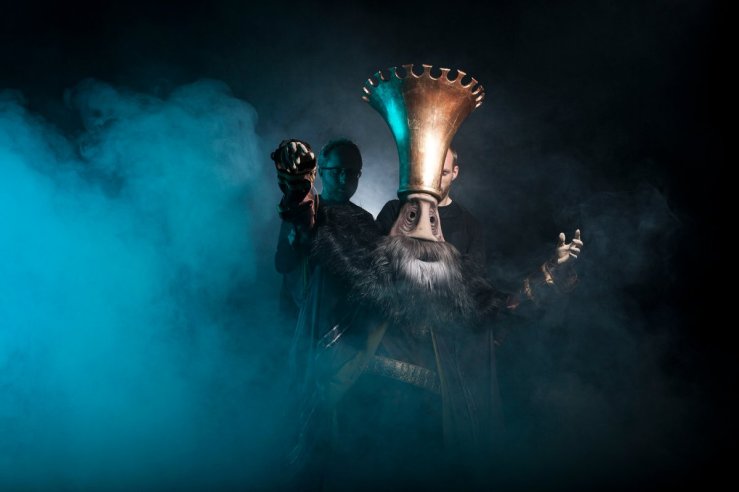
Much has been made of the costumes and puppets in this new production from our state company; plenty of effort has been liberally expended on this area, each of the central characters having a ‘front’ figure manipulated by puppeteers as well as a singer in modern-day mufti to sing Respighi’s notes.  This conceit is sustained right up to the end when the figures of Beauty and her Prince appear for the final hurdles, each pretty much en clair apart from some masks that disappear post-kiss.

Joe Blanck‘s designs for these manipulated figures are a random collection, the best of them that for the King.   Some of the others are depressing to look at, reminiscent of the trolls in Peter Jackson’s first The Hobbit film; among these I’d include the Ambassador and his Trumpeter, and the Old Lady who holds the fatal spindle that brings on the story’s central disaster.   Having noted this unsettling quality to some figures, and the disturbing Japanese ghost shape allotted to the benevolent Blue Fairy, I’ll allow that others have a Saturday-arvo-pantomime appeal, like the sprightly chorus of frogs at the opera’s start, the spry Jester-in-the-form-of-a-cat, and the plot-recapping Woodcutter who takes the shape of a lumbering, stage-dominating tree.

It all makes for a mobile scene sequence; for the most part, the story unfolds visually quite well, apart from the lengthy action for birds on flexible poles during the first pages and the following florid duet for Nightingale and Cuckoo, as well as the unavoidable longueur as the castle goes to sleep for four centuries.

Of more importance, the company’s musical work maintains a high level throughout the work, with only a few bumps along the way.   Conductor Phoebe Briggs and director Nancy Black have elected to run the three acts into a single sitting; not that such a move is a disadvantage to anyone as the cast exposure shifts all the time and any orchestral tutti sticks out obviously in this voice-focused composition.

I think that the company has opted for the original 1922 scoring which calls for a celesta and harpsichord.   But Tom Griffiths could also be heard on piano, which instrument comes from the 1934 revision.   Whichever it is, the band – made up largely of guest musicians – played this lyrically attractive neo-Romantic music with lashings of sentiment at the right spots, the body gifted with a clean brass trio and a small group of well-attuned strings.

As for the singers, their position was quite favourable.   Uncluttered by costumes and heavy make-up, leaving all the physical work to the puppeteers, they could concentrate on vocalising and remain assured that most people were not watching them.   The Nightingale/Cuckoo duet that begins the opera in a lush field of impressionism found Zoe Drummond and Shakira Tsindos sharing the labour – and the pages are not easy; although not asking for dynamic projection, they do hold an amount of fioriture that is high and exposed.  Timothy Newton made a clear and definite Ambassador, although he couldn’t avoid being handed a pretty bland characterization to deal with.  Elizabeth Barrow‘s Blue Fairy enjoyed a fair amount of exposure – responding to the Ambassador’s request, presiding over the gift-granting to the Princess, then ameliorating the curse.- keeping a calm control over another high line, albeit one that tended to legato delivery.

The first familiar voice I heard was Timothy Reynolds singing the Jester, then later appearing as the cameo American, Mister Dollar, in Act 3.    A secure technique and vocal personality made his appearances welcome, especially as both were amusingly carried off in a production that occasionally tried too hard.   As the maleficent Green Fairy, Juel Riggall did a great line in irrational rage, her part not actually musical but full-bore declamation.   Singing the King, baritone Raphael Wong managed to match his bluff vocal colour with the benign if gruff-looking puppet figure – another escapee (one of the dwarves?) from The Hobbitt.   Sally Wilson sang two roles, the Queen and the Cat, but the first proved vocally uninteresting, notably in the Act 2 crisis, while the feline impersonation sounded over-loud and overdrawn.   Another two-role singer, the experienced mezzo Liane Keegan gave fine service as the Old Lady with the spindle, and had much less to do in the (normally soprano) part of the Duchess whom the Prince discards once he gets a whiff of the sleeping Princess.

Another familiar voice emerged in Act 2 with Jacqueline Porter lighting up the stage by means of a sparkling salute to spring as the Princess, bounding wilfully into the spinning process, sinking into a coma with suitably failing vocal strength, then rounding out her night in a shapely love duet.   Becoming a regular in the Victorian Opera lists, Carlos E. Barcenas sang a charming, ardent Prince, holding his own against a very active puppeteer (Vincent Crowley?) whose Douglas Fairbanks athleticism was well-matched by the tenor’s vehement but controlled power.   Finally, Stephen Marsh blazed out the Woodcutter’s solo with a beefiness that suited the physical proportions of his arboreal manifestation, a broad passage of play that succeeded mainly through Marsh’s ability to make the already known assume an unexpected interest – although a good deal is owed to Gian Bistolfi‘s lines at this point.

At the end, the work was greeted with general acclaim even if it was difficult to categorize what we’d experienced – if you wanted to.  It’s definitely an opera, full to the brim with splendid vocal writing and some superb moments for orchestra, notably at hiatus points in the action and least of all when Respighi satirises the dance music of his own age.   But then, it’s an opera and also a mime-show.   Blanck’s puppets are the stage’s focus and, with that in mind, the production might have gained by having the singers do their work from the pit, as I think was done in the original presentations by the Teatro del Piccoli ; in this space, not much would have been lost.   As things turned out, the schizoid depiction of most characters left you a touch bewildered at points where the verbal action ratcheted up a notch or three.

And what of the vision behind the presentation?   The set remained pretty staid, with some tapered drums and circular platforms providing the framework for activity.   Philip Lethlean‘s lighting plan veered to the gloomy until Act 3.  Yet the guiding spirit was certainly to amuse; no secret messages emerged – no ironic hints at subtle meanings or underlying depths to the characters.   What you see here is all there is – a relief when you consider what Helden-direktoren inflict on us under the slimmest of pretexts.   Sung in Italian, with translations projected on side walls, the performance makes clear efforts to cater for all audience members.

Yet the work remains earthbound; the magic isn’t calculated to generate wonder and the stage-pictures show few signs of adventurousness.   However, this is an enterprise well worth visiting, if only because you’ll never see this Sleeping Beauty performed live again, I should imagine, and the musical values on show in this presentation are solid.
Oldest profession finds a new expression

‘TIS PITY

Victorian Opera

Melbourne Recital Centre

Saturday February 4  to Wednesday February 8, 2017

meow

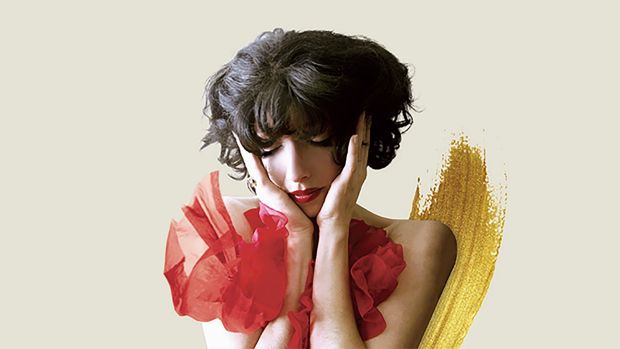
                                                                                     Meow Meow

Following the success of last year’s The Seven Deadly Sins production, Victorian Opera has decided to mount its own brand of cabaret-with-a-message, a showcase for the multiple talents of the company’s director Richard Mills who has provided both words and music. Not that much is given away about the nature of this new creation;  the company makes a virtue of keeping its gestational cards very closely guarded.   In its simplest form, this operatic fantasia charts the history of the prostitute from ancient times onward, doing so by means of a series of vignettes.

Given the subject matter, it’s fair to assume that Mills is citing John Ford’s tragedy in his title.   Understandably, despite the shenanigans and circus-style razzmatazz played out at the start and lasting for a substantial part of the work, the production’s 70 minutes’ length ends in a sombreness that reflects the play’s tenor.   Some days after the premiere, it’s still difficult to come down firmly on a sustainable evaluation of the creator’s intentions.

‘Tis Pity opens with a petit fanfare, as bold and brassy as any extroverted page from Les Six, chanteuse Meow Meow and tenor Kanen Breen setting up a whirlwind of clownish, frantic action before settling into the chain of episodes that constitute the work’s body, each change of era signalled by a brisk mood-changing blurt.   While the opening scenes are clearly signposted on large screens positioned on the Murdoch Hall’s back wall above Orchestra Victoria, the distinction between historical periods appears to break down the closer we get to the our own times.

Meow Meow works very hard to differentiate between the types of sirens from ages past, but the message is clear that ‘fallen’ women were (and are) more sinned against than sinning.   Musically, the fantasia puts few strains on the singer’s compass; rather, her endurance is tested as the action becomes more helter-skelter and, at two climactic points, her amplification system fails to carry over the OV brass at full pelt.  Breen’s tenor enjoys equal projection as he carries out his MC/Chorus role with athletic, angular enthusiasm. Both these principals are assisted by a trio of male dancers – Alexander Bryce, Thomas Johansson, Patrick Weir –  who move the set, act as dressers, do a bit of singing and offer a non-gender specific ambience that fluctuates from old-fashioned camp to menacing military slog.

Mills sets up a sort of thesis pretty quickly, first siting his Ever-Womanly in the Greece of Solon, that Athenian law-giver who, according to certain authorities, stabilised sexual conduct in his time – and for centuries after –  by setting up statutes that governed brothels.   The Roman Empire, I faintly remember, was represented by Ovid, the poet of instruction to both sexes on how to seduce each other.   The Dark Ages (unless I have things out of sync) brought up the shade of Tertullian, a Church Father who chastised all women as representing Eve, the original sinner.   Matters calmed down with the Middle Ages and Villon’s Ballade des dames du temps jadis – the night’s highpoint for me and its lyrical core – then smartened up for a post-Renaissance scrap from Rochester and a light-hearted description of the emergence of syphilis as an international scourge.

From about this point, the vignettes blended into a real fantasia, centuries passing in a blur of words and musical pastiche before climaxing at a point where the three dancers, with heads down, stamped out a rhythm while a moving screen packed with words from European languages referring to sex and its many professional executants scrolled over the hall’s back wall, the whole scene bringing to mind sadomasochism, military campaigns of rape and the dehumanising face of eroticism when it’s reduced to an automatic procedure, a reflex rather than a revel.

The libretto has something for all, its literary borrowings and allusions a consistent pleasure in a time when wit is often employed without wisdom.  The score, in essence, is a series of numbers, many of them imitations rather than parodies of dances from the early 20th century decades.  Mills is quite happy to give his singers a broad, lyrical vocal line or six to relieve the tension of concentrating on the quick-delivery one-liners.   Intentional or not, the enterprise brings to mind the world of the Cabaret film with Breen a rather unnerving Joel Grey figure who is not simply an introducer and observer but who becomes completely wrapped up in the historical/moral review.   Meow Meow changes costume and emotional address with remarkable skill, embracing the parodic aspect of the earlier vignettes and becoming more agitated in manner and vocal effort as the outline of prostitution’s history nears our times and the commentary rises in grim power.

At the end, ‘Tis Pity leaves you ambivalent.   While the choreography and prop/costume manipulation demonstrate director Cameron Menzies‘ deftness of craft, the moments that impress most tellingly are relatively static, where the author (who also conducted) pulls back the dramatic pace and the singers can concentrate on singing their lines without stage-business interference.   Not that the activity is distracting on a large scale, but there come moments when you would prefer less bounding across the stage or up and into the tinsel-protected bowels of the central mobile staircase.

And what is the moral?  After such a wide-ranging commentary, what is the summary lesson?  The courtesan we have always with us, from Lilith and Eve onward up to the mobility of relationships in our times where all our sophistication simply underlines the no-nonsense commercialism of the profession with, as in Solon’s day, the religious establishment’s accusations of sin or wrong-doing not worth considering.   Mills gives a consistently sympathetic portrayal of women, even in his penultimate vision of the New Age Amazon who may dress up as a valkyrie but is still suffering exploitation in a different guise.

You get no definite answers, more an inbuilt suggestion that, in commercial sex particularly, kindness and emotional generosity should not be impossible elements.   A large part of Meow Meow’s sharply insightful skill lies in proposing the observance of humaneness across the sexes without any descent into preaching.

If you have something to say

PERMISSION TO SPEAK

Chamber Made Opera

Arts House, North Melbourne

November 23-27, 2016

permissiontospeak-webpic-680x548

                                         (Left to right)  Gian Slater, Edward Fairlie, Georgie Darvidis, Josh Kyle

First and foremost, the four singer-actors in this entertainment impress mightily by their devotion to the task at hand.   They sing, speak and move around their acting space with unflappable confidence, facing down the occasional amplification system overload with an aplomb that carries the piece along, almost to the point where you are convinced that there must be a point behind it all, and you’re just too thick to grasp it.

Librettist Tamara Saulwick and composer Kate Neal have constructed a work that is hard to classify.   The central quartet of personalities – not that closely individuated, as far as I could tell – begin Permission to Speak by sitting on their white cube-seats and letting loose a chain of adolescent ejaculations – er, ah, mmm – which also move into isolated phrases or cliches before the vignettes that provide a plot begin.   Immediately, you are confronted with an implied irony: if you have or want permission to say anything, you need to have some sort of message.   At the beginning of this work, there is nothing to say  –  yet – except to defer communication by means of banal temporising techniques.

Later in the work’s progress, spoken words stop and the characters sing detached chords to isolated syllables: a juxtaposition of verbal tics and choral blurtings.   What is intriguing is the way in which the performers seem to pull chords out of the air, bringing to mind the splendid chorus work in Glass’s Einstein on the Beach – one of the few redeeming factors at operation throughout that extended exercise in superficiality.   But the musical content in Neal’s work is generally subordinated to the often cryptic texts.

Which come at you both from the (amplified) executants and speakers that surround the audience and pile on recorded information employing about 27 different voices.   Sometimes, the soundtrack is overwhelming –  material overload, a fading in and out of audibility, words and whole sentences sometimes coherent and then breaking into meaninglessness.   At quieter moments, such work is left to the live performers who share in a similar complex of straight dialogue and fragments.  For Georgie Darvidis, Gian Slater, Edward Fairlie and Josh Kyle the actual theatrical action allows for little slackening off, not much time spent out of the various spotlights.

But what actually happens?   The voice-overs and live actors move through a series of tableaux, mainly presented verbally although a sort of mimed death-scene for everybody intrudes near the end.   I picked up a few of the stories – a young man offended that his mother has read his emails which contain the news that he is dating a man; a young girl railing publicly against her bourgeois family life in Glen (or was it Mount?) Waverley; a daughter appalled at her father’s matter-of-fact announcement that he has a tumour; a diatribe against an apparently cold, emotionally unresponsive mother.   Most of this struck me as commonplace domestic drama, brief snatches that could provide plot variants for TV soaps.

But these situations have the benefit of being familiar, representing experiences that many of us have had or that resemble moments in our lives.    And that’s fine: you can’t be forever looking in your entertainment for towering passions like  those of Tosca or (more relevant this week) Brunnhilde.   Saulwick and Neal take the ordinary and the immediately recognizable as their basic matter, facing their observers with – themselves.

On  Wednesday night, it struck me that what these passages of play lacked was a sense that they constituted much more than the situations they presented, that they were capable of extrapolation.    It wasn’t so much that you were waiting for a resolution to each crisis: as far as I could work out, there was no intention of working any of the episodes through to a happy or sad ending   –  you just heard the voice narrating what had happened, sometimes with hesitations and abrupt bursts of development.    But the episodes had no context outside of their bare narration.

No, you can’t expect linear narrative in an enterprise like this one where interpretation is emphatically a matter for the individual and in any case is put to the challenge by the constructors’ modes of communication.   And you can’t fault the device of recording social malaise as a series of isolated points emerging from various lives.   But, at the end, you are left with small windows, only a few illuminated, rather than a canvas to re-examine and relish.

What Permission to Speak bases itself in, what it is about, is an entity that is all too familiar to nearly all of us: the family – more properly, the unhappy family because there’s precious little light in this exercise; even those few moments that moved into humour convinced only a few of us.

For all that, the opening night audience gave the cast and creators rousing applause at the work’s end, and you could understand why.   Despite its disconcerting layers of compacted information, Permission to Speak has an unarguably serious intent, its situations familiar to the point of discomfort, the musical content eminently assimilable.   Most importantly, it is distinguished for its hard-working cast, whose devotion gave focus and drive to this hour-long enterprise.

Figaro the big winner

THE BARBER OF SEVILLE

Opera Queensland

Playhouse, Queensland Performing Arts Centre

Thursday July 21, 2016

Brett Carter

                                                                                       Brett Carter

There’s a lot to like about the new production (shared with Seattle Opera and New Zealand Opera) of Rossini’s masterwork, presented by Opera Queensland.   The single set works pretty well; Matthew Marshall‘s lighting design has some surprises but little obtrusiveness; Lindy Hume‘s direction has some excellent touches of laugh-out-loud comedy as well as a few spots that are groan-worthy.  Roland Peelman has made a seemingly effortless glide from the rarefied Song Company recital scene to the pit of Brisbane’s Playhouse, and the Opera Queensland Chorus made a good showing in this version which gives extranumeraries a lot of scope; probably more than Rossini would have imagined, but who’s looking?

More importantly, the set of principals I saw were well-prepared, as close to note-perfect as the composer allows, given the frantic pace of a few ensembles.  This performance  – and, I assume, the others in which he was cast – were dominated by Brett Carter who has enjoyed plenty of experience in the title role.   He has a solid and flexible baritone, evident from his self-introductory aria which maintained its polysyllabic fluency without garbling or leaving out notes.   A lithe figure, costumed to accentuate his height, Carter shows an appealing character, responsive to everybody else and slotting into place with admirable skill.   Possibly his finest showing is Act 1 where in the sequence from Largo al factotum, through the sparkling All’idea di quel metallo/Ah, che d’amore duet with Almaviva, across the interchanges with Rosina, up to the brilliant finale, Carter sustained his line with equanimity and proficiency.

He had companions in this professionalism.   David Hibbard‘s Don Basilio surprised by the vibrancy and power of his vocal equipment, the La calunnia solo given with just enough suggestiveness, not falling into the trap of over-emphasizing its inbuilt crescendo.  In fact, each time Hibbard opened his mouth, that orotund bass impressed for its masculine darkness, as though the singer had just come from an audition for Boris.   As with Carter, the singer worked efficiently in ensembles, notably the Mi par d’esser gallop.

Andrew Collis confused us very nicely.  On his first entrance, announcing to Basilio that he intended to marry his ward that day, his Bartolo looked and sounded the stock characterisation: elderly to the point of doddering, vocally reserved, an impossible match for the young person who has just introduced herself at length.  Two scenes later and Bartolo appeared with a full head of post-Elvis hair, a much more aggressive vocal colour, altogether a more formidable manipulator (he thinks) of the household and all who live in it.   As with his fellow baritone/bass principals, Collis made a coherent personality, riding over others when required, although his final capitulation to events could have been negotiated with more amplitude; as it was, Bartolo’s two-line surrender was a side-of-stage business, unremarkable in this staging even though it triggers the exhilarating last number.

Emily Burke made a colourful Berta; at first, a potentially malevolent guardian for Rosina, then more inclined to mischief.   Her account of this character’s one chance to shine, Il vechietto cerca moglie, successfully communicated exasperation with the whole mess going on in the Bartolo establishment, possibly a tad heavy in its enunciation of a pretty simple jogging tune.   Brian Lucas as the almost-silent Ambrogio presented a character something like an albino Lurch on secondment from the Addams Family, decrepit but entertaining for his clumsiness – right up to the point where he and Berta clearly have off-stage sex, after which their appearances were played for lustful laughs and, of course, they attracted your eyes at every entrance after the mid-Act II storm, right up to the final curtain where they were placed centre-stage: a down-to-earth working-class counterbalance to Almaviva and Rosina’s semi-aristocratic infatuation.   Shaun Brown as Fiorillo opened the opera efficiently, preparing the stage for his master’s unproductive serenade and did so with ample fussiness and that anticipated hopeless ineptitude in keeping his hired musicians under control.

Virgilio Marino sang Almaviva, the disguised count in love with Bartolo’s ward who eventually gets the girl.   His opening appearance was not reassuring; the treatment of Ecco ridente in cielo sounded heavy-handed, the line delivered with force rather than lilting, as though Marino wasn’t sure that he’d be heard over Rossini’s placid string support.   Not every tenor is a Tagliavini but this opera is not coloured for drama and the Count has to show suppleness and amorousness.   Much better came later when Marino shared vocal exposure, and you could not find much to complain of in his drunken soldier impersonation.   But you were left thinking that a lot less force and grinding effort would have given the work better service.

Much the same lack of lucidity informed the opening Una voce poco fa of Katie Stenzel whose ornamentation came over as studied rather than frolicsome.  I’m unsure as to who started this fashion for large infusions of fioriture in the aria – it might have been an expectation from Righetti-Giorgi right up to Sutherland – but unless the embellishments can be tossed off without stress, then the piece’s progress turns into a series of tension-inducing hurdles.   And again, as soon as Stenzel moved into recitative, Rosina became the attractively determined and quick-thinking personality that should shine out from every bar she sings.  Further on, Stenzel showed a clean pair of vocal heels in the decorated opening strophes to Freddo e immobile, although admittedly the line here lies fairly low.

Some moments during the production seemed odd, if not inappropriate.  Having the chorus move into slow-motion/freeze positions during the Act I finale was preferable to having them all standing around simply singing, but the effect looked laboured, not at all suggestive of the green-lit phantasmagoria of confusion that was intended.   And the idea of turning the music lesson into sexual mimicry, with Rosina gasping through her aria and Almaviva employing his harpsichord as a penile substitute was effective in amusing the audience  –  but is it in the music?  And, more importantly, does it gel with the rest of the work’s action?    I thought it didn’t, but then I’m a prude from down south.

Peelman’s conducting of the Queensland Symphony Orchestra – or some of it – was adroit, inclined to hurry the work along, which I like.  The overture had some dodgy brass moments but the string body generated a full-bodied output in this medium-sized theatre.  Still, the outstanding instrumental work of the evening came from guitarist Andrew Veivers who spent a lot of time onstage providing the accompaniment for the recitatives – from memory.  That’s the kind of touch that makes a performance spring to life.

In all, a brisk and attractive Barber, noteworthy for its eponymous hero and the senior characters of the tale.   For all my reservations about the young lovers’ vocal straining, much of the performance proved highly enjoyable, often clever in its disposition of personnel, and eventually satisfying even the most carping observer at that brilliantly uplifting last polonaise, Di si felice innesto, choreographed with modest restraint by the Sydney Dance Company’s Rafael Bonachela.

.

Car stands out in problematic Verdi

LUISA MILLER

Opera Australia

State Theatre, Arts Centre Melbourne

Monday May 16, 2016

Nicole Car (Luisa)
                                                                                       Nicole Car 

It’s not really a hard sell, Luisa Miller; with a sharply-defined set of principals, some stirring, sometimes thrilling pages and a simple plot (albeit one with a few odd twists), the work could be an attractive proposition, especially welcome to finish the national company’s Melbourne autumn mini-season which otherwise walked through two repertoire staples.  For most of us simply a text-book name, one of the 15 or 16 early works by Verdi that largely remain unknown (with the exceptions of Nabucco and Macbeth), this opera represents a turning-point, the commentators say, where the composer’s fully-formed voice breaks into maturity and a buoyant originality that marks everything that follows.

This is a co-production with the Opera de Lausanne, in which house it was first staged over two years ago, and follows on from its appearance during the Sydney spring season in February this year.   From the northern capital’s staging, only the female singers have been transplanted to Melbourne  –  Nicole Car a sterling heroine, Eva Kong as the lightly-sketched confidante/villager Laura, and Sian Pendry taking the role of the other woman, Duchess Federica.    Tenor Riccardo Massi, who has sung in Sydney at least twice before, makes his Melbourne debut (I believe) as Luisa’s high-born lover, Rodolfo.  The remaining male soloists are all familiar home-grown faces: Michael Honeyman worked through the part of Luisa’s father; Steven Gallop added to his catalogue of villains with Wurm complementing his Nourabad from the company’s The Pearl Fishers; Operatunity Oz winner David Parkin (was it really a decade ago?!) gave his best to the unsympathetic role of Count Walter.

So, a reliable cast at work.  Why, then, was the effect so tedious?   Verdi took a gamble giving so much work to a baritone and two basses, especially in the work’s conniving centre.  But he gave them all some fine solos and concerted numbers.   Parkin came to life when Count Walter’s secret (he killed his cousin to get the title) becomes an issue but his self-justifications for stuffing up his son’s life failed to convince and, if you don’t believe that the Count is sincere  –  in this, at least  –  the whole tragedy crumbles.  Honeyman found a specific mode of delivery at Sacra la scelta e d’un consorte and stayed there, the shape of his line consistent but unchanging, so that his injunctions to Luisa and his wounded pride objurgations at the end of Act 1 sounded identical.  Gallop brought a menace to his characterization, his production packed with theatrical points that suggest the moustache-twirling villain, at his most impressive in the Act 2 duet with his master, L’alto retaggio non ho bramato, where both acknowledge their criminal past.

Pendry gave a cogent, dramatic account of the duchess, showing a fine balance between optimism and doubt in the opera’s central scene where Luisa is forced to lie that she feels no love for Rodolfo.   Yet you might reasonably have expected a more ample sound from the singer, particularly when her hopes increase that her wedding will take place. Possibly it was director Matthew Barclay‘s vision that Federica has something of the tightly-laced and snippy about her; I can’t find that in the music or in the actual dialogue that she conducts with Rodolfo on her first appearance.

Car sang with excellent point and clarity, giving an appropriate excitement to her opening L’o vidi e ‘l primo palpito, then making her over-wrought Tu puniscimi, O Signore the closest thing this production got to a show-stopper (it didn’t, but that’s more a comment on us than on Car and her fine clarinet support), and easing the weight of a lengthy double-death scene through an unerring command of her upper range and a clear awareness of her dramatic situation in duet with Massi for Ah piangi; il tuo dolore and in the concluding trio.   Luisa is cursed from the start, pulled from pillar to post by practically everybody with whom she interacts, a pitiable if conscious victim; Car’s gift was to draw a credible personality, one who gives in to Wurm, to the Count, to her father, to Rodolfo, but still has enough spirit to wave a rebellious flag  –  one that fails but you believe that her attempts are real, not just token efforts.

Massi’s Rodolfo proved to be the production’s most unsettling element – apart from the staging which stretched tolerance to an unnecessary degree.   His power stayed vigorous from the T’amo d’amor ch’esprimere duet where the lovers are at their short-lived happiest, through the argument with his father and consequent entreaties to Federica, continuing through the popular regretful aria Quando le sere al placido that experienced a rousing rendition, and into the final emotional chain that brings Rodolfo from disdain and anger to a revived, if fainting ardour at the work’s end.   Through this sequence, Massi sang with confidence and a resonant clangour, his tenor at full-stretch more often than not and his line full of points where he hoisted himself onto the note rather than attacking it cleanly; a powerful personification, yet in some ways not appropriate for this particular drama.

Conductor Andrea Licata gave Orchestra Victoria every encouragement, rousing a splendid ferment for moments like the conclusion to Act 1 where the drama’s personnel come into open conflict.   In later principal ensembles, the brass sounded over-energetic, although that’s an easy thing to accomplish in this space.   But the stand-out pit element for the duration of this opera’s run is the first clarinet.  Without a program, I can’t say for sure who the player is; the orchestra’s website lists Paul Champion as first desk, Andrew Mitchell as principal bass clarinet.   In any case, Verdi gave the San Carlo player plenty of exposure and his OV successor produced a sensible, present but not obtrusive account of the line.

As able as ever in this season, the Opera Australia Chorus gave good service in their few appearances, including a soft, somehow menacing reading of the Ti desta, Luisa opening serenade.  Not that the chorus is stretched at any point; Verdi kept his fireworks for the ill-fated lovers.   But the choral mix proved amiable and appropriately stentorian in support at climactic points.

The original director, Giancarlo del Monaco, moved the opera’s temporal situation from the early 17th century to relatively modern times, possibly about 1930.  The locale could still be the Tyrol; if so, it’s populated by villagers in perpetual evening dress, all set for a sombre gala.   Luisa wears white throughout;  the male principals affect tails, except for Miller who presents as a refugee from a Downton Abbey shooting party.   As the drama moves forward, the chorus remains outside the main acting space, processing slowly around it during the overture while carrying candles in what appeared to be plastic tubes. Preparing for the corpse-rich final curtain?   It’s hard to say.   Whatever the underpinning rationale, this group stays away from any involvement of a physical nature.

William Orlandi‘s set consists of two sculpture groups, one of a bourgeois domestic scene of nuclear family togetherness, the other of a gentleman bent over inspecting what could be a fountain or a civic monument.   Both are white, highly polished and suggestive of nothing so much as Lladro ceramics.   During the opera’s opening sections, these gradually roll upwards until they hang suspended over the stage – which could suggest an inversion of the natural order, if only we were sure what that was.   On the bare stage, Orlandi then employs chairs which the principals sit on (but not for long), or kick aside, or throw around in fits of rage or pique.   At the end, of course, the suspended statuary comes back down to stage level, right-side up.   It all makes for clear lines, a welter of black and white contrasts, minimal visual stimulation which focuses your attention on the music.

But, rather than offering a new locus from which to view the drama, the setting saps at its vitality in this specific staging.   Any concentration on Verdi’s score is laudable, certainly, but in bringing about this focus, the director and his team raise the bar for everyone – and only Car is equal to the challenge.   Too often, you have the impression that the male singers have little ability to shape their lines, that the differences between scenes, between individual lines, have been left unexplored, that getting the notes on pitch and on time is sufficient.  This might explain the interpretative pall that falls over the production early on and which rarely lifts.

With regard to a final puzzle that caused mild perturbation during the drive home, I’m assuming that the melodramatic climax  – where Rodolfo, with his last gasp, shoots Wurm –  misfired because the tenor’s gun, so active in the ludicrously handled duel scene, failed to work, leaving Gallop to strike a pose reminiscent of the central character in Goya’s The Third of May.    The effect of this tableau was to make a mystery of the opera’s final lines, where Rodolfo in extremis says to Wurm, A te sia pena, empio, la morte – and on this occasion did nothing.

The production has three further performances, ending on Friday May 27.

Competent but bland

THE PEARL FISHERS

Opera Australia

State Theatre, Arts Centre Melbourne

Saturday May 7, 2016

Emma Matthews (Leila) and Dmitry Korchak (Nadir)
                              Emma Matthews (Leila) and Dmitry Korchak (Nadir)

Many commentators – not I, though the temptation is great – find this Bizet opera a piece of dubiously-coloured tripe: its plot illogical or, if you’re feeling kind, clumsy; the music’s quality unworthy and variable, apart from the soaring glory of the Act 1 tenor/baritone duet; the vocal writing itself, for both soloists and chorus, undistinguished in comparison with the brilliance blazing out of the score for Carmen 12 years later.   Most of these complaints can be debated, if not completely justified, but what can’t be gainsaid is the popularity of The Pearl Fishers over recent decades in this city.  For a time, hardly a year went by, it seemed, when either the Victorian Opera Company or the Australian Opera did not produce this work with the same fervour as both organizations showed some time later for The Magic Flute.

An awful lot depends on the three main principal singers.  Each gets plenty of ensemble work but also a splendid, character-establishing aria.   Nadir enjoys the finely-spun arches of Je crois entendre encore, a gift for any tenor who can produce a soft upper register.  On this premiere night, Dmitry Korchak missed out on conveying the inbuilt languor and ecstasy-in-remembrance that fills these pages.

The priestess Leila opens with coloratura, singing to protect the fishers at their work, but her main extended aria, Comme autrefois, has a full-bodied lyricism and an interesting pattern of phrase-lengths.   Emma Matthews performed this with restraint, probably too much so; still, like everybody else, she was constrained by the slow tempi exerted by conductor Guillaume Tourniaire, a method of approach which meant that it was only half the time that singer and orchestra hit their cues simultaneously.   Jose Carbo sang a solid Zurga, making a dramatic meal of his late cavatina Nadir! . . . ami de mon jeune age which had the advantage of travelling securely across the footlights, as had all his singing since his early Act 1 appearance.

But the production’s most enjoyable singing came from the Opera Australia Chorus, in good shape vocally from the opening scene and consistently firm in articulation,  whether en masse or divided by gender.  In Michael Gow‘s direction, the group stood about in a block, filling up the rear of the acting area or geometrically aligned across temple steps; not much imagination shown in such dispositions but they ensured that mutual support was continuous and the concept of a body acting with one mind came across persuasively at moments like the election of Zurga to the population’s leadership or the death-threats hurled at the exposed lovers, Leila and Nadir, in the final scene of Act 2.

For those of us with a sneaking affection for this opera, certain moments are anticipated, usually with expectations that are rarely realized.  Most of these are duets, like the substantial love-duet in the third scene of Act 2 that has an irresistible sweeping power, not particularly original in its layout yet compelling and vehement\; just the thing for two lovers who have discovered each other at last.  Both Matthews and Korchak gave this section some much-needed animation, as also came across near the work’s end in the Zurga/Leila confrontation which brought out some fire in the soprano and a matching energy from Carbo, particularly at the point where he admits to his jealousy.

Michael Gow has reblocked the drama, turning both the male principals into middle-men of some kind, their dress that of the colonial administration rather than the original’s Sinhalese native-grown.  Right from the start, you’re led to question even the simplest matters, like why the fishers would elect Zurga their headman.  Nadir is always an outsider, a hermit-hunter by his own account, although in this personification he could have come fresh from the 19th century fleshpots of Western civilization in Kandy.   Why either would have at one time been hanging around Leila’s temple is a niggling question of behavioural probability.  Turning the priest Nourabad, sung at full throttle by Steven Gallop, into a sort of broker makes some sense, although why he also is dressed in a suit and at the same time can rouse the fishers to fury with menaces of divine vengeance adds to the plot’s oddities, rather than removing them.

But this production is short on subtleties, not least visually  as the sets by Robert Kemp emphasize the poverty of this community and, if anything, its lack of prosperity as the temples are overgrown with weeds.   Further inexplicabilities applied to the set mounted for Zurga’s bout of self-realization, suggestive of a white hunter’s bungalow in 19th century British Africa, complete with many hunting trophies (what has this pearl fisher-cum-entrepreneur been doing in his obviously copious free time?).

Still, as with all attempts to give a new vision to a work set in its time and place, the viewer has to exercise generosity. In this case, I’m not sure that much has been gained by taking all three male principals out of the population; the social commentary suggested appears pretty ordinary, giving a fresh socio-economic layer to a work that profits both musically and dramatically by its own simplicity.  Maybe it would be more persuasive in this regard with a central quartet that displayed more comfort in their work.

The production has seven further performances, ending in a 1 pm  matinee on Saturday, May 28.

Striking singers, senseless setting

LA BOHEME

Opera Australia

State Theatre, Arts Centre Melbourne

Tuesday May 3, 2016

Lianna Haroutounian
                                                Lianna Haroutourian

Not a new production, this offering from director Gale Edwards, revival director Andy Morton, set designer Brian Thomson and costume designer Julie Lynch – but of a piece with the company’s Autumn season pattern in that it updates and transposes the work’s action, as the following The Pearl Fishers and Luisa Miller will also do.   For all the distractions that these peripheral changes involve, this current version of Puccini’s touching score has a significant benefit where it counts: the voices of those involved onstage.   After some underwhelming principal line-ups in previous years, it came as a pleasant shock to hear an Act 1 that succeeded in engaging the inner musician in each member of the opening night audience.  Well, perhaps that’s being over-optimistic but, for those of us who were listening for quality, a good deal was there to be enjoyed.

Gianluca Terranova is a new voice to me but a welcome one.  His work as Rodolfo proved exceptional, not so much for insights into the character himself (are there any, apart from the furious confession of Act 3?) but simply for the fierce temper of his tenor which invested the line with vigour and a continual ardour.  Like most of his tribe, Terranova is no respecter of bar-lines when in full uninterrupted flight, so that Che gelida manina enjoyed a fluidity that a conductor more prickly than Andrea Molino would have brought into line, yet the travelling power of his top notes and their almost-total security swept aside a good deal of trivial nit-picking  .  .  .  like gripes about keeping in time.

A match for the tenor, Lianna Haroutourian sang a dedicated Mimi with a splendid carrying power not held back by the character’s racking consumption.  Her Si, mi chianamo Mimi matched Terranova’s opening aria with a soaring ma quando ven lo sgelo sequence and her following collaboration in O soave fanciulla demonstrated a responsiveness that front-lined the composer’s melodic and spacious lyric arcs as well as giving weight to the lightly-sprung dialogue to which this rhapsody momentarily descends.   Haroutourian even put up with her partner’s brashness in seconding the Act-ending high C that, for once, stayed on pitch, although this magic moment’s effectiveness was squashed, as usual, by over-anxious patrons drowning out the delicacy of Puccini’s orchestration across the last bars, harp harmonics and all.

The lovers’ confrontation in Act 3 proved less persuasive dramatically but you would be hard pressed to fault the desperation of Terranova’s Marcello. Finalmente! duet with Andrew Jones.   Later, after Haroutourian set up an excellent framework with Donde lieta usci, the tenor found it hard to convey Rodolfo’s grief through the Addio dolce svegliare alla mattina! quartet, compensating for it with a determined O Mimi, tu piu non torni duet to open the last act, then wringing the death scene for as much tragedy as a jaundiced audience would find credible; that final curtain came down in silence.

Jane Ede‘s Musetta carried out her responsibilities with moderate brio, the Quando m’en vo’ showpiece carefully delineated.   But you were rarely convinced of Musetta’s humour and brightness of personality; not even in the name-calling fight with Marcello at Act 3’s end, although Ede made a concerned, condoling figure at Mimi’s deathbed.   Jones, her counterpart, made a much more interesting fist of the jealous painter, working with professional ease through the romping that starts the outer acts and contributing a strong vocal presence in his duet with Mimi  at the Barriere d’Enfer toll-gate.

Richard Anderson relished his one chance to shine, Colline’s Vecchia zimarra aria, taken at a lugubrious pace, emphasizing the philosopher’s gravity rather than the ludicrous charity that he is exercising.    Graeme Macfarlane‘s landlord Benoit and Adrian Tamburini‘s Alcindoro fulfilled their obligations without striking any notes of originality.   But the children’s chorus for the Cafe Momus scene sounded as confrontational a pack of ragamuffins as you’d want to avoid on a dark night while the adult chorus gave a vocally colourful backdrop to the principal sextet in the same act.

The setting has been moved to 1930s Berlin.  You can tell this by a few black uniforms, a customs official dressed like the Fuhrer himself, some cross-dressing attendants on Shane Lowrencev‘s Schaunard, and the Momus establishment turning into a quasi-brothel/cabaret scene with a plethora of loges, at least one pair of bare breasts for ornamentation, an outbreak of garter belts, a band of ersatz Hitlerjugend coming on for the act’s final military blaze.   The changes in time and locale make no difference to the outer acts in the artists’ garret, the opera’s core action arenas.   Further to this puzzlement, at night’s end, you are left wondering exactly what correspondances are intended to exist between this Baz Luhrmann-redolent refreshment essay and the original’s Parisian Latin Quarter of a century before.

Orchestra Victoria responded well to Molino across the night, with a particularly keen briskness through Act 2, the body’s strings unexpectedly rich in the State Theatre’s close acoustic, some small passages of woodwind/string doubling whistle-clean, while the brass corps also surprised by its quick rate of response; no chain-dragging on this night.

In fine, this Boheme is worth visiting for its main players, both excellent calibre singers – which makes it hard to understand the premiere patrons’ lukewarm curtain-call reaction to Haroutourian.   Admittedly, she was dressed in an oddly dowdy costume for much of the night but that should have provided no impediment for a worthy response to her impressive vocal powers.    Among the locals, Jones shone with a secure and confident baritone.   As always, if the production’s look strikes you every so often as ineffective, if not over-affected, you can ignore the stage work and simply revel in some of the more transporting Italian operatic lyricism this theatre has sponsored for quite a while.

There will be a further eight performances of La Boheme, the last on Saturday May 28.

Lucia just clears the hurdles

LUCIA DI LAMMERMOOR

Victorian Opera

Her Majesty’s Theatre

April 11-21, 2016

Lucia di Lammermoor (victorianopera.com.au)

We’ve been spoiled in this country as far as this Donizetti opera is concerned; well, when I say ‘we’, I mean those who came of age in the middle of the last century and so experienced the performances  –  live, filmed, recorded – of Joan Sutherland in the title role.   Certainly, the challenge has attracted many great coloratura singers, but the Australian soprano’s interpretation throughout the 60s and into the 70s remains unparalleled for its staggering fluency and sheer technical brilliance; her Mad Scene is the standard by which all other sopranos are judged and – largely due to the precision and stinging truth of her fioriture – everybody else comes up wanting.

So, in a sense, Jessica Pratt was up against it when she took on the role for the state company’s big ‘grand’ opera for the 2016 season.   Yes, she has sung the role many times: Zurich, Florence, Cantanzano, Genoa, Naples, Tel Aviv, Novara, Deutsche Oper Berlin, Ravenna, La Scala, Amsterdam – houses large and not-so-large, major opera venues and some minor ones.   She brings to the role a good deal of experience, then, and she is definitely the outstanding voice in this production.   But the role is not an easy one to negotiate, especially with that assurance necessary to put an audience at ease.  This Lucia shows an awareness of the dramatic traits needed to convince us of the character’s flight into madness, yet the singer’s efforts fail to convince.

Pratt was labouring against some disadvantages in this theatre which, thanks to its plush furnishings, has little resonance on offer to help with dynamic subtleties.   Indeed, when conductor Richard Mills began the work’s prelude, the orchestra might as well have been playing from behind the scenes; the horns, faultlessly though they articulated, sounded improbably distant throughout the night while the string ensemble, about 30 in number, made a small sound, a murmur for the most part.   Like her six associate principals, Pratt also had to cope with Henry Bardon‘s original set(s), which sits above a long set of steps, meaning that access to the front-of-stage was limited, matters not helped by Pratt stumbling on her first appearance while coming down a smoke-filled stairway to her mother’s tomb-site.

Her opening Regnava nel silenzio aria came across competently enough if the rapid semiquavers and trills here and in the ensuing Quando rapita were treated with care rather than infused with an invigorating confrontation. The following duet with Carlos E. Barcenas‘ Edgardo again impressed more for the effort than by any communication of devoted affection.   Both singers saw each other through the Verranno sull’aure duet with stolidity, punctuated by some over-emphatic delivery of the music’s highest notes.  Better came in Lucia’s confrontation with her brother Enrico, Jose Carbo‘s baritone a confident foil for Pratt during the Soffriva nel pianto pages, even if the heroine’s surrender seemed too rapidly accomplished, the personality here presented rather unlikely to cave in without registering more emotional discomfort.

At some stages of the Mad Scene, Il dolce suono, Pratt impressed for her vocal work, notably her imagining of the wedding ceremony she desires with Edgardo, beginning at  Ardon gl’incensi.  But the more Donizetti’s vocal part accumulated force and impetus, from Spargi d’amaro pianto on, the more laboured the output, as though each problem required extra determination.  The whole point of Lucia’s mental collapse lies in the delusions she lives through and the visions she sees, all of which combine into an organized vocal flight towards an eventual physically unbearable delirium.   When this process sounds less than freely flowing, the dramatic impact is sapped until only the negotiation of hurdles is left to engross one’s attention.

Michael Petruccelli‘s brief appearance as Lucia’s one-night-stand husband Arturo showed an agreeably light tenor voice in command of its responsibilities, a light in a dark place as his costume made him appear like a refugee from Der Rosenkavalier in the middle of the setting’s Hibernian gloom.   More to the point, his vocal production displayed flexibility and dynamic nuance – much appreciated among a set of male principal characters who, like Michael Lapina‘s Normanno, remained on one interpretative level for most of the evening, whether for solos, smaller ensemble numbers or contributing to the opera’s splendid sextet, Chi mi frena.  Jud Arthur sang the role of Raimondo, the Ashton family’s resident Calvinist chaplain, but found projection in this theatre difficult, notably in his dialogue with Lucia; a more firmly contoured vocal contribution might have aided in persuading the onlooker of the draining force that brought about the girl’s surrender to family and spiritual pressure.

Cameron Menzies‘ direction broke no new ground, every move predictable even in the Mad Scene where Pratt’s actual stage movement missed out on using the music itself to underline her mental disturbance.   Chorus groupings ensured that each member had an unencumbered view of the conductor – which worked some of the time.  But you had to wonder about what was going on after the first chorus, where the male Ashton clan members, headed by Normanno, encourage each other to keep searching the estate in order to uphold a sort of household security, only for them all to stand around listening to the plot-establishing private conversation between Normanno, Enrico and Raimondo.

Not to be outdone, the pit produced one of the night’s sonic surprises.  The composer originally called for a glass harmonica to accompany Lucia’s escape into insanity, but the San Carlo producers made him change this instrumentation for two flutes.  Perhaps the novel sound didn’t travel well in the Naples theatre; it certainly didn’t do very well on this occasion, either – otherworldly, it could have been but, in this presentation, it might have been played in the Her Majesty’s foyer for all the impact it exerted on the aural character of the scene.

A well-dressed chorus fitted into the general ambience of the production by sounding half-hearted in pretty much every scene except the two Per te immenso and D’immenzo giubilo outbursts of merriment either side of the fateful wedding, and the unexpectedly forceful male reinforcements in the graveyard scene who, for all their doleful vehemence, are constrained to stand around uselessly while Edgardo commits a spectacularly unimpeded suicide at the final curtain.   Of the small dash of choreography that some members were involved in, there is little to remark except that it took place.

If you were looking for a straight-down-the-line, no-nonsense account of Lucia di Lammermoor, you could hardly ask for better than this production.  In fact, it looked like every other version I’ve seen, if somewhat mustier than most.   But, like all bel canto creations, this opera requires highly gifted singers to carry it off, particularly if the dramatic interplay stays on an unsurprising, time-honoured melodramatic level.   In this instance, I don’t believe that the talent onstage carried the work’s performance level beyond an also-ran standard.

Nor fish nor . . .

VOYAGE TO THE MOON

Victorian Opera & Musica Viva

Melbourne Recital Centre

February 15-19, 2016

Jeremy Kleeman

The name of this particular game was collaboration.  In a spirit of camaraderie, the state’s opera company and the country’s largest purveyor of quality chamber music pooled resources to mount that oddest of forms to pull off successfully: the pastiche opera. Not that this modern-day sequence of juxtapositions had much trace in it of the ad hoc nature of pasticcio opera melanges compiled in Baroque times where the aim was pragmatic – getting the show up and running quickly, at minimal expense through cutting and pasting, and showcasing the best points of the vocal talent available. This current-day exercise aimed more highly, as construction and performance of Voyage to the Moon came under the aegis of the Australian Research Council Centre of Excellence for the History of Emotions, Europe 1100-1800.

The doctrines and practical applications of affects underpins solid Baroque composition and performance theory, providing a resource of great moment for musicians grappling with scores that present interpretative quandaries galore, not just in the application of dynamics but also in phrase-shaping, gradual or abrupt changes in timbre, even the nature of attack on individual notes.  Whatever modes of delivery are eventually chosen, they need an underlying framework that sets up a ground plan for a specific interpretation.  For musicians unschooled in this specific craft, the affect-involving process of analysis and construction connected with articulating even simple pieces like harpsichord suites or violin sonatas can be both enlightening and confrontational in that knowing which affect you are seeking to convey causes an ongoing appraisal: you have to deliberate over every aspect of your engagement in re-creating.

Yes, it can lead to mannered renditions where the results have been over-studied to the point where ultra-refinement wipes away a listener’s sympathy but, in competent hands, this period of music thus informed can come across with a refreshing commitment and simple sonic definition that animate musty pages.

Taking its launching place (like so many earlier works) from part of Ariosto’s poem Orlando furioso, this Voyage to the Moon followed a simple plot where the eponymous hero, inflamed by love, loses his reason and goes on a violent rampage.  His fidus Achates, Astolfo, travels with the assistance of an omniscient Magus (is there any other kind?) through space to our satellite, the apparent location of Earth’s lost property, persuades the intransigent Queen Selena to give back the vital spiritual essence, then restores his angrily roistering colleague to sanity.  Michael Gow and Alan Curtis collaborated to create a plot-delineating sequence of recitatives and a re-wording of selected arias from operas by Handel, Molino, de Majo, Gluck, Hasse, Orlandini and Vivaldi.  The score was completed by Calvin Bowman after Curtis’ death in July last year.

This creation is without spectacle, a singular disadvantage for a production of Baroque opera.  The three singers have a full stage to work with but not much by way of scene-setting or visual complements to the scenario’s changes of mood and place.  In fact, Monday’s premiere saw the instrumental septet centre-stage at the Murdoch Hall’s back wall, harpsichordist/director Phoebe Briggs surrounded by a quintet of familiar string players – violins Rachael Beesley and Zoe Black, viola Simon Oswell, cello Molly Kadarauch, bass Kirsty McCahon – with the lone reliable oboe of Emma Black. A small body, this ensemble gave excellent service throughout the opera’s 75-minute length, the upper string trio consistently valuable contributors to the affective changes in the work’s progress. Whether sighing out plangent introductions or interludes like Handel’s Entree des songes agreables, or hurtling through the close-knit accompaniment to Hasse’s O placido il mare, these musicians set their notes into position just as you’d want: precise, resonant, suggestive of the requisite flights of temperament/emotional ambience.

Two of the three singers are very familiar names.  Soprano Emma Matthews (Orlando/Selena) and mezzo Sally-Anne Russell (Astolfo) are veterans of the opera theatre, concert stage and recital hall; both have plenty of experience in Baroque music and the technical equipment to negotiate respectable paths through intricately ornate arias.  Bass-baritone Jeremy Kleeman (Magus) has made a firm start on a singing career, turning up in unexpected places – as soloist for the St. John’s Lutheran Church at Southgate’s Bach cantatas during Sunday morning services, for instance, or as one of the Family quartet in Victorian Opera’s recent concert version of Weill’s Seven Deadly Sins.  While Matthews thrilled her devotees with acrobatics and Russell revelled in the night’s most familiar (and best?) music with Handel’s affecting Piangero la sorte mia, Kleeman used all three of his arias to sterling effect, at his most impressive covering the vast range needed for Handel’s Fra l’ombre e gl’orrori.

In fact, Kleeman appeared to gain most from the music selected for his role, in part because his major contributions were Handel compositions but also thanks to his innate consistency in timbre and rhythmic definition. Matthews displayed her velocity from the start with de Majo’s Tutti tremar dovrete right up to a racy version of the Hasse show-stopper.  But these ornate flights of fancy featured some attention-grabbing obtrusions – improbably high notes, in particular, distracted from this operatic form’s already-ornate eloquence.  The lily-gilding continued in the singer’s second role; Handel’s Neghittosi, or che fate came across as jerky, hard work and lacking in supple fluency of delivery.  Russell enjoyed the allocation of Orlandini’s close-order filigree aria Col versar, barbaro as a counterweight to her lilting Handel contribution earlier, and managed to give a persuasive communication of Astolfo’s pseudo-belligerent intention to fight with his comrade and beat sense into him.  However, several bravura passages misfired, possibly because of the vocal register employed, or because of the tempo chosen.

Still, the work’s elements made a pleasant enough melange with enough individuality in the compositional voices to sharpen the appetite for hitherto-unknown works, those by Molino and de Majo in particular.  Every so often, the chamber-like limitations intruded, like the absence of trumpets and an extra oboe in Handel’s Gia risonar d’intorno or the missing tenor voice in the finale, a light-filled chorus from Vivaldi’s Il Giustino.  But the libretto proved more coherent (and intelligible acoustically) than most, the singers in period costume worked successfully with limited means to give physical expression to their emotions, and the opera’s onward movement never faltered.  In sum, this Moon Voyage experience impressed as a worthwhile experiment, an amiable curiosity, its hybrid nature interesting – once.


New settings for old vices

SEVEN DEADLY SINS

Victorian Opera

Hamer Hall

November 6, 2015

Meow Meow

In an ambitious exercise, the state company juxtaposed Weill/Brecht’s sung ballet – the last significant partnership between playwright and composer – with a freshly-composed Australian cabaret that visited the seven canonical major sins on the nation’s capital cities.  Julian Langdon wrote a prologue and epilogue for these modern-day Seven Deadly Sins as well as illustrating gluttonous Adelaide; Mark Viggiani took on Hobart’s envy and angry Perth; Brisbane’s association with sloth was allocated to Ian Whitney, who also had the unenviable task of populating the lustful landscape in Sydney; Jessica Wells tried to persuade us of Melbourne’s innate greed through the person of John Wren, but then had the night’s easiest run with a romp through prideful Canberra as personified by Howard, Rudd, Gillard and Abbott.

As with any challenging cabaret, the segments varied substantially in content, with plenty of pastiche from each writer. And writers they were in both senses, providing the texts for their own music, albeit collaborating in workshops to develop the whole enterprise.  While each composer gave good musical service with well-regulated instrumentation and generally comfortable vocal writing, the librettos varied in effectiveness and relevance to the vices they were intending to depict.  Viggiani’s choose-a-wife contest for baritone Matthew Tng‘s amiable Prince Alfredo held suggestions of the Princess Mary/Prince Frederik romance, but his condensation of Perth’s idiosyncratic ire to the Rinehart/Hancock family split failed to make many points about the vice itself, the slapstick depiction of all three characters in the triangle coming across as relatively heavy-handed.

Whitney’s two scenes also made a sharp contrast.  In Brisbane denizens Pete and Joh (what’s in a name?), he gained from the services of baritones Nathan Lay and Tng as two exhausted layabouts, while soprano Cristina Russo as a Milton-spouting Angel relished the score’s only lyrical vocal lines.  When it came to the bed-hopping character of Sydney’s self-obsessed chattering classes, the overlapping lines of all seven characters generated a clever verbal depiction of swinging relationships, Elizabeth Lewis‘ anything-goes Helene a solidly crafted presence in a setting where most other vocal lines were confined to scraps.

Under Tahu Matheson, Orchestra Victoria escorted the singers through their tasks with equanimity, from  various Latin and Viennese take-offs to the circus-like superficiality of Jessica Wells’ mockery of Canberra’s political flotsam where costuming, mimicry and all-too-familiar verbal tropes took attention away from the musical underpinning.  Along the way through the night’s backside-numbing first part, the orchestra also took on Wells’ grim, sonorously weighty depiction of a depressed, working class Melbourne in thrall to John Wren’s betting stables and touts.

All of the singers involved were students from the Master of Music in Opera Performance course from  Melbourne University’s Conservatorium of Music; two of them – baritone Lay and impressive tenor Michael Petruccelli – also appeared in the night’s second part, the sung ballet that starred Weimar Republic cabaret expert Meow Meow in the lead role of Anna which, in more conventional productions, is split between a singer and a dancer.  As part of the male quartet representing Anna’s family, both young students gave firm service alongside tenor Carlos E. Barcenas and bass Jeremy Kleeman, the quartet aggressive, remorselessly stentorian on occasions in handling the chorale-type writing that punctuates Anna’s travels in search of wealth.

Matheson headed a larger instrumental body for Weill’s score which impressed for its consistent emotional content. The creators left very little time for their audiences to resent being preached to, no matter how dexterously, about the evils associated with success in a capitalistic world but the scenes, though often discrete, moved into each other without theatrical or musical jerks. While the intent of the work is clearly didactic, its moral, rather than coming over coated in a sugary cocoon of comforting platitudes, remains grim and unavoidable, right up to the bitter if quiescent final bars.

Dominating the stage, Meow Meow gave an impressive depiction of Anna, making a splendid impact in the Boston scene where Anna 2 encounters lust in the form of an attractive if poor man, and her other half has to persuade her to do right by the money-expecting family and stay with her rich lover, harnessing lust to the greater good.  The singer handled this brief but telling segment with unaffected warmth, not actually milking the situation for its sentiment of regret but communicating simply the double standards in operation as Anna encounters yet another sin in a different civic setting.

Both Deadly Sins were staged with surtitles, most helpful in the case of Brecht’s text which was sung in German.   Given the staging circumstances – a fairly small ribbon for action front-of-stage with the orchestra as backdrop, the family quartet singing from Hamer Hall’s rear wall – Cameron Menzies‘ direction depended largely on Meow Meow’s histrionic talents.  By and large, the satire’s onward drive worked fairly well, despite too much emphasis for this observer on the cabaret fall-back of semi-sexual spasms and jerks.

Still, the production’s flaw stemmed from these straitened operating circumstances.  Despite the lead artist’s best endeavours, the work makes best sense if there are two Annas: one, the no-nonsense and hard-headed negotiating singer; the other, a more flighty, temperamentally unreliable dancer who actually does the hard work to get the truism-touting, corrupt family its home in Louisiana.   In this space, a dancer would have been forced to work under improbable restraints, but the lack of one – let alone a corps – lessened the construct’s dramatic impact.