Reticence in a big space

KIRILL GERSTEIN

Musica Viva Australia

Concert Hall, Queensland Performing Arts Centre

Wednesday June 19, 2024

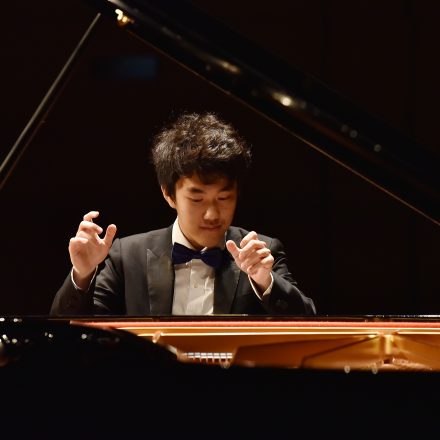
Kirill Gerstein

I found this to be a very laid-back affair, even while I could see the effort that Kirill Gerstein was putting in. It might have been caused by my having experienced the Australian Chamber Orchestra two nights previous in the same hall, and they bask fully in this space. By contrast, Gerstein often sounded muffled, as though normally thunderous torrents were being produced with the soft pedal on. Or it might be that this room just doesn’t suit piano recitals, much as I found the Melbourne Recital Centre’s main theatre to be a non-carrier for many players.

As for Gerstein’s program, you could point to plenty of occasions for potential pounding. For instance, he presented two substantial Chopin works in the Op. 61 Polonaise-Fantaisie and the F minor Fantaisie. Even more prominent for its relentless virtuosity was Liszt’s Polonaise No. 2 in E Major and only a few steps behind this in the powerhouse stakes was Schumann’s restless Carnival of Vienna. A little less insistent but packed with skittering good spirits in its outer reaches were Poulenc’s Three Intermezzi which were produced across a nine-year interval. It might have been due to the nature of the piece but the most resonant of this ‘old’ set was Faure’s final Nocturne in B minor: a vehement last gasp from the French veteran.

The Musica Viva guest also paid obeisance to his jazz-playing efforts and alternative musical life with a piece by his pal, American Brad Mehldau: the Nocturne, which comes third in a four-part homage called Apres Faure. More relevant to us was the premiere of a freshly written Transcendental Etude by Liza Lim which was commissioned by Musica Viva for this tour and makes a solid addition to the ever-growing number of locally-written piano compositions, a differentiating factor being that this one sits among the few worth hearing.

Gerstein handled the improvisatory nature of the Polonaise-Fantaisie opening with care but not elongating the four flights of ascending crotchets as several pianists do to emphasize the piece’s fancifully wayward nature (it’s not that, but it can seem so if its constituents are sufficiently disjointed), By the same token, he didn’t give vent to a musical gasp of relief when the polonaise first stretch arrived (bars 22 to 143) but treated it with restraint and deliberation, allowing the melodic contours to trace their paths without spicing up the delivery, even at the climacteric across bars 132-137. Perhaps the inner workings of the central section’s chorale theme got more attention than they merited but the return to arms came off with lashings of brio, even that awkward series of rushing triplets stretching from bar 254 to bar 281.

Gerstein began his evening’s second half with the Chopin F minor Fantaisie which is prodigious in its inventiveness and mixture of fireworks and quiescence. The pianist gave us a spectral march before the real fantasy began at bar 43 and didn’t let up. This includes that brilliant outburst of ultra-lyrical right-hand writing between bars 77 and 84 (and later at bars 164-171, then bars 244-251), and the two further march brackets between the undulating arpeggio figures that spark off nearly all of this score’s discrete components.

Parts of this interpretation grabbed your interest, mainly for the alteration in attack that germinated from the player’s fluency rather than an abrupt gear shift or six. It’s true that, as with the Polonaise-Fantaisie, certain passages sounded understrength, the melodic definition not as clear as from other interpreters with more brittle instruments and more percussiveness in their key-striking. But at certain moments, the warmth of Gerstein’s timbre proved irresistible and you had to admire the precision of his realization throughout which I could only pick up two or three errors.

He finished both halves with resonant samples of Romantic accomplishment. We went out to interval with the Liszt Polonaise giving proof of this musician’s interpretative power and high spirits: indispensable elements for this tour de force. For all that, the score labours under an initial deficiency in bar 8’s initial demi-semiquaver group which interrupts the main melody’s bounding energy. Still, the output remained firm and impressively true in its details, like the right-hand accelerando at bar 43 and the chain of sixths and contrary motion scale across bars 43 to 48.

Gerstein’s general restraint paid dividends when the central Trio turned gangbusters after those remorseless double octaves across bars 113 to 119 where the initial A minor theme enjoys a triple forte restatement before the welcome relief of Liszt’s interpolated cadenza. These virtuosic excesses profited from the sparkling delicacy of the first theme’s recapitulation (harmonic, if not linear) that found an able treatment under Gerstein’s hands. Later, he made full-bodied work of the ranting final pages after the first theme returned in its original form. It all made a sentimental return to the past for this listener and, I suspect, several others among the Concert Hall’s patrons.

Schumann provided the printed program’s finale with the Carnival of Vienna rarity. I think I’ve heard this collection twice in live performance: once from a professional, once in a student’s program. Again, I was grateful for the performer’s versatility of choice, avoiding the temptation to treat us to yet another Carnaval, Symphonic Studies or the colossal Fantasie in C. Even so, I heard some errors in the opening Sehr lebhaft, possibly due to fatigue – and each repetition of that initial ritornello began to grate after the first three. As compensation, you hear some intriguing interludes in this rondo, not least the totally syncopated passage when the key signature moves for the first time to E flat Major, and again in the first 26 bars of the movement’s coda.

Gerstein treated the one-page Romanze with high sensitivity, keeping his dynamic muted and allowing plenty of variation in the tempo. It’s hard not to like the following Scherzino with its simple common chord jumps and surprising variety in content, and this reading emphasized a light buoyancy, the piece retaining its agility of articulation to the end. Which made an eloquent contrast with the broad sweep of phrase in the following Intermezzo where the relentless chains of subordinate triplets were (for the most part) kept subordinate to the soprano melody. Schumann’s finale seems boisterously rushed after these precedents but Gernstein retained his energy through its much-ado-about-very-little pages. Still, there’s always a chortle or two to be enjoyed when hearing players cope with the awkward Coda with its crossed triplets and duple quavers.

As for the fill-in-the-middle pieces, there’s little to report. Mehldau’s tribute was distinguished for its inner part-writing yet, despite its brevity, wound up sounding cluttered. The Faure work can take your breath away for the spartan ferocity of its central G sharp minor pages which share a gravity of outlook with a few stark pieces like Tapiola; you do come to a sort of resolution but find precious little optimism – just a well of gloom. I expected more fire from this player across that urgent central stretch but was grateful for his realization of the nocturne’s deliberate resignation.

Poulenc’s trilogy took us away instantly from the sepulchral atmosphere of Faure’s work. The first intermezzo, a Presto con fuoco, is a briskly clattering, chattering effusion that is completely lacking in depth of sentiment. The following Assez modere intrigues for its melody statement in the alto, then bass registers, even if the soprano wins out in the end of what is a congenial brevity. You might mistake the last Tres allant for a waltz, although its time signature is 6/8. This piece rings several harmonic changes – most obviously in the juxtaposed common chords six bars from the end – and Gerstein realized its supple rhythm interlocks and ingenious part-writing with excellent results.

Lim’s new study is not really an adjunct to Liszt’s famous dozen products, of which I know about half pretty well. It is couched in a language completely outside the range of anything else heard on this program with nothing remarkable about its sound production methods: no reach-inside-the-piano or mallets on the strings or arms-instead-of-fingers smashes or preparing/stuffing the instrument. It exploits the instrument’s power to produce quick bursts of repeated notes and move rapidly between dynamic extremes. As far as its emotional content goes, it struck me as menacing because the score’s progress is packed with shivers, frissons that unsettle the listener’s expectations and equilibrium; quite an accomplishment in these days of predictable pap.

And it sat comfortably in this set of offerings that impressed for its variety bordering on the recherche but at the same time gave us some former repertoire stalwarts in a mini-refresher course. Gerstein’s reputation as a premier artist is supported by this recital, which was greeted with emphatic enthusiasm. But I think we would have been even more impressed if the venue had not been the city’s cavernous main concert hall. Still, it’s the old problem about where to put your suddenly increased numbers – a difficulty that Musica Viva will face again with the church-acoustic-loving King’s College, Cambridge Choir appearing in this venue same time next month.

The Russians are coming

JOYCE YANG

Piano+

Queensland Symphony Orchestra Studio, South Bank

Sunday May 12, 2024

Joyce Yang

Yang is celebrating her return to Australia with an all-Russian program, concluding with Mussorgsky’s epic Pictures at an Exhibition: a delight for pianists of all abilities who can find in its pages some highly graphic (or pictorial) descriptions, and enough variety to please even those of us with imperfect equipment – through laziness or age (or both). She began what I think was her first Brisbane appearance (ever?) with parts of Tchaikovsky’s The Seasons, continued with two well-known Rachmaninov Preludes (although not the too-familiar C sharp minor or the G minor) and a rarity in the D Major piece from the Op. 23 collection of ten. As well, we heard three parts of Stravinsky’s Firebird ballet in an arrangement by Guido Agosti who never got around to working at the first two parts of the composer-extracted 1919 suite.

Some of us would be aware of the Tchaikovsky 12-part collation for its arrangement by Edward Grigoryan for his guitarist sons Slava and Leonard; not so much for the work in its original piano form, even if my generation of young Australian players would have come across the November piece known as Troika which was once part of the AMEB syllabus for I-can’t-remember-which level. Yang chose half of the available months: By the Fireside for January, Carnival for February, Snowdrop for April, May Nights, Barcarolle for June, and Harvest for August.

Yang opened with an excellent January, the piece highly amiable in its own right and here distinguished by the executant’s carrying top line, carefully shaped and clear. Tchaikovsky’s festive February wasn’t so much, although its central stanzas came across more successfully than their bookends. Whatever Tchaikovsky thought about snowdrop flowers or the meteorological event (both mentioned in the piece’s accompanying poem), his invitation to consider both here has little melodic or harmonic interest, the only eyebrow-raising passage arriving when the main (only?) theme transfers to the alto line. The composer’s bifocal May Nights moves between a 9/8 barcarolle and a sprightly 2/4 dance, the latter winning out in the colourful stakes as briskly accounted for by Yang.

Probably the only one of the twelve pieces in the suite that enjoys popular currency, June’s Barcarolle is distinguished by its splendid main melody which glides with just as typical a breadth and melancholy as many of the belted-to-death ballet tunes. Yang’s interpretation found a cogent balance between sentiment and linear strength, notably in the central Poco piu mosso and Allegro giocoso romps. Her rapid path through harvest-time emphasized the inbuilt syncopations in the 6/8 (and occasionally implied 3/4) tempo and the piece’s mildly virtuosic moments served to demonstrate this executant’s rapid recovery rate.

In the first of the Op. 32 Rachmaninov excerpts, the slow B minor gem of musical depression, the main memory I have is of Yang’s powerful left hand across the prelude’s middle section which operates over a sequence of massive octave semibreve pedals, here generated with impressively full-blooded commitment. As well, this pianist exercised a noticeably free rubato in working through the initial and closing pages – which added much to the inbuilt emotional mournfulness. With her view of the G sharp minor No 12, Yang gave a prominence that I found unusual to the opening sextuplet ripples in the right hand which threatened to overpower the piece’s first theme, until this latter acquired some supporting chords. Despite this unsettling mode of attack, the pages were treated with a welcome fluidity and dynamic contrast that was sustained to the elusive final four bars.

Still, I thought the version offered of the Op. 23 D Major Prelude showed us the afternoon’s most complete Rachmaninov with a seamlessness to Yang’s principal melody announcement, which only improved in empathy on its second statement underneath those pear-like soprano triplets. Mind you, I might have been affected by the soothing warmth of this piece after a double-dose of spiralling gloom from its precedents. Still its gentle contours enjoyed sensitive treatment from this gifted artist who opted for linear integrity over sentimentality.

Stravinsky made his own piano score of the complete Firebird ballet in 1910, the same year as the work’s Paris premiere with the Ballets Russes. Agosti’s transcription offers much more scope for the gifted pianist, even if the work’s contours become obscure under the flurries of notes incorporated for dramatic effect. I’m not talking about the Lullaby or Finale which enjoyed spacious accounts from Yang, embellished with glissandi, an attractively even chain of trills in the former piece, and a sermon of thunderously powerful chords over the final Doppio valore 14 bars.

The piling-up of material tended to get in the way of the Infernal Dance‘s hurtling progress. Nothing wrong with the opening bass tattoo, but matters got more complicated about Number 136 in the original piano transcription, and continued to sound more cluttered from Number 146 onwards, up to the arrival of that melting moment at the change of key signature to D flat Major when melody rules all.. Nonetheless, despite a liberal use of glissandi, Agosti manages to generate more excitement with his realization of this dance’s final strophes than Stravinsky’s own rather ordinary realization.

The three segments made a fine vehicle for Yang’s musicianship and – wonder of wonders – the original shone through nearly continuously throughout. Commentators have noted the popularity of this transcription but I must confess to hearing it here live for the first time – after years of exposure to the three Petrushka movements that the composer put together for Rubinstein. Many thanks, then, to Yang for this unusual piece of programming.

So, we came to the big Mussorgsky collection. We immediately encountered a sure-footed promenader, quite at ease in the gallery surrounds: a gallery-wise, confident flaneur. Gnomus burst upon us with maximum rapidity and an admirably lucid realization of that final six bars velocissimo rush. More chastened promenading before a rather hard-edged The Old Castle, featuring a most insistent G sharp ostinato. Yes, it does continue pretty much across the whole piece but it seemed to dominate these proceedings like a threat.

The two-page Tuileries enjoyed deft treatment, if singular for a number of unprescribed pauses in the dispute. Not much novel in the Bydlo interpretation besides Yang’s persistent left hand ostinato pounding out below the driving principal theme. We enjoyed a clear account of the Unhatched Chicks with its alternations of acccciature and trills, here carried out with excellent regularity of attack and delivery..

Samuel Goldenberg and Schmuyle appeared in vivid form, the latter much more aggressive in the final 11 bars where the plutocrat has less dominance than he usually enjoys. For once, this sample of musical racism gave rise to a drama, rather than an unappealing portrait of bullying. After a final, athletic statement of the Promenade, Yang produced a hectic vision of the Limoges Market where the activity proved non-stop – no pause in this commercial outlet for any dawdling, finished off with a powerful four-bar rush of demi-semiquavers that came up against the full-stop of Hartmann’s Catacombs, here announced with very sustained chords, the fermate stretched to their limits.

A ghostly reshaping of the Promenade inspired the Con mortuis in lingua mortua page, the right-hand tremolo sustained with fine balance across this spectral page that impresses me a good deal more than many other parts in this composition. Baba-Jaga loped past with a hefty curmudgeonliness that very few pianists can avoid. Nonetheless, you could find plenty of time to admire Yang’s clarion-clear double-octave work in the outer pages of this picture before reaching the apogee of The Great Gate of Kiev.

Here, once more, you were aware of the power in Yang’s left hand at the principal theme’s restatement from bar 9 on. Even towards the crushing conclusion when Mussorgsky moves into triplet minims across the 2/2 bars, this pianist still found plenty of shoulder power to keep you involved with the piece’s theatrics to the final allargando 13-bar weltering into what is by now a voluptuous bath in E flat Major. A short encore or Grieg’s Notturno helped ease the tension as a salute to Mothers’ Day, but what I carried away at the recital’s end was a thorough admiration of Yang’s skill and controlled virtuosity, evident across every stage of her individualistic Mussorgsky reading.

Rare Brahms in the mix

DANIEL DE BORAH

Piano Series

Ian Hanger Recital Hall, Queensland Conservatorium

Friday April 26 2024

Daniel de Borah

Here was an eclectic program from the Queensland Conservatorium‘s Head of Chamber Music, taking the less easy path at every turn. For instance, the pianist opened this recital with Schubert’s Impromptu No 1 in C minor from the D. 899 set; pretty much every other pianist I’ve come across (except Paul Lewis) would try the No. 2 in E flat, the No. 4 in F minor or the G flat Major No 3 before presenting this death-wish albumblatt. Another impromptu came from the D. 935 set – again, the No. 1 in F minor, which is more bracing and confrontational than the mellifluous No. 2 in A flat Major, the richly endowed theme and variations of No. 3 in B flat Major, or the edgy Chopin-anticipating No. 4 in F minor (also).

A kind of similarity could be found in his choice from the last four piano collections by Brahms. He might have opted for the Op. 117 Three Intermezzi, of which the first and third are fairly well-known, even if the whole work doesn’t add up to much more than 15 minutes. Or perhaps the Sechs Klavierstucke Op. 118 from which we know the Intermezzo No.2 and the Ballade No. 3. Not forgetting the Op. 119 Four Piano Pieces set with its barnstorming final Rhapsodie. But no: he played the Op. 116 Seven Fantasies that you will hear live about once every forty years.

De Borah’s other offering in this hour-long event was Haydn’s Theme and Variations in F minor, which is one of the composer’s most familiar constructs for solo piano. This reading pleased for its assertiveness in the minor segments where many pianists play for brooding melancholy, then switch to spikiness for the major theme and its variants so that you feel that the composition is essentially bifurcate. On this occasion, the initial statement impressed for its non-sentimental approach with a barely noticeable hiatus at the move into bar 30’s alternative theme.

Each of the variations presents articulation problems but de Borah maintained an even touch across their pages: the syncopations of Variation 1 administered evenly, the later trills invested in both halves of the major section accomplished without excess energy. The following variation pair boasts a good deal of right-hand brilliance which this pianist negotiated with a modest amount of applied verve. As with the best Haydn interpretations, nothing jarred by over-temperamental bursts, not even in the abrupt chords that occupy bars 25-26 of the coda-finale, nor in the demi-semiquaver figuration of alternating quintuplets and sextuplets that occupy the centre of these drama-rich pages.

Not so happy was the opening to the program: Schubert’s C minor Impromptu. All too soon, the balance between melody and underpinning was lost; from memory, at about bar 18. I don’t know why; perhaps the melody didn’t maintain its attraction or perhaps the harmonization sequences seemed more relevant to the narrative. But then again, this particular piece has its dull spots, like the trite melodic action that starts at bar 74 and persists until bar 82; Schubert working at a tailer (revisited at bar 152) that fails to live up to its surroundings.

But, in the end, I wasn’t convinced of the piece’s gravity. God knows you can find a wealth of dramatic scope across its length, especially at the dynamic highpoint that kicks in at bar 111 and lasts for another nine. And the final page’s oscillations between C Major and minor never fail to bring to mind the composer’s inimitable combination of fragility and strength in the space of a few juxtaposed phrases. De Borah delivered this last with eloquent sympathy, yet much of the piece missed out on compelling your attention. Put simply, I’ve heard better, if admittedly from top-notch performers.

Much more persuasive was his account of the F minor Impromptu. In my opinion, it’s a more satisfying score both to hear and to play, with more room for de Borah to employ his subtle rubato, taking time to adjust to the piece’s changing geography, like the sudden busyness that strikes in bar 13, or the direct speaking that breaks out in the octave at bar 30, or the wrenchingly affecting lyrical oasis that splays from bar 45 on. In these passages of play, de Borah produced effective continuity, the shifts rising effortlessly out of each other.

But there are two segments where we move into a heightened Schubert world – of the Notturno, the last third of the String Quintet Adagio, Du bist die Ruh, the recapitulation of the B flat Major Piano Sonata’s first movement, the Gesang der Geister uber den Wassern: the list could go on but these come to the mind’s forefront with no effort. They convince you of the writer’s melodic genius and at the same time of his humbling emotional honesty, achieved without any hesitation. In this impromptu, it’s the crossed-hand sections for me – bars 69 to 126, then bar 197 to 239 – especially the later stages of each where he settles into his key – A flat and F – and showers us with simple lyricism.

These solid slabs emerged from de Borah’s web with impeccable authority and eloquence; no signs of fumbling or grasping for effect, just the clearest texture with the accompanying semiquaver rustling outlined with admirable clarity. Here also the left-hand delivery proved even and finely shaped, even though its contributions come in groups of three and four quaver gruppetti. Moments like these make you glad you are in the space where such music is being recreated, where you witness a kind of aesthetic fusion between the composer and the interpreter. It’s rare to encounter at any concert or recital but very welcome, mainly for its unexpectedness.

As for the Brahms Fantasies, de Borah made a strong case for airing a string of works that most piano enthusiasts would regard as unfamiliar. You can soon see why. The opening bluff Capriccio is an essay in syncopation to the point where the pulse is hard to determine for about 16 bars. This rhythmic disjunction is shared with a predictable penchant for key changes that pass in a blink. Still, de Borah made enthusiastic work of this focused jaunt. Something odd happened in the following Intermezzo when the Non troppo presto section in 3/8 arrived. It’s a passage of not particularly adventurous harmonic sliding allied to a right hand of trademark displaced octaves but we came close to an impasse.

De Borah soldiered on to the relieving Andante and a typical return to base over the concluding 21 bars. Into the G minor Capriccio and matters were well in hand with a firm contrast between the outer pages’ controlled impetuosity and a central E flat Major passage of eloquent rhetoric reminiscent of the B flat Piano Concerto’s opening. Little remains in the memory of the E Major Intermezzo, apart from de Borah’s smooth treatment of its delays in resolution and a quietly quirky oscillation between regular quavers (later semiquavers) and triplets: an effect that keeps the listener pleasantly off-balance throughout what strikes me as an off-kilter minuet.

Another effective realization came with the (probably) E minor graceful Intermezzo, fifth in the set. Despite its inbuilt repeats, this piece is a genial brevity where the disjunct metre of No. 1 is revisited with a middle section relief of splayed arpeggio chords tenderizing a forgettable melody line. Brahms continues with his ternary structure in the No. 6 Intermezzo and its affirmative downward stepping chords, the whole complex (if you can call it that) based on simple and common elements. De Borah articulated this pair of pages with care and consideration for its harmonic compression which remained lucid throughout.

To end, Brahms presents another capriccio, here in D minor and following a rocky path of transformations of the original material, in a remarkable demonstration of invention and husbandry. De Borah delivered this with enthusiasm and a sure sense of direction, right up to the composer’s affirmative tierce conclusion. As with most of its companions, this piece leaves you with small pickings to mull over until you get back to the score where the Fantasies‘ scope and eloquence can be remembered at leisure. Having said that, and mindful of de Borah’s slightly flawed apologia, I won’t be rushing to hear the Op. 116 again when so many more appealing late Brahms fruits are on offer.

Sadly, this event was poorly attended; I suspect because of the Conservatorium’s unfortunate scheduling practice. A half-hour after de Borah’s recital, the institution was presenting a symphonic/choral concert in the building’s main theatre; in fact, the usher for this recital looked set to be participating in the upcoming concert. But I suppose such planning misfortunes are inevitable, given the number and breadth of exercises going on in the Griffith building. Let’s hope that de Borah’s next program attracts greater numbers to hear the work of this insightful, gifted musician.

Fine effort from a new talent

REUBEN TSANG

Piano+

Queensland Symphony Orchestra Studio, South Brisbane

Sunday April 7, 2024

Reuben Tsang

This young (20-year-old) pianist comes from Cairns and so has a special connection to Queensland audiences. He is currently finishing a small tour taking in the three eastern mainland states, sponsored by Piano+. This organization runs the Sydney International Piano Competition, in which Tsang participated last year; to some effect as he was the second-youngest entrant to reach semi-final status, and he won the Nancy Weir Best Australian Pianist Prize. His success rate with the 2023 jurors seems to have been with his Romantic era repertoire interpretations, but he showed laudable facility with the Baroque and Classical pieces presented on Sunday afternoon’s program.

Mind you, the most ringing applause from his audience came after his account of Liszt’s Rhapsodie espagnole: a virtuoso’s warhorse that I haven’t heard for many years and, after this encounter, I’m not surprised. The piece offers variants on La Folia and a jota aragonesa but encases both mild tunes in a dazzling carapace of virtuosity that, in these moderate days, tends to generate chortles rather than admiration. Tsang made a brave sound in the opening nine bars, including a measured account of the cadenza, and he gave the Folia a grave statement, keeping fine control right through the splendid polonaise breaks in bars 66, 68, 70 and 73, then later from bar 118 to bar 131 – to my mind, the most inspired moments in these early stages.

The arrival of the jota lightens the atmosphere most effectively and Tsang gave a graceful realization of the third-laden early dissertations on the theme. He might have retained some dynamic force before the sempre animando explosions of bar 446 onward before the armageddon at bar 506. But the rush to a Folia restatement at bar 633 enjoyed brisk handling, even if the climactic arrival proved rather underwhelming; which is to say, I’ve heard it done better. But then, as noted above, you rarely hear it live and, for many of us, the recorded performances (Cziffra!) can be astonishing. The wonder is that Tsang got through it pretty unscathed with only a few palpable hits.

The recital’s other ‘big’ work was Brahms’ Sonata No. 1, which I encountered in student days as a favourite work in the repertoire of Ronald Farren-Price. Unlike the Liszt, this work asks for an imparting of weight or power. I’m not convinced that Tsang has the measure of the work’s first movement and its stentorian declamation, especially on its first page, in the guts of the development, and the harmonically altered recapitulation of the principal theme. You could not fault Tsang’s skill in outlining the composer’s changes in texture and his dynamic subtlety, but the movement failed to capture the composer’s from-the-shoulder heft. Yes, you walk a fine line between majesty and ponderousness but Tsang could improve his treatment of these pages if he took his time over them.

Nevertheless, the executant gave us an exemplary reading of the second movement variations, informed by a light attack in that striking passage of textural contrasts where the time signature moves between 4/16 and 3/16 in the lied‘s last lines. Further, his dynamic actualizations preserved the subdued emotional range of the score where the language is sparsely coloured, rarely rising above a quiet monologue. As Tsang communicated it, the change-ringing on this folksong moved around harmonically but its contours shone through to admirable effect.

This sonata’s scherzo-plus-trio would probably be better orchestrated, I think. As it stands, its pages are active but exhaustingly repetitive, the executant producing wide leaps and clattering groups of six descending quaver double octave chords in a row, to the point where the stepwise ascending Trio melody is warmly welcome. Tsang made a well-controlled creature of this awkwardly imbalanced opposition; his phrase initial leaps proved accurate and his broadly rolling C Major middle section made for some excellent Brahms. Added to which, it seemed to me that, in this movement more than the first, he was exerting more physical strength, infusing these pages with welcome bounce.

As with the scherzo and trio, Brahms’ finale might be better off orchestrated, although then the sforzandi at certain points in the main theme would be diluted in impact. I thought that Tsang took this Allegro con fuoco too rapidly for comfortable delivery so that the abrupt accents that pepper the score came over as something of a smash-and-grab affair, the executant dazzling us with his rapidity rather than making each chord count. Still, what was lost in unbuttoned humour/well-being was compensated for by a nervous energy – which is another way of portraying these pages, if an unexpected one.

As well as this sonata, Tsang also gave us an early Mozart: No 3 in B flat Major. It’s one of this pianist’s favourites – ditto for me. – and he worked through it with an appropriate infusion of elegance. The opening Allegro‘s juxtaposition of elements became one fabric, thanks to a restrained dynamic palette and a clever weaving of separated phrases by an appealing, easy articulation that looked for similarities rather than opposites. As well, both hands enjoyed their moments in the sun but rarely at the expense of each other, e.g. the development opening at bar 41 where the left-hand Alberti demi-semiquavers remained audible rather than reduced to a mushy susurrus.

I’m pretty sure that the repeats in the Andante amoroso were omitted, but then this has always struck me as the weakest of the sonata’s three movements; a touch over-studied, perhaps, and definitely predictable in its later stages. Still, you could say much the same about the concluding Rondo, even if the jaunty prime melody shows us Mozart relishing his own creativity, as in bars 22 to 25 where the bridge work triplets show us simple high spirits; and the following F Major tune starting at bar 28 has its first phrase repeated but minimally altered as the composer delights in his own frivolity. The score is loaded with happy, unaffected wit and Tsang sailed through with few errors.

Still, you could point to a few digital misplacements, as you could in the pianist’s opening bracket of Scarlatti sonatas: D Major K. 119, C Major K 132, and G Major K 427. The first of these, yet another hunting-horn exploiter, did not enjoy any repeats, although such an absence was understandable given the piece’s unusual internal structure. Tsang handled its opening leap-bounds and the later clashing syncopated right-hand chords (bars 61 to 65) with a fresh recitalist’s enthusiasm. I think he secured accurately the cross-hand action near the end of each half. With the C Major (the only one of the three that I knew well), the inward-collapsing arpeggios came off deftly and also the quaver tremolo bars (29, 31, 69, 71) sounded well-calibrated in this nearly symmetrical composition. Once again, I don’t believe Tsang repeated either half.

But he did for the presto G Major; just as well because there’s not much to it. In fact, the attack was probably too brisk for this instrument, even if the mordents in bars 22 to 24 travelled well. Tsang’s speed was reminiscent of Puyana, even if the Colombian harpsichordist hit the notes with much more ferocity in similar sonatas. Here, I believe for the first time, you heard some miscalculations in note delivery. These might have been ignored in much other music, but not with these transparent pieces where the sine qua non is responsible articulation.

Tsang followed his Scarlatti bracket with the large-framed Brahms. After interval, between the Mozart and Liszt, he gave informed accounts of three of Faure’s five Impromptus: No 1 in E flat Major, No 3 in A flat Major, and No 5 in F sharp minor. Here was the recital’s most fluent playing, which showed once again how the composer’s accidental-rich scores sound so equable in confident hands. These interpretations kept to a refined emotional level with no excess evident even in the climactic moments of each. Mind you, the impromptus are rarely performed, compared to Faure’s nocturnes or barcarolles; yet they hold an attraction and facility under the fingers that argue against their neglect, even though the only one I’ve heard live is the A flat Major gem.

It’s not immediately apparent, but Tsang appears to have an empathy with the French composer. Indeed, I would have welcomed a run-through of all the Faure impromptus from him, if the three presented are any indication of his interpretative skill in this regard. And I found it significant that his choice for an encore after the flashy Liszt finale was yet another Faure: the Romance sans paroles No. 3 – a reminder at the end of Tsang’s musicianship, exercised in just the right quarter.

Command and kindness

GARRICK OHLSSON

Musica Viva Australia

Conservatorium Theatre, Griffith University, South Bank

Thursday June 1, 2023

Garrick Ohlsson

This splendid American pianist was last heard here in 2019, appearing then for Musica Viva and getting his Brisbane recital in just before we all said farewell to live performances for some time. He’s back for another national series, kicking off in this city with an eclectic program of Schubert, Liszt and Scriabin with a new Australian commission adding spice to the mix in Thomas Misson‘s Convocations. Ohlsson is also offering a second program in his alterative nights in Sydney and Melbourne, as well as for Adelaide and Perth; in that figuration he will play Debussy’s Suite bergamasque, Barber’s Piano Sonata, the Misson novelty, and a slab of Chopin – the rarely-heard Variations brillantes, the Piano Sonata No 1, and the B flat minor Scherzo.

Yes, it would be rewarding to hear all that last group from the only American to win the International Chopin Competition (1970), but I don’t think we missed out that much with what we heard on Thursday evening. Ohlsson opened with the Schubert C minor Impromptu – the first of the Op. 90 set and the one that most pianists leave alone. This was followed by the Liszt B minor Sonata. After interval came the Misson and a clutch of Scriabin works: the C sharp minor Etude from the 3 Morceaux Op. 2, the D flat Major Etude from Op. 8, the C sharp minor Etude of Op. 42, the Andante cantabile that heads the Two Poems Op. 32, and the bursting-at-the-seams Piano Sonata No. 5.

Towards which this whole recital was aiming, it seemed to me. Ohlsson entered into the work with a certain sobriety; those odd little gruppetti of 5 with the first note missing that accelerate through bars 7 to 11 were not as brusque as other interpreters make them, although their return at bars 161 to 164 and from bar 451 to the end showed a remarkable ferocity, especially this last which found the performer twisting to face the audience in an unexpected gesture of pianistic braggadocio. Mind you, he was probably elated to get to the end of the composer’s vertiginous acceleration that starts at bar 401 and – for once – doesn’t stop for a meno vivo oasis.

For all its ecstatic intentions, this one-movement sonata (the first in this shape of the composer’s ten) holds itself together with a remarkably clear chain of material gestures and rhythmic shapes. In fact, for all the much-touted dynamic and emotional excess allied with highly demanding pianism, the work is clear in construction as a whole, if you can get past the stretches of chord-rich hysteria. Ohlsson took us on a finely graduated investigation of the score’s stop-start progress, demonstrating an admirable command of the composer’s vagaries and realizing fully the sonata’s flashes of magniloquence, like the thundering rapid left-hand octaves that feature in the Presto tumultuoso esaltato of bars 146 to 156, or the full-bodied peroration that explodes in bar 433.

Overshadowing the performance was the interpreter’s ability to take us along with him through the constantly changing landscape of this construct, where even the jittery off-the-beat right-hand chords that emerge so briskly at the first presto (bar 47) change to a more hectic, driven impulse as at the prestissimo that starts at bar 329. Indeed, Ohlsson captured with excellent skill Scriabin’s vital combination of languid harmonic opulence and urgent neurotic compulsiveness, this schizophrenia keeping us involved in what is still a robustly contemporary language.

Speaking of robust, the night’s first half focused on the big Liszt masterwork. In my tender youth, I was able to pick out the four potential movements that are said to comprise this large canvas but last Thursday’s reading came across all of a piece; you can hear where the materiel changes and is brought back for re-examination (or re-iteration, if you’re feeling unkind) but Ohlsson has the knack of finding some unification in the work’s presentation. It may be his insight owes something to a sublimated virtuosity as this pianist melds the meditative into the stormy with ease, as after the two mini-cadenzas in bars 200 and 204 where he shifted gear into a powerful Allegro energico C Major outburst; or, less obviously, the slow-burn from the F sharp Major repeated chords of bar 363 to a powerful climax across bars 393 to 396.

But it’s exhausting to get through; certainly for the executant, and even for an audience sufficiently primed to endure Liszt’s flamboyance and relentless magniloquence. I thought that there might have been two extra Es in bar 311 as Ohlsson emerged from another recitativo before dealing with a further 16-bar-long superimposition of two melodic elements, but that impression might have been self-generated. There’s no smothering a sense of disappointment in the fugato that starts at bar 460 and follows a resolute path to bar 599 before we get to the last, lengthy agglomeration where the writing becomes more and more complicated. Not that this substantial patch of working-out found the interpretation lacking and, if you grew impatient with the modulatory chains, you had this pianist’s almost flawless security to treasure.

Ohlsson exercised his habitual calm control over the Schubert impromptu, specifically its eventual triplet underpinning which many an interpreter allows undue prominence. For me, the most affecting segment of this reading came with the (only?) theme’s transference to the left hand at bar 60 under gently oscillating right-hand triplets; here was excellent dynamic management and a carefully shaped phrasing ebbing into a C flat Major quiescence. Actually, you could pick out several examples of sterling responsiveness, if the occasional oddity (the right-hand chord of bar 112 which sounded as though it had acquired an extra note) countered by a melting Winterreise conclusion from bar 193 onwards, minor alternating with major in an ideal instance of Schubert having it both ways – despair and consolation fused into each other.

Of the Scriabin studies, little is left in the memory. For many of us, the C sharp minor etude would have been our first encounter with the composer as it appeared in an AMEB list book (List D?) many years ago and proved easy enough to negotiate for its straightforward Chopinism. I didn’t gain much from Ohlsson’s treatment although I suspect it was included as part of the pianist’s way of preparing us for the coming sonata’s keyboard brilliance. You could admire his negotiation of the chains of chromatic thirds in the D flat Major etude, chiefly because the texture remained pretty clear with few over-pedaled washes along the way. Ohlsson’s approach to the C sharp minor piece proved a good deal less sharply defined, but then the harmonic shifts are gradual and closely-argued, so that even the left-hand change of metre to duplet crotchets in the study’s centre and near the end tend to muddy already thick waters.

A clearer texture spoke across the Andante cantabile in F sharp Major with Ohlsson smoothing out the quintuplets that emerge unobtrusively in bar 11 and become a constant element for much of the piece’s remainder. Still, this is whimsical country with a dominant right hand holding all the trumps in a very amiable colloquy that concluded these prefatory gambits which at least served the purpose of demonstrating how reasonable and later-Romantic this composer could be.

Misson’s new work enjoyed an introduction from the composer who pointed us directly towards a religious interpretation of his title, going even more directly to the core by speaking of the aspirational, Heaven-bound nature of his work’s right-hand while the left-hand matter stays firmly terrestrial. The opening strophes to Convocations impressed as rather obvious in both intent and statement, but the following elaborations and episodes proved more intriguing, particularly some moments of liturgical reference – not full-scale chorales but close enough to give a support to the composer’s suggestions of an abstract synod. Both composer and interpreter showed obvious signs of mutual satisfaction at the work’s end, and the composition itself did serve the purpose of suiting Ohlsson’s performance manner of benign, unshakeable confidence.

Two Bachs, two baroques

GOLDBERG VARIATIONS

Andrea Lam & Paul Grabowsky

Queensland Conservatorium Theatre

Saturday June 11, 2022

Andrea Lam

This latest gambit in Musica Viva‘s 2022 season gives us Lam and Grabowsky exercising their talents on the supremely accomplished Bach variations, which used to be rarely performed but currently attract all sorts of keyboard players. You can blame Glenn Gould for the attraction of the Goldberg Variations to contemporary pianists, the Canadian musician releasing his parameter-splitting recording in 1956 – since when things have never been the same. Of course, it’s more convenient to work through the score on a two-manual harpsichord (not to mention oh-so-authentic) so that intersecting lines don’t sound awkward. But what you lose in nerve-tensing clarity, you gain in dynamic and expressive potential.

Lam gave us the work as written, and she saw the task through with minimal trauma. On this occasion, that was her brief: to deliver the work ‘straight’, with technical prowess and interpretative insight. Grabowsky was required to improvise on the opening Aria‘s content, to transform Bach’s material into whatever harmonic, melodic or rhythmic shape occurred to him on the spot. I’d anticipate that, in later performances on this tour (Brisbane was the first), he might repeat himself; more than probable, given the nature of Grabowsky’s first dealings with the melody after he’d played it as written.

Throughout her account, Lam gave us a deft interpretation that took advantage of the piano’s powers to sustain and to offer toccata-like brilliance. Her reading of the initial Aria was slow-paced and restrained dynamically – a regular pavane. So her attack on the first variation sounded all the more startling, a full-blooded demonstration of hefty two-part counterpoint. I wasn’t certain about the player’s control during the early unison canon where the counterpoint faltered. Later, Variation 12’s canon at the fourth held a moment of dislodgement in its first half,

But Lam’s attack on the Ouverture and the following Variation 17 was direct and powerfully couched; in fact, the night’s lack of repeat observations turned the former into a too-short experience, the 3/8 second-part passing all too quickly. You couldn’t ask for a more lucid and fair reading of the alla breve Variation 22, each line individual and perceptible throughout. Later, the group of Variations 27 to 29 served as a masterclass in accelerating excitement and energy with sparkling finger-work in the right-hand demi-semiquavers of 28 and an exhilarating interplay at 29’s bars 9 to 14, 17 to 20, and 27 to 30.

The only mis-step that caused a hiccough in these final pages came in the bierhaus-reminiscent Quodlibet, before another calm restatement of the Aria brought us back to base. I’ve heard this last performed as a strong celebration, the dynamics amped up to turn the penultimate sinuous weaving of bars 27 to 31 into a chain of thumping assertions. Lam chose the upper path, giving us just the poetry and inbuilt elegance.

My problem with the night was that the recital started late; don’t know why – I was in my seat on time, everybody else turned up promptly (as far as I could tell), no obvious crises were on show in the foyer, and no smoke was seeping from backstage. Whatever the cause, Grabowsky didn’t get on with his Variations exercise until later than anticipated, the procedure made more delayed by a post-interval address from Musica Viva’s State Manager Paul McMahon, jiggling our charity bones through an EOFY reminder. The outcome was that, due to transportation necessities in getting back home, I had to leave before Grabowsky had finished.

The jazz musician’s concern was not that described by one patron returning to her seat who assured her companion that Grabowsky was going to go through each variation in a sort of cosmic re-assessment. His real concentration was on the Aria (which Bach left pretty much alone, using its bass as his creative fulcrum) and he restated it for us before embarking on what sounded like two variations of his own, carrying on in Bachian style. Well, that’s one way to get things rolling.

Then began the mystery of watching and hearing Grabowsky offer his own mutations. For a good deal longer than I’d expected, the path was followable, without any breaks into free-fall or a completely different musical dimension. Indeed, as the pianist grew into his own fluency, the structure occasionally dissipated, only to be brought back into line eventually. This is a large part of Grabowsky’s craft, of course, an aspect of it that for me has lain undiscovered; television apart, I’ve only seen him live twice – once with the Melbourne Symphony Orchestra playing the solo in Gershwin’s Rhapsody in Blue, and on an earlier occasion in the Melbourne Town Hall directing the Australian Art Orchestra (which might have been a performance of Passion). Not to mention his score for the opera Love in the Age of Therapy which I heard 20 years ago and of which, in my memory, there is left not a rack behind.

What struck me about this improvisation process was its normality and placidity. Grabowsky introduced plenty of 7th and 9th chords as well as upper-line work that sometimes bordered on doodling. In fact, the impression I gained at some spots was of a tinkering rather than a full-scale construction. Most of the enterprise’s intrigue came in hearing the pianist move from one harmonic mesh to another, in particular an extended sequence in E flat, from which key Grabowsky was in no hurry to extricate himself. Mind you, he was well on the way by the time I had to go, having landed in G minor and taking his own sweet time getting away from that into the home-key major.

That’s the point, of course: the improviser is under no obligation to rush but can milk a sweet spot for as long as s/he likes. It’s a different kind of baroque. Where Bach gives rein to his overpowering skill in manipulating notes across mathematical and lyrical frameworks, ornamentation hanging from the framework like grapes from a trellis, Grabowsky moves into a creative sphere where, if there’s nothing actually in excess, you can yet hear the borders sliding towards being unmoored on the smoothest of anchoring surfaces. To his great credit, this player manages the classical/jazz divide with equilibrium, neither side being forgotten or eclipsed in the process. Not that you’d expect anything less, especially when you call to mind his decades of exercising that specific musical muscle.

I’ve never had much patience with those who pose the question: what would Bach have thought of it? There’s no possible answer because the only finding is circumscribed by impossibilities. Do you think of Bach as an innovator, or as a culminating point? Is he the Baroque’s musical summa, or can you trace the developmental path through his sons to the geniuses-in-waiting of 1732 and 1765? What this night proves is that we can’t leave him alone; everybody in the Western musical world sources Bach, the well-spring of his – and our – craft. You emerge from this recital (even early) with great satisfaction that both executants have given the best of themselves in two versions of this towering construct.

The life so brief, the art so long in the learning

SIMPLY BACH

Christopher Howlett

Melbourne Digital Concert Hall

Wednesday November 17, 2021

Christopher Howlett

Is there life after the Melbourne Digital Concert Hall? Will the organization slip into the background or into nothingness when we enter the world’s springtime of no more lockdowns, vaccination of the total population extending to children in the womb, the relegation of the Morrison cabinet to exile on Pitcairn, and the accession of Greta Thunberg to President of the World? Put simply, no. As far as can be told, the Concert Hall shall not cease from exploration but will continue to fund its contributing musicians, ensuring them some kind of income from their professional practice in the same manner as has seen both Chris Howlett and Adele Schonhardt deliver 430 concerts/recitals since they began operations last year.

This achievement was modestly celebrated through Wednesday evening’s recital from Howlett comprising two Bach cello suites: No. 1 in G and No. 3 in C. All six suites are part of every serious cellist’s aesthetic DNA, just as the 32 Beethoven sonatas have primacy of place in each pianist’s professional world. It was evident that these suites are imbedded in Howlett’s fibre as both readings spoke with firmness and an integrity of delivery that showed a disciplined approach, each movement interleaving temperamentally with its companions. Along the way, you could take issue with some rhythmic choices peculiar to this player and some unexpected line-shaping idiosyncrasies, but such problems worked as pin-pricks, forgettable in the general scheme of these performances – unless you expend too much energy being a literalist or are captious about everything.

In the first suite’s Prelude, a kind of Apotheosis of the Arpeggio, I welcomed Howlett’s avoidance of emphasis on the low Gs in the first 4 1/2 bars, and later on the F sharps and Gs beginning at bar 15. Mind you, he made up for this with a hefty address on the repeated D that dominates bars 27 to 41, eloquently leavened by a splendidly light approach to the final four semiquavers of bar 39: a touch of shading that relieved the glorious clamour of these concluding strophes. The following Allemande showed several traces of individuality like the near-staccato approach to the cadential D before the double bar, and the aggressive attack on the A-B-C chain in bar 19.

As with all other interpreters, Howlett suited himself – within reason and musical logic – about where he inserted his phrasing pauses, nowhere better illustrated than in his Courante to this suite. It’s a delicate and difficult balance, keeping the fluency that’s so obvious on the page but at the same time investing the musical progress with breathing spaces that amount to interruptions of such significance as to ask the listener to compensate for any absence of metronomic regularity. My only problem came in bar 27 the first time round where the F sharp or E misfired. As for the Sarabande, you would be hard to please if you found this less than masterful, even in its splayed multi-stop chords which punctuated a generous and powerfully-limned upper line.

While giving both Menuets a welcome regularity of approach – they’re essentially dances, more than anything heard so far – Howlett reacted sensibly at the concluding notes to bars 18 and 20 of the minor-key Menuet II by observing a slight hiatus on both; after all, these are the crisis points of this benign amble. And the Gigue was handled as a driving burst of energy, unimpeded in its thrust by that solitary triple stop in bar 4. The delivery here smacked of the bucolic in its affirmative downbeats and a noticeable avoidance of polish – just the crunch of bow on string and a fine highlighting of Bach as a base mechanical (for once).

For the opening Prelude of the C Major Suite, Howlett changed tack and made a feature of accenting most of the first beats – extra weight, extra time. Against this came the urgent drive in play from bar 45 to bar 61 with the displaced arpeggios built on G constructing a compelling sonorous edifice. Finally, a startlingly undemonstrative treatment of Bach’s dramatic conclusion: a peroration that opens with an abrupt four-part chord putting a stop to the incessant run of semiquavers, followed by a superb rhetorical flourish or four that remind you in miniature of the violin Chaconne – the whole capped by a harking-back to the opening bar. Howlett’s double-stops in bars 6 to 7 of the Allemande worked more effectively on the repeat, and the final crotchet’s worth of bar 19 came over as rather throwaway in an otherwise evenly fluent environment. Otherwise, the rhythmic consistency proved steady and clear, in the main.

A generous weightiness informed the Courante‘s opening, infectious enough to make both halves’ repeats all the more welcome, their punchiness leavened by a delicate hesitancy across bars 73 to 77. A few questionable points of articulation arose during the Sarabande with some notes sounding an octave above pitch, probably due to bowing lapses, although both repeats proved impeccable as the interpreter delineated this movement’s remarkable variety of utterance involving rich aggregations and chords leading into unpredictable single-line bursts.

Both Bouree movements recalled the bounce and bucolicism of the G Major Suite’s Menuets, the attack demonstrating Bach’s matchless facility of inspiration, making much out of the simplest material and demonstrating a splendid emotional power, notably at the repeat of the first Bouree – those first notes a heartwarming restoration of the natural order (not really, but that’s the way I hear it). Even here, small details impressed, like the last four notes of bar 11 in Bouree II which piqued interest for their staccato character, and the early sounding of this piece’s final bass C (or was that unintentional?). Apart from a dodgy B in bar 17, the Gigue proved very persuasive with a well-plotted contrast between the deft sequential writing – bars 8 to 18, then 57 to 64 – and that infectious scrubbing motion across bars 20 to 32, later more aggressive between 80 and 92.

Both works have become very familiar in their original forms, most recital-giving cellists presenting either one of these or, occasionally, one of the other four. Even in concerto appearances, you’d be hard pressed to recall an encore that wasn’t a Bach suite movement. Expert visitors have impressed with their power of projection, or their smooth articulation, sometimes a welcome vehemence that drags Bach out of the 19th century salon. Howlett’s versions made their mark through an honesty of insight – no affectations, just a few more frills than the composer required, and an impressive coherence by means of which the suites maintained their intellectual and emotional rigour. In other words, a fine realization of craft – in the notes themselves, and in their delivery.

And then there were none – well, six

SYDNEY INTERNATIONAL PIANO COMPETITION

Session 22

Thursday July 15, 2021

Alice Burla

The only Canadian entrant and semi-finalist, Burla performed on a Steinway in the Musik Akademie, Basel; she made her recording of this program on March 28 and specified her theme as ‘Spiritual Journey’. Well, most of us would be prepared to go along with that when it comes o the last item played: Messiaen’s Regard de l’esprit de joie, No. X in the Vingt regards. But it’s more than a tad trite to claim Bach’s Overture in the French Style as spiritual, even if the consensus is that Bach wrote everything with a written or implied Laus Deo at the head/completion of every work, like the Ad maiorem Dei gloriam initials we were trained to put at the top of every written page at school. And you’re probably stretching it to find the spiritual in Debussy’s Feux d’artifice or Minstrels. There might be something to be said for Les fees sont d’exquises danseuses and Ondine if spiritualism is your bag and ephemeral beings have reality for you.

Whatever, Burla opened with Bach’s overture/suite and sent us hurtling back several decades to her countryman Glenn Gould and his remarkable Bach interpretations – free of Romantic blather and heavy pedalling . Her negotiation of the Ouverture‘s initial fits and starts, all that ornate ornamentation and abrupt turns, impressed for its sheer competence, particularly in laying bare the polyphonic skeleton, Burla played the first repeat before launching into the lengthy fast section which seemed to gain in mastery and interest the longer it lasted. Piano and forte contrasts passed by without overkill and the metrical drive was maintained without recourse to interpolated decelerandi – only the slightest trace at a few harmonic transitions. Sadly, Burla didn’t repeat these pages; but then, who does?

So on we moved to the dance movements, leading with a perfectly poised and accurate Courante. A right-hand trill flaw (bar 17) rippled across the limpid surface of Gavotte I, while the second showed this performer’s sense of style, of what’s appropriate when faced with what in Bach passes for bucolicism, here spiced up through a few delicious imposed triplets. The pair of Passepieds furthered your admiration for Burla’s precision of delivery, the second pellucid in the organization of its three lines. Bach’s Sarabande enjoyed a good deal of ornamental accretions but moved past all too rapidly, even if Burla observed both repeats, as she did with every number after the Ouverture. A flawless couple of Bourees led to a reading of the Gigue that would be hard to equal for its level-headed bounce and apparent ease of production, the whole apparently free of sustaining pedal use. Only in the Echo, at bar 26’s top B, came the slightest sign of a faltering.

You found it hard to take issue with Burla’s Bach – straining at gnats that were so infrequent as to be unimportant. I much preferred its sense of purpose and admirable control to her Debussy group, extracts from both books of Preludes. Even though she showed an unfoolable eye for the French composer’s finicky washes, her interpretation of Les fees etc. sounded over-studied, not as loose-limbed as anticipated and realizable in a convincing rendition. You could say the same about Ondine – you were often conscious of the bar-line – but Burla handled the effects and sudden rushes in this twitchy piece with a fine spiritedness, imposing a cooling veneer over the unsettled surface.

Much better came with Minstrels, although it seemed that Burla was following a latter-day trend of belting into this piece’s little bursts of ragtime, giving a lot of weight to its louder passages; yet in my old Durand edition, the only fortissimo comes in the final two chords. As for Feux d’artifice, the interpretation was exact in tempo, no matter which section you took, and sensible in giving the accompanying figuration its right value as a presence in Debussy’s fabric. I couldn’t swear to it but I believe Burla avoided the sustaining pedal until the score moved into three staves. The only question arose with her deliberate pause at the third-last bar.

The pianist spoke before starting her French bracket of identifying strongly with Messiaen; well, it could have been worse. As she worked through this rhapsody, I was working hard to glean some of the delight that Burla was trying to transfer but it looked as though she was working through a fiendishly difficult exercise, the whole effect a set of hurdles and any interest arising was conserved for the startling passages at both ends of the keyboard. Those hard edges of her Bach reading came to mind – all very precise, the ecstatic melodic sections ringing clear – but the result was less spiritual journey and more well-exercised bravura

Antonii Baryshevskyi

The second Ukrainian semi-finalist (standing alongside Artem Yasynskyy) and last of the competition’s twelve semi-finalists to perform, Baryshevskyi recorded this program in the Fazioli Hall, Sicile on March 17. His theme sounded cosmic – ‘Imagination’ – but he brought it down to earth with some halting introductions. As far as I could make out, this musician thought that each of his work had a program; maybe so, but you had to work hard to find it at the end. To be sure, his major offering was one of the more impressive examples of imagining in Western music, as we were (yet again)) admitted to the colourful semi-autobiographical world of Schumann’s Carnaval. A different kind of imagination emerged in Ravel’s Jeux d’eau: lapping with glittering cascades and sonorous buckets. And bringing up the rear came Messiaen’s Regard de l’esprit de joie – for the second time tonight, rounding out a program which struck me as an organizational oddity.

The Schumann Scenes mignonnes strutted out in a firm Preamble, turning into a rush at the Piu moto but the piece came off with excellent fidelity to the composer’s desire for a boisterous whirlwind. I was grateful to the pianist for his piano and forte juxtapositions: they weren’t all exactly the same in weight or lack of it. Throughout the score, Baryshevsyii made a moveable feast of repeats, avoiding them in Pierrot and Arlequin, this latter taking on unexpected weight, despite its innate skipping character. The Valse noble lived up to its adjective as the swooping of the bookend bars gave place to a gentle, malleable middle section. Eusebius enjoyed a placid, spacious interpretation – probably too kind to this wilting milksop, whose delineation was blessed with a fine left-hand contribution.

Florestan erupted onto the scene with an excellent mixture of enthusiasm and mania, the piece’s progress featuring one very loud passage. Baryshevskyi displayed individual ideas on dynamics in Coquette, all of them comprehensible if not in line with Clara Schumann’s directions. The pianist’s Papillons came across as sturdy insects who didn’t benefit from a D. C. ad libitum but fitted in with the ensuing spiky Lettres dansantes. Still, we were clearly in a vitality-loaded groove and Chiarina impressed as headstrong and muscular, although fortunately, Chopin enjoyed a rich bout of nocturne-like musing.

Estrella came over as particularly wayward (what is it about Carnaval‘s women?), and the bubbling Reconnaissance made a welcome appearance for its light character after some rich personalities. With Pantalon et Colombine, we’re back with the commedia dell’arte crowd, but this couple’s musical presentation was accomplished with splendid precision and plain-speaking., the which qualities also covered the Valse allemande. Paganini was all passionate, pell-mell action, fiercely rapid virtuosity, while that melting-moment Aveu enjoyed well-placed rubato during its second repeat. Both Promenade and Pause prepared the ground, in waltz-time and a headlong rush respectively, for a pompous Davisdbundler March, which turned into an object lesson in acceleration with a satisfying rush at the last Piu stretto. bringing this whole work to a satisfying, oddly agile conclusion.

He’s not just an urging player, though. Baryshevskyi made a glittering object of Ravel’s water-works, never forgetting the actual music by giving excellently judged weight to each bar, with a fine eye for the small notes and their place – present but fleeting – in the work’s progress. As an instance, you could see this discretion at its best in the chains of soft 2nds across bars 80 and 81: a soft cloud present, but that’s all.

As for this version of the Messiaen exuberance, I found more joy here than in the Burla performance. It’s still a series of events but the seams weren’t as obvious in this player’s portrayal. On the whole, this Regard struck me as more consistent because it was able to make its points with more weighty emphasis in the chugging centre-of-the-keyboard passages. As well, this reading involved you in its emotional scope. In other words, Baryshevskyi had the ecstatic rhetoric right in what was probably the best Messiaen performance I heard across the competition so far.

*****************************

Actually, so far is as far as I want to go. The finals begin in about 60 minutes from now but I’m not that interested. The jury has gone for Alexander Gadjiev and Adam Balogh, which I certainly endorse. Among the other four – Shion Ota, Calvin Abdiel, Artem Yasynskyy and Alice Burla – I heard exemplary performances in the semi-finals, but not much consistency across their programs. Worse, I can think of two in the penultimate twelve who haven’t cracked it for end-of-competition consideration and who would have brought me to my feet if I happened to be many decades younger.

Enough said; certainly, enough written about this oddly moving but half-cocked enterprise.

Pair give variable value

SYDNEY INTERNATIONAL PIANO COMPETITION

Session 21

Wednesday July 14, 2021

Yu Nitahara

One of two Japanese players to get this far, Nitahara took as his theme ‘Music born out of grief’, picking out two works that had their genesis in sad times for their respective composers. This musician used a Steinway sited at the University Mozarteum in Salzburg, recording his program on March 20. In the first instance, we heard Mozart’s Piano Sonata in A minor K 310, written near the time of his mother’s death and eventually showing marks of emotional stress. As a companion to this, Nitahara performed Mussorgsky’s Pictures at an Exhibition suite, written about the art, and in memory, of his friend Viktor Hartmann.

As seems to be customary in performances of most Classical and Romantic era sonatas, Nitahara offered no repeat of the Mozart’s Allegro maestoso exposition: a shame as it would have given us another chance to relish his sparkling treatment of the Non piu andrai bars 45 to 49. Although perhaps he might have been better served observing the second repeat after a spot of fumbling almost amounting to a stoppage at bars 72 to 73; a memory lapse that came out of the blue in the middle of an easy-flowing performance of ceaseless phrasing variety and a consistency of dynamic across the movement’s canvas.

More eloquent contouring came with the right hand outline of Mozart’s Andante cantabile (no repeat here, either) which seems to me to be one of the composer’s most benevolent mid-sonata movements. You come across a darkness that could suggest mourning at bars 43 to 51, but you’d be straining to find tragedy at any other stretch of this chaste benevolence . Nitahara was weaving a fine web until a simple error crept in at bar 69; so close to the end but enough to jolt the listener from bathing in the player’s excellent negotiation of these pages. Then the Presto finale worked well for its subdued energy, even if the pace sounded forced. No repeats at the A Major interlude; God knows why not – the halves are brief enough. A few slight errors crept in during the later stages, yet this pianist came up with an engrossing realization of those urgent last 27 bars.

Unlike some competitors, Nitahara has a massive stretch, with the largest pair of hands I’ve come across for many years. Yes, it might have been over-emphasized because of the camera angle, but I doubt it – he’s just spectacularly blest. Well-equipped then for the multiple tests of Mussorgsky’s gallery visit. A forward-thrusting Promenade sprang straight into Gnomus where the Vivo bursts were taken too rapidly. No troubles with the remaining elements, but a pity that the final top G flat didn’t sound. An excellent delineation of The Old Castle followed, gifted with a subtle fore- and backgrounding of the G flat ostinato; many pianists don’t bother, just letting it function as a bland drone. Nitahara probably over-favoured the tenor line’s downward creep in the 9th and 10th last bars.

A Mozarteum piano, but at this point I was confirmed in a belief that the B4 was slightly out of tune. Not that you could pick it out that easily in the Tuileries movement, even if it appears at the top 12 times in the middle interlude. This interpretation saw Nitahara exercise an individuality of sorts, taking his short breaths where he saw fit and stopping the patterns from becoming mechanical. Bydlo came through with a ponderousness that you could not fault. I didn’t see the point of that small hesitation before entering bar 16 – there’s a harmonic change but it’s not worth inserting a small boulder in the wagon’s path. Approaching the end, the player left his diminuendo until too late, I felt; in my edition, it can start as far back as when the treble clef goes back into the bass.

Nitahara’s Dance of the Unhatched Chicks impressed for its ideal light touch and high interest level; always a wonder how Mussorgsky brings off this brilliant aural image and the performer met expectations with delectable crisp ornamentation. I’m always unsettled by The Two Jews, even if the achievement of character is strikingly successful. But this reading could not be faulted, showing a fine schizoid even-handedness across the Andante. Grave combination.

That muscular (and substantial in length) final Promenade preceded a bustling and accurate picture of the Limoges Market, loaded with pianistic chatter that later smacked of the relentless, the whole rounded off with a sweepingly active four final bars before the safe stasis of Catacombs and its trembling pendant, Con mortuis. Nothing much to say about these quiet passages of play, the dead minor-key promenaders rustling unhappily before the composer’s light-filled final promise. Baba-Jaga hurtled in, all her sforzandi intact and only a few notes misfiring in the last third before a driving rush to The Great Gate – a gift to every pianist but especially one who can negotiate the clangour when the bells start. This movement held an impressive, full-bodied grandeur about it, the chant interludes treated with respect rather than impatience, and the final Meno mosso‘s bounding minim triplets across the bar burst on us with their satisfying, swingeing mobility.

Artem Yasynskyy

One of two surviving Ukrainian players to make the semi-finals, Yasynskyy came to us from the Artesuono Studio in Cavalicco (I think it’s in Udine), recording his program on March 31. Another performer who spoke before each offering, Yasynskyy worked at a Fazioli (an F278 Mk III?) as he proffered a set of four rarely-heard works – and their lack of currency was his theme, I gather. He was spot-on with his assessment; I’d never come across any of these rarities: Britten’s early Holiday Suite Op. 5, Myroslav Skoryk’s Prelude and Fugue in F Major, Jehan Alain’s L’oeuvre de piano Tome III, and Josef Hofmann’s Characterskizzen Op. 40.

Yasynskyy spoke at some length about each of Britten’s four pieces but, when he got to the centre of the first – Early Morning Baths – the sunny aspect had clouded over; his approach was fittingly fluid and flashy in its clever slashes yet the piece was heavy-going – more boarding school showers than anything to be remembered with pleasure. From the opening, Sailing could have been softer in dynamic, if the score is any indication, and the player might have handled it with a good deal more leisure, even a lackadaisical approach; for instance, Yasynskyy’s rendition of the central part where the winds come on strongly was not whimsical at all – no mucking-around-in-boats here but a near-escape from the North Sea.

At the Fun Fair, again, the approach proved over-aggressive, without much bustling pleasure imparted. Britten’s exuberance dissipated under a Prokofiev-like determination so that some rows of booths and rides came over as more duty than delight. In sum, the piece sounded like a study. But Night resisted hard-dealing: a series of chords at either end of the keyboard, investing the fabric with calm – the whole accomplished very satisfactorily as the performer inserted the middle motifs in keeping with their surrounds: smoothly, the notes telling but not made over-important.

Skoryk is a fellow countryman of this pianist – well, he was, and Yasynskyy played for him early in his life. The work is an odd amalgam of your anticipated formal structure and jazz, the prelude making its way through some bluesy chords and sequences. The whole impresses as a very sophisticated form of improvisation, the free-wheeling jazz elements undercut by conservative patterns and procedures. More memories of Brubeck and the MJQ rose up during the fugue with a stride bass cutting in after the subject’s introduction. As far as I could tell, it was in three voices, all formally announced before a sort of continuing oscillation between technical procedures and Newport on a summer’s day.

I know very little of Alain’s music, apart from Litanies of 1937, which I first heard performed by the composer’s sister, Marie-Claire, in Melbourne’s St. Patrick’s Cathedral – a memorable experience . His three Tomes of piano pieces seem to be collections from across his short compositional career and once more the performer gave introductions to each of the four in Volume III, although the content told us little about the individual pieces. Etude on a theme of 4 notes is just that, although its processes seemed more various than sticking to the title’s limitations; I’m sure a serious analysis would show the writer’s veracity. The piece is an atmospheric delight, leading past three discrete segments to a florid finale, negotiated with panache in spades. Second, a Petite Rhapsodie – half slow and half rapid – made little impression, apart from Yasynskyy’s taking liberties with the tempo, as though the option was left open whether or not to follow directions.

The same applied in the following piece based on Villon’s Ballade des pendus where the simplicity of its material begged for imposed interest, like a freedom of movement, reading accelerando in with crescendo, and storming through the admittedly massive treble chords at the piece’s highpoint . There’s a case to be made for fleshing out spartan material, of course: the whole early music scene relies on such dispensations. I’d like to hear this again, though, played straight. Finally, the Tarass Boulba piece left me nonplussed. It has the spectre of Bartok rearing over its block chords, coupled with Prokofiev for the work’s hurtling rigour. But what aspects of Gogol’s Cossack hero were meant to emerge, beyond galloping across the Zaporizhian countryside? Not a hindrance to Yasynskyy who gave it an idiosyncratic interpretation of impressive fervour.

Hofmann, reputedly the greatest pianist ever, was a prolific composer and this performer issued a CD in 2015 of some Hofmann works, including these Character Pieces. Naturally enough, the performances proved to be extremely proficient and authoritative. The first, Vision, showed Hofmann’s work to be a step-up from salon music, mainly because of its demands on technique with the executant most persuasive in the central Piu vivo e agitato – a chromatic-rich digital melting-pot. Then Jadis felt like a waltz/mazurka cross, most attractive in its surface matter but more conservative harmonically than late Chopin. Nevertheless, the interpretation impressed for its balance and the performer’s facility with the genre.

Nenien is a strange, elusive piece: melancholy, but with a spine. Not all of it sounded continuous – a sequence of linked parts, maybe – but it boasted page after page of passage work, a cut above the norm and congenial for Yasynskyy’s talents. And the collection came to a spectacular conclusion in Kaleidoskop: a piece calculated to round out an evening of fireworks with an almost uninterrupted chain of brilliant effects that begin with crisp energy and then move into a different room or two along the way before winding up in a festive clatter of over-lapping chords, a last zoom down and up, and a quick, widely-splayed cadence

I think all of us were happy to go along on this musician’s eclectic ride, taking in music we would never hear in the content-stratified (and even -stultified) recital halls of these times. Yet, for my taste, precious few of these scores live in the memory. All thanks to Yasynskyy and more power to his arm(s) but I’m not driven to investigate most of these, with the exception of Alain’s volumes. That’s the trouble with arcane music: it is what it is, even if for puerile, often unworthy reasons.

Head and heart

SYDNEY INTERNATIONAL PIANO COMPETITION

Session 20

Tuesday July 13, 2021

Yangrui Cai

This musician was the only member from a phalanx of six Chinese pianists to reach the semi-final round. I can’t speak for the others but Cai is a mightily gifted player, with an interpretative flair that is proving elusive to find as this week’s nights wear on. He worked on a Steinway in the 1900 Building, Mission Woods in Kansas City on March 28. As far as I could tell, his theme was ethereal, not coming down to anything approaching solidity. Indeed, it would be hard to find any common thread between the two works that Cai performed: Schubert’s Four Impromptus D. 899, and Stravinsky’s Three Movements from Petrushka. That lack didn’t stop the artist from introducing each work with small addresses that revealed some personality but laboured to find any common ground between the pieces he was presenting.

Despite that, Cai showed an individuality when he came into the core of the C minor Allegro con moderato impromptu. He has a varied approach to underlining Schubert’s modulations – sometimes applying a cosmetic touch, at others sailing straight ahead without adding any colour. The G minor section revealed a clear application to the task, which brought back memories of the finale to the final B flat sonata with its off-the-beat individual notes and, throughout all four impromptus, the never-suppressed penchant for triplets. Added to this, Cai avoided muddiness in the repeated notes and chords – the ostinati – that are often given a prominence well beyond their significance.

Cai’s light touch with pedalling came to the fore in a lucid reading of the E flat Major No. 2, his right hand triplets admirably even. It was all as regular as you’d want, the player reserving flexibility of approach to the central B minor episode where the tempo jockeying was applied with care. As far as I could tell, this – like its predecessor – was note-perfect. As, I suspect, was the G flat Major work where I noticed an old-fashioned oddity in Cai’s style whereby he lets his left hand have a split-second first say at the start of a bar; it doesn’t happen all the time but the effect can be helpful in setting up a harmonic status and also giving the melody an added primacy. His alto sextuplets murmured placidly and, from my seat, they were all properly filled in.

In Cai’s handling of the last piece in A minor, you noticed some details that hadn’t struck you much in all those interpretations from previous years, like his insistence on the right-hand quaver rest that concludes so many of those digested versions of the initial arpeggio figure. As well, he showed a chain of insights in phrasing this repetitious score and ferreting out the right notes to air, regardless of their position in the texture. At the end of the set you were left with two memorable facets to Cai’s performance: one, these impromptus were sincerely felt, the performer very involved in their emotional content; two, he is always on the grimace, the face never at rest. Stravinsky, speaking of Rachmaninov, praised his great compatriot above all else for never pulling faces; he wouldn’t have been happy here.

With the Stravinsky interpretation, you missed the ferocious excitement of Calvin Abdiel’s preliminary round execution but Cai gave a more considered interpretation, his Russian Dance ideal in its transparency, even with those consecutive rich block-chords in rapid succession. Rather than pounding the pages into submission, this time round the piece had the quality of a dance achievable by humans, not giants. Also, Cai added his own foot stamps at certain points, as involved in this music as he was in his Schubert.

After the rhythmic vitality of the opening, Cai retreated to Petrushka’s Room with a much more lithe approach, setting his own pace, particularly in a slower-than-usual Adagio, which turned out to be finely pitched to contrast with the upcoming Andantino. Loaded with abrupt shifts from loitering to mechanical, these pages made an intriguing study in mobile texture as the underlying choreography ran its course with excellent delineation of character and action. And, again, the clarity of this player’s output impressed mightily.

Even in The Shrovetide Fair conglomerate, you were given the precious gift of hearing everything in a movement that is packed with massive blasts. Cai kept the levels clear, improbably so in those three-stave very loud passages, especially the final instance of this where the obsessive chord sequence almost tips into mania. But Cai kept them startlingly detached, just as some interpreters of The Firebird do with that ballet’s final peroration.

I’m not given to predictions, having fallen flat too many times. But I’d be very surprised if this performer didn’t wind up somewhere near the top of the prize list, if not at its apex.

Philipp Lynov

This second Russian semi-finalist chose Sonata as his theme; enough said. He operated from the Central Music School in Moscow, taping his program on March 26. Here was another performer who spoke before each segment, having learned off his addresses; rather stilted and inclined to philosophical/musicological observations that came thick and fast, with no time to absorb (on our part) and left unamplified (on his side). However, Lynov at the keyboard covered a refined wealth of material: two Scarlatti sonatas, Beethoven No. 17 in D minor, and Bartok’s monster. One of the other Russian competitors spoke of the traditional big Russian piano sound, but this artist proved that such an expectation is not necessarily met on all occasions, although his reading of the Hungarian sonata smashed an already-bristling score out of the ball-park.

His approach to the Scarlatti, K. 27 in B minor and K. 113 in A Major, proved to be clean and circumspect, tending towards the neo-Romantic with some sustaining pedal work that many other players eschew. He observed the repeats and showed a keen sensitivity to the imitative entries in the first work. The second piece got off to an unfortunate start with an ‘off’ top A or B in bar 3, standing out like a sore thumb because of this player’s precision of articulation. He inserted some delays in his cross-over work and it took me some time to realize that this wasn’t a flaw in his legerdemain but that he was attempting to mark a difference between crotchets and minims in the bass.

Beethoven’s absurdly named Tempest sonata was preceded by a high-flown talk that flirted with the Shakespeare play, although not going further into parallels – a fruitless exercise – but proposing illumination through aesthetic verbiage. You had to admire Lynov’s mental determination while observing this futile requirement, as well as the effort he put into learning his text in a language that doesn’t quite flow from him convincingly. Nothing to be worried about with the first gambits of the Largo-Allegro, even if the bass E in bar 25 was fumbled and the exposition was not repeated. Still, the development came over with no deficiencies and the brooding final bars finished off a well thought-out interpretation – a real one, and impressively observant of the movement’s inherent drama and plentiful contrasts.

I’d never considered some details that Lynov brought out in Beethoven’s Adagio, like the obviously sensible breath before starting bar 27, because of its change of dynamic and sudden break into a major tonality; ditto at the same situation in bar 69. Here also we were treated to an uplifting interpretation that stuck close to contemporary editors’ dynamics. As with the first movement, the repeat at the start of the Allegretto did not happen. Upping the D minor ante, Lynov’s forte attack moved into the ff spectrum and he made a headlong assault on the bar 107 to bar 150 crisis that seemed almost certain to end in overkill; it came close enough to being a near thing. On the other hand, he was aware enough pick out certain points to lend his progress some finesse, like the left-hand crotchets found between bars 327 to 349. It was possible to find that this pianist was exercising that traditional Russian force and heft during this finale, if nowhere else.

But this was nothing compared to his approach in the Bartok sonata, which also enjoyed an introductory preamble with some distracting pronunciations. At the start of the Allegro moderato, intentions were made clear, gauntlets were slammed down, and we were left in no uncertainty that this ride was going to be a tough one. Even on the first page, the composer’s sforzandi were hammered; as for any double octave – solitary, or in a sequence – it stood no chance of passive handling. In spite of the overworked atmosphere, the pianist remained accurate while moderate expression markings were hyped up by a factor of 2, if not higher. Unlike my previous encounters with this work, this one from Lynov served up a spiky world of temperamental outbursts.

That repeated E across bars 2 to 6 of the Sostenuto e pesante was in danger of being forced out of true by heavy emphasis – and this comes early in the piece. Not much changed as the three pages passed by with unnerving deliberation, although, to be fair, Lynov was scrupulously observant of the sparse pianissimo directions. During an improbably rapid Allegro molto finale, the player took fierce delight in the chord clusters thrown out with growing frequency as the movement gains speed. But the melodic material – and there is a certain indispensable amount – disappeared in the assault, although it has to be admitted that the performer’s handling of those mighty dissonances proved flamboyantly impressive. The whole work showed every sign of expert preparation, but in the outer movements the (metaphorical) pedal was pressed flat for too long.