CYBEC 21ST CENTURY AUSTRALIAN COMPOSERS CONCERT
Iwaki Auditorium Southbank
February 10, 2016

Begun in 2003, this exercise serves as a welcome outlet for creativity and an opportunity for young writers to hear their works in a professional setting. The invitation to participate, offered to composers under 30, is advertised, following which successful applicants are invited to workshop their scores with an established mentor-composer prior to a public performance. For some time now, the number of participants has settled on four; given that the allocated time for each work is ten minutes, even with an ebullient verbal introduction, compulsory if sometimes awkward interviews between composers and conductor, and a lengthy postlude featuring fulsome expressions of gratitude, the night’s proceedings are quickly accomplished.
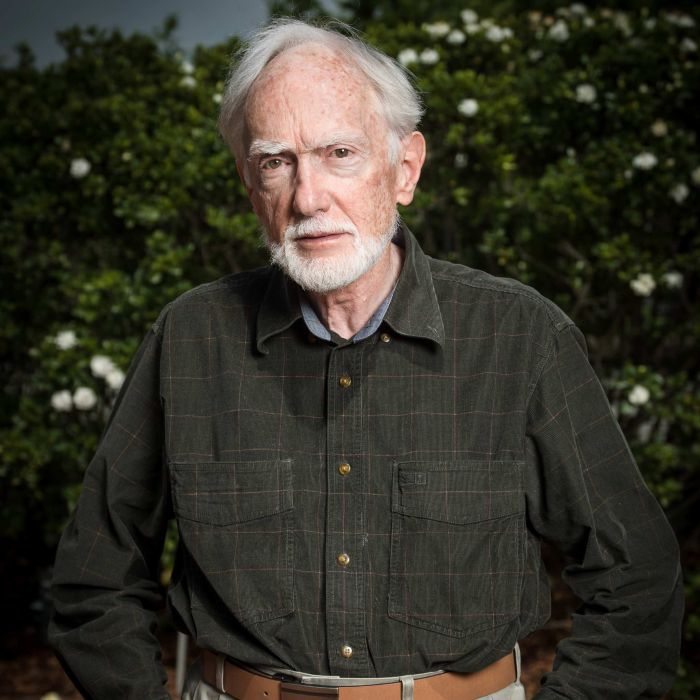
The benevolent co-founder of this annual event, Roger Riordan, in his address following Wednesday’s concert, expressed the aspiration that the Foundation would have achieved its aim if, somewhere along the line, it threw up another Mozart – which appeared to be setting the bar a tad high. Nevertheless, each of the pieces played by a chamber-formatted Melbourne Symphony Orchestra under conductor Benjamin Northey made its points with clear character and evident skill. All composers were required to relate their constructs to a specific theme: the city.
Samuel Smith, currently based in Melbourne, offered Interior cities, five sections that felt like three. attempting a depiction of the contrast and eventual confluence of exterior and interior states – emotional, geographical, psychological, civic: it was difficult to localise. Which was probably the point; the contrasts given by sets of instrumental trios in opposition positionally but melding into each other’s language illustrated the fluidity supporting the score’s development. Apart from a fondness for single-note crescendos culminating in a snappish change of pitch, Smith established a sustaining aural framework employing a central string nonet encased by two horn/trumpet/clarinet discrete bodies, a flute/oboe/contrabassoon trio in the usual woodwind position, two trombones, piano, harp, and three percussion and timpani operators. Interior cities is couched in a rigorous, emphatically contemporary language, although its most telling feature came in the concluding pages through a welcome relief from tension and rigour into pointillist flashes of colour leading to silence.
Sally Greenaway from the ACT juxtaposed the brash world of the modern city with extra-mural nature in Worlds within worlds. In its shape, this score seemed like an old-fashioned rondo, with episodes of placidity and romantic breadth interposed between loud if tuneful depictions of urban bustle. In her pre-performance interview, the composer indicated the influence of some early 20th century compositional strands found in Stravinsky and Tchaikovsky; once aired, it was hard to forget the names, so that echoes could be found at every turn. Greenaway’s opening strophes brought to mind the Shrovetide Fair music from Petrushka, if without the Russian master’s heaping up of time signatures on top of one another – but quite clearly in Greenaway’s use of brass and underpinning restless string patterns. In fact, the score proceeded in a regular pattern, specifically in its four-square phrasing, both in its city-scape sections and in the nature-evoking interludes with their shadings of the E minor Symphony’s Adagio, and a nifty glimpse of Gershwin’s An American in Paris to finish; the allure of the natural world is all very well, but Greenaway’s city is no hell-hole. In the concert’s four-part context, this made for easy listening and was none the worse for that.
From Perth, Alex Turley proposed a more minatory vision than anything heard so far. City of Ghosts is, as you’d expect, a deserted site, reminiscent for the composer of Francis Lawrence’s 2007 post-apocalyptic film I Am Legend where the Will Smith hero roves purposefully through a derelict New York. Not harmonically aggressive and sticking to a regular tempo through each of its three segments, Turley’s score kept substantially to the same personnel as used in Greenaway’s work and in the final contribution by Michael Bakrncev: pairs of horns, clarinets and trumpets; flute and oboe; the string body, percussion trio, with harp and piano/celesta for additional sparks. Just when you anticipated an extended study in sound-patterns, Andrew Macleod‘s alto flute produced a fluent, fertile melody, followed by Michael Pisani‘s cor anglais taking up the thread. A faster-moving segment featuring a well-constructed piccolo solo supported by string patterns led to a brief return of the opening mood. Turley offered his performers some aleatoric episodes but, judging by Northey’s cues, these were pretty well-contained moments of freedom.
Bakrncev’s Sky Jammer came closest in this quartet of compositions to the polemical. Its underlying concern is for the city bursting its bounds, the one-time wondrous skyscraper becoming a symbol of over-population as its species gets higher and more prolific. To this end, the work presents a fierce sound-fabric with plenty of frenetic action from the wind and strings, series of syncopated blips creating a sense of uncertainty and suggestive of rhythmic, and therefore social, disjunction. But the main actors on this scene were the percussion panoplies of Robert Clarke and Robert Cossom with Christine Turpin‘s timpani creating a powerful chain of bass timbres. These supplied the score with its climactic outbursts, asking the listener to respond to their explosions with – what? Sympathy for or empathy with the composer’s dystopian musical vision, I suppose. At its most frenetic points, Sky Jammer needed more strings – the only one of the night’s four pieces that underlined the inadequacy of that group’s dynamic impact. You could not mistake the composer’s intensity of purpose, notably in the work’s emphatic, menacing last strokes. Yet, in contrast with its companions, this construct presented its vehement washes of sound-fabric as an old-fashioned fusion of medium and message.
The Cybec 21st Century initiative is not confined to this one night. Two of these four works will be selected for inclusion in the MSO’s Metropolis New Music Festival, interpolated into Melbourne Recital Centre programs on Saturday May 14 and Saturday May 21 where they will keep company with Steve Reich’s City Life and Messiaen’s Couleurs de la cite celeste, among others. Of course, the Chosen Two will have the opportunity to refine their products further, with extended resources of personnel if no expansion in their works’ lengths. As an enterprise that encourages musicians to exercise their craft, the Cybec Foundation’s activity is an outstanding act of corporate benevolence; looking at the honour roll of previous participants, you come across many names that continue to feature on contemporary programs – no obvious Mozarts yet, but plenty of talents that continue to create with assurance and zest.
 O'Connell the Music