BACH: SPIRIT & SPECTACLE
Peninsula Community Theatre, Mornington
Saturday June 18, 20, 2016
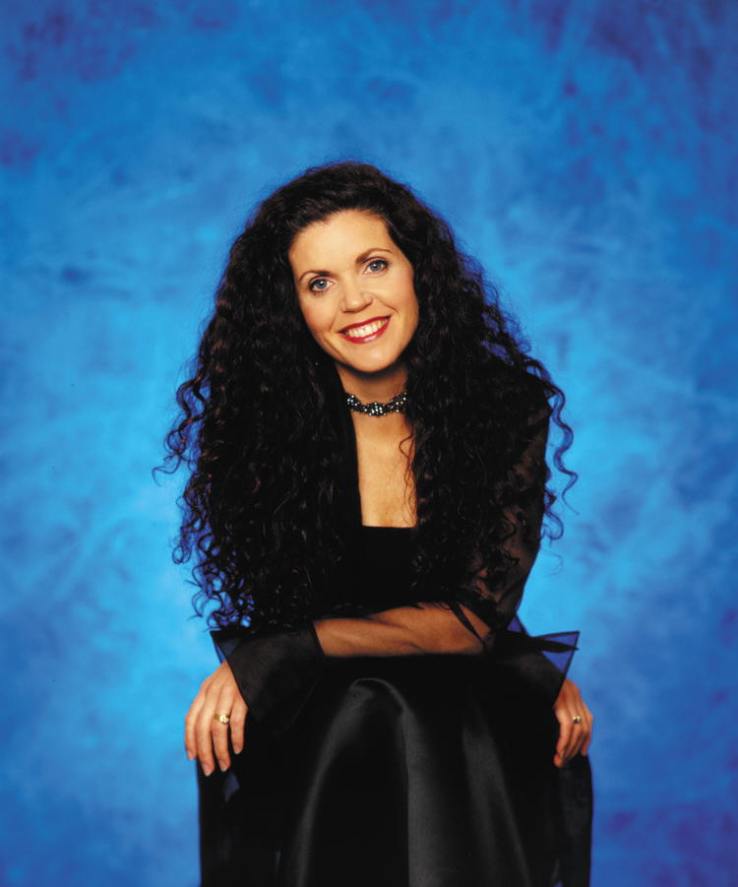
Sara Macliver
Quite a pleasant experience catching up with the MCO at an out-of-town centre, although you are hard pressed to call Mornington that any more, with Melbourne’s suburban tentacles and freeways stretching further south by the month. The community’s theatre is a no-frills but suitable venue for William Hennessy‘s young string players, their sound fabric coming through the hall with plenty of clarity and no error-shrouding echo. Then again, a fair bit of this night’s output was as straightforward as you can get, the ensemble quite happy to bound through their work at full bore.
Apart from Calvin Bowman‘s song-cycle Die Linien des Lebens, seven Holderlin settings, the MCO played Bach, beginning with a Stokowski arrangement of the simple aria Mein Jesu, was vor Seelenweh. Starting with a finely balanced statement for cellos and double-basses, a pair of violas joining in later, this was a luscious, lustrous setting in which the upper strings emerged for two strophes but left the bulk of the work to these lower-voiced musicians. And it made a fine impression, especially the sympathetic solo of Michael Dahlenburg who gave full value to the famous conductor’s heart-on-sleeve, Romantic view of Bach.
The orchestra thinned down, though not by much, for the following Brandenburg Concerto No. 3, one instrument a line and the support of a chamber organ which gave an added weight to the bass texture, revivifying the spirit of Stokowski and not for the only time in the evening. The reading proved to be beefy in tutti passages, the cellos urging through the first movement’s mix with enthusiasm. As a substitute for the two-chord slow movement, we heard the C minor Violin Sonata’s opening Siciliano given with finely-spun eloquence by leader Shane Chen, Dahlenburg’s cello support a prominent presence. The rapid last Allegro gave us loads of Baroque burble, heavy on the two accents in each bar, Merewyn Bramble heading a resonant viola trio with Hennessy showing his versatility by taking the third of these lines. Yet this finale also generated that individual Bach sound texture, thick with wood and vibrating strings as physical elements.
A scrap from The Art of Fugue, the Contrapunctus V where the inversions and stretti of the great compendium start, made for a moment of placid exposition, even if the concluding bars were ramped up dramatically to a this-is-the-end bloated statement. Soprano Sara Macliver then began Bowman’s cycle, only to stop in the second Sybille segment as an audience-member was taken ill and interval was brought forward. Beginning again, the soprano and MCO gave a sympathetic outing for this work which alternates full-blown lyrics with fragments of verse given sparse, mainly pizzicato accompaniment. From the opening to Fruhling beginning the cycle, Bowman strikes a lyrical vein, suggestive in its violin writing of Tippett, if more concordant than the English master-composer. But the work’s vocabulary refrains from being over-saccharine or too amiably pastoral with a good deal of assertive string support at play under Macliver’s wide-ranging line.
Later, in Abbitte, the emotional flavouring smacks more of Richard Strauss, showing a lavish richness of consonance between voice and orchestra, which dissipates in the succeeding Aus ‘Der Adler’ which exposes the most interesting, demanding vocal writing of the sequence. A focus on viola timbre throughout Auf die Geburt eines Kindes offered a tenor-pitched complement to Macliver’s warm timbre in the cycle’s most comfortable pages, while the Strauss shadows gathered again for the final An Zimmern which opened with a substantial and moving solo cello paragraph under Hennessy’s tremolo violin. In this quatrain comes the cycle’s title and the work concludes with sustained string chords, giving a sombre, majestic opulence to Macliver’s spacious outlining of the final transcendence-suggestive line, Mit Harmonien und ewigem Lohn und Frieden – Mahlerian in tone if not as sparse as that composer’s final philosophical musings.
This work shows a different aspect of Bowman’s output; well, different to me. The harmonic language remains orthodox, for the most part, the vocal line clean and uncomplicated if willing to linger on specific phrases. You hear fewer of the bucolic Vaughan Williams suggestions than in earlier pieces and, although the influences are still discernible, the composite language of these songs remains individual, the composer’s own.
Macliver returned to the program’s regular path with the second soprano’s Laudamus te from the B minor Mass, Bete aber auch dabei from the cantata Mache dich, mein Geist, bereit with Hennessy’s violin substituting for the original flute obbligato, and Vergnugen und Lust from the wedding cantata Gott ist unsre Zuversicht where pairs of violins and violas stood in for Bach’s two oboes d’amore. The soprano’s subtle, underplayed ornamentation proved as delectable as ever, her articulation penetratingly precise through pages of highly mobile writing, with never a hint of unease or hesitation. If you needed a key-point to demonstrate the singer’s expertise, it would be hard to surpass her smooth negotiation of the final aria’s central section: Das Auge, die Brust Wird ewig sein Teil An susser Zufriedenheit haben – here, words and music found an ideal fusion, each textual repetition to be relished. After this bracket, you wondered why many another soprano bothers in the face of artistry in Bach of this quality.
Finishing the night, Anne-Marie Johnson gave a firmly administered treatment of the D minor Violin Concerto, probably the original format of the famous keyboard work in the same key. Speaking of which, this definitely needed a harpsichord to add sparkle to a heavy string mass, Michael Fulcher‘s chamber organ again providing heft to an already well-encouraged bass component. Johnson gave as good as she got in terms of output, urging out her line against an unapologetic string backdrop, although the slow central movement revealed a steely lyricism, welcome between the hectoring pair of Allegros. Some relief might have been brought into play by cutting numbers back in non-tutti moments; as it was, the finale’s continuo homophony became a driven chugging – energetic, for sure, but deficient in timbral variety or intellectual challenge.

 O'Connell the Music