Half a night’s excellence

CONCERT 1: MIMIR CHAMBER MUSIC FESTIVAL

Melba Hall, University of Melbourne

Wednesday August 31, 2016
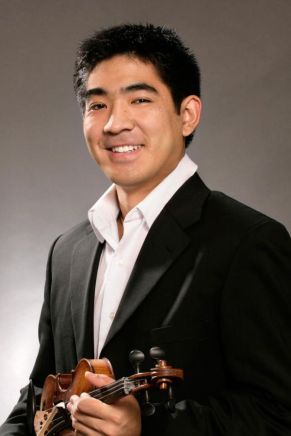
jun iwasaki

                                                                                     Jun Iwasaki

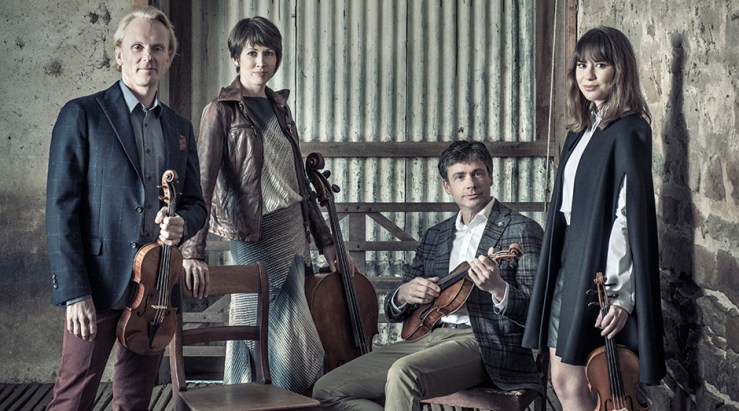
Back for its fourth Melbourne season, the Mimir week of performance and teaching has again brought to the University of Melbourne some gifted performers from the ranks of American orchestras.   The festival’s three major recitals feature four visitors and three local musicians: Curt Thompson, who is the festival’s director and the university’s head of strings, alongside pianists Kristian Chong and Benjamin Martin who are taking part in a piano quartet each.

My limited experience of the Mimir events has been positive,  all the more so when you consider how ad hoc some of the quartet personnel arrangements have to be.   For this year’s work, Thompson brought together Stephen Rose, principal second violin with the Cleveland Orchestra;  Jun Iwasaki, concertmaster of the Nashville Symphony,  Joan DerHovsepian, associate principal viola of the Houston Symphony Orchestra,  and Brant Taylor, cellist at the Chicago Symphony Orchestra.  Naturally enough, these artists have more in their resumes than simply a chain of orchestral positions: all are educators and have spread their talents widely, albeit for most of the time across their home country.

Wednesday’s opening gambit was Mozart K. 421 in D minor, one of the Haydn set and here given a gem of a performance with a collegial warmth that showed no signs of hasty accommodation or stress in enunciation.  In this instance, Rose took the first violin desk and revealed a rare sensibility in welding his line into the work’s fabric, departing from the general operating principle that the top line is always dominant even when its content is subsidiary.

Between Rose and his second, Jun Iwasaki, an exemplary interdependence obtained throughout this score but the reading reached its finest point at a fairly transparent stage: the last 8 bars of the third movement’s trio where both Rose and DerHovsepian executed a splendidly shaped doubling, almost bowing over the fingerboard – combining the brisk rhythmic snap of this segment with a bucolic absence of vibrato.   Just as impressive an interpretative point came in the final Piu allegro of the last movement variations-set with a delivery of brilliant lightness, the groups of rapid-fire semiquaver triplets mirrored with fine musicianship across all four lines.

The violinists changed positions for Respighi’s No. 3 in D Major of 1907, for which the first desk sets a more determined pace and enjoys more exposure.   Iwasaki made a more forthright-speaking leader than Rose, but that is his natural role in this full-blown late Romantic piece.   Also a challenging presence was DerHovsepian, whose viola made itself felt in exposed passages, even though her instrument faced towards Melba Hall’s back wall.   Taylor seemed the odd-one-out in this work, but it was hard to tell why.  His production occasionally proved suspect, particularly at the upper end of the compass Respighi requires, but the timbral differentiation could just as easily have been due to a lack of sympathy with the score’s idiom.   Still, the group realized to the full the work’s mercurial changes during the inner movements, draining as much drama as possible from the last Lento doloroso variation in the second movement with its unexpectedly fierce conclusion.

Benjamin Martin took on keyboard duty for Faure’s G minor Quartet, a hard ask of any group and a wearing odyssey for Iwasaki,  DerHovsepian and Taylor as well as the pianist. What emerged from this delineation was the inner complexity of the two outer movements but the quirky flightiness of the Allegro molto and the surging string arcs that eventually permeate the Adagio‘s central pages went missing.   In fact, the performance seemed to be an uneasy one as a whole, Taylor unsure of gelling with Martin’s attack at several points, although Iwasaki and DerHovsepian seemed happy enough.   But the lengthy, solidly argued finale was hard driving for all involved and, where you might have welcomed some pulling-back in dynamic and force of delivery, the effect was more of gritty determination.

On Friday at 7:30 pm, Thompson replaces Rose for US composer Mason BatesFrom Amber Frozen, but the visitors are together again in Beethoven’s G Major from the Op. 18 set, and Rose does violin duty in the Brahms A Major Piano Quartet with Kristian Chong at the keyboard.   The final recital at 3 pm on Sunday finds Thompson and Iwasaki exchanging chairs for Turina’s La Oracion del Torero and Debussy in G minor, the guests reforming for the festival’s finale: Schubert’s Death and the Maiden.

Soprano leads the way

L’AIR PARFUME

La Compania

Deakin Edge, Federation Square

Saturday July 16, 2016

Jacqueline Porter

                                                                                  Jacqueline Porter

A short program, as is this excellent period music ensemble’s wont, but an entertaining exposition of the subtle pleasures of the air du cour, the court song genre that is linked with the reign of Louis XIII, although those particular decades seem to have seen its finest final flowering.   Much of the music from this program preceded Louis’ accession in 1610; indeed only two names – Pierre Guedron and his son-in-law Antoine Boesset  –  actually worked at that monarch’s court.   On Saturday night, most of the other representatives heard from who worked in this form were retained by Louis’ predecessors, Henri III (Girard de Beaulieu) and Charles IX (Guillaume Costeley).  One of the names – Philippe de Vuildre – actually held posts for the Tudor monarchs Henry VIII and Edward VI.

Danny Lucin and his band – a pretty compact group this time around – gave us a fair tour of the air’s expressive breadth, punctuated by three bransles, a compact group of sequential allemandes by Claude Gervaise, and the only composition by Gervaise’s business partner Pierre Attaignant that you hear today: Tourdion, or Quand je bois du vin clairet if you’re in a singing mood.

This is music that can take you by surprise, breaking an anticipated pattern as in the opening anonymous Bransle de Loraine where the tune’s second half doesn’t balance the first, making you feel that the shape is about two bars short; dancing to this, you’d need to keep your eyes on your partner.  Much the same obtained in a balancing phrase during Guedron’s suspiciously racy Je suis bon garcon, where the singer is nothing of the kind.   Anonymous gave us two of the recital’s more intense pleasures in the air Une jeune fillette with its caressingly soft accompaniment from Rosemary Hodgson‘s lute and the gamba of Victoria Watts, and the Bransle de la Torche, a stately stepper with some resonant open string punctuation marks from Emma Williams‘ violin.

In soprano Jacqueline Porter, the company scored a bright carrying voice, very handy in some of these songs that occupy a middle register for a good deal of the time.   Yet the singer had room to be heard to fine effect in the plaintive Me voila hors du naufrage which lutenist Charles Tessier set at a more sustained high tessitura than much else on this program.   She also made light work of the off-centre accents in Beaulieu’s Rosette, pour un peu d’absence, a lucid expression of disappointment and disdain from a lover whose girl proved  .  .  .  inconstant, as they say.   And another sample of mixed emotional language emerged in Costeley’s Mignonne, allons voir si la rose which sweetly invites the addressee to bed with that tired excuse that her beauty won’t last; as old as Vivamus, mea Lesbia, et amemus but full of innocent charm in Porter’s calm, beguiling delivery.

Porter held her own in terms of audibility, the only occasions giving cause for concern emerging when Lucin’s cornetto and Glen Bardwell‘s sackbut were together in the mix.   Even so, she fared better than Hodgson and Watts who were inaudible during some of the dance doubles.   Christine Baker contributed a stolid if timbrally unadventurous percussion, but the ensemble needed more textural variety  –  at least another violin, or the buzzing energy of a dulcian or two.    A possible move might be to utilise two singers – even three? – as some of this music could be performed to fine effect with the supporting upper lines sung rather than (or as well as) played.

La Compania ends its Deakin Edge year on Saturday November 12 with Il Paradiso, a turn around the early Italian Baroque with particular reference to the age of Monteverdi and his contemporaries.

Wiping the floor

TEMPESTA

Australian String Quartet

Melbourne Recital Centre

Monday July 4, 2016

Australian String Quartet

                                                                            Australian String Quartet

And then there are the nights when everything pans out   –   the playing is as close as live performance gets to flawless, the works programmed combine (despite appearances) to offer a solid display of prowess and musical intelligence, any defects are swamped by the context in which they momentarily rear up.  The latest subscription series recital from this ensemble was exemplary: four performances that should have had the Murdoch Hall audience roaring for more.

Violinists Dale Barltrop and Francesca Hiew again impressed for the unusual nature of their upper-layer combination. Both seem to read each other like performers with an inbuilt agility resulting from decades passed in shared experience, their partnership generating lines rich in fine synchronicity and balance.  At the same time, each has a distinctive colour: where Barltrop produces a finely spun, athletic line, Hiew offers a sturdier heft to the combination with a vitally pronounced lower register.  Further to this, violist Stephen King and cellist Sharon Draper collaborate in similar style, King’s trenchant output a fine match for one of the fiercest bass lines at play on the local chamber music scene.

Not that this harnessed aggression came to the fore straight away; the group opened with Webern’s Five Movements for String Quartet, that ground-breaking suite of atonal wisps and blurts that somehow manages to make a set of individual statements that cohere to present its listeners with a coherent sound-world, despite those sound-production techniques that still have the power to startle, especially the lavish use of sul ponticello directions and the application of mutes.  What took you aback about this reading was a tenderness given to the disjunct strands of sound that permeate each page; in the ASQ’s hands, Webern’s pp markings were barely audible and the expressionist suggestions of the opening movement and later the restless ostinati and unison eruption of the third came over with a veiled drama that satisfied much more than the galvanic spasms of action that other ensembles favour.

A rigorous respect again emerged in the following Haydn,  Op. 20 No. 2 in C Major.  Draper’s cello set the scene with an impressive firmness as the composer begins jockeying with his force’s contrapuntal interplay, and the group’s determination was sustained up to the jaunty fugue/finale.  What you noticed was a lack of over-simplification, so that the Menuet came across with an unexpected grittiness; not that the reading lacked bounce, but the chromatic fall of the movement’s second half impressed for its dourness after the high-flying skittishness of Barltrop’s G major ascent to a high B immediately beforehand.  And the unison opening to Haydn’s Adagio, in its purity of articulation, brought back memories of the Webern’s more dramatic bars.

Joe Chindamo‘s 2013 String Quartet No. 1 is cast in the traditional four movements: Tempesta, Lament/Seduction, Frenzy and Flight.  An amiable work, its emotional statements avoid extreme expression; the promised storm is a pretty well-controlled outpouring and the frenetic pages later on show up surprisingly balanced and well-proportioned.  For all its moderate temper, the piece enjoyed a deft, enthusiastic exposition from these players who ensured that the composer’s expression markings and tempo shifts were given full measure, from the oscillations between storm and momentary calm in the opening movement, through the pizzicato-heavy vibrancy of the Frenzyscherzo, to the psychologically ambivalent finale.  Chindamo employs lucid melodic and harmonic structures, looking back on the quartet’s accepted heritage rather than employing the lingua franca of the post-Webern school; a blast definitely back to the past, but none the less attractive for that.

Just in the right program position, the ASQ came to Mendelssohn’s last in F minor which is inextricably linked with the death of his sister Fanny.  The score is a moving revelation of the composer’s profound reaction to this loss, an essay in a quality that rises above gentlemanly despair, where the composer’s craft is subsumed in an atypical and sustained tragedy.   Here the performers gave another sterling interpretation, maintaining the tension from the first Allegro‘s urgent rustlings onward.   Despite the intensity of attack, each musician maintained a consistent dynamic level in the ensemble, the work reaching its climax at the change in key signature in the core of the Adagio where the  delivery of Mendelssohn’s fortissimo outburst with Barltrop riding the blast was both emphatic and dangerously intense, the sort of risky straining at the bit that you rarely hear from more temperamentally circumscribed ensembles.

In this powerful piece, the ASQ capped off a generous and redoubtable stretch of playing where memorable passages remain in the memory long after, like the insistent syncopations disrupting the even pulse during the first part of the Allegro assai, and the beneficence of those two melting passages where the quavers and triplets stop for the first movement’s placid interludes.

In  fact, the only complaint you could make about this night would have to do with the audience.  It amazes me that some concert-going individuals will insist on giving full vent to their adenoidal or catarrhal problems at inopportune moments mid-performance.  Even more startling is the dual practice by such recital hall offal of continuing to inflict their medical drawbacks at large for extended periods, at the same time making no effort to muffle their all-too-audible mucous movements.  You can sit in the Recital Centre’s Salon for a solid hour and not experience any of this unpleasantness; up in the Hall, it seems, anything goes.  An experienced usher once told me that elderly people are often unaware that they are acting offensively; maybe, but more than a few of these clowns look suspiciously middle-aged.   Some old adages make good sense – like, if you’re sick, stay home.

Clarity and elegance

MUSICAL OFFERING

Selby & Friends

Deakin Edge, Federation Square

Wednesday June 15, 2016

Selby & Friends

                                                     (L to R) Nikki Chooi, Timo-Veikko Valve, Kathryn Selby

For this month’s subscription series recital, Kathryn Selby welcomed back to her piano trio the principal cellist of the Australian Chamber Orchestra, Timo-Veikko Valve.  As for a violin, a newcomer made a positive first impression; Canadian artist Nikki Chooi took the night’s opening, Julian Yu‘s Prelude and Not-a-Fugue trio, and contributed substantially to an assertive reading of the Australian composer’s Bach tribute.  In fact, Chooi set the pace by stressing the vigour in the Prelude’s initial rising chromatic arpeggio flourish, setting up a rougher communal texture than expected.

Not that the piece makes too many challenges in terms of dealing with a wealth of material; this Prelude follows a Bachian pattern in its motoric repetition.  With the non-fugue second part, Yu makes use of the main theme from the Bach work that gives this program its title.  While the strict rules of fugal establishment and sequencing are not followed, the contrapuntal interweavings in these pages impose a sort of order that suggests fugue.  As a homage, both parts are appealing, updating a format that can stand up to imitation, both satirical and flattering.   As an initial gambit, this piece proved amiable, not too taxing for the executants, and just long enough.

Chooi and Selby collaborated in Schumann’s Violin Sonata No. 1 in A minor, a work that you can go for years without coming across in chamber music programs; the only other time I’ve heard it live, I believe, was at an Australian National Academy of Music program several years ago.   These performers made an effective case for the work, which is not that substantial in terms of developmental length.  But it did give Chooi room for his powerful projection, right from the opening G-string statement.  This is not a violinist who holds back and this Mit leidenschaftlichem Ausdruck movement gave him scope to construct some drivingly urgent melodic chains, alternating with resonant octaves and passionate semiquaver sequences, particularly nearing the final bars.  His ability to articulate rapidly and with some humour informed the succeeding Allegretto and the concluding Lebhaft was taken at a reasonable pace, adding to the pleasure of the  E and A Major interludes that brighten up a rather dour landscape, Selby giving the violinist plenty of space but not holding back with her double-hand full chords.

Valve was apparently indisposed but still managed to give a sterling reading of the Brahms E minor Sonata.  Both he and Selby took the first movement’s Allegro non troppo at face value and erred on the stately side for its initial pages. Right on top of the piece’s challenges, both musicians gave each paragraph full weight, notably in the first movement’s shift to (nominally) F Major where Brahms soars into magnificent polemic. Selby made light work of the testing figuration in the Trio of the Allegretto, Valve keeping the circuitous melody line of this segment fluent and placid.  The pianist’s control of touch in the finale showed as securely as ever, both performers keeping the texture lucid, refraining from dynamic over-kill even in the helter-skelter of the last page’s Piu presto.

The three musicians came together again for the night’s concluding gem, Schubert in B flat.  For once, this well-worn masterpiece came over with few signs of Biedermeier cosiness or self-satisfaction, Chooi making a firm and generously voiced statement from the outset, in fine collaboration with Valve during the second movement’s imitative duet that stretches the cello to the treble clef for most of its length.   Later, the Trio to the third movement substantiated this reading’s lack of sentimentality with an unexaggerated vibrato from the strings while Selby’s keyboard chords on the off-beats remained recessed.  In sum, the trio came across with its clarity intact, if also having a touch of the scouring cloth with the dynamic levels a tad strident in places like the finale’s octave/unisons preceding Letter A, this feature balanced by a spotless delivery of the movement’s first 3/2 interlude in D flat –  an inspired sideways shift on paper and realized with agility and sustained elegance by these executants.

The best came last

ENSO STRING QUARTET

Melbourne Recital Centre

Tuesday June 7 & Saturday June 18, 2016

Enso String Quartet

                                                                                Enso String Quartet

The latest visitors appearing under the Musica Viva banner have made it to Melbourne; their only previous appearance, as far as I can tell, has been at the Huntington Estate Music Festival.  For this first intra-capital (and Newcastle) tour, the ensemble is presenting two programs; well, one-and-a-half, actually as two works remain constant across the board.

The Ensor are an expert group, well versed in their craft since their foundation at Yale in 1999, although the actual personnel has changed since the ensemble’s well-received recordings of the complete Pleyel quartets.  Since those days, second violin Tereza Stanislav has been replaced, first by John Marcus, then by Ken Hamao; at the viola desk, Melissa Reardon has taken over from Robert Brophy.   But the current formation has a homogeneity and balance you’d expect from a body with that temporal pedigree and history of accomplishment.

One of the constants throughout the Ensos’ Australian sojourn is a freshly composed work by Brenton Broadstock, commissioned (like so many other pieces) by Musica Viva.  Safe Haven celebrates the escape from and survival of the 1956 Hungarian uprising of a young child, Marianne.  In three movements, the work delineates the situation from which Marianne and her family fled, the first inklings of freedom, and the reassurance offered by their coming to rest in Australia.    Broadstock uses a nursery song, Boci, boci tarka, as the basis for a set of variations.   In the first, the melody is discernible under some intimations of unrest represented by rapid gruppetti and plenty of loud outbursts, but the task of expressing in musical terms the national tragedy that was taking place is a daunting, probably impossible one.

With the resources of four strings only, any composer would blanch at the idea of conveying the distressing images that remain in the memory of those days – a year when the term ‘Molotov cocktail’ came to mean something to my generation.   The rebellion’s brutal repression eventually resulted in the sequestration of Cardinal Mindszenty in Budapest’s American Embassy and later the infamous execution of Premier Imre Nagy.     Closer to home, the year 1956 still reverberates in this city for the infamous Hungary/Russia water-polo match during the Melbourne Olympics. Broadstock takes a sensible path and hints at tragedy rather than attempting a full-blown dramatic musical panorama.

In the second movement, the theme emerges en clair and the expressive language turns more congenial; the third lullaby variation is a long stretch of placidity which is determined to hammer home the message of harmonious security at extraordinary length. Safe Haven wears its emotions openly and is quite accessible; pleasant enough but its interest is limited by a perplexing veneer of simplicity.

The other fixed touring repertoire component is the earlier Beethoven in E flat Major, the Harp,  with its mildly suggestive first movement pizzicati.  Here was a satisfying performance, full of energy and a powerful impulse from opening Poco adagio to the finale’s set of variations.   You could have asked for more subtlety in the third movement where the players’ emphasis fell on the dramatic potential of the central declamatory Piu presto rather than the surrounding pages’ dour legerdemain.   But, at the work’s conclusion came the question that presents itself with a worrying regularity these days: what differentiated this reading from any other in terms of insight?   While admiring the players’ dedication, the answer had to be: not much.   Like most of their peers, the Ensos perform standards like this with technical security and a communication of the work’s developmental progress.   But I found it hard to recall any section that impressed for its intellectual incisiveness, or even a detail that offered some new aspect to these familiar movements.

The night’s second part offered two related pieces in Turina’s Serenata and Ginastera’s Quartet No. 2.   The first, a one-movement construct, lays on the Iberian colour with a will at the start before its substantial central Andante where the instrumental interplay takes more prominence.   The spirit of Falla rises every so often but the composer’s individuality is continuously asserted with a deft manipulation of the framing segments’ 3/8 rhythmic pulse and a masterful control of the string fabric’s possibilities.

With the Ginastera, the Ensos are playing to a particular strength, as they have recorded the Argentinian composer’s complete output in this genre.  Much has been made of the twelve-tone elements in this piece but, while Ginastera clearly uses Schoenbergian rows, he does so with a freedom from any doctrinaire application; repetitions abound, the immediate repetition of fragments is just as common, and no attempt is made to avoid consonances.   The score gave the performers plenty of individual exposure; first, in the second movement Adagio angoscioso with some brief shining moments for Melissa Reardon’s well-projected viola and Richard Belcher‘s eloquent cello; later, in the fourth movement Tema libero e rapsodico where each instrument enjoyed a cadenza, first violin Maureen Nelson having the opening and closing words, with second violin Hamao making a stentorian meal of his Allegro variation.

For all its dodecaphonic referents, this work gave Tuesday’s Musica Viva patrons few problems, its 1958 progressiveness a modest challenge alongside other contemporaneous works like Boulez’s Improvisations sur Mallarme, Stockhausen’s Zyklus, or Cage’s Concert for Piano and Orchestra.   But it showed these visiting players at their best on this occasion, their performance definite, full-blooded and persuasive.

The Enso program on June 18 replaces the Turina and Ginastera with Ravel in F and a Renaissance medley, compiled and arranged by first violin Nelson.

Some hits, a few misses

PAAVALI, POULENC, DEBUSSY & BEETHOVEN

Paavali Jumppanen, ANAM Musicians

Australian National Academy of Music

Thursday May 19, 2016

Paavali Jumppanen
                                                     Paavali Jumppanen

Back at the National Academy as a guest faculty member, the Finnish pianist mentored and participated in this night of doubles where each composer was represented by two works; not in an attempt to show any progress from youth to maturity, but more to give each of them another voice, no matter how similar in accent.   While the contrast between Poulenc’s Trio for oboe, bassoon and piano of 1926 and his horn/piano Elegie from 1957 was pretty stark – the one loaded with frivolity and cheek, the Dennis Brain lament heavy with reminiscences of the Dialogues des Carmelites opera – Beethoven’s B flat Trio Op. 11 and his E flat Quintet for piano and winds, separated from each other by two years, displayed not-unexpected affinities.   The links between Debussy’s Cello Sonata and some of the Book II Preludes are more difficult to articulate yet the sonata’s Serenade and General Lavine, eccentric share a brusquerie and volatility that reveal their author’s handwriting very clearly.

Similar or dissimilar, the six works programmed made for an intermittently involving night, beginning with the Poulenc trio from oboe Stephanie Dixon, bassoon Christopher Haycroft, and piano Alexander Waite.   In the South Melbourne Town Hall’s large air-space, the keyboard sounded over-lush, a frequently applied sustaining pedal ensuring a mushy complement for the winds; a much better mix emerged in the Rondo-finale with the high-register piano writing slotting in deftly with the active woodwind lines.

Beethoven’s Gassenhauer Trio from clarinet Kenny Keppel, cello Jovan Pantelich and piano Adam McMillan made a more consistent fist of getting to grips with a consistent interpretation, giving just the right measure to the composer’s aggression; by the end of the exposition repeat in the first movement, the ensemble’s concerted attack made you feel that this was an exceptional performance-in-the-making, reinforced by an excellently well-managed variety in dynamic gradations from all three participants in the following Adagio.

For the Debussy sonata, Pantelich was accompanied by Jumppanen, who had the score by heart and was able to keep both eyes on the string player.   With the piano lid on the long-stick, the keyboard dominated the performance, pretty obviously in the Final which saw Pantelich drowned at several important points (for the cello), both artists taking a very cautious approach to the composer’s Anime direction.   Jumppanen was faced with more of a challenge in the Poulenc Elegie from Timothy Skelly‘s beefy horn  12-tone solo opening foray, efficiently anticipating that trademark striding energy when the piano enters this scene.   Listening to a French horn by itself always fills me with foreboding; the instrument is difficult and miscalculations occur with regularity.   But Skelly’s performance – apart from one slight and soft blip in the core of this score’s main argument – proved exemplary, if inclined to the more forceful end of the dynamic spectrum.

Apart from the Lavine piece, Jumppanen played Ondine and Bruyeres; the first delineated with care for detail which made the irregular arpeggio-like gruppetti of 12 notes all the more striking and crisp; the English countryside/Scottish moors/Daniel Waters film tone-picture enjoyed a plain-speaking interpretation, without the push-me pull-you rubato interpolations that other pianists use to make the negotiation of three staves easier.

The program’s concluding Beethoven Quintet Op. 16 involved all four wind players heard so far and a new pianist in Nicholas Young.   As with other pieces preceding it, this was excellent in patches, nowhere more so than the opening to its central Andante cantabile where, after the pianist had enunciated the main theme, the winds entered en bloc to repeat it with a rich warmth of sound that transmuted the ordinary into a powerfully affecting statement.

Here was a performance with relatively few flaws, apart from a difficult moment for Skelly in the first movement’s Allegro where, 40 bars from the end, Beethoven gives the horn a falling arpeggio solo that he puts into lip-splitting triplets two bars later.   Young had great success with his acutely active part, while Keppel took bravely to his task as dominant wind; in fact, I would have appreciated hearing Dixon’s line surging out of the mix more often but, in this case, the reason for the oboe’s reticence is as much due to Beethoven as to the assertiveness of the other ensemble members.

Or what’s a heaven for?

THROUGH NATURE TO ETERNITY

Tinalley String Quartet

Melbourne Recital Centre

Wednesday May 4, 2016

Tinalley String Quartet

                                                                             Tinalley String Quartet

Doing the right thing by its patrons, this amiable ensemble opened  the first of its skeletal Melbourne series (two recitals?!) with an ever-welcome standard: Ravel in F.   First violin Adam Chalabi invested the deceptively open-ended first theme with just enough sweetness while second violin Lerida Delbridge mirrored his approach when the time came to share the melodic statement’s second strophe.   But violist Justin Williams‘ first point of exposure at bar 28 sounded roughly delivered in this context, a moment of discomfort in the work’s steady progress.   Not that this persisted as Williams gave a moving account of the D minor duet at a few octaves’ distance with Chalabi a bar after Letter 4: one of the most memorable passages in the quartet, both here and when it recurs in the rather reactionary recapitulation.

For the following Assez vif, cellist Michelle Wood made fine work of a solid underpinning in the oscillation between 3/4 and 6/8 that makes these pages a challenge in preserving clarity of metre.   Even better came in the harmonic shifts of the quartet’s Tres lent central movement, here handled with appreciable sensitivity, especially given the complexity of Ravel’s scoring with demi-semiquavers and semiquavers bandied about across all lines in the central pages.   More to the point, the Tinalley musicians took a firm grip on the composer’s slow ascent to a fierce climax in the passionate fortissimo at the Letter 8 shift to a Modere change of pace: a tellingly balanced passage of play.

Following the Ravel work’s half-hour length, interval signified a point of demarcation.  What followed came as an abrupt change of pace, both musically and emotionally.  With guest artist Lior Attar, the quartet worked through a compendium intended to illustrate the recital’s title, those last lines of Gertrude’s self-justifying first speech to her sardonic son.   A collaboration between Ade Vincent and Lior sets both Thomas’s Do not go gentle and American poet Hazel Hall‘s Hours as a matched pair.  For the Welsh writer’s vehement elegy, the composers have opted for a largely diatonic language, the quartet offering chords that slip and slide with some Sculthorpe-type rapid glissando swipes as colour-points.   The vocal line is a simple lyric with suggestions of Celtic folk-music, the only aggression coming in the fourth Wild men verse when the violins  make substitutes for guitars, the cello indulges in a slap-bass underpinning while the viola intones the melody line.   At the end, the singer is left unaccompanied to repeat the poem’s last line with fading strength – which bears comparison with Thomas’s own hypnotic reading of his poem.

The Hall setting begins with an instrumental hoe-down, changes for the second verse into sustained chords for the Hours eternal in their pain before reverting to the heftier movement, violins and cello rapping their instruments alongside pizzicato chords from the viola.   Again, the poem’s final line enjoys a repetition, but the matter that Lior sings again falls into the folk-song genre.   As companion pieces, the songs offer a mildly different atmosphere and, while nobody is over-stretched, both instrumentalists and singer gave the work every care.

Three of Dvorak’s Cypresses moved us into the land of the love-lorn, Chalabi bearing responsibility for pretty much all the vocal line from the original songs, Williams’ viola putting in a momentary helping hand for O nasi lasci, the last of the three extracts performed.   These sat uneasily beside the preceding songs, mainly because the Czech master’s melodies impressed as more sophisticated and expressive, evoking both desire and melancholy without self-indulgence and also having the unteachable gift (one that Dvorak did not always exercise) of being just long enough.

Lior sang his well-known My Grandfather to his own guitar accompaniment; again, the melody is Celtic-suggestive but also has an undercurrent of bush balladry.  Even after several performances, it still makes a direct emotional impact and earned its place in this program’s Seven Ages of Man musical symposium by bringing several significant strands together – feckless youth, old age sans everything, the cares of maturity.

Answering this, the Tinalleys played Barber’s Adagio in its original setting, a piece that has become a sort of American national elegy since its association with the deaths of Franklin D. Roosevelt and John Kennedy; a lesser source of grief was its performance on the day that Trump won his way through to the Republican nomination.  In their carefully-paced interpretation, the players reminded us of how voluble this set of pages can be without that corner-rounding smoothness you hear in the commonly-heard string orchestra arrangement, and how finely Barber contrives his slow progress to the work’s massive climactic chords.

Lior returned for the recital’s finale: Sim Shalom from the Compassion cycle, which he wrote for voice and orchestra with Nigel Westlake who transcribed it for this program.   Here, the vocal inflections are Judaic and Arabic, the modes employed suggesting both heritages in an affecting prayer for peace.    Again, this is not challenging music, making its points with a simple sincerity but bringing into play Lior’s extraordinary alto register, strikingly clean and penetrating   –  just the right vehicle for this final review of life’s span in a program that, throughout its latter half, made an ambitious grasp at illustrating the ineffable.

We should remember them

NOIR

Ensemble Liaison

Melbourne Recital Centre

Wednesday April 27, 2016

Ensemble Liaison

                                                                                  Ensemble Liaison

As the group’s front-man said, this was a program of composers who don’t get many performances these days.  Well, that’s certainly true but a further problem is that, with two of them, we used to hear only a few works from their considerable compositional achievements, yet even these popular choices are currently falling by the wayside.  Still, this night went some way towards resurfacing their names, even if the point of the night’s title seemed rather arcane after the first ten minutes or so.

At the opening, the Liaisoners welcomed Sophie Rowell, Associate Concertmaster of the Melbourne Symphony Orchestra.  With foundation members Svetlana Bogosavljecvic, cellist, and pianist Timothy Young, Rowell performed Bloch’s Three Nocturnes of 1924, the year when the composer took out American citizenship.  As Griffith’s indicated, Bloch’s name is one that is becoming a rarity in concert halls, although time was when the Schelomo rhapsody was a welcome annual revenant, the Concerto Grosso No. 1 was not unknown, the Israel Symphony had its adherents, and every violinist had Baal Shem in the repertoire, as cellists did the From Jewish Life sketches.

If anything in the program impressed as black, these small pieces came close, even though the darkness suggested was simply the same night that permeates Chopin’s works of the same descriptor.  In fact, both the opening Andante nocturnes bore the Chopin imprint, if the vocabulary proved more complex.  While the first is scenic, its successor held more expansive character with some splendidly broad melodic speeches in its central pages with a lavishly Romantic violin/cello duet.  As for the last one –  Tempestuoso – being jazzy, as Griffiths and other commentators suggest, you could find faint traces if you listened hard but the piece impressed more for its irregular metre and sudden vivid strokes of vitality that served as comparison with the piece’s predecessors.  The trio gave the set fine treatment, Young a responsive support for the two dominant and active string players.

As for strangers on  a program, Dohnanyi would seem to be in a worse case than his Swiss/American contemporary. Not too long ago, the Variations on a Nursery Tune appeared in every Youth Concert series I can remember, as well as occasionally hitting the big-time Red Series or Master Series sequences.  But as for the Hungarian composer’s operas, the symphonies, the piano and violin concertos, any of the piano pieces (and he was a great pianist, as the recordings attest) – you can live a lifetime and not come across them.  I seem to remember his Stabat Mater being sung by an adventurous women’s choir or three many years ago.  All the more welcome, then, was this airing of the Sextet in C Major with guests Elizabeth Sellars on violin and Christopher Moore playing viola alongside Bogosavljecvic’s cello in a trio facing Griffiths’ clarinet and final guest Roman Ponomariov‘s horn, with Young acting as circuit-breaker.

The shade of Brahms falls across much of this score, especially in its grandiose moments like the opening Allegro appassionato which sounded at its best when the adjective applied full-bore.  With plenty of octave/unison work and surging, eloquent melodic swathes, the score maintained involvement from the start and sustained it – which you would be hard pressed to assert about many another post-Brahms piece.  Ponomariov impressed throughout the work but nowhere more than in this section where he played the opening subject and powered through a wide-reaching part with only one slight slip.

Young and the string trio made a beguiling start to the Intermezzo: Adagio in A flat, giving the sentiment room to settle before the 12/8 march interlude introduced the wind duo’s direct-speaking statements that made an excellent study in timbre-mixing and just how much leeway to allow your partner.   In place of a minuet, Dohnanyi uses another allegro in 2/4 with the clarinet giving out a tune that might have escaped from one of the Brahms Serenades. This multi-partite sequence leads to a reminiscence of the horn’s first movement initial melody and suddenly the composer takes us into his finale with a perky and simple C major piano tune that is shared  by all (even the horn) despite its fast-moving opening mordent shape. As with the opening pages, this section of the work impresses most when the tension is high – a hard thing to achieve with so simple a tune – but Dohnanyi eventually works his players into an emphatic D flat Major, only to slip sideways in to a C Major perfect cadence.  It’s not witty music (what is?) but its expansive good-humour is patently obvious and these performers gave it rousingly firm handling with not a noir trace in sight.

Osvaldo Golijov‘s The Dreams and Prayers of Isaac the Blind bases itself on the work of a medieval Provencal Kabbalist rabbi, specifically his dictum that the universe’s objects and occurrences are founded on the combinations of the letters in the Hebrew alphabet.  As a musical illustration of this theory, Golijov’s work for clarinet and string quartet holds three main movements celebrating, Aramaic, Yiddish and Hebrew.  These are encircled by a prelude which takes in the first movement’s Aramaic tone while the Postlude leads out of the final movement’s extended prayer for clarinet-as-cantor.

The performance proved engrossing, dramatic but not blackly so, although for this listener the interest fell pretty strongly on its physical character: the sounds urged from the quartet and their lengthy phases of near-stasis, and Griffiths’ oscillation between piccolo clarinet, instruments in B flat and A, bass, and a concluding passage featuring the basset horn.  As for what was played  –  Golijov’s material  –  that seemed, in essence, interchangeable in structure and melodic process; but what else would you expect with three aspects for the same linguistic heritage, especially when the klezmer-heavy middle movement contained so many Jewish popular-music tropes that somehow seemed to leach into surrounding areas?   As a display by Griffiths, the work gave testament to his technical skill and his ability to construct and sustain the composer’s emotional and sound worlds.   What was missing, I suppose, was something that the composer could not provide or never intended to cover in the first place: an original illustration in music of the complex mentality and imagination of a great Jewish mystic.   As things turned out, at many stages of the middle Yiddish and final Hebrew movements, I was highly distracted by memories of the  Schindler’s List sound-track by John Williams.

Yet the night’s work provided some worthwhile insights into two Jewish composers – one who imbibed his heritage and turned it into a fluent individual voice, and another who grapples with the opportunities and responsibilities of the jaded present day.  Oh, and it also brought to vivid life that marvellous, reassuring sextet, filling out our experiences of a fine musician’s work.

A firm, fruitful friendship

JUST ‘C’

Selby & Friends

Deakin Edge, Federation Square

Wednesday April 13, 2016

Kathryn Selby (www.smh.com.au)
                                                            Kathryn Selby

She’s fortunate in her friends, Kathryn Selby.  I know that she has collaborated in past seasons with violinist Susie Park and cellist Clancy Newman, both musicians with Australian connections if US-based; clearly, their styles and personalities resonate with the pianist and this latest series recital showed an ideal professional fusion in play throughout trios by Copland, Mendelssohn, Shostakovich and Brahms.   All three major works were in the key of C, but then, with two of the composers, you’re as often in the key as out of it, if not more so in the case of the Russian master.

The executants tweaked the order of play, opening with Shostakovich  –  not the very familiar E minor work so popular at chamber music competitions where young tyros learn in real time how dangerous this open-faced score can be, but a piece of juvenilia from the composer’s late teens.  A one-movement construct, the trio owes obvious debts to late Romantic influences, the shade of Rachmaninov looming large in the active piano part during the central fast section, but simultaneously displaying the young composer’s spiky, nervous traits and a determined taste for percussive dissonances.   Distinguishing this reading was the immaculate dovetailing of lines at nodal points, and Newman’s remarkable colour.  I have little liking for comparisons between instruments and voices but for once it can be justified.   This young player’s cello has a distinctly vocal character which may spring from an ability to phrase his line as an informed singer does, or it could spring from the nature of his instrument which can provide a real tenor voice, not a consistently applied bull-roar rumble.

Next came Brahms No. 2: not as often performed as its predecessor but much better known than the composer’s last C minor composition in this form.  Here, both strings gave an object lesson in partnership, both in the unison statements of the opening, in details like the strong triple-string pizzicati later on, and in the sheer excitement of the first movement’s post-Animato concluding pages.   To this, you could add the control demonstrated in the final variation of the second movement, the antiphonal interplay carefully effected against Selby’s arpeggio-rich decorative support.

Everybody aimed to make the Scherzo‘s opening as sotto voce as possible but the result was a lack of definition – a series of whispers that eventually resolved into metrical clarity only at about bar 11.   The Trio found an infectious swing in the score, Selby bringing a fine complex into play as she pitched her 3/4 melodic balance against the movement’s underpinning 6/8 rhythm.  The finale made a powerful statement, Park a vivid presence from the start with a searingly penetrating line most evident on the work’s final page where she and Newman put up a telling resistance to Selby’s massive fortissimo chord work.

A curiosity even among what is a notably heterogeneous body of work, Copland’s Vitebsk  – Study on a Jewish Theme here enjoyed a crackling airing, both strings’ shofar imitating boldly accomplished, to the point that I (probably alone in this audience, judging by the discomfort of some neighbouring patrons) felt disappointed when the musical text moved into more orthodox paths for its examination of the Jewish melody.  Clancy’s enunciation of the central theme once again attested to his ability to suggest vocalisation, and the following brusque commentaries sustained the tension that this remarkable piece demands. Almost 90 years later, it stands as the solitary work in Copland’s output that depicts something of his religious background, still startling for its fierce, unyielding character.

Selby and her colleagues brought the ‘Key of C’ night to a warm conclusion with Mendelssohn No. 2, a once-neglected masterpiece that also features more and more at chamber music competitions.   Like the Archduke performance at the all-Beethoven program of last November where Selby collaborated with Melbourne Symphony Orchestra Co-concertmaster Dale Barltrop and the Australian Chamber Orchestra’s principal cello Timo-Veikko Valve, you felt that being present was in the nature of a gift: a passage of chamber music performance typified by brilliant execution and insightful mastery.

At the same time,  the work is a blessing to its players: the ever-increasing flamboyance of the piano in the opening Allegro, the wrenching beauty of the string duo’s opening statement in the second movement Andante/Barcarolle, the Dream spirit that invests the G minor spiccato Scherzo and its buoyant Trio, with the interpolation of the Genevan hymn Vor deinen Thron ringing through the finale in the most up-lifting of finales. At every point, this trio showed their partnership was far from an ad hoc arrangement but a true alliance of like minds in a congenial collegiality of top-notch quality.

In fact, not just Selby but all three of these musicians are lucky in their friendship.  Here’s hoping for more future visits; given a night like this, they’ll be more than welcome.

Best of partners

CINEMUSICA

Australian Chamber Orchestra

Hamer Hall

April 10 & 11, 2016

Best of Partners
                Synergy Percussion

For a collaboration between the ACO and Sydney-based group Synergy Percussion, this program delivered some odd goods, founded a not-quite persuasive backdrop of music written for film.  To be sure, Tognetti and his ACO played some genre-specific samples: a string orchestra suite constructed by Bernard Herrmann from his score to Hitchcock’s Psycho, some extracts arranged by Sydney composer Cyrus Meurant  from Thomas Newman‘s aural backdrop to Sam Mendes’ American Beauty.

But one of Monday night’s more outstanding passages of play had no celluloid connection, as far as I could tell.  Voile for 20 strings by Xenakis served as a fine curtain-raiser to the evening’s miscellany-of-sorts, the ACO players confidently constructing some excellent sound-clusters, their disposition of pitches typified by fearless attack and an almost-nonchalant embrace of the sonic barrage that at times comes close to white noise.  Further, the performers underlined the internal discipline of this score, notably the block chords alternating with ascending and descending close-interval sequences for small pairs and trios of executants.   It made for a bracing overture, too much so for the Hollywood products that followed.

In fact, after the acerbic bite of Xenakis’ final chords in Voile, the signature brusque glissandi swipes that accompany Janet Leigh’s unforgettable shower scene in Psycho sounded pretty tame, not the visceral shocks of 50-plus years ago.   Hermann’s collation is, by his own descriptor, a narrative where he outlines the film’s plot from Marion’s flight with the stolen money to the Bates hotel, her murder and the eventual psychological dysmorphism of Norman  as his mother’s persona takes over. While the score itself, for strings alone, is a formidable construct as a reinforcement of the film’s action, this performance gave the ACO musicians no challenges although the ensemble captured persuasively the three major contrasts of atmosphere and attack that Herrmann used as mini-pillars for this reminiscence-evoking offshoot.

Newman’s soundtrack is reduced to three scenes in Meurant’s arrangement, all suggestive of the film’s action, or lack of it.  Synergy members Timothy Constable, Joshua Hill and Bree van Reyk, along with Bobby Singh‘s tabla, gave a colourful complement to the ACO’s yet-again untroubled strings which invested a well-paced grace in Newman’s score, an oddly touching employment of simple motives intended to suggest the mundane lackadaisical nature of characters involved in psychological stresses behind well-to-do facades.  While this version brought back vague impressions of the film’s emotional character, the visual complements remained amorphous in the memory – well, mine; here, more than at any other time in the concert, you needed either stills or clips to give focus to pages that could be used to illustrate many scenarios in many films.

Another Xenakis finished the program’s first half: Psappha for percussion alone.  Here, the Synergists took to the 1975 score with determination, Hill given the scene-setting opening statement, van Reyk restricted to two timpani and bass drum while Constable enjoyed the most timbral variety.  The composer’s requirements are simple enough: three groups of wood instruments, possibly another of skins, certainly another group of metal.  Ostinati of an unreliable nature with regular and odd accents alternating recur throughout the work’s progress, the most arresting moments long, enervating silences before single, sudden bass drum strokes.  What the work has to do with Sappho, a variant of whose name supplies the work’s title, remains a mystery; nothing to do with the poet’s verse, I’d guess, except possibly in the mathematics of its metrical construction which, without reference to specific texts or arithmetical metadata, preserves its mysteries.

As a central collaboration, both participating bodies ended their concert with Bartok’s Music for Strings Percussion and Celesta; the film connection here coming about through this work’s use in that arch-musical magpie Stanley Kubrick’s The Shining and also in Being John Malkovich, Spike Jonze’s fantasy of 1999.   Just prior to this, Constable took centre-stage  – and vibraphone? –  for his own Cinemusica, a two-movement reflection on the evening’s content – well, some of it – with focal roles for his Synergy colleagues and Singh.   As the composer intended, the work provides contrasts in emotional impact and colour variety.  Not much remains in the memory some hours later, except a clear affinity with the film score language of Herrmann and Newman: amiable, undemanding, and, in this instance, deftly carried out.

For the Bartok, Neal Peres da Costa provided the celesta voice, Benjamin Martin the piano, Julie Raines on harp and an extra ten strings fleshed out the ACO for the double orchestra required with Synergy percussion making their marks through the required xylophone, snare drum, bass drum, timpani, tam-tam and cymbals.  What we heard was a far cry from the usual glutinous mash, particularly in the fugue opening movement and the high-point to the Adagio.  Taking its cue from the percussion writing, this reading worked towards a clear statement of material throughout, not just in the even-numbered dance movements. For the first time in my live experience of the piece, the antiphonal passages for strings succeeded splendidly, probably because both bodies were evenly split in executive skill, but also because of the integrity of the interpretation where each player slotted into the complex, particularly noticeable in the edgy upper strings; there are no passengers in this ensemble.

In fact, you could catalogue a whole range of specific pleasures to this reading, but the main headings would include the clean-limbed string lines, particularly in moments of maximum interweaving like the build-up in the first movement and the rich peroration that caps the finale; the welding of percussion into the fabric, notably Martin’s piano and van Reyk’s third movement pointillist xylophone; the luminous sound-world conjured up by celesta, harp and piano in the centre and at the end of the work’s central ‘night music’ pages; the whole body’s energetic control of Bartok’s hefty but ever-changing rhythms.

As a collaboration, they don’t come much better than this; the pity is, as others have observed, there’s precious little written for the strings and percussion combination.  Even so, experiences like this open our ears to possibilities, as well as doing the inestimable service of scouring sentimental, vibrato-heavy dross from a vibrant, glittering 80-year-old masterpiece.