New voices not modern

STARBURST

Omega Ensemble

Elisabeth Murdoch Hall, Melbourne Recital Centre

Wednesday February 18, 2026
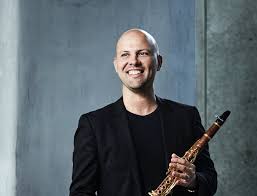
David Rowden

Back for another year of Melbourne endeavours, the Omega Ensemble, a Sydney-based contemporary music group, opened its 2026 account with a 90-minute-long program that began with an American work and ended in an Australian composition. Neither of these spoke a convincingly modern language but both found favour with this audience which reacted positively after each. In the middle came two concertos: Gerald Finzi’s Concerto for Clarinet and Strings of 1949, which has clearly been on the musicians’ minds since the visit last year of Michael Collins, a noted exponent of this work, here fronted by Omega artistic director/founder David Rowden; and the 1933 Piano Concerto No. 1 for Piano, Trumpet and String Orchestra by Shostakovich which featured Omega stalwart Vatche Jambazian taking on the keyboard role while the Sydney Symphony Orchestra’s principal David Elton negotiated the brass line.

As a preliminary foray, a string nonet – which constituted the Ensemble for this evening – played the concert’s title work by Jessie Montgomery which has proved one of the composer’s more popular works, I’d suggest, because of its sunny, festive nature. Written in 2012, the composer specifies a minimum requirement of 3/3/3/2/1 for participant numbers; in this case, she got two cellos and a double bass, but had to be content with two each of the upper strings.

Listening to or watching recordings of this work gives you some insight into contemporary music playing in the US as compared to the UK and here. While the American orchestras approach this score with caution, a body like the Philharmonia gives it a vigour and elegance of execution that elevates the music above a kind of plodding insistence. Just so with the Omega group which gave a vital and involving execution of a work that is strong on ostinati and semiquaver runs while short on rhythmic or harmonic innovation.

Add a significant virtue in that the work lasts just long enough and the conductor-less performers made Starburst into an initial burst of energy which was carried on to the Finzi concerto. Just as well that Rowden pitched his dynamic to the accompaniment because the composer has most of his forces playing divisi at some point, particularly the cellos in the first Allegro and, with the best will in the world, one player per line is stretching your volume requirements a long way. This lack of depth also meant the movement’s big moments, like the peroration up to the clarinet’s entry at Number 1 in the Boosey & Hawkes score, the triple forte outburst seven bars before Number 5, those insistent Gs from everybody before the cadenza, and the last eight powerful maestoso bars, came over as light imitations of the real thing.

A similar difficulty infected the following Adagio which was impossible to linger over, senza rigore, because of a lack of full-body timbre. You couldn’t say that Rowden rushed through it but the ritardando and ritenuto moments, apart from that before the clarinet’s first entry ad lib., were hardly spacious enough for this eloquent, elongated lyric. Still, the combined forces rose to the occasion of the movement’s powerful highpoint at Number 5 where the main theme is given in an unexpectedly vehement voice. As well, you would be hard of heart not to be moved by the last pages of this section, Rowden’s progress to the last F finely balanced.

Finzi’s finale, a folk-tune reminiscent allegro, passed without making much impact, apart from its melodic fluency and the soloist’s flexibility of articulation. It strikes me as a stop-start series of pages where striding certainty peters out regularly for ‘busy’ work, interrupted by a hard-to-ignore flavour of the Introduction and Allegro in the strings’ ritornello before Number 8. At the end, you’ve have to say this was a worthy outing for the score but one deficient in gravity and variety of timbre, particularly as the string body is responsible for the carrying-forward of the score; more so than the soloist, I’d suggest.

For the Shostakovich, Jambazian played the keyboard with his back to us and without a lid on his instrument. What followed was inevitable: his sound flew up to the Murdoch Hall ceiling and the biting attack of the composer’s pianistic brilliance was dissipated. Mind you, with such small string forces, that had its compensations but it gave Elton’s trumpet an unusual prominence. As with the Finzi work, this one also suffered from insufficient strings; not in the soloists-absent (for a short while) stretches, like the Allegretto in Movement 1, but when piano and strings are operating imitation around Numbers 21 and 22 (also in a Boosey & Hawkes edition) – you could see the gestures but the output sounded faint.

Even with the muted piano, you could hear that Jambazian was in control of this score; quite obviously in the Lento with its outer casing of a mournful slow waltz holding some highly dramatic pages. Elton’s treatment of the solo starting at Number 34 in tandem with Jambazian generated an impressive elegiac moment or two, if muted in timbre and nature. But it’s a startlingly fraught segment in a concerto where the emphasis is emphatically on hectic jollity.

Again, the Moderato interlude gave Jambazian the opportunity to be heard clearly in the solo that opens these pages; welcome after previous showings, the whole not helped by some hefty employment of the sustaining pedal. Our string nonet gave a forceful account of the lament that breaks from them, mutes off, a bar after Number 45, bringing another tragic undercurrent to this chameleonic score.

Which reaches its apex in the breakneck finale and found both soloists in fine fettle. Jambazian’s solo contributions at the upper level of his instrument travelled well enough but the two solos sounded muddled, especially that starting in F minor at Number 76 which sounds like a Hungarian Dance gone wrong. It’s hard to misfire with the ongoing exhilaration that fills these pages and, while the strings were often completely subsumed by the pianist’s ferocity, they were at least able to make their points during the intervening commentaries – and supporting Elton who maintained a cogent and expressive line to the insistent final bars.

Last came a new concerto written for Rowden and Elton, commissioned by the Omega Ensemble: A Turning Sky. The composer is Lachlan Skipworth from Western Australia who has here favoured the traditional three-movement format; as well, he employs an unadventurous rhythmic foundation and a harmonic scheme that delights the ears of the groundlings but does little for any soul in search of a 21st century language.

You’re left in no doubt that Skipworth has a facility for well-constructed melody and he negotiated flamboyant roles for both his soloists, although Elton enjoyed more of the limelight, especially in concerted passages for both soloists. But I’m afraid this style of writing makes me impatient with its hankering for the past and by its following a path that has been travelled by too many other feet. I’ve said something similar before – frequently – but I don’t think you can ignore the entire progress of 20th century music and pretend that Stravinsky, Bartok, Schoenberg, Boulez, Stockhausen, Ligeti and a collection of American and British masters never existed.

We’ve come too far in the development of advanced vocabularies to turn back the clock and find inspiration in the tropes of popular music. There are excuses trotted out regularly for the pursuit of beauty through diatonicism once more, that we need old-fashioned tunes, that there is still much good music to be written in C Major. Well, for this last, perhaps there is but it will require a brilliant talent to accomplish it. In faith and hope and love, I’m still waiting.
The answer is: don’t look

A WINTER’S JOURNEY

Musica Viva Australia

Elisabeth Murdoch Hall, Melbourne Recital Centre

Monday February 16, 2026

Allan Clayton

Here we are again with an updated Winterreise. British tenor Allan Clayton is collaborating with pianist Kate Golla on a Musica Viva Australia tour of Schubert’s song-cycle that started in Perth and moves to Brisbane, Sydney, Canberra and Adelaide over the coming fortnight after its two-night stint here. This version has been semi-staged by director Lindy Hume, with a background of Fred Williams’ paintings/drawings screened on a large pair of walls by David Bergman‘s video design, the whole lit by Matthew Marshall.

All right: that takes care of the credits. As for the experience itself, you were left with no little admiration for the singer’s embrace of the required theatrical action and the manner in which he tailored his output to the 24 situations that Schubert’s manic wanderer enjoys/endures. You could find little fault with Golla’s realization of the accompaniments, although that term is something of a diminution of the pianist’s responsibilities in this score.

With the Williams’ art, I’m not really convinced by the stated aim of finding common ground between three geniuses – poet, composer, painter. Not that the background distracted from the cycle’s progress; indeed, Williams’ work presented as a sober complement to some of the songs, even if there was one unexpectedly vehement painting exemplifying the later Romantic musical direction of sturmisch bewegt that I couldn’t trace in the supplied list of the artist’s works employed on this occasion. But while you could accept the Kosciusko depictions from the mid-1970s as mildly credible support for Gute nacht, the later landscape dots of vegetation looked centuries remote from anything in Muller’s poems.

Hume made an excellent start and ending to this enterprise, having Clayton isolated on left-stage, from which he moved into the central raised section holding Golla’s piano and the two walls around her, V-shaped towards the audience, with the Williams images imposed on them. This was the position he eventually re-occupied when left alone (so to speak) with the Leiermann at this work’s bitter end. In between, he raced around the raised platform, coming to rest and curling up about the Auf dem Flusse point, then finding another resting place somewhere near Der Wegweiser.

Fortunately, Clayton steered clear of too much pantomime, although he did use his long-coat, I seem to recall, to mimic Die Krahe. But you were spared the full mimesis for lieder that could – and have – been physically illustrated by the singer. I still have memories, fortunately fading, of Simon Keenlyside presenting a choreographed reading of this cycle in the State Theatre at the Melbourne International Arts Festival of 2004; on that occasion, too many textual cues were seized upon to ram the verbal messages down our communal throat.

My reaction was not shared by a gaggle of fellow critics who found inexplicable merit in this exhibition and bestowed that Winterreise with a critics’ award on odd grounds that had nothing to do with Schubert, and little connection to Muller although one of the plaudits came from an accompanying husband who found the singer’s German to be ‘very good’. Recalling this whole situation still leaves me thinking: Was it for this the clay grew tall?

Another reading of this cycle that proved more pleasing, although generating no little confusion in some of the songs, came from soprano Louisa Hunter-Bradley and pianist Brian Chapman who recorded this work on the Move label in 2006. Having the work’s central character change gender requires a good deal of interpretative latitude on the listener’s part but at least the score was given straight, without deviations from a normal recital format . . . insofar as you can have such a thing on CD.

Isn’t that enough, though? Why is it necessary to dress up a work which was intended to communicate directly with the listener, without any distractions? One of the reasons given for providing supporting illustrative matter is that audiences don’t understand the words; not everyone is familiar with the texts, let alone with German. Yes, but surely that deficiency can be covered by surtitles? They were employed on this night; even if we didn’t get a full translation of each line, sufficient was provided to communicate the songs’ emotional gist.

What you can do is, of course, close your eyes, as I did for a good deal of the time. Many of us have an admiration for Williams’ work, egged on by the 1980 hagiography produced by Patrick McCaughey which brought the artist into the mainstream, sponsored by the country’s most well-known art curator/academic/historian. But even this measure had its problems as, if you looked at the stage between songs, some striking scenes were on show, some of them with little input as to what we’d just heard.

In the end, Clayton and Golla enjoyed a rapturous reception which they deserved despite the visual salad behind them. The pianist demonstrated a fine responsiveness to Schubert’s piano writing, my only query a soft right-hand output during Mut, e.g. the piano’s muffled commentary in bars 9-10 coming straight after Clayton’s clear account of the melodic contour. But then you encountered Golla’s intensely moving account of the following Die Nebensonnen, with a lucid reading of that song’s bass-heavy accompaniment.

And you could find similar examples of subtlety across the work’s spread, Clayton’s dynamic palette a continuing source of delight in lesser-known pieces like Letzte Hoffnung as well as the all-too-familiar extracts like Der Lindenbaum. In fact, the hallmark of this interpretation came through its attention to shadings from both musicians, Golla establishing a scene with admirable directness and following Clayton’s line with excellent fidelity. Next time, we could do without the visual input, OK?

Soloist sparkles in brittle fabric

RACHMANINOV’S RHAPSODY

Australian Chamber Orchestra

Hamer Hall, Arts Centre Melbourne

Sunday February 8, 2026

Dejan Lazic

Beginning the year with a rather short program, the Australian Chamber Orchestra visited Melbourne for its regular three appearances across as many days, of which this Sunday concert was the middle. Richard Tognetti led his regular 17 musicians (with the addition of percussionist Brian Nixon for the last number) through four works, one of them a new ACO commission enjoying its premiere: John Luther AdamsHorizon, which deals with two levels of perception and attempts to contrast the aspect we see from our current positions and that which is visible in open spaces like the desert or the sea.

What Adams gives us is a music-picture of these dual horizons. My problem is that I can’t tell the difference because, after one hearing, my sense is that the enclosed horizon is not depicted in the score which begins and ends in the same fashion: low didj-like drones from the bass strings, everybody else entering independently and making their own contributions to the sonorous melange of layers and twittering that comprise the work’s forward motion.

Several performers seem to stand alone to a certain extent throughout the performance, although two cellists and Maxime Bibeau‘s double-bass sat/stood together at the rear of the stage. In front of it all, Tognetti led a string quartet that could have been serving as a fulcrum body; if so, its function proved ultra-discreet because the members appeared to have the same freedom of delivery as everybody else in the ACO group. Which was probably not as great as I’m suggesting because the surges of crescendo and ebbings of decrescendo sounded well-organized across the score’s length.

You’d be hard pressed to find much more meat in Horizon than its shifting colours, the general texture changing all the time but not markedly. Lines become prominent for a moment, then recede into the over-arching texture – a kind of glimmering sheen, like visible heat-waves off the Outback’s sand surface or a mobile sea mist. You find yourself being wrapped in a sonorous cocoon, without events interfering to break you out of a pleasant torpor, least of all when players start dropping out of the mesh, replaying Haydn’s Farewell practice, if not actually leaving the stage.

And what dropped into this luminous silence? A phone going off, in the middle stalls on the right-hand side of the hall. Yet another inconsiderate swine demeaning a carefully prepared and staged moment. Only in Melbourne? Only in an elderly audience? If only. Still, the work had achieved its effect of depicting something close to an austere monumentality, putting Adams in a chain of US writers starting with the can-hardly-stand-still Ives, alongside Ruggles, Harris and Hovhaness – all, to some extent, concerned with nature, the environment, and unanswerable questions.

A complete change in pace arrived with Stravinsky’s Concerto in D ‘Basle’ of 1946; one of only two works I’m aware of for string orchestra by the composer (along with the ballet Apollo from 1927). Is this the first time the ACO has played this piece? The composer doesn’t loom large in the ensemble’s discography; in fact, I can’t find him at all, even if this type of whip-smart writing is ideally suited to these players.

That’s what they gave us: a reading that showed precise, clear-cut and impressive for its ensemble, requiring minimal direction from Tognetti in its opening slightly febrile Vivace which begins with a clash between Major and minor mediants and maintains its bitonal flavour all the way through its neo-classical byways. An admirable smoothness emerged in the following Arioso with its melodic leaps of 9ths and studied courtliness, while the concluding Rondo, in an unchanging 4/4, enjoyed a brilliant outlining delivered with the inimitable ACO panache.

This Stravinsky is a music that suits this ensemble and you’d have to look far and wide to find anything approaching the interpretation given here. It probably helps that much of the score is clever-clever, even the central movement studied in its sentiment. But the outer segments illustrated the poise and uniformity of control and output that the ACO produces on its best days, right down to the final, almost-tonal, nearly uniform D Major double- and triple-stop chord.

After a long interval, we moved on to the program’s second novelty, here enjoying its Australian premiere. Lithuanian writer Raminta Serksnyte wrote her De profundis in 1998 as a Bachelor’s degree graduation piece, scored for a string chamber orchestra, slightly larger than the ACO forces performing it this afternoon. Gidon Kremer made an extravagant claim for this work – ‘the calling card of Baltic music’ – but I found it only moderately interesting. Serksnyte begins with a wealth of activity in a rapid-fire light barrage of sounds, after which we come to what might be considered as a real plaint, justifying the title.

But the composer is not interested in the religious or liturgical suggestions of Psalm 130; rather, she sees it as a kind of hook on which to hang her tableau of a young soul migrating to experience, discovering life’s realism after youth’s exuberance. I suppose ‘Growing up’ doesn’t carry the same suggestion of elevated concepts as a Latin tag. In any case, the language changes back to the original Allegro/vivace flurries and chitterings, which reversion suggests a circularity of experience if not informed by subtle depths. Its impact speaks to a lively mind at work, but is this really the best of Baltic?

At last, we came to the program’s title work: the Russian pianist/composer’s brilliant 1934 set of excursions based on Paganini’s Caprice No. 24. For prime interpreter, we heard an ACO friend in Croatian-born Dejan Lazic who proved both sympathetic to the work’s spiky Romanticism as well as its richly flamboyant strain. All right, it’s a hard piece to get wrong in terms of technique: you either have it or you fumble, obviously so. But finding each point of equilibrium as it turns up – from the assertive opening, through the Dies irae mini-phantasmagoria, into the middle etudes-tableaux excursions that arrive finally at the soulful apex of that melting moment Andante cantabile in D flat, concluding with the spiky final set of six variants that eventually bring to mind every lush piano concerto finale, up to the finishing in-my-end-is-my-beginning quirk – that is demanding, a series of challenges that Lazic met with high success.

Indeed, in this 20-odd-minute journey, Lazic showed an impressive mastery of material, relishing each abrupt turn and wholly prepared to give free rein to the usually dour composer’s high spirits and what amounts to an emotional elation that permeates this most appealing of his piano-orchestra scores.

As was the case last year with the ACO’s attempt at Gershwin’s Rhapsody in Blue, I missed the usual orchestral voices to a significant degree. Bernard Rofe‘s arrangement for piano, percussion and strings proved serviceable enough; as far as I could tell, Lazic wasn’t required to carry out anything but his own role and Nixon provided discreet additions to the texture (but did he have the complete set of the original score’s instruments, including glockenspiel and bass drum?). We missed a harp and ten each of both woodwind and brass.

Naturally, it’s beyond the ACO’s budget to carry 21 or 22 extra musicians around the country on an 11-concert operation, even if this particular tour covered only cities on the eastern side of the mainland. And I’m sure plenty of patrons would rather hear a truncated-in-forces version of this welcome work than not. But at certain moments, I missed individual and group timbres, the absence of which came as a cross between surprise and disappointment.

Even from the introduction, without the brass punctuation starting at Number 1 in the old Boosey & Hawkes score, you knew that you weren’t going to enjoy the usual environmental sparks; not to mention the clarinet/bassoon semiquaver slide three bars before Number 2. And on it went: the burbling clarinet gruppetti at bar 9 and bar 1 before Number 15 in Variation 6; the wind triplets that give a piquant edge to the Variation 9 texture at Number 26; the brass blazoning at Number 28 in the middle of Variation 10; the sprightly march that opens Variation 14 quasi Tromba in the woodwinds which reaches its bombastic best at Number 37 when all the brass enter wholeheartedly.

And still it continued: the plangent oboe at the start of Variation 17, followed by the first clarinet two bars after Number 45 – a brilliant complement; that energetic build-up of powerful bass layers under the piano’s full-blooded chords from Number 63 to two bars after Number 64; the vital pointillism in the woodwind starting Variation 24; and the hefty pesante of the brass hurtling out the Latin chant at Number 78.

You’d say that there’s no use crying over what couldn’t be done. I’d query why you’d bother doing something half-cocked. Even more so than with the Gershwin, you could sense the underdone nature of this effort, despite the soloist’s excellent demonstration of expertise and interpretative skill. Needless to say, Rachmaninov’s Rhapsody received enthusiastic applause from a pretty full house which clearly didn’t mind the thin orchestral fabric. De gustibus non est disputandum . . . except for mine, which are impeccable.

A startling clarity

BACH’S MOTETS

Bach Akademie Australia

St. John’s Lutheran Church, Southgate

Thursday February 5, 2026

Madeleine Easton

The image above is inaccurate, for this recital specifically. Madeleine Easton is founder/violinist with Sydney’s Bach Akademie Australia but on this night she was directing a few musicians only from her ensemble of expert players: cello Daniel Yeadon, double bass Pippa MacMillan, and two organists in Neal Peres Da Costa and Nathan Cox (who seemed to be giving the major contribution in this area). Her main focus beyond this functional continuo line-up, was the Song Company, another Sydney group but familiar here, thanks to its Melbourne Recital Hall appearances in recent years.

As I remember it, the Company numbered six singers, although it expanded when necessary. As for this mammoth bout of Bach’s seven motets, now that Ich lass dich nicht has been (finally) admitted into the canon. Some faces/voices are familiar: soprano Susannah Lawergren, tenor Timothy Reynolds, bass Andrew O’Connor. Others are new to me: soprano Michelle Ryan, alto Hannah Fraser, tenor Christopher Watson and bass Tom Herring. One other is new to the country: guest alto from the Netherlands, Iris Korfker.

Naturally, you need at least eight voices to negotiate the double choirs required for all the motets except the first one treated on this night: Lobet den Herrn which burst on us with unexpected vehemence. It was the original Song Company’s nature to sing forcefully; you were the only negotiator of a particular line, for the most part, and so no point was served in holding back in timbre. When you have four lines being treated by two singers each, used to individual projection, the results are powerful. Forget the solemn, respectful treatment from the British university college choirs, or even the bravely confident approach of German choirs these days. We were in for a night of dramatic exhalations and this opening gambit proved dynamically potent.

A slightly distracting sight was that of a soprano conducting herself ever so slightly. This might be a nervous performance tic but seemed unnecessary, given the fluency and directness of Easton’s gestures, which revealed a sterling familiarity with all of the night’s material. It also stuck out because nobody else did anything similar, all of them focused on their conductor as the sole fount and origin of their output.

Da Costa emerged for the following Komm, Jesu, komm, written possibly about 1731-2. His function on a chamber organ, like the efforts of Yeardon and Macmillan, was straightforward and based on the supposition that Bach might have employed a continuo group, as well as the two choirs that actually feature in his score; I haven’t been able to trace an edition of this work which has a written-out continuo line. Easton managed to elicit a deft balance from both forces in this consolatory construct, although Reynolds’ output proved clarion clear, dominating the mix at certain stages to an inordinate degree.

Giving us what was probably intended to be a modern leavening, possible latter-day imitations/homages to Bach, Easton and her company programmed two contemporary works, the first of which was written by Brisbane-based musician Sandra Milliken for a 2025 Bonhoeffer Project which interwove a Mass text with extracts from the Lutheran pastor’s writings while a prisoner of the Nazis. The composer arranged her original Herr Jesus Christus for eight-part choir and the results were amiable enough; not strikingly contemporary – indeed, it seemed to be couched in G minor, with minor 2nds thrown in, but couched in the English choral tradition, those discordant touches brightening an orthodox vocabulary. The metrical set-up sounded stolid, as did the rate of modulation where the home tonality moved into the major (E flat?) half-way through. Oddly enough, the last bars held a taste of the glee club about them, the parts moving with glib facility.

Two more motets preceded interval. First, the brief Ich lasse dich nicht which starts out in straight statement/response format, then moves into four-parts at the change of metre with the sopranos steeling the chorale melody over a restless quaver support from the lower voices. Indeed, musicologists have warred over the piece’s stages of composition, the first part coming from 1713 or earlier, the second section dating from 1735 or earlier. This latter section struck me as one of the more collegial sections of the program where personalities subsumed themselves for once.

Da Costa relieved Cox at the organ for Der Geist hilft of 1729 where basses O’Connor and Herring enjoyed plenty of continuo reinforcement, which was probably original as Bach orchestrated the piece with separate timbres for each of the choirs. The whole built to an alarming stridency at the height of the fugue that starts at sondern der Geist before it settles into doubling the parts (except the sopranos, of course). Still, the complex ended with a deliberate and considered reading of the chorale Du heilige Brunst with its superb text by Luther and Bach’s abruptly touching first Halleluja!

Back after the break, our singers gave Furchte dich nicht of 1726, or possibly over ten years earlier, which has instruments allocated to the vocal lines, even if none of them are specified. This was also striking for its animation in attack, which came as a relief, given the amount of textual repetition in the work’s main body. Even though Reynolds cut through the mix at some points, the whole body involved us in the action which seems to resolve itself, but doesn’t, when the sopranos take up the chorale tune Herr, mein Hirt and the complications are reduced to three lines, not six.

Yeadon then generated a thrusting version of the Prelude to Bach’s D minor Cello Suite, his fabric solid and informed by a clear articulation that wobbled only on a handful of occasions, although I was perplexed by the length of time he took over the dominant chord caesura at bar 48. You could find no fault with his negotiation of the concluding triple/quadruple-stopped chords, those sinewy strong pillars that anchor the movement’s restlessness.

Next came the large-framed Jesu, meine Freude of possibly 1723, even more possibly 1735 or thereabouts. In this 11-movement glory that oscillates between four and five parts, we hit the theatrical early with a feisty Es ist nun nichts, Easton making obvious points with the forte/piano oscillations and heightening the tension to a point that reminded us of the Sind Blitze, sind Donner eruptions from the St. Matthew Passion. Some of this fire came over even in the following (usually) sedate chorale with its klacht und blitzt with some Holle schrecken thrown in.

Light, mainly non-competitive relief arrived with the brief sopranos+alto trio Denn das Gesetz before we returned to the hit-outs of Trotz in five parts, again notable for its biting drama and percussive attack. In contrast, the work’s central fugue was generated with uniform clarity, attention focused on the linear interplay rather than any potential for vocal shocks; not that you can find many of these in one of the two drier texts that Bach employed, arguing for spiritual as well as physical commitment to Christ.

Another real pleasure came in the trio So aber Christus which I think featured Reynolds, O’Connor and the visiting alto, Korfker; whatever its composition, the group intrigued for its mixture of vocal timbres, here pitched at comparable dynamic levels and carefully articulating the second theologically practical text in the motet, again decrying the value of the body as compared to the soul – fair enough, for a believer. The lighter texture continued with a lightly-stepping Gute Nacht, without basses, an alto and a tenor. But I was taken aback by an unfortunate soprano solo at the end of So nun der Geist which stuck out from the smoothly accomplished five-part handling of this semi-reprise of Es ist nun nichts.

To follow, another contemporary interlude in Scottish writer James MacMillan’s O Radiant Dawn: one of the composer’s more well-travelled contributions to choral music and part of his 2007 Strathclyde Motets set. The Company probably enjoyed this ‘easy’ music after Bach’s complexities and the outstanding feature of the work, those ‘snaps’ or accacciature in bars 2, 4 and in the tenor for the work’s final chord (bar 45), even if these all sounded atypically faint, even given the forte direction at the opening and a piano dynamic prevailing in the chain of six Amens that MacMillan inserted along with an Isaiahan prophecy, negotiated by the ensemble’s female voices with excellent fluency.

And we ended with the joyous Singet dem Herrn (possibly 1727), Da Costa back at the organ; the Barenreiter edition (acting as God disposing) proposes ‘Instrument ad libitum’. Once again, tenor Reynolds’ timbre dominated proceedings, soaring over his peers in the opening chorus and reinforced by Watson when the tenors doubled each other from about bar 103 to bar 128. Mind you, the further into this opening gambit we go, the less energy seems to come from its hard-worked negotiators. It’s all a magnificent complex, if an aural assault that resolves itself into a four-part fugue for the final Alles, was Odem strophes which mirrored the jaunty bounce we heard at the evening’s start.

In the end, an extraordinary test of stamina for the performers, an unexpected demonstration of vocal clarity for us listeners in a series of performances that startled for their directness of address. Which I’m coming to believe is a Sydney characteristic; I can’t think of any Melbourne choir that would have infused these motets with similar bite and dynamic heft. Many thanks to these generous visitors.