Several sides, in fact

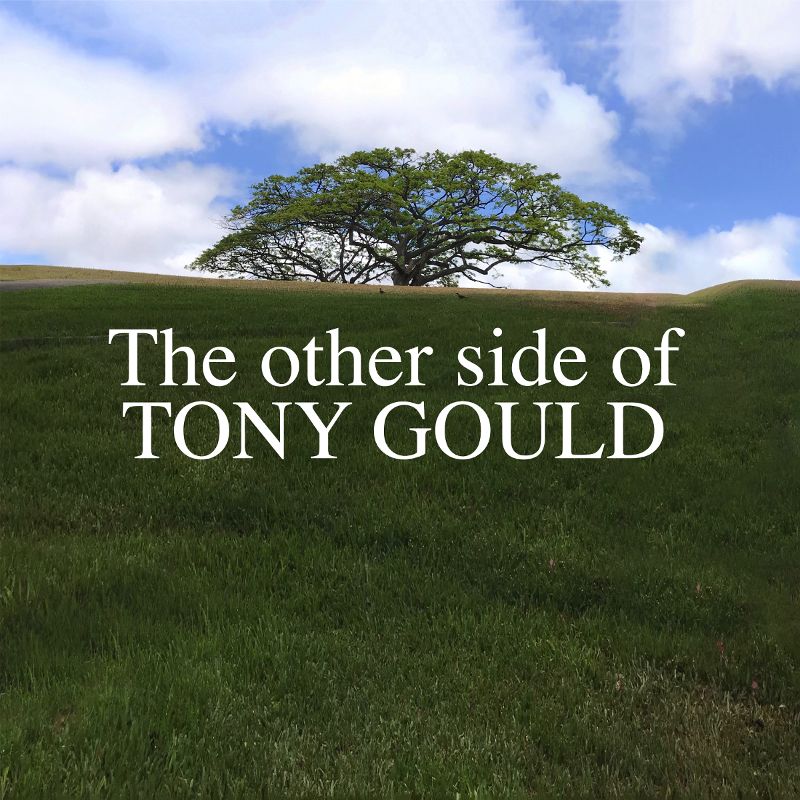
THE OTHER SIDE OF TONY GOULD

Jasmine Lai, Fabian Russell, Firebird Trio, Rosa Scaffidi, Tony Gould

Move Records MD 5478

Move Records are floating this disc as giving us an alternative view of Tony Gould. It’s true that most of the celebrated Australian musician’s output for this company has fallen into the jazz and popular categories but Gould as a composer of serious music is not exactly an unknown quantity, partly due to his one-time position as Dean and associate professor at the School of Music, Victorian College of the Arts. Still, this compendium has some interesting tracks, as well as some light ephemera.

Two of the pieces are performed by 19-year-old pianist Jasmine Lai: Empathy of 2013, and A Little Music for Jasmine of 2022 or thereabouts. Another intimate piece is Dreams of My Girl, also from 2013, and which was commissioned and performed by the Firebird Trio probably in that year; certainly from back in the days when Roger Jonsson was the ensemble’s violinist; cellist Josephine Vains and pianist Benjamin Martin appear, veteran and current Firebirds, The largest in scale of Gould’s works is a Homage to Mahler, premiered in 2014 by the Monash Academy Strings under Fabian Russell, who on this CD conducts a body called Symphonic Strings.

Over half of the CD’s length comprises the four-hand version of Stravinsky’s The Rite of Spring from 1913. Here Gould collaborates with Rosa Scaffidi, but I think this is a re-issue of a recording that the two pianists made for Move Records twenty years ago. If so, it has worn well, which is probably due to the machinations of the company’s founder, studio manager and recording engineer Martin Wright who has shown time after time how intonationally pure and timbre-rich each musician can sound under his ultra-informed care. Still, I can’t find any sign of this performance in the current Move catalogue, so perhaps a reminder of a considerable past achievement is in order.

The shorter of the two piano solos, A Little Music for Jasmine, is a mixture of rambling lyric and jazz-inflected chords. The melody line is all right-hand and the music progresses in ‘normal’ fashion; a good dollop of calm sentiment amid the quiet meandering which Lai delivers with fine control. At the start, while Gould’s intro wove its gentle patterns, I expected something along the lines of Grainger’s arrangement of Love Walked In to emerge, but the flow that followed had its own voice and balance.

Empathy has more substance to its material, although it follows a similar rambling path with the right hand dominant again. Here, Gould employs more rubato and his chords present more of a challenge in terms of their sequencing and content, which moves easily between the consonant and mildly dissonant. Once again, the phrase shapes remind you of Gershwin, if not as symmetrical or as calculated for a singer’s range. Lai maintains the piece’s even temperament, coasting gently over its mf ebbs and flows.

In fact, Dreams of My Girl turns out to be a kind of rondo on the old tune sung by Perry Como, Girl of My Dreams, written by Sunny Clapp in 1927. The trio take their turns in outlining the sentimental waltz while Gould provides two episodes of a more exploratory nature than you’d expect, although he does offer several twists and turns on the song’s original harmonic underpinning. A deft arrangement with some piquant moments, but I don’t think this is taking us very far into the alternate reality of Gould’s ‘classical side’, except for the matter of the piano trio performers who are very adept at entering the piece’s relaxed character.

You find much more gravity in the Mahler tribute which is based on the opening theme to the Austrian composer’s Symphony No. 9 finale. Gould offers a reharmonization and a re-thinking of the movement which, of course, sent me back to the original and its slow reckoning with sorrow and resignation. Apart from two significant full orchestra (sort of) points, the Mahler Adagio is a long elegy for strings and Gould reminds you of the wide-spread textures in the symphony’s spread. His modulations strike you as less comfort-inducing but you encounter passages that mirror the firmness and absolute inexorability of Mahler’s relentless grind towards an evanescent resolution.

First time round, I saw where Gould had interpolated the first line of The Last Rose of Summer but clearly wasn’t concentrating enough to see how substantial was his use of Aisling an Oigfhear, although he doesn’t explore the song’s second half (well, the start of it) although most levels of his string body enjoy momentary encounters with the first strophe. Further, he signs off with a reminiscence of the air at his solid essay’s conclusion.

Of the four original Goulds we hear on this disc, this Homage offers the most sustained outline of the Australian composer’s compositional depth. This is not to decry the piano pieces or the trio, but the gravity of its language and the intense focus on elaborating long paragraphs of string fabric make this a fine demonstration of Gould’s gift for taking a strand of material and making it his own while preserving the original’s character.

I think I’ve heard the four-hand version of Stravinsky’s epoch-signalling ballet only once – in the Collins. St. Uniting Church, played by a Russian husband-and-wife team who I believe lived and taught in Melbourne for a while. Of the performance, almost nothing remains in the memory except the faint feeling that both pianists operated from the one piano. This must have been horrifically difficult because, while you can negotiate most of the score at a single instrument, there are passages where the hands interweave to the point of reaching for the same note.

Scaffidi and Gould recorded their performance on two Yamahas at the Move studio and the result is startlingly clear. Without its rich orchestral garb, the work becomes something unexpected; all those biting chords present now as explicable, able to be dissected and lacking their usual timbral gruffness. What you get is an exposition of the composition’s bones, unadorned by flesh or cosmetics. As Gould points out in his leaflet notes, Stravinsky and Debussy played the work through in this four-hand format (but only Part 1) in June 1912. This event lives in my mind because of the generous reaction that the senior composer gave to his on-the-make junior, all the more memorable when you recall the various bitchinesses that Stravinsky came out with in his 1959 Conversations with Robert Craft.

As far as I can see, the four-hand reduction is congruent with the orchestral score, even if you’re always a little insecure, the composer having modified the work so many times throughout his life. Various editors have found thousands of errors or differences between original intentions and printed reality. Adding to this, Stravinsky took advice and suggestions from a good many people. So, while we’re generally confident that the Boosey & Hawkes edition of 1948 comes as close to the original as probable, the piano(s) reduction proposes several unresolved questions.

Gould and Scaffidi seem to follow the original Editions Russes de Musique of 1913, reprinted by Dover in 1989. They have a few scuffles with tempo placement on the first page but settle into congruence by bar 20. Whoever plays the Prima part avoids the ossia elaborations starting at bar 25 which follow the higher woodwind curvets above the general melange; mind you, how anybody would leave the main body for these finicky lines beats me. But the rest of Part 1 is handled cleanly; the Jeu de rapt an excellent instance of duo playing, specially when the Seconda (I think Gould takes this role but can’t guarantee it) hits those resonant bass duplets.

The further in you progress, the more you miss certain idiosyncratic timbres, like the brass braying in the Jeux des cites rivales and the percussion penetrating throughout the Danse de la terre. But the pianists produce their most effective work in the two rhythmically disjunct dances of Part 2: Glorification de l’elue and the massive Danse sacrale which comes close to realizing the unforgettable asymmetry of the orchestra in full spate. The players insert a few pauses between movements which makes me think they might have worked from a different edition – or they might have wanted to offer clear changes of pace/attack.

Whatever questions you raise about the reading’s oddities, the inclusion of this example of Gould exercising his talents on Stravinsky’s early masterwork certainly justifies the CD’s intention of showing another aspect of the pianist/academic’s range of practice. I’ve known Gould for over fifty years and was never aware of his Mahler work or this recording with Scaffidi; both are enriching for long-time acquaintances and newcomers to this remarkably versatile musician’s layers of creativity and performance.

Diary April 2026

MOSTLY MOZART – MANNHEIM TO PARIS

Melbourne Recital Centre & Australian National Academy of Music

Elisabeth Murdoch Hall, Melbourne Recital Centre

Wednesday April 1 at 11 am

Full credit to the Australian National Academy of Music, some members of which organization, under the control of horn player Carla Blackwood (herself a one-time ANAM member), will be presenting two Mozart chamber works that very few of us have experienced in live performance. First off is the Quintet in E flat for Piano and Winds K. 452 of 1784, the specific winds being oboe, clarinet, bassoon and horn. There’s no indication who is the lucky pianist, but the work has a fine collegial ambience which extends to a combined cadenza for everyone but that keyboard in the finale. At the recital’s end, Blackwood performs – with a violin, two violas and cello from the ANAM personnel – an earlier Mozart from 1782: the Quintet for Horn and Strings K. 407, also in E flat. A good deal shorter than the other Mozart on the program, this work gives more prominence to the wind player and exploits the instrument’s middle register in sympathy with the rich viola output. In the middle of these benign scores comes Louise Farrenc’s 1852 Sextet in C minor for piano, flute, oboe, clarinet bassoon and horn. This is dramatic and often turbulent in the best Romantic mould, but you’d be hard pressed to retain much of its material. Anyway, she’s the Paris end of the morning’s title, but why is Mannheim mentioned? Both the Mozart works were written in Vienna, as far as I can tell. Entry is $59, with a concession rate a whole $7 cheaper; students and Under 40s get in for $49 – and don’t forget the Recital Centre’s ‘Transaction Fee’ of anywhere between $4 and $8.50 if you book online or by phone. So I wouldn’t.

ST. MATTHEW PASSION

Melbourne Bach Choir

Elisabeth Murdoch Hall, Melbourne Recital Centre

Thursday April 2 at 2:30 pm

Good to see that Rick Prakhoff and his singers continue to mount major choral works, in particular this supreme masterwork of 1727 through which I first made the acquaintance of the Melbourne Bach Choir over twenty years ago. The ensemble has generally proved highly competent, ably abetted by a ‘Melbourne Baroque Orchestra‘ that I can’t remember appearing in support of any other choral forces. This year, the ripieno lines in the opening and closing choruses of Part 1 are to be given to us by the Yarra Voices, a children’s choir based in Fitzroy North. Prakhoff’s soloists are headed by tenor Andrew Goodwin, an Evangelist sans pareil. Adrian Tamburini will be singing Jesus; the soprano is Lorina Gore, Sally-Anne Russell the alto. Our tenor will be Henry Choo, while Simon Meadows and Christopher Hillier share the recitatives and arias for bass. If you’re going to do Easter with all the bells and whistles – and for Christians, this is the highpoint of the liturgical year – there’s no going past this experience, made all the more affecting because its composer was the beau ideal of a true believer. Every stage of this solid drama is intensely moving, Bach’s depiction of Christ’s route to Calvary purposeful and vivid. Seat prices fall into four grades: $139, $119, $99, $79; concessions $125, $99, $89, $69. Students pay $125, $89, $69 and $55. Everybody has to put in the Recital Centre’s fee of between $4 and $8.50, depending on the price of your ticket, if you book online or by phone. No possibility of avoiding this grasping impost as the event is usually booked out; there are only 92 seats left at the time of writing (March 20).

SEVEN LAST WORDS

Affinity Quartet

Good Shepherd Chapel, Abbotsford

Thursday April 2 at 3 pm

A much smaller scale offering than Bach’s marathon for a Passiontide observation, Haydn’s sequence of slow meditations (and a presto earthquake to finish) is an exemplary study in emotional restraint and studied simplicity. Obviously, the Affinity Quartet players are presenting the composer’s 1787 version, written at his publisher’s request and much more popular (and easier to mount) than the earlier orchestral or the later choral versions. Nothing is spelled out for you, apart from the stimulus offered by the actual words that Christ spoke in extremis. As well, there’s no getting away from the sombre effect of so many adagio movements in a row. But the end result is more refreshing than funereal. As for the performers, the quartet will be without its first violin, Shane Chen, whose place will be taken by the Adelaide Symphony Orchestra’s principal first violin, Holly Piccoli. The rest of the Affinities remain intact: violin Nicholas Waters, viola Josef Hanna, cello Mee Na Lojewski. All of them – including the transient import – are past ANAM members. Ticket prices seem to be a matter of engaging with the purchaser’s conscience. There’s A Little Extra for $65; Standard is $45; A Little Less comes to $25. But, no matter what you decide you can pay, there’s a booking fee of $5 at every level – the Lord giveth and the Lord taketh away. . . .

BEETHOVEN’S SEVENTH

Melbourne Symphony Orchestra

Robert Blackwood Hall, Monash University

Thursday April 2 at 7 pm

Here’s the Melbourne Symphony Orchestra going back to its roots. We have a collaboration between said MSO and the Zelman Memorial Symphony Orchestra, named after the first MSO leader/founder. As far as I can make out, the MSO will set the ball rolling with one of its favourite lollipops from years ago: Glinka’s Ruslan and Ludmilla Overture – the jolliest of quick romps and the only section we know of the 1837-1842 opera. This will be followed by the Meditation from Massenet’s opera of 1894, Thais, with concertmaster Natalie Chee outlining the soulful top line. More opera bursts upon us with the Carmen Suite No. 1, arranged from Bizet’s 1875 opera by Ernest Guiraud in about 1885. This comprises the last part of the Prelude, the Aragonaise, Intermezzo, heroine’s Seguidilla, interlude before Act 2, and Toreador theme from the Prelude and Act IV crowd scene. After this collation of popular hits, members of the current Zelman Orchestra will sit down with the MSO and take on Beethoven’s A Major Symphony. than which there is nothing more exhilarating in the composer’s output that doesn’t involve voices. Benjamin Northey conducts. As for entry prices, standard seats cost $50, concession ones are a whole $5 cheaper, and children pay $20, while everyone is oblige to yield a $7 transaction fee for ordering online or by phone. Here also, it’s an unavoidable grift because the night is selling rapidly with only 89 seats available as of tonight (March 21).

ECHOES OF VIENNA

Ensemble Liaison & Friends

Hanson Dyer Hall, Ian Potter Southbank Cntre

Thursday April 9 at 7 pm

Well, it’s not the gemutchlich Vienna of Strauss and Franz Josef but the later one of Freud and Mahler that is being celebrated here. And not just in the form of Austrian writers. True, the Liaisons will be playing some Webern, but not the hard stuff: from 1905 comes the Langsamer Satz for string quartet which, despite the commentators, is mainly in E flat Major, not C minor and an exemplary spin-off from Verklarte Nacht. Speaking of the Schoenberg circle, we also get to hear Zemlinsky’s Op. 3 Trio, written in 1896 and originally a half-hour long work for clarinet trio – which will probably be the form it takes tonight because of the Liaison foundation personnel – clarinet David Griffiths, cello Svetlana Bogosavljevic, piano Timothy Young. For no apparent reason, the ensemble presents Prokofiev’s Overture on Hebrew Themes of 1919, written for an ensemble then playing in New York. This calls for clarinet and piano as well as a string quartet. For that Antipodean touch, the group gives the premiere of a work that it commissioned: Stuart Greenbaum‘s The Drowned World, a five-movement score for the Liaison trio lasting about half an hour which takes its impetus from the Ballard dystopian novel dealing with climate change. As for the Friends, these are violins Sophie Rowell and Jasmine Milton, with viola Hanna Wallace. Tickets are simple: standard $53, concession and students $42 – but don’t forget that $4-to-$8.50 transaction fee that the Recital Centre imposes on every online or phone order. You might have to come up with this odious extra as the players are now working in the building next door to the MRC in which the Hanson Dyer space seats only 400, compared to their former base of operations: the 1.000-seater Elisabeth Murdoch Hall.

DISNEY’S BEAUTY AND THE BEAST IN CONCERT

Melbourne Symphony Orchestra

Hamer Hall, Arts Centre Melbourne

Friday April 10 at 6:30 pm

We’re coming up to 35 years since this Disney film came out but it’s stayed in the public eye, I’d suggest, due to the familiarity of the Broadway musical version that has been a dollar-spinner for quite a few companies since the original bastardization of 1994. Still, like Snow White, it’s been a Disney mainstay and will doubtless engage with young Melbourne audiences. Speaking of which, standard entry ranges from $88 to $136; concession holders and children pay $5 less (ah, the joy of a blatant money-grab), and you have a $7 booking fee if you order online or by phone. Which you might have to do because the event is selling fast. The Melbourne Symphony Orchestra will be directed by Jen Winley, currently the West Australian Symphony Orchestra’s associate conductor and one of the few musicians endorsed to conduct Disney in Concert undertakings. I’ve seen the film a few times but cannot recall any of Alan Menken‘s songs or set pieces, not even the Academy Award-winning title song. But I reckon I’d be in a minority on this night, especially after the rousing finale to this tale of a love that supposedly transcends appearances, only to smooth out differences in the end – something like what we hope will happen with the Iran excursion.

This program will be repeated on Saturday April 11 at 1 pm and at 8 pm.

CHORAL SPLENDOUR

Australian Brandenburg Orchestra

Elisabeth Murdoch Hall, Melbourne Recital Centre

Thursday April 16 at 7 pm

You’ll get some fine Baroque majesty in this program from the Australian Brandenburg Orchestra under artistic director Paul Dyer, as well as a good dollop of Baroque instrumental power. Employing the additional services of his Brandenburg Choir, Dyer directs two of Handel’s 1727 Coronation Anthems: the inevitable Zadok the Priest, and the The King shall rejoice which was meant to be sung at the actual moment of the monarch’s crowning. Preceding these powerful D Major statements come excerpts from two Bach cantatas. The first is Herz und Mund und Tat und Leben, from which 1723 work the well-known Jesu, Joy of Man’s Desiring chorale appears under its original title of Jesus bleibet meine Freude. There’s also the opening chorus to consider; I don’t think the singers will give us the mid-work chorale, Wohl mir, dass ich Jesum habe which is simply a pre-repeat of Jesus bleibet. Then comes the second cantata: Wir danken dir, Gott of 1731and here you have only the opening titular chorus and a monumental final chorale in Sei Lob und Preis. For the secular scraps, we’re promised Bach’s gripping D minor Double Violin Concerto from around 1730 headed by Shaun Lee-Chen and Ben Dollman, and Telemann’s difficult-to-date Overture in D which is actually a suite comprising the overture, two minuets, a passacaglia, an air, a trumpet duet called Les Postillons, and a concluding Fanfare. As usual with the Brandenburg organization, seat prices are all over the place, with standard ones ranging from $45 to $167 with reasonable reductions for concession holders and seniors, even better for students and Under 40s. And you can’t ignore the Recital Centre’s $4-to-$8.50 transaction fee that is piled onto your expenses.

This program will be repeated on Saturday April 18 at 5 pm and on Sunday April 19 at 5 pm. Seat prices are considerably more expensive for these.

MAHLER & TCHAIKOVSKY

Melbourne Symphony Orchestra

Hamer Hall, Arts Centre Melbourne

Thursday April 16 at 7:30 pm

Kahchun Wong, principal conductor of the Halle, takes the Melbourne Symphony Orchestra through Mahler’s Symphony No. 1 of 1888 in the later stages of tonight’s program. This is one of the composer’s most approachable works; even the slow movement is a kind of quiet laugh with its Frere Jacques opening on a solo double bass, and you’re spared the emotional wrenches of later symphonies’ adagio segments. The orchestral resources aren’t too far over-the-top, although you need 15 woodwind and 17 brass to meet the composer’s requirements. Still, the last movement is always in danger of tipping into excess-climax country – in fact, I can’t recall a performance where it hasn’t, Starting the night is an Australian work from the MSO’s Cybec Young Composer in Residence, Andrew Aronowicz: his newly-minted The Erl-King, which the orchestra commissioned. This has nothing to do with Schubert – well, not much. It’s based on a short story by Angela Carter telling of a maiden ensnared by the woodland murderer; she turns the Goethe plot around and kills him. For a concerto, we have Tchaikovsky’s Variations on a Rococo Theme with flugelhorn player Sergei Nakariakov replacing the usual cello soloist: it’s offering the sort of altered perspective that brings me out in hives. This Russian/Israeli musician has recorded Tchaikovsky’s defenceless work, so you’d have to assume that some recording gurus think the exercise was worth it. Your normal tickets range from $75 to $139, concession tickets are a whole $5 cheaper, children under 18 enter for $20; everybody pays the $7 transaction fee if you dare to book online or by phone.

This program will be repeated on Friday April 17 at 7:30 pm and on Saturday April 18 at 2 pm. Friday is a ‘relaxed performance’ – $35 for everyone except children who get in for $15 – and that nomenclature seems to suggest that any kind of behaviour is tolerated – even doing a Berlioz and shouting out ‘Where is the cello?’

JURASSIC PARK IN CONCERT

Melbourne Symphony Orchestra

Hamer Hall, Arts Centre Melbourne

Thursday April 23 at 7:30 pm

Two films in one month? Overkill? Well, you can’t really apply that term to this saga of prehistoric mayhem in which too many characters get away from the claws and teeth of the ravening re-created to generate credibility. For all its scientific and narrative nonsense, Spielberg’s 1993 blockbuster still keeps you on tenterhooks, especially when the kids are threatened by a gang of velociraptors. The score, to be played by the Melbourne Symphony Orchestra under Nicholas Buc, was not one of John Williams ‘ more memorable products; for my money, it never improves on the spaciousness suggested in the credits theme, although this gets worked to the limit through its wearyingly repetitive C-B-C motif. Yet the score is mildly imaginative when illustrating the behaviours of the island’s various animal denizens although I’m sorry but, when those computer-generated images trot or wing into view, I can’t help chortling at the cast’s various reactions. So what? This will be sold out: a financial, if not a critical success for the MSO. Standard seats fall between $89 and $165; concession holders and children get in for $5 less, which must be galling for the elderly and parents. Add to that the $7 transaction fee per order and it’s an expensive night out, especially for a film that lasts only a bit over two hours although the powers-that-be have determined that there will be an interval.

This program will be repeated on Friday April 24 at 7:30 pm and on Sunday April 26 at 1 pm.

SONOROUS XIII: ROS BANDT & VIJAY THILLAIMUTHU

Melbourne Recital Centre and Melbourne Electronic Sound Studio Limited

Primrose Potter Salon, Melbourne Recital Centre

Thursday April 30 at 7 pm

Nothing concrete is scheduled for this exercise which lasts for two hours without interval. The cunning have already booked out the available beanbags; everybody else has to cope with your normal Primrose Potter Studio seating for $45 ($40 concession; yeah, I’m panting at the door) along with the Recital Centre’s flexible $4-to-$8.50 transaction fee. It’s No. 13 in the Melbourne Electronic Sound Studio‘s series called Sonorous and nobody can doubt that it will be because we’re promised octaphonic sound as the many electronic instruments on offer are manipulated by Ros Bandt, a veteran in the field, and Vijay Thillaimuthu – a younger gun who is one of the supervisors at the MESS site. Bandt has a wide field of expertise; my main experience of her work was through her participation in the early music group La Romanesca. But that was decades ago and streets away from this evening’s form of music-making. If you’re up for a couple of hours being exposed to Sensurround with a strong emphasis on the auditory rather than the intellectual, I’d suggest this recital could be revelatory. You’d hope that the two sound manipulators have a far-reaching repertoire; that’s a helluva long time to sit passively.

Fine, but under-weight

THE DEVIL’S VIOLIN

Australian Chamber Orchestra

Hamer Hall, Arts Centre Melbourne

Sunday March 15, 2026

Ilya Gringolts

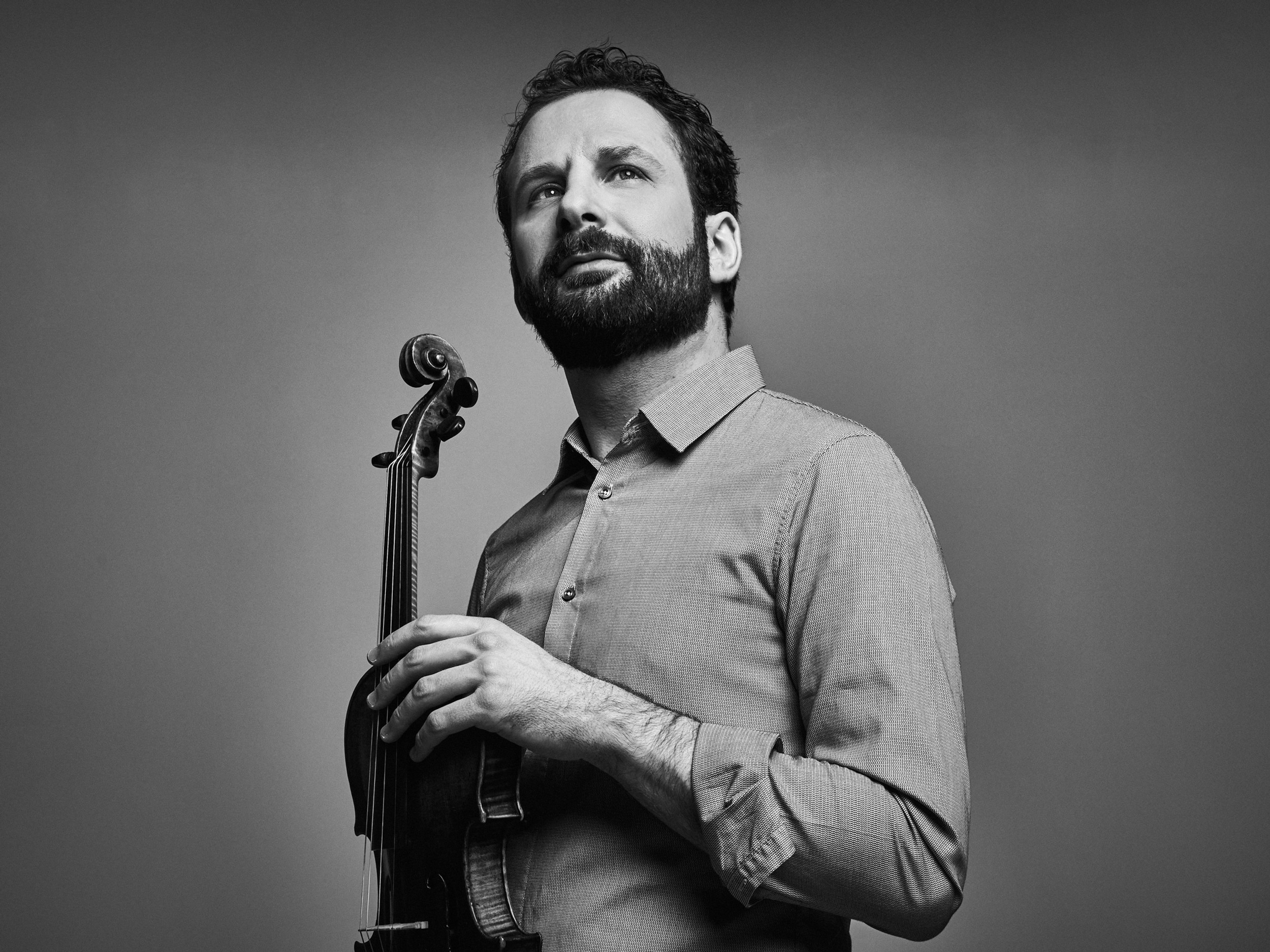
Perhaps someone was making a point about possession. A good deal of the program essay by Kate Holden for this afternoon’s Australian Chamber Orchestra concert concerned the instruments that both soloist Ilya Gringolts and his support are lucky enough to play, if not own – Guarneri, Stradivarius, Da Salo,, Maggini. As for the underworld connotations, I suppose the connection with Tartini’s Devil’s Trill Sonata was hard to resist, although a more convincing piece to play, other than the Italian composer’s tall-tale opus, might have been L’histoire du soldat, but that presents a whole new ball-game in requisite soloists.

For this event, apart from Gringolts’ presence as soloist in several concerti and leading everything else, only three extra musicians came into play: theorboist/Baroque guitarist Simon Martyn-Ellis. harpsichordist Masumi Yamamoto, and violist Thomas Chawner moonlighting from Brisbane’s Orava Quartet. In line with a mainly ‘old’ music undertaking, Gringolts confined his forces to six violins (including himself), pairs of violas and cellos, and the perennial Maxime Bibeau on double bass.

As for what Baroque music we heard, the visiting guest director offered two Vivaldi concerti – a solo and a double violin – as well as the Tartini sonata arranged by the ACO’s own Bernard Rofe for all the strings to swan in and out, Geminiani’s Concerto Grosso No. 12 called La Follia, and the slightest of lollipops in Westhoff’s Imitazione della campane extracted from his Violin Sonata No. 3 which was published in 1694.

Among all this period material, Gringolts inserted a trio of more or less contemporary scores. In the first half, we heard Gubaidulina’s String Quartet No. 2 of 1987 in an arrangement (unacknowledged) for the available eleven players, who appeared to share the original four lines while the director spent a good deal of time indicating the bar-lines.. As a lead-in to the second half, the strings played Mieczyslaw Weinberg’s Op. 9 Aria for string quartet from 1942, also amplified anonymously for the available forces. But the most recent composition on offer proved to be Paul Stanhope‘s Giving Ground, composed in 2021 to an ACO commission; this was based on the La Follia theme/bass and, at the conclusion to this program, leached into the Geminiani concerto/variations.

As the exercise progressed, you became aware of how much Gringolts was invested in everything, for all that the exercise lasted about half-an-hour less than normal. Naturally, he took the lead (only) role in Westhoff’s exercise in rapid broken chords; slowing down to break the 41 bars-worth rhythmic (and harmonic) monotony and varying his intonation between the bland and the rough; the piece giving us a chance to re-familiarise ourselves (Gringolts has toured twice over previous years for the ACO) with his individual voice which is a highly malleable one.

We moved straight into the solo Vivaldi concerto, D minor RV 237 published in 1716-17. After an initial bout of arpeggiating chords, the first movement’s solo part starts at bar 40 and runs through some familiar passage-work tropes with a rise in the interest level from bar 121 onwards for some athletic bouncing up to a high register in a neatly-packaged train of semiquaver foursomes. After an unassuming 32-bar Adagio which was an easy effusion for Gringolts and which he delivered without a trace of sentimentality, we arrived at the slightly elliptical Allegro finale which bounded past like a watery chablis that didn’t hit the sides. In the canon of memorable Vivaldi concertos, this one didn’t rank.

On to Gubaidulina’s challenging work which opens with a concerted examination of the note G, articulating it in several ways on various levels before moving to a more material-heavy second part and a brief conclusion. What made this performance more interesting than most was seeing the interweaving of individual players in the opening pages – an organizational feat of some distinction – before the more conventional later stages of the work. Still, Gubaidulina appeared to regard her score as the solution to a problem and, despite the finest efforts of insightful musicologists like Judith Lochhead and Joseph Williams, the work presents as more of a rigorous discourse than anything else, after its arresting opening.

As for the Tartini sonata (the composer alleged its composition date to be 1713; commentators suggest thirty years or so later), Gringolts began with an orthodox continuo of Martyn-Ellis, Yamamoto and the ACO principal cellist, Timo-Veikko Valve. I believe that the ACO’s other ranks started entering around the Tempo giusto but their efforts were all broad strokes filling out Tartini’s sparse texture. As you’d expect, the focus throughout this well-known work fell on Gringolts whose various modes of attack gave interest to these well-thumbed pages.

As you’re aware if you know the work, diabolic suggestions are non-existent. The piece proceeds in a respectably ordered path with some gymnastics for the violin in the Sogni del autore last movement. But you would have to be unusually susceptible to extra-musical suggestions to find anything but an assertive benignity across the composer’s canvas, especially in those euphonious trills that pop up to general satisfaction in the concluding pages.

Weinberg’s brief essay in chromatic slips and slides has its charms in quartet form; expanded, it somehow lost its harmonic interest, possibly because the inner workings sounded less striking when weighting had to be redistributed. But the great benefit was the timbral variety on offer with regard to those chugging quavers, especially a long passage for viola which here barely struck you as wearing even though the relentless chain of quaver thirds, fifths and sixths lasts from bar 33 to bar 53 in a piece that consists of only 63 bars.

The ACO’s principal violin Satu Vanska collaborated with Gringolts in the Vivaldi Concerto for Two Violins RV 507 from somewhere between 1713 and 1717. In this happy work – despite its brief E minor central Largo – the solo responsibilities are pretty fairly divided, except for the first Allegro where Gringolts had more of the running. For all the familiar sequence of harmonic steps and jaunty melodies, the chief interest here lay in the contrasting sound-colours of the soloists. Vanska’s output remained refined and lyrically eloquent but with an unflappable rigour, while Gringolts performed with more assertive verve.

You couldn’t call it brash or anywhere near coarse, but the visitor gave this rather unexceptional work an urgent vigour – just as athletic in treating the busy line as Vanska but offering a vital contrast in those frequent passages of close imitation, although he shepherded his dynamic when both soloists were in communal attack. Nothing here like the close similarity that David and Igor Oistrakh offered in the Bach D minor, or when Deller father and son worked through Sound the trumpet; rather, an unabashed juxtaposition of opposites.

Finally, we came to Stanhope’s clever set of variants on La Follia which seemed to be sticking to its harmonic last, except that it meandered off the prescriptive path easily enough and was able to employ sound-production techniques that wouldn’t have occurred to Corelli or Geminiani. You could tell when the Australian work ended and the Italian master’s 1729 concerto began but the blending was a deft move from Stanhope’s review of his opening bass-heavy scrapes to the spare statement that begins the older work.

Mind you, by the time Gringolts, Vanska and their forces reached the end of Geminiani’s 23 variations, I was all Follia-ed out and the later instances of vaulting virtuosity came close to wearing out their welcome. Not that you could find fault with Gringolts who maintained his enthusiasm until the end with an engrossing employment of dynamics and attack that exemplified what every musician has to do with these bare-boned scores: enrich listeners with an all-embracing view and find an emotional expansiveness to mine, rather than just work through the works’ outlines and only realize the notes. However, next time this excellent violinist visits, I’d welcome a lot more substance; fewer small bursts, no matter how pleasurable.

All over the place

MY HEART

Danae Killian

Move Records MCD 673

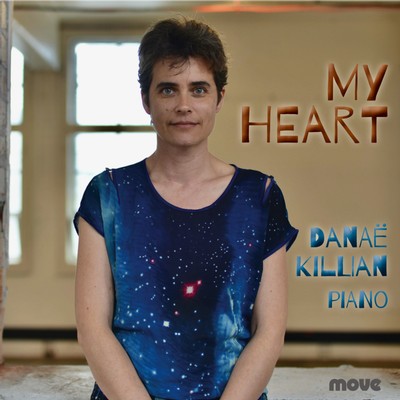
To be honest, I’m not on the wave-length of this Move Records CD from Melbourne pianist Danae Killian. Eight separate works provide the performer with plenty of material but seven of these break up the core of this presentation: a three-part construct by Killian called My Prussian Blue Heart. Originally written in 2017, then revised in 2024, this work is scored for pianist, tarot cards and piano – which strikes me as partly tautological in this case as Killian is definitely the piano performer and, I assume, takes on the pianist (speaker?) role, mainly because no other performers are listed on the liner notes/leaflet.

Exactly why the composer singles out that particular colour as a cardiac descriptor has me beat. Apart from its use by artists from the 17th century on, it also has strong medical applications; perhaps that’s a relevant association as the musical work could have some kind of therapeutic value for the composer/performer. Or it may have to do with Killian’s source of inspiration in German/Jewish poet Elsa Lasker-Schuler’s novel Mein Herz of 1912, an effusion of startling self-expression and revelation.

Killian’s first inter-leaver is Schoenberg, represented by his Drei Klavierstucke Op. 11 of 1909. This expressionist monument is followed by Mobius of 2012 by Melbourne writer Howard Dillon. Then, from another Melbourne resident, Christine McCombe‘s Asphyxed from 1991. After the middle movement of Killian’s composition, we hear some more Australiana in film-composer Amelia Barden‘s brief The Seventh Centre from 1992; and we stick with the Victorian region of the continent through senior jazz musician Colin McKellar‘s Birth Music of 2006 or 2008 or 2018, depending on your source.

Next, we make a temporary swerve geographically to Gregers Brinch from Denmark whose four-movement Two Minds suite dates from 2004. Then, just before the 39-second conclusion to My Prussian Blue Heart, back to home-base for Evan J. Lawson who appears through his Sikinnis III of 2015. He is the artistic director of the Forest Collective organization with which Killian is closely associated.

Another body that has proved a haven for several of these contemporary voices is the Melbourne Composers’ League, a body that has been operating for almost 30 years and is in the bread-and-butter business of presenting new music by local composers – although that categorization now stretches to include interstate and international voices, even if the avowed context of its presentations is covered by the term ‘Asian-Pacific’. As far as I can recall, my only experiences with this sector of Melbourne’s musical world has been through recordings, but it had an ardent advocate for many years in my erstwhile colleague-critic on The Age, Dr. Joel Crotty.

The first movement of Killian’s opus is a monologue which focuses on a single character: the pianist. You hear no music, from a piano or otherwise; just a pretty brief display of self-awareness on the narrator’s part. She appears to be suffering from an identity crisis but, to my mind, even if she fuses with the pianist figure, answers are a long way off. The second movement introduces piano sounds produced by striking the strings manually before settling into the orthodox note-production technique. Asa for the text, this has abruptly turned into a dramatic display bordering on sprechstimme but vehemently dramatic at its best, phantasmagoric more often in its imagery.

In fact, this long scena is highly aggressive, the piano’s innards a source of violent percussive attacks that reflect the narrator’s ramblings that present as a kind of image-laden narrative asking a good deal of the listener just to keep track of what’s being delivered. For all that, the admissions and self-observations move all too easily into the banal, both when concerned with mental states as well as physical. On top of this, we are treated to vocalizations of a hectic nature, yells and cries leading nowhere in particular. And the movement ends with a German text that could come from Lasker-Schuler, the whole singing to a final ‘Sterbe ich’ declaration – somewhat unnerving when you consider the previous indications of violent action.

As for the concluding phase of this work, it reverts to unaccompanied monologue, the pianist-subject in a happier place without any singing or piano scrapes – just a narrator reporting her current state of contented emotional stasis. Well, we’ve had a pianist as the focus of the work’s stages, and the middle segment features a piano in all its late 20th century glory. The tarot cards are mentioned but are irrelevant to this CD experience. Killian states that the full work also contains two interludes and a postlude; these interludes are apparently subsumed in the other composers’ music, and I assume the postlude disappears intro the ether.

As for the rest of the CD’s content, Killian’s reading of the Schoenberg piano pieces impresses for its strength of purpose. She is a stickler for observing every dynamic marking and is responsive to the frequent changes of pace across the composer’s free-flowing canvases. Very few details raise question marks, although the laid-back left hand entry at bar 45 of the second Massig seemed a puzzling choice. But the brisk oscillations between placidity and rapid outbursts that make the concluding Bewegt a sterling challenge for any pianist were unusually clear-cut and focused.

Dillon’s score lives up to its title by offering a repetitive cycle of individual notes and mini-chords that weave in and out of themselves in a pattern that seems like a moto perpetuo but allows for rubato moments – and a dead halt about half-way through. After which, Dillon appears to be considering his material in discrete fragments, as though the strip has become obstructed. Indeed, this meditative pattern remains with us for the remaining pages of the work as its world remains in a brooding ambience until the end, as though the performer realizes that the mobius construct leads nowhere.

By contrast, McCombe’s Asphyxed gives us a landscape of (mainly) single notes that creep slowly forward, interrupted at least twice by short, sharp gruppetti of chords and loud exclamation points. For all that, I don’t understand the title’s relevance nor the work’s intentions, even if Killian’s reading shows a willing sensitivity. What The Seventh Centre refers to escapes me also but in it Barden has constructed a soundscape as remote as McCombe’s, if one built on a clearer framework and employing a more obvious harmonic structure while occupying less than half the time-length.

Written around the time of his daughter’s birth, McKellar bases his work on a combination of bell-ringing charts and standard jazz progressions. He also has a penchant for single notes; understandable, given the nature of campanology in practice. Yet, for all the projected relationship between the two sources, Birth Music seems fragmented – possibly because of those single-note passages that are relieved by chords that have enjoyed permutation according to the bell chart being employed. We get idea after idea but it’s hard to find a focus.

Brinch’s first movement has the same title as his work and it cleverly proposes either two personalities or two aspects of the same consciousness. Each gets its individual say before the composer fuses them in concord and discord, although the les flamboyant mind has the last word – or does it? Reflective Intersections is less overt, although it opens with a meandering right-hand line supported by left-hand chords. As the piece moves beyond the half-way mark, the two intermesh and the texture becomes bass-heavy with whatever melody is left subsumed into sometimes gruff, other times brooding textures.

Third in this series, Homage, is something of a funeral march, especially in its later stages despite a florid upper texture. The piece opens with celebratory flourishes but soon settles into more sombre strophes. Of course, much depends on who or what is being paid homage and, being unaware of anything relevant, we are left to appreciate these pages as blanks, abstracts without context. Much of Drought is set at either end of the keyboard, so that initially I thought the low rumbles signified a protesting earth while the tinkles in alt were suggesting distant rain. But then, you wonder if Brinch’s drought is a physical one, or more simply a spiritual/emotional absence. Whichever it is, the writing is powerful and suggestive on its many disparate and (eventually) combined levels.

Last of Killian’s interstices is Lawson’s Sikinnis III, third (obviously) of a series based on a dance form from ancient Greek satyr plays. At the opening, I find this hard to fathom as the work’s progress is extremely slow, the composer celebrating the piano’s sustaining pedal with plenty of room for extended resonances. This composer is also a member of the single-note brigade that populates this CD. But then, the piece’s final pages are heavy with clangorous chords that enjoy a long fade to silence. It’s time for the less-aware among us to have a look at the lighter products of Aeschylus and Euripides to find some sort of footing for Lawson’s vision.

And that’s it. Killian has presented this collation in live concert for nearly a decade now and I suspect the exercise is more impressive in actual performance. I found individual works here very impressive but the whole strikes me as a collage of unfused parts – which you might say is what a collage is. Well, no: the craft comes in the fusion, as old Kurt used to say (and, if he didn’t. he should have). With My Heart, especially the disc’s focal work, I can’t detect more than a none-too-convincing melange.

Diary March 2026

JEAN-YVES THIBAUDET

Melbourne Recital Centre

Elisabeth Murdoch Hall, Melbourne Recital Centre

Tuesday March 3 at 7:30 pm

A popular visitor, the French pianist Jean-Yves Thibaudet has appeared here as soloist and fronting concertos. Apart from his craft, he brings to the stage a peacock’s couture. Does it make a difference that parts of him glitter? Not really; if you’re offended by such quiet flamboyance, you can always look at the Murdoch Hall ceiling or ponder the ushers perched on the side walls. Tonight he is playing all the Debussy Preludes (written between 1909 and 1912) and his expertise is unquestionable; after all, he has recorded the two volumes twice – in 1996 and notably in 2023 with a cover design by Vivienne Westwood. You’d have to anticipate that Thibaudet is going to take his time over the 24 pieces, as the Recital Centre publicity refers to a length of one hour 50 minutes. Even if that includes a 20-minute interval, we’ll have a leisurely view of these atmospheric studies. But that seems to be his way; where younger players take about 75 or 77 minutes in their readings of both livres, this pianist’s earlier recording brings them in at 82 1/2 minutes. Still, he’s getting faster: his 2023 double LP performances come in at 81 1/2 minutes. Full adult tickets range from $79 to $139; concession holders can get a $20 deduction in the middling-quality seats, while Under 40s can get into the same sections for $49. As usual, you face the Recital Centre’s sliding transaction fee of between $4 and $8.50 – the organization’s peculiar form of book-keeping where no books are involved.

2026 SEASON OPENING GALA

Melbourne Symphony Orchestra

Hamer Hall, Arts Centre Melbourne

Thursday March 5 at 7:30 pm

Starting the year proper after those Myer Music Bowl shenanigans, the Melbourne Symphony Orchestra settles into staid mode under its chief conductor Jaime Martin. Tonight’s flavour is American, aiming for the popular jugular with the Star Wars: Suite for Orchestra by that Hollywood colossus, John Williams. It was published in 2000 when the composer was in the throes of coping with Lucas’ second trilogy and the melange of themes has become part of our consciousness. The evening’s guest is French pianist Jean-Yves Thibaudet who plays the solo role in Gershwin’s Concerto in F of 1925, which he recorded in 2010. Despite its creaking structural bones, especially in the final Allegro agitato, this score is appealingly brash and sentimental in turns with some energetic bravura passages for the soloist. To end, Martin directs Rachmaninov’s Symphonic Dances of 1940, the composer’s only work written completely in America. Always harking back to his past experiences, this three-movement construct is eventually a buoyant joy, showing the same high spirits as you hear in the Paganini Rhapsody. Tickets range from $81 to $139, with concession holders getting in for $5 cheaper. You also have a $7 transaction fee which always strikes me as particularly grasping when you consider the capacity of Hamer Hall. But you have to front up the cash to be sure of a seat as it’s bound to be a popular event.

This program will be repeated on Saturday March 7 at 7:30 pm.

MOZART’S SPRING

Australian Haydn Ensemble

Primrose Potter Salon, Melbourne Recital Centre

Wednesday March 11 at 7 pm

As far as I can tell, the Australian Haydn Ensemble is a string quartet comprising violins Skye McIntosh and Matthew Greco, viola Karina Schmitz and cello Daniel Yeadon. These members all appear to have their professional lives in Sydney and this recital will be their first collegial Melbourne appearance. Welcome, brothers and sisters, to town. What are you offering? Haydn? Oh, great. We’re to hear the Op. 33, No. 3 of 1781 nicknamed The Bird because of some acciaccaturas in the first violin part of the opening movement’s first bars. Nonetheless, it’s 19 to 20 minutes of sparkling C Major magic. Then Mendelssohn’s early E flat, written when he was a tyro teenager in 1823, two years before the superb Octet; it lasts for about 24/5 minutes. Finally, Mozart K 387 in G, nicknamed Spring although it was written in the Vienna December of 1782. The first of the ‘Haydn’ quartets, the work is a model of the composer’s genius at melodic curvature, and it comes in at a little under 30 minutes. All of which, even allowing for an interval, lies well below the specified two hours’ duration of this event. Perhaps we’ll have lots of talk; oh joy. Your tickets cost $60, $45 concession, or $55 if you’re a Senior which seems generationally odd. Also, you will cope with the Recital Centre’s graduated transaction fee – anywhere between $4 and $8.50 – if you book online. It might be worthwhile just showing up at the box office on the night.

ALSO SPRACH ZARATHUSTRA

Melbourne Symphony Orchestra

Hamer Hall, Arts Centre Melbourne

Thursday March 12 at 7:30 pm

Don’t know about you but I find the most energising part of Strauss’s long exercise of 1896 in musical philosophizing comes at the start when the orchestral tutti cuts out and you’re left with the full organ C Major chord. How they’ll achieve this effect in the organ-less Hamer Hall will be a delight to watch and hear. Even better will be the machinations to get a decent blast in Costa Hall. Anyway, it’s downhill all the way after that powerful opening as the composer tries to illustrate selections from Nietzsche’s rambling tome. Preceding this exercise, a less-swollen Melbourne Symphony Orchestra under chief conductor Jaime Martin escorts Maria Duenas through Beethoven’s Violin Concerto of 1806. A young Spanish musician, Duenas has recorded the work and may be playing her own cadenzas to the second and third movements. At the night’s start, for an overture we hear a 2020 work by Australian writer Melody Eotvos: her The Deciding Machine of 2020 which serves several purposes. It’s a memorial to the centenary of women’s suffrage, a celebration of the 250th anniversary of Beethoven’s birth, and holds a titular reference to Ada Lovelace who wrote the first computer algorithm for Babbage’s projected ‘analytical engine’. Your standard tickets range from $51 to $142, with concession holders relishing a $5 discount. Children are charged $20 and you have to pay $7 if you book online or by phone. About this last, I wonder what would happen if you questioned exactly where this fee goes; e.g., which employee is paid for handling your credit card details, especially if you’re a regular client.

This program will be repeated in Costa Hall, Geelong on Friday March 13 at 7:30 pm and again in Hamer Hall on Saturday March 14 at 2 pm.

SHANGHAI SYMPHONY ORCHESTRA

Melbourne Symphony Orchestra

Hamer Hall, Arts Centre Melbourne

Friday March 13 at 7:30 pm

In a welcome display of camaraderie, the Melbourne Symphony Orchestra is presenting a large group of visitors in the form of the Shanghai Symphony Orchestra, conducted by music director Long Yu who has held this position for 17 years. Half their one-night stand is Chinese music, while the second part is a warhorse very familiar to Melbourne audiences: Rachmaninov’s Symphony No. 2 of 1907 – a big sprawling series of four canvases packed full of Romantic surges and emotional richness. Before that, we hear some selections from the ten-movement Chinese Kitchen: A Feast of Flavours, written in 2024 to a Shanghai Symphony Orchestra commission from 30-year-old composer Elliot Leung who has enjoyed remarkable success in China and the United States, bridging the Trump/Xi divide with aplomb. As for a soloist, the orchestra hosts pianist Serena Wang, a San Francisco-born 21-year-old talent who fronts the 2009 Er Huang Concerto by Qigang Chen, Messiaen’s last pupil. The title refers to a type of Beijing opera, Chen employing tunes from that art-form in a lavish orchestral palette. To hear these guests, you’ll pay between $81 and $139, concession holders enjoying a munificent $5 reduction; children get in for $20, but everyone faces the $7 transaction fee – a shameful example of grift generated by our dependence on credit cards and online booking.

THE DEVIL’S VIOLIN

Australian Chamber Orchestra

Elisabeth Murdoch Hall, Melbourne Recital Centre at 7:30 pm

Saturday March 14 at 7:30 pm

Back for the third time, violinist Ilya Gringolts takes the Australian Chamber Orchestra through a program that oscillates between the old and the new with an even hand. Clearly, the entertainment’s core is intended to be Tartini’s Devil’s Trill Violin Sonata in G minor which the composer said he wrote in 1713, even if those in the know claim it came from about thirty years later; what a dreamer. Scoring with two concertos is Vivaldi: first, with the RV 237 in D minor, possibly written in 1617 and notable for a sprightly third movement; and the C Major RV 507 for two violins that Gringolts gets to play with ACO principal Satu Vanska in a demonstration of canonic interplay and endless chains of thirds. Fleshing out the Baroque content will be Geminiani’s Concerto Grosso No 12, La Follia, which is an arrangement of a Corelli original and which keeps to the well-known theme throughout. Starting the program is Johann Paul von Westhoff’s Imitation of the Bells from his Sonata No. 3 in D minor, published in 1694 and consisting of 41 bars loaded with solo violin exercises intended to simulate a carillon. Moving to more recent times, Gringolts leads a string orchestra version of Gubaidulina’s brief String Quartet No 2 of 1987 which screams individuality from every bar, so having the ACO players handle it three or four to a line will be more than intriguing. Mieczyslaw Weinberg represents another facet of Soviet composition and we hear his 1942 Aria for string quartet, presumably organized for the ACO forces. As well, Paul Stanhope received an ACO commission for Giving Ground, written in 2020 and based on the La Follia chord progression, so that you have a traditional and a (pretty) contemporary look at this famous sequence. As usual with a hall the size of Hamer, prices range wildly and widely. You can start at $30 for a student and pay top adult for $148. The handling fee is $8.50, which is a tall order for your student struggler; probably why you don’t see many of them at these Sunday afternoon events.

This program will be repeated on Sunday March 15 at 2:30 in Hamer Hall, Arts Centre Melbourne, and on Monday March 16 in the Elisabeth Murdoch Hall at 7:30 pm.

TOUR DE FORCE #1

Corpus Medicorum & the Royal Melbourne Hospital Foundation

Elisabeth Murdoch Hall, Melbourne Recital Centre

Sunday March 15 at 5 pm

This bod of medical personnel trying their hands at taxing serious music here takes on two cornerstones of the Russian repertoire under regular conductor Fabian Russell. The Corpus Medicorum showed more than competence the last time I heard them, but that was some decades ago and you might reasonably expect that their achievement level would have risen. In any event, their cause is a noble one: raising funds towards the treatment of lung cancer patients at the Royal Melbourne Hospital. To this end, the organizers have gained the services of Alexander Gavrylyuk to take the main role in Rachmaninov’s Piano Concerto No. 3 in D minor, written in 1909 and forever linked in Australian minds, for better or worse, with the names of David Helfgott/Geoffrey Rush/Shine. Partnered with this redoubtable work is Prokofiev’s most famous symphony, No 5 in B flat Major of 1944. As a Soviet-era score, this stands at the top of the pile through its inventiveness, integration and striking individuality. And it has been the subject of many recordings by eminent conductors, so you can easily familiarise yourself for comparative purposes with a score that was once as regularly heard as Shostakovich’s No. 5. Tickets for a full adult cost $70, concession holders enjoy a whopping reduction to $40, and students pay $30. But then you have the $4-to-$8.50 fee imposed by the Recital Centre if you book online or by phone. I’d be tempted to show up on the day; at the time of writing (February 28), there are about 450 seats available across the Murdoch Hall.

STRAVINSKY & CHINDAMO

Melbourne Symphony Orchestra

Hamer Hall, Arts Centre Melbourne

Thursday March 19 at 7:30 pm

Happy company, then, for our own jazz master Joe Chindamo. The Melbourne Symphony Orchestra under principal guest conductor Benjamin Northey begins its work tonight with Ravel’s Pavane pour une infante defunte, from the year 1899 when the composer was studying with Faure. This exercise in introspective retrospection lasts a little less than 7 minutes. Stravinsky is represented by his epoch-making The Rite of Spring ballet that shocked the public – well, the Western part of it – at its premiere on March 29, 1913. Mind you, it wasn’t long before the world had a lot more on its mind than the not-quite-emigre Russian composer’s full-scale innovations. This lasts about 35 minutes. Which leaves a lot of space for Chindamo – the MSO’s composer in residence this year – to fill with his commission piece Are there any questions? which will involve the services of mezzo-soprano Jessica Aszodi and the MSO Chorus. I don’t have much information about this new composition, except that it takes its title from Atwood’s The Handmaid’s Tale novel, and it is a requiem. I’ve seen and heard Chindamo play only a few times over the years, even more rarely as a composer but his handling of large-scale forces will be a significant demonstration of his participation, from about 15 years ago, in serious music enterprises. Full adult tickets fall between $75 and $139, concessions are a ludicrous $5 cheaper, and children’s seats are priced at $20. You will add $7 an order if you try to book online or by phone. The alternative? Just come on the night, cash in hand.

This program will be repeated on Saturday March 21 at 7:30 pm.

THE POETRY OF PIANO DUO

Hoang Pham Productions

Elisabeth Murdoch Hall, Melbourne Recital Centre

Saturday March 21 at 2:30 pm

Two doctoral graduates from the Manhattan School of Music, Allie Xinyu Wang and Daniel Le are combining their talents to present a 75-minute tour of some significant contributions to the duo piano repertoire. The musicians begin with some scraps from Ravel’s Mother Goose Suite of 1908, which most of us know better in an orchestrated form that came three years later. Then follows one of the repertoire’s masterpieces in Brahms’ Variations on a Theme by Haydn which came out in 1873 in two scores: piano duo and orchestra. Just like the Ravel, we know the orchestral version much better than the smaller-scale piece; a shame, as the latter is a joy to play and less orotund to the ear. Staying with the strength, Wang and Le give us Rachmaninov’s early Suite No. 1 from 1893, the composer being 20 at the time he wrote these four reactions to poems and which he dedicated to Tchaikovsky. We jump forward to Lutoslawski’s 1941 Variations on a Theme by Paganini which treats the Caprice No. 24 with respect (until the end) and an acerbic harmonic vocabulary. Finally, the musicians leap across the Atlantic for part of William Bolcom‘s The Garden of Eden: four ragtime stages in the Fall, originally written for solo piano in 1969, then transmuted for two pianos in 1994 (half of them) and 2006 (the other half). The extract we’re to hear is The Serpent’s Kiss which takes on fantasia qualities throughout its D minor length and is the longest in the set. Standard tickets are $62, concession $50, student $38 – this last, a strange number but nowhere near as odd as the Recital Centre’s universally applied fee of between $4 and $8.50 for labouring intensively over your credit charge use if you book online or phone.

CHOPIN PIANO RECITAL

Hoang Pham Productions

Elisabeth Murdoch Hall, Melbourne Recital Centre

Saturday March 21 at 6 pm

Acting as both producer and artist, pianist Hoang Pham plays a 75-minute program of various pieces from the extraordinary larder that is Chopin’s contribution to piano music. He begins with the C-sharp minor Fantaisie-Impromptu, that favourite from 1834 that sets three against four (or six against eight) in a satisfying musical mesh. We then move to the Ballade No 1 in G minor of 1835, which is another very popular recitalist’s choice for its coruscating virtuosity and overt drama. The Two Nocturnes Op. 27 give any listener a welcome experience in tonal subtleties, the first in C sharp minor and the second in D flat Major, this latter showing the composer in 1836 already at his refined best with some astonishingly delicate fioriture. Pham then takes on the Ballade No. 4 in F minor, written in 1842 and a remarkably difficult piece to bring off, even for experts in this composer. The Two Waltzes Op. 64 of 1847 follow: another pairing of D flat Major (the so-called Minute Waltz) and that well-known C-sharp minor one used in Les Sylphides. Taking on another form that the composer made his own, the pianist offers us the Three Mazurkas Op. 63 of 1846, of which the last in C sharp minor may ring some bells. To end, Pham breaks over us with the Polonaise No. 6 in A flat: one of the most recognizable works by the composer and a test for every pianist with a battery of difficulties, including that energising Trio with its octave semiquaver bass-line. A standard ticket to this recital costs $68, with concession holders enjoying a measly and fiscally inexplicable reduction to $61.20 while students pay $34. Everyone who books online or by phone will also have to stump up the Centre’s $4-to-$8.50 ‘Transaction Fee’, in which extraction art is meant to make friends of the mammon of iniquity.

ART OF THE SCORE: JAMES HORNER

Melbourne Symphony Orchestra

Hamer Hall, Arts Centre Melbourne

Friday March 27 at 7:30 pm

Yet again, the Melbourne Symphony Orchestra is hitting the film score theme, although this time the players will not be providing the soundtrack to a full movie. The aim is to celebrate the career of American writer James Horner who died over ten years ago in a plane crash. Across his career, this composer wrote music for a large number of films, some of which even I know: Aliens (1986), Apollo 13 (1995), Braveheart (1995), Jumanji (1995), Titanic (1997), The Perfect Storm (2000), Troy (2004), and Avatar (2009). Nicholas Buc will be conducting suites and individual excerpts from Horner’s oeuvre stretching (according to MSO publicity) definitely to Star Trek II: The Wrath of Khan (1982), The Rocketeer (1991) ‘and many more’, some of which have been mentioned in my list of familiarities. I’m assuming that these extracts won’t be accompanying specific scenes from the various films; if that’s the case, it undermines the whole purpose of the music itself which only lives in the power of its suggestiveness. All credit to Horner but I can’t think of a single theme from any of the films I’ve seen for which he wrote the soundtrack – except that Titanic number. Taking fans through the program, two presenters/hosts will negotiate the narrative path: Andrew Pogson, the MSO’s Special Projects Manager, and Dr. Dan Golding, Professor of Media at Monash University. Obviously, my lack of recall/filmic insight means nothing because there are plenty of people for whom the Horner music must be memorable; the MSO has scheduled three concerts in a row to celebrate his music. Mind you, the balcony in Hamer Hall is unavailable for these concerts; further, at the time of writing (February 28), plenty of seats are available. Standard price comes in anywhere between $93 and $150; concession holders pay a whole $5 less, if they can be bothered; everyone faces the objectionable $7 transaction fee if booking online or by phone. As I say, it’s a month away but nobody seems to be rushing to get in.

This program will be repeated on Saturday March 28 at 7:30 pm and on Sunday March 29 at 2 pm.

SOUVENIRS: BRAHMS AND TCHAIKOVSKY STRING SEXTETS

Melbourne Symphony Orchestra

Iwaki Auditorium, Southgate

Sunday March 29 at 11 am

A day after presenting this program at the Castlemaine Town Hall, musicians from the Melbourne Symphony Orchestra come back to town with the rarely-heard Brahms Sextet No.1 of 1860, and the much more well-known Tchaikovsky Souvenir de Florence Sextet, written in 1890 after several years of difficult gestation and followed by an uneasy revision/afterbirth. Even so, the Russian composer’s nervous energy makes his work an illuminating pleasure: an excellent coupling of sophistication and (in the later two movements) simplicity. The Brahms is another matter, soaking in warmth right from the broad opening cello statement to the same instrument’s tenor clef melody of the concluding Rondo‘s initial bars. Coupling these scores was a happy inspiration for someone (Michelle Wood, it would seem from the advertising bumf) in the MSO and these players will have just as large a chance of success as anybody, permanent string sextet combinations being few in number. They are violins Kathryn Taylor and Emily Beauchamp, violas Katharine Brockman and Aidan Filshie, cellos Wood and Anna Pokorny. Part of the organization’s long-lasting Chamber series, tickets cost $55, concession holders still only getting an insulting $5 reduction. And you have to engage with the booking platform to find out that the orchestra will apply its customary $7 transaction fee at this recital; probably unavoidable because these events are highly popular – which makes this example of fiscal greed all the more contemptible.