FIRST VOICES SHOWCASE
Melbourne Symphony Orchestra
Iwaki Auditorium, Southbank
Wednesday June 3 at 6:30 pm
Not what I was expecting. The voices aren’t those of writers who are having their first pieces played but members of the First Nations who have been around for a while, like Aaron Wyatt who is a Noongar man from Western Australia and a pretty old hand at conducting in Perth. Which is just what he’s doing this evening: taking the Melbourne Symphony Orchestra through three scores, one of them his own. This will be The Things Which Are Most Important Don’t Always Scream the Loudest, written in 2023 for the opening of a performing arts centre in Subiaco named after Bob Hawke, from whom the title comes – perhaps. It’s a fanfare that lasts three minutes, could begin in D minor, and appears to pack in an awful lot of indigenous references. Wyatt also conducts Nyrrimar Ngamatyata/To Lose Yourself at Sea by James Howard, a Jaadwa composer who possibly composed this work last year; it was certainly premiered by the MSO in that year, if ABC Radio National is to be believed. As well, we hear a fresh MSO piece: Mutations by Nicholas Astill, a Gamilaraay writer and researcher who is here presenting his first orchestral commission from the people playing it. So he is an actual first voice in both senses, I suppose. Tickets are a flat $15, but the MSO also charges almost half that in its $7 transaction fee, which is fiscally insane in these trying times.
WHERE SONG BEGAN
Bowerbird Collective
Elisabeth Murdoch Hall, Melbourne Recital Centre
Saturday June 6 at 7:30 pm
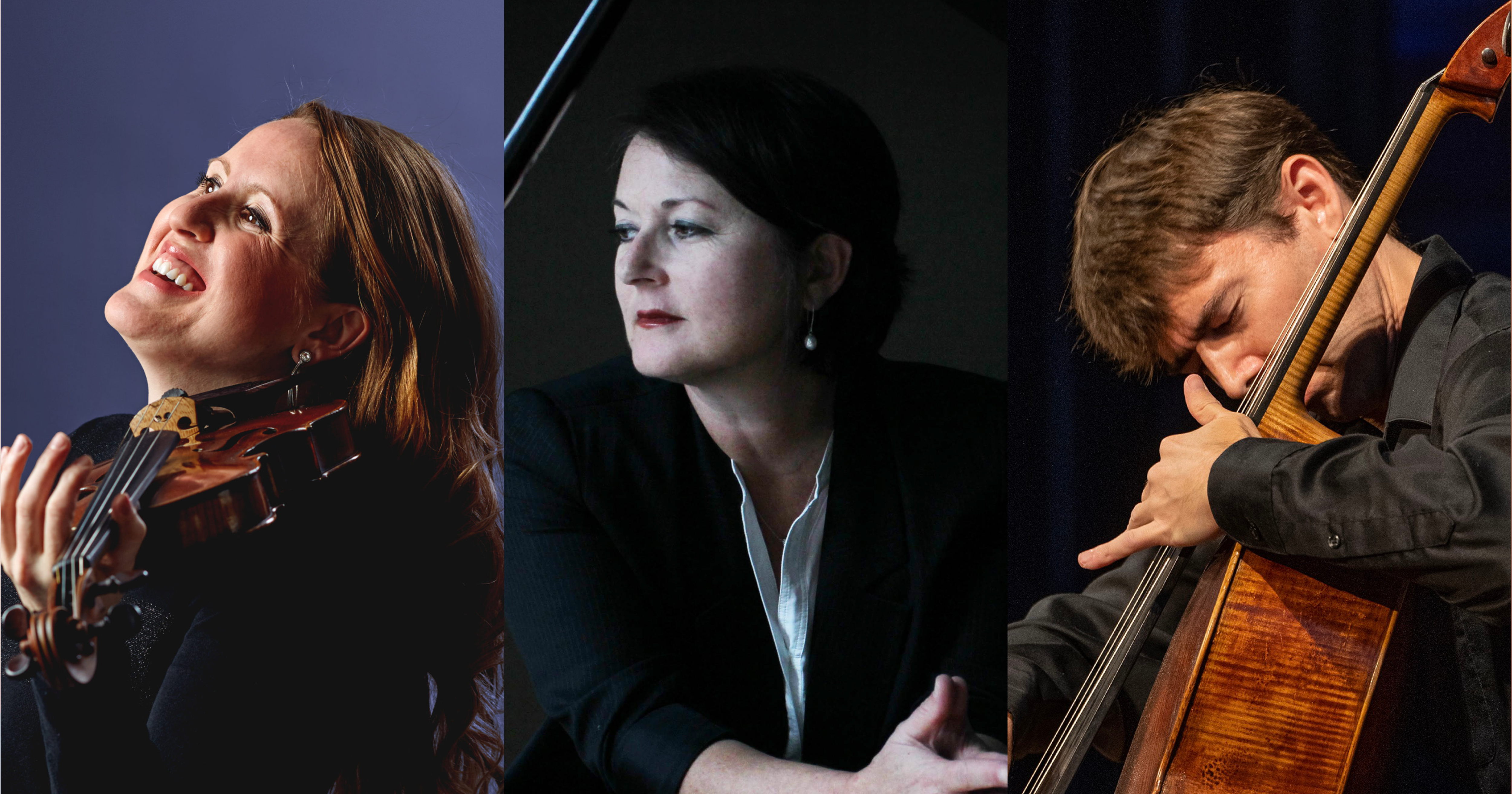
The principle behind this recital from the Bowerbird Collective is that song began with birds. Well, I suppose it’s one way of looking at it – I would have preferred ascribing its origin to angels but that’s being uncharacteristically optimistic. In any case, the ensemble is an odd one. In the Recital Centre publicity for this event, the co-founders of the group – violinist Simone Slattery, cello Anthony Albrecht – are listed as separate guests; on the Bowerbird website, you can find a solid list of artists that have indulged in collaborations with the fundamental duo. Not tonight. Slattery and Albrecht themselves will present a nine-part unescorted program from all over the shop. We kick off with Arvo Part: his 1977 Fratres for violin alone. That will be fun as the only arrangement I know of this work in solo form is for piano. Brisbane-based Sarah Hopkins‘ Reclaiming the Spirit comes from 1993 and exists in many arrangements, but you’d have to guess the violin/cello one will emerge here. Vaughan Williams’ The Lark Ascending from 1917 somehow will enjoy a release in what you’d have to anticipate will be a skeletal shape. Chris Williams wrote birds, songs, seas in 2017 specifically for these two musicians, extracting it from a larger work to do with convicts. A welcome dose of Maninyas comes with Ross Edwards‘ 1990 Ecstatic Dance No. 2, once again in a violin/cello format. Hurtle back temporally to Schmelzer’s Cucu Sonata in A minor of 1664, then nudge forward 50+ years into some Bach: the well-known opening to his Cello Suite No. 1 which comes (probably) from somewhere between 1717 and 1723. Anthochaera carunculata by David John Lang was written for Slattery – and this program – in 2017 and celebrates the red wattlebird. To end, a traditional (really?) indigenous hymn, Ngarra Burra Ferra, which has become a part of the Yorta Yorta contemporary culture because they wrote its lyrics. Tickets range from $69 to $89; Under 30s pay $30; everybody stumps up the MRC fee of between $4 and $8.50 per online order – the best argument I can think of for cash at the box office on the night.
DANIEL HOPE IN RECITAL
Classical Music Australia
Elisabeth Murdoch Hall, Melbourne Recital Centre
Tuesday June 9 at 7:30 pm
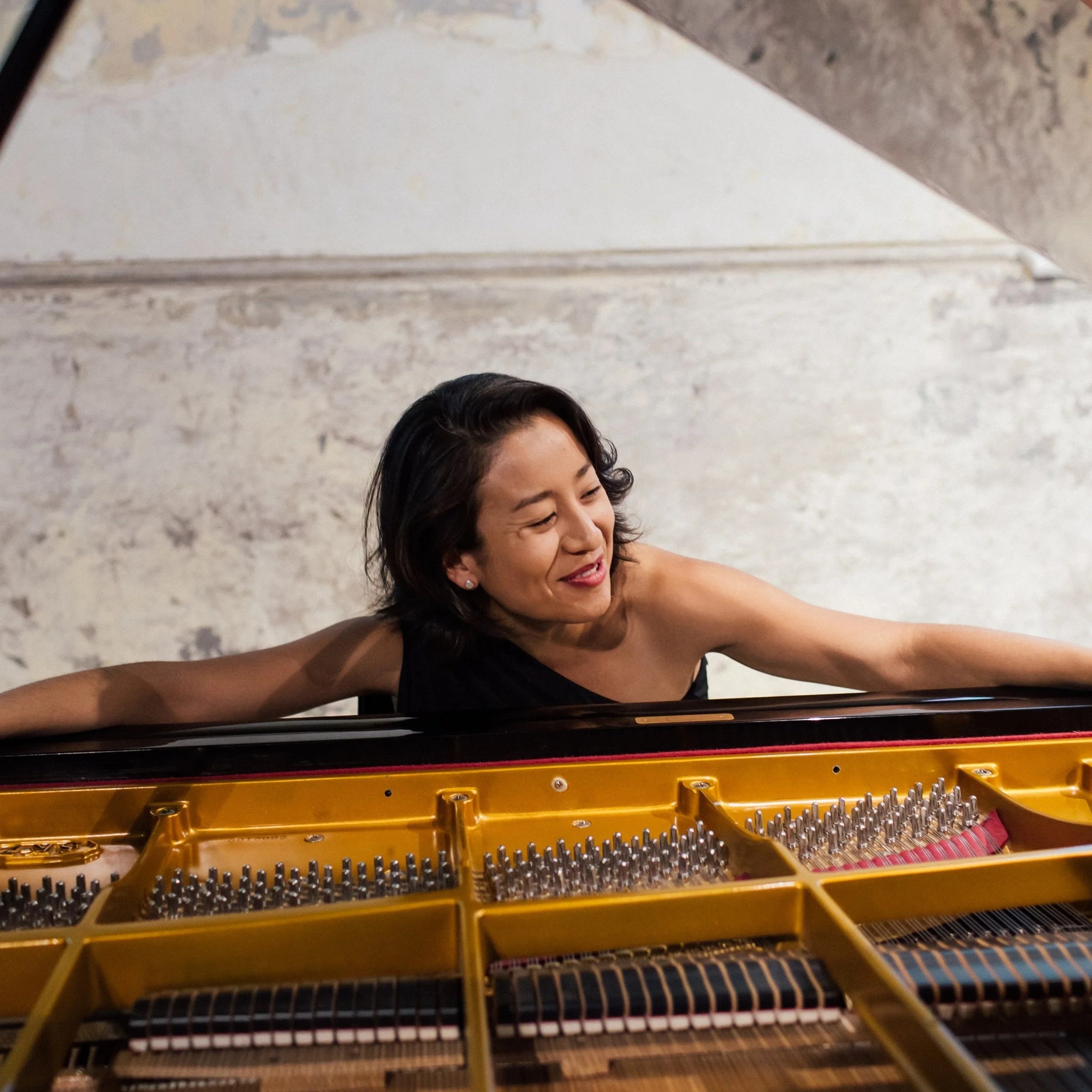
The highly enterprising South African-born violinist Daniel Hope is back after a twelve-year gap, collaborating with pianist Marie Sophie Hauzel in a strange program that has one solid work as its conclusion after some odd predecessors, a few of them more easily seen as encore scraps. The duo begin with Enescu’s triplet-rich Impromptu concertant in G flat Major (that’s a key you don’t see much of) from 1903, then move to Faure’s Andante in B flat of 1897. Both pleasant show-pieces, both fine salon music. I’ve encountered the Sonatine of 1893 by Dvorak in a transcription for flute and piano and its four movements stretch to about 20 minutes’ uncomplicated playing time; it was written for the composer’s children and shows it. Then come two Mendelssohn bagatelles in transcription: the eloquent On Wings of Song from 1834, which you sometimes hear in its original vocal format; and Witches’ Song, one of the Op. 8 set of twelve lieder written between 1824 and 1827. Hope balances his Dvorak with Elgar’s Violin Sonata: a three-movement construct lasting about 25 minutes, generated in the grim year of 1918 and recorded by Hope 25 years ago. Your normal tickets range between $95 and $140. Then there’s a selection of others; a Pay What You Can (a bit extra topping up the top price), a reduced price (down $20), a lower-priced ($30/$35 under the regular), and a $30 for the $95 regular seats if you’re struggling. No matter: everybody will have to cope with the Recital Centre’s $4-to-$8.50 transaction fee for online/phone orders – Congregavit nos in unum . . .
HARRY POTTER AND THE CHAMBER OF SECRETS IN CONCERT
Melbourne Symphony Orchestra
Hamer Hall, Arts Centre Melbourne
Wednesday June 10 at 7:30 pm
As we all know, this is the second in J.K. Rowling’s celebrated series of tales about the boy wizard, and in it she documents the next bout in his ongoing struggles against Voldemort, this time in the persona of an old Hogwarts boy, Tom Riddle. Apart from enjoyable jaunts like the flying car, the mandrake transformations, and the encounters with Moaning Myrtle, the film is enlivened by the presence of Kenneth Branagh, playing the magnificently egotistical Gilderoy Lockhart: a Dark Arts teacher for the ages with absolutely no talent for much except self-aggrandisement. And there’s lots of seat-edge mayhem in Harry’s final confrontation with the basilisk as he saves his future wife from death, with suitably gripping musical support from John Williams‘ score, in which construction he was assisted by William Ross, following the centuries-old precedent of Renaissance painters and sculptors. And they say you can’t teach a new dog old tricks. This project is selling very well for the Melbourne Symphony Orchestra, which will be directed by Filipino veteran of these events, Gerard Salonga. Admission costs you between $86 and $161; concession card holders and children are treated with equal contempt by being given a $5 discount. Everybody has to meet the MSO’s $7 transaction fee for each online or phone order – passable if there are ten of you, totally unreasonable for a single-ticket booking.
This program will be repeated on Thursday June 11 and Friday June 12 at 7:30 pm, and on Saturday June 13 at 1 pm.
DORIC STRING QUARTET & LLOYD VAN’T HOFF
Musica Viva Australia
Elisabeth Murdoch Hall, Melbourne Recital Centre
Thursday June 16 at 7 pm
Since they were last here, the Doric String Quartet members have changed. No: that’s not quite right. Two of them are new: Maia Cabeza is now first violin, and Emma Wernig is the current viola. Ying Xue continues as second violin and foundation member John Myerscough has been cellist since the group began in 1998. Will that make a difference to the ensemble’s ‘sound’? Of course it will, particularly as we have no grounds of comparison: as far as I can see, the ensemble hasn’t issued any CDs since this personnel realignment. They’re banging the nationalist drum with Britten’s Three Divertimenti of 1936, a ten-minute work the group recorded in 2019. Furthering the patriotic cause, we hear Thomas Ades‘ Alchymia of 2023 which will bring Lloyd Van’t Hoff into the mix for this four-movement sequence of transformations; the Australian musician will be playing a basset clarinet because nothing says alchemy like that instrument. It’s back to your old-time repertoire for the night’s second half with Beethoven’s Razumovsky No. 1 in F: the composer’s self-launch into a new and challenging style of writing in this form, after which nothing was ever the same for both audiences and performers. Normal tickets cost between $65 and $163; concession holders and students pay $18, $15 and $12 less in the three top seating divisions; Under 40s cough up $49, Under 18s $20. As with the Melbourne Symphony Orchestra, there is a transaction fee charged of a flat $7 which you might avoid by turning up on the night, although the space is currently (May 9) pretty full.
ITALIAN SERENATAS
Australian Brandenburg Orchestra
Elisabeth Murdoch Hall, Melbourne Recital Centre
Thursday June 18 at 7 pm
The publicity for this Australian Brandenburg Orchestra event is heavy on hype, light on detail, but we make what we can of what’s on offer. The program moves across the Italian Baroque, focused on four cities: Venice, Florence, Naples and Rome. Leading us on this pilgrimage will be a baritone expert in this period, Renato Dolcini, and the Brandenburgers’ director-from-the-harpsichord, Paul Dyer. We joyfully encounter several significant names: Vivaldi (that covers Venice), Corelli (so Rome is accounted for, but did he write any vocal music that has survived?), Brescianello (a Mass, an opera, two cantatas but he stayed pretty much all of his professional life in Stuttgart), Falconieri (Naples-Parma-Rome-Naples producing quite a few vocal works), Giulio Caccini and his daughter Francesca (both active, if not dominant, writers for voice in Florence). The bumf’s adjectives fly in superlative directions – ‘bold, stylish, unforgettable’, ‘vibrant’, ‘lavish’, ‘opulent’, ‘expressive’ – but you have to regain your feet with the realization that the concert is un-staged: what you get is pure singing and playing – of a high calibre, to be sure, but not as colourful as it sounds . . . unless you’re a Baroque aficionado, in which case, rapture awaits. Seat prices differ between performances but tonight’s are cheaper, starting at $45 and swooping to $167, with some substantial reductions for concession holders, less handsome for seniors, $20 anywhere except the top stratum for students, $36 for Under 40s with the same proviso. You still pay between $4 and $8.50 if booking online or by phone; currently, about a quarter of the hall is available.
This program will be repeated on Saturday June 20 at 5 pm and on Sunday June 21 at 5 pm.
ABC CLASSIC 100 IN CONCERT
Melbourne Symphony Orchestra
Hamer Hall, Arts Centre Melbourne
Friday June 19 at 7:30 pm
Has the ABC’s annual quiz stopped already? The one where you’re asked to nominate what you think is the greatest piece of music (this year, ‘of All Time’)? It would seem so because the cast of participants is set out on the Melbourne Symphony Orchestra‘s website. Strange, as the cut-off date for entries is actually on May 28. Still, going with the flow, we note that Benjamin Northey will be conducting and no doubt relishing his other function as creative director, which probably means he gets to talk. As well, the ABC proposes one of the presenters/hosts of its The Piano series: Andrea Lam. Billed for her participation as a ‘vocal’, Koa, Kuku Yalanji and Wakka Wakka soprano Nina Korbe is doomed to perform operatic highlights. Another face from The Piano, pianist CJ Jones visits from across Bass Strait to perform who knows what. MSO concertmaster Natalie Chee and associate principal cello Rachael Tobin will enjoy solo exposure, and the MSO Chorus will participate, probably in such deathless numbers as I Still Call Australia Home and Up There, Cazaly. I’ve not been to one of these events (this is the fourth) but I’ve seen a televised version and it struck me that an awful lot of chatting went on – for a concert. Anyway, the organizers are presenting the program twice, which means there’s an audience for it. Tickets are still available, but not many. Standard seats cost between $59 and $109; concession holders pay a munificent $5 less. Everybody has to meet the $7 transaction fee if you book online/by phone. Sorry but, if they’re going to broadcast the concert live, why drag yourself out on a Melbourne winter’s night for a program packed with pieces that you might not like and which you will be hearing in (generally, based on my one experience) truncated form, anyway?
This program will be repeated on Saturday June 20 at 2 pm.
JAMES EHNES WITH ORION WEISS
Melbourne Recital Centre
Elisabeth Murdoch Hall, Melbourne Recital Centre
Friday June 19 at 7:30 pm
I’ve always had a lot of time for James Ehnes, the personable Canadian violinist: for his prodigious repertoire, for his fluidity of production, for the restraint and depth he brings to his interpretations. Is he alone in these respects? No, but he is also ever-reliable; it’s impossible to think of one occasion when his playing sounded sub-par, and par for him is a level that few can sustain. Anyway, here he is in recital with Orion Weiss, a well-travelled American pianist who has collaborated with Ehnes in past years. Tonight, the pair collaborate in three major sonatas: the benevolent Brahms No. 1 in G from 1878-9, Debussy’s short and sprightly exercise from 1917 which was his last major composition, and the Grieg No. 3 in C minor which was finished in 1887 and is his most popular work in this form. All are three movements long, which is not that remarkable as only Brahms wrote a four-movement violin sonata. To introduce themselves, Ehnes and Weiss play Korngold’s Suite from his 1919 music for Much Ado about Nothing: four movements of brilliant scene-setting that prove to be touching and amusing by turns – which alternating reactions strike me as typical of the play itself. Tickets cost between $79 and $139 full price; concessions for middling seats can be bought for $20 less; Under 40s pay $49 for the same mid-price places. Everybody pays the $4-to-$8.50 transaction fee imposed by the Recital Centre if they book online or by phone. At the moment (May 10), the hall is half-empty and I don’t think the gallery is in use on this occasion.
SPOTLIGHT
Melbourne Symphony Orchestra
Hamer Hall, Arts Centre Melbourne
Thursday June 25 at 7:30 pm
You have two forces in the spotlight during this program from the Melbourne Symphony Orchestra under German conductor Anja Bihlmaier who, judging from her website, isn’t that engrossed by her Australian tour that takes in four nights in Sydney, three nights here, and two in Perth. The focus in this night’s second half is on the ensemble which essays Bartok’s 1943 Concerto for Orchestra, one of the composer’s more popular scores and a showcase for its performers, especially in the second movement’s instrumental duets. Also something of a fabulous fabric, Bihlmaier opens this brief program with Strauss’s Rosenkavalier Suite of 1945; well, sort of Strauss’s but more probably put together by conductor Artur Rodzinski who directed the first performance. All the opera’s hits are there, including the ‘Mit mir’ waltz. As for an individual spotlight, that will shine on the MSO’s principal oboe Johannes Grosso who will give us the solo line in Mozart’s Concerto in C Major of 1777, a work that many of us know as a flute concerto that the composer transcribed in a vain attempt to flesh out a commission. For all that, it’s a sterling work for oboe and one of the two that defines/confines the instrument’s repertoire in that form. Seats cost between $51 and $139; concession holders get in for a game-changing $5 cheaper; children are admitted for $20; everyone pays the $7 fee if booking online or by phone. At the moment (May 10), plenty of good and poor seats are available, especially in the stalls.
This program will be repeated in Costa Hall, Geelong on Friday June 26 ay 7:30 pm and back in Hamer Hall on Saturday June 27 at 2 pm.
THE CORONATION OF POPPEA
Victorian Opera
Palais Theatre, St. Kilda
Tuesday June 30 at 7:30 pm
It’s been a number of years since I last saw this Monteverdi opera. I can vaguely recall a production carried out in South Melbourne decades ago that obfuscated more than enlightened, thanks to its directorial oddity. Then came an Opera Australia production in 1993 that brought out the Italian composer’s inner punk. Now comes a new production from Victorian Opera that has several daunting prospects dangling. The original score of 1643 has been revised by Australian composer Elena Kats-Chernin, to a stage where there are infusions of jazz to brighten up an otherwise pedestrian night at the Baroque. Further, the time has changed from the 62 CE court of Nero to a mafioso club of the 1980s; surprising they’ve left the environment in the same country, but then, the singers will be working in Italian. The bright minds behind this re-incarnation are conductor Chad Kelly who has ‘realised’ the performing edition in use; the text and vocal lines have been adapted by Alan Hicks; Sam Strong directs; sets and costumes come about through Anna Cordingley. Good luck to them all. And even more kind wishes for the cast headed by Samuel Dundas (Nero), Meechot Mareero (Poppea), Jeremy Kleeman (Ottone), Margaret Trubiano (Ottavia), and David Greco (Seneca). As well, there’ll be three others, you assume, to impersonate the god/goddesses who clutter Busenello’s libretto. In its original form, this is a lengthy opera and definitely gains from aggressive staging; this production lasts two hours, which includes an interval. If you’re happy with all of this, tickets will cost you between $39 and $175 – one of the more sensational spreads I’ve come across anywhere (except opera). You also have a ‘handling fee’ of ‘from $7.80’ which to my ears sounds menacing; more so than usual.
This production will be repeated on Thursday July 2 at 7:30 pm and on Saturday July 4 at 7:30 pm.