Shreds and patches, sound-wise

CROSSING THE BAR

Gesualdo Six and Australian Boys Choir/Vocal Consort/Kelly Gang/Training Choirs

St Andrew’s Anglican Church, Brighton

Tuesday June 23, 2026

Gesualdo Six

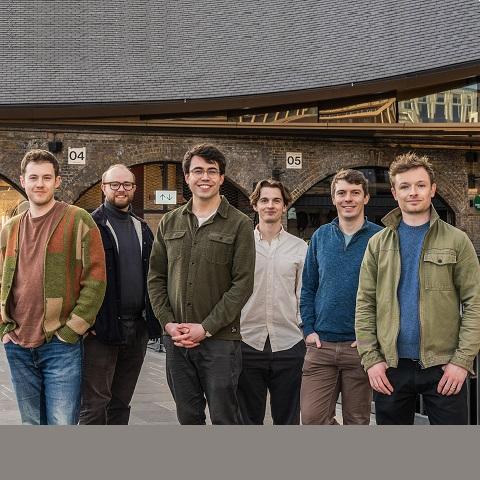
(L to R) Simon Grant, Joseph Wicks, Owain Park, Alasdair Austin, Guy James, Josh Cooter

It somehow seems disloyal, using a snap of the visiting British guests at this event, rather than highlighting the local choir(s) which was (were) the hosts. Added to that, I’ve probably got wrong the names attached underneath it. But the Gesualdo Six did most of the singing on Tuesday night, working their way through ten items on their own account as well as taking part in all but two of the Choirs’ six pieces. In fact, the Gesualdos’ director, Owain Park, conducted the concluding number in each of this concert’s halves and he spoke with evident admiration about the work, even the existence, of the Australian Boys Choir and its offshoots in his concluding exhortation to us all to nurture such a body.

The whole organization, it seemed to me, gathered for the opening Out there by Dan Walker, this 2006 piece having acquired a bongo contributor to reinforce its piano accompaniment somewhere along the way. The artistic comptroller of the ABC, Nicholas Dinopoulos, conducted this bouncy work which was given under adverse conditions for those of us hearing the event under the Australian Digital Concert Hall auspices. The volume level was faint until near the score’s end, although matters improved in the following Sailing Time by Dulcie Holland; written at an unknown date but a favourite of this ensemble. Like Out there, this also sounded rollicking and vital, a typical product from the well-known composer in its easy flow, moving past very quickly.

Concluding the evening’s first half came two extra-Australian products, both involving members of the Gesualdo Six. The Vocal Consort, Kelly Gang and (I believe) members of the Training Choirs worked through American arranger/composer Timothy Takach‘s 2009 version of the spiritual Keep Your Lamps which involved a Gesualdo tenor and bass taking the solo lines in the piece’s later stages. The arranger’s score asks for tambourine and ‘low’drum’; I think we got a timpani (tympanum?). A pseudo-folk tune from 1993 arrived with Frobisher Bay, written by James Gordon and heard here as arranged by American-born Canadian choral eminence Diane Loomer. A Gesualdo soloist opened the piece, conducted by Park but yet again the sound system let us down with a faint dynamic until later in the work. Despite this, the interpretation revealed an excellent response to the work’s phrasing and a demonstration of fine concentration from the young choristers.

All the ABC forces re-assembled after interval for Sarah HopkinsPast Life Melodies from 1991 which, according to Dinopoulos, moves into 11 parts and generates a distinct atmosphere thanks to the persistence of drones in the lower and middle voices and the sudden emergence of some harmonic overtone singing that recalled the sounds of those Asian (Mongolian?) singers who visited our churches and/or halls some years ago. The ‘past life’ referred to is the composer’s own; it must have been one filled to the brim with chants and no little melodic fragmentation. Once again, the singers were let down by the sound manipulators whose microphone(s?) proved slow to react to the required amplification levels.

Finishing the night, we heard a work by Calvin Bowman, organist at this church of St. Andrew and a composer in the British tradition that favours concord of sweet sounds. This was the program’s title work and surprised nobody by being a setting of Tennyson’s well-known elegy. I’ve not come across this choral version of the composer’s later score for voice and piano, presumably of 2019. In any case, it involved all the forces available, including the visitors, with Park conducting from a hand-held tablet and urging his forces through its dulcet pages.

The Gesualdo ensemble operated inside this choral framework, four of them singing Purcell’s Thou knowest, Lord of 1695 from a gallery, transporting us for a couple of minutes into the Anglican ecclesiastical sphere with an unexpected emotional tranquillity. Almost immediately, the singers moved to ground level, split into two groups, and outlined the 1981 Funeral Ikos by John Tavener – a prayer for the burial of priests – while moving up the church aisle, taking turns with the text, then singing the six cadential Alleluias. It reminded me, not suprisingly, of Blazhen muzh, the third segment from Rachmaninov’s All-Night Vigil of 1915, even if the Russian work is streets ahead in fabric, insight and conviction.

For a treat, the group sang a motet published in 1611 by their patron, the homicidal Prince of Venosa: Plange quasi virgo, which somehow smoothed out those chromatic clashes that have become legendary in this composer’s music, especially works with emotionally fraught texts like this one from the Tenebrae Responseries for Holy Saturday which spreads gloom and dread on the eve of Christianity’s greatest triumph. Perhaps we’ve become inured to the dissonances in these piping times of pap, or more probably the Gesualdi sing the piece with impeccable dynamic and linear fidelity, as well as a firm ardour.

British writer Howard Skempton‘s setting of some Apocalypse verses, And there was war in heaven, seems to date from 2005 and utilises a fair amount of drone sounds, textual repetition, and bass-line heft, possibly due to its five-voice, no-soprano-one-alto weighting. Once again, the amplification system moved between faint and surged into something approaching decency half-way through. Another British composer Joanna Marsh‘s I take thee was composed for the Gesualdo Six in 2020 and has traces, in spite of its cosy domesticity, of a modern-day, anniversary-celebrating epithalamium. The singers move into and out of dissonance, resolving the composer’s mini-harmonic crises with that kind of expertise arising from the pleasure of singing a work written for you and your voices, speaking a language both tender and melismatic.

In the program’s second part, the guests began their work with Byrd’s This sweet and merry month of May from 1590. One of the composer’s more popular choral compositions in English, the six-voice madrigal twittered elegantly until the sovereign-lauding started and you wondered – not for the first time – how the composer could indulge himself – and her – in an exercise that served ego before anything else. Cutting back to four voices, the ensemble worked easily through Vaughan Williams’ 1908 arrangement of Bushes and Briars for pairs of tenors and basses. The participants sang this from memory and worked through the three stanzas with masterly ensemble and the kind of phrasing control that only focused rehearsal gives. Which was even more impressive when you note that baritone Simon Grant only joined the group last year.

Back to all six voices, the group sang a piece by director Park: his 2013 setting of Louisa (After Accompanying Her On A Mountain Expedition), by Wordsworth, composed for the SATB formation and opening with a solo for soprano – in this case, Grant. It’s a neat sample of compositional doodling, something of a choral torch-song or a smoothly eliding cabaret number. Little happens in its passing – no dynamic alterations to the prevailing benign mood. To conclude the sextet’s offerings, we heard Josquin’s four-voice frottola from around 1505, El grillo. This demonstrated the group’s crisp attack and mutual rhythmic responsiveness, albeit on a small and not-too-demanding canvas. Sadly, the audience thought the work had concluded at the repeat of sol per amore, cutting across the singers’ reversion to Josquin’s opening bar.

So, not the happiest of recitals from the perspective of a remote listener. I can’t remember so many problems with the sound system arising in the ‘good old days’ of the Digital Concert Hall when its acivities were all we had to go to in the dark days of our COVID infections. Mind you, it was simple self-indulgence and the quest for comfort that impeded me from making the trip to Brighton in this city’s freezing weather. I’m sure that hearing the Gesualdo Six and the ABC forces (once again) in the flesh would have been worth the journey. Next time . . .

Best wine came early

DORIC STRING QUARTET & LLOYD VAN’T HOFF

Musica Viva Australia

Elisabeth Murdoch Hall, Melbourne Recital Centre

Tuesday June 16, 2026

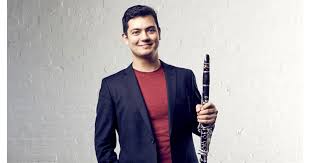
Lloyd Van’t Hoff

It’s probable that I haven’t seen the Doric String Quartet since 2007 when the group played in that year’s Melbourne International Chamber Music Competition held at the South Melbourne Town Hall, which was at that stage home to the Australian National Academy of Music. It seems that I missed the Quartet’s most recent visit for Musica Viva Australia in 2019, in which year I moved to the Gold Coast in a search for physical warmth – simply put, heat. Not that I can recall any of the members from the original group; the only one who has survived is foundation cellist John Myerscough.

While Ying Xue has occupied the second violin role since 2018, the latest arrivals from 2024 offer a somewhat disturbing contrast. Viola Emma Wernig makes an ideal match for Myerscough’s assertive bass line, the pair combining to excellent effect in Thomas AdesAlchymia of 2021, more stridently in the post-interval Razumovsky No 1. Unfortunately, first violin Maia Cabeza produces a cultivated, carefully honed timbre that offers little competition to her colleagues in full cry – and that’s a great pity as her sound colour is very attractive and finely articulated.

As a warm-up, the Dorics offered Britten’s Three Divertimenti of 1936 which broke over us with all the textural brilliance we’ve come to enjoy from this composer, even while being all too aware of the calculated charm invested in this product of his early 20s. During the opening March, you could relish the clarity and truth of the ensemble’s octaves and unisons which featured strongly across the movement. Wernig’s well-projected and shapely line graced the middle F Major Waltz, lending some weight to this clever-clever interlude.

But the main interest came in the concluding Burlesque with its masterly oscillation of sound-production techniques and in which Cabeza made a clear-cut appearance on the change of key-signature at Number 11 in the Faber score of 1981. This movement holds a good deal more interest than its predecessors because of the abrupt shifts in attack mode and the wide-ranging harmonic sleights that Britten exercises in what amounts to a brisk musical reflection of the contorted work of the pages’ dedicatee: Francis Bacon.

As for the concluding Beethoven Op. 59 No. 1 of 1806, this left me unsatisfied because of the ensemble’s balance problems. Time and again, top violin lines that you knew should be there, riding the blast, failed to appear or turned into pale imitations of themselves. Even details like the communal sforzandopiano accents in the opening F Major Allegro from bars 67 to 70 were dominated by the lower lines, which made the first violin’s solo exposures – bars 130-1 and 134-5, for example – very welcome. A little further on, the long ‘solo’ for Cabeza between bars 152 and 190 proved strikingly well-crafted over some at times impatient support.

But later, the chugging quavers in the background that underpin the first violin from bar 261 to bar 276 distracted from the main message – which was hardly replicated when Myerscough had the first subject beforehand between bars 254 and 260. Still, matters improved in Beethoven’s Allegretto which the Dorics all took to with gusto, although even their collegial zest wasn’t quite enough to compensate for the composer’s moments of insistence.

Later, Cabeza projected the Adagio‘s first theme with eloquence through six of the opening eight bars and her accompanied cadenza across bars 126 to 132 impressed for its variety of attack as she led into the finale with its Theme russe manipulations. Here, I suppose, the tendency to go hell for leather dynamically proved irresistible and the Wernig-Myerscough combo bounded in tandem across bars 73-105 as the exposition turns seamlessly into a development-of-sorts.

Possibly this performance might have impressed more in a recording studio where output levels can/are/always will be adjusted, but the lasting impression was unsatisfying in that one respect. Not so with the Ades construct from 2021 for basset clarinet and string quartet which gave us the most rewarding performance of the evening. The work springs (it is said) from Elizabethan London and, to my mind, reveals much of the composer’s habit of adapting and adopting whatever takes his fancy; in this instance, the opening four notes of Dowland’s Flow, my tears, published in 1600.

Ades’ first movement deals with Shakespeare direct under the title A Sea Change (… those are pearls …); a trifle odd as we’re well out of Elizabethan times with The Tempest‘s first production. Anyway, the composer builds a type of free-flowing fanrasy on the falling steps of the fourth interval. When it comes to the second movement, The Woods So Wild, Ades adopts a lighter touch in what is something of a scherzo, as he deals with a song popular in Tudor times, the original tune believed to be a favourite of Henry VIII and the subject of variations by Byrd and Gibbons. I liked the sotto voce character of many of these pages, Van’t Hoff a leading voice here.

With the following Lachrymae movement, we’re definitely in Dowland territory and Ades treats his quartet like a chest of viols for some of the time with plenty of non-vibrato passages and a steady progression that sounded less like a fantasy and more the shape of a chorale, albeit a grim one, based on the Flow, my tears head motif. As for the final Divisions on a Lute-song, the composer quotes from Berg’s Lulu, giving the street organ tune (that most of us have experienced from the fourth movement in the composer’s 1934 Suite from the opera) to his clarinet. From there on, the divisions/variations become progressively more complex, the development eventually stopped from its semi-rambunctious forward motion for a slow meditation.

This builds to a powerful climax, prefaced by a clarinet glissando following the best Rhapsody in Blue tradition, then sinking through what might have been a slow-moving Mahler Adagio quote, or it could have used some of the chord progressions from the Siegfried Idyll. The final impression is of a lament, despite its consolatory pianissimo ending, and I don’t want to be over-pedantic but Wedekind’s Lautenlied sits well outside the Elizabethan framework in time and geography, even if the Berg opera’s finale takes place in London during the Jack the Ripper terror of 1888.

Alchymia was, to some degree, a showcase for Van’t Hoff’s instrument, yet the Doric players melded into an exemplary unit with each voice a clear and lucid component across the whole complex. For once, you felt in sympathy with those Schoenberg allies and patrons who wanted to hear new works twice in a row; Ades’ score held so much variety of content and colour that all of us would have gained from such a repetition. To be honest, I can’t say the same about most contemporary work that I come across.

It made for a highpoint in this recital that didn’t so much disappoint as peak early. Commentators aplenty have written that Ades sits in a line of succssion to the towering figure of Britten in English music and he shares in the senior composer’s melodic felicity and brilliant instrumental colouring. But you find a willingness to investigate and linger over his work in Ades that makes a contrast with Britten; at least, in my experience outside the opera house. Will we hear Alkymia again? Maybe, but you have to agree that the combination of players needed is an odd one, despite its effectiveness.

An empire strikes back

ISLES OF LIGHT

Australian Chamber Orchestra

Hamer Hall, Arts Centre Melbourne

Sunday June 14 2026

Lawrence Power

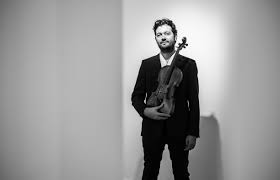
Guest artist for the Australian Chamber Orchestra, violist/violinist Lawrence Power took us on a sort of English-Irish voyage with a few references to music of our time, music of the 20th century, and a quick side trip to the country’s greatest composer, as well as one of his predecessors, and a senior Victorian/Edwardian composer who got a look-in because . . . well, like Scotland, he was there.

This last was Elgar who concluded Power’s opening gambit: a dog’s breakfast called English Mixtape in which the ACO, led by their guest on viola, wandered onstage to give a racy airing to a Curtain Tune by Purcell, written for a masque introduced to Shadwell’s version of Timon of Athens in 1695. In the original, the composer uses his ground bass about 40 times; I think we got through that many and possibly a few more by the time everyone moved on to Jonny Greenwood‘s 2005 Popcorn Superhet Receiver Part 2b where the invention level dropped a few feet for what sounded to me to be little more gripping than a bland pizzicato interlude.

Because the program later featured Vaughan Williams’ Tallis Fantasia, we then heard the Elizabethan composer’s original psalm tune, Why fum’th in sight (fight?) – first played by the ACO, then vocalised by them. I hope they were doing this because I couldn’t distinguish any words. Why no actual text? Perhaps people had a problem with the words of Psalm 2, seeing them as a denunciation of Trump or Charles III – and their supporters. Anyway, a push-through came to us via Kate Bush‘s The Man with the Child in his Eyes which seems to be giving vent to a placid dream/nightmare/delusion in calm pop language.

This was succeeded by Ivor Gurney’s Sleep, a 1912 setting of Fletcher’s melancholy poem by a composer friend of Herbert Howells, who also featured in this program’s second half. Power supplied the impetus for this odyssey which ended in Variation XI from the Enigma Variations of 1899, the one depicting the bulldog Dan falling into the River Wye. With strings only, this section sounded messy; you missed the powerful brass statements of the theme at Number 48 and five bars before Number 51 in the old Novello score; not to mention the woodwind timbre doubling the strings in chords and semiquaver runs throughout – so I won’t.

This short travelogue then stopped for a change of orchestral disposition as the expanded group (four guest violins, two extras in both violas and cellos, and another double bass) sat facing one side of the stage in what was probably a boat shape (this might have been more obvious from the circle or gallery). The reason for this came about because of the theme of a new viola concerto written for Power and co-commissioned (with two European organizations) by the ACO. The composer, Irish-born Garth Knox, uses Coleridge’s The Rime of the Ancient Mariner as the basis for his score which is an expert display-piece for Power (Knox is a violist) who not only produced a hefty solo line but also treated us to scraps of the poem.

Yet, having said that, I’m at a loss to remember much of the score itself which illustrated vignettes from Coleridge’s story: the arrival and death of the albatross, the desolation of the Mariner alone, his observation of the sea snakes, the buoyant journey home. Knox’s vocabulary proved to be atmospherically apt, at its best in the work’s Prologue and Epilogue, the whole calling to mind some of Westlake’s film music in its fluency, although a few parts of it struck me as odd, like the near-tango that followed the death of the bird and Power’s breaking into a folk-type song on his path to redemption.

But the chief memories I have of this new work come through its theatrical touches, its look rather than its sound. Using the band as a neatly-arranged ship’s crew made for a clever scene-setting, with Maxime Bibeau and his bass at the centre, standing like a mainmast throughout. Having the whole corps doing a rocking motion to suggest wave motion didn’t seem to distract anyone in their playing. Using individuals to supply Power with his destructive arrow/bow, then hanging a violin aound his neck as a stand-in for the dead albatross worked better than expected.

As you’d expect, the main burden fell on Power who fell in with one of the interpretations of the poem: it’s a fabrication, told by the sailor when he stoppeth one of three. This comes about mainly because of the violist-actor’s insistent repetition of the opening to line 10 – ‘There was a ship’ – but, the more you hear it, the more individual musicians he confronts with this plaint, the less you believe – until the voice dies away and you are left with Keats’ last nightingale-inspired question. As the solitary protagonist, Power gave us a striking character, if one stripped to bare essentials by having only the poem’s bones to work with; no space for any metaphysical musings to do with spirits, angels, the Hermit and the ship’s final disappearance.

After this entertainment, the concert’s second half moved back onto tried-and-true paths. Even so, the afternoon was over-long, extended by a curiosity in Elizabeth Maconchy’s Symphony for Double String Orchestra from 1952-3. This productive English-born, Irish-bred composer had the good fortune to study in Prague, so she encountered a wider musical world than most of her peers. The Symphony has plenty of rhythmic irregularities and several instances of Bartok ‘snaps’; also, the melodic contours of both Lento movements have a consistent breadth that raises your expectations, best met in the work’s concluding Passacaglia which is a powerful set of pages, if a harmonically conservative one, considering the time it was being written.

But Maconchy’s work came late in the day and might have fared better further back in the program. As it was, we had been treated to two searching works beforehand, beginning with Howells’ Elegy for Viola, String Quartet and String Orchestra of 1917, written in memory of a fellow Royal College of Music student who died at the Somme a year before. This score shows an influence or four from Vaughan Williams’ Fantasia (most palpably at the first triplet-heavy string quartet passage, starting at Number 4 in the Boosey & Hawkes score) although its colours are not as striking; but Howells’ use of this string quartet seems to me the more striking and his whole work is imbued with a stern grief.

Power’s account of the sombre viola solo showed us an example of masterly interpretation, his voice penetrating the supporting texture pretty well across the score’s length. Was he amplified, or has he just got a powerful right arm? Don’t know but he gave us a strong and moving account of this simply-framed, intense work which ended its C minor journey with a superbly welcome tierce; not particularly original but touchingly appropriate, for once.

Between Howells’ Elegy and the Maconchy Symphony came the Vaughan Williams 1910 Fantasia on a Theme by Thomas Tallis: the only familiar music of the afternoon and given a hearty reception, I suspect, because of that. If not the performance of your dreams, it came close. Power let ACO principal Stefanie Farrands take on solo viola duties while he moved to Richard Tognetti’s usual space heading the violins and revelling in the duet with Farrands that soared into existence with heart-filling grace a bar after Letter U in the 1921 Goodwin & Tabb edition.

Not too suprisingly, this interpretation favoured the inner voices, where a lot of the action takes place from five bars after Letter A when the Tallis tune gets a bowed exposure. Another welcome feature arrived with the restrained gravity of Orchestra II which sounded just strong enough to fulfill its Choir organ function and reflect those splendid chord sequences with which the composer peppers his score. Power is nowhere near as demonstrative a leader as Tognetti but the music didn’t suffer, maintaining its dynamic balance and surging along its animando path to reach a striking climax at the score’s largamente highpoint.

The achievement here was assuredly better than any previous live attempts I’ve heard in this country. But you’d expect that from this body which revels in its own dynamism and operational assertiveness, even infusing those extra (willing, I’m sure) bodies fleshing out its edges. This Fantasia made for a splendid climax to this ACO program celebrating the focal British isles; if only it had ended there.

Diary July 2026

THE FAIRY’S KISS

Musica Viva Australia

Elisabeth Murdoch Hall, Melbourne Recital Centre

Thursday July 7 at 7 pm

One of Stravinsky’s less popular works from the 1920s (like Oedipus Rex, which I’ve heard live once), The Fairy’s Kiss is based on (mainly) lesser-known pieces by Tchaikovsky. Originally a ballet, it never captured popular acclaim like the three early Paris scores for Diaghilev or even Jeu de cartes which you can come across once in a blue moon. Anyway, this Musica Viva Australia version is a four-movement Divertimento for violin and piano that the composer put together from his orchestral score for Samuel Dushkin in 1932. Tonight, we hear it from American-Canadian violinist Leila Josefowicz and plain American pianist John Novacek. It comes at the end of their endeavours, which begin with the Debussy Violin Sonata of 1917, the composer’s final major work and a remarkably buoyant one. In the middle come Szymanowski’s 1915 Mythes, three of them: The Fountain of Arethusa, Narcissus, and Dryads and Pan – this last famous as asking for quarter tones (well, he gets the violin to lower its D string, I think; the harmonics passages are far more intriguing). And the musicians give us a new commission (partly a Musica Viva effort) from British writer Charlotte Bray: Mriya, a four-movement tribute to the people of Ukraine and their current state of persecution. Tickets are $59 or $79; Under 40s pay $49; Under 18s are up for $20. There’s a $7 booking fee for the standard seats, which is a lot in these straitened times and when you consider what you’re paying for in terms of service.

UNDER THE CANOPY

Melbourne Chamber Orchestra

Elisabeth Murdoch Hall, Melbourne Recital Centre

Thursday July 9 at 7:30 pm

Guest for the Melbourne Chamber Orchestra in this exercise is accordionist James Crabb, familiar to many of us from his appearances with the Australian Chamber Orchestra. His main contribution to this program seems to be his own arrangement of C.P.E. Bach’s Harpsichord Concerto in A Wq 29 of 1753 which I can’t find in any score collection, although there is a recording available. God knows there are a lot of such works by this composer; about 40, by my count. Anyway, this exercise will be preceded by Sophie Rowell leading her string forces in a Rameau Suite from Six concerts en Sextuor which I assume refers to the arrangements collated by Saint-Saens when he set about organizing his predecessor’s catalogue. That arrangement used winds; this one, constructed by Stanislaw Skrowaczeski in 1969, involves five movements for strings alone, ending with the well-known La poule. Australian writer Aaron Wyatt is also contributing an arrangement to this program in the concert’s title work, which was written to a MCO commission last year for string quartet and celebrates the temperate forests around this city and the composer’s Western Australian home. We have a substantial detour for Argentinian guitarist Tomas Gubitsch‘s In a tango state of mind concerto for accordion and strings of 2011; again, information is thin about this work. Finally, Crabb finishes us off with his arrangements of a selection of Scottish Traditional: I can smell the heather from here. Tickets range from $75 to $150; concession/senior discounts are $15/$20 less, depending on where you sit; Under 40s get mediocre-to-poor seats for $40; students and children can get seats anywhere for $30. Everybody has to front up with the Recital Centre’s Transaction Fee of between $4 and $8.50 per order online or by phone. Good luck with that.

This program will be repeated on Sunday July 12 at 2 pm.

INNER LANDSCAPES

Omega Ensemble

Elisabeth Murdoch Hall, Melbourne Recital Centre

Monday July 13 at 7 pm

In another varied and searching program, the Omega Ensemble from Sydney graces the Recital Centre with a mixed bill of fare that aims to expose various composers’ mental states, two of the four works on display coming from that fountainhead of self-examination, the United States. First we hear John Corigliano‘s Soliloquy for clarinet and string quartet, extracted in 1995 from the composer’s Clarinet Concerto of 1977 and a meditation-of-sorts on his father’s death. Later, we hear Jessie Montgomery‘s Rounds from 2022 which is a sort of concerto/rondo for piano and strings, lasts about 15 minutes, and is here enjoying its first performance outside the American mainland, as far as I can see. For our local delectation, Omega artistic director David Rowden heads the premiere of a new clarinet concerto by David Stanhope. But the evening’s main example of introspection comes with Schubert’s Death and the Maiden String Quartet No. 14 of 1824, but in a transcription by Mahler begun in 1896 and left unfinished. As I understand it, Mahler’s projected expansion to string orchestra format was completed by British musicians Donald Mitchell and David Matthews and published in 1984. Whether in its original garb or vested in its new clothes, this score is a magnificently public manifestation of psychological stress under control. Entry cost for normals ranges from $54 to $139, concession $10 cheaper; Under 30s prices range from $39 to $114. Never forget that, if you order online or by phone, the Recital Centre charges a fee of somewhere between $4 and $8.50; I’d be tempted to show up on the night – with cash.

SPRINGS IN THE CITY – FOUR LAST SONGS

Stewart Kelly and Music by the Springs Festival

Primrose Potter Salon, Melbourne Recital Centre

Tuesday July 14 at 7 pm

This recital concludes with Richard Strauss’s melting reminiscence of Germany’s Late Romantic era splendour, even if it will lack the lustrous orchestral fabric that supports every soprano who undertakes the 1948 cycle as it was intended. Tonight, it’s a task for Kiandra Howarth who will be accompanied by pianist Stewart Kelly, Orchestra Victoria concertmaster violinist Sulki Yu, and her OV colleague, principal Andrew Young on horn, all taking part in a new arrangement by somebody. Yes, there’s a soaring violin solo in Beim Schlafengehen and an indispensible horn part through Im Abendrot, but Stewart will be hard pressed to fill in most of this richly-textured score. Howarth and Kelly also present Korngold’s 3 Lieder Op. 22, completed in 1929 and rarely heard in live performance despite their approachability. The recital’s first half moves a tad further back in time to Brahms, with Howarth working through some ‘Selected songs’ by Brahms in which I’d suggest only Kelly will be a present sustaining voice. And the singer can enjoy some rest time as the three instrumentalists take on the Horn Trio of 1865: the first significant work in this instrumental shape and still surpassing fair, despite many a competing contemporary voice. It will be interesting to see whether or not Young plays a natural horn, as the composer intended. But then, does anybody these days? Seats are $79, concession $69, student $30, as well as the MRC’s floating transaction fee of anywhere between $4 and $8.50 if booking by phone or online – pretty unavoidable, more’s the pity, because of the venue’s small space.

ANDREA LAM PLAYS TCHAIKOVSKY

Melbourne Symphony Orchestra

Hamer Hall, Arts Centre Melbourne

Thursday July 16 at 7:30 pm

Well-known to ABC TV viewers (well, some of them) for her participation in The Piano series and coping womanfully with the multiplicity of distractions offered by host Amanda Keller, Andrea Lam appears here in a great warhorse of the repertoire: Tchaikovsky’s B flat minor Concerto No. 1 of 1875. It’s a hard ask of any pianist because it’s a technically taxing test still and because all of us have our own ideas of the perfect reading (mine is Van Cliburn with Kondrashin and the RCA Symphony in 1958; nobody has equalled his stunning double-octaves). Good luck to this talented performer in her endeavours because everyone will be listening closely. Conductor Tabita Berglund from Norway takes us a tad further east after interval for the Sibelius Symphony No. 2 from 1901-2. This is the composer’s most popular work in the form and it’s not hard to see why with its chain of successful melodies and a sweeping inexorability that leads to a spirit-lifting, exuberant finale. A little further west to Sweden and we’re in the land of tonight’s overture composer. Wilhelm Stenhammar wrote his Excelsior! in 1896 and it was almost immediately neglected; a pity as it stands as a fine instance of vigour in composition with (understandably) plenty of vaulting ambition. Here’s an excellent Russo-Nordic program, particularly welcome as the Melbourne Symphony Orchestra reaches into mid-winter. Ticket prices fall between $51 and $142; concession holders pay $5 less; children gain access for $20. And there’s also the $7 booking fee per order online or by phone; unfortunately unavoidable, I think, because it’s a popular program and could be sold out well before the date.

This program will be repeated on Friday July 17 in Costa Hall, Geelong at 7:30 pm. and in Hamer Hall on Saturday July 18 at 7:30 pm.

THA TAILOR OF TIME – 40 YEARS OF ELISION

Melbourne Recital Centre and ELISION

Elisabeth Murdoch Hall, Melbourne Recital Centre

Thursday July 16 at 7:30 pm

For this celebratory concert, ELISION artistic director Daryl Buckley has assembled a large cast of musicians, most of them involved in a performance of the event’s title piece written by Liza Lim in 2023 for the Ensemble intercontemporain of Paris. To begin, however, some members perform Mexican-born veteran Julio Estrada‘s Yuunohui’ tlapoa’ nahui’ ehecatl, which is a part of the composer’s large cycle of works stretching from 1985 to 2012 that take their names from the springboard of the Yuunohui’ title; this one seems to be a nonet. We launch straight after into Welsh writer Richard Barrett‘s elsewhen, a 20-minute four-movement work that is part of a large-scale construct called PSYCHE which seems to have been written for Elision between 2018 and 2024 (and which I can’t find in the composer’s online catalogue); this also presents as a nonet, although one source describes it as an octet. Perth-born composer Kate Milligan is represented by her newly-written Great Dog! (as seen by the River) which is a quintet. Lim’s large-scale score involves oboe (Peter Veale) and harp (Marshall McGuire) as soloists with 28 other supporting musicians including flutes (Paula Rae, Eliza Shephard), oboe (Niamh Dell), clarinets (Richard Haynes), bassoons (Ben Roidl-Ward, James Aylward), horns (unknown), trumpets (Tristram Williams), trombones (Benjamin Marks, Cian Malikides), euphonium (Max Gregg), percussion (Peter Neville and/or Aditya Ryan Bhat and/or Rebecca Lloyd-Jones), piano (Alexander Waite), keyboard (Jacob Abela), violins (Austin Wulliman and/or Madeleine Jevons and/or Sola Hughes), viola (Phoebe Green), cello (Freya Schack-Arnott or Jack Ward), and contrabass (Rohan Dasika or Kathryn Schulmeister). I know: even allowing for them all to be taking part, that still doesn’t add up to 28, but what can you do? Others participating elsewhere in the program are recorder(s) Ryan Williams, saxophone Joshua Hyde, and uilleann pipes Matthew Horsley. Where necessary, Clement Power conducts. Entry is a flat $55 and the Transaction Fee charged for online or phone booking is $7. On current showing, you can risk turning up on the night, preferably with an annoying pocketful of coins.

RACHMANINOFF WITH PIERS LANE AND KRISTIAN CHONG

Melbourne Recital Centre and Kristian Chong

Primrose Potter Salon, Melbourne Recital Centre

Saturday July 18 at 7 pm

It’s a short program with the Russian composer’s Symphonic Dances the main work. He wrote this version for two pianos at the same time (1940) as he worked on the orchestral score, the last major work he completed before his death in 1943. Its three movements are vivid in their orchestral format and the outer segments revel in emphatic rhythmic interplay. I’m not saying that Piers Lane and Kristian Chong are flamboyant performers, but you wouldn’t call them shrinking violets, either. Both have engaging personalities, well-suited to this happy score. As an introduction, they perform 6 Pieces in the form of Canons by Schumann (not Schubert, as stated in the Recital Centre bumpf), written in 1845 for a pedal piano but here presented in an arrangement for two pianos that Debussy engineered in 1891. Well, that’s going to prove a nice experience for everyone, if a bit recherche; it will give the performers a chance to brush up on their integration skills, I suppose, but you’d be hard pressed to find any common ground with the Dances. Standard entry costs $55, concession $45, students $20 and the transaction fee is an ungracious $7 if you book online or by phone.

KEYS TO LIFE: JAYSON GILLHAM AND IYAD SUGHAYER

Jayson Gillham

Elisaberth Murdoch Hall, Melbourne Recital Centre

Sunday July 19 at 5 pm

Here comes another two-piano recital following straight on from the Lane/Chong one yesterday. Featuring Queensland’s own Jayson Gillham and Jordanian-Palestinian Iyad Sughayer, this evening’s program involves works which were pretty much all composed (or personally authorized) for the two-piano combination, although not the players’ opener: Debussy’s limpid four-movement Petite Suite, written between 1886 to 1889, has both performers seated at the one keyboard. A pinnacle of the repertoire arrives with Mozart’s Sonata in D K. 448, one of those masterful works that brim with affability and contentment. The 1905 Introduction and Allegro by Ravel has always existed for me as a harp, flute, clarinet and string quartet construct but the composer himself put together a two-piano version which Durand published in 1906. In 1944, Khachaturian produced his Three Pieces for Two Pianos (Ostinato, Romance, Valse fantastique) which are new to me but painless, this compendium lasting about ten minutes only. Arensky wrote four suites for two pianos and we hear his first, the Suite Op. 15 which also has three movements (Romance, Valse, Polonaise) of which I know only the gentle middle one. The pianists end with Chabrier’s Espana, the work which brought the compooser fame in 1883; again, I was surprised to find that Chabrier himself set up a two-piano version in 1884. As well, there’s a contemporary voice heard along this recital’s path: senior Lebanese composer Houtaf Khoury‘s new work, here enjoying a world premiere. Your normal adult tickets sit between $79 and $119, concession holders paying $20 to $15 less in the two top brackets of three; Under 28s pay $99 for good seats, $54 for not-so-good; Under 16s cough up $54 anywhere in the hall. The Recital Centre’s Transaction Fee of between $4 and $8.50 obtains if you order online or by phone. While the Murdoch space’s circle and wings aren’t available, the stalls still have about 180 seats available. It’s tempting to try fronting up on the night to avoid any financial brutalization.

FROM ROMANCE TO RECKONING

Selby & Friends

Primrose Potter Salon, Melbourne Recital Centre

Wednesday July 22 at 2 pm

The first bit is easy. Kathryn Selby and her Selby & Friends colleagues for this tour, Melbourne Symphony Orchestra concertmaster Natalie Chee and University of Melbourne Conservatorium of Music’s Head of Cello Richard Narroway, are playing a double dose of Schumann and the big Mendelssohn Piano Trio No. 2: two of the fundamental names from the Romantic era in European musical history. The reckoning is a more local affair and involves a plethora of local composers, all women. This hybrid is called Fire Dances Suite and it dates from 2020. Unlike Stravinsky’s happy ballet, this commemorates the spate of bushfires that have swept across the nation in recent (?) years to deadly and devastating effect, each of the writers treating a particular aspect of these scourges, from initial smoke to evaluations after the disaster has passed. The voices involved are Nat Bartsch, Olivia Bettina Davies, Natalie Williams, Maria Grenfell, Hilary Kleinig, Elena Kats-Chernin, Cathy Applegate and Isabella Gerometta. The only complete performance I can find comes in at 17 minutes, so the movements are all brief. Our two Schumanns are, first, the Three Romances of 1849 which the composer expressly forbade his publishers from arranging for anything else, insisting on the original’s oboe and piano format, but here we are with a cello/piano version; and then the A minor Violin Sonata of 1851 which didn’t please the composer but which has found plenty of favour since, if only for its highly appealing middle Allegretto. As for the Mendelssohn in C minor of 1845, this work has enjoyed expoosures aplenty, thanks to Melbourne’s chamber music competitions where the temptation to power through its rhetoric is irresistible to many a young ensemble, all of them delighting in the Old Hundredth peroration that crowns the score. Standard entry costs $89, student and concession $69, Seniors $87, children under 12 free. You also have the Recital Centre’s fee-gouge of between $4 and $8.50 if booking online or by phone – hard to avoid when the event is in the Salon which holds only 140.

This program will be repeated at 7 pm.

OLD IDEAS, NEW STORIES

Melbourne Symphony Orchestra

Primrose Potter Salon, Melbourne Recital Centre

Saturday July 25 at 4:30 pm

This small-scale recital begins with American writer Bryce Dessner‘s Murder Ballades of 2013, famous for its initial performances by the ensemble eighth blackbird. This work takes its fons et origo from American folk music, albeit melodies and lyrics with a particularly gruesome theme, and it calls for flute/alto flute, clarinet/bass clarinet, percussion, piano, violin and cello, lasts about 20 minutes and can be played by a very versatile two instrumentalists or (more commonly, you’d think) five or six. For this reading, I’m guessing the Melbourne Symphony Orchestra members participating will be flute Wendy Clarke, clarinet David Thomas, percussion John Arcaro, piano Louisa Breen, violin Tiffany Cheng (this program’s curator) or Anna Skalova, and cello Caleb Wong. The MSO’s composer in residence, Joe Chindamo, presents his String Quartet No.1, Tempesta, a four-movement (Tempesta, Lament/Seduction, Frenzy, Flight) score from 2014. This will involve, Cheng, Skalova, viola Jenny Khafagi, and Wong. A further blast from America comes in Copland’s 1937 Sextet for Clarinet, String Quartet and Piano, arranged from his Short Symphony of 1932-3 which was thought to be too difficult to play. This will be followed by Holly Harrison‘s celebration of (part of) Lewis Carroll’s masterpiece, The Mad-Hatter’s Tea Party written in 2018 which will involve Clarke, Thomas, Cheng or Skalova, Wong and Arcaro with a narrator/reciter in the shape of Nick Kuiper. Probably because of this last piece, the performance will be a ‘relaxed’ one, so your usual all-quiet rules won’t necessarily apply. Standard and concession tickets cost $35, children get in for $15. Also, the MSO’s $7 Transaction Fee applies if you book online or by phone. The event isn’t sold out – yet (June 8).

This program will be repeated on Sunday July 26 at 11 am in the Iwaki Auditorium, Southbank. This is not relaxed but also not necessarily tense; still, ticket prices are more expensive.

DIVINE BOHEMIANS

Australian Haydn Ensemble

Primrose Potter Salon, Melbourne Recital Centre

Wednesday July 29 at 7 pm

I might have encountered Sydney’s Australian Haydn Ensemble during our COVID years when we all depended on the Australian Digital Concert Hall to hear anything in live performance. If so, nothing remains in the memory. Which is not to say that their first Melbourne performance tonight might not be worthwhile. The ensemble is, in fact, operating as a string quartet: violins Skye McIntosh and Matthew Greco, viola Rafael Font, cello Daniel Yeadon. They are proposing a diet of ‘Bohemian’ music which begins with the Austrian Haydn’s Op. 77 No. 1, his second-last in the form written in 1799. To end, we hear from the German-born Beethoven through his Op. 18 No. 3 in D of 1798-1800. In between come a single movement, Larghetto, from a real Bohemian (well, he was called ‘Il Boemo’ in Italy) Myslivecek’s Op. 3 No. 6 (presumably, the one in C Major); the complete Op. 5 No. 5b in G minor by Richter who was born in Moravia and so sort-of qualifies as a Bohemian, here producing a taut four-movement construct that concludes with a minuet and trio; and another Moravian, Paul Wranitzky’s Op. 49 in D minor which could well have been his last in the form. Any of them divine? You be the judge. Entry costs $60, concession $45, Senior $55, plus the anywhere-between-$4-and-$8.50 Transaction Fee that the Recital Centre slugs every patron with when you order online or by phone. At time of writing (June 8), there is still ‘moderate availability’.

2026 WINTER GALA

Melbourne Symphony Orchestra

Hamer Hall, Arts Centre Melbourne

Thursday July 30 at 7:30 pm

The draw-card for this concert is Melbourne-born soprano Danielle de Niese who we hope will be generating much-needed warmth on this cold night with several as-yet unspecified selections from musicals by Bernstein, Gershwin, ‘and more’. You’re spoiled for choice with Gershwin whose melodic facility is, in this sphere, beyond compare. As for Bernstein, you’ve got On the Town, West Side Story and about six other musicals that nobody knows much about in this country. Searching for de Niese’s experience with either composer, I can’t find any trace; still, perhaps she’ll be more familiar than we are with the ‘and more’ component. The Melbourne Symphony Orchestra‘s chief conductor Jaime Martin directs the soprano and also takes his instrumentalists through the nine-part Symphonic Dances from West Side Story, arranged in 1960 by Bernstein and orchestrators Sid Ramin and Irwin Kostal. Of more interest (well, to me) is a long-time favourite: Ginastera’s Variaciones concertantes of 1953 which I once had on an exceptionally lucid LP from Dorati and the Minneapolis Symphony Orchestra. This work still strikes me as a more colourful, less studied showpiece than Britten’s Guide, especially for its finale: a brilliant malambo in 3/4+6/8 brimming with rhythmic energy and a spiky sequence of timbres that encapsulate the appeal of Latin American classical music. For a standard seat, you’ll pay between $81 and $139; concessions are a munificent $5 cheaper. The MSO applies its $7 Transaction Fee if you incommode its money-counters by ordering online or by phone. Currently, the balcony is not being used and the booking site claims that there are 100+ seats still available in the stalls and the circle-and-choir respectively.

This program will be repeated on Saturday August 1 at 2 pm.