ENSEMBLE Q PLAY BARTOK AND BRAHMS
Ensemble Q
Primrose Potter Salon, Melbourne Recital Centre
Saturday August 22, 2026
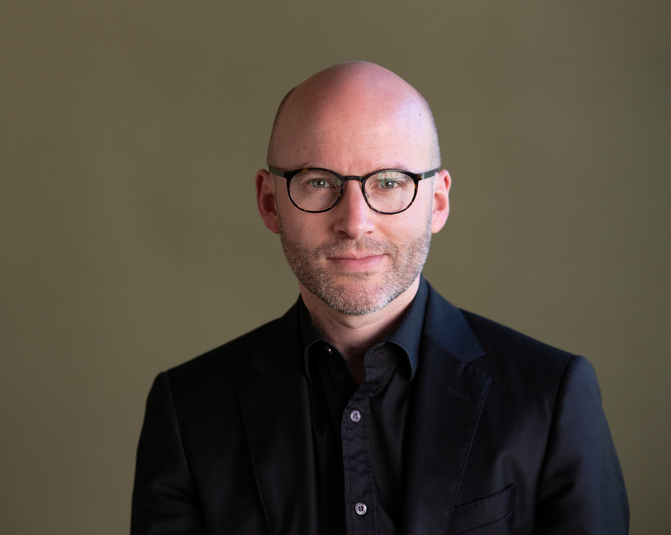
Daniel de Borah
During the five-and-a-half years I spent on the Gold Coast, I never managed to hear Ensemble Q, the brainchild of Paul and Trish Dean and a fixture of Brisbane’s musical world over the nine years since the body’s generation. Their forays to Melbourne are a new venture, I think, and clearly welcomed by a swath of younger musicians who might know clarinettist Paul from his years as director of the Australian National Academy of Music (2010-2015). Or they might be observing the performances of Adam Chalabi, currently ANAM’s Head of Violin. Of course, that’s assuming that these young patrons have connections to ANAM or the country’s various musical institutions of learning.
Most of us know Daniel de Borah as a Melbourne-born pianist who is currently teaching at the Brisbane Conservatorium in Griffith University, where I heard him give a faculty recital some years ago. Cellist Trish Dean is another Griffith faculty member and has appeared frequently all over the country, if not that often in Melbourne. And the last member of the quintet that represented Ensemble Q on Saturday night was violist Benjamin Roskams who recently participated in the later days of the recent Australian Festival of Chamber Music held in northern Queensland.
This brief (75 minutes, without interval) recital opened with Paul Dean, Chalabi and de Borah powering through Bartok’s Contrasts of 1938. The opening Verbunkos began jauntily enough but soon developed into a strident outpouring for clarinet, which instrument took over much of the running. At certain moments, I wondered if the players had taken account of the Salon’s very lively acoustic, and the work reached some dynamic levels that bordered on the painful, Chalabi’s line after his opening pizzicati was often drowned out and gained some pre-eminence only at the Meno mosso of bar 30. De Borah was at some pains to make himself heard but came to the fore at the glissandi-rich passage between bars 45 and 54.
Chalabi held more prominence in the middle Piheno, even though the trio’s output again proved very lively in these close quarters. But both he and Dean gave an equally passionate account of the movement’s climax (senza piano) across bars 33 and 34. De Borah took control in the final Sebes with his octave semiquaver pattern work, although you’re hard put to find any thematic interest in the keyboard part during the first pages. Still, he and Chalabi made fine work of the relieving Piu mosso at bar 132 where the violin articulates that melting B/E Major folk-tune in a peacefully mobile time signature of (3+2+3)(2+3)/8.
After this elongated oasis, the stop/start rush to the end brought us back to the striving urgency that ran as an undercurrent across this reading. It’s one view of the composer’s odd score even if it left you on edge for a good deal of the work’s duration, waiting for the next explosion to disrupt Bartok’s even temper shown through a discerning balance of resources and material that you can hear from trios with a less virtuosic, moderately aggressive style of attack.
A small piece of Australiana followed with Margaret Sutherland’s slight Nocturne of 1944 for violin and piano. Thirty-one bars of 12/8 semi-sweetness, this also enjoyed an energetic airing, especially in the substantial middle section where Chalabi urged out his line with a determination that was mirrored by de Borah’s weighty negotiation of the composer’s shifting harmonic backdrop. Mind you, from what I’ve seen of the score, Sutherland left no dynamic directions, so a version hinting at machismo has just as much validity as any other, I guess.
The Ensemble concluded their night’s exhibition with Brahms: the Piano Quartet No. 3 in C minor of 1875. It’s another work that you don’t hear often, the format more popularly represented by the composer’s first G minor essay in the form. But this score shows a remarkable control of structure expressed in the most glowing and ardent language, extraordinarily rich even for this high Romantic composer. After the opening suggestions, the group abruptly hurled us into the ferment at bar 31 with that decisive unison downward scale from all three strings before de Borah entered with the start of a concerto-style peroration.
From here on, the interpretation proved both persuasive and cogent, the participants engaged fully in this first Allegro‘s argument. From all quarters, the playing showed a dedication and involvement that you rarely come across expressed with such ardour, the chains of polyphony unwinding with a sense of presence that involved the listener completely. For once, an ad hoc group of players showed us what superlative music-making can come about when those involved are confident in each other and their shared artistry.
Even the slightly off-kilter scherzo came across with an easy style of delivery in its jocund passages, and a delicious contrast in the answering strophe beginning at bar 23 where Brahms plays ducks and drakes with G Major and G minor: just a deft flight of fancy to disrupt the bounding 6/8 metre but remarkably uplifting in effect. Still, the main thrust of the movement is brisk galumphing, concluding with a rousing almost-unison 19 bars of power from the strings above the piano’s urging 6/8 chords, the whole arriving home with irresistible emphasis.
To be followed by the Andante and a finely shaped opening solo from Trish Dean – 16 bars of impressively shaped cello lyricism surging above de Borah’s supple accompaniment almost entirely confined to the bass clef. And then, a melting duet with Chalabi; only ten bars but packed with intense tenderness, only to be capped by Roskams’ arrival for the string trio that carries the movement forward after one of those interludes (bars 25 to 34) that display the composer’s expressive depths, similar to what you hear in the carol setting for Brahms’ Geistliches Wiegenlied of Op. 91.
Finally, we heard an Allegro commodo equal in propulsion to the first movement, de Borah making no errors as far as I could tell in a stormy series of pages that bore witness to the composer’s emotional turmoil throughout this quartet’s long gestation. At the same time, you had to be impressed by details like the striding, rivetingly clear octave melody for Chalabi and Roskams from bar 54 to bar 67; the string trio’s invasion of Mendelssohn’s Piano Trio No. 2 territory with the chorale at bar 75; de Borah’s ebb and flow in development while the strings sustained notes, e.g. bars 103 to 150; and the communal descent to darkness from the ben sostenuto of bar 340.
It all contributed to the final impression of a splendidly contoured reading of a great work and a further cause for regret that I didn’t get to any Ensemble Q performances up north. If you live in Melbourne, I’d suggest that any future recitals from this body deserve your attention, especially if they’ve scheduled Brahms; it will be a long time before any of us hears chamber music of this quality – besides the Selby & Friends events – and a performance with this combination of experience and spirited attack.

