Local voices aired on Richmond Hill

COMPOSER’S CONCERT

Melbourne Composers

St. Stephen’s Anglican Church, Richmond

Sunday April 3, 2016

Anyone looking at this concert program before the event would have felt overwhelmed: five composers, seven world premieres, eleven works in all ranging from solo piano pieces, through trios and string quartets, to a full-blown symphony.  As things turned out, the overkill looked more threatening on paper than in actual performance even if, as you might have anticipated, the impact of certain works was less substantial than a few stand-out scores.

Kitty Xiao after para 1
                                     Kitty Xiao

As conductor/host Andrew Wailes pointed out, the musicians who made up the afternoon’s personnel were of mixed abilities: some professionals, some advanced students, some amateurs or amiable musically competent friends.  Further to this, several of the more difficult works suffered from that bugbear of projects that work on volunteers’ good-will almost exclusively: insufficient rehearsal.  Counterbalancing those problems, quite a substantial number of the works presented made congenial listening, if often not offering much challenge to audience or performers.   This easy-access aspect emerged pretty quickly with Kitty Xiao‘s Nimbus and Nipper for flute/alto flute, violin and piano where the amiable spirit of Australian post-impressionism loomed large.  At certain points, when the instrumental mesh and harmonic changes were aligned, you also heard echoes of Franck’s chamber works – which is fair enough if your intention is to suggest a combination of aural imagery and weltering emotional activity.  Xiao’s piano part took the limelight in both works for a while but she was more than adequately served by Cameron Jamieson‘s violin and the breathy flutes of Jessica Laird.

Hana Zreikat‘s first offering came in the form of a piano solo, Elan, which employed plenty of common chords in its stop-and-start progress.  You could not find much of a contemporary edge to this composition, pleasing though it was but mainly distinguished by the addition of added notes for an occasional frisson of harmonic colour.

Carol Dickson
                       Carol Dixon

Three of the premieres followed in quick succession. Carol Dixon‘s Piano Trio No. 1, The Dove, made its points in one continuous movement with the best content falling to pianist Natasha Lin; her companions, violin Navin Gulavita and cello Sage Fuller, made an unhappy start with what at first impressed as poorly matched intonation, which then recovered, only to fall prey later to further dislocation.  For a while, you could suspect that these tuning discrepancies might have been caused by Dixon’s adding tension to her harmonic constructs, but no: the unsettling effect came from the playing itself.   Certainly the work followed the environment set up by both Xiao and Zreikat in being amiable in its melodic fluency, predictable through its rhythmic consistency and un-alarming in the actual demands on its interpreters.

By contrast, Sarah Elise Thomson‘s fresh String Quartet No. 1 showed attempts to grapple with post-Bartokian musical activity.   Following the one-movement format, this piece showed an enthusiasm for activity, although at its centre lay a lengthy section featuring sustained-note interjections from the upper strings over a repeated pattern from Sage Fuller’s cello.   Gulavita at second violin partnered Matthew Rigby on first and Georgia Stibbard‘s viola but, despite the activity, the performance proved to be some rehearsals removed from security.

Rigby proved a strong presence in the succeeding String Quartet No. 1 by Dixon. Subtitled No Stone Unturned, the score followed minor melodic paths for much of its length but showed little sense of parameter-expanding adventure, especially compared with its predecessor in this program.   Acknowledging the influence of Ravel’s and Debussy’s essays in the form, Dixon imposed a fairly obvious structure of returning to and mildly developing her material with a penchant for the sorts of fluttery gestures found in both the French composers’ quartets, but you would need a very secure body of performers to give polish and interest to a pretty predictable piece like this one.

Benjamin Bates adopted the time-honoured three-movement framework for his Symphony No. 3, this program’s largest element in scale and number of participants. While the composer led the double basses in this presentation under Wailes’ direction, he based a fair bit of the symphony’s material on Spanish guitar-inflected melodic scraps, fairly obvious when Bates brought them to the front of the action, but not the most arresting features of the work when considered as an entity.   The three movements ran into each other so that the second movement’s impressive solos for cor anglais and bass clarinet emerged organically from a tautly argued opening AllegroPrestoAllegro continuum; later, the finale’s attempt at a fugue also emerged from the fabric without any warning.

Some woodwind pitching could have been more carefully managed, the flute pair sounding the most reliable performers from that cohort.  You felt the absence of trumpets from the mix, if only to provide some brisker flavour to the exposed brace of horns, able though these players were.   And confining percussionist Jessica Bird’s contributions to a side-drum removed another source of potential timbral input.  Still, the score has an intriguing energy and a kind of Sibelian brusque lyricism at its best moments, as well as several patches of tedium where the argument loses impetus, as in the fugue which cries out for a tauter delivery than could be achieved with two rehearsals.

As a bracket to this major piece, the program moved back into chamber mode with music by Dixon, Zreikat, Thompson and Xiao.   For her Soldiers’ Suite, Zreikat accompanied herself while singing three songs: Now I Find Myself Hoping which  proved to be a simple pop-tune lyric of some length, in the manner of Adele at her most depressed; Somebody’s Waiting which followed a similar vein of predictability; finally, Enya’s May It Be from the soundtrack to The Lord of the Rings film trilogy.  All of which seemed to be an anomaly on this program where other contributors grappled with the art of composition without resorting to overuse of cliches and sentimental simplicity.

Dixon’s Ocean Oasis I for mixed trio – Laird, Jamieson, Xiao – generated more of the same impressionistic colouring as at the afternoon’s start, this time depicting Norfolk Island.  Again, the piece raised no alarms and presented its atmospheric suggestions with expertise: perfect accompaniment for a documentary on the island’s beauties.  Xiao’s Emei, reminiscing about a journey up a mountain in China, turned into a slow waltz, lushly scored with plenty of imitative work for Laird and Jamieson, Xiao’s piano generating an attractive underpinning shimmer in parts.  This was just as suggestive of Ravel as the Dixon String Quartet No. 1, although this time what came to mind was the Ravel Piano Trio especially its final movement’s assertive figuration.  In contrast Thompson’s Riven piano solo, played by Zreikat, showed an adventurous mind at work, what with hitting the piano wood, playing on the strings and occasionally indulging in washes of sustained, across-the-keyboard dissonance, counterbalancing an employment of lavishly arpeggiated common chords.

In the end, the many components of this program formed a kind of arch with smaller-framed constructs, some close to bagatelles, book-ending the central symphony.  The composers themselves deserve praise for the actual physical exercise involved in collaborating to mount this concert and in attracting into service the various talents required: the Nimbus Trio of Laird, Jamieson, and Xiao; the Briar String Quartet of Rigby, Gulavita, Stibbard and Fuller; Zreikat lending her talents to Thompson; and the significant number of well-wishing musicians participating in the Bates symphony. It’s grass roots stuff and at times rough-edged, but this sort of ad hoc concerted willingness to give  creative voices an airing bears witness to the reassuring fact that at least this particular Melbourne Composers corner of our city’s musical life enjoys good health.
Arcko challenges and cheers

MELBOURNE MADE

Arcko Symphonic Ensemble

Church of All Nations, Carlton

Saturday March 19, 2016

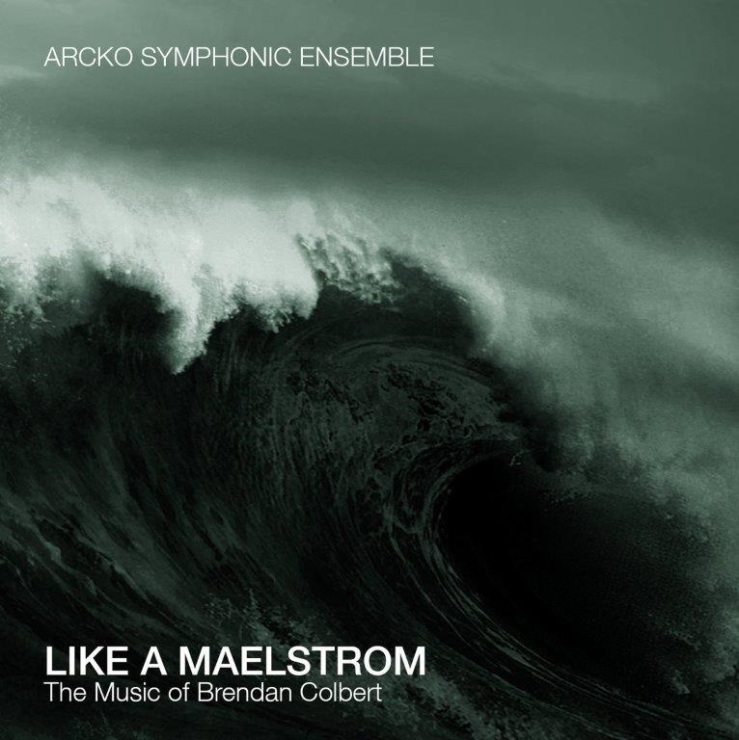
Like a Maelstrom CD (arckosymphonicorchestra,bandcamp.com)

This concert offered a little bit of the old as well as the new – that’s if you could call anything on this program old. Timothy Phillips and his symphonic ensemble specialize in challenging new music and yesterday had that in spades with the world premiere of Tim Dargaville‘s Kolam, a return visit to Caerwen Martin‘s X-Ray Baby (featured on the first Arcko CD), Ingressa of 2009 by Elliott Gyger, and Brendan Colbert‘s  .  .  .  like a Maelstrom which is the title of the latest CD from these players, launched at this concert.

It’s been quite a few years (twenty?) since I last visited this church which has now become a community powerhouse – and it shows.  The interior last night had a few pews along the side walls while the central space was lined with individual, if not very comfortable, chairs.  The Arcko players worked from the front facade where the preacher’s gallery sits, on the same level as the audience which meant that, to see individuals at work, you had to crane; which the lady in front of me did throughout the evening, although she seemed indiscriminate in her viewing choices, contorting her body in the direction of players who were, at the time, static.

Still, she could do little to disrupt Tim Dargaville’s new work, taking its impetus from a Tamil religious practice.  The composer is making no attempt to absorb and discharge Indian musical influences: no Bollywood echoes, no resuscitated Ravi Shankar.  The recurring motif is a falling major 2nd, an upward leap of a 5th, then back to the original interval.   But for much of its length, the score is of interest for its textures; there is a melody for cello that eventually emerges, followed by another for horn, but one of the distinctive points of interest is a brisk section for winds alone prior to a fulminating climax.   As an example of management of forces, Kolam makes a positive impression but its philosophical underpinning  remains a mystery to this listener, even if the work’s format presents few problems.

Gyger’s work is based on a type of religious chant that emanates from the town of Benevento, a Campanian city near Naples.   Scored for wind and string quintets, piano, harp and two percussionists, this work is based on an entrance chant for Easter Sunday, a dialogue between Mary Magdalene and the angel at Christ’s tomb.   Using far more notes for a musical phrase than the more common Gregorian, this sample of Beneventan chant is angular, inclined to more abrupt intervallic leaps than you’d expect, and not averse to ending phrases mid-word.   You would need a score to trace the melody’s use in this piece, as the instrumental output is strikingly dense, but its climactic point, an Alleluia divided between strings, solo horn and tubular bells, is effectively jubilant, bringing to mind the more restrained outpouring in the final Taize-illustrating movement of the Laudes  octet by Nigel Butterley, on whose music Gyger is an authority.   Still, throughout this work’s progress, the percussionists have all the running, Amy Valent-Curtis and Peter Neville dominating the action with a wide-ranging battery of sound-sources.

Martin’s construct aims to suggest hospital sounds, beginning with rustlings and subdued suggestive wisps, eventually graduating to a very forceful climax.   Dedicated to the composer’s two daughters, the score has graphic elements based on her children’s scans and X-rays; like Gyger’s chant, constituents you can not easily assimilate from what you hear.   Given that the composer has clearly spent a good amount of time in medical institutions, her work succeeds in suggesting the mechanics of the hospital experience. Well,  you can pick out passages that strike you as suggestive; I heard sirens, nurse-doctor confrontations, the lapping of amniotic fluid, a loud labour, disputes in emergency.   Once the thesis is suggested, you can hear whatever you want to – or fear.  Despite Martin’s description of X-Ray Baby as abstract by nature, it takes very little effort to find musical illustrations of medical realities.

Colbert’s score owes its title to an Emily Dickinson poem of morbid imagery, even for that death-haunted poet.   It is a double concerto for trumpet and piano with emphasis on the latter which is not silent throughout the work’s half-hour length.  This was a remarkable tour de force from Peter Dumsday; getting the notes under his fingers an achievement in itself but maintaining stamina across an unforgivingly active part was a tribute to the performer and, on his part, to the composer.  By comparison, Bruno Siketa‘s trumpet had things easy, not entering for some time, then kept restrained by being muted for the concerto’s outer segments.   Once again, percussion played a major role and the chamber orchestra strings, bowing away fiercely in the first five minutes, stayed close to inaudible for a good part of the action. To his credit, Colbert does not compromise, maintaining tension without much relief, the default expression marking being a determined forte, it seems.  At certain moments, the experience brought back memories of Cage’s 1958 Concert for Piano and Orchestra; not in its soundscape, because Colbert’s is through-composed, not left up to the musicians to choose their own paths, but for the massive onslaught of sound that coloured so much of its impact.

It’s an uncompromising voice, both enervating and exciting to hear in an age when contemporary composition is finding it difficult to sustain interest, let alone an audience.   In that regard, . . . like a Malestrom represents the sort of initiative for which the Arcko organization exists.  Whether or not it offers pleasure is irrelevant; what it does give you without holding anything back is a horizon-expanding experience, one where your ears are challenged to an aesthetic confrontation.   At a new music concert, I can’t imagine anything better.

An unexpected light

SIR ANDREW DAVIS CONDUCTS MAHLER 5

Melbourne Symphony Orchestra

Hamer Hall

Saturday March 19, 2016

Pierre-Laurent Aimard (en.wikipedia.org)
                                                                            Pierre-Laurent Aimard

With the bit between their collective teeth, the MSO musicians mounted an impressive assault on the central Mahler leviathan, their chief conductor bringing a surging energy to a score that other conductors handle as though its opening funeral march determines the complete score.   From principal trumpet Geoffrey Payne‘s opening call-to-obsequies, the ground was set for a reading that spoke clearly but at its own pace with an elastic approach to metre that initially led to some slight discrepancies between the brass corps and the rest.  But the energy behind this reading came bursting out in the 13th bar’s explosive full-orchestra chord and was sustained throughout the following grim pages.

But what eventually distinguished this performance was an immediacy of impact, even in pesante passages throughout each of the five movements.  Through the Sturmisch  bewegt that follows the march, the textural balance ensured that secondary voices came across with appropriate clarity and, although Mahler’s symphonic scores have plenty of mud-pools waiting for any orchestra, Davis managed to keep the MSO’s output lucid and so much more involving than when an audience is bombarded with bullying heftiness.  Not that matters are made easy since, after the second movement’s whip-crack first gestures, the development becomes something of a passage of play between orchestral blocks.  But what came across here was a clearly perceptible development, the variety of harmonic and digital shifts and juxtapositions a genuine intellectual engagement with the listener, more than a demonstration of temperament and hyped-up dynamics.

Two problem movements confront every interpreter of this work.  Both the central; Landler and the Rondo-Finale have the potential – realized all too often – of wearing out both players and patrons.   Both are lengthy, even if the middle movement has a more moderate emotional cast, and in both the seams between sections can be over-exposed, as though the paragraphs have to be sharply delineated: finished with that, on with this. Davis gave us a changeable sonic landscape, distinguished by a lightness of touch even in difficult juxtapositions of attack and ever-changing dynamics, as in the melange prior to Letter 4.   And, for the first time in many years, the last movement radiated bonhomie and a spirit-infusing warmth; usually, I’m waiting for the concluding rush with impatience, worn out by what all too often sounds like the composer’s self-indulgence in delaying tactics.   As with the Landler, this finale had a cogency and an insightfully driven suspense that made sense of  its episodes as a cumulative process.

Just as deftly accomplished, the Adagietto found itself subjected to sensible treatment; without interpolated pauses, its melodic drift given full weight but the entire movement kinetic – no oleaginous Venetian pooling but an ardent and controlled emotional exhalation with the MSO strings steady and cohesive; moments like the pianissimo shift back to F Major achieved with minimal fuss or pausing for effect.   Further, for once, the harp element from Yinuo Mu made itself a constituent part of the action, not just a presence in the opening bars and at the first high-point.

Of course, this work is no strange territory for the MSO who recorded it about a decade ago under Markus Stenz as part of that conductor’s review of the full Mahler symphonic range, and revisited it less than  three years ago with Simone Young.   Yet, this time around, its remembered longueurs dissipated in a forceful and fresh interpretation, giving much promise for the next two works in the cycle which present even greater challenges.

As a preface to the main work, Pierre-Laurent Aimard took the solo part for Ravel’s Piano Concerto for the Left Hand; not a work you hear often live, partly due to the scarcity of disabled performers and also owing, one suspects, to the desire of most pianists to exercise their craft using all their gifts.  Davis and his players provided a louring background for Aimard, whose handling of the deliberately wide-ranging keyboard part was hard to fault, particularly in the necessary leaps between bass and treble and the multitude of arpeggio-like passages by which Ravel gives the executant full coverage of the instrument’s range.

Still, this concerto comes to life in its two cadenzas which are packed with wrenching difficulties, although Aimard negotiated them with authority and abstained from an over-employment of the sustaining pedal.   Particularly impressive were the pianist’s emphatic delivery at both ends of the compass, including some thunderous bass clusters, and the penetrating duet with clarinet under the orchestra’s clarion calls near the work’s thrilling conclusion.

Aimard is certainly the first guest I know of to treat an MSO audience to an encore by Boulez.   He played three of the Douze Notations with agility and a cogent communication of the composer’s febrile piano style.   As the title indicates, the works are rapidly done and came as a kind of spicy interlude in an afternoon where gravity was a significant element. More interestingly, this encore, although some worlds away from the expected Debussy or Ravel miniature, did not appear to upset the MSO’s Mahler aficionados.  But then, as I say, the Notations are over very quickly.

Today Aimard performs Messiaen’s Vingt regards sur l’enfant-Jesus in the Melbourne Recital Centre at 5 pm, after having played them in Sydney last week following three performances of Messiaen’s Des canyons aux etoiles . . .   A true devotee, the pianist studied with Messiaen’s widow, Yvonne Loriod, so you can expect an ultra-informed performance.

And the Ravel concerto and Mahler Symphony will be repeated in Hamer Hall on Monday March 21 at 6:30 pm.

Mozart all the way

CLASSICAL VISIONS

Melbourne Chamber Orchestra

Melbourne Recital Centre

March 6, 2016

Starting its 2016 activities, the city’s leading chamber orchestra eased its patrons into a kind of  contentment, a slippers-and-whisky mode with a diet of firm favourites and comfortable listening.   The main works came from Mozart, two of the incomparable masterpieces of Western music: his Symphony No. 40 in G minor, and the Clarinet Concerto from the last months of the composer’s life.  The MCO’s artistic director, William Hennessy, controlled  the readings from his usual concertmaster position, while the soloist for the concerto was David Griffiths, familiar to concert-goers from his work in the always-fresh Ensemble Liaison.

As leavening for these repertoire pillars, harpist Melina van Leeuwen took centre stage for two French works that typify her instrument’s repertoire as most of us know it: Ravel’s Introduction and Allegro requiring also flute, clarinet and string quartet, and Debussy’s Danse sacree et danse profane which have the soloist supported by a string orchestra. Perhaps these were not the most original works to program but they made amiable enough contrasts with the afternoon’s Mozart content.   Neither presented van Leeuwen with obvious problems, her generously spaced, ornately complex arpeggios at the opening to the Ravel work a promise of the fluency that she brought to the score’s major segment.

Not that the performance was blemish-free; the opening brief wind duet in thirds (Griffiths and an unknown flautist – I had no program) came over as uneasy, a sort of feeling-your-way that is made a more exact experience by a central conductor. Further, the piece gains a good deal more weight if, as on this occasion,  a string orchestra is employed – if that added heft is what you want.   Not that the composer had any problems with other musicians’ re-shapings of this piece but restricting the forces to a string quartet gives the more active stretches of the Allegro an agreeably febrile quality that a group three times that size smooths away.

Later, the Debussy test-piece enjoyed a fine airing, its open textures cleanly carried off in the mode-infested first half string writing while van Leeuwen gave full voice to the sacred dance’s rich two-hand chords.  After the stately,  hieratic suggestions of this opening set of pages, it always seems a comic relief when the D Major waltz marks out Debussy’s entry into the secular world that the second dance intends to represent.  This section is far more colourful for the soloist with a wide range of technical requirements and a rapid alternation between various techniques of sound production.  But van Leeuwen kept the interpretative tenor on an even keel, the details of harmonics and appoggiaturas coming across without unsettling stress, and the various ritenuto/a tempo changes handled with aplomb.

For the G minor symphony, Hennessy kept to an orthodox path; no abrupt tempo shocks, the dynamic shifts in keeping with the run of the score rather than an imposition of interpretative temperament, the all-important string complex working with dedication through these well-travelled pages.  The director was also lucky with his wind back-line, the horn duo a touch over-prominent but accurate.   If we didn’t learn much new about this score, we experienced a reassurance of sorts in the experience of its outer movements’ unforgettable restless determination.   Some might have preferred to hear one of the earlier symphonies – a Haffner or a Linz, a Paris, even No. 33 in B flat that I don’t think many of us would have heard live – but there is also a school of belief that you can never get enough of this work; certainly, those patrons near me were more than pleased with the experience.

Griffiths is a veteran with this concerto; Sunday must have been the third or fourth time I was hearing his interpretation and it has always given an invigorating pleasure.  The emphasis is not on the mellow and smooth but more concerned with both expressiveness and a restrained jauntiness.  Rather than barnstorming through the first movement, this musician holds back on the wallowing chalumeau texture and aims for subtlety of dynamic, including some improbably soft cadential passages, moments where the player  takes risks in production as his output approaches inaudibility. And while the central Adagio came over with admirably simple phrase-shaping and a welcome emotional reserve, the final Rondo impressed for its good-humoured bounce, bringing out the composer’s open-hearted humanity with great persuasiveness; even the scale-rich passage-work illustrated with the closest thing music gets to aristocratic wit.  Here was a performance to treasure.

David Griffiths (mco.org.au)
                      David Griffiths 

This program will be repeated at 7:30 pm on Friday March 11 in the Deakin Edge, Federation Square; a space that seats less than half of the Recital Centre’s Murdoch Hall. Given this quality of playing and the program’s appeal, the place should be packed.

Under new management

OPENING CONCERT

Australian National Academy of Music Orchestra

South Melbourne Town Hall

March 5, 2016

Once again, rumours have begun to circulate about the parlous situation of the National Academy, whose administrators seem fated to plead on a regular basis with Canberra for funds to continue their activities.   Late last year, the news came that the Australian National University is willing to house the Academy when its lease arrangements with the South Melbourne Town Hall come up for renewal in 2017 –  a move that has its proponents but many more detractors, fortunately.   Peter Garrett, as Minister for the Arts, proposed closing ANAM in 2008 because he saw the institution as elitist; what he wanted in its place remained unclear.   But the thinking behind the minister’s proposal showed both a meanness (or absence) of spirit and a totally inadequate comprehension of what it takes to make a real musician.  And that lack of insight has lasted well beyond the first Rudd ministry.

under new mang
              Nick Deutsch

If you want to see why ANAM is  both important and successful, all you have to do is attend a single concert or recital to understand what is being achieved.  Not everything you hear will be easy listening, but anything performed by this body’s young instrumentalists stands several aesthetic strata above the products that emanated from Garrett during his musical career-of-sorts.  Saturday night was a sterling example of where the Academy’s players are situated with a half-challenging (for the audience) night’s work of a near-contemporary concerto for percussion, a remarkable freshly-minted work from outgoing ANAM director Paul Dean to expose the virtuosity of his successor Nick Deutsch, and a rousing trip into established repertoire with the Sibelius Symphony No. 2 in D.

Soloist in Per Norgard‘s Percussion Concerto For a Change, Kaylie Melville operated from (as far as I could see) three stations positioned right in front of the audience.  Norgard’s work is ostensibly in four movements, representing four states of being extracted from that fountain of fascination for post-Cage composers: the I Ching or Book of Changes. What actually comes out is a sequence of massively charged solos for the percussionist with the orchestra very much a supporting act, occasionally offering relief and, it has to be said, context behind the free-wheeling, attention-grabbing soloist.  Norgard’s enthusiasm for Eastern sounds come over with remarkable clarity in the flavours of his writing, even if the cultural suggestions in movements like the opening Thunder Repeated, the Image of Shock sound more like Tibet than China, suggesting the long semi-braying trumpets that used to sound from the Potala in Lhasa.

Melville gave a bravura performance, moving from drums and woodblocks to a large array of gongs, then over to  a panoply of more drums – the whole exercise carried out with assurance and an obvious familiarity with the Danish composer’s demands.  While you came across moments of tranquillity, even near-stasis, the score (here receiving its Australian premiere, although I thought that distinction had already gone to Perth’s Tim White) made its most compelling impact in a set of long cadenza-style solo passages for Melville: shifting rhythms suggesting a compressed minimalism, just-this-side-of-painful heightened dynamics, a constant barrage of contrasting timbres.  As a vehicle for this ANAM graduate, Norgard’s sustained exercise enjoyed a positive reception in a hall that, at its conclusion, was tropically sweltering.

Paul Dean’s farewell gesture to ANAM is an oboe concerto, with Deutsch its first executant;  this work did enjoy a premiere performance on Saturday night.  For reasons that escape me, the composer has kept his soloist’s output fixed in the instrument’s high register, which means that the oboe is a pretty strident line for most of the time.  In the traditional three movements, the fast-slow-fast sequence is interrupted by a cadenza, one that is no free-for-all rubato rhapsody because an escorting snare drum emerges to set up a grounding rhythmic baseline.  Dean lays on rich washes of sound in the outer segments, wind and brass providing solid sound-walls that the soloist emerges from with penetrating sustained notes.  An easing lyricism obtains in the central adagio where the support is reduced to strings alone but, in keeping with the concerto’s unapologetic focus on the soloist, Deutsch set up the lyrical running pretty quickly and maintained it throughout what was a welcome hiatus in a typically ebullient creation.

Fortunately, the ANAM strings came into their own for the Sibelius symphony.  Indeed, one of the more gripping spectacles in what had now become uncomfortable atmospheric conditions was the sight of the corps bending into their work, both in the flows and ebbs of Sibelius’ opening Allegretto and late in the arches of the finale’s central theme.  In sum, the reading generated by conductor Antonio Mendez proved to be urgent and magniloquent, its ongoing problem one of balance.  Even from the first, you were left to question the conductor’s weighting; when the woodwind entered with the first theme in bar 9, the clarinets could be heard clearly while the lead oboe line was present but not dominant.  The third movement Vivacissimo was certainly that, its 6/8 tarantella exciting to watch but clarity of delivery was questionable, particularly after Letter C when the brass made their presence felt.

Something similar dogged the finale; not so much in the broad-beamed melodic streams but, in pesante full orchestra pages, the brass and wind were allowed too much dynamic latitude.  You felt that the suggestions of Scandinavian grandeur-in-nature were suffering from over-kill, that Sibelius’ spacious sonorous edifices had been turned into cliff-faces without detail.  Having noted that, however, the final peroration came over as a proper capstone to the performance, the players undiminished in drive and responsiveness.  Obviously, the Academy is raring to go for another year; here’s hoping the bureaucrats and penny-pinchers  somehow, sometime, get to see these gifted talents showcasing their abilities.  It’s always an invigorating sight and the full ensemble’s impact can be striking; this Sibelius reading had more individuality, even with its over-heftiness, than a performance broadcast on ABC Radio from the Sydney Symphony Orchestra the preceding night.

A mixed quartet of cities

CYBEC 21ST CENTURY AUSTRALIAN COMPOSERS CONCERT

Melbourne Symphony Orchestra

Iwaki Auditorium Southbank

February 10, 2016

Benjamin Northey

Begun in 2003, this exercise serves as a welcome outlet for creativity and an opportunity for young writers to hear their works in a professional setting.  The invitation to participate, offered to composers under 30, is advertised, following which successful applicants are invited to workshop their scores with an established mentor-composer prior to a public performance.  For some time now, the number of participants has settled on four; given that the allocated time for each work is ten minutes, even with an ebullient verbal introduction, compulsory if sometimes awkward interviews between composers and conductor, and a lengthy postlude featuring fulsome expressions of gratitude, the night’s proceedings are quickly accomplished.

The benevolent co-founder of this annual event, Roger Riordan, in his address following Wednesday’s concert, expressed the aspiration that the Foundation would have achieved its aim if, somewhere along the line, it threw up another Mozart – which appeared to be setting the bar a tad high.  Nevertheless, each of the pieces played by a chamber-formatted Melbourne Symphony Orchestra under conductor Benjamin Northey made its points with clear character and evident skill.  All composers were required to relate their constructs to a specific theme: the city.

Samuel Smith, currently based in Melbourne, offered Interior cities, five sections that felt like three. attempting a depiction of the contrast and eventual confluence of exterior and interior states – emotional, geographical, psychological, civic: it was difficult to localise.  Which was probably the point; the contrasts given by sets of instrumental trios in opposition positionally but melding into each other’s language illustrated the fluidity supporting the score’s development.  Apart from a fondness for single-note crescendos culminating in a snappish change of pitch, Smith established a sustaining aural framework employing a central string nonet encased by two horn/trumpet/clarinet discrete bodies, a flute/oboe/contrabassoon trio in the usual woodwind position, two trombones, piano, harp, and three percussion and timpani operators.  Interior cities is couched in a rigorous, emphatically contemporary language, although its most telling feature came in the concluding pages through a welcome relief from tension and rigour into pointillist flashes of colour leading to silence.

Sally Greenaway from the ACT juxtaposed the brash world of the modern city with extra-mural nature in Worlds within worlds.  In its shape, this score seemed like an old-fashioned rondo, with episodes of placidity and romantic breadth interposed between loud if tuneful depictions of urban bustle.  In her pre-performance interview, the composer indicated the influence of some early 20th century compositional strands found in Stravinsky and Tchaikovsky; once aired, it was hard to forget the names, so that echoes could be found at every turn.  Greenaway’s opening strophes brought to mind the Shrovetide Fair music from Petrushka, if without the Russian master’s heaping up of time signatures on top of one another –  but quite clearly in Greenaway’s use of brass and underpinning restless string patterns.  In fact, the score proceeded in a regular pattern, specifically in its four-square phrasing, both in its city-scape sections and in the nature-evoking interludes with their shadings of the E minor Symphony’s Adagio, and a nifty glimpse of Gershwin’s An American in Paris to finish; the allure of the natural world is all very well, but Greenaway’s city is no hell-hole.  In the concert’s four-part context, this made for easy listening and was none the worse for that.

From Perth, Alex Turley proposed a more minatory vision than anything heard so far. City of Ghosts is, as you’d expect, a deserted site, reminiscent for the composer of Francis Lawrence’s 2007 post-apocalyptic film I Am Legend where the Will Smith hero roves purposefully through a derelict New York.  Not harmonically aggressive and sticking to a regular tempo through each of its three segments, Turley’s score kept substantially to the same personnel as used in Greenaway’s work and in the final contribution by Michael Bakrncev: pairs of horns, clarinets and trumpets; flute and oboe; the string body, percussion trio, with harp and piano/celesta for additional sparks.  Just when you anticipated an extended study in sound-patterns, Andrew Macleod‘s alto flute produced a fluent, fertile melody, followed by Michael Pisani‘s cor anglais taking up the thread.  A faster-moving segment featuring a well-constructed piccolo solo supported by string patterns led to a brief return of the opening mood.  Turley offered his performers some aleatoric episodes but, judging by Northey’s cues, these were pretty well-contained moments of freedom.

Bakrncev’s Sky Jammer came closest in this quartet of compositions to the polemical.  Its underlying concern is for the city bursting its bounds, the one-time wondrous skyscraper becoming a symbol of over-population as its species gets higher and more prolific.  To this end, the work presents a fierce sound-fabric with plenty of frenetic action from the wind and strings, series of syncopated blips creating a sense of uncertainty and suggestive of rhythmic, and therefore social, disjunction.  But the main actors on this scene were the percussion panoplies of Robert Clarke and Robert Cossom with Christine Turpin‘s timpani creating a powerful chain of bass timbres.  These supplied the score with its climactic outbursts, asking the listener to respond to their explosions with – what? Sympathy for or empathy with the composer’s dystopian musical vision, I suppose.  At its most frenetic points, Sky Jammer needed more strings – the only one of the night’s four pieces that underlined the inadequacy of that group’s dynamic impact.  You could not mistake the composer’s intensity of purpose, notably in the work’s emphatic, menacing last strokes.  Yet, in contrast with its companions, this construct presented its vehement washes of sound-fabric as an old-fashioned fusion of medium and message.

The Cybec 21st Century initiative is not confined to this one night.  Two of these four works will be selected for inclusion in the MSO’s Metropolis New Music Festival, interpolated into Melbourne Recital Centre programs on Saturday May 14 and Saturday May 21 where they will keep company with Steve Reich’s City Life and Messiaen’s Couleurs de la cite celeste, among others.   Of course, the Chosen Two will have the opportunity to refine their products further, with extended resources of personnel if no expansion in their works’ lengths.  As an enterprise that encourages musicians to exercise their craft, the Cybec Foundation’s activity is an outstanding act of corporate benevolence; looking at the honour roll of previous participants, you come across many names that continue to feature on contemporary programs – no obvious Mozarts yet, but plenty of talents that continue to create with assurance and zest.


East is East and . . .

THE FOUR SEASONS

Australian Chamber Orchestra

Melbourne Recital Centre

December 9, 2015

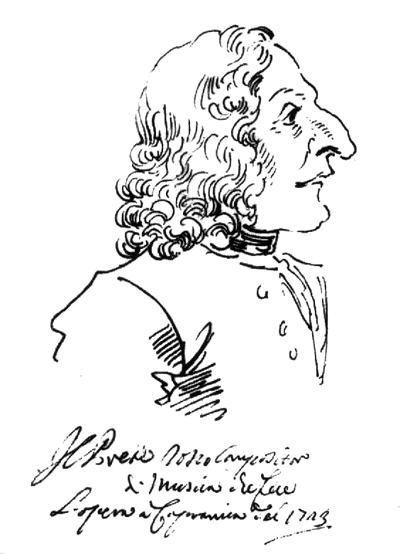
Vivaldi_caricature
Caricature of Vivaldi Il prete rosso by Pier Leone Ghezzi                                       (1723)

In virtually identical fashion, the ACO began and ended its Melbourne year with this program built around Vivaldi’s well-worn quartet of violin concertos.  Richard Tognetti roused audience approbation for his vital interpretations of these familiar pages at both last Wednesday’s packed concert and back in the last week of February.  With characteristic mastery, he found refreshing novelties in both tutti passages and solos – heaving the line into faster or slower pace to unsettle expectations, lingering suggestively over chromatic ascents, then abruptly hurtling through whole segments in the Autumn and Winter scores with remarkable rapidity, and always finding a ready response from his associates – a string nonet of ACO regulars, Neal Peres Da Costa oscillating between harpsichord and chamber organ in performing continuo offices, Tommie Andersson also doing dual service on theorbo and guitar.

So far, so fair.  These concerts have a well-earned reputation for rattling cupboards, raising dust, turning on unfiltered lights.  Along with a re-viewing of the season-celebrating evergreens, with two isolated Vivaldi movements from other concertos and a Gabrieli sonata for extra Venetian heft, Tognetti arranged a juxtaposition of European Baroque and contemporary Egyptian through a collaboration with the Tawadros brothers, Joseph playing oud and James on the tambourine-like riq and occasionally the bendir hand-drum.  Not that this musical association is new; both Tawadros musicians have been performing with the ACO for almost 15 years.

But this program proposed a more serious aim than a mirror reflecting culturally differing musical elements.  Tognetti has been looking for a common ground between the worlds of Islam and the Venetian Republic with specific reference to music, given that the inter-relationship certainly existed in artefacts, goods and solid artistic objects, not to mention that trite descriptor of cross-cultural  pollination – cuisine.

But when it comes to music, the influences, one-sided or mutual, prove difficult to track down.  In the end, what this program offered seemed unconvincing, even more so after a second experience.  Joseph’s lute-like instrument served competently in giving an edge to the orchestra’s output, reinforcing Andersson’s timbre if with a more brusque sound-quality, less happy doubling the solo line in several concerto movements.  Joseph’s percussion underpinning, especially in the more bouncy third movements, sounded like an unnecessary adjunct, sadly reminiscent of that inane version of the first Allegro in Mozart’s Symphony No. 40 which was supplied with a drum-kit undertow.  What did the insertion of that percussive supplement add to the Mozartian experience?  Precious little, if anything.   I fear, the same applied to this Vivaldi fusion experience.

Interleaved between the Vivaldi concertos and single movements, Joseph presented seven of his own compositions, episodic constructs with occasional spotlights on ACO players – Tognetti, of course, and bass Maxime Bibeau – but the focus centred consistently on the oud, apart from one extended riq solo to begin Give or Take.   Modal melodies, sprightly metrical set-ups, plenty of unison work for the ACO strings, cadenza-type breaks all helped to create a specific sound-world although I found it hard to differentiate between most of these pieces and what I’ve heard from Turkey and Iran.  Complicating the mix, an Indian influence is inescapable, the riq’s rapidity and ability to produce rapid-fire bursts and semi-complex patterns resembling the tabla in everything but the use of the palm, while the decorative ripples from Joseph’s lute occasionally came very close to a sitar’s enunciation of a raga.

Yet, while both the orchestra and its guests entered into each other’s worlds with that confidence gained through a long-time aesthetic conversation and built on the performing security invested in the last night of a national tour taking in four state capitals,  their respective worlds, their basic languages remained discrete.  In the opening Gabrieli sonata for three violins, it seemed that an attempt was made to give lines an Eastern curve – hesitant, languorous, dynamically restrained – but when all parts were well under way, the Orient disappeared and the instrumental fabric reverted to type.   In the Tawadros pieces, the ACO players sounded as if added on, providing a sound quality that all too often sounded suggestive of an old-fashioned the dansant straight out of Death on the Nile.  When Tognetti took a prominent part, the spectre of Stephane Grappelli and his Hot Club Quintet loomed unnervingly close.   Added to this odd non-Venetian shadow of reminiscence, the works  sometimes began promisingly – the oud solo at the beginning of Point of Departure with suggestions of intriguing irregularities,  a similarly expectation-lifting start to Permission to Evaporate  – but settled for rapid-fire rushes of activity, negotiated with a palette of colours in which eventually you laboured to find points of differentiation, let alone any timbral, melodic, harmonic or rhythmic congruence with the European scores.

Perhaps I’m wrong.  Further exposure to Tawadros’ music may reveal connections with music of the European Mediterranean that are definitely discernible in several parameters.  At present, the links continue to elude. Not that this concerned the rest of the MRC audience, who were fortunate to hear these players in the clear acoustic of the Recital Centre’s Elizabeth Murdoch space rather than at the ACO’s usual theatre of operations in Hamer Hall, as was the case in February.  A well-applied amplification system helped even more in heightening accessibility, particularly during the central movement to Vivaldi’s Autumn where Da Costa filled in its 45 bars with a deftly executed  solo over the semi-static string chords.  More importantly, it put us up-close with the Tawadros brothers’ determined attack and sharp delivery right from their opening Kindred Spirits – one of the concert’s most effective demonstrations of their craft.

All the old familiar faces

A LITTLE NIGHT MUSIC

Melbourne Chamber Orchestra Virtuosi

Deakin Edge, Federation Square

November 20, 2015

A new group on the local concert-giving scene  –  well, new to me  –  the Virtuosi has spun out of the MCO ranks over the past year or two and comprises some very familiar faces.   The central organization’s artistic director, William Hennessy, heads the second violin trio, Lerida Delbridge from the Tinalley String Quartet is Virtuosi director, the violas are veterans Justin Williams (also a Tinalley member) and Merewyn Bramble, cellos Michael Dahlenburg and Paul Ghica (Bramble’s colleague in the Patronus Quartet), and the double-bass-of-all-work is the dependable Emma Sullivan.

Lerida Delbridge (mco.org,au)
                  Lerida Delbridge 

Last night’s program, to be repeated tomorrow in the Melbourne Recital Centre, impressed as a consolidation of core repertoire for a string ensemble of modest numbers. A tad circumscribed in personnel for string orchestra staples like the Bach Brandenburg Concerto No. 3 (which needs a third viola and cello) or Vaughan Williams’ Tallis Fantasia (its subdivisions require extra personnel in every section), the group still contrived to put together a successful sequence of familiar works stretching from Boccherini and Mozart, through Tchaikovsky and Holst, to a new work by Australian writer Nicholas Buc with the provocative title A Little Night Music and set alongside Mozart’s sparkling serenade of the same name.

The Virtuosi began with the expatriate Boccherini’s appreciative Night Music on the Streets of Madrid, although I missed hearing the first segment dealing with the Ave Maria bells as the performance seemed to launch straight into the Soldiers’ Drum phase, two violins doing the honours in that phase from opposite sides of the Edge’s internal walkway.  But the main segments showed a well-rehearsed body with an appropriately fluid approach to rhythm; the only question arose in the Passa Calle where Dahlenburg’s solo melody line could have been projected with more aggression, particularly as the chief accompanying texture was pretty much continuous pizzicato.

In fact, the night’s soloist was Dahlenburg who took the central role in both Tchaikovsky offerings: the Nocturne and that melting moment, the Andante cantabile from the D Major String Quartet No. 1 in Tchaikovsky’s own arrangement which moved the pitch up a semitone, it seems, but graciously gave the cello an opportunity to play the folksong-indebted theme that it alone does not get to treat in the original score.  The solo strand travelled well in the Edge’s large air-space, with only a moderate vibrato employed and a fine sensibility brought to bear that let the music speak for itself, more clearly in the Andante than the Nocturne where the accompaniment, well-intentioned and firm, was overbearing in the piece’s later, mildly decorated pages.

Both the Eine kleine Nachtmusik and Holst’s St. Paul’s Suite enjoyed sterling interpretations, the Mozart cleanly executed with loads of animating dynamic variety and supple phrasing, especially in the simple but demanding Romanze where the violins resisted its temptation to gild the melodic lily.   Later, the English suite featured fine solo work from leader Delbridge and Williams’ diplomatically understated viola in the Intermezzo that alternates languour and ardour in just a few brilliant pages.  For both of these essential scores, the musicians spoke with impressive unanimity, realizing the promise shown before interval in a high-spirited run-though of Mozart’s F Major Divertimento K. 138 – another necessity for any string orchestra to have under its belt.

Buc’s new work has few obvious problems for its interpreters.  The work’s content is neatly constructed, the phrase-lengths predictable, its atmosphere suggestive of a standard film noir accompaniment – moody but not tragic, unabashedly lyrical, high on string colour, no pretensions to depth of meaning.   Buc has constructed an amiable nocturne and the Virtuosi, with the backdrop of several regional performances behind them, gave it a confident airing.  As a commissioned foray into modern music, A Little Night Music represents a tentative enough move; now for more challenging fields – Schoenberg or Tippett, anyone?

Full of the warm South

RICCARDO MINASI

Australian Brandenburg Orchestra

Melbourne Recital Centre

November 7-8. 2015

Riccardo Minasi

Saturday’s fine concert from Paul Dyer and his chamber orchestra was controlled by visiting virtuoso Riccardo Minasi, billed as the ‘fearless Italian Baroque violin’ – which is fine, if you have an apt attribution of what it is to be fearless.  For sure, Minasi bolts into action at the opening bar to every allegro; in his negotiation of rapid semiquaver figuration, nothing stands in the way; even with mediocre material, he remains in full-throttle delivery mode, urging his Brandenburg colleagues to maintain their impetus.

This style of performance is not exclusive to Minasi, but it is hard to find in many other period performances.  An outstanding instance of this approach first struck me when Il Giardino Armonico played their initial tour in Hamer Hall, a program in which machismo and individual flamboyance refreshed many well-worn pages.  Minasi operates with less flashiness but the results he brings out are similarly dust-free.  Mind you, the Brandenburgers have a head start in this style, as artistic director Dyer asks for the same clarity and vigour from his forces in every program that he himself leads.

Minasi compiled a set of nine works for his visit, all written by composers who flourished in Naples and who lived and flourished during that impossible-to-pin-down period of the Late Baroque.  Some of the names were familiar – Durante, Jommelli, Leonardo Leo; others were complete novelties, so much so that Dyer indicated that some of these scores by de Majo, Ragazzi, Manna and Fiorenza were possibly being heard outside Naples for the first time.  Arcane they might have been in provenance but their impact was continuously benign, the usual developmental tropes showing, and giving in to, the potential for shifting unexpectedly; Durante’s G minor Concerto No. 2 maintained this surprise element throughout its admittedly brief length.

Sharing the workload to some extent, Minasi brought members of the ABO strings to prominence in the evening’s second half with a 4-violin concerto by Leo in which he and guest concertmaster Shaun Lee-Chen performed in duo-opposition to Matt Bruce and Ben Dollman,  The final Allegro to this remarkably appealing score produced the evening’s most brilliant playing, a style galant promenade loaded with compressed energy and delivered with a flawless sheen.  Much the same immediacy and elegance followed in a three-violin sinfonia by Nicola Fiorenza, Minasi and Dollman partnering Matthew Greco in a small treasure, all too brief in its last three movements.

Other moments had their drawbacks.  Both horns and oboes were exposed in an E flat sinfonia by Gennaro Manna, the woodwind pitching noticeably off-centre in the work’s Trio; the brass were required to carry out some rapid trilling in this piece’s first movement which sounded laboured.  But then the program’s final offering, Jommelli’s Sinfonia from the oratorio La Betulia liberata found both oboes generating an excellent spritzig timbre while the sinfonia from Domenico Sarro’s Demofoonte remains in the memory for a series of sustained single-note crescendos from the horns, the string ferment riding the blast.

Minasi made a strong apologist for this neglected music from Naples which, like much of the South then as now, has always been denied a fair shake of the national parmesan cheese dispenser.   In this enterprise, he enjoyed unstinting support from the ABO musicians who played with a confidence and flair that reflected the character of their gifted, personable guest.

Happy 80th, Nigel

FROM SORROWING EARTH

Arcko Symphonic Ensemble

Iwaki Auditorium, Southbank

October 31, 2015

Nigel Butterley

This ambitious concert’s title refers to Nigel Butterley‘s 1991 score, a kind of symphony in one movement which can be read as a lengthy meditation on the planet’s destruction or in even more concrete terms as an active threnody on environmental ruin, albeit a plaint where the listener is eventually offered some grounds for optimism.

n fact, this night celebrated Butterley’s 80th birthday, which actually took place in May this year. Currently, the octogenarian is one of the few survivors of that optimistic period in Australian composition history when we attempted to catch up with the rest of the world after years of rehashing what passed for modern 50 years before.  Butterley’s Sydney-based contemporaries Richard Meale and Peter Sculthorpe have left the scene, their direct descendant David Ahern preceding them by several years.

From that 1960s period of ferment, apart from Ross Edwards,  Butterley’s remaining peers seem to be Melbourne residents, notably George Dreyfus, seven years his senior, and Helen Gifford; both are still productive, if relics of an active era here that mirrored Sydney’s world and included George Tibbits, Felix Werder and Keith Humble.  Agreed, the national musical history doesn’t start and end with these composers but their impact was considerable and more encouraged by the ABC and other concert-promoting bodies than seems to be the case today.  Certainly, their premieres were more keenly anticipated and more widely discussed than similar events in these piping times of benign indifference and undiscriminating tolerance.

Yesterday’s event, a partnership between Arcko Symphonic and ABC Classic FM, served a higher purpose than just recycling scraps from Butterley’s oeuvre.  Alongside an audition of In the Head the Fire, a still-gripping aural composite that won the 1966 Prix Italia, and the night’s-title symphony, the program saw the premiere of From Joyous Leaves, a freshly minted piano concerto by Elliott Gyger, this work taking its framework from Butterley’s 1981 piano solo, Uttering Joyous Leaves.

Zubin Kanga took us into this mesh gradually with an authoritative account of the short solo, idiosyncratic in its vocabulary but impressive for its bursts of deft spikiness; a complex construct but packed with devices and flourishes that document yet again the composer’s brilliant writing for keyboard. Later, in Gyger’s concerto, Kanga gave a gritty demonstration of unflinching insight, negotiating page after page of restless, demanding action.  Following the score’s opening statement for three violas, the pianist entered the work’s scheme and remained a constant presence for a remarkably long time.

One of the concerto’s features is the use of a prepared piano, bringing up memories of Butterley’s own performances of Cage’s Sonatas and Interludes.  The work moves with restless impetus and, using a chamber orchestra of woodwind sextet, brass quartet, two percussion with an often-near-inaudible celeste, and 13 strings, you are confronted with a succession of calculatedly juxtaposed colours, even from the piano which oscillates between normal sounds and the gamelan-like texture of the prepared strings.  A great deal is given to the listener in aural information and, before the tutti which disrupts the soloist’s urgent declamations, the concerto comes close to overload.

I’m not sure that simply playing the recorded performance of In the Head the Fire worked as a concert-going experience.  Yes, it was rewarding to hear the work in well-amplified conditions but these days most of us can achieve pretty much the same impact in our own homes.  Still, what else can you do with a work that wa recorded in different sites, its effect dependent on superimposed tracks and some sonic distortion?  Or perhaps it simply seemed out of place in the concert’s live performance context.

The symphony showed the extended Arcko forces in good form, director Timothy Phillips giving the work’s long paragraphs plenty of breadth.  For much of its length, From Sorrowing Earth moves forward steadily, but several agitated moments interrupt its measured progress; both wind and brass maintained an evenness and cohesion of ensemble that infused these livelier moments with real bite.   In the close acoustic of the Iwaki Auditorium, the general balance would have gained from greater string numbers, particularly both groups of violins which were liable to disappear in ardent full-orchestra pages.

Suggestive of the plainchant soaring over the last movement of Laudes, Butterley’s seminal octet and first major success which exposed many of us to his individual voice, the symphony eventually reaches a point of concord where the strife and stridency are replaced by block chords moving in parallel: a calm processional, an organum for the late 20th century.

For some of us, this would have been the first time we were hearing this striking and concentrated score live; the only recorded performance I can trace was made by the Melbourne Symphony Orchestra under Isaiah Jackson in September 1992.  Its reappearance many years later, delivered with exemplary dedication by the Arcko players, must have pleased its creator.  For Butterley’s admirers, this all-too-short tour d’horizon served to reinforce our admiration and affection for a personable, ever-rewarding creative voice: a timely tribute to his intellectual integrity in furthering the development of Australia’s musical progress.