Local voices aired on Richmond Hill

COMPOSER’S CONCERT

Melbourne Composers

St. Stephen’s Anglican Church, Richmond

Sunday April 3, 2016

Anyone looking at this concert program before the event would have felt overwhelmed: five composers, seven world premieres, eleven works in all ranging from solo piano pieces, through trios and string quartets, to a full-blown symphony.  As things turned out, the overkill looked more threatening on paper than in actual performance even if, as you might have anticipated, the impact of certain works was less substantial than a few stand-out scores.

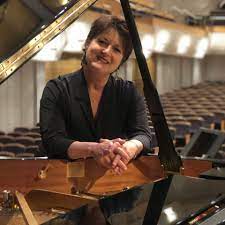
Kitty Xiao after para 1
                                     Kitty Xiao

As conductor/host Andrew Wailes pointed out, the musicians who made up the afternoon’s personnel were of mixed abilities: some professionals, some advanced students, some amateurs or amiable musically competent friends.  Further to this, several of the more difficult works suffered from that bugbear of projects that work on volunteers’ good-will almost exclusively: insufficient rehearsal.  Counterbalancing those problems, quite a substantial number of the works presented made congenial listening, if often not offering much challenge to audience or performers.   This easy-access aspect emerged pretty quickly with Kitty Xiao‘s Nimbus and Nipper for flute/alto flute, violin and piano where the amiable spirit of Australian post-impressionism loomed large.  At certain points, when the instrumental mesh and harmonic changes were aligned, you also heard echoes of Franck’s chamber works – which is fair enough if your intention is to suggest a combination of aural imagery and weltering emotional activity.  Xiao’s piano part took the limelight in both works for a while but she was more than adequately served by Cameron Jamieson‘s violin and the breathy flutes of Jessica Laird.

Hana Zreikat‘s first offering came in the form of a piano solo, Elan, which employed plenty of common chords in its stop-and-start progress.  You could not find much of a contemporary edge to this composition, pleasing though it was but mainly distinguished by the addition of added notes for an occasional frisson of harmonic colour.

Carol Dickson
                       Carol Dixon

Three of the premieres followed in quick succession. Carol Dixon‘s Piano Trio No. 1, The Dove, made its points in one continuous movement with the best content falling to pianist Natasha Lin; her companions, violin Navin Gulavita and cello Sage Fuller, made an unhappy start with what at first impressed as poorly matched intonation, which then recovered, only to fall prey later to further dislocation.  For a while, you could suspect that these tuning discrepancies might have been caused by Dixon’s adding tension to her harmonic constructs, but no: the unsettling effect came from the playing itself.   Certainly the work followed the environment set up by both Xiao and Zreikat in being amiable in its melodic fluency, predictable through its rhythmic consistency and un-alarming in the actual demands on its interpreters.

By contrast, Sarah Elise Thomson‘s fresh String Quartet No. 1 showed attempts to grapple with post-Bartokian musical activity.   Following the one-movement format, this piece showed an enthusiasm for activity, although at its centre lay a lengthy section featuring sustained-note interjections from the upper strings over a repeated pattern from Sage Fuller’s cello.   Gulavita at second violin partnered Matthew Rigby on first and Georgia Stibbard‘s viola but, despite the activity, the performance proved to be some rehearsals removed from security.

Rigby proved a strong presence in the succeeding String Quartet No. 1 by Dixon. Subtitled No Stone Unturned, the score followed minor melodic paths for much of its length but showed little sense of parameter-expanding adventure, especially compared with its predecessor in this program.   Acknowledging the influence of Ravel’s and Debussy’s essays in the form, Dixon imposed a fairly obvious structure of returning to and mildly developing her material with a penchant for the sorts of fluttery gestures found in both the French composers’ quartets, but you would need a very secure body of performers to give polish and interest to a pretty predictable piece like this one.

Benjamin Bates adopted the time-honoured three-movement framework for his Symphony No. 3, this program’s largest element in scale and number of participants. While the composer led the double basses in this presentation under Wailes’ direction, he based a fair bit of the symphony’s material on Spanish guitar-inflected melodic scraps, fairly obvious when Bates brought them to the front of the action, but not the most arresting features of the work when considered as an entity.   The three movements ran into each other so that the second movement’s impressive solos for cor anglais and bass clarinet emerged organically from a tautly argued opening AllegroPrestoAllegro continuum; later, the finale’s attempt at a fugue also emerged from the fabric without any warning.

Some woodwind pitching could have been more carefully managed, the flute pair sounding the most reliable performers from that cohort.  You felt the absence of trumpets from the mix, if only to provide some brisker flavour to the exposed brace of horns, able though these players were.   And confining percussionist Jessica Bird’s contributions to a side-drum removed another source of potential timbral input.  Still, the score has an intriguing energy and a kind of Sibelian brusque lyricism at its best moments, as well as several patches of tedium where the argument loses impetus, as in the fugue which cries out for a tauter delivery than could be achieved with two rehearsals.

As a bracket to this major piece, the program moved back into chamber mode with music by Dixon, Zreikat, Thompson and Xiao.   For her Soldiers’ Suite, Zreikat accompanied herself while singing three songs: Now I Find Myself Hoping which  proved to be a simple pop-tune lyric of some length, in the manner of Adele at her most depressed; Somebody’s Waiting which followed a similar vein of predictability; finally, Enya’s May It Be from the soundtrack to The Lord of the Rings film trilogy.  All of which seemed to be an anomaly on this program where other contributors grappled with the art of composition without resorting to overuse of cliches and sentimental simplicity.

Dixon’s Ocean Oasis I for mixed trio – Laird, Jamieson, Xiao – generated more of the same impressionistic colouring as at the afternoon’s start, this time depicting Norfolk Island.  Again, the piece raised no alarms and presented its atmospheric suggestions with expertise: perfect accompaniment for a documentary on the island’s beauties.  Xiao’s Emei, reminiscing about a journey up a mountain in China, turned into a slow waltz, lushly scored with plenty of imitative work for Laird and Jamieson, Xiao’s piano generating an attractive underpinning shimmer in parts.  This was just as suggestive of Ravel as the Dixon String Quartet No. 1, although this time what came to mind was the Ravel Piano Trio especially its final movement’s assertive figuration.  In contrast Thompson’s Riven piano solo, played by Zreikat, showed an adventurous mind at work, what with hitting the piano wood, playing on the strings and occasionally indulging in washes of sustained, across-the-keyboard dissonance, counterbalancing an employment of lavishly arpeggiated common chords.

In the end, the many components of this program formed a kind of arch with smaller-framed constructs, some close to bagatelles, book-ending the central symphony.  The composers themselves deserve praise for the actual physical exercise involved in collaborating to mount this concert and in attracting into service the various talents required: the Nimbus Trio of Laird, Jamieson, and Xiao; the Briar String Quartet of Rigby, Gulavita, Stibbard and Fuller; Zreikat lending her talents to Thompson; and the significant number of well-wishing musicians participating in the Bates symphony. It’s grass roots stuff and at times rough-edged, but this sort of ad hoc concerted willingness to give  creative voices an airing bears witness to the reassuring fact that at least this particular Melbourne Composers corner of our city’s musical life enjoys good health.

New space, new sound

EL FUEGO

La Compania

Deakin Edge, Federation Square

Saturday March 19, 2016

La Compania (www.lacompania.com.au)
                                                                                    La Compania 

After a fair stretch of time working out of the Recital Centre’s Salon, this expert period music ensemble has moved its performance venue across Swanston Street Bridge to the Deakin Edge.   One immediate advantage is that patrons now have unimpeded visual access to the group’s performance: they’re all exposed, head to toe.  And, thanks to the space’s natural light, you can see the labour involved in the players’ work.  Another incidental benefit is that the need for two sittings of the same program on the same day has disappeared and, by yesterday’s showing, La Compania has largely retained its audience.

A disadvantage comes in the Edge’s acoustic properties.  While they can flatter a chamber orchestra, a small set of players like La Compania’s septet can become imbalanced, given the large air space.  Worth investigating is the solution put into practice by Kathryn Selby which is a back screen of panels that bounces sound out into the audience; this reflection works very well for piano trio recitals and might do much to lift the audible profile of Victoria Watts on viola da gamba and Rosemary Hodgson‘s vihuela and small guitar/chittarino, both of which tended to disappear in the sonic complex except when used percussively or when the wind components fell silent.

Opening the new season in a new room, Danny Lucin led his players and two singers in a program concentrated on Mateo Flecha the Elder, the early 16th century Aragonese composer attributed by some musicologists with the composition of that well-known Chistmas villancico, Riu riu.   But this program consisted entirely of the composer’s ensaladas – salads indeed, mixing languages and metres in a cleverly unified whole; to my mind, more like a mixed grill because of the emphatic if changing rhythms and the clear melodic definition, some stimulated taste-buds removed from lettuce leaves and cucumber.  Three of these involved singers, soprano Cristina Russo and tenor Timothy Reynolds: La negrina, La guerra and the substantial El fuego.   Interwoven came three instrumental transcriptions: La bomba and two brief extracts from another ensalada, El jubilate: O que bonita cancion and La girigonca.

Pretty much all of these, sung or played, have a religious basis: some connected to the birth of Christ, others like La guerra concerned with the inevitable triumph of the Son of David over Lucifer or the necessity to follow the strait and narrow path rather than succumbing to the tempting fires, depicted in El fuego (of course), that can seduce mankind into wrong-doing in this temporal realm.   All very laudable and, if you have to endure moral-enforcing strictures, they could hardly be more agreable than these buoyant and optimistic miscellanies, written for the Christmas-time delectation of Spanish aristocrats.

In this new operating ambience, Cristina Russo’s projection impressed more than the last time I heard her in the Salon.  From the confident opening to La negrina, her projection emerged clearly from a considerate instrumental backing, a fair match for Reynolds’ always-lucid tenor.  In fact, this ensalada offered the most obvious examples of internal variety, its parts glued together in a rapid-moving miscellany, while the later stages of La guerra held some cleverly constructed and just-long-enough onomatopoeic passages where the singers mimicked the sounds of battle.   In addition, both Russo’s and Reynolds’ articulation in these instantly perceptible right-or-wrong conditions remained finished and accurate and their diction impressed consistently, given the rapidity with which several stretches of the texts had to be pronounced.

Lucin’s cornetto is as supple as ever, never strident but sinking to a gentle piano when escorting the singers, even if some of his ornamentation work sounded over-rushed; too many notes, as Mozart’s emperor said.  When Brock Imison took up his bass dulcian, the instrument’s penetrating force gave the ensemble’s output an added weight, matching Mitchell Cross‘s penetrating tenor dulcian while Glenn Bardwell‘s sackbut presented a discreet line throughout the program.  In fact, the streamlined shape of the company, with Christine Baker‘s percussion offering plenty of colour in her chameleonic supporting role, gave this celebratory music an attractive leanness that only came unstuck at the start of O que bonita cancion which began with a solo from Hodgson that sounded tentative, possibly because the notes fell awkwardly for the player’s left hand.   But it was a small blemish, forgotten when the other instrumentalists entered into this particularly enjoyable ensalada party.

Ring in the half-new

ALLEGED DANCES

Australian String Quartet

Melbourne Recital Centre

March 3, 2016

In its current format, this ensemble shows loads of skill.  Alongside the two survivors from its previous formation – viola Stephen King and cello Sharon Draper – the Melbourne Symphony Orchestra’s co-concertmaster, Dale Barltrop, has taken on first violin duties, with another MSO musician,  Francesca Hiew, playing second violin.  On first showing, the combination makes a fine collective sound, particularly in the central elements of Wednesday’s program.  The solitary problem comes with the bass line which, in the new context, can sound muffled.  Which could come from the nature of Draper’s peers – Barltrop’s sound colour is precise and fine, Hiew his timbral complement with an output of solid determination,  King maintaining his full-bodied and accurate projection, a continual pleasure from this leading light in the country’s chamber music tenor ranks.

Australian String Quartet
                                    Australian String Quartet 

Or it could arise from the nature of the instrument.  The ASQ is using a chest of Guadagnini instruments, the cello the earliest made.   Time – and usage – will tell if the instruments are well-matched in more than name or provenance.  And it has to be said that the under-demonstrative character of the bass layer was not uniform throughout the program; in fact, the more contemporary the music, the more it entered into the mix as a full partner.

The players began with Beethoven, the last of the Op. 18 set and  an amiable introduction to the group’s standard. Barltrop  initiated a firm and clear-speaking interpretation, the opening imitation-work with Draper jaunty and clear although the group’s inter-dependence showed at its most remarkable in the Scherzo/Trio third movement where the rapid speed made the violins’ syncopations as efficiently discombobulating as the composer would have wished.  As well, you could find much to admire in the balance of levels during the final movement’s famous La Malincolia first page adagio and the group made a determined fist of the disappointing Allegretto that follows, pages where the effort always seems more gripping than the material.

Balancing this conservative-with-a-difference first gambit, the ASQ finished their night in Schumann’s  A minor, a score that is heard rarely enough, in my experience mainly at chamber music competitions when a young ensemble tries to break away from the expected Romantic-period offering and generally does itself no good.  Luckily, the work enjoyed a fine run-through this time around, King partnering Hiew in a passionate give-and-take dialogue during the formally simple but voluble central Adagio.

The night’s guest, percussionist Claire Edwardes, contributed a vibraphone part to the Melbourne premiere of Matthew Hindson‘s String Quartet No. 4.  In two movements, the work sets up a contrast between animation and quiescence, although the freneticism of its first half was of a milder order than Barltrop’s introductory remarks had indicated; for sure, it lived up to its promise of action, packed with vaulting leaps of scales and arpeggio passages, the vibraphone adding a Bergian cast to the texture, if the experience yielded not much more interest than that of watching five performers beavering away enthusiastically at patterns.  The following movement almost falls into sustained melody but interests more as an exercise in dexterity treating uncomplicated, diatonic intervallic sequences – a placid cantilena for the most part, again with no pretensions to striking out in new directions, apart from the percussion overlay.

Later, Edwardes provided her own soundscape for three movements taken from John’s Book of Alleged Dances, the off-centre amalgam by John Adams that manages to achieve that welcome rarity in American music: wry humour.  In place of the prepared-piano percussion tape loops set off by a quartet member, Edwardes utilised a set of everyday implements as a live-performer substitute; quite satisfactorily, as matters turned out. The clattering tram ride of Judah to Ocean was a triumph for the percussionist-arranger, the clanks and non-resonance of the piano’s stopped strings imitated with high success, while the following Habanera and Rag the Bone came across to the back of the hall without rousing much disappointment in their new sonic format, which actually added some spice to Adams’ tendency to labour his own atmosphere.

As a new start, this recital ticked many buttons.  It established the group’s authority in its handling of received repertoire; not simply by reviewing over-exposed quartets but by taking on a quirky, young Beethoven and the most original of Schumann’s three essays. The ASQ actually commissioned Hindson’s new work – admittedly with the help of several partners –  but the move  made clear that the players look for challenges, wish to stimulate local writers, and are quite prepared to take on unexpected partnerships in order to add to their recital experience.

On July 4, the group plays Webern’s brusque/wispy Five Pieces, one of Haydn’s Op. 20 in which  the composer dragged the string quartet into shape, Joe Chindamo’s two-year-old Tempesta, and Mendelssohn’s No. 6, his last.   On October 24, the ensemble’s third series program begins with Mozart’s final essay, K. 590, moves to Ligeti’s Metamorphoses nocturnes, and ends with Ravel.

.

Ringing the changes

VARIED VIRTUES

Selby & Friends

Deakin Edge, Federation Square

Monday February 22, 2016

Living up to its title, this latest foray by Kathryn Selby and two associate artists centred on variation form, although last night’s main work kept to the normal sonata-ternary-rondo framework with not a variation in sight.  In fact, by the time the players arrived at the Arensky Piano Trio No. 1, the solitary constituent of the program’s second half, the impact of a good old-fashioned exposition+development structure proved very welcome.

Not that you had much to complain of with the Beethoven Piano Trio in E flat, which comprises 14 variations on a theme of the composer’s own creation.  Selby had a mini-work-out with the keyboard part but cellist Timo-Veikko Valve from the Australian Chamber Orchestra, and violinist Andrew Haveron, concertmaster with the Sydney Symphony Orchestra, enjoyed a sweet-speaking partnership in their function as support for the piano.  The theme’s announcement has all players in unison, from which point on Beethoven-the-pianist shows his colours;  violin and cello only break into prominence in the final hunting-horn 6/8 Allegro variant.  A neat performance all round, Selby in excellent form without unduly dominating the constitutionally imbalanced mix.

Andrew Haveron (selbyandfriends.com.au)
            Andrew Haveron 

Schubert’s C Major Fantasy D. 934 has enjoyed a poor press, as Haveron pointed out before playing it; in fact, much of the criticism hinges around the lack of comparisons that can be drawn between it and the final masterpieces that the composer was hurling out in his last months of life.   Admittedly, its sectional divisions creak but the central four variations on Schubert’s own song Sei mir gegrusst have striking interest in their brilliance of writing for both instruments, as does the extended march-finale with its Davidsbundler premonitions.  Apart from which, few elements can transform a piece’s flaws more than the work of two fine artists and the Haveron/Selby combination was impressively effective: two strong-armed performers, both finding in turn the vehemence and the poetry throughout this rambling, moving amalgam.

Busoni’s Kultaselle, ten variations on a Finnish folksong, presents just as many challenges as the Schubert, particularly when its elaborations become more dramatic and technically challenging.  Valve enjoyed much of the melodic burden in this construct, a rather orthodox one in shape and harmonic structure, although the composer was only in his early twenties when he spent time in Helsinki and found this tune, among others.  The contour of the melody remains perceptible throughout and the cello line is wide-ranging and virtuosic, exercising Valve’s powers of projection in certain passages where the keyboard contribution is more than a touch emphatic.  It’s a curiosity, of a piece with many another display-work for the mature professional and, despite the extraordinary creative mind behind it, once heard, easily forgotten.

Not so with the Arensky work, as fresh and uncomplicated now as when I first heard Selby perform it many years ago in Melba Hall.   Although in D minor, its initial impulse is to move to major tonalities and this tendency to look towards optimistic language remains one of the piece’s most enjoyable characteristics.  Dramatic in its flourishes, the first movement projects a brand of benign restlessness that these performers captured with enthusiastic drive, Haveron’s eloquent, tensile line a fine match for the broad cello strokes and the piano’s continuous energetic pulses and exclamation points.

The scherzo is a test of agility for the piano, its recurring main paragraph a minefield of irregular scale work and flamboyant arpeggios.  Somewhere near the end of the middle section, the texture thinned out unsettlingly, although the recovery was swift.  A following Elegia displayed once again the high quality of the string duo, their interweaving and alternating passages  intense and passionate without over-kill.  As for the finale, these musicians coped well with its difficulties, the main one being that there is not much going on underneath a welter of surface activity.   Fast and furious, it has an impressive impetus and a sense of potential drama but the melodic material, after three movements of richness, fails to impress, least of all when the composer introduces reminiscences of material from earlier in the trio’s all-too-brief progress.  Still, Selby urged her colleagues to a rousing coda, the whole carried off with the requisite panache and dynamic definition.

Nor fish nor . . .

VOYAGE TO THE MOON

Victorian Opera & Musica Viva

Melbourne Recital Centre

February 15-19, 2016

Jeremy Kleeman

The name of this particular game was collaboration.  In a spirit of camaraderie, the state’s opera company and the country’s largest purveyor of quality chamber music pooled resources to mount that oddest of forms to pull off successfully: the pastiche opera. Not that this modern-day sequence of juxtapositions had much trace in it of the ad hoc nature of pasticcio opera melanges compiled in Baroque times where the aim was pragmatic – getting the show up and running quickly, at minimal expense through cutting and pasting, and showcasing the best points of the vocal talent available. This current-day exercise aimed more highly, as construction and performance of Voyage to the Moon came under the aegis of the Australian Research Council Centre of Excellence for the History of Emotions, Europe 1100-1800.

The doctrines and practical applications of affects underpins solid Baroque composition and performance theory, providing a resource of great moment for musicians grappling with scores that present interpretative quandaries galore, not just in the application of dynamics but also in phrase-shaping, gradual or abrupt changes in timbre, even the nature of attack on individual notes.  Whatever modes of delivery are eventually chosen, they need an underlying framework that sets up a ground plan for a specific interpretation.  For musicians unschooled in this specific craft, the affect-involving process of analysis and construction connected with articulating even simple pieces like harpsichord suites or violin sonatas can be both enlightening and confrontational in that knowing which affect you are seeking to convey causes an ongoing appraisal: you have to deliberate over every aspect of your engagement in re-creating.

Yes, it can lead to mannered renditions where the results have been over-studied to the point where ultra-refinement wipes away a listener’s sympathy but, in competent hands, this period of music thus informed can come across with a refreshing commitment and simple sonic definition that animate musty pages.

Taking its launching place (like so many earlier works) from part of Ariosto’s poem Orlando furioso, this Voyage to the Moon followed a simple plot where the eponymous hero, inflamed by love, loses his reason and goes on a violent rampage.  His fidus Achates, Astolfo, travels with the assistance of an omniscient Magus (is there any other kind?) through space to our satellite, the apparent location of Earth’s lost property, persuades the intransigent Queen Selena to give back the vital spiritual essence, then restores his angrily roistering colleague to sanity.  Michael Gow and Alan Curtis collaborated to create a plot-delineating sequence of recitatives and a re-wording of selected arias from operas by Handel, Molino, de Majo, Gluck, Hasse, Orlandini and Vivaldi.  The score was completed by Calvin Bowman after Curtis’ death in July last year.

This creation is without spectacle, a singular disadvantage for a production of Baroque opera.  The three singers have a full stage to work with but not much by way of scene-setting or visual complements to the scenario’s changes of mood and place.  In fact, Monday’s premiere saw the instrumental septet centre-stage at the Murdoch Hall’s back wall, harpsichordist/director Phoebe Briggs surrounded by a quintet of familiar string players – violins Rachael Beesley and Zoe Black, viola Simon Oswell, cello Molly Kadarauch, bass Kirsty McCahon – with the lone reliable oboe of Emma Black. A small body, this ensemble gave excellent service throughout the opera’s 75-minute length, the upper string trio consistently valuable contributors to the affective changes in the work’s progress. Whether sighing out plangent introductions or interludes like Handel’s Entree des songes agreables, or hurtling through the close-knit accompaniment to Hasse’s O placido il mare, these musicians set their notes into position just as you’d want: precise, resonant, suggestive of the requisite flights of temperament/emotional ambience.

Two of the three singers are very familiar names.  Soprano Emma Matthews (Orlando/Selena) and mezzo Sally-Anne Russell (Astolfo) are veterans of the opera theatre, concert stage and recital hall; both have plenty of experience in Baroque music and the technical equipment to negotiate respectable paths through intricately ornate arias.  Bass-baritone Jeremy Kleeman (Magus) has made a firm start on a singing career, turning up in unexpected places – as soloist for the St. John’s Lutheran Church at Southgate’s Bach cantatas during Sunday morning services, for instance, or as one of the Family quartet in Victorian Opera’s recent concert version of Weill’s Seven Deadly Sins.  While Matthews thrilled her devotees with acrobatics and Russell revelled in the night’s most familiar (and best?) music with Handel’s affecting Piangero la sorte mia, Kleeman used all three of his arias to sterling effect, at his most impressive covering the vast range needed for Handel’s Fra l’ombre e gl’orrori.

In fact, Kleeman appeared to gain most from the music selected for his role, in part because his major contributions were Handel compositions but also thanks to his innate consistency in timbre and rhythmic definition. Matthews displayed her velocity from the start with de Majo’s Tutti tremar dovrete right up to a racy version of the Hasse show-stopper.  But these ornate flights of fancy featured some attention-grabbing obtrusions – improbably high notes, in particular, distracted from this operatic form’s already-ornate eloquence.  The lily-gilding continued in the singer’s second role; Handel’s Neghittosi, or che fate came across as jerky, hard work and lacking in supple fluency of delivery.  Russell enjoyed the allocation of Orlandini’s close-order filigree aria Col versar, barbaro as a counterweight to her lilting Handel contribution earlier, and managed to give a persuasive communication of Astolfo’s pseudo-belligerent intention to fight with his comrade and beat sense into him.  However, several bravura passages misfired, possibly because of the vocal register employed, or because of the tempo chosen.

Still, the work’s elements made a pleasant enough melange with enough individuality in the compositional voices to sharpen the appetite for hitherto-unknown works, those by Molino and de Majo in particular.  Every so often, the chamber-like limitations intruded, like the absence of trumpets and an extra oboe in Handel’s Gia risonar d’intorno or the missing tenor voice in the finale, a light-filled chorus from Vivaldi’s Il Giustino.  But the libretto proved more coherent (and intelligible acoustically) than most, the singers in period costume worked successfully with limited means to give physical expression to their emotions, and the opera’s onward movement never faltered.  In sum, this Moon Voyage experience impressed as a worthwhile experiment, an amiable curiosity, its hybrid nature interesting – once.


A generous collection of masterpieces

BASICALLY BEETHOVEN

Selby & Friends

Deakin Edge, Federation Square

November 25, 2015

Kathryn Selby

I’ve not seen or heard a Selby & Friends recital for some time; renewing acquaintance, the most obvious change has been in audience size.  From the years when numbers were thin at Melba Hall, patronage has swollen to the point where seats are at a premium because the Edge space last night was sold out.  Maybe people were attracted by an all-Beethoven program; perhaps the combination of Melbourne Symphony Orchestra co-concertmaster Dale Barltrop, the Australian Chamber Orchestra’s principal cello Timo-Veikko Valve and Selby’s brave, polished pianism made an exceptionally attractive proposition.  Those music-lovers who managed to hear this recital were treated to a bracing tour of achievement peaks from the composer’s middle period.

Putting her guests to best use, Selby programmed a sonata for each, framed by two piano trios – one that’s almost not there, the other a trail-blazing masterwork.   In terms of substance, the No. 12 Trio offers little: one movement, an Allegretto that consists of a simple minuet, soon over and leaving not much impact.  A curtain-raiser, then, but one with a muted vivacity, particularly the piano part which holds the lion’s share of the (admittedly brief) action.

Beethoven’s final violin sonata, No. 10 in G Major, comes as a relaxation of tension after its famous predecessor, the A minor Kreutzer and follows that irregular oscillating pattern of power and placidity in the composer’s output – the jocund B flat Symphony between the Eroica and No. 5 in C minor, the rollicking alla tedesca Piano Sonata No. 25 sitting between the deeply-felt A Therese and Les Adieux pieces, that amiable Op. 74 Harp String Quartet sitting between the voluble final Rasoumovsky and the terse, unsettling F minor.  For all its approachability, the last violin sonata has not appeared regularly in chamber music programs, not as often as the Spring or C minor favourites.

Commentators have found a sort of farewell to arms in this work which comes from the centre of Beethoven’s middle period but which was, as a form, ignored by the composer from then on.  Selby and Barltrop performed it with an unfussy relish, both well-matched in the question-and-response opening strophes and maintaining a calm path through even those pages that tempt most to declamation.  As with all three major works on this night, the players had searched out a mode of operating that sprang from the score’s possibilities; rather than the usual smash-and-grab display of temperament, this was a considered, mutually respectful interpretation, riveting in passages like Selby’s negotiation of the low-lying chords and octaves that support the Adagio‘s opening statements, and later in the interlocking cadenzas of the finishing Allegretto where the usual flashiness was avoided and the work’s sinewy power spoke for itself.

The most familiar of the cello sonatas, the middle No. 3 in A Major, proclaimed its intentions from the start as well.  Timo-Veikko Valve outlined the unaccompanied first melody with restraint and the two brief cadenzas that tail each sentence were made to count as integral to the preliminary statement, rather than being tossed off as flourishes. When the movement proper began, both performers set a steady pace – Allegro, but not too much, as the direction requires – and at every turn you heard something new; not necessarily unexpected, but a shift in focus like a paragraph-ending rallentando, a hitherto-unknown doubling of the bass line, weight applied sparingly and not the often-encountered mindless pounding.  More than this, the work held an unusual fluency,  best heard in the last movement where Selby in particular negotiated the octave runs with a sotto voce grace and provided Valve with a true partnership like the miraculous moment at the centre of the movement where the cello has the main theme and the piano’s accompaniment of a rolling A Major triad supports it with a balalaika-style rustling – the effect here and the detail of accomplishment at many other stages achieved through innate musicality and a fine depth of preparation by both executants.

As you’d expect after this groundwork, the Archduke realization proved exceptionally fine: determined in attack, meticulous in dynamic balance, both strings ideal in their close ensemble work, most evident in the chain of sixths and thirds at the start to the Andante cantabile and the interleaving sustained notes at the movement’s end.  But the performance was loaded with extraordinary moments, like Selby’s strong Weber-reminiscent chord/arpeggio upward bounds punctuating the Scherzo‘s trio, the precision of her rapid trills in the finale and the amiable sharing of sound-space between the musicians with every contributor audible throughout.  We may wait some time before coming across a reading as enriching, informative and spirit-lifting as this one.


Jokey American, sombre Czech

BRAVE NEW WORLDS

Sutherland Trio

Salon, Melbourne Recital Centre

November 24, 2015

Sutherland Trio

Pairing the Ives Piano Trio with Dvorak’s  F minor No. 3 presented something of a surprise in this latest recital at the MRC from an estimable ensemble of Melbourne musicians: violin Elizabeth Sellars, cello Molly Kadarauch, piano Caroline Almonte.   While the Czech composer pours out a chain of luxuriant melodies tinged if not infused with folk-song suggestions, the American’s one essay in the form leavens his love of dissonance with a strong melodic current running through its outer movements, atypically diatonic in the concluding Moderato con moto where the spectre of 19th century Romanticism looms unexpectedly large.

It wouldn’t be Ives without contrasts and the trio’s central Presto makes a relentless, eventually unnerving amalgam of non-original melodic fragments that lead to a critical climax which exhausts the ears through simple informational overload reinforced by forceful dynamic levels.  Ives might have intended a brand of levity by naming the movement TSIAJ (This Scherzo is a joke) but the humour is fierce, a case of piling Pelion upon Ossa where the references to hymns and popular tunes weld into a massive complex, extraordinarily dense given the small sound resources employed.

Dvorak’s trio  stands as one of the master’s more dramatically consistent chamber music constructs, particularly for its substantial first movement’s grandiose sweep and developmental density.  Despite many caveats, the influence of Brahms remains consistent throughout; open to a page of the first Allegro‘s development and the actual physical aspect of the score makes you look twice.  Yes, you can also point to irregular metrical structures that the older writer would not have used but the textural variety offers many grounds for complementary comparison. Further, the writing for piano is often as clangorously dominant in effect as in an early-to-mid period Brahms chamber work.

The Sutherlands made fine exponents of the Ives trio,  Kadarauch giving the first movement’s opening duo section plenty of wide-ranging eloquence, followed in similar form by Sellars when her turn to outline the 27 bars of material came around.  For that helter-skelter scherzo, the effect was of diving in with suspenseful energy, the players beavering at their responsibilities without drawing breath.  This is the Ives sound as many people find it – ignoring the lashings of broad, singing simplicity to be found in the symphonies, violin sonatas, string quartets and tone sets sitting alongside the polytonal, polyrhythmic, poly-polyphonic, multi-textural collages of the Three Pieces in New England or the jagged piano writing of the Three Page and Concord Sonatas.  Here the impetus came from Almonte’s keyboard which, as required, often threw the two strings into low relief.

Ives moves into a less frenetic world for his finale, the language kept simple and accessible with lengthy paragraphs of interwoven mesh, the whole reaching the composer’s individual vision of the transcendental in a sequence of concluding variants on Rock of Ages, a meditation here played with care and requisite placidity: a passage that you wished could go on and on.

The Dvorak trio also enjoyed more of a clenched-teeth style of interpretation,  Almonte finding plenty of resonance in the outer movements, which featured passages where Kadarauch’s cello was kept well-recessed.  Still, you would be hard to please if you found the focal Poco adagio deficient: Sellars and Kadaurach combining in the canonic melody-lines with fine sympathy, all performers at their most persuasive in the B Major middle segment where the dark tenor of the work dissipates for a time.

In fact, the main problem with this interpretation came from an underlining of its already sombre character.  While the Ives presented sonorous challenges and consolatory ease in turns, this Dvorak impressed as over-determined, so that the twists into and out of action in the concluding Allegro lacked a balance between heft and lightness, the impact  more of a relentless drive.  Dvorak was living through emotional stress at this time but I think that this interpretation hammered that historical  message with excessive vigour in the score’s two supporting outer pillars.


All the old familiar faces

A LITTLE NIGHT MUSIC

Melbourne Chamber Orchestra Virtuosi

Deakin Edge, Federation Square

November 20, 2015

A new group on the local concert-giving scene  –  well, new to me  –  the Virtuosi has spun out of the MCO ranks over the past year or two and comprises some very familiar faces.   The central organization’s artistic director, William Hennessy, heads the second violin trio, Lerida Delbridge from the Tinalley String Quartet is Virtuosi director, the violas are veterans Justin Williams (also a Tinalley member) and Merewyn Bramble, cellos Michael Dahlenburg and Paul Ghica (Bramble’s colleague in the Patronus Quartet), and the double-bass-of-all-work is the dependable Emma Sullivan.

Lerida Delbridge (mco.org,au)
                  Lerida Delbridge 

Last night’s program, to be repeated tomorrow in the Melbourne Recital Centre, impressed as a consolidation of core repertoire for a string ensemble of modest numbers. A tad circumscribed in personnel for string orchestra staples like the Bach Brandenburg Concerto No. 3 (which needs a third viola and cello) or Vaughan Williams’ Tallis Fantasia (its subdivisions require extra personnel in every section), the group still contrived to put together a successful sequence of familiar works stretching from Boccherini and Mozart, through Tchaikovsky and Holst, to a new work by Australian writer Nicholas Buc with the provocative title A Little Night Music and set alongside Mozart’s sparkling serenade of the same name.

The Virtuosi began with the expatriate Boccherini’s appreciative Night Music on the Streets of Madrid, although I missed hearing the first segment dealing with the Ave Maria bells as the performance seemed to launch straight into the Soldiers’ Drum phase, two violins doing the honours in that phase from opposite sides of the Edge’s internal walkway.  But the main segments showed a well-rehearsed body with an appropriately fluid approach to rhythm; the only question arose in the Passa Calle where Dahlenburg’s solo melody line could have been projected with more aggression, particularly as the chief accompanying texture was pretty much continuous pizzicato.

In fact, the night’s soloist was Dahlenburg who took the central role in both Tchaikovsky offerings: the Nocturne and that melting moment, the Andante cantabile from the D Major String Quartet No. 1 in Tchaikovsky’s own arrangement which moved the pitch up a semitone, it seems, but graciously gave the cello an opportunity to play the folksong-indebted theme that it alone does not get to treat in the original score.  The solo strand travelled well in the Edge’s large air-space, with only a moderate vibrato employed and a fine sensibility brought to bear that let the music speak for itself, more clearly in the Andante than the Nocturne where the accompaniment, well-intentioned and firm, was overbearing in the piece’s later, mildly decorated pages.

Both the Eine kleine Nachtmusik and Holst’s St. Paul’s Suite enjoyed sterling interpretations, the Mozart cleanly executed with loads of animating dynamic variety and supple phrasing, especially in the simple but demanding Romanze where the violins resisted its temptation to gild the melodic lily.   Later, the English suite featured fine solo work from leader Delbridge and Williams’ diplomatically understated viola in the Intermezzo that alternates languour and ardour in just a few brilliant pages.  For both of these essential scores, the musicians spoke with impressive unanimity, realizing the promise shown before interval in a high-spirited run-though of Mozart’s F Major Divertimento K. 138 – another necessity for any string orchestra to have under its belt.

Buc’s new work has few obvious problems for its interpreters.  The work’s content is neatly constructed, the phrase-lengths predictable, its atmosphere suggestive of a standard film noir accompaniment – moody but not tragic, unabashedly lyrical, high on string colour, no pretensions to depth of meaning.   Buc has constructed an amiable nocturne and the Virtuosi, with the backdrop of several regional performances behind them, gave it a confident airing.  As a commissioned foray into modern music, A Little Night Music represents a tentative enough move; now for more challenging fields – Schoenberg or Tippett, anyone?

A Musical Portrait

Ludovico’s Band

Salon, Melbourne Recital Centre

November 17, 2015

                                                                                    Ludovico’s Band 

In this final 2015 recital given by a consort notable for the high calibre of its members, the five contributing composers were producing work during England’s Caroline Era, the reign of Charles I which tore the country apart and, in the process, put much of its cultural heritage in peril; not just music, although we tend to slide past these particular decades between the brilliant ferment of Tudor composition and the brief-lived glory of British music that is Henry Purcell.  For this occasion, Ludovico’s Band comprised six instrumentalists, including the extra triple harp of Hannah Lane to partner co-director Marshall McGuire’s instrument, with guest mezzo Sally Anne Russell singing works by Nicholas Lanier and Shakespeare’s known collaborator, Robert Johnson.

The timbre melange for this brief recital, which included purely instrumental music by William Lawes, John  Jenkins and some scraps from John Playford’s Dancing Master compendium, gave top-line honours to Julia Fredersdorff‘s violin, with a fellow-string in Ruth Wilkinson’s gamba occupying a supple support role except for a D minor trio sonata by Jenkins where the pair shared the work-load with occasional harp interludes.  But for the most part, plucked instruments dominated, the harps partnered by Tommie Andersson’s alternation between theorbo and lute, Samantha Cohen also employing her theorbo but working through a good part of the night on her guitar.

The result, when all were engaged simultaneously as in the opening D minor Harp Consort by Lawes, No. 4 in the set of the eleven, made a rich tapestry, a generous buzzing brought about by an inevitable arpeggiation when harps and theorbos each play more than one note.  This work’s opening Fantazy saw the melodic burden shared between Fresersdorff and McGuire, both preserving the music’s innate stateliness right through to a noticeably vigorous, if brief, sarabande.  A less generous amplitude came in the same composer’s Duet for lute and harp, Andersson and McGuire handling with seasoned aplomb the work’s three-dance chain, the whole lasting about 4 minutes, with little variety of dynamic inflexion.

Russell’s arrival onstage brought a novel strand to the mix, largely because this singer eschews the peculiar habit adopted by some singers of works a century either side of this period; to wit, aiming for a near-genderless purity with minimal vibrato, an avoidance of dramatic possibilities and a concentration on purity of line – no swooping, no audible breaths, no distinct plosives.   Russell took her four Lanier songs as scenes, the settings of Thomas Carew’s No more shall meads and Mark how the blushful morn infused with a warm vigour of attack, reaching even more intense levels in Campion’s Fire, fire and the vivid bite of Neither sighs, nor tears, nor mourning.  The mezzo entered into each song’s emotional world and, while the effect could be over-pronounced in intensity, the works spoke clearly, each one taking the listener on a short trek as engrossing as a Schubert lied if more reminiscent of an extended recitative than a lilting folk-song.

Johnson’s setting of the Ben Jonson lyric Have you seen but a white lillie grow was the best-known piece on this program, Russell giving two verses and hence a chance to take in her security of pitch at the lyric’s climax and the flexibility of tessitura while her accompaniment was relatively thin with lute and theorbo.  Woods, rocks and mountains, possibly/probably by Shakespeare, also gained from a more direct voice, its Dowland-like downward falls and hopeless repetitions of one note speaking cogently of love’s despair in this interpretation, rather than communicating a well-bred, light soporific depression.

For O let us howl some heavy note, a rough-edged invitation from a madman in Webster’s The Duchess of Malfi, Russell took relish in the chromatic rises that illustrate the character’s unbalanced state and found plenty of room for near-onomatopoeic imitations as the air moved from ‘beasts and fatal fowl’ to some not-too-quiescent swans greeting their own extinction with placidity.  Even in the benign context of a comfortable evening recital in Melbourne’s salon, this piece holds an uncomfortable force that Russell conveyed with a full-bodied and mobile style of execution.

Concluding with five of the Playford dances, the band again illustrated its elasticity, a wealth of bass strings resonantly rhythmic and, for a bonus, Ruth Wilkinson took up her recorder to cut through the string textures, focusing your attention on the the simple but infectious brio of the tunes on which these players built a rousing harmonic ambience, a window into (musically, at least) more simple and clearer-speaking times.

Genius at one (or two) removes

MOZART & J. C. BACH

The Melbourne Musicians

St. John’s Southgate

November 15, 2015

Lawrence Dobell

Finishing their annual subscription series, director Frank Pam and his chamber orchestra paid tribute to one of the more congenial musical friendships between two great composers.  Mozart and Johann Christian Bach met in London in 1764 and became fast friends, the younger composer claiming that the English-based youngest son of Johann Sebastian had a formidable influence on his instrumental writing. Both blazing successes at moments in their careers, the two men died in penurious circumstances.

As a sign of his esteem, Mozart arranged three of the elder writer’s keyboard sonatas as concertos and performed then on his trans-European tours, providing the originals with his own orchestral framework. Taking this one step further, the notable Israeli clarinetist Yona Ettlinger re-arranged the Mozart score, changing the solo part to fit his own instrument and adding a third movement to the original two, neatly transplanting the second Allegro from Bach’s own Sonata Op. 17 in E flat.  This was the piece that the Musicians performed yesterday with soloist Lawrence Dobell, principal clarinet with the Sydney Symphony Orchestra.

As you’d expect, the reading was distinguished by a fluent, polished line from Dobell, at home with the mutated galant style that came across despite the permutations intervening between the original and this reworking published in 1974.  Easy in its melodic flow,  the concerto makes no extraordinary demands, not even in the cadenzas which Dobell dispatched  effortlessly; but then, they are brief, I suspect because there is little thematic matter to be exploited.

Appearing a little later in Mozart’s life, the Symphony No. 27 is the last of six written in 1773 and precedes the superb work in C Major of the following year, the opening phrases of which are forever associated for many of us with the Music Lovers’ Hour hosted on ABC Radio by Dr. A.E. Floyd, one-time organist/choirmaster of St. Paul’s Cathedral and a Melbourne musical institution as well as a Mozart enthusiast at a time when the composer’s works were rarities on concert programs.  Not that the G Major K. 199 suffers in comparison but the jump in assurance between the two symphonies is noticeable.

Pam’s orchestra made a hearty start to it, the violins bracing in their triple-stop chords and observing the dynamic niceties set up by their conductor.  The body was blessed by pairs of forthright flutes and horns, the latter making their presences felt in tutti passages and coping manfully with parts that rarely challenge a modern instrument.   The second movement’s progress could hardly be faulted in terms of articulation although the strings, especially when muted, sounded plump, not quite altogether on the beat.  In fact, the rhythmic factor presented the only real difficulty in all three movements; at the cross-over points before repeats, everyone seemed hesitant and the players needed to keep closer focus on Pam during the Presto-finale: a model of transparency demanding a confident and exact attack.

Appearing in another work from the teenage Mozart, young violinist Jackie Wong performed the solo part in the G Major Concerto, a light-hearted masterpiece for the most part calculated to flatter an executant’s suppleness of delivery and asking for a clear, light-coloured product.  At 14, Wong obviously sees the score as an exercise in bravura, tending to make heavy weather of her outer movements, which is understandable in passages of semiquaver figuration.  When the solo violin has the floor, however, there is little point in a weighty dynamic, particularly as Mozart kept his accompaniments discreet.  In the melting Adagio, Wong made a better impression, letting her line speak without over-insistence; a welcome contrast to the first Allegro‘s exposed cadenza where she urged so hard that the danger became one of tuning.  The Musicians coped well enough with their responsibilities, apart from a cracked horn note or two, and the trio of second violins showed an admirable consistency throughout.

To complement the woodwind concerto, Pam finished the afternoon with one of Christian Bach’s Op. 3 sinfonias, the last of the set of six and, like most of this program’s content, in the gratifying and congenial key of G Major.   Three movements in the space of ten minutes left little time for absorption except that the bookend Allegros sounded confident while the middle G minor-centred Andante found out occasional intonation problems in the top strings.  Still it made a brisk, optimistic conclusion to the year’s work from this always-ambitious body of performers.