Fine, but under-weight

THE DEVIL’S VIOLIN

Australian Chamber Orchestra

Hamer Hall, Arts Centre Melbourne

Sunday March 15, 2026
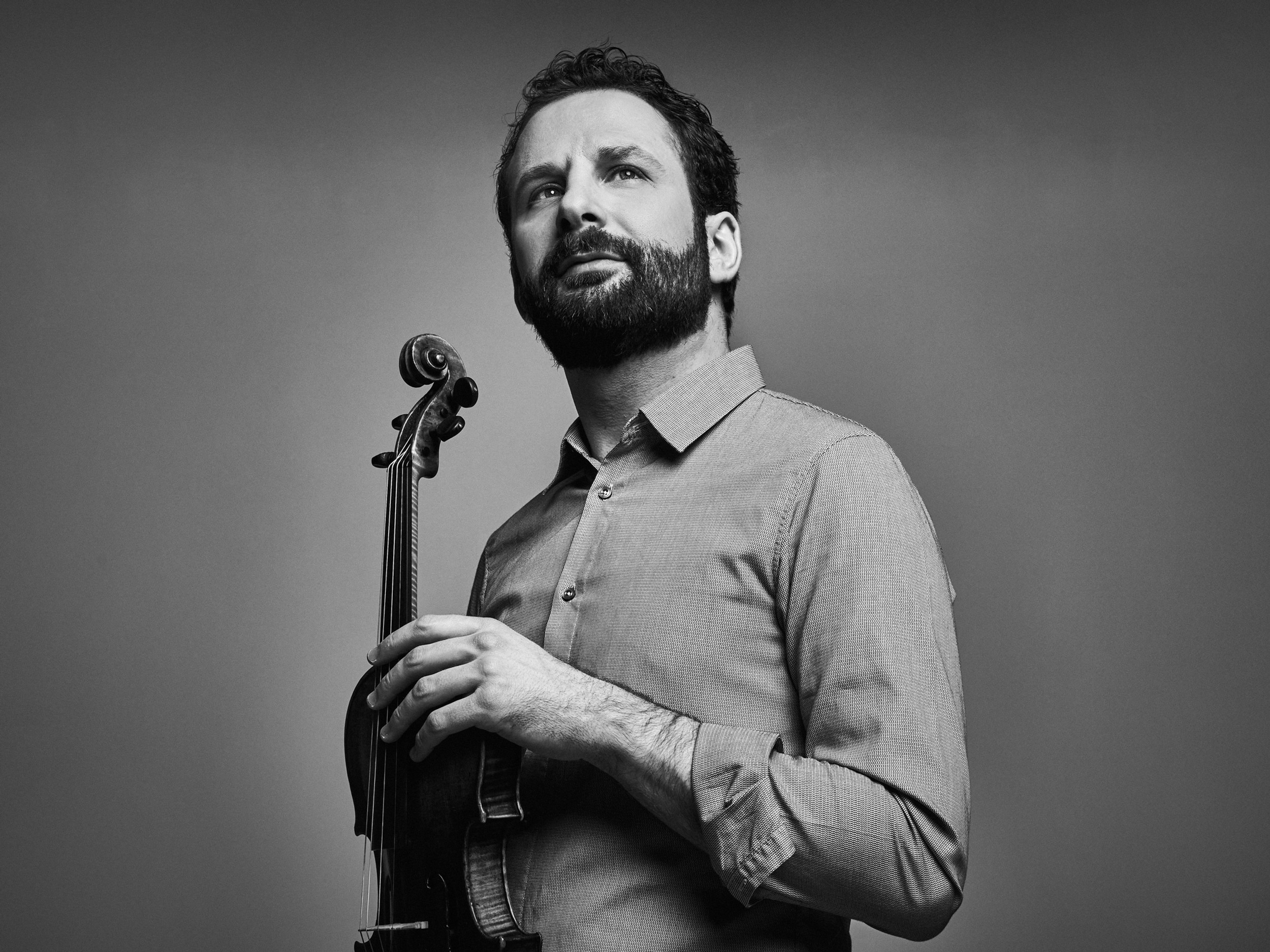
Ilya Gringolts

Perhaps someone was making a point about possession. A good deal of the program essay by Kate Holden for this afternoon’s Australian Chamber Orchestra concert concerned the instruments that both soloist Ilya Gringolts and his support are lucky enough to play, if not own – Guarneri, Stradivarius, Da Salo,, Maggini. As for the underworld connotations, I suppose the connection with Tartini’s Devil’s Trill Sonata was hard to resist, although a more convincing piece to play, other than the Italian composer’s tall-tale opus, might have been L’histoire du soldat, but that presents a whole new ball-game in requisite soloists.

For this event, apart from Gringolts’ presence as soloist in several concerti and leading everything else, only three extra musicians came into play: theorboist/Baroque guitarist Simon Martyn-Ellis. harpsichordist Masumi Yamamoto, and violist Thomas Chawner moonlighting from Brisbane’s Orava Quartet. In line with a mainly ‘old’ music undertaking, Gringolts confined his forces to six violins (including himself), pairs of violas and cellos, and the perennial Maxime Bibeau on double bass.

As for what Baroque music we heard, the visiting guest director offered two Vivaldi concerti – a solo and a double violin – as well as the Tartini sonata arranged by the ACO’s own Bernard Rofe for all the strings to swan in and out, Geminiani’s Concerto Grosso No. 12 called La Follia, and the slightest of lollipops in Westhoff’s Imitazione della campane extracted from his Violin Sonata No. 3 which was published in 1694.

Among all this period material, Gringolts inserted a trio of more or less contemporary scores. In the first half, we heard Gubaidulina’s String Quartet No. 2 of 1987 in an arrangement (unacknowledged) for the available eleven players, who appeared to share the original four lines while the director spent a good deal of time indicating the bar-lines.. As a lead-in to the second half, the strings played Mieczyslaw Weinberg’s Op. 9 Aria for string quartet from 1942, also amplified anonymously for the available forces. But the most recent composition on offer proved to be Paul Stanhope‘s Giving Ground, composed in 2021 to an ACO commission; this was based on the La Follia theme/bass and, at the conclusion to this program, leached into the Geminiani concerto/variations.

As the exercise progressed, you became aware of how much Gringolts was invested in everything, for all that the exercise lasted about half-an-hour less than normal. Naturally, he took the lead (only) role in Westhoff’s exercise in rapid broken chords; slowing down to break the 41 bars-worth rhythmic (and harmonic) monotony and varying his intonation between the bland and the rough; the piece giving us a chance to re-familiarise ourselves (Gringolts has toured twice over previous years for the ACO) with his individual voice which is a highly malleable one.

We moved straight into the solo Vivaldi concerto, D minor RV 237 published in 1716-17. After an initial bout of arpeggiating chords, the first movement’s solo part starts at bar 40 and runs through some familiar passage-work tropes with a rise in the interest level from bar 121 onwards for some athletic bouncing up to a high register in a neatly-packaged train of semiquaver foursomes. After an unassuming 32-bar Adagio which was an easy effusion for Gringolts and which he delivered without a trace of sentimentality, we arrived at the slightly elliptical Allegro finale which bounded past like a watery chablis that didn’t hit the sides. In the canon of memorable Vivaldi concertos, this one didn’t rank.

On to Gubaidulina’s challenging work which opens with a concerted examination of the note G, articulating it in several ways on various levels before moving to a more material-heavy second part and a brief conclusion. What made this performance more interesting than most was seeing the interweaving of individual players in the opening pages – an organizational feat of some distinction – before the more conventional later stages of the work. Still, Gubaidulina appeared to regard her score as the solution to a problem and, despite the finest efforts of insightful musicologists like Judith Lochhead and Joseph Williams, the work presents as more of a rigorous discourse than anything else, after its arresting opening.

As for the Tartini sonata (the composer alleged its composition date to be 1713; commentators suggest thirty years or so later), Gringolts began with an orthodox continuo of Martyn-Ellis, Yamamoto and the ACO principal cellist, Timo-Veikko Valve. I believe that the ACO’s other ranks started entering around the Tempo giusto but their efforts were all broad strokes filling out Tartini’s sparse texture. As you’d expect, the focus throughout this well-known work fell on Gringolts whose various modes of attack gave interest to these well-thumbed pages.

As you’re aware if you know the work, diabolic suggestions are non-existent. The piece proceeds in a respectably ordered path with some gymnastics for the violin in the Sogni del autore last movement. But you would have to be unusually susceptible to extra-musical suggestions to find anything but an assertive benignity across the composer’s canvas, especially in those euphonious trills that pop up to general satisfaction in the concluding pages.

Weinberg’s brief essay in chromatic slips and slides has its charms in quartet form; expanded, it somehow lost its harmonic interest, possibly because the inner workings sounded less striking when weighting had to be redistributed. But the great benefit was the timbral variety on offer with regard to those chugging quavers, especially a long passage for viola which here barely struck you as wearing even though the relentless chain of quaver thirds, fifths and sixths lasts from bar 33 to bar 53 in a piece that consists of only 63 bars.

The ACO’s principal violin Satu Vanska collaborated with Gringolts in the Vivaldi Concerto for Two Violins RV 507 from somewhere between 1713 and 1717. In this happy work – despite its brief E minor central Largo – the solo responsibilities are pretty fairly divided, except for the first Allegro where Gringolts had more of the running. For all the familiar sequence of harmonic steps and jaunty melodies, the chief interest here lay in the contrasting sound-colours of the soloists. Vanska’s output remained refined and lyrically eloquent but with an unflappable rigour, while Gringolts performed with more assertive verve.

You couldn’t call it brash or anywhere near coarse, but the visitor gave this rather unexceptional work an urgent vigour – just as athletic in treating the busy line as Vanska but offering a vital contrast in those frequent passages of close imitation, although he shepherded his dynamic when both soloists were in communal attack. Nothing here like the close similarity that David and Igor Oistrakh offered in the Bach D minor, or when Deller father and son worked through Sound the trumpet; rather, an unabashed juxtaposition of opposites.

Finally, we came to Stanhope’s clever set of variants on La Follia which seemed to be sticking to its harmonic last, except that it meandered off the prescriptive path easily enough and was able to employ sound-production techniques that wouldn’t have occurred to Corelli or Geminiani. You could tell when the Australian work ended and the Italian master’s 1729 concerto began but the blending was a deft move from Stanhope’s review of his opening bass-heavy scrapes to the spare statement that begins the older work.

Mind you, by the time Gringolts, Vanska and their forces reached the end of Geminiani’s 23 variations, I was all Follia-ed out and the later instances of vaulting virtuosity came close to wearing out their welcome. Not that you could find fault with Gringolts who maintained his enthusiasm until the end with an engrossing employment of dynamics and attack that exemplified what every musician has to do with these bare-boned scores: enrich listeners with an all-embracing view and find an emotional expansiveness to mine, rather than just work through the works’ outlines and only realize the notes. However, next time this excellent violinist visits, I’d welcome a lot more substance; fewer small bursts, no matter how pleasurable.
All over the place

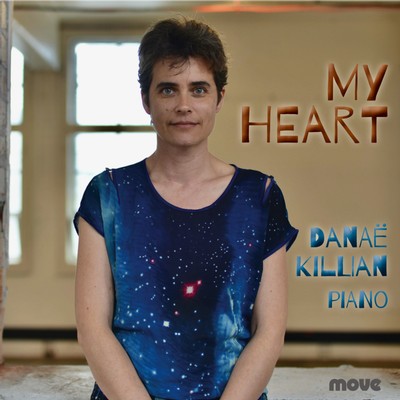
MY HEART

Danae Killian

Move Records MCD 673

To be honest, I’m not on the wave-length of this Move Records CD from Melbourne pianist Danae Killian. Eight separate works provide the performer with plenty of material but seven of these break up the core of this presentation: a three-part construct by Killian called My Prussian Blue Heart. Originally written in 2017, then revised in 2024, this work is scored for pianist, tarot cards and piano – which strikes me as partly tautological in this case as Killian is definitely the piano performer and, I assume, takes on the pianist (speaker?) role, mainly because no other performers are listed on the liner notes/leaflet.

Exactly why the composer singles out that particular colour as a cardiac descriptor has me beat. Apart from its use by artists from the 17th century on, it also has strong medical applications; perhaps that’s a relevant association as the musical work could have some kind of therapeutic value for the composer/performer. Or it may have to do with Killian’s source of inspiration in German/Jewish poet Elsa Lasker-Schuler’s novel Mein Herz of 1912, an effusion of startling self-expression and revelation.

Killian’s first inter-leaver is Schoenberg, represented by his Drei Klavierstucke Op. 11 of 1909. This expressionist monument is followed by Mobius of 2012 by Melbourne writer Howard Dillon. Then, from another Melbourne resident, Christine McCombe‘s Asphyxed from 1991. After the middle movement of Killian’s composition, we hear some more Australiana in film-composer Amelia Barden‘s brief The Seventh Centre from 1992; and we stick with the Victorian region of the continent through senior jazz musician Colin McKellar‘s Birth Music of 2006 or 2008 or 2018, depending on your source.

Next, we make a temporary swerve geographically to Gregers Brinch from Denmark whose four-movement Two Minds suite dates from 2004. Then, just before the 39-second conclusion to My Prussian Blue Heart, back to home-base for Evan J. Lawson who appears through his Sikinnis III of 2015. He is the artistic director of the Forest Collective organization with which Killian is closely associated.

Another body that has proved a haven for several of these contemporary voices is the Melbourne Composers’ League, a body that has been operating for almost 30 years and is in the bread-and-butter business of presenting new music by local composers – although that categorization now stretches to include interstate and international voices, even if the avowed context of its presentations is covered by the term ‘Asian-Pacific’. As far as I can recall, my only experiences with this sector of Melbourne’s musical world has been through recordings, but it had an ardent advocate for many years in my erstwhile colleague-critic on The Age, Dr. Joel Crotty.

The first movement of Killian’s opus is a monologue which focuses on a single character: the pianist. You hear no music, from a piano or otherwise; just a pretty brief display of self-awareness on the narrator’s part. She appears to be suffering from an identity crisis but, to my mind, even if she fuses with the pianist figure, answers are a long way off. The second movement introduces piano sounds produced by striking the strings manually before settling into the orthodox note-production technique. Asa for the text, this has abruptly turned into a dramatic display bordering on sprechstimme but vehemently dramatic at its best, phantasmagoric more often in its imagery.

In fact, this long scena is highly aggressive, the piano’s innards a source of violent percussive attacks that reflect the narrator’s ramblings that present as a kind of image-laden narrative asking a good deal of the listener just to keep track of what’s being delivered. For all that, the admissions and self-observations move all too easily into the banal, both when concerned with mental states as well as physical. On top of this, we are treated to vocalizations of a hectic nature, yells and cries leading nowhere in particular. And the movement ends with a German text that could come from Lasker-Schuler, the whole singing to a final ‘Sterbe ich’ declaration – somewhat unnerving when you consider the previous indications of violent action.

As for the concluding phase of this work, it reverts to unaccompanied monologue, the pianist-subject in a happier place without any singing or piano scrapes – just a narrator reporting her current state of contented emotional stasis. Well, we’ve had a pianist as the focus of the work’s stages, and the middle segment features a piano in all its late 20th century glory. The tarot cards are mentioned but are irrelevant to this CD experience. Killian states that the full work also contains two interludes and a postlude; these interludes are apparently subsumed in the other composers’ music, and I assume the postlude disappears intro the ether.

As for the rest of the CD’s content, Killian’s reading of the Schoenberg piano pieces impresses for its strength of purpose. She is a stickler for observing every dynamic marking and is responsive to the frequent changes of pace across the composer’s free-flowing canvases. Very few details raise question marks, although the laid-back left hand entry at bar 45 of the second Massig seemed a puzzling choice. But the brisk oscillations between placidity and rapid outbursts that make the concluding Bewegt a sterling challenge for any pianist were unusually clear-cut and focused.

Dillon’s score lives up to its title by offering a repetitive cycle of individual notes and mini-chords that weave in and out of themselves in a pattern that seems like a moto perpetuo but allows for rubato moments – and a dead halt about half-way through. After which, Dillon appears to be considering his material in discrete fragments, as though the strip has become obstructed. Indeed, this meditative pattern remains with us for the remaining pages of the work as its world remains in a brooding ambience until the end, as though the performer realizes that the mobius construct leads nowhere.

By contrast, McCombe’s Asphyxed gives us a landscape of (mainly) single notes that creep slowly forward, interrupted at least twice by short, sharp gruppetti of chords and loud exclamation points. For all that, I don’t understand the title’s relevance nor the work’s intentions, even if Killian’s reading shows a willing sensitivity. What The Seventh Centre refers to escapes me also but in it Barden has constructed a soundscape as remote as McCombe’s, if one built on a clearer framework and employing a more obvious harmonic structure while occupying less than half the time-length.

Written around the time of his daughter’s birth, McKellar bases his work on a combination of bell-ringing charts and standard jazz progressions. He also has a penchant for single notes; understandable, given the nature of campanology in practice. Yet, for all the projected relationship between the two sources, Birth Music seems fragmented – possibly because of those single-note passages that are relieved by chords that have enjoyed permutation according to the bell chart being employed. We get idea after idea but it’s hard to find a focus.

Brinch’s first movement has the same title as his work and it cleverly proposes either two personalities or two aspects of the same consciousness. Each gets its individual say before the composer fuses them in concord and discord, although the les flamboyant mind has the last word – or does it? Reflective Intersections is less overt, although it opens with a meandering right-hand line supported by left-hand chords. As the piece moves beyond the half-way mark, the two intermesh and the texture becomes bass-heavy with whatever melody is left subsumed into sometimes gruff, other times brooding textures.

Third in this series, Homage, is something of a funeral march, especially in its later stages despite a florid upper texture. The piece opens with celebratory flourishes but soon settles into more sombre strophes. Of course, much depends on who or what is being paid homage and, being unaware of anything relevant, we are left to appreciate these pages as blanks, abstracts without context. Much of Drought is set at either end of the keyboard, so that initially I thought the low rumbles signified a protesting earth while the tinkles in alt were suggesting distant rain. But then, you wonder if Brinch’s drought is a physical one, or more simply a spiritual/emotional absence. Whichever it is, the writing is powerful and suggestive on its many disparate and (eventually) combined levels.

Last of Killian’s interstices is Lawson’s Sikinnis III, third (obviously) of a series based on a dance form from ancient Greek satyr plays. At the opening, I find this hard to fathom as the work’s progress is extremely slow, the composer celebrating the piano’s sustaining pedal with plenty of room for extended resonances. This composer is also a member of the single-note brigade that populates this CD. But then, the piece’s final pages are heavy with clangorous chords that enjoy a long fade to silence. It’s time for the less-aware among us to have a look at the lighter products of Aeschylus and Euripides to find some sort of footing for Lawson’s vision.

And that’s it. Killian has presented this collation in live concert for nearly a decade now and I suspect the exercise is more impressive in actual performance. I found individual works here very impressive but the whole strikes me as a collage of unfused parts – which you might say is what a collage is. Well, no: the craft comes in the fusion, as old Kurt used to say (and, if he didn’t. he should have). With My Heart, especially the disc’s focal work, I can’t detect more than a none-too-convincing melange.

The answer is: don’t look

A WINTER’S JOURNEY

Musica Viva Australia

Elisabeth Murdoch Hall, Melbourne Recital Centre

Monday February 16, 2026

Allan Clayton

Here we are again with an updated Winterreise. British tenor Allan Clayton is collaborating with pianist Kate Golla on a Musica Viva Australia tour of Schubert’s song-cycle that started in Perth and moves to Brisbane, Sydney, Canberra and Adelaide over the coming fortnight after its two-night stint here. This version has been semi-staged by director Lindy Hume, with a background of Fred Williams’ paintings/drawings screened on a large pair of walls by David Bergman‘s video design, the whole lit by Matthew Marshall.

All right: that takes care of the credits. As for the experience itself, you were left with no little admiration for the singer’s embrace of the required theatrical action and the manner in which he tailored his output to the 24 situations that Schubert’s manic wanderer enjoys/endures. You could find little fault with Golla’s realization of the accompaniments, although that term is something of a diminution of the pianist’s responsibilities in this score.

With the Williams’ art, I’m not really convinced by the stated aim of finding common ground between three geniuses – poet, composer, painter. Not that the background distracted from the cycle’s progress; indeed, Williams’ work presented as a sober complement to some of the songs, even if there was one unexpectedly vehement painting exemplifying the later Romantic musical direction of sturmisch bewegt that I couldn’t trace in the supplied list of the artist’s works employed on this occasion. But while you could accept the Kosciusko depictions from the mid-1970s as mildly credible support for Gute nacht, the later landscape dots of vegetation looked centuries remote from anything in Muller’s poems.

Hume made an excellent start and ending to this enterprise, having Clayton isolated on left-stage, from which he moved into the central raised section holding Golla’s piano and the two walls around her, V-shaped towards the audience, with the Williams images imposed on them. This was the position he eventually re-occupied when left alone (so to speak) with the Leiermann at this work’s bitter end. In between, he raced around the raised platform, coming to rest and curling up about the Auf dem Flusse point, then finding another resting place somewhere near Der Wegweiser.

Fortunately, Clayton steered clear of too much pantomime, although he did use his long-coat, I seem to recall, to mimic Die Krahe. But you were spared the full mimesis for lieder that could – and have – been physically illustrated by the singer. I still have memories, fortunately fading, of Simon Keenlyside presenting a choreographed reading of this cycle in the State Theatre at the Melbourne International Arts Festival of 2004; on that occasion, too many textual cues were seized upon to ram the verbal messages down our communal throat.

My reaction was not shared by a gaggle of fellow critics who found inexplicable merit in this exhibition and bestowed that Winterreise with a critics’ award on odd grounds that had nothing to do with Schubert, and little connection to Muller although one of the plaudits came from an accompanying husband who found the singer’s German to be ‘very good’. Recalling this whole situation still leaves me thinking: Was it for this the clay grew tall?

Another reading of this cycle that proved more pleasing, although generating no little confusion in some of the songs, came from soprano Louisa Hunter-Bradley and pianist Brian Chapman who recorded this work on the Move label in 2006. Having the work’s central character change gender requires a good deal of interpretative latitude on the listener’s part but at least the score was given straight, without deviations from a normal recital format . . . insofar as you can have such a thing on CD.

Isn’t that enough, though? Why is it necessary to dress up a work which was intended to communicate directly with the listener, without any distractions? One of the reasons given for providing supporting illustrative matter is that audiences don’t understand the words; not everyone is familiar with the texts, let alone with German. Yes, but surely that deficiency can be covered by surtitles? They were employed on this night; even if we didn’t get a full translation of each line, sufficient was provided to communicate the songs’ emotional gist.

What you can do is, of course, close your eyes, as I did for a good deal of the time. Many of us have an admiration for Williams’ work, egged on by the 1980 hagiography produced by Patrick McCaughey which brought the artist into the mainstream, sponsored by the country’s most well-known art curator/academic/historian. But even this measure had its problems as, if you looked at the stage between songs, some striking scenes were on show, some of them with little input as to what we’d just heard.

In the end, Clayton and Golla enjoyed a rapturous reception which they deserved despite the visual salad behind them. The pianist demonstrated a fine responsiveness to Schubert’s piano writing, my only query a soft right-hand output during Mut, e.g. the piano’s muffled commentary in bars 9-10 coming straight after Clayton’s clear account of the melodic contour. But then you encountered Golla’s intensely moving account of the following Die Nebensonnen, with a lucid reading of that song’s bass-heavy accompaniment.

And you could find similar examples of subtlety across the work’s spread, Clayton’s dynamic palette a continuing source of delight in lesser-known pieces like Letzte Hoffnung as well as the all-too-familiar extracts like Der Lindenbaum. In fact, the hallmark of this interpretation came through its attention to shadings from both musicians, Golla establishing a scene with admirable directness and following Clayton’s line with excellent fidelity. Next time, we could do without the visual input, OK?

A change of scene

After five-and-a-half years on the Gold Coast, we have decided to move back to Melbourne. Unlike our arrival in Queensland, we have no definite address to which we’re headed back ‘home’.

So there will be a delay of some weeks before this site publishes new material.

Masterwork with Oz seasoning

A WINTER’S JOURNEY

Allan Clayton & Kate Golla

Concert Hall, Queensland Performing Arts Centre

Thursday July 14, 2022

Allan Clatyton

This latest Musica Viva touring program could have been more than unappealing. Well, it proved to be so for many patrons who stayed away in droves. Or did they? Hard to tell in Brisbane’s Concert Hall, which is much more capacious than the organization’s usual haunt in the Griffith University Conservatorium of Music. Did somebody in administration think that the northern capital’s music-lovers would come out in numbers to enjoy Schubert’s gloomy song-cycle? Was there a book running on the popular appeal of a young English tenor? Or did some off-site official bank on public curiosity about a wedding between German Romanticism and the paintings of Fred Williams?

As far as I can tell, Brisbane is the only city that has been upgraded in potential capacity this way; every other Winterreise is being performed in the usual spaces. Moving from a hall with a maximum capacity of 750 to one that holds 1600 is one of the more striking instances I know of great expectations. I didn’t attempt to count on Thursday evening – bad-mannered and depressing at the same time – but the place would have been about a third full. I couldn’t see any patrons in the upper reaches of the Concert Hall and in the stalls we were well spread out; even then, with not much occupation at the fringes.

Possibly it’s one thing to mount Winterreise in Melbourne where self-consciousness is unremarkable; or in Sydney, a town where awareness of self is strangely attractive in a city so inured to promotion of personality from the womb on; or in Adelaide and Perth in whose cultural reaches individual self-love is abnegated in favour of Church and State respectively. Brisbane, as they say, is different: a smaller pool for clientele, a chamber music audience that is dutiful but elderly, a set of patrons who take more pleasure in short bursts than in sustained essays (we were warned in a pre-recital voice-over that the 24 songs should not be interrupted by applause, just in case any of us went ape over Der Lindenbaum or Fruhlingstraum).

Whatever the local peculiarities are, we heard a fine performance from Clayton and his almost-faultless accompanist Golla. While the tenor prowled the stage and Golla sat and played, stately at the pianoforte, paintings by Fred Williams were projected on screens behind the performers, presumably to give an Australian wanderer’s perspective on trolling through the countryside, albeit reflecting a happier, more positive personality than that of Muller’s rejected lover, as well as a series of landscapes some centuries and 10,000 miles away from the imaginary originals. I think most of us would be receptive of Williams’ visions of this country, even without Patrick McCaughey telling us what and how to think about them. But marrying them with the cycle’s aesthetic content proved challenging, not least because Muller’s poems are often very physically suggestive, reliant on solid objects in the world as well as on mood and psychological deviation.

Lindy Hume directed the 70-minute-long spectacle; not able to do much with Golla, she put Clayton to work by using the stage’s width and sending him roaming around the backdrop screens. But she didn’t descend to nonsensical mimicry as was carried out by Simon Keenlyside when he participated in a staged Winterreise for the 2004 Melbourne International Arts Festival where one of the low points was having the baritone pose as a lime tree. Mind you, at one point Clayton came close, settling in for a sleep under the piano (possibly during Das Wirtshaus, although that’s unlikely as the poet finds no rest there; more likely it was Rast). But the emphasis was mainly on the tenor’s vocal powers of suggestion, rather than physical flourishes. Still, one in particular impressed when Clayton simulated quickly pulling a curtain across the backdrop as a placid Williams painting changed into a wild vertical expressionist panel-triptych, perhaps for Der sturmische Morgen.

Sorry for the overuse of ‘probably’, ‘possibly’, etc., but my memory is becoming unreliable as the decades creep past. In normal conditions, you can see enough in a venue to scratch out some notes for later reference; when the lights go out for a visual presentation like this one, you’ve got little-to-no hope of recording anything. Nor are you helped when the relevant program-booklet pages are black with white print – which is illegible anyway under these conditions. So you’re left to fall back on memory alone which, even at one day’s distance, is chancy. Nonetheless, video designer David Bergman kept his background projection movements quiet in general, paintings melding into each other with considerable skill; to my shame, I recognized only three of them and one was the early Balwyn landscape of 1946, although many of the other 18 (from across the following 30 years) were familiar in style, if not content.

So I’ve got few comments on individual songs. Clayton and Golla made a firm opening with a steady Gute Nacht that took a few tempo liberties, maintaining its pulse and balancing between a trudge and a march. At this early stage, you could appreciate the tenor’s clean production and the pianist’s unobtrusive determination that didn’t labour the details. Even more impressive, Die Post proved to be memorable for Clayton’s communication of self-exasperation; something I’ve not seen before as most singers head for jaunty exhilaration, even though the stanza-concluding Mein Herz?/! is best read as impatience at approaching and inevitable disappointment – as in this Clayton vision.

During the familiar Der Lindenbaum, we witnessed some instances of this singer’s unexpected moves, including an almost-not-there soft volume at Hier findest du deine Ruh’!, as well as an avoidance of bluster in the cold wind stanza’s modulation. Across the 24 lieder, Clayton showed an impressive control in the larger-framed works like the urgent Ruckblick, the subterranean menace that permeates Im Dorfe, and the hope-destructive repeated notes that eventually consume all in Der Wegweiser.

I get impatient with writers who manage to find some sort of uplift in Der Leiermann, the cycle’s concluding song. No matter which way you turn, neither poet nor composer offers redemption or a light breaking through: it’s despair contemplating itself in the bleakest of landscapes. And that’s exactly what I took from Clayton and Golla’s reading where their voice/piano alternation made a powerful conclusion to this atmospherically consistent interpretation. It obviously impressed this audience which greeted the fade-to-black with an initial tentativeness that swelled rapidly into infectious enthusiasm.

Finally, the conceptual elephant: what, if anything, do the paintings contribute? Eye candy is the kindest I can think of: they don’t challenge much, and even those that branch away from the trademark straight tree-trunks like the two Sherbrooke forest works from 1961 or dabs of scrub in the You Yangs landscape still border on the figurative, like one of the two Mount Kosciusko studies. Whatever conceptualizing lay behind super-imposing these backdrops, there was no intention of illustrating or visually complementing the lieder; rather, the intention appears to have been to present us with a familiar environment in which to site the cycle. For me, this didn’t work, music and paintings occupying utterly different strata and never the twain did meet – well, very rarely.

An additional chauvinism-reinforcing observance came in the form of 24 poems (of sorts) by Judith Nangala Crispin, Musica Viva Australia’s Artist in Residence, printed in the program booklet. These stanzas depict Williams wandering around the Kosciuszko (take your pick) landscape pursuing a white emu, presumably to paint rather than to eat. You assume that the questing, determined artist stands in for Muller’s pseudo-Werther, while the animal represents the jilting lover. Imagery and landscape details are piled on thick to give us a new Winterreise, one that has nothing in common with the original. But I assume that was the whole point: to escape the European cliche/trope and depict your typical Australian artist, ploughing through the mulga in search of a bunyip substitute. It’s all an interesting adjunct but such a juxtaposition across time and space stretches my limited imagination to breaking point.

You could, easily enough, shut your eyes and just listen to the Clayton/Golla Experience – which I did for a time, starting at Der greise Kopf. And thereby relished – undistracted – the duo’s stellar combination of restraint and vehemence. For my part, the score itself works against any ethnic transubstantiations or contemporary parallel-drawing. It’s a puzzlement: go along and see/hear for yourself.

Large written small

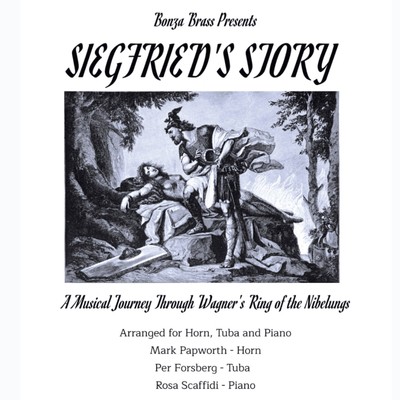
SIEGFRIED’S STORY

Mark Papworth, Per Forsberg, Rosa Scaffidi

Move Records MCD 597

Does anyone in the current generation – X, Y, Z squared – remember Leopold Stokowski? Not the talk-down-to-the-audience posturing figure in DIsney’s first Fantasia of 1940, but the important force in American music-making (and music) who suffered vilification from less-endowed colleagues and underlings, but who stayed the course and remained active almost until his death aged 95 in 1977. He comes irresistibly to mind when considering this idiosyncratic CD which reduces some of Wagner’s most powerful outpourings in the Ring cycle to a mixed trio’s compass: horn, tuba and piano. In doing so, the content covers a bit more ground than just that trodden by Siegfried, who only appears in the last two of the four operas. But, as everyone will tell you, the big tetralogy is nothing less than a monster family show, albeit one starting in primordial ooze and ending in an apocalypse.

Stokowski put his own mark on well-known chunks like the Liebstod, Magic Fire Music and Ride of the Valkyries. In fact, it was some years before I realized that this last-named had singing interpolated. He also put together what he labelled syntheses. Quite a few of both these formats introduced many of my peers and myself to Wagner, mainly because our chances of seeing any parts of the Ring cycle were next to none in this country. Lohengrin or Tannhauser, perhaps; Tristan, less likely; Mastersingers, on the outer rim of feasibility; Parsifal, an impossible dream. These orchestrations were, for their time, very impressive-sounding, especially the three extracts from Tristan: the Prelude, Liebesnacht and Liebstod. Stokowski also gave us more than a nodding acquaintance with the last act of Parsifal, including the Good Friday Spell, as it was known in less religiously correct times.

This Scaffidi/Papworth/Forsberg trio seem to have been driven to their enterprise by little more than Wagner love. Well, that’s certainly true of Papworth who constructed all twelve arrangements and persuaded his colleagues to enter the lists with him. Great to have a musician follow his ambitious path, following the Stokowski trail but scaling down rather than revelling in sumptuousness. Further, it’s admirable to have a player behind the exercise, rather than a well-meaning amateur who responds to the Ring for questionable reasons. For one thing, if you remove most of the tracks on this CD from the original corpus, you are left with hours of tedium in theatrical or dramatic terms. The same can’t be said of the music where many of us look for salvation, but Wotan’s (and others’) lengthy recapitulations can daze many a music-lover. regardless of any singer’s quality.

So, here we are at the opening to Das Rheingold, Wagner’s exercise in E flat Major if mainly its tonic triad. Both wind players have little to do here but sustain the tonic drone while also sounding out the endless chain of E flats, Gs and B flats that are the lot of the brass while Scaffidi copes with the semiquaver arpeggios that turn up in the bass (eventually) and then the woodwind, roaming around both dominant and tonic triads. The group plays a straight version of this famous opening before the first of he composer’s Kardashian precursors, Woglinde, opens her mouth and introduces us to Wagner’s mellifluous vocal line and onomatopoeiac rhyme patterns. No problems here, and the performance is fluid enough.

A more difficult excerpt to carry off follows. After the ‘Get up, you lazy sod’ colloquy between Fricka and Wotan, Fasolt and Fafner, having built Valhalla, show up for their payment. The extract starts at the giants’ entry – Sanft schloss Schlaf dein Aug’ – and their trio with Wotan is followed right up to the D Major cadence just before Donner threatens the giants with his hammer. Forsberg carries the vocal line brunt, Papworth taking over when the movement becomes more chromatic, while the piano is prominent in the galumphing leitmotif that brings to ear the brothers’ heftiness. The players do their best to cover all harmonic bases and, for the most part, the extract doesn’t sound threadbare, although I must confess to losing the vocal line when Freia starts carrying on about being carried off.

This set of three extracts ends with the Entrance of the Gods into Valhalla and it’s an impossible task to give even an inkling of the grandiose effect of these pages in a small-scale version. The trio begins at the spot where Donner tells everyone to come on up at Weise der Brucke den Weg!, omits the brooding of Wotan, his uneasy triumphalism countered with the distant Rhinemaidens bemoaning their loss, and takes up when the singing stops and the stately three-in-a-bar march takes over as the gods move into their new quarters. No way on earth can Scaffidi hope to cope with the divisi string work that goes on for page after page and the brass can only hint at the colossal grandeur of the massive brass choir. Still, the extract does show you how brilliant Wagner could be at fleshing out his bare-bones material through a mighty orchestral onslaught.

We are given four excerpts from Die Walkure: two from Act 1 and the concluding act’s Ride of the Valkyrie and Magic Fire Music, with nothing from the much-maligned middle act. The opera’s Prelude is handled well enough, lasting just up until curtain up and a bar before Siegmund comes into the hut. Both brass take on the minor scale motif while the piano keeps up a sustained chord pattern which doesn’t attempt to replicate the sextuplets in violins and violas; even so, the brass cannot hope to replicate the rushed quintuplets that feature so often on the first crotchet in the cellos’ and basses’ pattern work. Still, the dual impressions of storm and urgency come across efficiently enough and with very few errors, considering the pell-mell music and the considerable troubles with giving string music to low brass.

Towards the end of the first act comes Siegmund’s Wintersturme wichend dem Wonnemond aria. sticking out like a sore thumb in the middle of this menacing act. Our trio begins 8 bars before the singer and cuts out on the same bar as the aria’s final Lenz! Papworth takes the tune, Scaffidi gives us the mobile arpeggio-rich support, but Forsberg roves across the score with remarkable liberty, here following a bass clarinet part, there a horn, sometimes a violin or cello scrap. It all makes for a genial experience, in large part due to the horn’s smooth agility, especially when the aria moves out of its B flat comfort zone.

The hackneyed Ride of the Valkyries is played straight, without gimmicks, and proves to be a real workout for Scaffidi who has to handle all the athletic work that falls to strings and woodwind. Both brass players tend to reinforce each other, playing at the octave as the piece reaches its highpoint. It’s a bit heavy-handed, as Rides go, and you certainly miss the blazing energy when the brass go into canon with themselves. Scaffidi brings things to a halt at the spot just before Ortlinde sets the girls off on their dead hero body-count, suggestive of AFLW post-match locker room banter – enjoy it while you can, girls: Coach Wotan’s on his way. Then we hear part of Wotan’s Farewell, starting four bars before he summons Loge to install the fire hurdle, and moving to the end of the opera with some omissions to the god’s moving ruminations before he leaves his daughter to her doom. Again, the piano had all the flickering labour while the brass hefted out the pompous descending scales and that unforgettably moving Innocent Sleep motif.

I started to lose the plot with the first extract from Act 2 of Siegfried. I followed the real Forest Murmurs – obvious in the score, beginning at the Wachsendes Waldweben notification and the key change to E Major – but the preceding introduction seemed a Stokowski-style mashing of melodies and motifs from the preceding scene. After a while, of course, Siegfried starts singing and the brass outlined his part, but the process was fragmented and the extract ended in mid-flight, the piano giving us the clarinet solo that accompanies the hero’s picking up his horn prior to blasting at Fafner. This fragment of the opera came off very well, handled with an agreable fluidity, even if most of the effectiveness came from Scaffidi’s non-glutinous string substitution. Papworth gave an excellent reading of Siegfried’s Horn Call, one of Wagner’s rare solo passages – completely exposed, I mean, not just rising above the ruck. You’d go some way to find an equal to this player’s accelerando: immer schnell und schmetternder indeed.

The final extract from Siegfried was the Prelude and first scene of Act 3 where Wotan/Wanderer is loitering at the base of Brunnhilde’s rock. This is pretty dour Wagner with little to recommend it except as an informative harbinger of impending doom and a marvellous contrast with the splendid final duet to the opera. Or perhaps I just miss the orchestral ferment here more than in several other excerpts.

And finally, the trio reaches Gotterdammerung and two solid pieces of work, the longest on the CD: Siegfried’s Rhine Journey and his Funeral March. Everybody puts themselves to employment in the musical picture that shows Siegfried leaving the rock, Brunnhilde’s last glimpses of him, and the jaunty journey that our hero has on his luxury-less Scenic tour before the music sinks to depression. The players follow the score right through till the ambiguous chord that signifies the curtain going up on the Gibichung Hall. Much of this is horn-heavy in the original but the keyboard provides much of the movement’s thrust, doubling the brass’s handling of the main melody line for substantial lengths of time. Here, as in previous tracks, details have been omitted; admittedly, most of these are rapid and hard to incorporate into an arrangement, but it might have been worth leaving the brass to jockey with the melodic Hauptstimmen and given Scaffadi the opportunity to fill in the supporting gaps.

And we come at last to the opera’s penultimate dramatic highpoint. Auden once said, ‘When my time is up, I’ll want Siegfried’s Funeral Music and not a dry eye in the house.’ Wishes are all very well, but the poet had a quieter send-off at the churchyard of Kirchstetten in 1973. It’s hard to think of anything to rival Wagner’s pages for shattering, sombre power and these musicians give a convincing musical depiction of this imposing scene, picking up in the bar where Siegfried dies and coming to a neat C Major conclusion (the original’s C sharp down to C) at the point where Gutrune comes on stage to reap the rewards of her household’s duplicity. This is a very hard ask without a conductor and you can hear some slightly discrepant entries, moments when the ensemble is just a tad imperfect. But the interpretation has a reduced grandeur and punch at those stirring moments of C and G Major repeated chords that, even on a small scale as here, take you into the tragedy of this saga’s final moments.

In the end, this CD is something of a curiosity, reducing the irreducible and clarifying where the original intent was often a fabric of rich agglomeration. What you must do is respect the exercise as a labour of love, fed by Papworth’s familiarity with and attachment to Wagner’s music. No, of course it’s no substitute for the original bleeding chunks that Stokowski carved out for us. It’s more like a digest of a digest: improbably diminished canvases, yet bearing enough distinctive lineaments to satisfy the sympathizer, if not the Bayreuth purist.

Penitentials for all

MUSIC FOR HOLY WEEK

Canticum Chamber Choir

Sacred Heart Catholic Church, Rosalie

Friday April 2, 2021

Canticum Chamber Choir

One of the few opportunities to hear some traditional Good Friday music arose from this event from one of Brisbane’s leading choral bodies. Given the state premier’s penchant for lockdowns, the planned initial presentation on March 31 had to be postponed for a week; luckily, conductor/director Emily Cox and her forces were able to get themselves together for this performance on the heels of the snap-lockdown’s lifting. The experience thereby gained an added frisson, as though events of this kind were lacunae in the normal life of this city – like early Christians getting a partial reprieve when a theologically indifferent Caesar came to power.

Emerging from our live-performance catacombs, Canticum gave us a mixed program, its material widespread in ambit but nearly all of it appropriate for the dour day itself. That familiar setting of Psalm 51 from the 1630s by Allegri with its exposed high Cs for solo soprano was written for Tenebrae services in Holy Week; O vos omnes is a responsory for Holy Saturday, here in the setting by Pablo Casals; presenting a Good Friday scene, although not written for that day’s observances, the Stabat mater dolorosa sequence has attracted many composers, including Domenico Scarlatti whose treatment I was hearing for the first time live.

O nata lux has its foundation in the Feast of the Transfiguration and, if not there, then Christmas, but I was happy to hear Canticum put their voices to another Lauridsen composition. Lotti’s 8-part Crucifixus deals with part of the Creed, but the part most pertinent to this day. And the Xhosa song Indodana is centred around the Son’s self-sacrifice which is the fundamental matter of Good Friday.

It’s a brave choir that opens its account with the Allegri score. For one thing, your force is split into three: the Gregorian set, the small group in the distance, and the main body. On the plus side, it’s repetitive and the change in timbre gives a necessary variety. Still, I must admit to a certain relief when the Benigne fac, Domine verse comes around and we’re on the home stretch.

Cox sent three male singers to stand under the church’s dome, from which they articulated the mono-linear chant, a line that got progressively slower as the work proceeded. But the trio stayed in tune, as did the main body Choir I who showed themselves well-prepared and expressively capable. With the four-line Choir II, matters got off to an unfortunate start, the soprano seemingly left high and dry in the first Amplius lava me intercession, the tenor and bass vanishing from view around the time of the top note on munda. Luckily, the group showed increased security in their next excursion and the negotiation of mihi proved much more secure.

As a whole, this performance was reverent, lacking in dynamic drama, although that’s understandable in a psalm that, more than most, rambles across a wide range of guilt. What it lacked more than anything, though, was a sense of urgency; these sinners were in no placatory hurry but admitted their iniquities at a measured pace. More trepidation would have helped the setting to carry more weight than this reading’s pleasure in its comfortable resonance.

As intra-choral interludes, cellist Louise King offered us two solo improvisations with a loop supporting her live performance. The first, Lament, opened with a long pizzicato passage before a solid bowed melody emerged. The language was diatonic, highly suggestive of Jewish music with what sounded like reminiscences of Bruch’s Kol Nidre setting along with a handful of Hasidic sobs. Nothing particularly startling here but an intriguing mix of sonorities and a richly expressive lyrical fluency.

The Casals motet began in the same key as the conclusion to King’s Lament – a nice piece of continuity. This O vos omnes is popular in Holy Week ceremonies, not least for its adoption by British choirs which find a reflection of their conservatism in its simple, concordant pages that reveal the cellist/composer’s happiness in a harmonic landscape that has barely progressed beyond Schumann but sets the text with impressive ardour for all that, particularly at the arresting climax on attendite. This showed a clarity of texture from the Canticums, especially across the sections where Casals almost divides his forces into 8 parts; the interpretation gave us a good taste of a choral body momentarily not under much pressure.

As with the Allegri, this evening’s performance of Scarlatti’s solid Stabat mater impressed more for its steady workmanship than for any suggestions of transcendence. For all that, the Canticums (or should that be Cantica?) enjoyed a continuo support throughout from Phillip Gearing’s chamber organ with King lending a subtle, welcome hand. In the first movement, the delivery proved reliable, apart from one of the soprano lines being happier at her work than the other in the brief canon at bars 5-6. The succeeding Cuius animam followed the same emotional bandwidth, although here you find some more intriguing harmonic structures as in the treatment of Et dolentem. Cox gave her forces some solo work at various stages across he score; fine as a change in surface tension although the ones employed in the centre of this movement tended to lag behind the pulse.

With Quis non posset, Scarlatti gives his interpreters a bit more chromatic creeping and a more lively pace at the Pro peccatis text. Even so, I think these pages could have been negotiated at a brisker pace because the sopranos and first tenors struggled with the downward motion between bars 69 to 72. A much more comfortable time they had of it in the balmy 2nds of Eia Mater, King’s surging colour prominent here for the first time. Also, the mix of soloists proved texturally intriguing and individual, while the movement came to a moving efflorescence in the closing bars with a finely judged tierce de Picardie. In this last respect, ditto for the Sancta Maria verses, moving from major to minor throughout before a concluding raised B flat. At this point, the soloists’ contribution, accurate in intonation though it was, lacked plosive bite, consonants disappearing with that freedom shown by Sutherland in her prime.

I’m fascinated by the setting styles of various writers in the Fac me tecum interlude. Scarlatti doesn’t disappoint with his major-key determination while the poet keeps giving the Mother of God more orders. The singers made a bold start on these pages but I sensed a slackening of determination at about bars 18 and 24 where the top sopranos have a short break. Some more surprises emerged in the Juxta crucem sequence. Every so often in this score, a note emerges that doesn’t exactly jar but rather points in a new harmonic direction, the composer here moving between D and D flat; not making a Gesualdo chromatic strike but sapping away at your expectations. Yet again, in these pages the soloists showed a tendency to pull against the conductor’s admittedly fluent metre, and the only unhealthy contribution heard across this score came in the soprano soloist’s last note.

A florid tenor/soprano solo alternation opened the Inflammatus, well carried off even if it might have gained from more exuberance and less self-consciousness. When they entered, the main body also played by the book and tamped down the potential for vigour, possible because of Scarlatti’s sudden plethora of minims. To their credit, the soloists’ second exposure proved more persuasive, almost exhilarating. I expect (not having counted the bars) that the Fac ut animae segment is the longest of this score and hard work for its interpreters as Scarlatti channels his inner Handel. Sadly, the melodic material stays unremarkable at a point where we need novelty but instead get blocks of vocal fabric that offer little variety. Full marks to the singers for soldiering through it.

The 3/8 Amen (even though we’d enjoyed an Amen during the previous movement) restored some vitality, even if the basses failed to make much of an impact at their first bar 11 entry. But the performance ended in fine style thanks to an excellent integration of solo lines into the full corps, completing the task with some welcome panache.

Canticum has recorded some Lauridsen and has clear sympathy with the American master’s style, including an ease with those added 2nds and 7ths. The singers treated O nata lux with devotion, putting their vocal backs (?!) into the task and carrying off a fine realization of the brief work’s recapitulation/coda at bar 35. To Cox’s credit, she kept her charges at a steady pace, without wallowing in the wash of choral colours and the occasional passage of very ripe chordal texture.

King’s Dawn Light solo moved to the major and impressed for its felicitous character, enriched by some excellent integration of live and taped material. Were there some Sculthorpe-type bird imitations in the mix, or was that a serendipitous intrusion from outside the building? Whatever the case, this was a welcome instance of affirmative action, giving vent even more to the player’s appealing and resonant production abilities.

All of Canticum moved to stand under the Sacred Heart dome for Lotti’s Crucifixus. It’s unusual to clump your lines together like this in a work for 8 parts but the results were excellent, the mesh a glowing texture of impressive movement at sub Pontio Pilato.

If you’ve seen the University of Pretoria Camerata sing Indodana under arranger Michael Barrett (available on YouTube), you’ve heard this simple construct at its best. Which is no reason for not essaying such an atmospheric piece yourself. I liked the Canticum version, although it was necessarily more elegant than anticipated. Still, the linear complex proved faultless with some well-balanced sustained chords from tenors and basses, the latter an explosive force at the work’s Jehova! climax across bars 46-48. An uplifting conclusion to this event that, for me at least, put the day into its proper perspective.

Uncomplicated but odd

ENOCH ARDEN

Brisbane Music Festival & Victorian Theatre Company

Bowen Studio, Bowen Hills

Sunday March 28, 2021

Matthew Connell

Richard Strauss’s setting of the well-known Tennyson poem is an uncomfortable fit for classification. The composer was quite sparing in his score, framing the work – sort of – but writing only a few extended passages for the piano alone. At the conclusion, you realize that attention has focused on the speaker/reciter throughout, even when the work moves into a duo format. So the star of this night was actor Matthew Connell, given the task of reading the Poet Laureate’s somewhat Victorian (to state the bleeding obvious) effusion on the nature of self-sacrifice ,a virtue that does no favours for the character who exercises it. By contrast, pianist Alex Raineri, the Brisbane Musical Festival’s director and factotum, had moments of activity but huge hiatuses as well. As for the Melbourne visual contribution/complement, that consisted of atmospheric slides of landscapes and clips of the sea in motion; none of this interfered with the performance and was not original enough to distract you.

Strauss already had a large amount of material under his 32/3-year-old belt by the time that he composed Enoch Arden: two symphonies, the Burleske, Don Juan, Till Eulenspiegel, Macbeth, Aus Italien, Death and Transfiguration, Also sprach Zarathustra, Don Quixote on the near horizon, and a wealth of lieder and chamber music. In this company, the duo melodrama looks and sounds a slight product: 24 pages of piano score that feature several leitmotifs, left hand G minor scales (the sea) being the most memorable. One of the most sustained and active segments for piano involves Annie’s dream of self-justification, the determination to accept Enoch’s death and marry long-suffering Philip. That has its second part counterpart in Enoch’s visit to the house of his one-time wife and best friend, an experience that prostrates him.

As far as I could hear, Strauss’s piano part presented Raineri with few challenges. For every surging billow suggestion, the score presented simple progressions, sustained chords, repeated patterns if the speaker needed time to catch up. As opposed to other works like the Sinfonia domestica or An Alpine Symphony, the composer kept his word- or scene-painting simple, eschewing opportunities to lay colour on thickly, as in the lush descriptions of Arden’s island. For all the freedom allowed, Raineri played correctly and precisely, keeping control of the arpeggiated chords and matching his speaker’s delivery with a responsive dynamic range.

As for Connell, he is a young artist and so was able to avoid the tone of sententiousness in certain moralizing passages, while entering completely into the histrionics embedded in the text during the early debate between Annie and Enoch, the over-ripe marriage declaration that ends Part 1, and the returned Arden’s despair. Not as important as his insightful delivery but most surprising as a matter of mechanics was Connell’s fidelity to the text which most reciters arrange to have cut substantially; I could find only a few places where some lines had been left out, For instance, in the description of Philip’s careful wooing, some lines disappeared after ‘By this the lazy gossips of the port’; and, further on, some more strophes disappeared during Enoch’s night-time walk to Annie’s old house (near the parenthetic ‘A bill of sale gleam’d thro’ the drizzle’).

In their combined passages, both speaker and pianist were able to keep pretty much in proper relation to each other. Were they at work in the same space? Or was Connell operating in Melbourne while Raineri performed from his own Bowen Street lair? Whatever the case, the partnership between text and music was noticeably out of synch at the end of that moving scene where Philip sees he has lost his chance at happiness, ‘and rose and past Bearing a lifelong hunger in his heart.’ But that was really the only severely discrepant point. Another unexpected twist came after Philip’s solicitous ‘Tired, Annie?’ when more of Tennyson’s lines than sit in the score were superimposed on this segment’s concluding 13 bars.

These minor points did little to disrupt the reading’s energy which persevered up to the final strangely prosaic line. Both artists seized those opportunities for emotional zeal that at some stages comes close to bathos and managed to display the work’s probity of character as its three protagonists find satisfaction and/or redemption after suffering. I doubt if many more performances of Enoch Arden will come my way. There was an old LP recording that used to be available in the Melbourne Conservatorium library, which is how I first came across it. And Ensemble Liaison presented an odd version of it almost seven years ago to the day in the Melbourne Recital Centre, with extra parts added in from the original score for clarinet and cello.

And the form itself is a cover-term for such a variety of compositions; a case has been made that opera is really melodrama. But Strauss’s effort comes from an era when the melodrama was a more circumscribed object, certainly more so in terms of subject matter which tended to the moralistic. Apart from Berlioz’s extravagant Lelio – which he calls a melologue – I don’t know any other melodramas apart from this one. That is, of course, to ignore the greatest melodrama of them all – Schoenberg’s Pierrot lunaire – which stands alone, unassailable and inimitable, thank God. But both the VTC and BMF can be satisfied with their interpretation of this Strauss/Tennyson composite, even if I’m not really sure that the visual stimulation added much to the experience.

Power from four likely lads

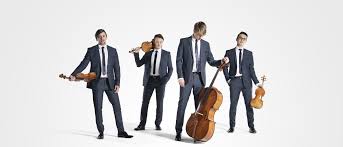
AN EVENING WITH ORAVA QUARTET

Melbourne Digital Concert Hall

Townsville Civic Theatre

Saturday October 17, 2020


Orava Quartet

Using the resources of the Australian Festival of Chamber Music which is being celebrated, as usual, in Townsville, Adele Schonhardt and Chris Howlett inserted this popular Queensland ensemble into their strong Melbourne Digital Concert Hall series, yet again showing that lockdown means nothing to administrators with a will. Mind you, the program was a brief one, with only two scheduled works: Haydn’s Sunrise Op. 76 No. 4, and Erwin Schulhoff’s Quartet No. 1 of 1924. Lucky I hung around at the end because the group came back to play a filler in the third movement, Tres lent, of the Ravel String Quartet.

It turned into a bit of a lop-sided hour with the Schulhoff score gaining most from the Oravas’ attentions. As expected, the young men made much of the vehemence to be found in the odd-numbered movements, but they were able to present an attractively dawdling version of the problematic second movement Allegretto and surprised with a non-indulgent treatment of the final affecting Andante – not flawless but assuredly insightful, living up to the composer’s emotional addresses (and distresses, for that matter).

The quartet’s score begins with a forte sempre dynamic direction across the board; the Oravas were quite happy to intensify the one term and obey the other. You could not want for any enthusiasm here in a Presto that owes much to Bartok and a little less to Stravinsky, and the pace was pretty inflexible up to two bars after Number 11 in the Philharmonia/Universal Edition score when the pizzicati, au talon and arco melange halts and the four lines come together in a four-octave-wide unison stringendo before a ferocious reversion to taws.

It sounds like an onslaught and in some ways it was, but the players found room for a bit of tempo flexibility along with the pressing motor-rhythms, so much so that the effect was far from freneticism for its own sake. The ensemble was crisp and exact as the players set out the ordered clash between modal and dissonant writing that started in D and ended in C. The result was pacy and entertaining to hear as the machismo level in the Townsville theatre took an upward turn.

Violist Thomas Chawner dominated the following Allegretto, his partners giving him an unobstructed field for his Number 1 solo. And he did not disappoint, generating a malleable and accurate line that exemplified the malincolia grotesca that Schulhoff required. Not to be outdone, cellist Karol Kowalik took up the reins after the the Tempo I marking: a 17-bar lyric of remarkable variety. All players made the sudden sul ponticello Nachtmusik a startling motion-packed melange before Chawner returned for a brief, acerbic cadenza leading to the last lingering and opening-recollecting violin solo; the texture quietly restless until the fade to darkness with a final squiggle from the top line.

It’s an unusual set of pages, organized but whimsical, and packed with effects that, for the most part, don’t get in the way. What I carried away was an awareness of the executants’ respect for every note and its placement, especially in the passagework of communal demi-semiquavers in pianissimo parallel motion. A turn back to the muscular broke in with the Allegro giocoso, a highpoint emerging at Number 2 with some gripping duets in fourths and a burst of unison work – the kind of fierce action that suits this group to a T. Nevertheless, five bars after Number 4 where the dynamic of the potentially Slovak melody is blazoned out, the composer’s forte enjoyed an upgrade to fortissimo. No wonder: this jaunty, affirmative and tautly written genre of composition presents an irresistible temptation to overload on testosterone.

In late Mahler mode, Schulhoff reserves his slow movement for the quartet’s finale: an Andante molto sostenuto of grave introspection, doubly telling after the hefty folksiness of its precedent. The cello has all the running to begin with, the bar-3 high A sharp not enjoying the most secure of treatments. But the landscape of dejection enjoyed some expertly accomplished interventions, like the viola and cello harmonics punctuations following Daniel Kowalik’s brief cadenza straight after Number 2, even if these sounded over-emphatic under the first violin’s sweet, atonal solo line.

The players completed their task with a moving account of the death-watch beetle mutterings in the final segment after Number 4, although the strictissimo sempre in tempo of the preceding violin two-bar cadenza proved to be something of a moveable feast. But the group made telling work of the quartet’s final, twitching bars in which several commentators have found intimations of Schulhoff’s concentration camp death 18 years later; stretching their levels of prescience, I think, since the writer’s state of mind at the time of this composition was more likely shadowed by his in-the-field experiences of World War I. Whatever your opinion, this haunting passage concluded an interpretation that successfully balanced brio and placidity, often on consecutive pages.

Opening their debut MDCH appearance, the Oravas ran through their chosen Haydn with its inane title. First violin Daniel Kowalik surprised with his rubato approach to the first aspiring theme, and you were unable to pick out a steady pulse until the semiquavers kicked off in bar 22. Still, the ensemble showed its teeth at places like bar 54 with a few bars of upper-level orderly scurrying. And, to their credit, the group stayed consistent in their schizoid interpretation, changing to ambling pace whenever the ‘sunrise’ theme emerged.

Along with the interrupted impetus approach, you could be surprised by individual touches as well, like the ringing top A flat from Daniel Kowalik at bar 85, the well-judged prefatory ritenuto at bar 108, cellist Karol Kowalik’s attention-grabbing slight delay at bar 166, and the clarity at work in the players’ output during polyphonic interchanges like those beginning at bar 130. Not that the balance remained perfect throughout. In the second movement Adagio, a sudden rush of blood meant that the first violin’s G across bar 2 disappeared in the forceful subsidiary E flats from second violin David Dalseno and Karol Kowalik. Urgency wasn’t actually in play here but the pace chosen seemed to me to be on the quick side.

Countering the steady-pace regularity came odd spots like the pause before starting bar 27, the reason for which was hard to fathom unless the group considered that the first violin’s leap from a staff-top G to a low E pointed to a need for opening a new sentence. A slow-down move at bar 35 heralded a pace that sounded more like an adagio. Later, progress came to an arresting halt at bar 51 for the first violin’s quaver rest, possibly to highlight the main theme’s resuscitation en clair. Dalseno took his time over his exposed semiquavers in bar 60, but then I would have liked more time expended on the C minor fermata chord in bar 65.

I liked the hesitant start to the Menuetto‘s main theme, as it made a point of the determination invested in the following measures, but it might have been varied with profit further down the track; you didn’t have to utilise that tic all the time. Haydn’s enigmatic Trio enjoyed a welcome equivalence of speed, rather than being slowed down for its minor/chromatic suggestions; the result gave a fine drive to the whole section, although – again – I thought the fermata at bar 97 could have been sustained a tad longer.

Another idiosyncrasy appeared early in the Allegro finale where both violins inserted a slight comma after their last note in bar 3 – and repeated this quirk every time the pattern was repeated. Nevertheless, these pages passed along with plenty of sustained fluent action, the only question mark coming through at the Piu allegro of bar 110, after which the dovetailing of lines could/should have been smoother. Yet you had to admire without question the full-bodied unison octave work at bar 161, these musicians relishing a final welter and carrying it off with refreshing panache.

To cheer us up after the Schulhoff, the Oravas decided to play the Ravel movement, but I’m not sure if you could say they lightened the mood overmuch. Possibly the players see this piece as a benign nocturne, which is fair enough as a general view of its main body, with some superb interludes based on the first movement’s initial theme. More memorable than worrying about this choice of program extra, the reading included some splendid moments, like the viola’s richly pointed contribution at the key change at Number 1, and again at Number 2; and like the subtle pause at six bars after Number 2.

I missed out on the cello’s pedal E three bars after Number 5 – surprising, since the lowest line is marked piano while the other three parts are pitched at pianissimo; but then, perhaps it was my equipment at fault. Later, I missed the distinction in diminished dynamics in bars 6 and 7 after Number 8. But Chawner made a welcome, direct and expressively balanced reappearance at Number 9, taking his colleagues into a fine conclusion, especially a carefully calculated interpretation of the last seven bars. It made for a reassuringly ‘sweet’ ending to the night but a better result might have been achieved by outing Ravel’s second movement Assez vif, which melds rhythmic excitement with this some of this slow movement’s subtle shadings.

It was a well worthwhile exercise, in the end. These young musicians have been successful in forming a musical alliance that works exceptionally well, four voices distinguished from several other high-profile Australian ensembles for a practically flawless purity of intonation, and an equally reliable balance of output that is so good that you notice immediately those few places where it falters. And, of course, their program gave us a welcome reminder of what ‘normal’ life looks like in a state that is coming closer than most to cultural resurrection.

Small force gives enjoyment

CAVATINA

Australian Romantic & Classical Orchestra

Melbourne Digital Concert Hall

Friday July 10, 2020

                                                                                Rachael Beesley

I’ve heard this ensemble once before but in a more expanded form, I believe.   Friday’s proceedings gave us a Reader’s Digest ARCO with only a string sextet at work, performing a five-part program of composers whose life-spans intersected and who all fell into the special interest area of this organization.   But it was a tad unsettling because some of the program content could have gained from more string weight, particularly in the upper two lines, while the focal piece might have fared better if it had been left alone, unexpanded, in its original form.

The ARCO co-artistic director, Rachael Beesley, headed the performer list, supported by co-violinist Anna McMichael.   The group enjoyed the services of two violas – Katie Yap and Simon Oswell – while Natasha Kraemer‘s cello was reinforced by double-bass Emma Sullivan.   As for the music, the night led off with Mozart’s F Major Divertimento K. 138 which was paired with Franz Xaver Richter’s Sinfonia a quattro in B flat Major – written some 30 years before the athletic Mozart and comparatively uninspired.   This evening’s title work referred to Movement V of Beethoven’s Op. 130 String Quartet, the one where he had to write a manageable alternative to the original concluding Große Fuge.   While you can tolerate dilations like the Australian Chamber Orchestra’s full-scale re-scorings for string orchestra of well-known quartets, this version with the added viola and double bass weight skewed your attention.

Moving definitely into the Romantic period, the group gave us Rossini’s Sonata No.1 in G Major which asks for a pair of violins, a cello and a double bass.  You usually hear it from a string orchestra without violas but here it worked functioned easily with four players.  The night ended in Mendelssohn’s early symphony No. 10 in B minor: one movement but with two viola lines, which at last sort of explained the necessity for both Yap and Oswell.

It’s always a delight to hear late Beethoven, especially the string quartets, but the Cavatina from No. 13 is puzzling in its own right.   Only 66 bars long and following a magnificently dense Andante and a clear-as-light tedesca, it presents as a semi-sophisticated ternary lied with a remarkable economy of material and expressiveness.  Taken by itself, it makes less an impression of spiritual hiatus than it does in its linear position during the complete work.   Still, even if it made a less-striking-than-intended appearance here, the players did it justice.

For one thing, they adopted performing practice from Beethoven’s era.   In her preliminary address, Beesley told us they were aiming for a period sound by utilising certain techniques, not to mention employing gut strings.   One of these devices was a liberal application of portamento which came into its own here; for example, in the first violin’s emerging out of sotto voce at bar 24 with a cadential theme, the downward and upward 5th leaps gained extra warmth by being given slight portamento.  The piece is top-heavy with luminous moments, one of the more prominent being McMichael’s surge to prominence six bars from the end with a critic-silencing pure delivery before the final consoling fade-to-benevolence.

At the program’s centre, the Cavatina stood out for various reasons, not least for its emotional depths in pretty light-hearted company.   More tellingly, it was the only piece of pure chamber music on offer, despite the additional instrumental weight; nearly everything else could have done with more players, like the Mozart frivolity.   Along with its companions, the D Major K. 136 and B flat K. 137, the short F Major score has become almost as popular as the later Serenade in G – certainly with performers.   You could find unexpected pleasures in this interpretation which removed a lot of the flashy sharp-edged quality that you get from plenty of modern ensembles.  Indeed, the tempi of the outer movements appeared to chug along, totally dissimilar to the crispness and bounce you expect from a body like the Melbourne Chamber Orchestra or its glittering big brother.   Yet what a delight to hear clearly the two lower lines which are always drowned out.

In the opening Allegro, I liked Beesley’s subtle unbalancing of symmetry in bars 44, 46, 48 and 50 which sat in easy complement with her chugging lower support.   But even more striking was the caressing approach from all concerned to the simple lyrical beauty of bars 81 to 86 – finely phrased and timbrally balanced.   You could find further agreable moments in the following Andante like the nice deviations from metrical regularity between bars 9 and 12, as well as in a mirroring point to this during the movement’s second half, although I was sorry to find that the group did not repeat this segment.  On to the concluding Presto and we were back in the jog-trot territory of the opening; nothing wrong with that – in this playing context – but you forfeit some of the swashbuckling bravado of passages like the last episode, not to mention the sparklingly busy main theme of this rondo which only really disappointed in a slushy passage near the last bars.

Richter’s sinfonia is set out, like the preceding Mozart, in quartet form and it also could have gained from more heft.    Its initial Spiritoso rushes up hill and down dale without showing much for the energy involved; not a memorable tune anywhere in the work’s fluent motion after the opening arpeggio pattern.   It seemed like good exercise work for the violins but your attention was only momentarily arrested by some suspensions.   The  Andante with muted upper strings wove a pleasant sextuplet/triplet web above a pizzicato bass line although in this work I wasn’t upset by the lack of a second-half repeat.   Richter’s Presto finale followed the opening movement’s lead in having no memorable melodic material to relieve its chains of scales and suspensions.  Admittedly a short burst of unexpected modulations in the second part pulled you up short for about 10 seconds and the whole score enjoyed an exemplary execution.  Yet, this was another divertissement; sadly, set alongside Mozart’s brilliant burst of adolescent inspiration, it paled into padding, particularly if you compared the two works’ finales.

Responsibilities seem more evenly divided between participating personnel in Rossini’s early sonata where – eventually – everyone gets a share of the limelight.  A product of the composer’s 12th year (the following Mendelssohn symphony was written when that composer was 14), this work has grown in popularity, although playing it as written in quartet form is rarely done, most organizations choosing to flesh it out with extra bodies to three of its lines.   You think for a while that the opening Moderato is going to be an uninterrupted gift for Violin 1 until you reach bar 45 where McMichael’s generous timbre enjoyed the chance to shine for 20 bars.   Here also, the players did not repeat the first half – disappointing because the performing accidents would have been useful to hear at length, given that this sonic ambience would have been more familiar to Rossini than the flamboyance of a group  like I Musici or I Solisti Veneti.  Kraemer worked with deliberation through her solo starting at bar 125, even if it turned out to be a shorter version of McMichael’s earlier exhibition spot.   By the end of this segment, you had a pretty fair awareness of this ensemble’s ability to oscillate between a biting attack in solo work and a more round-edged delivery in ensemble passages.

The plain Andante eventually springs to life at bar 19 where the first violin enjoys a skipping passage all-too-reminiscent of Dvorak’s Humoreske; not the Italian composer’s fault, of course – he came first – but it’s a welcome jeu d’esprit in a repetitious and predictable set of pages – see bars 32 to 47 – before Rossini revisits his first melody.  The Allegro that finishes this sometimes-remarkable piece of juvenilia includes another cello solo of 8 bars, preceded by a double-bass solo of the same length, both welcome break-outs for Kraemer and Sullivan who had no hesitation in pushing themselves to the front.  As an entity, the sonata sounded more relaxed and easy-flowing than in the hands of others determined to find a dormant Paganini in its amiable progress, all too often delivered with steel strings and lashings of Latin flair.  And it strikes me that the sonata gains considerably from more friendly treatment like the ARCO’s in both personality and warmth, however fuzzy.

Some idiot once told me that all of Mendelssohn’s early symphonies – 12 of them – have two viola lines.  Because I’m trusting and lazy, it’s taken a while but this performance helped to lay that myth to rest: only Symphonies 9, 10, 11 and the Sinfoniesatz have two sets of violas.   The ARCO sextet made a fine showing in the initial Adagio with an energizing clarity during the chromatic slide in bars 22 and 23.   But the whole effect was undermined by the lack of violin body strength in a score that, as it moved forward, showed that it wasn’t chamber music by making more deliberate, even cruder statements than in the smaller-framed format.

The tempo of the work’s main Allegro proved to be slightly variable in execution, close to off-balance towards the end of the development if recovering when not involved any further with working at exploring material.   But the playing reached its highest point of achievement in the brief piu presto, an invigorating 30-bar concluding burst with a bustling power across its active top four lines.   At only one movement long, calling it a ‘symphony’ is a bit of a stretch; even Webern managed two.   But Mendelssohn knew enough about juxtaposition and thematic eloquence to construct a convincing musical scenario.   Still, it was a pity that what we heard was necessarily limited in its power to involve.

It’s a welcome sight, watching even a small fragment of the ARCO performing; on the job in this dire time for artists across all fields.  The orchestra’s approach and products are far removed from most other ensembles who exercise their communal virtuosity without concern for what is of prime interest to musicians like these who dedicate their art to resurrecting original timbres and styles.   With these re-creators, you hear – even in constrained circumstances like those obtaining last Friday night – a strong semblance of what composers like Mozart and Beethoven might have expected to experience themselves, if probably more accurate in articulation, more refined in phrasing and dynamic balance.  Thanks to this sextet, we enjoyed a positive remembrance of things past – warm, slightly gruff, gemütlich.