As if it were one voyce

KUNG FU CELLIST – Y-SQUARED

Yelian He & Yasmin Rowe

Australian Digital Concert Hall

February 22, 2023 at 6 pm
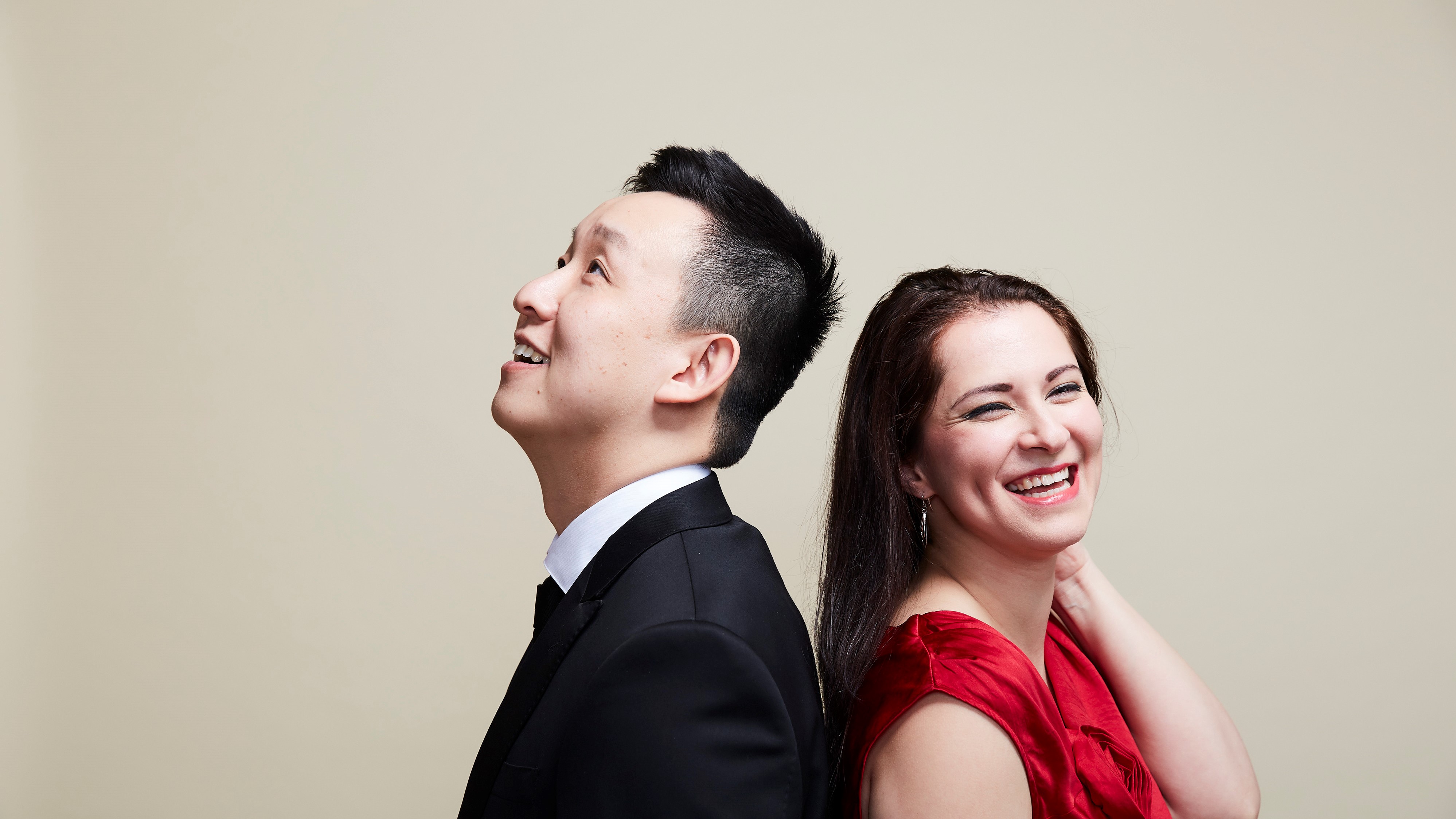
Yelian He, Yasmin Rowe

This cello/piano duo has been going strong since 2008 under the appellation Y-Squared. In a surprise announcement at the Primrose Potter Salon between Beethoven and Schumann works, He announced that, after 15 years, he and Rowe are taking their collaboration to another level and are getting married. This was a rather understated occasion; nobody flew into manufactured ecstasy; nobody whooped or hollered in the traditional Love Island acknowledgement of such information; the partners smiled at the applause but kept their composures – and almost immediately got on with the program. I can’t tell you how much I admired this restraint which delighted after years and years of manufactured emotional exhibitions in the poorest Hollywood tradition, now exaggerated to ludicrousness on reality television.

Still, such control seemed to be a continuation or reinforcement of the couple’s artistic output. They opened their evening with Beethoven’s Twelve Variations on the theme ‘Ein Madchen oder Weibchen’, Papageno’s Act 2 aria in Mozart’s The Magic Flute. As with much in the rest of the program, this performance proved to be refined and elegant although, to be fair, He had little of gravity to do with most of the virtuosic running left to the piano; well, this is only to be expected, given Beethoven’s prowess which was in full swing at the probable time of composition – 1796. From the outset, this interpretation impressed for its sprightliness, evident in the theme’s announcement, and in the bounce with which Rowe infused her solo Variation 1’s demi-semiquavers.

He relished the opportunity to urge out an accurate, carefully wound Variation 2, while Rowe’s left hand gave us a faultless, highly active account of Variation 3. A clever division of labour on Beethoven’s part followed, then another piano-dominated 16 bars’ worth. Variation 7 again gave He little to do, the sole point of interest Rowe’s hiatus-point trills, carried off of a fine evenness. Ditto Variation 8, although the cello was rarely silent but confined to bass support while the keyboard generally worked on two treble staves. I enjoyed the slurred syncopation of Variation 9 from both musicians, chiefly because they made sense of the section’s rhythm while giving full weight to the bar-lines’ presence. As for the two minore blocks, Rowe handled the first one’s opening 8 bars with fine sensitivity and a lightly applied rubato, while He produced a mellifluous bass lyric in Variation 11, the pianist maintaining a present but non-insistent treble tinkling. With the change of time signature to 3/4 for Variation 12, a more even spread of responsibility proved welcome, with a deft and clean account of the work’s last 10 bars that concluded the work with placid softness.

After their engagement news, the duo launched into Schumann’s Op. 73 Fantasiestucke and again you were confronted with a seamless interpretation of welcome maturity. He produced a finely burnished timbre for the opening Zart, his line balanced and carefully woven, avoiding any suggestions of fitful temperament or tantrums; in firm balance, Rowe was an excellent partner for the controlled restlessness of her triplet patterns, almost continuous up to the last nine bars – both executants working in fine synchronicity of attack and emotional congruence. Similarly, in the following Lebhaft, the performance showed admirable fluency in treating the same metrical contrast across the first part, up to the central repeated segment although a rare articulation error from He disrupted the first note of this central section’s second part (in the repeat, I think).

Once again, Rowe demonstrated a sterling consciousness of appropriate dynamic levels in the final Rasch, the piano a reinforcement of the rapid cello upward arpeggios and a background to the movement’s second-phrase lyric. This trait is notable in a Schumann chamber music pianist where many players seem to think they have right of way because of the writing’s solidity; Rowe looks for elegance rather than loquacity; for example in the middle segment where the tonality changes to A minor (if anything) and the cello sings a relieving, quiet melody over more semi-urgent triplets.

My only query came with an introduced pause 11 bars into the Coda when an abridgement of the upward-leaping arpeggio pattern shifts into a flattened-out version of the beginning’s answering strophe. It just seemed an odd refinement to admit when the direction Schneller has just been introduced for a gripping rush towards the ebullient, can’t-come-quick-enough conclusion.

We then enjoyed some highly appropriate Salon music in Elgar’s Salut d’amour which I don’t think I’ve heard live since my mother gave up the violin. A fine melody seems to be its main attraction; certainly there’s not much for the pianist to do, except for maintaining the andantino pace. And He produced a caressing line, achieved without over-stretching his vibrato and keeping our attention fixed on his quietly insistent phrasing. It made for an amiable interlude, a blast from our Victorian/Edwardian past, probably best reserved for an encore – like the Frank Bridge Serenade that eventually fulfilled that function.

But the last offering in the duo’s printed program was Poulenc’s Cello Sonata which was constructed well before the composer’s four woodwind scores in the same genre. Again, I can’t recall a previous live performance that I’ve attended. Maybe I’ve been lucky because this four-movement construct falls into tedium in its outer Allegro and Presto movements. Yet again, the distinctive feature of this interpretation was its fluent facility; all the cello’s technical ducks and drakes, all the piano’s dissonances seemed ironed out with few harmonic frissons available to spice up a busy environment. Something odd happened at the A flat trills around Number 10 in the Heugel 1953 edition; I can’t be specific but I think it came from the cello line – going back to find the place proved fruitless but I believe some unexpected if slight irregularity sprang up.

Both parties gave us a fetchingly voluptuous passage beginning at Number 18 where the composer insists that his interpreters must not slow down to take relish in a sudden purple passage after all that Tempo di marcia insistence. At some point, I began thinking that Rowe was using her sustaining pedal a good deal; but the score pretty well instructed her to produce plenty of washes. Still, the movement is garrulous right up to this point; dedicatee Fournier might have called for a dash of brevity, apart from advising the composer on technical problems and potentialities. Happily, the following F sharp Major Cavatine displayed many passages of smooth sailing, beginning with the sans presser melody emerging in the cello at Number 1, even if a momentary blip came with He’s assault on the top G at Number 4, the production coming across as uncertain on what is probably the highest note in the cello part across these pages. Against that, place the impressively controlled sweep of colour with the reapplication of the mute at the Excessivement calme marking 13 bars from the movement’s chaste conclusion.

Rowe showed herself in light touch across the Ballabile, even with those full chords and octaves subsumed in the general aura of balletic bounding. Once again, you had to be impressed by the unshakeable congruence of these players in the outer sections where the instruments double each other with no room for hesitation. On top of that, He and Rowe convinced you of the good humour that runs through these pages where the percussive and intimate leggiero walk hand in hand. A full-bodied account of the finale’s 10-bar Largo introduction preceded an abrupt shift to rhythmic busyness at the arrival of the main body’s Presto subito; the players burbled along efficiently, although a C sharp minor chord at Number 11 struggled to make its desired effect. But there’s little defence against the movement’s central content between Numbers 13 and 18 where the action relaxes and the underpinning impetus disappears. It’s hard to describe how welcome were the returned triplets and how depressing the reversion to Gymnopedies country at Number 20 before the rounding-off stately five-bar Largo,

Poulenc’s product is a hard one to like, even when faced with a performance as expert as this one was. At the end, you know you’ve been through a substantial experience, one that gives its performers much room to demonstrate their skills. But, at the same time, you retain very little in terms of instrumental interplay, well-shaped melodies, rhythmic acuity, piquant harmonic layering. You can see and hear that the universally applied ternary format has been employed well enough, but the centre cannot hold your interest in a least two of the movements.

We all wish the newly-affianced our best wishes in their relationship which is clearly an artistic success already. They have shown themselves willing in their work, particularly in facing this evening’s French challenge; I’m anticipating calm seas and a prosperous voyage as they move on to more agreable Francophone peaks: Debussy, Ravel, Honegger, Saint-Saens, Faure – even the Franck Violin Sonata was approved for cello transcription by the (Belgian-born) composer. They’re definitely a duo worth following; in this instance, presenting an hour-long recital with remarkably few technical flaws and a wealth of interpretative insight.

Lead, kindly Gringolts

ILYA GRINGOLTS PLAYS BRUCH

Australian Chamber Orchestra

Concert Hall, Queensland Performing Arts Centre

Monday February 13, 2023 at 7 pm

Ilya Gringolts

A tad bitty, this opening Brisbane gambit from the Australian Chamber Orchestra for 2023. Missing from the line-up were artistic director Richard Tognetti and associate Satu Vanska, but the band enjoyed some amplification – an extra viola (Carl Lee), a pair of new cellists (Charlotte Miles and Eliza Sdraulig), a mate (Axel Ruge) for bass Maxime Bibeau, and some violinists I’ve not come across before (I think!): Anna Da Silva Chen and Tim Yu. Also, by an arranger’s quirk, timpanist Brian Nixon came to prominence during the night’s big feature: Bruch’s G minor Violin Concerto.

Control of these forces fell to Ilya Gringolts, last heard with the ACO five years ago when he performed Paganini as we should have been hearing it. On this night, he took the soloist’s spot for the Bruch warhorse as well as for a splendidly cogent reading of Frank Martin’s Polyptyque, In more workmanlike mode, he took over Tognetti’s usual place as concertmaster-director for the last of Mendelssohn’s early string symphonies, the one-movement No. 13 in C minor; a fresh commission in Australian writer Harry Sdraulig‘s Slanted; then finished off proceedings through Grazyna Bacewicz’s Concerto for String Orchestra of 1948.

Naturally enough, popular acclaim went to the great-hearted German concerto, arranged for smaller forces by the ACO’s artistic administration manager Bernard Rofe. All the wind parts vanished – 2 each of the woodwind, four horns and two trumpets – their lines relocated to any stray strings; as you might have expected, this meant a loss of timbral variety and an absence of ambient gravity which can actually weigh down considerably this score’s progress. Further, the absence of a sizeable group changed the concerto’s flavour; if you knew the work (and that would have described quite a few patrons), you would have missed some tutti passages memorable for their abrupt bite and stridency, let alone the Vorspiel‘s haunting initial wind chords.

Nevertheless, Gringolts gave us a memorable account of the solo line, accommodating to his reduced background so that full ensemble passages came across with less heft than usual; for instance, the first explosion at bar 11 after Gringolt’s second cadenza was a watery intimation of the real thing. But you learned to compensate as the Vorspiel surged forward with its amalgam of rhapsody and respectability. The absence of timbral punch mattered less in the central Adagio but by this stage Gringolts had absorbed most of our attention with an impeccable demonstration of how to perform the score’s technical hurdles with absolute confidence, while simultaneously expounding the concerto’s rich romantic paragraphs.

Unlike other brilliant interpreters, Gringolts refrained from generating a seamlessly pure line with its contours neatly enfolded; when the action heated up, you could hear some preparatory scrapes as double- and quadruple-stops were hit hard – but not so much in the energetic Allegro last movement where the temptation to add extra gutsiness to the main theme’s thirds and sixths is too great for many an executant to resist. Both soloist and orchestra made as much as necessary with dynamic contrasts, while the whole reading kept you involved by its rhythmic intensity in the outer movements and through the waves of tensile string fabric in the second movement.

Messiaen stole several marches on his contemporaries with regard to putting his Christian/Catholic faith into musical practice, but Martin’s late creation for violin and two string orchestras scales some religio-emotional peaks with just as much sincerity and brilliance of utterance as the French master. His Polyptyque was inspired by a series of miniatures in Siena that depicted various stages of the Passion. In his six movements , Martin lets the solo line represent Christ and a Narrator, in the best Bach fashion; hence also, the two orchestral forces. It only seems like yesterday that adventurous choirs would present the Swiss writer’s Mass for Double Chorus (now almost a century old!) as the last word in modernity and improbably hard choral writing. You would hardly say the same about Polyptyque which is couched in that stringent, athletic language with which some of us have become familiar through the chamber works. Any appearance of a work by Martin is still remarkable, if not as noteworthy as it would have been 30 or 40 years ago.

As at the best of concerts, this performance was a revelation because of a happy combination of expertise and inspiration. After seven live audience performances, this penultimate one in Brisbane came to us well-honed and holding no surprises for all concerned. But the fulcrum of this success emerged through Gringolts’ sympathetic outline of the central role: in turn jubilant, mournful, aggressive, transfigured. Of course, the composer’s realization of specific images veered closer to the physically illustrative than anything in Messiaen’s work. For instance, the opening movement depicting Palm Sunday set out the turba in action – not wholly elated, but busy with suggestive undercurrents – while the violin wove a clearly defined path into the city.

Martin did justice to Judas with an active cadenza for the soloist, packed with self-circling energy like a man newly-arrived in a prison cell and finding no relief, even when the orchestras enter sombrely to underline the traitor-victim’s isolation. To end, the composer contrived a matched pair: the judgement before Pilate and Via crucis, prefacing a continually aspiring image of Christ’s glorification which is achieved by simple means, certainly more mobile than the Louange a l’immortalite de Jesus and less constipated than Majeste du Christ demandant sa gloire a son Pere. In these pages, Gringolts led us on an all-too-brief journey, remarkable in its concentration of output as it moved beyond a kind of remote tension to a radiant, soft triumph. Obviously, an experience to treasure.

The evening started with the Mendelssohn Sinfoniesatz, the last of the teenage composer’s essays in the form. While being happy to observe the near-adult grappling successfully with formal exercises, I’ve never gone overboard about any of these early efforts, least of all this effort with its thickly applied imitative passages of fugato. But then, I feel the same discomfort when Schumann starts fugueing in the Piano Quintet’s final Allegro, or even when the piano kicks off a mini-fugue in the last movement of Bartok’s Piano Concerto No. 3 (bar 228). But, if nothing else, this piece set the physical scene: Gringolts leading an all-male first violin group, Helena Rathbone opposite him at the head of an all-female second violin bevy; pairs of violas either side of centre-stage (this is one of the string symphonies with two viola lines); pairs of cellos in the rear centre, Timo-Veikko Valve and Julian Thompson at the front, of course, with the two females seated in the second row; and the two basses bringing up the real rea, one behind each group.. In any case, the Mendelssohn served its purposes of clearing the sinuses, loosening bowing arms and establishing a communal sound.

Better followed with Sdraulig’s new work. I can’t quite grasp the rationale behind Slanted, even if the composer explains it in two ways: the first, in terms of the actual music’s shape, its architecture as the 18 variations elide into one another; then, as a social commentary on the biases with which we’re all infected these days. Not ignoring these descriptor/explanations, you tended to become less concerned with the underpinning dialectic and more enthralled by the composer’s felicitous writing: expertly shaded, clearly defined in its allocation of responsibilities, gripping in its athletic first part and subtly atmospheric when the tension eased rhythmically for the later stages. It reminded me of several all-strings scores (well, of course, given the timbral potentialities) but carved out an individual stature by means of its remarkable definition, like a solidly sculptured torso. In some ways, it recalled the Frank Bridge Variations but with less glitter: Britten with balls.

Bacewicz’s famous Concerto rounded out this night effectively; to my mind, more so as a demonstration of the ACO’s finesse and ardour in attack than for the ground-breaking qualities of the score itself. As a standard-bearer for Polish modern music in the grim late 1940s, Bacewicz struck out on a progressive track although, in a wider European context, this work is not ground-breaking. Nevertheless, the composer’s vocabulary presents as strong and flinty with its neo-classical sprightliness and linear lucidity at a time when the great ruck of writers were still stuck in a post-Romantic morass. Gringolts headed an interpretation that found grace, even elegance amid the spiky polyphony; I heard only one suspect early entry , probably from the second violins, in this composition’s expertly-contrived delineation. More memorable was the rank and file’s vivid reaction to their guest leader’s never-failing enthusiasm.

Diary March 2023

KARIN SCHAUPP & FLINDERS QUARTET

Musica Viva Australia

Queensland Conservatorium Theatre, Griffith University

Tuesday March 7 at 7 pm

Born in Germany but raised and educated in Queensland, Karin Schaupp leads the first Musica Viva recital series event in Brisbane for this year. To make us feel more warm and fuzzy, she is accompanied by the home-grown Flinders Quartet which, at current time of printing, comprises violins Thibaud Pavlovic-Hobba, and Wilma Smith, viola Helen Ireland, and cello Zoe Knighton. These last two are original members while the upper lines have seen a few excellent musicians leave for fresh pastures; Erica Kennedy and Matthew Tomkins spring to mind as long-term previous members, she currently occupied with Orchestra Victoria and he still leading the Melbourne Symphony Orchestra’s second violins as he has since the Punic Wars. At all events, here they are in partnership, recalling their 2011 successful CD Fandango for ABC Classics, but only slightly: the one surviving program element is part of Boccherini’s D Major Guitar Quintet – the last two movements, comprising a Grave assai and a fandango. As for the rest, the night starts with a Carulli guitar concerto, Op 8 in A Major which, as far as I can tell, has two movements only. Of more temporal substance is Castelnuovo-Tedesco’s 1950 Guitar Quintet Op. 143, written for Segovia and comprising four movements. Another work of substance is Imogen Holst’s one-movement Phantasy Quartet of 1928; an early work, full of common sense and opening with the promise of relaxed British pastoralism. Interspersed with these come two Australian scores. First, Richard Charlton‘s Southern Cross Dreaming from 2007 – a short tremolo study for solo guitar, written for and first performed by Schaupp. Then Carl Vine‘s Endless, commissioned for Musica Viva and enjoying its world premieres across this national tour; it’s a substantial commemoration of the architect Jennifer Bates, killed by a motor accident in December 2016. Tickets range from $15 (Student Rush) to $109 (Standard). As far as I can see, the customary pernicious booking fee is waived, but I could be wrong.

MACBETH IN CONCERT

Opera Queensland

Concert Hall, Queensland Performing Arts Centre

Thursday March 9 at 7 pm

Not my favourite Verdi opera, although fanatics will hear nothing against it, just as they will tolerate no negative comments about Ernani or I masnadieri. A few performances in Melbourne over a span of about 30 years reinforced this prejudice, the first one starring Rita Hunter as Lady Macbeth; the highpoint of that night lay in coming across the strangely inappropriate brindisi, Si colmi il calice, by means of which the murderess greets her guests for the ghost-dominated banquet. But also, I’ve been jaundiced by having to teach the play to hundreds of uninterested Year 11 students over much of my secondary school purgatory. How Verdi’s first Shakespeare dabble will fare without the trappings of scenery and lighting is anyone’s guess; still, you’ll enjoy an extraordinary focus on the singing. Who gets the title role? Well-known Opera Australia bass stalwart Jose Carbo takes the honours here. As for his toast-mistress wife, this is soprano Anna-Louise Cole, whom I remember from her student days before she went off-country to study in Germany, recently returning home to take on heavy roles like this and a 2022 Turandot for the national company. Big winner/loser (‘All my pretty ones?’) Macduff will be Rosario La Spina, local celebrity tenor from whom we’ve heard little in the past few years (an absence from activity that he shares with many other singers, of course). The Banquo will be New Zealand bass Wade Kernot, tenor Carlos E. Barcenas the luckless Malcolm, while the Queensland Symphony Orchestra’s newish chief conductor, Umberto Clerici, controls the pit – and, with a bit of luck, the stage. OQ’s publicity mentions a director and a pair of costume creatives, so things may not be as visually bleak as I’d expected. Tickets range from $75 to $ 125 with some slight concessions available and – of course – the booking fee that is a compulsory penalty for using a credit card in this rubbishy new world where nobody pollutes themselves with cash.

The performance will be repeated on Saturday March 11 at 2 pm.

BASSOONS, BANDONEONS AND BEETHOVEN

Queensland Symphony Orchestra

Queensland Symphony Orchestra Studio, South Brisbane

Sunday March 12 at 3 pm

Welcome to the first of this year’s Sunday afternoon chamber exercises from the QSO, where members of the organization get to play together in small groups; all very pleasant, even if the resulting performances can creak at the seams. In fact, this program will feature some fairly noticeable creaking in its first part, while the second segment is made up of a string quartet stalwart in Beethoven’s Razumovsky No. 3 in C – last in the three-part set and the one that doesn’t have a Russian tune/theme incorporated. As preludial matter, a quartet of bassoons – Nicole Tait, David Mitchell, Evan Lewis, Claire Ramuscak (contra) – will air Gerard Brophy‘s brief Four Branches of 2015. Then a group of strings might present the first movement of Piazzolla’s Tango Suite. This was originally written for two guitars, but I’ve also come across an arrangement for four bassoons (no contra) by Fraser Jackson. So the QSO’s low woodwind may be extending their Brophy experience to take in the pugnacious Argentinian’s Deciso opener which lasts a little longer than the Australian composer’s five minutes of piquant burbling. Another Argentinian voice comes through with Golijov’s 1996 Last Round, a two movement construct for string orchestra/nonet in two movements which attempts to imitate the sound of a bandoneon in an elegy-homage to Piazzolla, the title coming from his life-long participation in street fights rather than being a reference to the call that used to echo through the world’s pubs at the end of every night’s excursions into soddenness. As for the nonet, it could include any of the following musicians, bar the essential participation of double bass Phoebe Russell who sits/stands mid-stage between two string quartets: violins Mia Stanton, Sonia Wilson, Nicholas Thin, Natalie Low, Delia Kinmont, and Katie Betts; violas Nicole Greentree and Graham Simpson; cellists Hyung Suk Bae, Kathryn Close and Matthew Kinmont. Naturally, the Beethoven interpreters will come from the above list and the transitional jolt from Buenos Aires to Vienna should be suitably chastening. This program is scheduled to last for 75 minutes and tickets range from $30 (various concessions) to $55, as well as the customary booking fee/theft.

THE FOUR SEASONS

Australian Chamber Orchestra

Concert Hall, Queensland Performing Arts Centre

Monday March 13 at 7 pm

Artistic director Richard Tognetti is once again hosting the Tawadros brothers, Joseph (oud) and James (riq), in this amalgamation where Vivaldi’s four violin concertos will be interspersed with original compositions by Joseph/James and other Baroque works from Italy and the Ottoman Empire. You’d be right (and probably happy) to suspect that the seasonal sequence will be given straight, not re-interpreted Max Richter style. The questions rise with the interpolations as the Tawadros brothers and Tognetti aim to offer Venice and the Near East as musical companions. Well, they’re certainly geographically closer than Australia and Finland and were assuredly more intertwined commercially than Nepal and Chile. Aesthetically? A bit of a stretch. Musically? I’m having a lot of trouble finding the Ottoman in Vivaldi (or in the Gabrielis or in Monteverdi); conversely, I can’t see the Baroque contribution to the Tawadros’ Permission to Evaporate or The Hour of Separation albums. In the preparatory playlist provided on the ACO website for this event, you can hear the essential Seasons, as well as some Vivaldi additions – the final Presto from the Op. 3 No. 6 in A minor plus the Recitative/Grave and final Allegro from the Grosso Mogul concerto. The only other Venetian track is a motet by Legrenzi: Lumi, potete piangere; perhaps Tognetti & Co. will be surprising us with a vocalist – or one of the multi-talented Tawadros brothers will turn his hand to this plangent Baroquerie. Speaking of the Ottoman contribution, we will hear five original Tawadros compositions (the inference from the playlist being that they will come in part from the above-mentioned albums), as well as a Turkish concerto called izia semaisi (by Toderini?) and an Ottoman march with the bellicose title Der Makham-i-Rehavi Cember-i Koca (I’m a tad worried about that Der). Not looking a pair of gift horses in their mouths, but I’m not sure where the guest brothers’ work really fits in with the Eastern components of this program, mainly because their own compositions are an individualistic blend of Arabian sounds with Western emotional tropes. It makes for a beguiling melange but one that stretches even further the relationship between East and West, musical Venice and anything heard in the 16th and 17th centuries from Turkey to Egypt. Still, the composite makes an intriguing envelope for Vivaldi’s series of brief tone-poems. This event is scheduled to last for two hours and tickets range from $25 to $159, as well as the compulsory booking fee that spices up the whole experience of concert-going.

HAYD’N SEEK

Ensemble Trivium

Old Museum Building

Thursday March 16 at 7 pm

This expandable group is presenting a set of works involving flute, viola, cello and piano in various combinations. As for its participants, flautist Monika Koerner takes part in four of the evening’s five works; cellist Katherine Philp will be heard in three, as will violist Yoko Okayasu; pianist Allie Wang performs in two. You can probably glean from the title that we’ll get to enjoy some Haydn: a flute/cello/piano trio, Hob XV:16 in D Major, in three movements with the central one in D minor. The concluding work is a Prelude, recitatif et variations by Durufle, that highly self-critical French composer’s only chamber work; this involves Koerner, Okayasu and Wang. Between these masterful products come three varied scores. Caroline Shaw’s Limestone and Felt was written in 2012, a viola/cello duet that follows a pizzicato sound production for most of its six minutes with a few bowed arpeggios (representing the fabric?). Brisbane composer Connor D’Netto‘s parallel involves flute and viola following a 12-minute process of changing and becoming – into what, is anyone’s guess. And leading into the Durufle will be Guillaume Connesson’s 2002 Toccata nocturne for flute and cello: slightly over three minutes of mainly subterranean whistles and quick whispers. The recital is projected to last an hour – which it might with some pre-performance chats. Tickets range from $22 to $52 but the inevitable additional charge is a few cents over $1 – which might even be justifiable.

MAGNIFICENT PIANO

Queensland Symphony Orchestra

Concert Hall, Queensland Performing Arts Centre

Friday March 17 at 11:30 am

The titular instrument refers to that employed in Grieg’s Piano Concerto: for my money, the greatest show pony in the repertoire – and the easiest, as far as interpretative depth is concerned. My first ever CD was Dinu Lipatti’s recording of this work, unloaded on me by a French teacher with a penchant for making money on the side. Having paid through the nose for it, I listened to the recording until it wore out. But the concerto was also an accessible orchestral concert favourite for decades, until it fell by the wayside as being too popular. Tonight, Grieg’s four-bar-phrase extravaganza is paired with the Brahms Symphony No. 1 – a long time a-coming but a rewarding source of discovery and delight in the right hands; and, in several senses, the most effective of the four. For the concerto, the soloist will be Sergio Tiempo, a Venezuelan-born musician with an impressive discography. He has appeared in Brisbane before, apparently, with his sister, duo-pianisting for the QSO under Alondra de la Parra. The steadiest of hands, Johannes Fritzsch, principal guest conductor for this orchestra, will take us through the concerto and symphony, prefacing the lot with an Impromptu, after Schubert by Richard Mills, produced in 2014 and premiered in Tasmania. This is not an orchestral refurbishment of one of the 8 Impromptus but a meditation on fragments from two lieder – one I know (Auf dem Wasser zu singen) and one I don’t (Ariette) – with a few additional references emerging from the Unfinished Symphony and the Winterreise cycle. A lot of material to ferret out, in other words. Tickets range from $89 to $105, with concessions available as well as the usual credit card charge, here coming in at over $7.

This concert will be repeated on Saturday March 18 at 7:30 pm. This event has more seats available, from $90 to $ 130 – also with concessions and the credit card compulsory tip.

SERGIO IN RECITAL

Queensland Symphony Orchestra

Queensland Symphony Orchestra Studio, South Brisbane

Tuesday March 21 at 7:30 pm

Putting their guest artist to use – just as the ABC used to do, pairing concerto appearances with a recital – the QSO powers-that-be here re-present Sergio Tiempo in solo mode. His program is half-Chopin (this pianist made a splash with his CDs of this composer’s music – some of it) and half-South American, with Piazzolla featuring twice while worthwhile masters like Villa-Lobos and Ginastera get one look-in each. Oh, and one of the Pizzollas is Muerte del Angel which has been thrashed into oblivion (sorry) by too many musicians of minimal ability. Anyway, the Chopin will involve three preludes (Nos. 3, 15 and 16 from Op. 28 [where else?]), two etudes (No. 6 from Op. 10 and the No. 1 Aeolian Harp heading Op. 25), and the last sonata, that in B minor. Moving well south of the border after interval, Tiempo starts with Venezuelan Moises Moleiro’s Joropo, a brief 6/8 romp in D minor. The two Piazzolla pieces follow, the other being Fuga y Misterio which has been extracted from the composer’s opera Maria de Buenos Aires. A rarely-encountered name in serious music is that of Brazilian writer Antonio Carlos Jobim, whose moody song Retrato em Branco e Preto has been arranged for himself by Tiempo. A more familiar Brazilian voice arrives with Villa-Lobos whose offering comprises excerpts from his 1918 The Dolls, Book 1 in the three-part cycle A Prole de Bebe. You (well, Tiempo, actually) choose between dolls made from porcelain, papier-mache, clay, rubber, wood, rag, cloth – and Punch for a possible gender-imbalance leavening. Last element of all comes Ginastera’s feisty Malambo of 1940, an Argentinian response to Moleiro’s piece but more aggressive and blessed with a powerfully discordant conclusion. Tickets range from $30 (child) to $75 (adult); the surcharge is now up to $7.95, regardless of your concessionary status.

HIGH HEELS & HORSEHAIR

Ensemble Q

The Raven Cellar, 400 Montague Rd., West End

Tuesday March 28 at 7 pm

Second in an off-shoot series distinct from the main Ensemble events, this recital presents two artists: harpist Emily Granger and cellist Trish Dean. Details about their program are sketchy but Falla’s Suite populaire espagnole appears; it might as well as it’s been arranged for a large number of instrumental combinations. The composer himself and Paul Kochanski put the collection together from Falla’s original Siete canciones populares espagnolas, leaving out the Seguidilla murciana. As well, Dean gets to swoop through Saint-Saens’ The Swan, that near-immobile chunk carved out from the Carnival of the Animals. And we are also promised Granville Bantock’s Hebrew melody, Hamabdil, in the composer’s own cello/harp arrangement. When you go looking, there’s not much music that was specifically written for this duo combination, but the three works promised are unobjectionable. So much so that you’d expect Granger and Dean to show high competence at fleshing out a program scheduled to last for two hours. Perhaps a few solos will be inserted along the way? Tickets range from $22.49 (student, and prepare to stand) to $70.14 (adult), into which prices a graduated booking fee has already been added. Nice to see that somebody is trying to preserve a modicum of social responsibility.

Last sonatas but not the last word

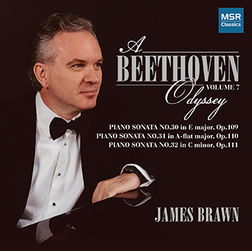
A BEETHOVEN ODYSSEY VOLUME 7

James Brawn

MSR Classics MS1471

Carrying us onward towards the conclusion of his complete Beethoven piano sonatas cycle, James Brawn has grouped the final three works in the series under one roof. It’s a bold move, presenting the major intellectual challenges before taking on an imposing technical mammoth: the Sonata No. 29 in B flat, Hammerklavier. While this last-mentioned is the preserve of master-pianists (although I’ve heard a few readings that disappointed greatly, including one where the performer simply left the stage mid-slow movement), each of the final three sonatas features commonly in recital programs these days – much more than half a century ago when they were avoided in favour of more agreeable works with appealing nicknames.

The favourites linger, of course, Pathetiqueing, Moonlighting and Waldsteining their ways across recital programs until their appearance induces frissons of ennui: you know that nothing informative will be achieved across the duration of yet another Tempest or Appassionata but, like Christians the world over, you wait in hope (usually disappointed). With the last three sonatas, you can expect more fine gradations of interpretation. It’s not that they are more difficult to get around than their predecessors, although certain movements are risky – the Prestissimo from No. 30 in E Major, the I’ve-been-everywhere fugue that concludes the A flat Op.110, and the multi-layered Allegro of Sonata No. 32’s first movement.

Brawn’s reading of Op. 109, the E Major Sonata, is blessed with a well-matched pair of opening movements before the disproportionately long theme-and-variations conclusion. For the opening Vivace/Adagio, he finds an appealing give-and-take set of speeds which don’t over-egg the changes from the initial two-note motif-chains to mini-cadenzas (bars 9 and 58), passages that often enjoy a piacevole treatment rather than the disciplined observation of underlying pulses that obtains here; why the hell would Beethoven have bothered with those explicit groupings of demi-semiquavers and hemi-demi-semiquavers unless he wanted pianists to exercise a relative tempo ratio? Brawn’s care for detail shows out in minutiae like his handling of the last crotchet’s worth of bar 12’s right hand, and the elision of those wafer-thin joins between segments (bars 9, 15, 57 and 65).

The following very fast movement also shines for its sensible treatment, the pauses slight and used to mark a differentiation of attack rather than employed for the usual excuse of repositioning a hand. Brawn makes full use of the expression markings (well, those in Wallner’s edition for Henle), with a few clever dynamic pulling-back instants that serve to keep the onward rush buoyant. And here was one of the more fluent transfers of attention from right hand to left at bar 112; it only lasts a few seconds but it’s become one of my discriminant points for determining a player’s dynamic balance and care in avoiding bluster.

For the sonata’s largest span, the third movement theme and six variations, Brawn shows the requisite alternation between ultra-sensitivity, as in the hiatus breaths he employs during the melody’s first articulation’s phrases, and helter-skelter jollity (Variation 3) alongside an Handelian determined simplicity during Variation 5’s fugal mesh. The executant shows commendable care with the second variation’s juxtaposition of detached semiquaver two-note motives and the broad chordal thematic treatments (bars 41 and 57). A more relaxed approach typified Brawn’s handling of the Etwas langsamer variation which enjoyed a quietly splayed outlining; not enough to undercut the prevailing metre but sufficient to suggest a surging barcarolle.

For all that, you have to relish this pianist’s bringing the sonata home in the final variation where the sustained trills on B (with a brief excursion to home-key E) generate an underpinning that threatens to overpower the material being outlined both above (mainly) and below. With a further example of that insight shown across this odyssey, Brawn observes a dynamic level that doesn’t distract from the composer’s strands of operation; you find no heavy pounding of those arpeggio/broken chord chains that reveal a simple, devastating musical deconstruction before the theme returns en clair, bringing us round to full term.

I’m not so taken with the first movement of Op. 110 in A flat Major. Admittedly, Beethoven’s writing is fitful, putting a sonata-form shape through several odd wriggles and engineering sudden changes in tonality. Brawn underlines these oddities and abrupt shifts by pointing them up (or out) with brief pauses, so that the movement advances as a set of episodes rather than as wholly-woven fabric. I suppose it’s a fundamental problem of interpretation – how do you treat a chameleonic canvas? – but my view comes down on the side of playing the pages without any tangential commentary on the not-so-subtle shifts in register alongside the traditional modulatory brusqueries.

Not much to find fault with in the ensuing Allegro molto. Brawn keeps a cool head, especially when faced with the invitation to belt out the forte and sforzando chords. Further he gives the central D flat Major trio some lucidity by not accelerating or moving into a slushy over-use of the sustaining pedal. Still, this page-and-a-bit is hard to integrate in any sense; you can’t call it aimless because it has direction (mainly down, from a fair height) but any congruence with the surroundings escapes me. Of course, I could go to that bank of scholars and hanger-on pedants who make theses and careers out of explaining these ‘problem’ sonatas but life’s too short; well, it’s getting that way in this quarter, what with the endless struggle against infections both physical and mental, particularly now that we have returned to normal after the Australian Open has limped to its flaccid conclusion.

You can find more justification for Brawn’s pointing-up character in the tragic-heroic last movement of this work where arioso, recitative and fugue are assembled in a carefully staged scenario of lament and ebullience. The pianist is very painstaking with his left-hand chords and their shadings into one another right across the Adagio ma non troppo when it really starts (half-way through bar 7). Further, his outline of the Klagender Gesang itself proves to be irreproachably clear and poised, With the fuga‘s first part, this reading preserves a contrapuntal clarity and control that obtains up to and throughout the reinforced bass explosions at bars 45, 72 and especially 101. Brawn also manages to suggest the rests between those enigmatic semiquaver chords from bar 131 to 134 while still following the sustained pedal direction.

For the fuga‘s inversion and complexities, this interpretation takes the high road by treating the score with respect, ensuring clarity even as the argument becomes more determined at the change of key in bar 153. Further, in the final pages where the material is reduced to an alternating bipolarity and Beethoven stretches further and further outward to the topmost and most bass-ic limits of his instrument, Brawn observes the decencies, articulating with weight but without bombast or hysterics. Which gives us a reading informed by warmth and integrity, one where I can’t find any note or gesture out of place.

Last of all comes the C minor Op. 111: a minefield, they say. It’s not technically over-remarkable but its first movement offers too many opportunities for pontification before and after bar 19 where the Allegro kicks off properly. Brawn is awake to the inbuilt drama of the scene-setting seventh chords at the opening and the unsettling hiatus chords between bars 6 and 10 where expectations of regularity are roused and left unsatisfied. He is quite happy to indulge in a considerable hold-back whenever he comes across a poco ritenente in the main dramatic chapter, while some hard-pressing passages come within cooee of dragging, e.g. bars 37 to 42. Then there emerge some fine sweeps of impassioned confidence; for example, the crescendo at bar 96 leading to a marvellously contrived piece of contrapuntal display, rich in octaves from both hands until the escorting semiquavers take over at the end of bar 108.

Another effective interpretative illustration comes in the final bars. After a chain of eight sforzandi and a vehement tonic affirmation, the subsequent chords become epuise, until the menacing semiquaver runs emerge in the bass while the right hand consoles with three resolutions into a tierce de Picardie – a passage that brings to most minds the penultimate relaxation (8 bars from the end) in Chopin’s final Op. 10 etude.

Yet again, I’m impressed by Brawn’s intellectual control, specifically in the second movement Arietta with variations. His initial pace is spacious, and you can hear every element of the chord work, no matter how raw the texture. Each variation is welded into a framework that relies on its foundation rivets, no matter how discursive or florid the embellishments. I’ve listened to these pages several times, making sure that Brawn gives exact measure in the syncopations and displacements of the later variations when tied chords or notes ask for intense concentration from an executant; or further on when both hands operate in the bass clef (bars 65 to 71, 81 to 88) and those left-hand groups of nine demi-semiquavers hare murmur clearly; or closer to the end when Beethoven brings in his trills, which are delivered in this context with unstudied regularity.

The CD is an excellent sample of Brawn’s powers in Beethoven performance. The three works are treated with a respect and firmness that reveal an intimate awareness of the composer’s demands and a fidelity to the works’ aesthetic compass – true to the drama, the gravity, the incredibly powerful impetus underpinning what can look on paper like ambling. This isn’t Brawn’s final odyssey leg – there are two more discs to come – but it’s a considerable and bracing contribution to the journey.

February 2023 Diary

VIVALDI FOUR SEASONS

Eclective Strings

St. John’s Cathedral, Ann Street

Friday February 3 at 6:30 pm and 8:30 pm

Beginning the year with absolutely no style at all comes this run-through of Vivaldi’s greatest hit. Not the whole thing, mind you, but ‘selections’. I suppose the excuse will be that such an abridgement, a digest helps bring in punters who don’t usually listen to serious music, or who want to graduate from enterprises like the Tamworth mud bath. So, as a benefit to the intentionally stupid, let’s give voice to those movements from these four violin concertos that have become most recognizable through TV advertisements. Tonight is one of the more presentable efforts in a program of candlelight concerts, most of which are homages to various pop singers and groups; this program sticks out in its context like a diamond in a sewer. Still, I’m rather wary of the main performing structure; we’re not offered a soloist but a string quartet – which is not enough of a resource to carry even this lightweight music. As far as I can see, the Eclective haven’t operated much outside Victoria but they specialize in tribute concerts – ABBA, Adele, Beatles, Coldplay, AC/DC – when they’re not indulging in cut-down Baroque. On its website, the ensemble claims to be respectable by day, up-to-the-mark rockers by night; I would have been impressed if the roles/times were reversed. Anyway, they’re giving their selections twice on this evening, depending on your eating arrangements, I suppose; tickets start at $29. To be honest, I’d need a lot of persuading to sit through even a filleted version of these works, particularly when there’s so much more Vivaldi to hear.

JOY AND SORROW

Queensland Symphony Orchestra

Queensland Symphony Orchestra Studio, South Brisbane

Friday February 10 at 7:30 pm

Chief conductor Umberto Clerici takes a small set of forces through this three-component program schedule to last 75 minutes without interval. He begins with Strauss’s Metamorphosen for 23 solo strings, written in the dying days of World War II and probably intended as a threnody for German culture which was at that time being pounded into dust. Not the most interesting of the composer’s works but it has relevance to the current world situation, given the war being inflicted on us by the latest in a series of Russian megalomaniacs. It’s hard to tell how this will come across in the Studio’s close quarters; you’ll certainly know if anyone wavers. Then comes a new work by the QSO’s long-time principal percussionist, David Montgomery – a suite for brass and percussion that, at time of writing, has no name. I know of Montgomery as a performer and educator – not as a composer, which could make part of this night revelatory. Finally, we hear Stravinsky’s Pulcinella Suite, eight movements from the original ballet: Sinfonia (Ouverture), Serenata, Scherzino, Tarantella, Toccata, Gavotta, Vivo, and Minuetto+Finale. The instrumentation asks for pairs of flutes, oboes, bassoons and horns, with a trumpet and trombone for ballast and a string quintet alongside a string orchestra. The composer’s transformation of Pergolesi pieces, the full ballet is rarely heard (or seen) but this suite is packed with piquancies: a rare sight of Stravinsky the Funster. Tickets are $75, unless you have a concession or are very young; children get in for $30, but will they put up with the Strauss willingly?

DANCE AROUND THE WORLD

Queensland Symphony Orchestra

Concert Hall, Queensland Performing Arts Centre

Sunday, February 12 at 11:30 am

Another special with QSO chief conductor Umberto Clerici holding the leading strings. I’m not sure how far around the world this dancing extends; what we know of what is to be played leaves me feeling more than a little Eurocentric. The problem is that, after listing a number of highlights, the promoters promise ‘. . . and more’, which always makes me wonder if that more has been decided or will it be decided between lunchtime tomorrow and Australia Day. We know that we’re getting the Can-can from Offenbach’s comic opera Orpheus in the Underworld, an energetic terpsichorean remnant of the belle epoque and forever associated with impossibly frilled petticoats and startlingly unrevealing knickers. Further along the morning promenade, Clerici & Co. will perform Strauss’s Voices of Spring, presumably without the optional soprano; like the Offenbach, a musical portrait of a world of outward brilliance but rotten to the core. Brahms’ Hungarian Dance No. 5 in F sharp minor/G minor puts in an appearance, doing its best to live up to proud Zigeuner pretensions in orchestral garb supplied by Schmeling, Parlow, or Ivan Fischer. The tone moves upwards with the Act 1 Waltz from Tchaikovsky’s Swan Lake, which is a splendidly balanced product in every sense. As a Me Too genuflection, the program includes the third of American black composer Florence Price’s Dances in the Canebrakes: the cakewalk Silk Hat and Walking Cane, probably in the orchestration by William Grant Still. But there’s more, and good luck with that. Tickets range from $75 to $105 for a scheduled 80 minutes playing time without interval; good value, if there’s no irritatingly amiable chats involved.

ILYA GRINGOLTS PLAYS BRUCH

Australian Chamber Orchestra

Concert Hall, Queensland Performing Arts Centre

Monday February 13 at 7 pm

Five years ago, ACO habitues heard this Russian violinist play Paganini brilliantly. The popular appeal item this time (and it’s the only one on the program) is the first of the three Bruch concertos in an arrangement for the string ensemble by the organization’s librarian, Bernard Rofe. What we will miss out on hearing are the pairs of flutes, oboes, clarinets, bassoons, trumpets, the horn quartet, but the original score’s timpani part is spared any editorial cut. Will you feel the lack? Probably, if you know the work well, and I’d say most of us do. Still, it saves on employing an extra 14 musicians and transporting them round the country for a series of one-night stands. Gringolts also contributes his solo skills to Frank Martin’s Polyptyque of 1973, written to a Menuhin commission and calling for two small string orchestras underpinning the solo violin. These six images de la Passion de Christ make a substantial work, slightly longer than the Bruch concerto, and most of us will be hearing them for the first time. As well, the ACO performs Mendelssohn’s one-movement String Symphony No. 13, a new score – Slanted – from Melbourne-born Harry Sdraulig, and Bacewicz’s 1948 Concerto for String Orchestra, a major composition from the Polish composer and one which carries its neo-classicism with an impressive pnache. Prices range from $49 to $115 with concessions available for qualified patrons.

ODE TO JOY

Queensland Symphony Orchestra

Concert Hall, Queensland Performing Arts Centre

Friday February 17 at 7:30 pm

Always a crowd-pleaser – except for those pesky three movements before the choral finale – Beethoven’s Symphony No. 9 can be a shattering experience. The trouble is that you have to take it as a job lot, instrumental predecessors and all before you get to the furious heaven-storming of the choir’s massive explosions. Umberto Clerici conducts his orchestra and the Brisbane Chamber Choir with a clutch of four soloists, three of whom I know well from their concert/recital/opera work: soprano Eleanor Lyons (I’ve not come across this artist), mezzo Deborah Humble, tenor Andrew Goodwin, bass Michael Honeyman. We’ve all got a perfect Ninth in our heads, and some of us have had poor experiences (one of mine was an appalling realization of the males’ Seid umschlungen entry from the Royal Melbourne Philharmonic under Tzipine, and a recent one was a painfully lacklustre reading from Bendigo this past December), but the omens are propitious for this reading. With monstrous over-reach, the publicists have claimed that Peter Sculthorpe is Australia’s Beethoven because he is the founding father of this country’s music. Well, he was a lovely fellow but he wasn’t the founder of anything except his own sound world. We get a well-worn sample of that in his Earth Cry of 1986 which has an optional part for didgeridoo; no options about if because tonight we enjoy the services of William Barton. Following this theme of finding a place for Aboriginal-inspired music, the concert begins with a collaboration between Barton and violinist Veronique Serret: Kalkani, which was a 2020 commission by the ABC. Here, it has been transmuted from a duet into orchestral dress and enjoys its Queensland premiere. Does the whole set of proceedings sound like a mess? That’s because it is one, no matter which way you try to dress it up. Admission ranges from $90 to $130 and the program includes an interval; the two didgeridoo-inclusive pieces last about 20 minutes while the symphony has an average length of about an hour plus five minutes.

This program will be repeated on Saturday February 18 at 1:30 pm and again on Sunday February 19 at 1:30 pm

HARRY POTTER AND THE HALF-BLOOD PRINCE IN CONCERT

Queensland Symphony Orchestra

Brisbane Convention & Exhibition Centre, South Brisbane

Saturday February 25 at 1:30 pm and 7:30 pm

Ah, this brings back happy memories of the Melbourne Symphony Orchestra opening its year’s practice at the Plenary space near the Convention and Exhibition Centre with Dr. Who or Wallace and Gromit extravaganzas, as well as some films for the masses. Then, throughout the year, we would enjoy more film screenings in Hamer Hall with the MSO providing a live soundtrack – which usually meant the films had to be supplied with subtitles. Starting the academic year with a dollop of infantile necromancy, the QSO under Nicholas Buc will support David Yates’ adaptation of J. K. Rowling’s sixth novel in the Harry Potter series, which is one of the darkest of the lot – well, it’s the darkest (novel and film) so far because it (the film) begins with the suborning of Snape and climaxes in the death of Dumbledore – after which fun times at Hogwarts definitely come to an end. Nicholas Hooper’s score uses elements of the John Williams music that we have imbibed into our very souls but his instrumentation is an interesting, carefully placed element in the narrative. Has the Potter fever been sustained? Will audience members come dressed in their house colours or swathed in cloaks and besoming their ways into the auditorium? You’d have to be there to find out, I suppose. Tickets range from $59 to $120 and I couldn’t find any concessions. Bookings attract that meaningless Service Fee, which is an accounting swindle both universal and unavoidable (believe me, I’ve tried).

CITY OF LIGHTS: FROM PARIS, WITH LOVE

Southern Cross Soloists

Concert Hall, Queensland Performing Arts Centre

Sunday February 26 at 3 pm

Here we go once more, perpetuating the legend about Paris being the artistic centre of the world. Yes, it was: not anymore, The last time I visited (pre-COVID), the population was in a sour mood with strikes galore and consequently a fair few sites shut. Very little music-making and no opera. Still, the Soloists are determined to celebrate its palmy days, beginning with some selections from Gluck’s Orfeo ed EuridiceBlessed Spirits, anyone? Actually, yes: Portuguese flautist David Silva will be exposed in this bracket. The composer was German, the libretto was Italian, but Gluck did revamp his work in 1764 for Parisian audiences; something of a link, then. Mozart’s A minor Piano Sonata, K. 310, was apparently written about the time of his mother’s death – in Paris; this will be performed by the Soloists’ artist-in-residence, Konstantin Shamray. A firmer connection comes with selections from Debussy’s books of Preludes (Flaxen? Sunken? Fireworks?), which will also involve Shamray. And another Debussy appears in the art song Beau soir, which features one of the night’s guests, cellist Guillaume Wang, the programmers possibly deciding on using Julian Lloyd Webber’s arrangement. Wang also leads the way through Georgette by Rumanian violinist Georges Boulanger. This is a piece of salon music named after the composer’s daughter; despite his (adopted) name, Boulanger had no connection to Paris – perhaps his daughter did. As far as I can tell, Prokofiev wrote his Piano Concerto No. 4, the one for left-hand alone, in Paris during 1931. Commissioned by that unpleasant personality Paul Wittgenstein, the work was never performed during the composer’s lifetime. I don’t know if the Soloists will play the score as written or (more probably) an arrangement; regardless, you’ll be hearing Shamray at work again. Finally, Ravel’s Tzigane will exhibit the talents of guest violinist Courtenay Cleary. By the time he wrote this, the composer was living outside Paris but let’s not be too pedantic at this late stage of the program. The program lasts for 90 minutes (interval? maybe) and the cost is a flat $85.

Fiat lux

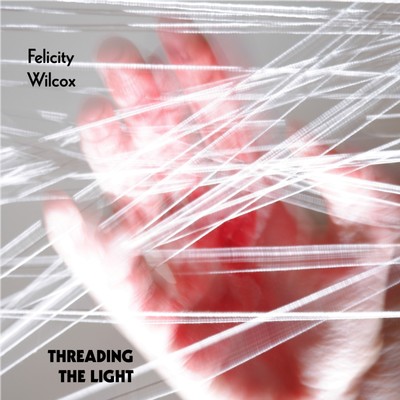
THREADING THE LIGHT

Felicity Wilcox

Move Records MCD 636

I don’t know how to catalogue this four-part exercise. According to the notes available on the Move Records site, the score formed the basis of Wilcox’s Ph.D. submission and was written between 2008 and 2012. The composer provides a good deal of technical detail on how she contrived the background/supporting musical stream that runs throughout the work. As you probably know if you’ve dabbled in academia, very little impresses a supervisor/examiner more than graphs, tables and photos of mechanisms; the trouble lies in interpreting the numbers which few people (except those paid to do so, viz. supervisors and examiners) can be bothered attempting. I had a few tries and got some way in – but then you listen to the CD and have to wonder at the need to explain technical details when the whole product presents more puzzles than the technical tooling around with frequencies extracted from or supplied by Sydney percussionist Michael Askill’s singing bowls.

Wilcox’s four soundscapes go by elemental titles: Light, Water, Blood, Fire. The overall emotional tenor of the work is meditative and ritualistic, with a heavy accent on Near and Far Eastern practices. Not that you wouldn’t be aware of this from the composer’s instrumental fabric, but it helps that she uses singers who beaver away at various texts that might give some reinforcement or illustration of the work’s four generic titles. Soprano Alison Morgan, contralto Jenny Duck-Chong and baritone Mark Donnelly are the nominated vocalists, the last-named moving very close to a tenor range in the score’s latter pages – a tribute to Donnelly’s versatility.

It’s a mixed ensemble that provides the bulk of Wilcox’s output, all led by Sada Muramutsu. Top of the town sits a string trio: violin Anna McMichael, viola Luke Spicer, cello Anthea Cottee, with a prominent part allocated to Alison Pratt and her multiform percussion. As a central body, we hear a string quintet: violins Ben Adler and Victor Wu, viola Tara Hashambhoy, cello Anthony Albrecht, bass Muhamed Mehmedbasic, while Ben Burton supervises the composer’s electronic instrument. Once again, according to the online booklet, the recording’s mixing and mastering (Daniel Brown at Trackdown) was carried out in March 2012 – which means this disc has been a long time coming.

One of the more intriguing compositional bases that Wilcox employs is a contrast between just intonation and equal temperament, the first sourced from the bowls and manipulation of their output while the second is the regular tuning of the string-rich ensemble. Any disjunction between the two tuning systems is not apparent at the start of Light, Track 1, but the aim is to refine the difference into obviousness by the time we reach Track 4, Fire, so that eventually a palpable disjunction obtains. God knows the difference ought to be clear as the work moves at a ceremonial pace for the most part and the progress is rarely interrupted by technical conundrums of a significant order – apart from the electronics which seem happy for much of the time to bathe us in a soothing infinity pool of familiar warmth layers..

So we begin with Light and plenty of bowl sounds, some of them sounding real-time, others pre-recorded. The atmosphere is hushed, reverent and inescapably oriental. A female voice (Duck-Chong?) begins singing a three-note Vedic mantra about sacred light illuminating us. A continuation of the subtly pulsing backdrop brings forward a male voice (Donnelly) celebrating the light of Allah (as outlined in a Quran verse) in a melodic arc that seems to be farther-ranging than the first solo but is limited to the same three notes (plus some octaves). At all events, simple percussive tinklings emerge in the struck-bowl main timbre-world and take on some prominence here as punctuation points. I believe it’s Morgan who gives us the final textual content with a Buddhist lama’s prayer of thanksgiving (for light, of course); again, her material follows the same trail as blazed by her peers. What follows is an instrumental slab where the three base notes are elaborated and twisted into all sorts of predictable shapes by McMichael with two essays in melisma, eventually followed by Spicer and Cottee rising out of a sonorous band supplied by the string ensemble with some occasional high bells and an underpinning current of bowl sounds operating as a support.

The language is deliberately limited but the dynamic level moves from meditative calm to fierce percussiveness. At its opening, Water sets a suitably limpid atmosphere with sustained bowl sound-bands, the strings entering gently in high/harmonics strata, with an occasional dollop of a Wilcox gesture where a soft string passage or crescendo ends in a chordal thump. The composer’s textures now have become less transparent, her string ensemble producing a sustained mid-range sound-band that could have escaped from Penderecki’s Threnody. Suddenly, we have moved into a new and completely unexpected segment where the bass is a five-note cantus firmus above which Cottee pours out a sad if mobile lament. It’s the sort of music that struck me as being useful for indicating a transcontinental trudge of the Burke & Wills genre, but no: such an interpretation is overturned by all three singers breaking out in an (eventually) unison setting of the opening lines to Psalm 23 (22) with a strikingly non-impressionist vision of the still waters. It’s hard to penetrate the vocalists’ Hebrew, given the strident accompaniment, but with a few hearings under the belt I’m not sure whether they reach the final phrases set out in the online booklet about being guided along straight paths for his name’s sake.

We are again grounded by two more settings which appear in reverse order to their printing in the booklet. First come a few lines about the Lord pouring out blessings, written by the composer’s brother, Rev. Dr. Gavin Wilcox who died in 2008 from cancer aged 46, and to whom Threading the Light is dedicated; this setting is a wide-ranging one with a welcome addition of vocal and instrumental glissandi that relax the three- or four-note limitations exercised so far. Duck-Chong and Donnelly outline an anonymous Buddhist prayer (well, most of it) about rains filling streams and oceans being reflected in the exercise of human goodness in healing all things. Here. we’re back in limited ground, Duck-Chong’s line at least mobile while the baritone sings a single note. Then the movement ends in similar condition to its predecessor: in a lengthy interstellar hum punctuated by a single note.

Comparatively brief in this context, Blood lasts for 6 1/2 minutes and uses one text; well, actually two, but the second comprises just two Latin words for blood. The main one is a Vedic mantra in which the aim is complete identity between the chanter and whomever/whatever he is addressing; not so much blood will out as much as blood is blood, as we say in Calabria. The movement opens with a Bloch-reminiscent cello solo couched in a more adventurous vocabulary than that used by the Jewish master. Donnelly sings through the Sanskrit quatrain with similar adventurousness before being joined by the female voices who generally finish off his lines for him. I think the mantra is repeated three times, the latter two a pulsing monotone in Donnelly’s case; underneath come sinuous strings arcing and glissading above an insistent timpani. Here, the ceremonial achieves its hypnosis through forceful insistence, rather than quiet repetition.

The movement’s second half comprises mainly an interweaving of the three voices, sticking to a limited number of notes for each and treating the two words sanguis and cruor with increasing intensity that involves aggressive string linear interplay and a vehement undercurrent iof percussion, including a prominent side-drum. Without a score, I can’t make much insightful headway into the work’s interstices but, once again, it appears that Wilcox is deliberately confining herself in her material while expending more adventurousness on drama; this piece ends with an explosion, not the suggestion of an all-embracing, eternal continuum. The final strokes have the singers returning to the Veda’s final words, ‘Light of all lights’.

Last comes Fire, about double the length of Blood. We’re back with the singing bowls straight away and on the lookout (listenout) for a change in temperament and pretty quickly there’s a scale that announces the new – the changed, rather – followed by the cello playing an imitation, possibly to illustrate the technical differentiation. The string group focuses on a single chord, alternately soft and loud, sustained and agitated before the bowl music returns and integrates itself with a single string line. So far (about a quarter of the way through), there’s little to grab on to, even if you’re prepared to find fiery flickers in the alternating timbres. Then comes another of those bowl scales which is definitely filling in your usual well-tempered cracks; the ensuing cello solo (Cottee, I assume) now seems to be doing the same thing with another odd scale/arpeggio upward motion/gesture before a substantial solo that features some welcome technical flourishes. This merges into a chord and some isolated ejaculations for all three vocalists which dissipate into a sort of tutti for strings and bowls.

The voices enter; first Donnelly, with another verse-prayer from Gavin Wilcox, speaking of the individual’s helplessness and a complete frailty that depends on the Lord’s support to survive. Meshing in with this comes yet another excerpt from Psalm 23 (22) – the bit about walking through the valley of the shadow of death but enjoying divine support from both rod and staff. As before, the Old Testament extract is sung in Hebrew and I think has been entrusted to Duck-Chong because it sounds as if it’s Morgan who immediately breaks in with yet another text: an anonymous saeta to Our Lady of Sorrows which bears a close resemblance to the Stabat Mater‘s first stanza. In all three vocal lines, we have returned to the tonal chastity of the work’s opening, Wilcox using few notes and maintaining a regular pulse of one note repeated twice underneath the singers; nothing like a constant unvaried pulse to suggest the hieratic.

This slow, lurching pace continues through the final sung fragment which is for all three voices and is an evening prayer ascribed to Muhammad, a salutation that again records the worshipper’s total dependence on God. The vocalists rise to a vehement climax that involves the interjections of slapping-sticks, the episode culminating in an instrumentally reinforced open-chord Amen – very Muslim in its decisiveness. And immediately we are changed, in the twinkling of an eye, back into the outer reaches of the universe with a final sample of sustained humming and soft high strings. I’m not sure what part fire plays in all this; I suspect that where I expect the vivid and the passionate (the ardent), Wilcox is more concerned with the (divine) spiration that ignites us all. Sad to report that, at about the halfway mark of this finale, I’d forgotten completely about listening for the disjunction between Wilcox’s two tuning systems; it’s certainly there – he that hath ears to hear, let him hear.

Congratulations to Wilcox and her collaborators for getting this CD into the light of day. It strikes me that its content deserves attention, principally because of its rarity in celebrating the numinous with individuality and doing so by using in part a novel language of sound sources. A kind of catholicity pervades the work, the textual sources highly varied in their origins, and the musical content falling into a strange land. Somehow, the orthodox sits alongside the novel – and not just alongside but the two intertwine. Indeed, it is these moments of fusion that interest me, more than the singing bowls as an isolated creation. Most listeners, I believe, will find something admirable in the course of hearing Wilcox’s substantial musical essay, not least her vaulting ambition.

January 2023 Diary

There is nothing.

I’ve looked assiduously in every potential corner, wherever information could be assimilated, assessed, obscured.

But in January, no musical activity worth the name is being presented in Brisbane or on the Gold Coast.

It makes me long for the Organs of the Ballarat Goldfields that has shrunk from its previous impressive substance to a few days’ shadow of its former self. And the Mornington Peninsula Summer Festival is spreading itself even more thinly these days. But at least both these events promise something.

Not north of the Tweed.

For your cultural input, perhaps Sydney may offer something with its Festival. From what I can see, a couple of contemporary operas and a chamber concert would seem to be the main (only?) offerings.

The nation is on holiday, but nowhere more seriously inactive than in the land of the Where-The-Bloody-Hell-Are-You?

Better luck for us all next month.

No surprises here

MESSIAH

Christ Church St. Laurence

Australian Digital Concert Hall

Wednesday December 21, 2021

Sam Allchurch

This performance of Messiah comes from December last year. Which is a tad disappointing – that the Australian Digital Concert Hall is projecting a year-old concert when you might have expected something fresh, like an interpretation from this year; there must have been some around the traps, especially of a score so inexplicably linked to Christmas time. Added to which, the Christ Church St. Laurence occasion itself was distinguished from others by only a few factors like the participation of the church’s ensemble in residence, the Muffat Collective, and the presence of guest tenor soloist Andrew Goodwin. Several other elements did not work to similar fine effect in this reading of a very familiar masterpiece.

I was tempted to attend a local Messiah last Sunday, given in the Brisbane Town Hall; after all, nothing is quite as effective as a live performance. What put me off was the invitation to interested members of the public to participate in the afternoon as members of the Queensland Choir. Of course, such postulants had to attend rehearsals but I don’t know if I want to pay good money to enjoy this sort of pro-am experience, embittered in my old age by memories of execrable Handel informed principally by good intentions rather than skill. But what do I know? Plenty of people were prepared to put their cash towards this public-involving exercise, if the online box-office seating map was any guide.

Under Sam Allchurch, the Sydney onslaught began well enough, an expanded Collective taking to the Sinfony with bracing vigour and exemplary purity of enunciation (making a good argument for repeating this number’s allegro – but then, nobody ever does). The group’s core – violinist Matthew Greco (this occasion’s concertmaster), violinist/violist Rafael Font-Viera, cellist Anton Baba, keyboard Anthony Abouhamad (handling the harpsichord continuo here) – was supplemented by a clutch of string accomplices, with a trumpet duo and timpani lolling around for most of the night before their big moments at the end of Part the Second and Part the Third. We missed the pair of oboes and bassoon that are required for the chorus Their sound is gone out. Not that this made too much difference because I couldn’t find any details about any supernumeraries; whatever program was originally available (was there one?) was not supplied for this broadcast.

Obviously, I know Goodwin and value his work highly. Bass David Greco has crossed my path (thanks to the ADCH) on a few occasions. Neither soprano Anna Fraser nor alto Hannah Fraser has fronted any ensemble I’ve come across. As the night wore on, both female singers showed themselvcs to be capable if uninspiring Handel interpreters, with a shared penchant for shortness of breath and a resultant unhappy habit of interrupting their lines at unsettling or downright inappropriate places. Greco took up his challenges with relish and some dash, even if his bravura passages didn’t quite come off despite clear efforts to work hard at getting his notes out on pitch and in time.

Goodwin started us off with a best-of-British Comfort ye/Ev’ry valley bracket, showing a slight lagging in the recitative, then a smooth pair of heels at the awkward leaps on exalted (bars 56 to 58), and eschewing the temptation of a cadenza in his second-last bar – thereby displaying a taste and a musicianship that would (should!) shame many another inferior executant.

Next came the first chance to hear the choir through And the glory of the Lord. On first impressions, the six tenors and six basses were dynamically light in comparison with the well-populated soprano and alto forces, the latter quite a presence in this chorus. Yet you waited for something individual about the composite body and, by the end of this amiable set of pages, the overwhelming sense was of a competent Anglican ensemble carrying out their work honestly but without any fire in the belly. So we settled down for a staid night.

Greco worked with force through Thus saith the Lord, notable for a poorly disciplined string entry in bar 7 – completely unexpected and one of the night’s few instrumental anomalies – and a finely regulated 2 1/2 bars of semiquavers (19-21) from the bass himself. Allchurch did not present his alto soloist for But who may abide, taking the alternative – and very rarely heard – bass recitative, thereby reducing the expected 158 bars to 6.

And he shall purify began easily enough with the sopranos clear and consistent; the following bass entry was not as definite in its outline of the 32 semiquavers that occupy the centre of their initial sentence. As is all too common, the chorus settled into a bit of a jog-trot without much concern for phrasing. You could find some powerful, driving phrases in the later stages but these singers were happy enough to get the notes out and in place.

Hannah Fraser stepped out for the Behold, a virgin/O thou that tellest sequence and soon revealed that odd interpolation of breathing stops, notably across bars 29 to 35 on the third repetition of get thee up into the high mountains, and later across bars 90 to 98 at the treatment of is risen upon thee. This voice is mild in delivery, not convincing as far as conveying dramatic import goes, and I wasn’t impressed by the decision to move the concluding D up an octave just before the chorus entered; there’s no need, because the accompaniment is a simple bass line at this point.

Greco returned for the bass accompagnato and song For behold, darkness/The people that walked which flowed past easily enough, apart from some sparked-up rhythmic irregularities when he reached but the Lord shall arise. This singer also avoided the low G and F in bar 8 of the aria and took the final notes of his line an octave above the normal position – apparently not sure of his carrying power in a low register.

Everybody’s second-favourite chorus For unto us a child is born passed by without much fuss – or much drive; the combined forces didn’t make any effort to point up the pages’ magnificent coup de theatre at the first Wonderful exclamation in bar 33. Despite a lack of competition, the altos’ semiquaver run proved indecipherable from bar bar 57 onward, but throughout the expanded Muffats provided a vital and punchy underpinning that attracted more than its usual share of attention.

We heard the short 12-bar version of the Pifa interlude before Anna Fraser gave us the recitative/accompagnato Nativity quartet that prefaces the Glory to God chorus. The soprano soloist showed some spirit in this brief exposure, giving the choir a finely purposeful and saying lead-in. Sadly, you listened in vain for much jubilation in the angels’ acclamation, even if the choral output was accurate in timing and pitch. I convinced myself that trumpets were added to the mix, but they were remarkably faint in volume.

It was hard to tell whether Anna Fraser was taking Rejoice greatly too fast or too slow for comfort. Things were proceeding smoothly enough but a whole group of four semiquavers disappeared at bar 22, and an unsettling twitch was the singer’s occasional portamento elision between closely adjacent notes. Probably the only other notable factor in this bouncy reading came in a rare violin error at bar 104 where someone played a B for the requisite B flat.

Hannah Fraser returned for the Then shall the eyes recitative and led the way into He shall feed his flock, with Anna Fraser doing the usual and taking over the second half at bar 25/26; I was pleased by the sudden piano at the repeat of take his yoke upon you, although it isn’t an original stroke. Again, the chorus ambled through His yoke is easy, the sopranos showing best reactions to Allchurch’s pace and producing a satisfying final top B flat seven bars from the chorus’s (and Part the First’s) end.

Behold the Lamb enjoyed a typically lugubrious outing, and I thought for a moment that matters were coming close to a dead halt at bar 18 where taking away the sins of the world grew into a seriously weighty undertaking. But the chorus wasn’t quite on point, their dotted quaver-semiquaver rhythmic cells coming close to triplet pulses. Handel lays on the tragedy with He was despised, which is a superb alto vehicle. Hannah Fraser gave a muted account of this song, during which her odd vocal line interruptions for breaths had me puzzled, particularly in a piece where Handel gives his interpreter plenty of congenial rests; a rushed intake before grief in bar 31 seemed highly intrusive. The central He gave His back to the smiters would have gained considerably from a general elevation – in dynamic, in attack, in consonantial ferocity – but the Muffats compensated with plenty of bowing bite here.

Then the focus shifted to the chorus and something might have been made of the start to Surely He hath borne if only the ensemble hadn’t smoothed out the composer’s crisp setting of the piece’s first word; but the whole segment was sanded back into blandness. And with his stripes is admittedly uninspiring, a fugato with little to capture the imagination, and the St. Laurence group realised its dour character appropriately. But the atmosphere improved at All we like sheep which showed some humour in all that straying, climaxing in a moment of magic with an a cappella reading of the last phrase: the iniquity of us all. I believe I’ve experienced this same choral isolation in previous performances but none as breath-catching as here.

Goodwin returned for a striking All they that see Him, prefacing yet another chorus, He trusted in God, which is yet a further set of pages where the rhetoric becomes prosaic and the temptation to work through it at full throttle is hard to resist – as proved to be the case here where solidity outweighed complexity of phrasing. Goodwin returned for the Thy rebuke hath broken/Behold and see double, both carried off with impeccable serenity and security. Anna Fraser provided the compliment with He was cut off/ But thou didst not leave; her enunciation not as lucid as the tenor’s, she seemed rough and ready in some passages, the whole spoiled by her mangling of the song’s final word into kerruption.

With Lift up your heads, the chorus’s sopranos are split into two parts for 30 bars; the effect is a loss of impetus in most choirs and the Laurentians fell into the general mould. Still, when the usual SATB was re-established, the top line made a brave crescendo showing from their exposed the Lord of Hosts in bar 55 up to the resumption of homophony in bar 62. Then we lost a chunk of the score: Unto which of the angels tenor recitative, Let all the angels chorus, the alto’s Thou art gone up, another chorus in The Lord gave the word, and the How beautiful are the feet song were all omitted. After a brief alto recitative, we heard a solid and respectable Their sound is gone out chorus, although the male lines seemed occasionally under-represented.

There followed an attacca on bass Greco’s Why do the nations song where his vocal rhythmic ducks and drakes gave a peculiar uncertainty to this stern rage aria. Nonetheless, this mildly truncated version (without the recitative insert) held attention for its energy. I couldn’t work out why the singer avoided the four note rise across bars 91 and 92; possibly confusion, perhaps fatigue. Whatever the case, another attacca led us into Let us break their bonds which action the chorus threatened to do with initial inertia. Goodwin returned for He that dwelleth in heaven/Thou shalt break them, the latter resonant and splendidly controlled from a singer who knows when and where to take breaths that make sense of the vocal line.

Ending Part the Second is the chorus Hallelujah, in which the soloists joined for some reason; it was (you may say) satisfactory if a tad overblown. Anna Fraser tended to slow down the pace of I know that my Redeemer liveth but Allchurch restored power quickly enough. More of those odd stops for breath came up during her at the latter day upon the earth passage. We also had an unexpected (and rare for this performance) cadenza on the last setting of fruits in bar 151; what that added to this stately piece is beyond me.

The most effective segments of Since by man came when the chorus worked without accompaniment, in the Grave phrases; by this stage, however, the top line was fading while the men found renewed oomph. Then Greco gave us the final solo in Behold, I tell you a mystery/The trumpet shall sound in the latter of which the aforementioned instrument enjoyed two palpable errors during the initial ritornello. A breadth of mobile vocal line quavers was interrupted for the sake of a breath between bars 60 and 65 and the singer moved the low B up an octave at bar 138 for no apparent reasons of either audibility or taste. The middle For this corruptible segment of the aria was omitted.

So were the alto recitative Then shall be brought to pass, the alto/tenor duet O death, where is thy sting?, the But thanks be to God chorus, and the soprano solo If God be for us. We moved straight to the final choruses (soloists also taking part) with Worthy is the Lamb which gratified in its imposing largo sections and the clarity of Blessing and honour even if the singers didn’t complement the timpani’s pounding; and the final Amen which was surprisingly clear in texture. But you waited in vain for that spine-tingling moment in bar 80 (151) when the sopranos cut through the turmoil with their top A; it was there, of course, but not hurled out with sufficient conviction.

So a reasonable Messiah, but not a memorable one. It confused me for most of the night because of the dichotomy between a period chamber orchestra of considerable skill and a choir of conservative bent; I’m not sure that the results of that fusion were calculated to satisfy anyone except either the charitable or the undiscerning. Anybody would like to give approbation for the effort involved; yet that’s impossible to confer honestly. If you’re going to put yourself in the public eye, you have to have a reason for doing so; you could have something original to offer by way of interpretation, or you might have a high level of expertise in the Baroque. Too often, I felt that this reading was marking time, constrained by an unresolved interpretative vision.

Cut your cloth

BEETHOVEN SYMPHONY NO. 9 – SYMPHONIA CHORALIS (VIC)

Bendigo Symphony Orchestra and The Gisborne Singers

Ulumbarra Theatre, Bendigo

Sunday December 11, 2022

Merlyn Quaife

We’ve imbibed all the old saws throughout our lives; warnings about Vaulting ambition, which o’erleaps itself, or injunctions along the lines of Ah, but a man’s reach should exceed his grasp . . . and very encouraging/discouraging they can be. But surely you have to take these up on a personal basis, judging how they apply to you. It’s a different matter when you involve others in your aspirations: then, the ambition is a shared one, the grasp becomes common property. Also, if you exert yourself to carry off an individual accomplishment, it’s OK if success or failure belongs to you and you alone.

Concerning this concert broadcast under the Australian Digital Concert Hall auspices, Browning’s line came to mind many times during the performance. This mighty score tested the grasp of the assembled musicians – Bendigo Symphony and Gisborne Singers – and the results were unhappy, for the most part. Uncertainty ran through the instrumental forces from the opening bars in Beethoven’s Allegro ma non troppo where the sotto voce 5ths and 4ths for the first violins sounded unhappy and uncertain. As with much of what followed, certainty arrived only when everybody was involved, as at the bars 16-to-17 explosion of the movement’s first theme. Biting away at this sudden assurance, the two trumpets dominated this stretch, the theme itself disappearing under the brass’s octave Ds and As. I thought this imbalance might have been due to the ADCH microphone placements, but the problem really lay with the small number of unassertive high strings in the ensemble.

Why the Choral Symphony, of all works? It’s been with us for nearly 200 years and its finale has turned into a celebratory cliche but the complexities involved in getting through the thing still tax even expert musicians who don’t rely on sailing along on the grounds of professional competence and/or regular familiarity. Conductor of the Bendigo and Gisborne forces, Luke Severn was hard pressed to keep his orchestra in time, let alone in tune or taking proper care with articulation and tuning. In the end, this performance struggled up to the last movement and that’s a long stretch of purely orchestral fabric to generate successfully – and to sit through when the output fails to deliver.

As for an actual cause for this concert, it came about through a choral festival held in Bendigo last weekend. On Saturday evening, participating choirs showed their wares to each other (and the public, one assumes), while the combined forces came together on Sunday for the Beethoven Ode – even though the only listed choir in the program was Severn’s Gisborne Singers. In fact, 55 singers were listed as his Gisborners – which is a respectable number but insufficient to carry off this score, particularly as these vocalists were rarely able to produce a sufficiently robust sound.

So Severn was labouring under all kinds of disadvantages, the main one being his players’ pussy-footing round a masterpiece that demands absolute confidence, particularly in its first two movements. All manner of details were muffed, like the violins and violas downward demi-semiquaver scales at bars 34 and 35 and the fatigued upper string sound at bar 71. Every so often the bland texture was disturbed by a misreading, as among the unison strings during bar 116, or by an absence like the missing woodwind at bar 138, or by a simple mistake like the first violin’s falling 5th at bar 177, or by the lack of woodwind coherence in the simple chords of bar 197. Then you’d suddenly come across a patch of competent work as in the flute/bassoon dialogue starting at bar 253 which shone for its unexpected clarity. But matters had become laboured, bogged down in hard slog by bar 333. Horns 1 and 2 had their exposure almost precise at bars 469 to 477 but the trumpet pair revisited their original hard-man brashness from bar 531 on, drowning everything else that was being generated at fortissimo level.

I’m afraid the scherzo fared little better. Right at the start, the trumpets made a mess of their D octave leap in bar 5 and, from then on, we were on tenterhooks as this naturally biting movement progressed. Wisely, Severn did not undertake most of the repeats in either the main body of this vivace or its Trio but you encountered some unexpected pleasures, like the bassoon work kicking off the Ritmo di tre battute pages, counterbalanced by the first oboe unable to make sense of a simple exposed melody line at bar 468. What you really missed in this movement was an efficient contrast between its initial ferocity and its complementary fleet-footed warmth.

It might be a slow movement but Beethoven’s Adagio offers many challenges, most obviously through the exposure of all its executants; the first violins and all four horns enjoy some torridly testing stretches of play. Again, it seemed to be a case of simply getting through these pages without much attempt to shape individual phrases; suppleness was at a premium, exemplified in bar 42 and the rushed lead-up to the violins’ E flat pause (which didn’t happen), as well as the fourth horn’s unhappy arpeggio encounter finishing bar 55. The Andante moderato change in pace went unmarked, but horn 4 gave an almost precise account of the stand-alone bar 96. This near-success was almost immediately followed by the first violins’ rhythmic malfunction at the bar 99 change of key back to B flat and the time signature splaying out to 12/8. One of the simple brass chords across bar 122 proved defective but then this section reached another apogee of strained performance at about bar 141 before a messy account from the first violins of bar 151’s semiquaver triplets.

Cellos and double-basses gave a persuasive account of the finale’s six recitatives but they were set a fast pace through Beethoven’s famous D Major melody starting at bar 92, their tuning occasionally off-centre. When the first violins got their crack at the tune in bar 149, you would have expected that the ensemble would have acquired some fluency in its treatment but their enunciation sounded stilted, although the least impressive part of this celebratory all-in came with a trumpet fluff across the theme’s last phrase at bar 184.

Bass soloist Teddy Tahu Rhodes delineated his O Freunde recitative with a vibrato as wide as the Calder Freeway but his delivery mode proved welcome for its assurance. Which only served to emphasize the lack of projection from the Gisborne altos, tenors and basses at their bar 21 entry of the Allegro assai. Soprano soloist Merlyn Quaife attempted to bring the whole operation back to a more measured, less runaway pace from her Wer ein holdes Weib entry at bar 37. Severn’s forces began the Alla marcia quite well, giving a congenial setting for tenor soloist Michael Petruccelli‘s bravely buoyant Froh investing these pages with much-needed vivacity, although I would have liked his concluding high B flats at bars 101-2 to have been hurled out with more ardour.

The consequent orchestral double fugue proved to be a testing set of pages that simply lacked consistency of output with valuable lines lost in a general melange, climaxing in a pair of disappearing horns at bar 210, their repeated octave F sharp inaudible. While the male choristers gave a good account (if not quite loud enough) of the Seid umschlungen maestoso, their Bruder in bar 17 came over as faint, given the context; but later, the full choral Welt? exclamation in bar 44 made for an unanticipated aural bolt.

The Gisborne sopranos handled the top As that pepper the Allegro energico with laudable vim; speaking of which, it was gratifying to hear the small band of tenors handling the same note with force at bar 65. And it was reassuring to come across mezzo soprano Kristen Leich‘s line emerging clearly during the soloists’ Alle menschen melismatic stroll starting at bar 70. But the performance’s underlying tentativeness endured to the end with an unsatisfying prod at the last stringendo‘s kick-off in bar 81, the concluding bars an unsatisfying series of soft punches.

Obviously, I didn’t enjoy this concert, finding it full of specific flaws and a lack of coherent interpretation. A school of thought that prevails these days believes that any effort is to be praised; you can see this mind-set at work in every classroom across our country where accomplishment comes second to the Morrisonian trope of ‘having a go’. Well, it didn’t work for the self-aggrandizing Australian football team in blood-drenched Qatar; it doesn’t work for the petulant brats who represent us in the world’s tennis stadia; much more importantly, it doesn’t do anything for the thousands of underpaid workers in our hospitals and nursing homes.

You have to be capable of more than good intentions when putting your grappling skills into operation for any Beethoven symphony; this D minor masterwork, one of Western music’s cornerstones, is not a construct for which it’s sufficient to ‘do your best.’\

Why not take all of me

LIGHT IN DARK

Jennifer Enchelmaier

Move Records MD 3465

One of the oddest anthologies I’ve come across, this CD features all the (till-now) known piano solo music by Tom Henry, a Melbourne-based composer who began his career path as a flautist before changing to the more idealistic, top-of-the-class transcendental role of a composer.   He has an ideal interpreter in Enchelmaier who lavishes her skills on rich and poor alike – or perhaps it would be better to distinguish between the junior and the elder, the tyro and the proficient, the smooth and the rough.  What is apparent is that Henry travelled through a not-uncommon creative trajectory that began with imitations of the masters, then switched overnight to a cracker-jack contemporary style which takes the wind out of your sails through its stark contrast.

But then, this vault between light and dark (you choose) is not at all clear-cut.   Enchelmaier begins with 14 pieces stretching from 2003 to 2006.   They come in various groups: three Songs without words (2003-2006), three Studies for modern times (2005) and three Ecstatic preludes from that same year, a slightly puzzling brace from the composer’s 2006 Pieces for children (originally three in number, but A Funny Game has been omitted  –  hence the descriptor here of From ‘Pieces for children’).   Then there are the Three short pieces for piano of 2005 which take on the function of a midriff punch after what we’ve heard so far because they sound like Webern of the Variations for Piano alternating with Schoenberg of the Drei Klavierstucke.   And these lead into the Piano Sonata No. 1, written for Michael Kieran Harvey and an excellent vehicle for that pianist/composer’s scintillating skills.  This is followed by the forward-leaning Three pieces for piano of 2010, and the one-movement Piano Sonata No. 2 written four years ago and less elliptical than its predecessor in the form from 2006.

We start with the Ecstatic preludes No. 1 – Like an omen.   Well it’s ominous enough, taking its opening cell – a clipped, falling interval – and putting it through some unremarkable, post-Rachmaninov harmonic changes.   No, not so much ominous; more, a prophecy emanating from a Tarot reading.   Sensual and languid depends for its mood-setting on surging scales that aren’t allowed to take over the message which is a carefully circumscribed melody that suggests the eroticism of Saint-Saens.   Finally, Calm and flowing presents as something of a study for the right hand which reserves its melodic interest for the middle two notes of every quaver group of four; as I’ve mentioned before, this is written in a style that suggests Rachmaninov but without the surprises, harmonic or lyrically transporting.

Pop song is the first of the Studies for modern times; not too modern, I’d suggest, as its language is lush and harmonically too subtle for anything I’ve heard from the gutter-mouthed rappers that captured the imaginations of my students and too frisky in its instrumental range to compete with the musical debris that spews from my gym’s sound-system.   Not to mention that the vocal range required to sing this piece would be beyond the abilities of anyone currently performing on any ‘pop’ stage.   The death of Pope John Paul II prompted April 2005 which manages to sound optimistic and elegiac at the same time.   Henry imposes a fair amount of bell-ringing on us with a running scale figure doing the peals while a few chorale-suggestive figures range across the keyboard; it’s not La cathedrale engloutie (the pace is too rapid for Debussy’s lush washes) but the liturgical suggestions are there for those unkind enough to find them.    And the composer’s forging along an harmonically conservative path seems right in line with the heritage (such as it remains) of Karol Wojtyla.    Last in this set, Film theme suggested all sorts of possibilities.   It’s got a rolling undercurrent of left-hand arpeggiations and a ‘noble’ tune in block chords that proposes all sorts of visual equivalents – the Australian bush but not too far west of the Great Dividing Range, a Mary Tyler Moore family drama, Avatar 3 in its pictorial obviousness, perhaps even a Big Sur Buddhism scenario in a cleaned-up Kerouac setting.

From ‘Pieces for Children’ involves A sad story and Barcarolle.  You might find signs of Schumann here, although Mendelssohn is more the go despite some harmonic slips and slides.   The story has a melancholy fluency to it but it could be played at sight by a reasonably competent pianist; Enchelmaier spices the outline with clever phrasing and sympathetic dynamics.   As for the Venetian scene, you look in vain for any complexities; the pulse is regular and the right hand melodic outline is not distinctive enough to distract from the piece’s lack of adventure or colour, despite some sudden swerves into a new tonality – for a moment.

Henry admits to a collegiality with Mendelssohn in introducing his Songs without words and the three small-frame works share a certain picturesque reflectiveness with the German composer’s miniatures.   Remembrance is upper-level lounge music with a wealth of added 7th chords and a definite lyrical shape; I was distracted by an odd resemblance in the work’s emotional character to Joseph Kosma’s Autumn Leaves  –  not that there’s anything wrong with that.   More blues-inflected chord work emerges in Nocturne, a simple ternary shape with a very long central section (in relation to its surrounds) but the initial flourish is attractive enough to tolerate repetitions.   New York comes over as a sort of ambling promenade not that far removed from Loved Walked In but bedevilled by its unchanging movement of block chords, occasionally spiced up with some arpeggiations; it’s certainly a very benign view of a city that I found menacing and unpleasant, by day and by night.

Now we come to the split where Henry’s compositional language turns into the second half of the 20th century.   Following his studies with Lawrence Whiffin (or probably during that time), Henry produced Three short pieces for piano which are aphoristic in terms of length (in particular the last Molto allegro) and unpredictable in terms of rhythm and harmony which is emphatically atonal and probably 12-tone although you can hear repeated notes and motifs that would disrupt strict application of the rules.   All of a sudden, the listener has to cope with an abstract set of soundscapes, starting with an Andante of tight-lipped stringency, followed by a Piu agitato that is my pick of the three for its expressive range and technical dexterity.   Aficionados of the Second Viennese School will find plenty of reminiscences in these all-too-brief essays.

Henry wrote his Piano Sonata No. 1 in 2006 and revised it in 2011; a fascinating fact although it’s difficult to know what to do with it.   As it comes across on this CD, the composer’s style-world has moved on from brief bursts of a 1920s vintage to short explosions of a 1950s/60s Boulez/Stockhausen variety – at least for the sonata’s scene-setting Theme which looks on paper like one of the Klavierstucken: ultra-refined dynamic markings, glancing shots before a sustained crotchet or minim, subdivisions of rhythm like a quintuplet that’s as much rests as it is notes, leaps of 7ths and 9ths: the whole panoply of serialized physical jerks, although, as I say, I don’t think the principles are being applied in too doctrinaire a fashion.

The following Variations movement is probably divided into six sections, their material emanating from the thematic material of Movement 1.    You can find common intervallic vaults, I suppose, but the music is chameleonic and, despite the divisions, its progress is continuous.    Also, Henry is fond of the direction recitativo; that gives his interpreter all the leeway necessary to handle whimsical creative flights as she pleases.    In fact, most of these sectional indicators aren’t that helpful to the ear: what Henry calls Molto calmo e ritmato requires a large amount of creative listening, as does quasi una Habanera and, later, Violente.  However, you can take pleasure in the pockets of high-pitched pointillism across this variations sequence, as well as Henry’s ear for the dramatic gesture and the pointed repetition.

The finale , Molto perpetuo, presents in two versions: one where the linear rhythmic values are prescribed, the other a sort of breakdown into consecutive quavers.   Whichever one you pick, the results follow a different vocabulary to that obtaining in the preceding two movements.    It winds up being diatonic in character towards the end after a  moderately athletic main body.    At times, I was reminded of an old-time passacaglia where the bass is emphatic and definitely placed while quavers follow their predictable path on top.    In fact, about half-way through, the texture is satisfyingly complex with three layers in full operation.  But this is not your usual perpetual motion rush as Enchelmaier exercises plenty of rubato and dramatic emphases, especially in the last minute where the work seeks the security of a tonal resolution,   This you can receive as a haven or a restoration of the natural order; or you can wonder why, after showing mastery of a contemporary compositional style, the work peters out in a kind of surrender to the tonic.

Which is why the interest arises in the direction of Henry’s revision of 2011.   In this form, the work is lopsided and I wonder whether the Moto perpetuo is part of the original or an addition (or transformation?).   Or take it the other way: that the last movement is a survivor and the Theme and Variations attest to the composer’s adoption of advanced techniques in his compositional address.

Another surprise comes with the Three Pieces for Piano which seem to be homages in their different ways.   Henry acknowledges the influence of earlier writers in his Intermezzo: an attractive expressionist soundscape with some lush writing of considerable warmth interrupted by piercing outbursts of temperament and a quiet tonal ending with a faint echo of the last chord in Berg’s Sonata – a bit fanciful as a comparison but not impossible.    The CD’s title track is a series of episodes that opens with two factors in operation – a chorale, and surrounding decorations both high and low; this disintegrates in several ways, the main ones being an assumption of importance by the colourful material at either end of the keyboard, and an incorporation of the chords into a faster-moving stage of activity.    It’s an odd combination of restlessness and steady progress, but it eventually finds a quiet subterranean resting-place.    Last, Henry’s Toccata also acknowledges the past, specifically Prokofiev whose hefty 1912 gem is echoed here, and I think you can also detect a smidgen of Khatchaturian although Henry sticks with a regular pulse of quadruple-time semiquavers without any relieving triplets such as the Armenian introduced into his flashy pseudo-virtuosity.   Again, Enchelmaier avoids martellato continuity and leavens the movement forward with a pliant ritenuto or four.

The latest of Henry’s piano solo endeavours, his Piano Sonata No. 2 was commissioned for a 50th birthday and is based on the name (most of it), represented in musical notes, of the celebrater.   This piece follows the composer’s studying with Stuart Greenbaum, Head of Composition at the Melbourne Conservatorium of Music.   Certainly, you can hear a change in approach here, more in line with the harmonic smoothness in the Moto perpetuo ending the Piano Sonata No. 1 but, despite the homogeneity acquired by using the name-motif as fundamental, the work still impresses as episodic.   So it’s not really your old-time sonata form at play here but more like a rondo.   And that doesn’t really get to the heart of the business because the apparent wholescale reversions are few in number.

For instance, the sonata opens with a stately theme set out a an octave or two, this sentence moving with an effective stateliness, even grace.   That rhythmic movement then changes abruptly to a gambolling bucolic episode, somewhere between Vaughan Williams and Bartok at his least acerbic.   Here Henry sets up a pattern of rising and falling scales in both hands that takes over his forward thrust; these are especially noticeable in pages where the right hand carries out its ups and downs while the left hand generates chords that follow a scale progression, albeit more slowly.   Mind you, the derivation of this developmental matter from that opening cell is clear as day.    Not sure about what follows when an arresting trill leads into Ondine land with some voluptuous colour washes giving way to a return of the bucolic skipping toned down and the scales are replaced by ‘open’ arpeggios in the right hand that reach a highpoint about half-way through the sonata.   Another bucolic trace element and a richly Romantic meditation with a spectral recurrence of the opening noble striding in arpeggiated format before we enter the last lap with Henry employing a falling interval as his calm farewell to arms.  

It’s here that Enchelmaier comes further into the picture by singing this two-note phrase to the ejaculation He-ya in a concordance with her piano part.    This vocal line involves both a rising and falling minor third in alternation, then rising and falling perfect 5ths.   According to Henry, the  intention is to accentuate an intended atmosphere of meditative stasis, and it kind of achieves that end in a coda that even revisits the countryside, albeit in slow motion, before the movement slows to a definite ending, despite its ephemeral dynamic.   You  might have expected, after pages that exercise a kind of impressionism in their harmonic ambiguity, that Henry might leave us with an added-note chord, reinforcing the unfinished nature of spiritual experiences.   But no: when Enchelmaier breathes her last rising murmur in a space where words have no substance, the sonata resolves onto a minor chord with no interrogatory accretions.

You have to take your hat off to Henry who reveals every part of his achievements on this disc; it’s not a Greatest Hits selection but the entire oeuvre that he has written (so far) for solo piano.    He shows us his beginnings with a late (and sometimes middle) 19th century bent, using the conventions of that time (in fact, there’s rather a lot of these pieces, as they take over half-an hour of the CD’s 72 minutes’ length); then comes the abrupt shift to a world of technique-shaking demands familiar to us survivors of the challenges promulgated by Bussotti, Berio and Kagel (not to mention the apparent insanities committed to manuscript by Pousseur and Ferneyhough); finally, it’s an arrival at the ‘new lyricism’ where ev’ry compositional mountain and hill is made low.   All of this makes for a refreshing, wholesome hejira, one that is probably not completed.   Along his path, Henry has been gifted with a sympathetic and conscientious interpreter who exerts her considerable interpretative craft across each of these 21 tracks.