Early opera, sort of

BITTERSWEET OBSESSIONS

Australian Brandenburg Orchestra

Melbourne Recital Centre

November 4-5,  2017

                                                                               Karim Sulayman

Paul Dyer and his ABO brought a split personality of a show to Murdoch Hall over the weekend; on one side of interval came stately tragedy, on the other, the closest thing the High Baroque gets to a joke.  You could make a case that the two parts didn’t gel, but you are faced with the same situation on many an orchestral and chamber music program where juxtapositions of unlikely material occur regularly.  However, this program succeeded chiefly through the dedication of all involved and the absence of presentation irritations that have marred previous ABO events.

The MRC audience was faced with three scenes, two by Monteverdi and one from Bach. New Zealand soprano Natasha Wilson sang in all three, as did American tenor Karim Sulayman and Danish baritone Jakob Bloch Jespersen.  Local tenor Spencer Darby sang in the opening Lamento della ninfa while actors Melanie Lindenthal and Andrew Sunter took on mute roles in the more substantial works.

Dyer and his instrumentalists – three violins, viola, cello, violone, two recorders, a lirone/viola da gamba. Tommie Andersson‘s theorbo/guitar/gallichon set, harp and single percussionist – worked from an open pit on the same level as the front stalls while the usual performers’ working platform became a well-spaced arena for Charlotte Montgomery’s mutable sets: a stylized landscape for the mournful nymph, a large scaffold apparatus for Il combattimento di Tancredi e Clorinda and a cafe for Bach’s Coffee Cantata, Schweigt stille, plaudert nicht.

A three-section madrigal, the Lamento is hard to present theatrically because nothing happens.  The four  voices outline the situation of a girl left abandoned by her lover; the lady takes centre-spot for the lament with the males offering subterranean commentary, finally come  a few observations about the power of love to round out a 6-minute piece centred on an inexorable ground-bass.  With a large backdrop of a stylized landscape and some cardboard clumps of bushes, the four singers spread themselves around: fine for Wilson’s penetrating, clear voice, not so hot for the males who needed to be positioned in a solid group, if only as a solid source of complementary colour.

For Il combattimento, most of the emphasis fell on Sulayman’s Narrator who surged through Tasso’s lines with requisite fire and dramatic emphasis – in line with the composer’s directions and his music’s illustrative character.  Every so often, the tenor sacrificed precision of pitch for dramatic delivery, which might have made more sense to more people if the surtitles had translated the entire libretto.  But the single-voice experience didn’t pall, thanks to this singer’s vocal vim and textual assurance.  As in the one other staged performance I’ve seen from the national company, the two paladins remained static figures, their combat acted out at ground level by Lindenthal and Sunter in aikido costumes and equipped with staves.

Dyer’s band showed a vital flexibility in this reading, taking every chance to find and deliver the revolutionary score’s flashes of illustrative colour.  Constantine Costi‘s direction had Wilson and Jespersen proceed up the scaffolding, become blindfolded as a substitute for the helmets that disguise identities in the original poem, then deliver their few lines from static postures..  In this non-naturalistic mise-en-scene, armour was nowhere to be found on the nominal protagonists  –  just bland everyday clothes, while Sulayman sported a striking red thobe and the aikido fighters wore their usual white, all-enveloping bandage-uniform.

Costi was understandably sparing with his directorial bolts from the blue but noteworthy were the collapse of  the backdrop for the Lamento to reveal the confronting scaffold set, and the dropping of a long red cloth from the top level when Clorinda is mortally wounded by her lover.  Still, like its predecessor on this program, the work is short – about 20 minutes – and, apart from the absurdity of the story and the instrumentation novelties, the presentation’s chief interest lay in Sulayman’s feat of memory and stage dominance.

Framing the two madrigals, Dyer interspersed some fragments by Monteverdi’s contemporaries.  Andersson opened with Kapsberger’s Toccata arpeggiata, curdled by percussion support that featured a wind machine, the action spreading to the lower strings before a gusty transition to the Lamento.  Between the Monteverdi pieces came a Falconieri ciacona of refreshing exuberance but sitting completely at odds with the two tragic stories, and Monteverdi’s own overture to Il ritorno d’Ulisse in patria that occupies eight bars and can be (and was) elongated at will.  To round off the night’s first half, Dyer and his players moved immediately from Clorinda’s dying sentence to a Consonanze stravaganti by Trabaci which also took on more timbres than merely its keyboard original.

For the program’s second part, we vaulted forward a century to Bach’s cantata, prefaced by the first movement of his Brandenburg Concerto No. 4 with the two recorders and violin solo lines. Nobody wasted any time relishing the counterpoint in this marvellous construct, top billing going to Shaun Lee-Chen‘s flight of demi-semiquavers from bar 187 to bar 208; the two recorders were sadly swamped.

There isn’t much to be done with the Coffee Cantata.  It’s just four recitatives with pendant arias, then a final recitative and concluding trio.  The Narrator (Sulayman) introduces the story; father and daughter Sclendrian (Jespersen) and Lieschen (Wilson) share three recitatives, enjoy two arias each; finally, the Narrator folds it all up and all three collaborate for the summation.  As you’d expect, the girl gets to enjoy her obsession – coffee – and the father once again copes with the inevitable.  But the score holds two splendid numbers: the soprano’s lilting last aria, Heute noch; and that last ensemble, Die Katze lasst das Mausen nicht, which is so full of sturdy bonhomie that it makes you forget – almost – the affected and pretentious industry that has grown up around the simple practice of drinking coffee.                                         (L to R)     Karima Sulayman, Natasha Wilson, Jakob Bloch Jespersen
Wilson played the spoiled rich girl with convincing flair, her sprightly vocal colour suited to this transparent score.  Jespersen enjoyed his only moments of extended solo work in the night, best exercised in his Madchen, die von Harten sinnen aria where he kept exasperation and self-pity deftly harnessed.  Sulayman occupied himself with the fiddly tasks that typify your born barista – a hard ask, doing nothing for a good stretch of time – but came into his own with a light ringing sound for the concluding trio.

Yes, the company asked you to jump from deep medieval gloom to pre-Enlightenment burlesque across the night but something about Bach’s assurance and innate kindness made the transition come to a softer landing.  Finally, it is hard to speak highly enough of the ABO’s flawless support, although, if pressed, you’d have to single out Melissa Farrow‘s delectable flute and its supple ornamentation as a particular delight.

Celebration of the displaced

JACOBEAN COMPOSERS IN THE LOW COUNTRIES

Ensemble Gombert

Xavier College Chapel

Saturday October 28, 2017

The old order changeth – or so it seems with this excellent ensemble.  For many comfortable years  –  comfortable for us admirers  –  this choir has maintained its own timbre, such that you can usually pick the group out from the ruck: piercingly true sopranos, a steady and prominent alto line, a resonant quartet of basses, and tenors that negotiate the notes, even if diffidently.  Further, the Gomberts’ control of material extended across the centuries, well past the time of their namesake and well into the last century; John O’Donnell could take his 18 singers into any landscape and make them sound content and secure.

Much of this had to do with longevity; a solid core remained in the organization’s line-up, no matter what individuals went or returned, and this continuity of service ensured that the ensemble’s calibre of performance suffered minimally, whether a program comprised Flemish masters of the early-to-mid Renaissance or moved into the realms occupied by  contemporary static Scandinavians.  On top of this, the choir began as it continued, making no compromises for the sake of attracting a wider audience but sticking to its communal last of taking up challenges and producing readings of high musicianship without the slightest trace of populism.

This single-mindedness hasn’t changed,. evident from this most recent program given on Saturday night.  O’Donnell and his singers – the number increased slightly to 19 – worked through a focused series of works by recusant composers (well, two of them were; the other used Catholicism as the public justification for his exile) who left England for the more tolerant climate of the Netherlands and Belgium.  Mind you, two of the three composers programmed got short shrift.  O’Donnell played John Bull’s Praeludium voor Laet ons met herten reijne on a chamber organ which emphasized the piece’s progress into angularity and abruptness.  But the piece lasts only about three minutes.  Peter Philips enjoyed a longer hearing with four motets, but the recital’s main emphasis fell on works by Richard Dering – 20 of them.

Right from the opening bars of Philips’ Ave verum corpus setting, you could tell that the Gomberts’ sound had changed; in this work, the suspicion turned to certainty on the word praegustatum where the advent of at least three new sopranos – new to my experience – had altered the line’s timbre, to the point where you wondered about the possibility of someone operating slightly below the set pitch. The effect was hard to pin down because, in this piece for five voices, there are two soprano lines.  Something of the same uncertainty occurred in the following Christus resurgens where the final high notes of the sopranos’ overlapping Alleluia – Fs in my music – missed out on true congruence.

Media vita, set in a more sombre, lower tessitura, made a more favourable impression, possibly because of a calmer dynamic in operation, but the last offering from this composer, Ascendit Deus, held some more flashes of rough delivery, so that the customary smoothness and consistency of product was not sustained.

For the two brackets of Dering motets, O’Donnell accompanied the choir with the provided continuo, occasionally giving his singers a brief respite with an interlude. In the first, pre-interval group, an opening brace of O bone Jesu and O nomen Jesu made a favourable impression with several passages of quietly assertive declamation.  The sopranos didn’t pick out their opening to Jesu dulcis memoria carefully enough; the tenor lines in Quando cor nostrum sounded unusually thin, then pretty tired in the second line of Desidero te millies although the chromatic slipping at the end of that motet came across with fine accomplishment.

The composer’s works proved full of surprises in word-setting, rarely lingering over a phrase and all too happy to get past an awkwardness like incompraehensaque bonitas with some dispatch.   But even a bucketful of compositional felicities could not disguise a dominance of the choir’s texture by the top line/s with an agreable murmuring from the bass quartet but no commensurately prominent counterweight; it made you long for the presence of old-time regulars like Jerzy Kozlowski and Tim Daly.

The second group of Dering motets began with a fine reading of Anima Christi which alternated solo voices with the full choir, the sudden emergence of individuals a welcome change, although something odd happened in the final speravi in te where the combined texture appeared to undergo a dynamic gap.  The same technique worked to more confident effect in the following Vox in Rama and the women’s voices carried the burden for Dixit Agnes with as much assurance and directness of address as in years past.  A fine emotional flare informed the horticultural rhapsody of rubicunda plusquam rosa, Lilio canbdidior that concluded the deceptive Ave virgo gloriosa where the singers dipped into a sequence based on the Song of Songs.

Approaching the end, the well-exercised singers found sufficient energy to outline the suspension chain in Contristatus est Rex David where the king mourns his faithless son. But the central O sanctum signum Cruce, adoramus te in Omnem super quem returned us to the opening qualms about the upper line’s pitch, a problem that continued into the final Ave Maria.

This year is the 400th anniversary of the publication of Dering’s five-voice Cantiones sacrae and I can’t imagine that another celebration of this event would be as carefully researched and prepared as this program was.  Certainly, the night shone a battery of lights in a dark place as Dering is not a name that emerges often in Catholic choral ceremonies, although he is  –  somewhat perversely  –  not so much of a stranger in the Anglican church.

The Gomberts have cut down on their Xavier College Chapel appearances in recent times; this year, they are presenting only three nights there, and mounting more programs in the Melbourne Recital Centre’s Salon.  You can only hope that the new choir members settle more firmly into the body’s long-time high level of performance, even though the opportunities for such acclimatization in the rich Xavier acoustic are becoming more rare.

Tension squared

THE END OF TIME

Ensemble Liaison

Melbourne Recital Centre

Tuesday October 24,  2017

                                                                               Ensemble Liaison

For their last Melbourne appearance this year, the Liaisoners – clarinet David Griffiths, cello Svetlana Bogosavljevic, piano Timothy Young – hosted Dene Olding, recently retired concertmaster of the Sydney Symphony Orchestra and lead desk in the Goldner String Quartet.  Another guest reserved his talents until the night’s second half: lighting designer Paul Jackson who exerted an optical influence over the Messiaen quartet that gave this night its title . . .  sort of.  Fellow lighting-man Danny Pettingill contributed significantly to the visual scheme as well.

Opening Tuesday night’s bill, Bogosavljevic and Young collaborated in Schumann’s Adagio and Allegro Op. 70, originally written for horn and piano but authorised by the composer for violin, viola or cello consumption.  Simply put, the two movements sound most convincing in the original formulation, although you could not fault this cellist’s delineation of the slow opening, especially in the plangent tenor-clef higher passages where the player’s pitching proved pretty exact.  The Allegro poses a bigger problem in audibility, especially as its bold opening descending gambit is swamped even by a considerate pianist, so that the flourish tends to fade into a secondary role unless the player is capable of urging out volume commensurate with the keyboard’s three reinforcing forte chords.  Still, the players worked their interpretation into the pages’ irresistible verve and maintained our interest through the movement’s intervening episodes.

Australian writer Samantha Wolf wrote There Is Only Now specifically for the ensemble’s forces,  Griffiths being asked to play a bass instrument as well as the regulation clarinet (B flat or A? I still find it hard to tell).  A pale, limpid texture from the cello and clarinet began the piece’s premiere hearing with some piano chords for atmospheric support, but it soon became clear that Wolf’s vocabulary offered not just impressionistic dreaming but a definite alternation between straight tonal material and passages of not-too-grating bitonality.

The work seemed to fall into three segments, the last a revisiting of the opening scene after an optimistic, rapid-moving central core.  At the end, an unexpectedly elegiac solo from Young, you realized too late (for ‘you’, read ‘I’) that Wolf had been dealing chiefly in motivic cells, not melodic arches, and the piece’s progress had featured expanded and compressed versions of these note groups.  Underlying the composition itself is a statement of faith expressed in the title but I can’t recall whether the emphasis is placed on living for the present because that’s all there is to your life, or whether each moment should be relished as a testament to one’s joy in life as it is, no matter how rough or smooth your particular situation happens to be.  Down at ground level, I admired the performers’ zeal, even though some synchronicity errors emerged in a duet of abrupt explosions between Griffiths and Young.

Olding took the lead role in the trio concert suite from Stravinsky’s The Soldier’s Tale, put together by the composer as a thank-you for the affluent amateur clarinetist Werner Reinhart who financed the staged work’s premiere.  This began well enough with a suitably jaunty inflection to The Soldier’s March.  But tension arose in the following The Soldier’s Violin when Olding’s instrument suffered a malfunction; I’m not sure what it was but it looked like his D string lost its tension and the movement had to be re-started after a considerable break.

And this had the inevitable result of making you (me) fearful of the problem recurring so that attention during The Little Concert went out the window while you  (I) kept on expecting the worst; stupidly so, as matters turned out because the violin-forefronting Tango-Waltz-Ragtime was carried off with fine flourish and dextrous responsiveness to Stravinsky’s time-signature changes and abrupt side-steps. Young realised the challenging piano part with diplomacy, Griffiths enjoying the role that the composer gave – a none-too-taxing one, even in the concluding The Devil’s Dance – to his financial backer.

We came back after interval to a Murdoch Hall filled with smoke – which had almost cleared by the time all four musicians came on stage for the Quartet for the End of Time, Messiaen’s most popular and accessible statement of faith.  The lumiere contribution to this experience was pretty bland when compared to the overwhelming son canvas but a few movements made simple dramatic points, most significantly Griffiths’ solo on Abime des oiseaux, delivered from memory and in a dark blue spot which only suggested the player’s shape.  To be honest, I’ve heard Griffiths articulate this movement with more intensity, and one of the very soft echo passages failed to travel  to my seat.

Still, Bogoisvljevic’s account of the Louange a l’Eternite de Jesus impressed for its consistency, barely a tremor noticeable in its long, stately progress.  Later, you had to be exhilarated by that dangerous Danse de la fureur, pour les sept trompettes where all four players vault in unison across Messiaen’s irregular patterns of melody and rhythm.  And Olding with Young produced a moving timbral ascension for the concluding Louange a l’Immortalite de Jesus where the composer looks towards the eternal and finds a kind of static ecstasy.

Despite the moderate colour scheme – reds mainly, with an appealing white-and-cream for the excellent violin and cello octave duet in the Vocalise, pour l’Ange qui annonce la fin du Temps – this performance worked at its best in dialectically extreme moments: long essays in stasis or pithy and controlled explosions of action.  What was surprising on this occasion was how quickly the score was completed.  Many of us would have experienced readings that seemed to stretch out till the crack of doom, but this version from the Liaisons and guest Olding seemed almost brisk.   Or possibly we’ve become inured over the years to Messiaen’s penchant for longueurs when delineating his own soul’s theological odyssey.

November Diary

Wednesday November 1

QUATTRO

Selby & Friends

Tatoulis Auditorium, Methodist Ladies College at  7:30 pm

Last Melbourne appearance for the year from Kathy Selby and her kaleidoscope of cobbers and she has moved operations from Deakin Edge in Federation Square to MLC.  Suits me: it’s a five-minute walk away.  I wonder how many of the group’s loyal followers will be trekking out to Hawthorn/Kew; here’s hoping there’s no fall-off, but an increase.  For this inaugural Tatoulis Auditorium recital, it’s piano quartets all the way: Turina’s solitary effort in A minor, the G minor first of Mozart’s two, and the E flat second of Dvorak’s brace.  Guests tonight are all Sydney Symphony Orchestra members: violinist Andrew Haveron from the concertmaster’s desk, principal viola Tobias Breider, and principal cellist Umberto Clerici.   Now that’s an imposing set of visitors, all used to dominant roles.  Should be a powerful end to an always enjoyable, illuminating and – in this new ambience – plushly comfortable experience.

Thursday November 2

BEETHOVEN 9: ODE TO JOY

Melbourne Symphony Orchestra

Hamer Hall at 8 pm

There’s nothing like the Symphony No. 9 for warming the communal heart cockles; its choral finale has been used and abused by modern-day advertisers and a hideous gaggle of sports promoters over recent decades but nothing beats the stop-start excitement of the work’s final strophes.   Not forgetting – although most do – the superb drama of the preceding three movements.   This is billed as the Season Finale Gala, which it almost is, if you leave out about half-a-dozen later programs.   Benjamin Northey gets his chance at this big canvas, the MSO Chorus on hand for the fireworks, and a cast of all-Australian soloists: a wonder these days and not the case with the MSO’s real season end –  Handel’s Messiah in December.  Tonight, we’ll hear soprano Jacqueline Porter, mezzo Liane Keegan, tenor Henry Choo (good luck with the Alla marcia, sport), and bass Shane Lowrencev.  For starters, Northey conducts John Adams’ Absolute Jest where the Australian String Quartet and the MSO indulge in the American composer’s take on Beethoven scherzos and other non-funny works; rib-tickling it ain’t but a 25-minute construct that keeps referring to Beethoven and winding up in a game of Guess The Movement.

This program will be repeated on Friday November 3.


Saturday November 4

BITTERSWEET OBSESSIONS: MONTEVERDI & BACH

Australian Brandenburg Orchestra

Melbourne Recital Centre at 7 pm

I don’t know about Monteverdi and the bittersweet, let alone if such an emotionally catholic composer was ever obsessed.  Nor does the idea of over-centric preoccupation come to mind when thinking of Bach, although you could have cause to re-think when considering A Musical Offering and Art of Fugue.  But this assorted program from the Brandenburgers could throw some new light on both composers’ psyches.  The night opens with the Italian composer’s Lamento della ninfa, a four-part madrigal from Book VIII of Monteverdi’s output.  It requires a soprano, especially for the exposed central section where the poor nymph carries out her plaint – in this case, Natasha Wilson – with a choir of two tenors and a bass.  Well, we have one tenor scheduled in Karim Sulayman from the US, and another in our own Spencer Darby, with Denmark’s Jakob Bloch Jespersen giving bass support.  Then the ABO gets involved with Il combattimento di Tancredi e Clorinda: a scena, also from Book VIII and requiring two tenors and soprano to tell this Tasso-inspired story of Christian murder.   Finally, Bach provides some light in his Coffee Cantata, which is really a one-act opera in ten parts asking for Wilson to sing the addicted Lieschen,  Jespersen to take on the part of her grumpy father Schlendrian, and one of the tenors to fill in as the Narrator who tops and helps tail the work.

This program will be repeated on Sunday November 5 at 5 pm


Sunday November 12

THE OUTSIDERS

Trio Anima Mundi

Holy Trinity Anglican Church, East Melbourne at 3 pm

I’ve neglected these people shamefully but, if you miss one of their recitals, it’s a long time between drinks because they only give two programs a year: first in Geelong, then, after a few weeks’ break, repeating it in this East Melbourne church.  The personnel – pianist Kenji Fujimura, violinist Rochelle Ughetti, cellist Noella Yan – are ranging pretty widely in their definition of what constitutes an outsider.  They include Haydn, here represented by his Piano Trio No. 10 in A Major, because he lived a fair part of his life in the geographically situated Hungarian wilds of Esterhaza . . . which was true for 25 years but didn’t stop him being the most celebrated composer in Europe.   Rutland Boughton’s Celtic Prelude represents – briefly – a composer of high integrity who had considerable success founding an opera festival at Glastonbury but eventually became suspect because of his Communist sympathies; surprising he stood out at all for this political disposition in post-World War I Britain.  Also being played is Alfred Schnittke’s Trio – originally for strings but later arranged for the piano trio combination; like pretty much every Soviet-era composer, Schnittke fell foul of the authorities, eventually migrating to Hamburg, although the Russian state re-claimed him after his death.  The Trio Anima Mundi’s 2017  Composition Prize-winning work will also be performed on this full-program.


Tuesday November 14

Orchestra of the Age of Enlightenment and Rachel Podger

Musica Viva

Melbourne Recital Centre at 7 pm

Podger is actually directing this well-credentialled period music band which operates without a regular conductor in full democratic mode; atypical for this genre of organization, although not unheard of.   This will be the fourth in a series of eight concerts across the country under the MV umbrella, all of which comprise the same program: Podger as soloist/leader in Mozart’s first and last violin concertos, Haydn’s three-movement Lamentatione Symphony in D minor, and a J. C. Bach Symphony in G minor (presumably the Op. 6 No. 6).  Is this the OAL’s first Australian visit?  Whatever the case, the body has a long pedigree packed with notable guest directors and soloists and it will be interesting to see how large a body fronts up to the Recital Centre.

This program will be repeated on Saturday November 18


Wednesday November 15

Emma Kirkby with Jakob Lindberg

Great Performers

Melbourne Recital Centre at 7:30 pm

Kirkby seems to have been around for years.  She is certainly a senior citizen among the ranks of British singers and her fame rests mainly in the early music field; among her collaborators have been the Orchestra of the Age of Enlightenment, appearing a night before her in the Recital Centre.   Tonight she is sponsored by the MRC itself, one of their Great Performers for the year.   Accompanied by lutenist Jakob Lindberg, she will be amplifying on their 2007 CD collaboration with a program of English, French, Spanish and Italian works of the Renaissance, leaching into the early Baroque.  But then, Kirkby can’t help retracing her steps, as she has sung pretty much everything in the repertoire at some time or other, not least with her former partner, Anthony Rooley.   For purity of intonation and clarity of articulation, you have to look far and wide to find her equal.


Thursday November 16

HARRY POTTER AND THE PHILOSOPHER’S STONE

Melbourne Symphony Orchestra

Plenary Hall at 7:30 pm

Dealing with one of the most recognizable film scores of modern times, the MSO is moving out of Hamer Hall to cope with the hordes who want to re-experience the Harry Potter films with a live soundtrack underpinning.   Is this the city’s biggest performance space with a decent acoustic?   I reckon so, although there’ll be the usual amplification chicanery going on.   I don’t know why I’m bothering with this entry, though: both performances are sold out.  You can put your name down on a wait list, apparently.

This program will be repeated on Saturday November 18 at 1 pm


Friday November 17

HARRY POTTER AND THE CHAMBER OF SECRETS

Melbourne Symphony Orchestra

Plenary Hall at 7:30 pm

On the other hand, you can still book seats to this, the second in the Harry Potter experience where you get to see Voldemort in the personage of Tom Riddle and you also witness the incomparable Dumbledore of Richard Harris for the last time.  Needless to say, the score is largely a reprise of the first film’s content, although the basilisk sequence has some exhilarating novelties.   Moreover, a large part of the arrangement was carried out by William Ross as John Williams was swamped with work at the time.   What is the attraction of these live soundtrack experiences?   You’ll never know until you try but I suspect part of it comes down to the communal experience of sitting in a theatre with several thousand other people and watching a total familiarity where all the jokes are still worth a laugh and the thrills are somehow more compelling when seen on the big screen. Or it could be the sensation of watching expert musicians at work for once.

This program will be repeated on Saturday November 18 at 7:30 pm


Sunday November 19

LETTERS FROM TCHAIKOVSKY

Melbourne Chamber Orchestra

Melbourne Recital Centre at 2:30 pm

It’s Peter Ilyich till you’ve had an ample sufficiency.  The main  and unadulterated element is the Serenade for Strings where the melodies run rampant throughout its four irreplaceable movements; always a joy to hear from a devoted band, and they don’t come more ready-for-purpose than William Hennessy’s ensemble.   And, of course, we have the arrangements: MCO favourite composer/orchestrator Nicholas Buc’s version of the three-movement Souvenir d’un lieu cher set for violin solo and strings replacing the original’s piano, then some of Rostislav Dubinsky’s string settings of the Album for the Young Op. 39 – your guess is as good as mine about which ones will emerge because Dubinsky certainly arranged all 24 of these miniatures for string quartet.   Hennessy kicks off his afternoon with Arensky’s Variations on a theme by Tchaikovsky: seven of them plus a coda based around the fifth of the composer’s Sixteen Children’s Songs.   Deviating from the main motif, the MCO will play another arrangement for strings of Shostakovich’s early Three Fantastic Dances, the composer’s first piano pieces.  Shane Chen, first violin in the Flinders Quartet, will be soloist in Tchaikovsky’s Souvenir.

This program will be repeated on Thursday November 23 in the Deakin Edge, Federation Square at 7:30 pm.


Thursday November 23

MSO PLAYS RACHMANINOV 2

Melbourne Symphony Orchestra

Hamer Hall at 8 pm

Returning to a well-tilled field, the MSO will race through a work they have made a specialty in their repertoire since the days of Hiroyuki Iwaki.   Something about its spacious lyricism and harnessed nervousness brings out the best in these players when they launch into Rachmaninov’s Symphony No. 2 in E minor.   Tonight they are conducted by Stanislav Kochanovsky, a native of St. Petersburg in his mid-thirties and already well-established as a notable opera conductor – to the extent that the poor fellow comes to us fresh from directing a Barrie Kosky production of Eugene Onegin in Zurich.  Kochanovsky opens his Melbourne debut with Schumann’s Manfred Overture, then the night’s soloist, Swedish soprano Lisa Larsson, expounds music by one of her countrymen and regular collaborator, Rolf Martinsson: Ich denke dein . . . , settings of five poems by Goethe, Rilke and Eichendorff, written expressly for Larsson in 2014

This program will be repeated on Saturday November 25 at 2 pm.


Friday November 24

MARWOOD PLAYS CHAMBER MUSIC

Australian National Academy of Music

South Melbourne Town Hall at 7:30 pm

Back for his annual stint in the halls of ANAM, British violinist Anthony Harwood is heading an evening of chamber works that begin with Mozart’s Piano Trio in G Major  – one of the five definites and two possibles in the composer’s catalogue (this is the K. 496 with the six-variations finale).  Marwood and his as-yet-unknown colleagues end with Dvorak’s third – and last – String Quintet, that in E flat which asks for a second viola; a requirement that might prove attractive for the ensemble’s versatile leader.   In the centre comes Erwin Schulhoff’s String Sextet, finished in 1924 after a long gestation and one of the ill-fated composer’s most impressive if sombre works.


Friday November 30

SOUNDS OF SPRING

Melbourne Symphony Orchestra

Melbourne Recital Centre at 8 pm

It’s great to see the MSO break out of its overture/concerto/symphony straitjacket for these events at the MRC which seem to be left in the hands of the body’s two concertmasters.  Tonight is Eoin Andersen’s turn at the helm and he starts with a great seasonal opening; no, not Vivaldi, but Beethoven’s Violin Sonata in F Major in which he will be accompanied by Stefan Cassomenos, last heard at September’s Music in the Round Festival thundering through Liszt’s arrangement of Beethoven’s Symphony No. 7.  Expanding the timbre field a tad will be Copland’s Appalachian Spring in the original version for 13 instruments: an American voice speaking in firm and resonant notes with a humanity and emotional truth that give promise of better times to come, a national harbinger of a resurgence in robust ethics out of the present sewer.  Finally, Andersen takes the solo spot in an arrangement for violin and strings of Piazzolla’s Four Seasons in Buenos Aires where I defy you to point to any significant difference between the movements in any parameter that counts.

This program will be repeated in Robert Blackwood Hall, Monash University on Saturday December 1 at 8 pm


Calm if not static

NOVUM

Kitty Xiao

Move Records MCD 562

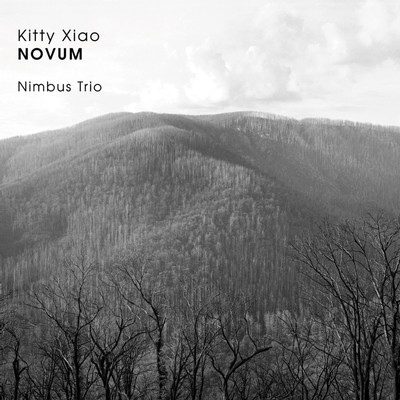
Comprising five works by Australian composer Xiao, this disc is a no-frills product with no information about the works themselves, nor any biographical details about the players.   What you get are a set of atmosphere-rich vignettes, mainly for the Nimbus Trio personnel: Xiao on piano, Cameron Jamieson playing violin, Jessica Laird working with the standard three flutes.   For the final piece, Solstice 1, Luke Carbon‘s bass clarinet joins the mix.   I’d heard the first two of these tracks in a composer’s concert about 18 months ago but the memories are faint.   Incidentally, the disc’s duration is a tad short of 43 minutes

For some of her constructs, Xiao has drawn inspiration from certain photographers.  The CD’s cover, above, features Australian photographer Jane Brown‘s Bushfire Landscape II, Lake Mountain, Victoria, 2010 and this shot provided the impetus for the album’s title (and longest) track.   For this, Laird uses the alto flute, beginning with shakuhachi-type exhalations to the accompaniment of violin shimmers and questing piano chords; a slow, adagio-style meditation settles onto a violin scrap that bears more than a passing resemblance to the Dies irae plainchant, which mercifully moves along an individual path rather than simply into a straight trio setting.   The instrumental interplay gives each contributor plenty to work with, although the first climactic moments find the piano and violin almost oppressively in synchronicity.

Xiao is pretty conservative when it comes to harmony.   Structures are easy to penetrate and she uses ambiguous timbral possibilities with discretion, making much of the flute’s potential for plosive, breathy accents.   At the central pages of Novum, the movement becomes more insistent with a steady sextuple pattern from the keyboard while the violin winds its way above it, before the three instruments revert to the Dies irae motif and another Romantic stentorian burst of rhetoric, both violin and flute trilling over solid piano chords before the piece’s positive concluding affirmation that begins with a soft ascent from flute and piano into something approaching a curt hymn.

Whether Xiao aims to give a kind of musical illustration to the tragedy behind Brown’s photo of the aftermath to Marysville’s 2009 destruction  –  the fire begins, the ascendant catastrophe, a concluding consolation  –  is up to any listener to decide.   Perhaps the composer is more intent on suggesting states of mind, in the best Beethoven Pastoral manner, rather than launching into musical pictures in contravention of Stravinsky’s dictum about the expressive abilities of music in general.   Whatever the interpretation, Novum is an easy piece to take on board and has plenty of interest in its progress for any potential executants.

Nipper is a shorter work, a little over half as long as Novum.   Its title refers to photos by Walkley Award winner Narelle Autio; I’ve found three in a series but there may be more.   All are underwater, the angle looking up at submerged swimmers who seem to be wearing life-saver caps  –  which gives an added dimension to the title in this country.   The piano opens with some impressionistic rumblings and leads the flute into a long arching melody with a supporting commentary from the violin.   The flowing effect stops for what could be confrontation with rocks or a beach drill exercise for the squad.

Xiao shows in  the central pages of this piece a tendency, or a preference, for doubling melodic lines, which heightens tension as the texture becomes more driven and insistent.   But the overall effect is summery, in some places languorous, with the piano always ready with repeated washes to bring you back to the water’s edge, and beyond.  Eventually the patterns take over and the work reduces itself to pure colour before a strong slow waltz brings back suggestions of marine power.   A Debussyan coda dissolves the scene placidly.

The third piece that has a reference to photography is Nimbus, the CD’s opening track, but I can’t find any such photo in the catalogue of either Autio or Brown; just as well, because this marrying of visual image with sound leads you to forget the music itself  –  which explains the high success of Richard Strauss’s orchestral music.   Whatever its inspiration  –  cloud or halo   –   this is the shortest track here at less than 5 1/2 minutes, and it begins very simply as a piano/flute duet before the violin enters in short canon with the violin.   The piano maintains the step-like pace, eventually moving to a less rigid 4/4-type rhythm, although triplets enjoy something close to over-use.   Here is another piece which presents no difficulties to the listener, although the intra-instrumental mirroring moves into the predictable, with a frisson-filled tension before a hefty piano solo/cadenza finishes the Nimbus experience with pattern-work that somehow leaves you unsatisfied; why, I don’t know, given the evanescent suggestions in the title.

Emei falls in length somewhere between Nimbus and Nipper.   This has a definite extra-musical reference   –  to Mount Emei, the highest of the Four Sacred Buddhist Mountains to be found in China, an age-old pilgrimage destination and apparently the site where all that Shaolin self-defence business began, immortalised for some of us by the television series from the early 1970s, Kung Fu, with David Carradine playing a mendicant monk in 19th century America.    A flute (bass?) opens the work before the violin and piano enter playing a melodic line that starts by sounding like a left-over from Ravel’s Introduction and Allegro but more four-square in outline.   The instruments reach a climactic point which suggests Brahms before the flute leads into a new melodic stream, another strong climax before a whimsical pastorale in triple time changes the pace.   A further segment of strong unison work (or nearly so) before some discords and a tension-releasing D flat 6th chord signifies journey’s end.   Is it a travelogue score of sorts, depicting the various stages the climber encounters during the ascent?   Could be, but it does have the CD’s least adventurous score.

Finally, Xiao’s Solstice I, over 11 minutes, is the second-most substantial work on offer.   It starts with what sounds like some flute over-blowing but in fact signifies the arrival of Luke Carbon’s bass clarinet; Laird takes no part in this work.  At all events, the initial atmosphere is placid, full of softness and quiescence before the piano and violin enter with an open-ended theme for elaboration.   Several distinct episodes follow although you are hard-pressed to find much that is new, i.e. any sounds you have not encountered in the preceding four pieces, apart from the bass clarinet colour which, outside two powerful moments of full-bodied playing, can be all-too-reminiscent of  Laird’s lower-pitched instruments.   The violin line suffers a slight intonative flaw at about the 8:15 mark, but it also is given what I think are the only octave double-stops on the CD, and these serve as a  reminder of how staid are Xiao’s vocabulary and palette.   She is not given to rapidity or flashes of colour but offers an ongoing contrast, especially in this Solstice I, between feather-;light textures and sturdy declamations, although the former have the edge.   A worthy showing, even if the products tend to emotional similarity.

Dark consolations

RUSSIAN LULLABY

Songmakers Australia

Melbourne Recital Centre

Wednesday October 4, 2017

                                                                                    Merlyn Quaife

As depressing programs go, this hour’s music-making was remarkably positive and seamlessly organised.   Andrea Katz‘s brainchild, Songmakers Australia, on this Slavs-only night featured two of the organization’s stalwarts in soprano Merlyn Quaife and tenor Andrew Goodwin, with mezzo Christina Wilson stepping in for regular Sally-Anne Russell.  Supported by Katz’s resolute accompaniment, these artists shared the first half’s honours in pairs of songs and duets by Glinka, Mussorgsky, Tchaikovsky and Kabalevsky although Goodwin enjoyed both duets as well as two solos while the female singers each had a duet collaboration and two solitary exposures.

None of this material was familiar – well, not to me.   Glinka, despite being the fons et origo of Russian music after the Enlightenment, remains a mystery man in this country, apart from a couple of overtures, so the two extracts from his cycle A Farewell to St. Petersburg  –  Cradle Song and The Lark  –  whetted the appetite for more because of their individualistic lyrical attractiveness.   Quaife took the vocal line in the first but Goodwin joined in with a contribution I can’t trace; there’s a version for voice, cello and piano but this one for two voices and keyboard I can’t track down.

Similarly, The Lark  seemed to have Goodwin as its main protagonist while Wilson provided vocal counterpoint, but finding a two-voice version proved impossible, although the final line for tenor and mezzo in this piece made for one of the recital’s high-points because of its emotional warmth and ideal balance.   And for those of us who thought Tchaikovsky’s melancholy sprang solely from an idiosyncratic personality, think again: the seeds are here, even in these two emotionally unpretentious songs.

As for Tchaikovsky, Goodwin sang one of the Sixteen Songs for Children, starting with Winter Evening, which opens benignly enough before moving into a grimmer landscape where a happy fireside domesticity gives way to reminders that, outside, the world is a stark place for the unfortunate.   Katz seized upon the postlude, giving it a confronting intensity and force that matched Goodwin’s unabashed rhetoric in Pleshcheyev‘s two final stanzas.  Then, the cycle’s next song, The Cuckoo, has an equally fortissimo conclusion and Goodwin surged through his page of onomatopoeic duplets while the piano thundered out its  –  approval? disapproval? impatience? or just an old-fashioned hurry to get to the end?

The two Mussorgsky pieces came from The Nursery song cycle and produced the most interesting music in this part of the recital, probably because of the composer’s lack of concern for the voice as anything but a vehicle for words.  Quaife sang the opening piece in the sequence, With Nurse, and made a mobile enough creature of this stop-start monologue with plenty of expressive detail and a well-etched contrast between the two verses.   She also sang the last completed piece in the two-part cycle, The Cat ‘Sailor’; another of the more striking settings of the composer’s own verses, this illustrated even more readily Mussorgsky’s craft in setting a text to a fitting melodic structure, the song moving from a regular rhythmic pattern to a near-parlando mode of action, well realised by both artists with a minimum of dynamic over-gilding.

As for the Kabalevsky pair, both given by Wilson, these came from the composer’s unexceptionable, if unexceptional, set of Seven Nursery Rhymes: There was an old woman, and I saw a ship a-sailing.   The first introduced us to the mezzo whose production was unflustered if unchallenged by this material, although her middle range has little distinctiveness about it, least of all in this context where Katz again gave full vent to an active piano component.  The second piece, not a particularly interesting bagatelle. seemed to be toeing the party line in its Soviet schmaltz, although Wilson enjoyed the undemanding experience.

After this octet came Shostakovich’s From Jewish Folk Poetry Op. 79, a deliberately sombre group of 11 songs written in the shade of the Holocaust, the 1948 Zhdanov denunciation of the composer (and others), and Stalin’s imposition of the Nazis’ Final Solution on his country’s Jewish population.   The sequence stands alone in Shostakovich’s output in its lack of a mediating filter, for its bitterness at his nation’s polity and his total sympathy with the victims of a state-run universal pogrom, and for a close identification with Jewish folk and klezmer musics.   This interpretation played with a straight bat, not overloading the tragedy that underpins every section of the cycle, in spite of some mordant humour in The good life and the final Happiness.   No, this singing trio concentrated on direct simplicity and an unbending strength of delivery, eschewing the temptation to opt for sentimentality in wrenching pages like those in Lamentation for a dead child, Cradle song, and Winter.

In this performing context, Quaife was most comfortable, contributing significantly to the first two songs: duets with Wilson that began with hectic mourning, then moved to the similarly nervous reassurance of an ailing child.   Wilson’s solo Cradle song made its points concerning isolation and exile with plangent simplicity, although you might have asked for a more synchronous partnership at some of the ritardandi points.   Quaife and Goodwin worked through Before a long separation with an engrossing juxtaposition of despair and resignation expressed in a driving alternation of apostrophes before both voices join in the same plaint: the individuals representing the generations of lovers and families torn apart by an indifferent officialdom.

You became more conscious with each passing number what a dour world Shostakovich is illustrating.    Quaife’s urgent Warning stood for every mother protecting her child from temptation as well as from the dark terrors that stalk the unwitting object of persecution.   The following The abandoned father for Wilson and Goodwin could have been amusing, a Goldberg and Schmuyle study for the 20th century, except for its underpinning message of familial abandonment and disloyalty.

The musical atmosphere remains ironic in Song of misery which Goodwin negotiated with his trademark unrelenting clarity as he presented pastoral pictures, unexceptional in themselves, but hiding a depth of suffering and starvation; which is continued through all three voices in Winter where, at the conclusion to Goodwin’s description of an ill wife and child, the trio mourn the advent of a death-ridden season.   Goodwin proceeded to outline a Schubert-reminiscent The good life with a firm directness of address, contrasting the bad old days with the new age of the collective farm, the death-throes of Tsarist Russia turning into the Golden Age of Communism, suffering transmuted into mindlessness.

Quaife achieved even better in the penultimate Song of the girl where the cattle-herd seems to mimic a Song of the Auvergne in a picture of bucolic content until, at the end, we realize that this gaiety and high spirits are false, compulsorily imposed on singer.   Finally, Wilson bore the brunt of Happiness which should offer an optimistic uplift by depicting the cliches of worldly success and contentment, but the biting music shows that these are all false and the old pain from random murder and continual persecution lie just below the surface; for Russian Jewry: no ‘star shines above our heads now.’

The most significant quality of this cycle’s rendition was its non-stop nature, the songs merging with chilling effectiveness and bite as their surfaces cracked to reveal a nightmare world where words cannot be taken at face value and an eminently singable, even popular-sounding music veers on collapse into a dirge.   For anybody inclined to diminish Shostakovich’s negotiation of a knife-edge path of survival through the years of Stalin, this cycle stands as testimony to the composer’s compassion and anger at what was so obviously a disgrace and shame for the world after the revelations of 1945 but which continued without qualms of conscience for further decades behind the Iron Curtain.

And for those sad moral delinquents who think politics and music don’t mix, they should look on this wrenching song-cycle and (hopefully) despair.   Songmakers Australia has informed my year significantly by presenting it and accomplishing the undertaking with admirable fidelity.

Chausson ideal, Prokofiev not so much

EAST MEETS WEST

Markiyan and Oksana Melnychenko

Melbourne Recital Centre

Tuesday September 26, 2017

                                                                             Markiyan Melnychenko

For their recital in the MRC Salon, the Melnychenkos covered almost as much territory as other duos are happy to handle in a full recital-with-interval.   Well, sort of: the addition of another major work might have exercised this audience’s endurance but not by much because the responses were very warm to all four programmed items.   In fact, the musicians played three repertoire staples as well as a brief curiosity and, for long stretches, any auditor would have been quite happy with the experience.

Markiyan is the violinist in this pairing, Oksana the pianist.   To my mind, the event’s first offering proved to be the most rewarding: Chausson’s Poeme  –  originally with orchestral accompaniment but then arranged by the composer for this combination, with other writers offering improvements as the work achieved its deserved popularity until these times when it has become a staple in every professional player’s repertoire.   The piano’s role, however improved, is subsidiary to the solo string and Markiyan Melnychenko impressed straight away after the sombre introduction with a gripping account of the first solo  –  unaccompanied and not difficult but immediately loaded with character and giving evidence of this player’s admirably firm bowing work.

Even when the score progresses to those rich double-stop bars inspired by the dedicatee Ysaye  –  the Animato at Number 11 in my Breitkopf & Hartel imprint  –  you were treated to a smooth delivery without a hint of scratch or scrape.   Indeed, the violinist’s enunciation proved near-flawless at those moments of exposure and/or peril, like the cadenza that Chausson interpolated early on, and the soaring high-set lines that reach their conclusion in the set of trills starting on a low B flat bringing the Poeme to its muted resolution.   Here was a controlled and metrically disciplined account of a favourite that often suffers  –  just like many similar products of its time and genre  –  from sloppy sentimentality and a devil-may-care attitude to the bar-line.

In comparison, the following Debussy Violin Sonata made a less favourable impact.   It’s a hard piece to get right, particularly in this environment where, to play safe, a pianist might make constant use of the left pedal for fear of manufacturing a glutinous texture or sounding over-prominent.   The opening to the Allegro vivo sounded sprightly enough but the movement’s centre found both artists inflicting heavy treatment on pages that don’t need power.  From the first Meno mosso where the key signature changes to E Major, Debussy is operating in a kind of atmospheric susurrus, a restrained mesh which is meant to sound light and transparent; the effect here was mobile but muddy.

Nor did the Intermede offer much better.   For one thing, it was taken at a pretty fast pace, which suited the violinist but found the pianist working too hard in chordal sequences like bars 29 to 33 or in potentially whimsical passages like the 16 bars before Number 3 in the Durand edition.   This over-emphatic attack also brought an unnecessary tension to the finale where Debussy’s contrapuntal interplay gets quite complex, to the point where you relished the violin’s abrupt unaccompanied flights in 9/16.   Soft passages like the chain that follow the direction au Mouvement initial lacked the expected delicacy, although the players recovered some finesse of attack by the time of that magical Meno mosso move to E Major.

Prokofiev provided the evening’s second half, beginning with the first of the Six Pieces from Cinderella, Op. 102; this is the third suite of piano solo extracts from the ballet and I didn’t know it had been arranged for violin/piano duet.   In this format, the waltz sounded very effective, the string line taking melodic responsibilities but also adding a good deal to the slightly manic impetus  that the composer invested in this scene where the private and public overlap to brilliant if alarming effect.   If for nothing else, the extract gave Markiyan Melnychenko an opportunity to display his gift for urging out long lyrical sweeps of fabric not dependent on a hefty vibrato.

With the Sonata in D Major, co-opted for Oistrakh from the Flute Sonata, the piano contribution again erred on the side of heft and a forceful dynamic.   The partners worked with certainty through the opening Moderato‘s exposition but things took a turn for the hectic during the development, notably when Prokofiev changes his key signature to B flat Major/G minor and the action involves chromatic creep and an increase in linear tension.   It struck me that both performers were again pushing what is a pretty simple work, in terms of construction and atmosphere on to a more weighty plane that it deserved.

The Scherzo would have gained, like the Debussy Intermede, from a more brisk staccato and a softer dynamic.   In the music I have for the work, there is no request for anything beyond mezzo-forte from the keyboard until the D flat chords four bars before Number 14; as it was, this presto impressed as lumpen-footed, lacking biting humour or acerbic spark.   Still, the D Major interlude/Trio was accomplished with sympathy and polish, in particular Markiyan Melnychenko’s quadruple stops and quiet, present harmonics.

Both musicians gave the Andante its space and showed a well-controlled dynamic balance, notably in the long central pages where triplets are the order of the day; their subsiding into that marvellous, simply-achieved drift down a chromatic scale at Figure 31 impressed also for its sweetness of timbre from the violin and gentle underpinning from Oksana Melnychenko.

Both musicians enjoyed the vigour of Prokofiev’s concluding Allegro con brio but a good deal of this sonata section came across as strident.   As with many another reading of this work, the deceleration at Figure 37 struck me as unnecessary; as far as I can see, the composer only wants a change of pace twice during this movement  –  for the rest of the time, it makes sense in the actual music itself to maintain a steady metre.   The final eight bars would have gained a good deal in accuracy if the tempo initially adopted had been more considered and the sustaining pedal not so readily employed.   Yes, Prokofiev has a reputation as a seeker after the percussive, but not in this elegant if sometimes ebullient score.

I’ve heard Markiyan Melnychenko in larger combinations before this and found plenty to admire in the accuracy of his pitching and the finesse of his delivery, the technical and emotional control evident no matter how ardent the composer’s temperament.   Of course, these qualities emerged often in this particular night’s work but it seemed as if both musicians were making hard work of their music-making –  like the Debussy which should shimmer with energy, not be delivered with gritty determination and hard-edged insistence.

Closing in on ideal

BASICALLY BEETHOVEN

Selby & Friends

Deakin Edge, Federation Square

Wednesday September 20, 2017


                                                                                     Daniel Dodds

These all-Beethoven recitals from Kathryn Selby and her mobile band of associate-friends have proved popular in recent years, the only problem being the thin repertoire available; it doesn’t take long before you start repeating yourself.   The composer left 13-and-a-bit works for the piano trio combination and, for this program, Selby brought into play two of the ‘fringe’ scores:  the composer’s own arrangement of his Symphony No. 2 in D, and the Gassenhauer Trio which offers the violin line as an alternative to a clarinet, the original treble instrument.

Filling out the night, Selby and her guests  –  violinist Daniel Dodds from the Festival Strings Lucerne, and cellist Timo-Veikko Valve of the Australian Chamber Orchestra  –  chose that ground-breaking work, the C minor Op. 1 No. 3.   In the normal run of performances, you can half-understand the legend that Haydn thought this ought not be published as it was a step too far for the Viennese public of the time; a stern and outspoken musical drama.   The general practice is to emphasize its brusqueness, particularly in the outer movements which make the most lasting impression.

In this ensemble’s hands, the trio itself preserved its inbuilt tension and tempestuous bursts of power, yet you were given the inestimable gift of seeing it in context  –  not just in relation to its opus number companions but also as a development in the form, Beethoven taking it several steps forward in dramatic potential and expressive intensity.   It helped immeasurably that this particular set of musicians worked with unfailing cohesion so that moments of ferment like the explosion at Letter C (in my score) of the opening Allegro con brio were punched out with compelling drive and well-husbanded dynamic control.   Later, these performers made an enriching odyssey of this movement’s development, sustaining tension but not by the fits-and-starts methodology of many another group.

Selby gave a spiky edge to the Andante variations, but then the pianist has most to say here.   Despite the composer’s best efforts to share the load, his piano intrudes at every turn, even when the two strings have the melodic burden and the keyboard is relegated to peripheral duties, as in the fifth variation.   Matters don’t improve in the scherzo, either, as the piano has those distracting arpeggio runs in the second half, not to mention a set of light-as-Mendelssohn scale punctuation points in the pendant trio.

The reading reached its highpoint where it should: in the stormy finale where Dodds’ firm line cut through the surrounding thunder to fine effect nine bars after Letter R when the relative major rears its welcome head.   Later, when Beethoven’s counterpoint is exercised more fully, both Dodds and Valve made clean-cut work of their flashing duets in thirds, octaves and in canon – all transparent and comprehensible rather than a meaty maelstrom-dive.   Finally, the players brought this urgent movement to an effective conclusion, the last two pages an object lesson in how to play a diminuendo without losing tension.

This trio was preceded by a light-stepping version of the Gassenhauer Trio No. 4 in B flat Major.   Here, the approach was measured, even deliberate, but the score’s inbuilt good humour bubbled continuously, particularly in the finale where even the advent of some B flat minor variations sounded tongue-in-cheek, surrounded as they were by forthright, athletic boisterousness.   The players made sparkling, deft work of the concluding Allegro with its jaunty syncopations, the strings in an ideal tandem partnership across these happy pages.

Apart from this bracing energy, other sections of the interpretation showed a painstaking degree of preparation; details like Selby’s hesitation before her eloquent D Major entry 8 bars before Letter B in the first Allegro; the calm eloquence of the Adagio‘s first theme’s restatement from bar 8 onwards; an expertly calculated evenness of delivery in the interplay 8 bars from the movement’s conclusion.   It might be a second-runner to the composer’s Archduke and Ghost masterpieces but this work, in the right hands, can make for an experiential delight; so it proved to be here in a display that came very close to ideal.

As for the symphony transcription, interest there focused on how hard Selby would have to work.   In effect, she was pressed very strongly across the breadth of the score.   Dodds and Valve contributed, generally with lines simply extracted from the orchestral score, but the pianist took on the primary responsibility load, having to handle all sorts of material that originally fell to the violins, woodwind and brass.   By the time the finale began, it was clear that Beethoven had given all his confidence to the keyboard musician.   That’s fine, but at times you wondered why he hadn’t gone the full Liszt and just written a solo piano transcription.   It was an interesting experience, if one where you admired Selby’s stamina more than the arrangement’s skill.

Lively night in North Melbourne

TRIPLE TREAT

Gertrude Opera

130 Dryburgh St., North Melbourne

Saturday September 16, 2017

                                                                                    Allegra Giagu

For sure, it was a triple bill; the question of a treat, I’m not so certain.   This company, coming up for its 10th birthday, gives a welcome avenue for aspiring local and international singers to gain expertise and repertoire; whether by design or by chance, the participants in this group of one-acters were young, although the GO promotional material shows that this accent on tender years doesn’t always obtain.

For Saturday night’s premiere, members of the company began with Salieri’s Prima la musica, poi le parole: that little entertainment, first performed on the same night in the same venue as Mozart’s Impresario, with which it shares pretty much the same plot-line  –  the problem of getting an opera written with two competing sopranos in play.   The male roles of Poet and Composer were handled with plenty of grunt by baritones Josh Erdelyi-Gotz and Darcy Carroll; they exuded a persuasive sense of exasperation from the start, setting out the plot-lines competently enough, although Salier  and his librettist Casti make sure an audience is aware of the competitive collaboration that underpins the action, simply by means of sheer repetition.

Soprano Allegra Giagu sang Eleonora, the prima donna with an ego the size of Schonbrunn.   This voice was over-projected for the room that was used for the triple bill, but she made a fine fist of the three satirical extracts from Sarti’s Giulio Sabino that saw the three soloists involved move into slapstick.   Bethany Hill‘s contribution as the good-time soubrette Tonina presented as more hectic than happy, the account of Via largo ragazzi given too rapidly for comfort.   But I did enjoy the wrap-it-up quartet, Lieto intanto, mainly for the unabashed energy that each of the singers gave it.

Second up was Menotti’s evergreen The Telephone, one of the shortest operatic two-handers you’ll ever come across. Bethany Hill put in another appearance as Lucy, Darcy Carroll also returning for the not-too-demanding part of prospective fiance Ben.   A fluffy piece which gives its soprano all the running, this staging by Greta Nash worked efficiently, even if there’s little enough you can do with it.   Hill proved more effective in this piece, but then it’s an easy ask: the line is simply dialogue (or monologue, if we’re honest) dressed up with notes.

In these days of instant communications where a phone is rarely out of many people’s hands, this work takes on a credibility that is streets beyond its effect in 1947.   The ubiquity of multi-function phones as an extension of personality plays out well in a reading set in today’s world, with the added advantage that Hill could (almost inevitably) use her device as a physical appendage  –  to talk into, of course, but also to take selfies.   Carroll had few occasions to shine, except when his beloved left the room for a short spell and then in the love-duet that concludes the work to general satisfaction.   Not that the singers were playing for subtlety: Ben and Lucy are both as superficial as anyone you can see on The Bachelor or, more pertinently, The Farmer Wants a Wife.

A new quartet came on for the staging of the 18-year-old Bizet’s operetta Doctor Miracle, the most substantial of the evening’s components, in part due to a fair bit of truncated dialogue in the Salieri work.   Resounding with echoes of The Barber of Seville, Don Pasquale, Cosi fan tutti and even La serva padrona, the plot concerns the feisty daughter of the Mayor of Padua who wants to marry a buoyant Almaviva-type military sprig, who gets into the house by disguise, is found out, pulls a swifty on the podesta and gets the girl in the end.   Nothing particularly original, yet the music is loaded with attractive melodies and the young composer had a keen eye for how long he could justifiably hold up the dramatic onward surge.

Juliet Dufour sang the daughter-in-love, Laurette, with a keen eye for the part’s vitality, especially in recitative.   The solitary problem came from her pronunciation.   Doctor Miracle was written in French, of course, with a libretto from Leon Battu and the highly prolific Ludovic Halevy, but the Gertrudes presented it (as also Prima la musica  .  .  . ) in English and Dufour’s enunciation showed a lack of ease with idiomatic English singing.    While she would have been happy sailing through Ne me grondez pas, it was often hard to decipher her meaning in that romance’s English equivalent.

Bass baritone Henry Shaw made a satisfyingly fussy Mayor, if inclined to overdo his revulsion at certain stages; the objection to Miracle’s clamour was strident enough but the omelette reaction exceeded the bounds of probability. Nevertheless, his contribution to ensembles like the trio with Laurette and Silvio was assured and moderately resonant. As his wife, Veronique, Lisa Parker played a comfortably assured vamp, too clever for her current company but pushing all the right buttons; in other words, making her presence felt in spite of having little but dialogue with which to do it.

Tenor Hew Wagner, a guest artist with GO,  made a bright beginning as Silvio, the military man disguised as Pasquin, the Mayor’s newly-hired servant.   His boasting Je sais monter les escaliers self-introduction came across with a breathless vigour and assurance.   A pity, then, that his ensemble contributions were close to inaudible, even in the rousing final quartet.   It was hard to see why this ringing timbre went missing in concerted moments, although I sympathized with him in coping with Jeremy Stanford‘s direction.

Wagner is a solid fellow, with the physique of a second-row forward and a solid diaphragm at his disposal.   But the tenor was required to climb onto a fairly rickety table at two points in the action, moments where your expectations that he wouldn’t make it or that he would fall were high.   This clambering requirement looked effort-laden and distracted from your focus on the voice and characterization.   A pity as he might have made a more persuasive showing if he’d had his feet on the ground throughout.

The company works under certain constraints, most of which are understandable.   Costumes have to be contemporary, regardless of traditional settings (1786 Vienna?  An American city in 1947?  18th century Padua?  Forget it), lighting is rudimentary and scene-setting errs on the functional side with little room for stage effects.   The most serious problem relates to the absence of an orchestra.   Bizet’s opera requires a pretty standard pit with a quartet of instruments for off-stage noises representing the Doctor’s self-promotion; Menotti asks for six wind, percussion, piano and strings; Salieri has the full woodwind, trumpets and horns, timpani as well as an active string body.

Opera Australia’s veteran Brian Castles-Onion took on the unenviable task of escorting the company’s singers through all three elements of the triple bill; he did so from the piano, just like at a rehearsal which, at times, this night seemed in danger of becoming.   I don’t know what he was doing with Salieri’s opening sinfonia but it sounded like selected bars were hefted out with little care for exactitude.   Matters improved for the actual opera but the results across the three productions were often ragged, the most successful collaboration coming in the Bizet score which, compared to the others, radiated fluency.

It’s beyond the company’s means to assemble an orchestra, although thought might be given to organizing a skeleton band  –  even a string quartet for something like the 18th century piece would have helped, or some percussion(ists) for Menotti’s entertainment.   But serious thought should be given to providing the Gertrude’s singers with something like a realistic accompaniment against which they can show their talents more fairly and with more rewarding results.

The productions have been presented also on Monday September 18 and will receive their last performances tonight at 8 pm.

October Diary

Sunday October 1

EMMANUEL PAHUD

Australian Chamber Orchestra

Hamer Hall at 2:30 pm

Getting themselves into shape, the ACO begins with the Ricercar a 6 from Bach’s A Musical Offering; I doubt that it will be the enthralling Webern orchestration – just a bland, everyday transcription for strings.  Pahud, here billed as ‘the world’s greatest living flautist’, will then play the C.P.E. Bach A minor Sonata, hopefully unaccompanied.  The orchestra’s outing wouldn’t be complete without a string quartet transmogrified for their forces, and here comes defenceless Ravel in F.  Another unaccompanied stand-by in Debussy’s Syrinx and Pahud finally joins up with the ACO in Franck’s Sonata for Flute and Strings, which is a misnomer: the composer wrote nothing for flute solo.  This work is for violin and piano, one of the great duos and not that suited to the flute, even Pahud’s; but then, I didn’t think much of the Galway/Agerich recording, either. Tognetti has organised the piano part for strings which should provide a barrel of laughs for anyone who’s played the work in its original form.

This program will be repeated on Tuesday October 3 at 7:30 pm.


Sunday October 1

MENDELSSOHN’S OCTET

Melbourne Chamber Orchestra

Melbourne Recital Centre at 2:30 pm

The MCO has its own octet; not hard to achieve, considering the wealth of willing talent available.  This afternoon, the title work is surrounded by the buoyant B flat Major Sextet by Brahms and a new octet by Douglas Weiland, the British composer, founding member of the Australian String Quartet, and a favourite voice of the ACO’s artistic director, William Hennessy who shared those early ASQ days with Weiland.  The new work is called Winterreise, which sets up all sorts of expectations.  The work comprises six movements, lasts about 14 minutes and was commissioned by Hennessy in 2015, was completed in August that year and is finally getting an airing here.  It’s very welcome, of course, but the pairing of the Mendelssohn and Brahms scores was an inspired move: both youthful, glowing works but what a world of difference!


Tuesday October 3

WILLIAM WINNANT

Australian National Academy of Music

South Melbourne Town Hall at 7:30 pm

Continuing the Academy’s percussion festival, the California-based senior citizen of contemporary music-making leads three works by Lou Harrison, the centenary of whose birth is the fulcrum on which this series of concerts and recitals turns.  First is Tributes to Charon from 1982 for three percussionists and alarm clocks, which Winnant requested from the composer for a 65th birthday concert; then, the 1987 five-movement Varied Trio for violin, piano and percussion; finally, the earlier (1973) Concerto for organ with percussion orchestra – about a dozen players –  in five movements which will present some logistical problems, mainly in siting the solo instrument.  As light relief come Henry Cowell’s Ostinato Pianissimo for Percussion octet, a pioneering piece from 1934 that lasts about 3 minutes – don’t blink; and John Cage’s Four6 from 1992, one of the great master’s late works and originally written for an unspecified (naturally) quartet.  Like pretty well everything in these American Triptych events, the content is significant and still challenging.


Friday October 6

GLORIES OF THE FRENCH BAROQUE

Brenda Rae and the Australian National Academy of Music Orchestra

Melbourne Recital Centre at 7:30

While the Academy’s percussionists are being happily engaged in their US-inspired orgy, the organisation’s other instrumentalists will be working under conductor Benjamin Bayl to support the American soprano in this night of music by Rameau.  I know nothing about Rae who is appearing here for the first time in Australia and tonight has the honour of launching the serious  music side of this year’s Melbourne Festival.  She will sing seven arias, which will be surrounded by overtures, dances and scene-setting interludes from the French composer’s operas, none of which we see today unless you’re lucky enough to live in Sydney: Les Paladins, Castor et Pollux (produced by Pinchgut Opera five years ago), Platee, Zoroastre, and two works from which you might have heard extracts: Les Boreades, and Les Indes galantes.   Other Pinchgut Rameaux include Dardanus in 2005, then Anacreon and Pigmalion on a triple bill earlier this year.  It’s a specialized field but just the sort of material that should be mounted at a festival because you’re unlikely to hear anything this concentrated very often.  The musicologists among us will be happy; let’s hope the singer is able.


Saturday October 7

JAN WILLIAMS

Australian National Academy of Music

South Melbourne Town Hall at 7:30 pm

Finishing up the American Triptych celebrating the wealth of the Republic’s composers for percussion comes another senior figure in the field and long-time presence at the University of Buffalo.  Williams leads four works by Lou Harrison, with a solitary stranger in the middle: Morton Feldman’s Instruments 3 for flute, oboe and percussion – 20 minutes of atypical activity.  But the night opens with Song of Quetzalcoatl, a 1941 composition for four percussionists with an understandable emphasis on Mexican instruments.   The brief 1939 Concerto No. 1 for Flute follows: also a trio, the woodwind solo is supported by two percussionists, although I’ve seen it played with only one handling the accompaniment. Like Debussy’s Rhapsodie, the ‘No. 1’ seems superfluous: I can’t find another.  Post-Feldman, Williams takes charge of the Canticle No. 1, also from 1939 and a percussion quintet lasting about 4 or 5 minutes; don’t blink.  The last Harrison work is the 1941 Labyrinth No. 3 for 11 percussion players and a relatively large-scale work, not just in the number of its executants but also in its four-movement length.


Saturday October 7

TURNING POINT

Australian String Quartet

Collingwood Arts Precinct at 8 pm

A further bullet in the Melbourne Festival’s gun-belt, this recital begins with a non-string quartet: Scarlatti’s Piece in 4 voices.  Well, I say it’s not a string quartet but I could be wrong; the work might not be by Alessandro or Domenico but by some other member of the family.  Or it could just be a keyboard sonata arranged for the ASQ instruments.   Anyway, there’s no doubting the provenance of Bartok’s First String Quartet or the first Beethoven Razumovsky which sustain the bulk of this event.  Also enjoying an outing is Philip Glass’s String Quartet No. 3, Mishima: a six-movement work and part of the composer’s score for Paul Schrader’s film based on the Japanese author’s last day.  The recital’s venue is a new one to me; from the directions given on the Festival website, it seems to be part of the old NMIT complex on the corner of Wellington and Johnston Streets.

This program will be repeated on Sunday October 8 at 6 pm, and on Monday October 8 at 7 pm.


Sunday October 8

MORE TELEMANN

The Melbourne Musicians

St. John’s Southgate at 3 pm

Finishing up for the year, Frank Pam and his chamber orchestra give Bach’s voluble contemporary a fair hearing, starting with his Canary Cantata, a compendium of four arias and recitatives on the death of a well-loved pet to be sung by soprano Tania de Jong. Pam himself takes the solo line in Telemann’s solitary and popular Viola Concerto in G Major, followed by Mark Fitzpatrick coping with the composer’s even-more popular, brief D Major Trumpet Concerto.  As makeweights, de Jong will sing Handel’s Ombra mai fu – the only aria anyone knows from the opera Serse – and the afternoon concludes with the first two symphonies by Johann Stamitz, so-called Mannheim Symphonies the first of which is a questionable attribution to this fertile composer who had an impact on Haydn and Mozart.


Thursday October 12

MSO PLAYS BEETHOVEN 8

Melbourne Symphony Orchestra

Melbourne Recital Centre at 8 pm

They will eventually get around to playing the unassuming F Major symphony, but only after an odd collection of pieces, beginning with Dvorak’s Serenade for Winds.  Written for pairs of oboes, clarinets, and bassoons, with three horns, an ad lib line for contrabassoon and cello and double bass parts supplied to supplement the bass line if you can’t find a contra, this work belongs more to the MSO’s Sunday morning Iwaki Auditorium recital programs.  Still, guest conductor Michael Collins will doubtless control proceedings from the first clarinet desk.  The night’s other soloist will be Lloyd Van’t Hoff sharing the honours in Mendelssohn’s Konzertstuck on his basset horn while Collins takes the clarinet line; I just don’t know which one of the two that the composer wrote is to be played   –  the F minor or the D minor.   And you’d assume they will use the orchestrated accompaniment instead of the composer’s clearer piano support.  Elena Kats-Chernin’s Ornamental Air from 2007, a solid three-movement concerto for basset clarinet and chamber orchestra, could find either of the two Mendelssohn soloists under the spotlight.

This program will be repeated in the Robert Blackwood Hall, Monash University on Friday October 13 at 8 pm.


Friday October 13

BANGSOKOL – A REQUIEM FOR CAMBODIA

Rithy Panh, Him Sophy

Hamer Hall at 7:30 pm

Another Melbourne Festival offering, this is the result of a collaboration between film-maker Rithy Panh and composer Him Sophy.  They have assembled a group of singers and instrumentalists to perform a hybrid lament for the agony of Cambodia under the Khmer Rouge.  The hour-long piece combines the Buddhist Bangsokol ritual and the Christian requiem in a fusion of dance, film, song and speech.  As the world now knows, there is a lot to grieve for; it strikes you even four decades on, principally the loss of two million lives as well as the near-annihilation of a culture = all made possible by a continuing wilful ignorance in the West.  This collaboration is receiving its world premiere here before it is taken to New York and Paris.

The program will be repeated on Saturday October 14 at 7:30 pm.


Saturday October 14

Joep Beving

Melbourne Recital Centre at 7:30 pm

Beving is an amateur pianist from the Netherlands who has made a splash with two CDs and is appearing under the aegis of the Melbourne Festival. I’ve listened to about ten tracks from these and the best that can be said is that it constitutes fairly harmless musical doodling.   The titles of his works might be different but Beving’s music is tediously similar, an aimless meander around the keyboard that betrays a harmonic gaucheness and melodic stasis.   It makes you long for the going-nowhere-quickly ambience of the American minimalists.  This recital is scheduled to last 75 minutes; for some of us, that’s over an hour too long.


Tuesday October 17

DOUBLE MANUAL

Peter de Jager

Melbourne Recital Centre at 6 pm

Another pianist on the Melbourne Festival roster is this remarkable musician who is mounting a one-night stand featuring only music by Iannis Xenakis, the Romanian/Greek/French composer whose immersion of composition in mathematics set challenges – some of them impossible to surmount – for even the most willing and adventurous musicians.  De Jager plays three of the major piano pieces – Herma (1961), Evryali (1973) and Mists (1980), which was written for Roger Woodward.  For variety, he will also play the composer’s only two solo harpsichord works: Khoai (1976) and Naama (1984). The performance of one Xenakis keyboard work is a rarity because preparation requires a very long time . . . but five?  Unless you attend with scores in your hand, there’s no way you can testify to de Jager’s precision, especially in the earlier piano works which show what wimps Stockhausen and Boulez turned out to be.  But for some of us, this 70-minute stretch could turn out to be one of this year’s high-water marks.


Thursday October 19

‘ROUND MIDNIGHT

Emanuele Arciuli

Melbourne Recital Centre at 8 pm

Third of our Festival’s three solo pianists is the Italian-born expert in contemporary American composition for his instrument.  Making his Australian debut, Arciuli goes all the way, beginning with China Gates by John Adams, a brief bagatelle from 1977.  Then he plays Judd Greenstein’s First Ballade, a jump of thirty years in chronological time but a retrograde step in modernity; the piece stays in the same harmonic loop for most of its duration and you can see why he gave it this title.  Eine Kleine Mitternachtmusik: Ruminations on ‘Round Midnight by Thelonious Monk by George Crumb requires an amplified piano and is a nine-section construct commissioned by Arciuli himself 16 years ago.  Sound Gone was written in 1967 by Stephen Alexander Chambers before he converted to Sufism and changed his name to Talib Rasul Hakim.  Arciuli winds up his hour with Rzewski’s pounding Constructivist revival, Winnsboro Cotton Mill Blues.

Arciuli presents a second program at the Deakin Edge, Federation Square on Friday October 20.  Works include Cage’s In a Landscape, Louis Ballard’s Four American Indian Piano Preludes, the ‘Round Midnight Suite variations on a Thelonious Monk theme by Rzewski, Babbitt, Torke, Harbison and Daugherty, and  Phrygian Gates by John Adams.


Friday October 20

HOWARD PENNY: FROM THE CELLO

Australian National Academy of Music

South Melbourne Town Hall at 7:30 pm

Head of Strings at ANAM, Penny takes control of the organization’s strings in a breezy night’s work that begins with Two Pieces for String Octet by Shostakovich, a prelude and scherzo dating from the composer’s student years and written concurrently with the startling Symphony No. 1.   The forces reduce a tad for the warm, aspiring Brahms Sextet No. 2 in G Major; you can go years without hearing either of the composer’s works in this form, then they both turn up within weeks of each other (see above, Sunday October 1). Quite a few more players will be needed for Bartok’s Divertimento of 1939; in fact, 22 is the prescribed minimum, the composer having a keen eye for the weight needed when he divides the players which happens regularly, although he’s more happy to play off principals from each section against the main body in the best concerto grosso manner; always an exhilarating journey, if a brief one.


Friday October 20

PATH OF MIRACLES

Tenebrae

St. John’s Anglican Church, Malvern East at 7:30 pm

A 15-year-old British choir making its debut in the Melbourne Festival, Tenebrae is presenting a single program at two different venues.  The works to be given are Owain Park’s Footsteps and Joby Talbot’s Path of Miracles, both of them recently recorded together by these singers.  Which makes you wonder why they’d bother bringing them so far and making them the only offerings available.  Talbot’s four-movement work, for 17-part a cappella choir with a few crotales thrown in for atmosphere, follows a pilgrim’s route from Roncesvalles, through Burgos and Leon to Santiago and the shrine of St. James; it lasts a little over an hour and is a Tenebrae specialty because the director Nigel Short commissioned it.   But then, so he did for Park’s work that presents images of a tiring traveller in a little over fifteen minutes.  All well and good and the few performance extracts provided sound effective, but again: why come all this way to sing a record?

The program will be repeated  in the Melbourne Recital Centre at 8 pm on Saturday October 21.


Saturday October 21

SOUND TEXT

Charles Gaines

Melbourne Recital Centre at 6 pm

This recital concludes an exhibition, The Score,  which runs from August 1 to November 5, and a series of seminars held throughout the Melbourne Festival at the Ian Potter Museum.  The recital is a combination of art and music put together by American conceptual artist Charles Gaines with music supplied by Opera Povera’s Sean Griffin.  The musical content ranges from Reconstruction-era spirituals (were there any?) to French Revolutionary ballads.  The art itself seems to revolve around musical scores that lurch out into visual and linguistic areas; something like the stuff we were all writing back in the 1960s, except that this has intimations of holding more of an emphasis on politics.  It all sounds promising and there’s some hope, as it’s Festival time, that the occasion could be confrontational.


Tuesday October 24

THE END OF TIME

Ensemble Liaison

Melbourne Recital Centre at 7 pm

As soon as you see this night’s title, you immediately think of Messiaen, don’t you?  And you’re spot-on: the climax of this recital is the famous quartet with guest Dene Olding coming in for the work’s violin line.  Before that long sequence of visions spiritual and a leetle bit temporal comes Schumann’s Adagio and Allegro Op. 70 which could feature either Olding or Svetlana Bogosavljevic’s cello, but certainly Timothy Young’s piano, and certainly not the original score’s horn.  As well, the group presents the premiere of Australian writer Samantha Wolf’s Splinter for an as-yet unspecified instrumental combination; and, to begin, Stravinsky’s The Soldier’s Tale in the composer’s own version for violin, clarinet (David Griffiths, on this night) and piano.  We are promised a lighting design from Paul Jackson, so the night’s colours won’t be only instrumental.


Wednesday October 25

SOUVENIR DE FLORENCE

Australian Chamber Orchestra

Melbourne Recital Centre at 7:30 pm

Once again, a real chamber recital from the ACO and exclusively for Melbourne, it would seem.   As well as Tchaikovsky’s athletic string sextet to bring down the curtain, the visiting ACO personnel will also indulge us in Beethoven’s Grosse Fuge – hopefully for just the original four strings – and Shostakovich’s Two Pieces for String Octet, performed just five days previously by Howard Penny and his ANAM forces (see above, Friday October 20). Carrying the torch for frequent collaborator Olli Mustonen, Tognetti and his colleagues will play the Finnish pianist’s eight-movement Nonet No. 2 from 2000 for two string quartets and double bass: a work that the ACO hastened to present in the following year and of which I can’t recall any trace.


Friday October 27

MSO PLAYS SCHUBERT 9

Melbourne Symphony Orchestra

Hamer Hall at 8 pm

Back in the old routine, this event shows the MSO back in the well-worn saddle.  Finishing off the program, the strings will suffer from an extended bout of RSI with the Schubert Symphony No. 9 which is Great, as its nickname claims, but draining for the performers who endure page after page of scrubbing.  British conductor/musicologist Andrew Manze starts off with Beethoven as well – the dour Coriolan Overture – and Isabelle van Keulen is soloist in Prokofiev’s rapidly accomplished (20 minutes or so) Violin Concerto No. 1 in D Major.   Van Keulen was the Eurovision Young Musician of the Year in 1984 but has been much more than a flash-in-the-pan popular success; the pity is that it has taken her so long to get to these shores.

This program will be repeated at 8 pm on Saturday October 28 and Monday October 30 at 6:30 pm.


Saturday October 28

JACOBEAN COMPOSERS IN THE LOW COUNTRIES

Ensemble Gombert

Xavier College Chapel at 8 pm

John O’Donnell begins this journey into another historical byway with an organ work by John Bull, Prelude on Laet ons met herten reijne; probably written while the composer saw out his exile in Antwerp after having to escape from the law in England for the unmusical talents of fornication and adultery.  The Gombert singers come on to the scene with selections from Peter Philips’ Cantiones sacrae, apparently picking material from both sets for five and eight voices;  this composer had a more high-flown reason for living in the Netherlands and Belgium as he was a Catholic.  The main part of the program will probably be consumed by Richard Dering’s first book of Cantiones sacrae quinque vocum; here was another Catholic who nevertheless managed to get back to England when  appointed organist to that crazy, resentful royal, Queen Henrietta Maria.  A last chance to hear this excellent choir before its final-for-the-year Christmas celebration in the same venue on Saturday December 9.