Straight down the middle

PIANO TRIO JEWELS

Wilma & Friends

Ian Roach Hall, Scotch College

Saturday November 12, 2016

wilma-smith

                                                                                     Wilma Smith

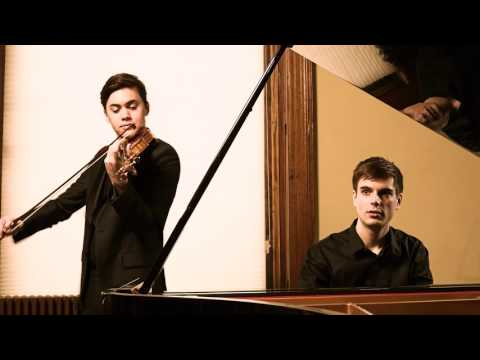
Concluding her three-recital season under the Wilma & Friends banner in the opulent  main auditorium of Scotch College’s music school, Wilma Smith hosted two guests in a night that featured three very well-known works.   Cellist Yelian He is a Scotch old boy who has studied in the UK and is back home with his performing partner, British pianist Yasmin Rowe, who was this night’s third voice.   As ad hoc ensembles go, the Smith-He-Rowe combination showed a high degree of competence in coping with Haydn’s C Major Hob XV:27, Mendelssohn in C minor and Brahms No. 1 in B Major: all fare that chamber music enthusiasts in this city have become very familiar with through the international and Asia-Pacific competitions held since 1989.

The chief problem with Saturday evening’s work was a question of balance.   The Roach space is excellent for chamber music: plenty of wood, a fan-shaped auditorium, a not-too-large airspace to fill.   But a piano on its long stick enjoys resonant pre-eminence and neither Smith nor He was able to mount a challenge to Rowe’s domination of the happy Haydn work.   Yes, its emphasis does fall heavily on the keyboard and the cello, for the most part, spends its time reinforcing the piano’s bass notes, but this interpretation proved dynamically lop-sided.

Smith’s line remained clear, coming into its own during the ornate passages of the middle Andante, but Rowe’s attack took over the work’s progress, in part because of her emphatic definition in delivery, but also because, in unison passages, she continued to maintain her position of primus inter pares.   Of course, she had the work under control and distinguished herself with excellent dexterity in the perky concluding Presto, but, for the most part, He’s timbre featured very faintly in the sound mix.

Matters improved significantly in the Mendelssohn work – but then, the cello has a more adventurous, independent part to deliver.   Most pianists find it hard to resist the temptation to turn this work into a concerto, the writing is so rich and flattering.   Rowe gave space to her colleagues, especially in the melting string-duet work of the second movement.   Both outer Allegro segments might have gained in clarity by less use of the sustaining pedal at moments like the quickly descending arpeggios from bar 142 onwards (and later from bar 307).

Still, while the work’s central pages worked well enough, particularly Rowe’s lightly chattering output in the Scherzo, the finale underlined a lack of presence from He’s cello.   The notes were all there and eloquently phrased but you had to strain to hear them, except in exposed moments like the opening sentence.    Further, at a fortissimo burst, as in bar 49 where everyone breaks into a broad theme in an elliptical E flat Major, He’s contribution sounded recessed.   Still, the musicians gave a fine account of the two places where Mendelssohn inserts his version of the Vor deinen Thron chorale: moments that I still can’t fathom in terms of structural relevance but which always rouse responsive shivers.

After interval, for the Brahms, He re-positioned himself so that, instead of facing across-stage to Smith, he sat full frontal to the audience in the piano’s curve.   The result improved the integrity of the performance markedly; just as well, as the cello takes over the noble first subject from bar 4 and sets the interpretative standard for the rest of a substantial movement, made even more so on this occasion where the expansive exposition was repeated.   To happy effect, the eloquent string writing in sixths came across with satisfying depth and balance.

Rowe  coped very well with this score’s multiple difficulties, particularly the composer’s use of syncopations in accompaniment and constant variation in rhythmic patterns, much of which seems to fall to the piano part with wearying frequency.   The player’s dynamic output was still, for my taste, over-heavy, but she sprang quite a few surprises along the way, like the evenness of her septuplets in the Scherzo‘s second half repeat, and the pointed delicacy of her delivery of that sparkling Mendelssohnian tracery-work starting at bar 145.

Later, the Adagio proved to be a continuous pleasure which showed how well-matched Wilma and He were in sound-colour and phrasing during their exposed duet passages and at dangerous moments like those sustained, scouringly clear F sharps in the last bars.   By contrast, the finale showed signs of fatigue, mainly at stages where both strings were operating pretty high in their ranges, like the declamation from bar 171 to 187.   Still, the players made a gripping experience of the last 50 bars or so as the trio surges to its determined firm final cadence: a convincing finish to a reading of welcome dynamic uniformity.
Winner with the well-worn

SHEER NYLON

Selby & Friends

Deakin Edge, Federation Square

Tuesday November 8, 2016

daniel_dodds_2-1

                                                                                Daniel Dodds

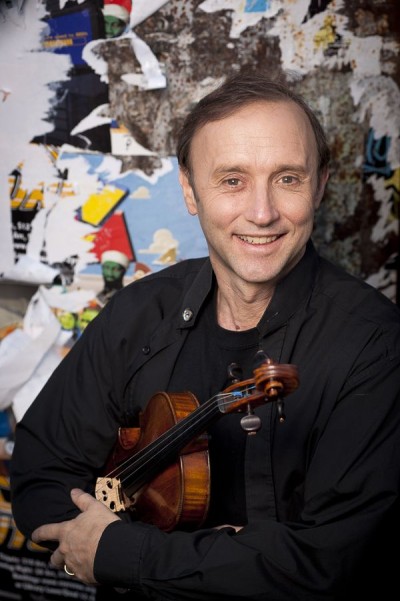
Finishing the year in style, Kathryn Selby and her guests – violin Daniel Dodds, cello Julian Smiles – gave a rich, broad airing to the Brahms Piano Trio No. 1, if more heavy-footed in the Scherzo than usual – not over-molto in this Allegro – and I believe without a repeat of the first movement’s exposition.   But what you gained from this interpretation was an awareness of the score’s linear strength and the warm humanity of its expressiveness which avoids any trace of the sentimentality that cloys some of the composer’s most popular bagatelles.

Smiles is a well-known quantity – not just from his appearance at the last Selby & Friends all-Beethoven recital, but also through years of Goldner Quartet, Australia Ensemble and Musica Viva appearances.   Once again, he brought his quietly assertive strength into play from bar 4 on, later most eloquently at that rare moment of lyrical exposure in the Adagio with the change to G sharp minor (sort of): the only moment in that inspired alternation of chorale and complex harmonic meshing where a string instrument speaks alone.

Dodds, currently artistic director of the Festival Strings Lucerne, made a remarkable contribution to the work’s success. He is not a barnstorming force, carving up the melodic soars and swoops, but more penetratingly fine in output than most players achieve in negotiating this work.   His first entry – that delayed powerfully fine theme restatement with the cello in sixths – made a deep impression for its controlled supremacy of line; but the finesse of his detail delighted just as much, like the rapidly accomplished triplets throughout the finale and his moderate dynamic at those few points where the violin in that movement actually gets to enjoy the limelight unopposed or unyoked to the cello line.

Tuesday began with a brief Schubert piece, the D.28 Sonatensatz.   A youthful single movement, this hardly stretched these performers although Selby was kept occupied with dollops of doubling and plenty of underpinning passage-work.   Just as rare, Liszt’s Tristia, a late arrangement of his own La vallee d’Obermann, the longest work in  the Swiss book of the Annees de pelerinage, impressed for its restraint, especially the muffled string output at the piece’s opening, so that the eventual explosion into dramatic hyperbole for all three performers came over with emphatic power.

A close-to-full Deakin Edge auditorium greeted the Brahms trio interpretation with considerable acclaim; with this audience you can’t go wrong with the tried-and-true Romantic.   A similar reaction greeted the Liszt rarity; for all its inbuilt depression and mournful meanderings, the work is framed in familiar 19th century terms.   Not so happy was the reception given to Gerard Brophy‘s Sheer Nylon Dances, a piano trio work in four movements with the piano ‘fetishised’, i.e. slightly prepared in the Cagean sense.

Most of the Australian composer’s suite titles suggest atmospheres or settings, although the intent is surely comic.  An initial cakewalk avec carillons lointains begins with bell-suggestions from a slow-moving piano before the strings liven up the action; the start of the voiles tunisiennes is string patterns just disjunct enough to suggest minimalism before the piano enters; a more placid la gymnopedie engloutie precedes a rhythmically disjunct danse d’extase.   These Debussyan/Satiesque titles (with a dash of Scriabin) give you no preparation for what follows, particularly as the movements’ texture is subtly dominated by the clanks and thuds of the piano.   A good deal of the piece is a test of synchronicity, the danse something of a trial for the executants who have to do a fair bit of counting eleven to the bar.

This Brophy score from 2000 puzzled the patrons – and me, simply because it was out of context, although you can see that it was programmed in comfortable surroundings to give it an airing, rather than to draw parallels with adolescent Schubert and venerable Liszt.   But the true tenor of this audience came from a question without notice after Selby’s opening talk/explanation when a lady asked when the organization would be programming Clara Schumann’s Piano Trio of 1846.   That’s the sort of curiosity that this splendidly accomplished pianist’s Melbourne patrons seem to want .  .  .  more’s the pity.

Well, the diet in 2017 is light on rarely-heard names but long on interesting products from the familiar ranks.  March brings Beethoven, Saint-Saens and Dvorak’s Dumky.  May is all arrangements: Haydn’s Miracle Symphony, Ravel’s Le tombeau de Couperin,  and Beethoven’s Triple Concerto.   Elena Kats-Chernin’s The Spirit and the Maiden will begin July’s program, with a Dvorak and Ravel to follow.  September is another all-Beethoven night, including the composer’s own arrangement of his Symphony No. 2.   And the end of the year offers the only break in the piano trio mould with Turina, Mozart and Dvorak piano quartets.   Nothing to fret about here, not even Kats-Chernin’s quarter-hour construct, thanks to the composer’s penchant for repeated patterns and traditional harmony.    What you will get across every night is excellent chamber music-making with a lot of familiar faces rotating at the string desks.

Finishing their year on a high

METAMORPHOSES

Australian String Quartet

Melbourne Recital Centre

Monday October 24, 2016

                                 gyorgy-ligeti

                                                                                     Gyorgy Ligeti

Now that the underwhelming serious music content of the Melbourne Festival has passed into a well-deserved oblivion, we are watching most local ensembles and organizations close down for the Christmas/New Year (and beyond) break.   Monday saw the ASQ performing its final subscription series recital for 2016 but the group’s assurance and insight left you hopeful of even better things to come when the musicians re-assemble next May – with guest Slava Grigoryan –  for the first of the usual three inter-capital tours.

Like the Beilman & Tyson duo a few days before, the ASQ opened with Mozart, which always strikes me as either a foolhardy or a supremely confident gambit; the instrumental web for most of the composer’s chamber music is not so much fine as exactingly precise – no time to feel your way in or sloven around with the back-of-the-conscious reassurance that the exposition repeat will signal the group’s ‘real’ start on the matter in hand.   Even more ambitious, this kick-starter was the  K. 590 in F Major, last of the ‘Prussian’ trio – indeed, the last work by Mozart in this form.

In its opening statements, the players went for drama, extending the third and sixth bars’ rests into what came close to a general pause; understandable, given the music’s momentarily brusque nature, but presenting as something like overkill in this essentially urbane compositional ambience.   Most of the striking initial Allegro fared well, with occasional question marks over the mediant’s tuning in cellist Sharon Draper‘s upward-rising common chords; part of that famously outstanding bass line intended to showcase the capabilities of Friedrich Wilhelm II, the alleged dedicatee of the work.

What one carried away from this interpretation was a reinforced admiration for first violin Dale Barltrop‘s subtlety of output.   He was in the thick of things when the going got rough and raspy, as in the Menuetto‘s Trio and across the rapid-fire finale; but the lacework moments, like the decorative line above the first melody’s iteration at the Andante‘s opening, the throwaway interpolations topping the first movement’s gossamer coda, or the burden of activity at the work’s end, all delighted for their release of tension in a reading where Draper and viola Stephen King showed no hesitation at hurtling into the action with a vigour just this side of confrontation.

Draper spoke to us before the group launched into the night’s semi-title work, Ligeti‘s String Quartet No. 1, Metamorphoses nocturnes, giving the 60-plus-year-old construct a sort of context, including the warning that it could be ‘scary’.   Possibly, if you were a newcomer to chamber music.   But this score stands more as a young composer’s dealing with his heritage and what he thought was the prevailing musical environment of the mid-1950s.   It jumps from one activity to the next with enormous agility; as there are 17 sections in all spread across 20 minutes, the chances of following the work’s four-note nerve-cell are not great.   Still, the debt to Bartok’s night music escapades (what did you expect with a subtitle like that?) remains apparent and constant, with lots of bridge and fingerboard bowing bursts, some effective harmonics, glissandi for that scare factor – all carried off here with excellent crispness, the players’ weaving in with each other without faltering.   Ligeti springs a continual series of surprises, none of them electrifying these days but a clever canvas of contrasts prefiguring the greater, larger scale works to come.

To finish, the ASQ headed to Ravel, and justifiably so.   Here was an eloquent interpretation which showed how the allocation of weight means everything in this light-filled masterwork.    As the movements slipped past all too rapidly, you were struck afresh by how much the work’s development comes from the first violin-viola interplay, often almost antiphonal in its structure; this time, Barltrop complemented King with a steely determination in the outer movements.  All members worked towards a well-rounded version of each movement, vitally percussive in the pizzicato-heavy Assez vif and then unfolding the muted languor of the Tres lent with its Proustian hothouse suggestions.

Particularly in this endearing work, the quartet members showed a brand of synchronous individuality that marks them off from other ensembles.  This quality doesn’t just come from Barltrop’s quiet authority and linear purity, nor from the firm deliberation of King’s tenor, nor the evenly generated warmth across the full range of Draper’s resonant Guadagnini, not even Francesca Hiew‘s vitality in imitative or support passages with her leader.   I think the group’s appeal comes from an innate assertiveness that survives the demands of ensemble-work, where a musician is expected to subsume natural inclinations when faced with the general good.

Each of these contributors preserves his or her voice and they come through clearly, no more so than in a work like the Ravel with its continuous opportunities for each of the four participants to exercise  –  often pretty discreetly  –  a personality.   Yes: roll on 2017, with more of the same.

New talents in cool combination

Benjamin Beilman and Andrew Tyson

Melbourne Recital Centre

Saturday October 22, 2016

beilman-tysopn

                                                                                  Beilman & Tyson

The second-last set of guests for Musica Viva‘s subscription series recitals this year are better-known as individual achievers, prize-winners at competitions for their instruments, rather than as chamber music laureates.  In fact, as far as I can see, their association with each other, as opposed to their relationships with other duo artists, is of pretty recent origin: an all-Mozart recital at the Louvre in March which included the Violin Sonata in A Major K 526, as on Saturday’s program; another at Wigmore Hall on July 10 where they played the Janacek Sonata.

The other elements in their Australian tour are a new work by Australian-born, Glasgow resident Jane Stanley, Cerulean Orbits (in two sources, her first name has been re-gender-assigned to ‘John’), and the Saint-Saens Violin Sonata No. 1.   By the time they reached Melbourne’s Elisabeth Murdoch Hall, the pair had negotiated these four works ten times in a 17-day stretch crisscrossing the country, which must have given them a remarkably concentrated opportunity to hone their interpretations; the final performance should be a gem.  After which, I’d assume, they’d be happy to give these scores a rest for quite a few months.

Meanwhile, we reap the benefits.  The Mozart proved to be a polished, well-synchronised performance; in fact, a standard-setter for the rest of the night.  In the first Molto allegro,  Andrew Tyson’s touch was lapidary-refined, each note slotted into position with singular craft, while his Presto finale could hardly be bettered for fleetness of finger-work.  Benjamin Beilman allowed his partner to set the running, coming into prominence where required, but the reading as a whole favoured the keyboard’s output, although honours were split more evenly in the middle Andante with its unsettling, plain-speaking octave doubling passages.   A different perception of the piece to your classic Szeryng/Haebler delineation but shaped  – no, honed  –  to a very high standard.

The tables weren’t quite reversed for the Janacek work.   Long in gestation and even longer in revision, the sonata shares problems equally as both instruments cope with its alternating bursts of spasmodic interjections and short-winded tunefulness bordering on the folksy.   Here, Beilman enjoyed more exposure, even if Andrew Tyson’s percussive explosions sometimes drowned his pizzicato doubling, or later his rapid downward scales in bars 2 and 4 of the third movement Allegretto.   But both musicians were intent on communicating the essential bite of Janacek’s writing where even a simple lyric like the second movement Ballada can’t be relied on to remain lyrically plain, or harmonically definite: just as you think you’re happily in E Major, the menace of C sharp minor wins out at the end.   This segment of the work impressed most because of the affecting embrace by both executants of the composer’s restless, unapologetic sentiment.

While Tyson dealt forcefully with the irrepressible jagged rhythmic patterns and complex trills that dominate the piano’s content in both of the first two movements and that return at the finale’s climax, Beilman brought a persuasive warmth to the Poco mosso section of the final Adagio, capped later with a rasping glow at the Maestoso G-string melody that rises to a weltering high B flat before the sonata ends in whispers and tight-lipped depression.  The players maintained tension throughout this work, taking their time over its relieving interludes so as to more effectively set up the following frenetic action.

Jane Stanley’s work was introduced by Tyson with an admirably fluent pre-performance address which went as far as possible, in the time allocated, to unveil some of the orbital mysteries.   This new score’s progress seemed to hold little meat beyond a series of timbral and rhythmic patterns or motifs, complete with sparse passing quarter-tones for Beilman and punctuating chordal splodges from Tyson.   Any suggestive extra-terrestrial images came from some high, ethereally calm passages for violin, while the arrival of space-junk generated a patch of twitchy, if not temperamentally refractory, playing  –  to my mind, the short piece’s most arresting moment.

In the Saint-Saens D minor Sonata, the players found performance gold.   Like a fair amount of the composer’s work that I know, the requisite virtuosity isn’t that demanding on fingers being urged to negotiate hard-to-manage chords and positions, but more reliant on the musicians’ response rate, which has to be lightning-fast.   Beilman and Tyson were note-perfect, as far as I could tell, and easily at home with the composer’s flamboyant style.   Just as in the preceding works, if more noticeably here, their collegial phrasing, agreement on points d’appui, interdependence in spots of rapid execution  (like the helter-skelter doubling – really, tripling – that breaks out about 12 bars before the final Animato indication in the Allegro molto) informed a reading of striking efficiency and brio.

Yes, the sonata is an intrinsically flashy piece, one that draws attention to its own brilliance and that of its interpreters – as in the central section of the Adagio which is flattering for everybody involved – or when it gets stuck in  bar after bar of light-hearted repetition (see the third movement’s change of key to E flat).   For all that, it suited Beilman and Tyson exceptionally well, allowing them to give free rein to their executive skill and high-powered temperament.   Here’s hoping their future performances together gain in interpretative depth because this set of four works demonstrated to a high degree their matched abilities and capacity for concentration and the impressive results that come from simple hard work.

This program is repeated on Tuesday October 25 at 7 pm.

When the audience gets in the way

SCHUBERT QUINTET

Australian Octet

Melbourne Recital Centre

Sunday October 9, 2016

melnychenko-markiyan-950x1425

                                                                             Markiyan Melnychenko

As most local chamber music enthusiasts know by now, the Australian Octet is an off-shoot of the Melbourne Chamber Orchestra,  with William Hennessy the artistic director/leader of both bodies.   Now in its third year of operations, the Octet is a mobile organism; not only touring but adjusting its personnel so that programs can take in a much wider range than only that written for all eight string instruments.

Sunday’s well-attended recital made a case in point.  The whole group appeared for the premiere performance (in this hall, at least) of Graeme Koehne‘s Nevermore  .  .  .  which has been set up for the orthodox Mendelssohnian personnel of four violins and pairs of violas and cellos.   Speaking of orthodoxy, the score is a model of old-style lyricism and harmony, undemanding of any auditor’s forbearance in its one-movement minor melancholy, richly satisfying for its performers as it gives each instrument a flattering area in which to operate and asks for none of those brusque, even violent sound-manufacturing techniques that have become vin ordinaire since the start of the last century.  Koehne points to Poe’s The Raven and Verlaine’s Nevermore sonnet as source material; perhaps better tied to the latter than to the American’s gnomic nightmare.

I identify the piece more with the French poem because the work’s emotional world suggests retrospective regret, if you want.   But in its nature,  Nevermore  .  .  .  is a music that looks backward to an aesthetic that abjures adventurousness and plays expertly with a traditional mode of composition.  Not that this was unexpected from the creator of To his servant Bach, God grants a final glimpse: the morning star which comes close to a celebration of the German composer couched in parameters that remain well inside a conservative field.  At odd moments in Nevermore . .  .  you aren’t inclined to think of specific composers so much as of a period; although the traces often defy specificity; at two points, the inescapable suggestion of a the dansant‘s salon ensemble came to this mind.  Whatever the case with those of us trying to categorize the work, it very clearly appealed to the Octet’s audience which emitted a murmur of approval before applauding.

In Dvorak’s A Major String Sextet, Markiyan Melnychenko took Hennessy’s position as first violin, supported by fellow violinist Robin Wilson, violists Merewyn Bramble and Tobias Breider, with cellists Paul Ghica and Josephine Vains.  While all pairs made excellent contributions to the work’s progress, the violins proved an exceptionally fine combination, particularly during the second movement Dumka, their passages in sixths showing an admirable empathy in pitch and phrasing.  This success continued even in the following Furiant, notably at the testing octaves that abound from from Letter H onward.

Although the concluding set of variations works some notches below the inventive spirit of the preceding movements, these musicians made it an enjoyable experience, their linear interdependence and character well-defined and invigorating to experience.  As a contributor to the work’s success, it’s hard to look past Melnychenko – a born leader who sets a high standard but observes his own place in the ensemble.  At the end, other players clapped him on the back – a rare accolade in my experience but well-merited here for the combination of directional control, encouragement and finesse in delivery with which he brought this work to completion.

Performing in the program’s title work, D. 956 in C Major, Hennessy returned to first violin with Madeleine Jevons his ever-secure second.  Breider made a formidable alto voice, while Ghica and Vains took on the terrors and delights of first and second bass lines respectively.   Interpretations of this apical masterpiece come in many varieties: quite a few blood-baths of woody texture, others holding back on the vibrato and weighty right hand for a more polished sound-world, while an unhappy few border on the nondescript.  This run-through succeeded for its generosity of dynamic, which rarely teetered off balance except at two points in the first long Allegro,  as well as a reassuring precision in bowing attack.  The players did not repeat the first movement’s exposition (thanks) or one or two in the Scherzo/Trio complex.   But the work unfolded with an open-handed graciousness, including a tautly balanced Adagio where the holy calm of the outer segments was achieved with respect for the score; the central F minor outpouring conserved its most fervid moment for the true crisis at bar 51 and the final E Major nocturne’s duet between Hennessy  and Vains impressed for its contrast of lightly crystalline violin and muffled burbling cello commentaries.

If you wanted, you could point to the odd misfire – an ill-pitched note, an octave that didn’t quite ring true – but these hardly broke the performance’s intensity of utterance and the players’ informed outlining of their responsibilities.  It might not have been a transfiguring experience – and how often do these come along? – but you could relish the quintet’s great compositional achievement and the spirit of the incomparable genius who penned it.

More noticeable than at any other event I’ve experienced in this Murdoch Hall was the disturbance caused by coughing.   Both final bars of the first and second movements in Schubert’s quintet were saluted by a fusillade of throat-clearing, almost ludicrous in its intensity.   Of course, the odd clown or six also toyed with his/her sputum in mid-performance as well, most with an infantile disdain to do anything about muffling their noise.   Is it an MCO audience characteristic to give vent to foul-mannered public catarrhal onslaughts like these?   It added an unexpectedly revolting aspect to the concert’s progress, marring an otherwise pleasant, civilized entertainment.

Beethoven’s fixations

SPEAK LESS THAN YOU KNOW

Tinalley String Quartet

Melbourne Recital Centre

Tuesday October 4, 2016

john-bell-jpeg

                                                                                        John Bell

For a program scheduled to last 90 minutes including interval, this recital went well over its allotted time.  Not that the experience was necessarily painful  – just long-winded, and the miscalculation made you wonder about the precision of any organizational pre-planning.

I can’t explain the program’s title, an updated version of a piece of advice offered early in the play by Lear’s Fool.   As the program moved forward, it seemed to me that this specific behavioural stricture was being ignored, both literally and metaphorically.

The night’s main intention was to interweave extracts from Beethoven’s letters with movements from his string quartets, the Tinalley ensemble providing the music and actor John Bell reading the composer’s words.   This succeeded fairly well, the quartet moving from the Op. 18 set  –  three discrete movements  –  to the Harp Op. 74, and significant segments from the Op. 131, 132 and 135 masterworks.   Bell’s selection of letters covered a considerable span – beginning with the 13-year-old’s self-introduction to the Elector of Cologne and ending in the sad codicil to his will in which  he left everything he owned (not much) to his nephew.  And, of course, the evening’s last word went to the Heiligenstadt Testament, that over-emphatic plaint addressed to the composer’s brothers but never sent.

Prefacing this Beethoven letters-and-music compendium, the Tinalleys played Mendelssohn in A minor Op. 13:  yet another product from the phenomenally gifted 18-year-old written in the year of Beethoven’s death and deeply indebted to the late works, especially the Op. 132 in A minor.   First violin Adam Chalabi impressed immediately through the disciplined moderation of his production and a deft manipulation of phrase.  And the group made a sterling essay in assertive sonority across the Adagio, every line contributing to a solid bout of weltering in the fugue sections, even more gripping when the subject was inverted; the movement capped by a luminous ending and a final chord of unexpected evenly distributed weight.

In the Allegretto/Allegro alternation of the Intermezzo, the melded lines of second violin Lerida Delbridge and Chalabi served as a fine instance of emotional sympathy underpinning a firm congruence of phrase-shaping.  But all four musicians shared the responsibility for a mightily impressive evenness of output; indeed, the substantial proof of their partnership’s success was borne out even in passages like the pseudo-recitatives at the finale’s start where Mendelssohn imitates Beethoven’s Op. 132 device without disguise.   At the end, the players’ efforts were given a moderately animated reception, although probably not as warm as the performance should have received, considering the interpretation’s fluency and its success in conveying the composer’s emotional fervour and open-heartedness.

Bell’s letter-reading followed a chronological chain, the 1802 Testament finale apart.  To mirror each text with a contemporaneous quartet would have been impossible, so the deviser of this concept, Anna Melville, went for sympathetic resonances rather than direct links between words and music.   This worked quite well with certain parts of the entertainment  –  the first F Major quartet’s confident Allegro con brio (without the exposition repeat) following the brash Cologne Elector letter – if a tad forced at other points, as with the Immortal Beloved letters supported by the Adagio from the E flat Harp score.

The chosen texts fell roughly into two thematic divisions: Beethoven’s encroaching and then full-blown deafness, and a near-manic concern for his nephew Karl.  With regard to his physical disability, the composer was clearly distraught at its advance; the later letters show a determined acceptance born from suffering far too many shonky medical experiences in fruitless efforts towards a cure.   But the nephew-related communications, loaded with irrational invective about his sister-in-law, betray an off-putting real-world misogyny that not all the high-flown Wertheresque proclamations of the love letters can dispel.

Bell brought to life the over-interfering uncle effectively, as well as the early enthusiastic greetings to the composer’s friend Karl Amenda.  But the Immortal Beloved extracts read like a melodrama script – full of gesture and poetic fancy but with no convincing depth to them.   Later, while the final letter to Moscheles, written two weeks before his death, showed without affectation the composer’s stoic resignation, the Testament itself was handled briskly, making the man sound less an unhappy and noble spirit but more of a cranky whinger.

The quartet moved across the designed repertoire with security, showing a flawless synchronicity of attack during the F Major Op. 18 extract, particularly clean at the fermate near Letter O.   Small details emerged continually to demonstrate the group’s constitutional finesse, like the opposed delicacy and mellow power brought into action after bar 115 where the violins share melodic and decorative functions in turn.   Even Justin Williams‘ single note exposed F flat strokes at bars 152-3 caught the attention for their well-judged, tension-inducing delivery.

One of the happier juxtapositions occurred with a letter to publisher Moritz Schlesinger accompanying the last Op. 135 Quartet, and the Tinalleys playing that work’s Muss es sein?/Es muss sein finale.   Finally, although 23 years apart, the Testament and the Heiliger Dankgesang from the Op. 132 quartet made a solid pairing.  While these musicians’ reading offered security of delivery and a well-ordered textural complex, it missed out on full effectiveness through removal from its natural context; unfortunately, the movement had been brought to vivid life a week before in the same venue by players from the Australian Chamber Orchestra who presented the complete work.

However, the Bell/Tinalley mixture put the composer and his work into fascinating juxtaposition, the main effect being to make you wonder  –  yet again  –  how this self-regarding, temperamentally unpleasant human being could have produced such a miraculous chain of Heaven-touched marvels.

.

Back in the saddle again

MELBA QUARTET PLAYS SCHUBERT AND DVORAK

Salon, Melbourne Recital Centre

Sunday October 2, 2016

william-hennessy

                                                                                         William Hennessy

This Melba group is actually the original Australian String Quartet – well, almost: the second violin chair, first occupied by Douglas Weiland, was later taken up by Elinor Lea who appeared on this night with first violin William Hennessy, viola Keith Crellin, and cello Janis Laurs.  The players kept their load manageable, working through Schubert’s early E flat Quartet D. 87, then the Dvorak Piano Quintet in A with one-time regular collaborator Lucinda Collins.

It’s been twenty years since the group handed over the ensemble to younger hands, and the subsequent years have been rich in personnel changes, some on a grand scale.   The current inheritors are forging a steady individual voice and we can only hope that, after a period of some ferment, they can build on their current success.

In fact, individuality proved a key factor in the Melba ensemble’s performances (I heard the first of two last Sunday). Each member established a style of attack pretty quickly, remarkably so in the tenor and bass lines where Crellin and Laurs took no backward steps, making their contributions with a generally justifiable authority.   Still, the articulation wavered every so often – not enough to disturb Schubert’s composite structure but putting the teeth slightly on-edge.

More immediately interesting was the score itself which is rarely played, what with Death and the Maiden, Rosamunde, the last G Major and the Quartettsatz featuring in relentless sequence on recital programs.  In  its opening Allegro, the composer’s E flat insistence is striking, as is the modulational husbandry at work throughout.  But the only eyebrow-raising moment  –  even in the exposition repeat  –  came at bar 90 where the dotted quaver/semiquaver pattern in the three lower strings veered towards triplets.  Apart from an occasional and fractional pitching discrepancy between Hennessy and Lea, the perky Scherzo enjoyed a fluent run-through, while the Adagio suited these performers pretty seamlessly.  You could have asked for more pianissimo in the viola/cello interplay after the half-way point of the finale; this came across as more aggressive than necessary.

Yet the interpretation cleared the bar comfortably for its impulse, the performers giving satisfaction with a powerful, exertion-rich attack that brought to the fore the quartet’s clarity of shape and ebullient nature; the ventures into minor-key territory prove transient, very much so in that benign and brief slow movement.

I’ve heard the Dvorak quintet recently but can’t pinpoint where.  With the addition of Collins, any intonational discrepancies became more obvious, although less frequent than anticipated.  She is not a pianist to occupy a secondary role, particularly not when gifted with a driving note-packed part such as this score provides.  After the melodic richness of the first pages, the ensemble made a remarkably urgent business from Letter D to the end of the exposition, the repeat as compelling as the first time around with every player participating fully in the continual fortissimo markings over these pages.

Some enthusiasts enjoy this work’s Dumka; I’d probably be among them if the repeats were not there.   I think that the Melbas played them all which showed exemplary obedience to the letter of the law but, each time the opening querulous piano motive came round, my interest waned – and that’s despite the presence of plenty of contrasting episodes.   By contrast with the Schubert, the group’s lower voices here tended to take a back-seat when faced with Hennessy and Lea in lyrical duet, Collins a voluble presence.  The pianist showed her mastery in a fine Scherzo/Furiant, informed with sparkling lightness of attack when her part moved to the upper range of the instrument.  You might have asked for less stridency in the last Allegro which was hard-fought without much dynamic relief – either very loud or moderately soft but not much in between or in reserve . . . and this is generally a busy, tightly-written movement.

For those of us with even vague memories of these musicians in their ASQ days, it was a pleasure to hear them again, playing with a full-throttle diligence and certainty in each other after a long time-gap.  Of course, they are all still active  –  working at the University of Adelaide (Collins, Laurs), the Tasmanian Symphony Orchestra (Lea), the Adelaide Youth Orchestras (Crellin) and the Melbourne Chamber Orchestra/Octet (Hennessy).  It makes a welcome change to see and hear our home-grown old masters, especially when they haven’t lost their cunning and craft.  Here’s hoping this wasn’t just a celebratory one-off.

Another solid success

BASICALLY BEETHOVEN #3

Selby & Friends

Deakin Edge, Federation Square

Wednesday September 21, 2016

dene-olding

                                                                                      Dene Olding

He has probably been playing in Melbourne more times over recent years than I’m aware of but I heard violinist Dene Olding at this recital with great pleasure because the memory of his ultra-refined sound quality had been dimmed by a long time-gap.   For some years, he appeared regularly here with the Goldner Quartet, and even put in some time as concertmaster of the Melbourne Symphony Orchestra.   But other audience members on Wednesday night said that he has appeared a few times each year in Kathryn Selby’s recitals; my loss, their gain.

Another all-Beethoven night and a geometrically balanced one with two piano trios book-ending a pair of sonatas from the night’s Friends  –  on this occasion, Olding and his Goldner colleague, cellist Julian Smiles.   While Olding took on the sunny, amiably disposed G Major Op. 30 which expounds contentment even in its ambling middle Tempo di Minuetto,  Smiles opted for the Op. 102 No. 1 in C which comes close to defying classification and explication.

The group opened with the early G Major Trio, the middle of the Op. 1 set and a substantial offering in four movements, probably designed so as to make a solid public impression.  From the opening, the most singular feature was the reticence of Olding’s dynamic; his line comes over as finely-spun, notably in the first movement where he offered little competition to Selby‘s restrained keyboard.  Yes, the places where the violin has the running worked well enough but in those passages of minor-strength ferment where the pianist ranges across the instrument’s compass, the upper string line cast a shadowy presence.   Smiles made more of his work, although as far as I can see he has little chance to shine until a bar before Letter Q in my score of the Largo – and even that moment of exposure doesn’t last long.

Which cannot be said about the movement itself: an expansively-worded sequence of pages, here given rich voicing and fine dynamic responsiveness from the simple piano opening statement to the final E Major chords.   The Presto-Finale came off with considerable panache, Selby again giving room to the strings so that we could appreciate their rapid semiquaver articulation – no mean feat of control in a movement where the piano part is continuously active and the instigator of much of the action (after a bland start).

The Cello Sonata No. 4 strikes me as inscrutable, having much in common temperamentally with some of the later piano sonatas in its brusque awkwardness.  Still, to his credit, Smiles found the lyrically expressive vein in its two movement’s slow introductions and Selby gave a finesse to the flurries during both the Adagio and Tempo d’andante that lead into the brisk ungainliness of the piano writing in the sonata’s concluding Allegro vivace.

Olding produced a more satisfyingly forward dynamic in his sonata, a polished determination informing the first movement’s exposition and a deft mirroring of Selby in the 25-bar-long development.  Later, in the busy final movement, the honours were rather imbalanced, especially when the semiquavers were flying around in both parts and Olding wasn’t operating on his E string.   But the solid central Minuet-of-sorts proved a rewarding passage-of-play, mainly for Olding’s mid-range polished warmth of timbre.

For excellent ensemble, you would find it hard to go past the players’ reading of the Op. 70 No. 1  Trio, the popular Ghost.   They opened with a particularly striking octave statement, an indicator of the disciplined aggression that dominated their interpretation.  Olding and Smiles have built up years (21?) of Goldner experience and so their dovetailing and imitative work are seamless.   Both the bracketing Allegro and Presto maintained attention for the balanced and complementary colour at work in the string lines, and this despite the pages being pretty  well-worn these days.   But, in spite of the sinuous, suggestive violin part in the spectral Largo, these measures are a pianist’s delight, even with all those tremolo passages, and Selby did them excellent service, her final brace of hemi-demisemiquaver-packed bars a splendid example of swiftly-accomplished diminuendo into silence.

This elevating performance capped off an adventurous night, in some ways.  The cello sonata is a programming rarity, most cellists being happier to present its two predecessors.  The early trio is also becoming harder to find in live performance, although it holds many riches for willing executants.   Put all four elements of this night together and you had a solid taste of Beethoven’s accomplishment across a productive span of 22 years, delivered with remarkably few slips and an impressive breadth of interpretative insight.

And so we say farewell

CONCERT 3: MIMIR CHAMBER MUSIC FESTIVAL

Melba Hall, Conservatorium of Music, University of Melbourne,

Sunday September  4, 2016

joan-derhovsepian - Copy

                                                                                Joan DerHovsepian

Winding up the Mimir operations for this year, the quartet/quintet in residence played a program that began with the folklorically simple and ended in a pillar of the string quartet repertoire.  Not that it made much difference to the performance standard which remained at a top-flight level punctuated by moments of inspired and insight-rich accomplishment, to the point where it will be hard to avoid drawing invidious comparisons for the coming months with what we have heard during this past week.

Turina’s La Oracion del Torero paints lavishly coloured pictures of a rather well-behaved corrida before actually getting round to the stage where the bull-fighter gets down to his first prayer for survival.  The piece is impressionistic, opening with shadings and flutterings, before delving into some Falla-style dance pages –  a rather idealized scenario for what is a truly bloody business.   Curt Thompson took first chair, with Jun Iwasaki his second; Joan DerHovsepian and Brant Taylor continuing as viola and cello respectively. This performance preserved the composer’s contrast between the popular and the personal as the arena’s display breaks in on the torero’s musings concerning his fate; for all the possibilities, the prayer is rarely clouded with doubt and ends in a sweet high-pitched passage of religiosity. What the ensemble had to do with this deft piece of program music, it did with definition and an avoidance of too much vibrato.

Moving back 32 years in time, the Debussy String Quartet saw Thompson and Iwasaki change seats to launch into an emphatically well-etched first movement where the rhythmic underpinning was set down without any of the rubbery pliancy that bedevils other interpreters trying to come to terms with this formally firm construct in the oeuvre of one of music’s great tempo-twisters.   The clear definition remained a constant in the succeeding scherzo; excellently carried out with split-second accuracy through its flighty bounds from abruptness to florid melodic bursts, but finished off with as elegant a final 10 bars as I’ve heard: the triple piano G major susurrus and final three pizzicato chords as welcome as icing on a light sponge.

The players gave a certain weight to that muted sweetness that bookends the Andantino, although the gloves came off for the middle section where the key signature changes and, in this instance, Brant Taylor gave a finely consistent account of the surging mini-melody that begins seven bars before Figure 13 and which found completion in Iwasaki’s poignant re-statement before the mutes come on again.   As for the final Tres modere, the most impressive moments came from DerHovsepian’s viola, surging out with menace at the Tres mouvemente change, then leading the way into new territory at Figure 17 and maintaining a firm voice in later proceedings.

And the series concluded with Schubert in D minor, Death and the Maiden.  Stephen Rose returned to the first violin seat and the work began with a gritty flourish.  The exposition repeat was ignored but you could detect few signs of flagging stamina in this first movement with its fiercely argued statements and oscillations between triumphant blazonings and delicate murmurs.   The final 16 bars of the Tempo 1 coda came close to ideal, showing the core of steel under the surrender of the descending four-note motif that brings about a desolate conclusion.  Taylor’s contribution to the second movement Andante proved exemplary, for his unforced articulation in Variation 2 and his powerful presence in the second part of the fifth variation where his line remained dominant despite the ferment above.   I was again taken with the close-to-sul tasto passages in the scurrying last Presto and the subtle use of instrumental breath-breaks in a movement where the usual rule is that the devil takes the hindmost.

Yes, there were some signs of discomfort in this Schubert – mainly a few left-hand problems that marred the mix – but the performance encapsulated the point of Mimir.  This is what chamber music-making is about: an endless capacity for taking pains, a complete familiarity with the material; a continual state of awareness of what others are engaged in and where you fit into the mesh, a consciousness of what the music should sound like and how best to achieve the composer’s aims.   Of course, the same applies to other forms of musical performance but most of these qualities seem to loom larger in a context like string quartet playing.   It’s a great pleasure to see experts of this calibre leading the way and sharing their talents with young Australian aspirants to their seats.

A little touch of amber in the night

CONCERT 2: MIMIR CHAMBER MUSIC FESTIVAL

Melba Hall, University of Melbourne Conservatorium of Music

Friday September 2


Kristian Chong

                                           Kristian Chong


For the opening offering in this middle recital of the main Mimir events,  the core personnel of violins Stephen Rose and Jun Iwasaki, viola Joan DerHovsepian and cello Brant Taylor again began the night’s innings, this time with Beethoven in G Major, one of the less striking in the Opus 18 set.

A congenial enough score, it still presents irritating problems; for instance, the first violin’s handling of the first bar’s group of eight demi-semiquavers – a flourish that unsettles and is not exactly integral to the movement’s progress but returns to feature in all lines except the viola at the recapitulation.   More than in the first recital’s Mozart, Rose showed a dominant voice here; not surprising as the internal dialogue is more heavily weighted towards the top speaker.

Once again, the balance in play between Rose and Iwasaki proved immaculate in its dynamic equanimity and mirrored phrasing.   The ensemble made sense of that odd change of pace that sits in the middle of the second movement Andante cantabile, the group deftly managing the oscillation between staccato and bowed notes before the return to a florid treatment of the opening melody.   Rose set a sparkling pace for the Scherzo, pages where the first violin meets few challenges for primacy.   Adding to the sense of benign control, the sudden shift to E flat in the middle of the finale – for almost the first time in my experience – sounded as if organically spawned rather than an abrupt leap sideways.   Rose and Taylor generated highly competent outer levels throughout this happy movement-cum-frolic.

The sole contemporary work in the Mimir recitals was From Amber Frozen, a one-movement construct by US composer Mason Bates.   The piece is about 12 years old and follows a path more or less as the composer describes, ranging from detached sounds to suggest a form of gestation, to a stage where the instrumental lines take on melodic consistency, reverting (sort of) to the initial sound gestures.  The whole isn’t exactly circular, but the underlying proposition of a transformation taking place comes across quite clearly.

Bates suggests the title could be seen as referring to a prehistoric insect locked in a transparent stone, which might explain the opening pages – full of instrumental scratches, pizzicati, brief motivic cells – as the embalmed insect either settles into its perpetual stasis or fights against it.    Despite the semi-confrontational percussive nature of the opening, the composer does not venture far, content to use a limited range of notes and sound-manufacturing devices.   Melody proper emerged on Iwasaki’s first violin, transferred to Curt Thompson’s second and the pulse movds from duple/quadruple to triple before the expected return to a cascade of cells which, for some strange reason, resemble a dance, something like a hoe-down.   Eventually, motion gives way to harmonics and suddenly the work lives up to its title – or, better, comes into its title – through a sequence of suggestive overlapping, sustained notes before the scrapes and isolated noises, taps and slaps return.

It’s an interesting work to experience, moving to the theatrical towards its end as the sound production techniques become more physically overt.   The conceit behind its creation is catchy, even if the realization is questionable – it takes a long time to get to the frozen image – and Bates is not over-concerned with breaking new ground.   Listening to a recorded performance, however, is barely half the story; this is a piece that has best effect live where the textual questions can be ignored as you observe the composer’s sonic shape-shifting, launched with familiarity and expertise by these executants.

Kristian Chong joined Rose, DerHovsepian and Taylor for the big Brahms Piano Quartet in A Major, a marathon for all but particularly the pianist who has to cope with writing that is little short of concerto-standard virtuosity.   Chong delighted mightily with a restraint in attack that was consistently applied and which stopped him from crashing out his part, seen as early as bar 27 of the first Allegro where the piano re-announces its opening strophes with emphasis.   Unlike many interpreters who take the composer’s mahogany and apply lacquer with hefty fortissimo brushwork whenever it might possibly be applied, this musician observed his role as primus inter pares, so that the three strings remained audible, not subsumed under washes of keyboard pounding.

As Benjamin Martin did with the Faure quartet concluding the first of these recitals, Chong kept his instrument’s lid open on the long stick, which can be dangerous in this hall with its lively  and all-revealing acoustic.  Yet the instrumental combination remained in balance through this score’s long reaches, nowhere better than in the development pages of the first movement when the key signature changes, the dialogue becomes discursive and the best way to avoid prolixity is to tamp down the vigour; as Chong did, so that the move back to taws came across with melting sweetness.

But the night’s highpoint was this work’s Poco adagio, particularly at that marvellous revelation in bar 86 where the strings’ mutes came off and Rose and Taylor reprised the opening melody in a unison at the double-octave over Chong’s pianissimo floating chords background: chamber music-making magic where Brahms exposes his greatness of heart without self-consciousness and a privilege to be a witness at this equally generous interpretation.