A blessing, lullabies and a prayer

KARIN SCHAUPP

Musica Viva

Saturday August 22

                                                                 Karin Schaupp

‘Schaupp has been a stalwart of this country’s guitar world for close to 40 years: in her own right as a soloist, as a concerto performer with state orchestras, and as a collaborator with musicians like Umberto Clerici and the Flinders Quartet.   On Saturday evening, she presented this no-frills recital from her home with nobody else but a recording technician in the room with her.   Great to see that Musica Viva has embraced the new model of mounting spartan events: one performer providing her own space and not playing too much in case of mental overload in a time of musical famine.

Schaupp’s choice of diet spanned a wide time range, opening with a brace of Scarlatti sonatas and taking in some modern classics of the guitar repertoire, with a side-step to Australian composer Richard Charlton’s Suspended in a Sunbeam, written for this performer last year.    Of course, some of these pieces have become familiar from the artist’s CDs: Scarlatti’s Keyboard Sonata K. 208 (L. 238), Brahms’ Wiegenlied and Llobet’s El Noy de la Mare (the lullabies), Una Limosna por el Amor de Dios by Barrios, and Leo Brouwer’s Elogio de la Danza.   These date from at least a decade ago in Schaupp’s recording career; apart from the freshly-minted Charlton piece, the program’s other unrecorded works came as no surprise:  the BWV 1000 Fugue in A minor for lute by Bach, and an extra Scarlatti sonata, K 322 (L. 483), which was more successful as a guitar transcription than the other sonata by this composer performed here.

After a Musica Viva-lauding address by a ‘suit’ whom I didn’t recognize, being distracted by negotiating volume and access to scores,  Schaupp began operations with one of those remembrances or salutes to indigenous land rights – a gesture that has quickly become a behavioural cliché which could even be well-intentioned but which never fails to annoy because of its tokenism.   Remember those sad white people in Clifton Hill who put plaques on their houses noting that their lots really belonged to the Wurundjeri Woi Wurrung, only to have some Aboriginal people knocking on doors and laying claim to those boastful houses?   They were invited in for cups of tea, which says all you need to know about the depth of such acknowledgements.

Both the Scarlatti works were arranged by Schaupp herself and the ‘Adagio e cantabile‘ K. 208 made for an amiable opening with both repeats observed.   My only quibble was the avoiding of the 5-note chord that ends bar 13; well, not so much an avoiding but an impossibility, given the instrument’s low operating level at that point.  The faster K. 322 is better-known among keyboard players and is gifted with one of those trademark Scarlatti passages of courtly play from bar 36 to the half-way point, and again from bar 73 to the end; the harmonic transparency at these points came over with particularly gratifying clarity in Schaupp’s interpretation

Are you uncertain about the provenance of Bach’s works for lute?  Join the club.  Before the Early Music Brigade got under way, Segovia cruelled the authenticists’ pitch by transposing, transcribing and transliterating a good deal of Bach’s music.   He didn’t leave Scarlatti untouched either, making a popularly-used guitar version of the L. 483, the second of Schaupp’s offerings.

The G minor Fugue, well-known in a violin version, is taken up a tone by most guitarists, I believe; Bach might have moved it himself, for all I know.   Schaupp played a pretty clean reading with some passing glitches in bars 44 and 47 but with an otherwise sustained accuracy, reaching a well-prepared climactic point at bar 59 and onward, then realising the smothered tension of the suspensions in bars 93 and 94 before the sudden near-cadenza in the penultimate measure.   Here was a measured interpretation without imposed theatrics or a resonance-besotted bass line; rather, the lines were delivered with balance and dynamic control.

Schaupp’s husband, Giac Giacomantonio, arranged the Brahms piece for her and expanded the song to three verses.   No surprises here, even if the piano accompaniment’s slight syncopations  did not appear to survive the move.   With the arrival of its companion piece by Llobet, we entered the realm of straight guitar music, this work and what followed all original compositions.   Not that there is much more to the Spanish composer’s Catalan folk-song arrangement than there is to the Brahms lied: one page divided into two halves, one work in 6/8 and the other in 3/4, both placid in emotion (as you’d expect).    It was hard to determine why Schaupp seemed so anxious to get off the final D of bar 6, or why the lower notes of the thirds that end bar 5 didn’t resonate.   But then, I didn’t register whether or not they appeared at the bar 7 repetition.   A simple piece, but a pleasure to come across something which takes into account the instrument’s potential for colour and chord spacing.

With Brouwer’s two-movement Elogio, Schaupp jumped into a contemporary stream; even though the work dates from 1964, the Cuban composer speaks an adventurous language which takes dissonances in its stride. at odd points verging on twelve-tone writing although pedal points and the first movement’s Major 7th characteristic argues for a tendency towards a tonal centre.   The executant employed plenty of rubato in the opening Lento, which is a kind of tribute to dance in its juxtaposed flashes of motion and near-stasis, the whole comprising a mobile core surrounded by pairs of ten bars showing relative quiescence. 

Brouwer’s second movement obstinato deals, like the first, in gruppetti, but here much more aggressively.   The entire movement hurtles forward, notably in the central Vivace in 2/4 which reaches a climax in a vehement repeated rasgueado chord before returning to the rapid, metre-changing material that began the movement, followed by a vivace coda. Schaupp displayed an excellent command of this demanding work, at ease with its many  jumps in emotional and technical content, building an impressive structure in each movement while showing no hesitation in vaulting between Brouwer’s juxtapositions of the frenetic with one-line meditation.

Charlton’s work takes its inspiration from a 1994 Carl Sagan speech about the Earth and its position in the cosmos.   The Australian composer subtitles his piece Thoughts on the ‘Pale Blue Dot, as photographed by Voyager 1, and he interpolates in the music a text of his own composition with two brief Sagan excerpts.   Charlton gives his performer (guitarist and speaker in one, preferably, as here) leeway to pronounce the words over pauses or repeated patterns; Schaupp, the work’s dedicatee and commissioner, showed a reassuring ease with the score.   A good deal of its progress is spasmodic, the accompaniment to the text tersely episodic but hard to take in because the words get in the way.  Charlton inserts two passages where the speaking stops and the musical content presents as more sequential and lyrical.    You come across some moving passages, as when the composer returns to lyricism after the speaker comments on the ‘cosmic dark’ of our universe, and at the work’s end where the last chords present an affirmation of our small-scale existence on the rim of infinity.

Barrios’ tremolo study seems to be a rite of passage for every aspiring guitarist but it has an underlying sweetness of melody that complements the middle fingers’ exercise work.  I liked Schaupp’s interpretation which gave a necessary stress to the middle-range arpeggios – the tune, if you like – rather than belting out the bass dotted minims that open nearly every bar, or over-emphasizing the efficiency of her top tremolo.   Mind you, she had given us her view of the work in a prefatory talk, finding a ‘prayer’ in this music.  Which may well be the case, if only for the consolatory turn to E Major at bar 56 and he ‘Amen’ coda at bar 72.   Certainly, it brought this brief recital to a satisfying conclusion: rounding out a trip from the firm benediction of a brilliantly constructed fugue to the touching vision of an old woman asking for alms  –  all too relevant a backdrop to this year of disasters.


The night of the arranger

LA VIE EN ROSE

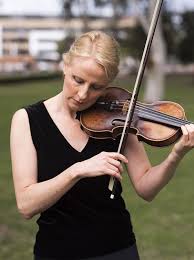
Tania Frazer, Jonathan Henderson, Alan Smith, Alex Raineri,

Brisbane Music Festival

Saturday August 1, 2020

                                                                                 Tania Frazer

Latest in this online series that is lighting up the synapses of music-loving Brisbane, Saturday’s all-French concert employed the services of the city’s Southern Cross Soloists; well, four of them.   While you might have expected from the title an hour-long reminiscence of Trenet, Aznavour and Piaf, what came out was both enriching and puzzling but, in synchronicity with what I have learned about the Soloists, the program was packed with arrangements – some of them comfortable for all concerned, others not so happy.    At the heart of it all sat Alex Raineri’s piano accompaniment; in an act of self-abnegation, the Festival’s artistic director performed only one sols, which is extraordinary when you consider that the offerings included works by Satie, Ravel and Debussy.

In fact, the most orthodox, ‘straight’ work kicked off the evening.   Henderson and Raineri worked through Francaix’s Divertimento of 1953; not a piece to keep you engrossed but an alternately tuneful and busy compendium.   Its initial Toccatina, a non-stop barrage of notes for both players, proved as full of surface excitement as many another showcase written especially for Rampal; a frippery, but soon over.   The following Notturno proved attractively mobile; no longueurs here.   Another vital effusion in the Perpetuum mobile which lived up to its title but annoyed at the opening because you could not tell whether the rhythm was intentionally irregular or whether the players were uneasy with its metrical lay-out.   Fitted with a galaxy of chromatic runs, these pages gave Richardson a real workout in terms of breathing.

I found Francaix’s Romanza the most attractive of the suite’s five movements with its deft combination of sentimentality and spice.   You couldn’t call the latter aggressively dissonant but the composer beguiled you with several unexpected turns of line and harmonic structure.   These pages showed Francaix at his best in a lyric of no little charm, executed without excess in any department; the unfeeling could dismiss it as film music but the final bars showed how Francaix could transcend the trite.   As for the Finale, it impressed for a dash of piquancy but sounded like a trial for the performers who fortunately found a less dogged approach as the piece neared its end – or perhaps the work gained in inspiration.   Whatever the case, you were more aware in the later pages of a sense of humour in the stop/start alternations and a slick final bar.

For a lot of us, there was a time when we found Satie to be as he presented – droll, eccentric, heart-of-gold.   But the charm wore off somewhere in the 1980s for me; now the performance directions along the lines of ‘ Take a nap, then construct a lovers’ nest from papier-mâché and osprey dung’ seem aimless, although such high-jinks gave rise (eventually) to a school of composition where the score was all prose; and who was that Frenchman discovered for us by Keith Humble and Jean-Charles François who wrote  pithy enigmatic texts as his scores?   Not to mention Stockhausen in the later Messianic years.   Even so, we are still brought up short by the pared-back calm of creations like the Gymnopédies in both piano and Debussy-scored (1 and 3 only) formats.

No less so by Satie’s Gnossiennes, which may have something to do with gnosticism or, more materially, with Knossos; I’ve had nothing to do with the creed but have wandered around the Cretan ruins and Satie’s miniatures could possibly have some connecrtion with Sir Arthur Evans’ excavated site – exactly what, I don’t know except for a shared angularity.   Whatever the background, this performance of Gnossiennes 1, 4 and 3 saw Frazer offer her own transcriptions for oboe and piano, the outer ones of this trio very well known.   Frazer took the right-hand melody line and left to Raineri the chordal background.

It took a while to get used to the penetrating double-reed timbre but Frazer generated an expressive line in No. 1, although I wondered about some of the too-simple dynamic shifts during repeats, like the move to piano in the second half of the Très luisant segment; and the upward octave shift on the final F sounded unnecessary.   The encounter with No. 4 impressed in its middle strophes, after the semiquaver quibbling.   And I couldn’t understand the acceleration during No. 3 unless Frazer and Raineri were putting an individual slant on the composer’s direction to play De manière à obtenir un creux.   If anything, the reading of this Gnossienne seemed to me rather over-played, imposing a personality where the original intention was to remove it.

Smith gave a sensible reading of Ravel’s Tzigane with fine Raineri accompaniment across the whole tension-packed canvas.   The violinist would probably not have been too happy with his A dotted crotchets in bars 9 and 10 but this whole opening section on the G string only is a taxing passage, especially as it sets a high intonational standard right from the first notes.   Smith’s rendering proved powerful enough, although the double-stops at Rehearsal Number 3 emphasized the lower line.   Coming up all too soon, a diabolical alternation of harmonics and left-hand pizzicato follows before the exposed violin gets some relief (not that it ever gets much of a pause).

The violinist powered through the testing pages with admirable zest, winding up with an excellent grounding deliberation at Number 17, building to a fine clamour at Number 32 with the concluding rush from accelerando to presto impressing for its accuracy under high pressure as the piece smashes into a compelling quadruple-stopped last two bars. Tzigane is one of music literature’s great exercises in deconstruction, Ravel taking all-too-familiar Ziegeuner tropes and pushing the trite into virtuosic exercises with no concern for soppy sentimentality or faux-masculine flashiness.   It’s a delight to hear when the violinist is able to handle its trials and Smith did Ravel – and himself – proud.

From here on, the program moved into Beecham-lollipop mode with a bracket of three songs and a one-time compulsory encore for violinists.   Raineri began this group with his own solo piano arrangement of Louiguy’s La vie en rose.   It followed the song’s chorus faithfully enough, the whole piece containing only a few harmonic solecisms and, for most of its length, having a concentration on the lower half of the piano’s compass.  Taking the familiar tune up an octave was effective, not least because it made for a relief from the low-pitched preceding pages.   I’m not a fan of the ripple/arpeggio ending but at least it wasn’t overdone here.   No, it wasn’t as ambitious an undertaking as Grainger’s reshaping of The Man I Love but it did little harm to this era-representing evergreen.

Henderson partnered Raineri in a no-surprises version of Debussy’s pre-1891 Beau soir chanson.   The flautist took on the vocal part with a generously phrased volubility and giving us a well-prepared climax across bars 25 and 26.    The same composer’s 1880 Nuit d’étoiles brought Frazer to the melody line.   Here also, the lyric came across with ease and restraint.   I think that the piano part diverged from the original in the last refrain, making the octavo jump eight bars early – or perhaps I was happy to get the main theme back pianissimo.   Last in this group was the Méditation from Act Two of Massenet’s opera Thaïs, with which neglected work Sir Andrew Davis made Melbourne music-lovers familiar three years ago.    Smith had no trouble dispatching this sweetest of intermezzi with a fine deftness in handling the gruppetti of five and four semiquavers that punctuate the smooth violin line’s progress in the piece’s outer sections.   Possibly the sforzandi at the più mosso agitato direction from bar 34 on could have been pulled back to a less full-on dynamic level but it was difficult to find fault with the rest of the score, Raineri having little to do beyond outlining the harp’s almost non-stop accompanying role.

To finish off the night with some fireworks, Raineri and Co. put on a more taxing encore piece, a work that occupies a dodgy zone between definite program material and something frivolous with which to delight any audience: Saint-Saëns’ Introduction and Rondo Capriccioso.   But, rather than employing Smith’s expertise, the work was given in an arrangement by Frazer where flute and oboe share the solo violin line between them. Frazer took the opening solo up to bar 6; Henderson took over from bar 7 to bar 10; and on it went in a heart-warming demonstration of how to play musical fair-shares.   A little bit of transposition was needed to cope with the fioriture nine bars before the rondo’s start.  Nevertheless, once the main constituent of this work was in progress, Frazer maintained her even distribution of the work-load with some clever interweaving and a subtle preparation for the trill hiatus just before Letter B.

Notably appealing was the attack by both woodwind artists on the double-stops during the con morbidezza interlude.   A crunch-of-sorts came with the triple-stop cadenza five bars before Letter G which turned somehow into spaced-out arpeggios; but that’s pretty much what the original is.   Then on to a hurtling coda and home.  You’d have to call it an interesting exercise but I have to confess to a longing for the original where you get to enjoy a violinist’s handling of the composer’s hurdles, contrived especially to test that instrumentalist’s virtuosity and self-control.

Not a night for the purist, then.   Still,  Raineri had organised a well-assorted program, contrasting the tried-and-true with some arcana, peppered with three very popular works.   All of it gave a platform for four sadly under-used musicians.   But we live in hope that Aunt Annastacia will keep us free from extra-state contamination and that these artists will soon get back to playing for live audiences who are actually in the room with them.   Until then, we will have to put up manfully and womanfully   –  and appreciatively  –  with the inbuilt fluctuations in content of entertainments like La vie en rose.

Working hard to make a program

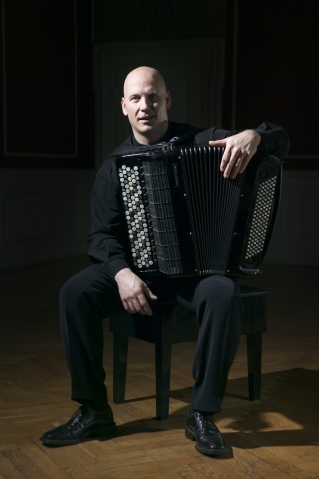
James Crabb and Julian Smiles

Bendooley Estate, Berrima

Monday July 20, 2020

James Crabb

                                                                                 James Crabb

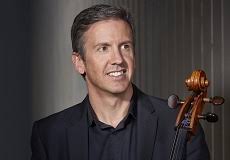
                                                                                Julian Smiles

For its bonus recital in the middle of a year that can politely be called ‘unsettled’, Musica Viva hit on a duet combination that you would be charitable to view as made in Heaven.  In fact, matching a cello with an accordion, no matter how classical, is a dangerous affair because the string instrument doesn’t have commensurate carrying power and, although it can quadruple stop, the cello also doesn’t have the ability to hit note clusters.  Put them together and you’re asking a good deal from the accordionist in terms of dynamic subtlety.

My only previous experience with James Crabb has been through his excursions with the Australian Chamber Orchestra, with which body the Scottish musician has been a welcome guest, particularly in those years when Richard Tognetti and (some of) his ACO colleagues were engaged with the music of Astor Piazzolla, that Argentinian-born fecund source of encore material.   In fact, the relationship between Crabb and the Sydney players goes back to at least 2003 when the accordionist and pianist Benjamin Martin appeared as guest soloists on the CD Song of the Angel with members of the ACO.   If you like your tangos feisty to the point of violence, here you go.

Smiles is a more familiar figure in Australian concert and recital halls.   One of the originals in the Goldner String Quartet (what’s the point of writing that?  They’re all originals, staying together as a group since its establishment in 1995), he has also been heard as a guest in Kathryn Selby’s recital series, Selby & Friends, and for some years as principal cellist with the ACO.    Also to the point, he has enjoyed a long association with Musica Viva, as an educator as well as a Goldner.

On Monday evening, the duet played in a lavishly wooden space at the winery, looking to me like a sort of warm version of the Riddling Hall at the Yarra Valley’s Domaine Chandon where Musica Viva presented a brilliant series of mini-festivals for some years.  In democratic spirit, both artists took it in turns to address their audience, which process was remarkably free from the awkwardnesses and staginess of most procedures of this kind.   Unlike the Melbourne Digital Concert Hall practice, this recital had no program: you found out what you were going to hear just before the players set to work.   So Elena Kats-Chernin’s Slicked back Tango came on before you knew it was in the offing.

Luckily enough, this dance was based on an arrangement for cello and piano by the composer, one of eight versions she has put out; no wonder her works’ catalogue is so vast.   This wide-awake writer is familiar with all the tropes of the South American dance, giving the cello pretty much all the melody material with the accordion taking on the chordal/rhythmic responsibilities, Crabb considerate in letting his partner take up prominence.   It’s brief and lively, a pick-me-up like we had in the mid-20th century when the Melbourne Symphony Orchestra used to whiz through Glinka’s Ruslan and Ludmilla Overture to open otherwise stolid concerts.

This short work was followed by a well-known cello solo: Bloch’s Prayer – first piece in the triptych From Jewish Life.   Once again, Crabb did piano duty although you missed quite a few bass notes; one moment they were there, then omitted in the next passage.  Smiles kept the right side of schmaltzy, except in the Più vivo of the last 7½ bars which was overdrawn, as was the over-loud accordion chord in the 4th-last bar.   But neither player treated the work as a chain of glottal stops, avoiding surges of loud and abrupt drops to soft, or imposing extended time for the melismata interruption near the end or for the chains of shared triplets.

At the heart of this recital came C. P. E. Bach’s Viola da Gamba Sonata in G minor H. 510, the most successful of the night’s collaborations in terms of sound colours.  Crabb impressed right from the beginning of the Allegro moderato, taking on his two cembalo lines with brisk vigour and giving each one equal weighting, especially welcome in his negotiation of Bach’s infectious ‘walking’ left-hand bass.   Both players performed with a mutually shared suppleness of rhythm without disturbing the work’s underpinning pulse.   Of course, they had top-notch material to work with; not just that safe-as-houses bass but also a wealth of melody intertwined with a fluency that delights at every turn.

In the C minor Larghetto, you had time to take in the work’s detail more easily, as in the delineation of all the original’s ornamentation.   While the players interwove their melodic work, you had even more leisure in which to appreciate Bach’s fertility, ideas thrown off with as much insouciance as in a mature Mozart piano concerto.   Smiles gave us a pointed and carefully shaped reading, Crabb keeping his potential swamping power well under control, most notably in the melting 6ths across the final 8 bars of this semi-siciliano.

A different sort of pleasure came in the concluding Allegro assai where Bach pulls some subtle rhythmic tricks across its length.   Crabb did a sterling job of realising the figured bass chords during the movement’s first 11 bars before his treble entered to compete with the viol/cello.   My only disappointment came with the executants’ decision not to repeat the second half of this segment of the sonata.

Having heard Bloch’s Prayer earlier, now we were treated to the other side of the religious coin in Saint-Saens’ Prière Op. 158, a product of his last years originally for cello and organ.   You could not fault the grace of expression in the opening section but the change to E flat soon saw an influx of religiosity, notably when the cello started on its triplets in bar 38.   A little later, the cello’s two-quaver pattern treatment veered towards the sentimental and the piece’s climactic point at bars 69-70 entered into the composer’s theatrical over-kill with enthusiasm; not to mention the reminiscence of Samson at bars 91-94 which sounds cheap in this context.   However, the problem with this reading came from the accordion’s texture which couldn’t avoid sounding very reed-heavy; to be expected, given the nature of the instrument.

Last scene of all was the inevitable Piazzolla; we’d had balancing prayers, so why not balancing tangos?    This was Le Grand Tango of 1982, the one written for Rostropovich who was unaccountably slow to come to the party and play it.  It’s a long piece, well over 10 minutes, and here gave evidence of a marriage of vision even if you might have liked more vim from the cello.   Nevertheless, both parties were consistent in their observance of the many incidental passing notes throughout.    Here, the nuevo tango is writ large with plenty of individual segments contributing to the whole.   At its core, it strikes me as concert music, not the sort of thing you can easily dance to unless you’ve been pre-choreographed – which, for all I know, may be essential to this new style.   But Smiles and Crabb gave as sensibly aggressive an account of this score as you could want with firm agreement on their attack, speeds and dynamic variation.

You could quibble that a cello is not strong enough to carry the burden of Le Grand Tango; that you need a violin to realise the dance’s inbuilt eroticism; that giving a melody to any bass instrument is dangerous when you have a bandoneon/accordion on the loose.    But, as in the Bach gamba sonata, Crabb observed the decencies: letting rip when he had the running, but maintaining a backing role when Smiles took up the Hauptstimme.   For such an odd combination, one where the members had no original music for cello and accordion in their rucksack, these artists delivered a near-hour’s worth of exemplary duo-playing.

Small force gives enjoyment

CAVATINA

Australian Romantic & Classical Orchestra

Melbourne Digital Concert Hall

Friday July 10, 2020

                                                                                Rachael Beesley

I’ve heard this ensemble once before but in a more expanded form, I believe.   Friday’s proceedings gave us a Reader’s Digest ARCO with only a string sextet at work, performing a five-part program of composers whose life-spans intersected and who all fell into the special interest area of this organization.   But it was a tad unsettling because some of the program content could have gained from more string weight, particularly in the upper two lines, while the focal piece might have fared better if it had been left alone, unexpanded, in its original form.

The ARCO co-artistic director, Rachael Beesley, headed the performer list, supported by co-violinist Anna McMichael.   The group enjoyed the services of two violas – Katie Yap and Simon Oswell – while Natasha Kraemer‘s cello was reinforced by double-bass Emma Sullivan.   As for the music, the night led off with Mozart’s F Major Divertimento K. 138 which was paired with Franz Xaver Richter’s Sinfonia a quattro in B flat Major – written some 30 years before the athletic Mozart and comparatively uninspired.   This evening’s title work referred to Movement V of Beethoven’s Op. 130 String Quartet, the one where he had to write a manageable alternative to the original concluding Große Fuge.   While you can tolerate dilations like the Australian Chamber Orchestra’s full-scale re-scorings for string orchestra of well-known quartets, this version with the added viola and double bass weight skewed your attention.

Moving definitely into the Romantic period, the group gave us Rossini’s Sonata No.1 in G Major which asks for a pair of violins, a cello and a double bass.  You usually hear it from a string orchestra without violas but here it worked functioned easily with four players.  The night ended in Mendelssohn’s early symphony No. 10 in B minor: one movement but with two viola lines, which at last sort of explained the necessity for both Yap and Oswell.

It’s always a delight to hear late Beethoven, especially the string quartets, but the Cavatina from No. 13 is puzzling in its own right.   Only 66 bars long and following a magnificently dense Andante and a clear-as-light tedesca, it presents as a semi-sophisticated ternary lied with a remarkable economy of material and expressiveness.  Taken by itself, it makes less an impression of spiritual hiatus than it does in its linear position during the complete work.   Still, even if it made a less-striking-than-intended appearance here, the players did it justice.

For one thing, they adopted performing practice from Beethoven’s era.   In her preliminary address, Beesley told us they were aiming for a period sound by utilising certain techniques, not to mention employing gut strings.   One of these devices was a liberal application of portamento which came into its own here; for example, in the first violin’s emerging out of sotto voce at bar 24 with a cadential theme, the downward and upward 5th leaps gained extra warmth by being given slight portamento.  The piece is top-heavy with luminous moments, one of the more prominent being McMichael’s surge to prominence six bars from the end with a critic-silencing pure delivery before the final consoling fade-to-benevolence.

At the program’s centre, the Cavatina stood out for various reasons, not least for its emotional depths in pretty light-hearted company.   More tellingly, it was the only piece of pure chamber music on offer, despite the additional instrumental weight; nearly everything else could have done with more players, like the Mozart frivolity.   Along with its companions, the D Major K. 136 and B flat K. 137, the short F Major score has become almost as popular as the later Serenade in G – certainly with performers.   You could find unexpected pleasures in this interpretation which removed a lot of the flashy sharp-edged quality that you get from plenty of modern ensembles.  Indeed, the tempi of the outer movements appeared to chug along, totally dissimilar to the crispness and bounce you expect from a body like the Melbourne Chamber Orchestra or its glittering big brother.   Yet what a delight to hear clearly the two lower lines which are always drowned out.

In the opening Allegro, I liked Beesley’s subtle unbalancing of symmetry in bars 44, 46, 48 and 50 which sat in easy complement with her chugging lower support.   But even more striking was the caressing approach from all concerned to the simple lyrical beauty of bars 81 to 86 – finely phrased and timbrally balanced.   You could find further agreable moments in the following Andante like the nice deviations from metrical regularity between bars 9 and 12, as well as in a mirroring point to this during the movement’s second half, although I was sorry to find that the group did not repeat this segment.  On to the concluding Presto and we were back in the jog-trot territory of the opening; nothing wrong with that – in this playing context – but you forfeit some of the swashbuckling bravado of passages like the last episode, not to mention the sparklingly busy main theme of this rondo which only really disappointed in a slushy passage near the last bars.

Richter’s sinfonia is set out, like the preceding Mozart, in quartet form and it also could have gained from more heft.    Its initial Spiritoso rushes up hill and down dale without showing much for the energy involved; not a memorable tune anywhere in the work’s fluent motion after the opening arpeggio pattern.   It seemed like good exercise work for the violins but your attention was only momentarily arrested by some suspensions.   The  Andante with muted upper strings wove a pleasant sextuplet/triplet web above a pizzicato bass line although in this work I wasn’t upset by the lack of a second-half repeat.   Richter’s Presto finale followed the opening movement’s lead in having no memorable melodic material to relieve its chains of scales and suspensions.  Admittedly a short burst of unexpected modulations in the second part pulled you up short for about 10 seconds and the whole score enjoyed an exemplary execution.  Yet, this was another divertissement; sadly, set alongside Mozart’s brilliant burst of adolescent inspiration, it paled into padding, particularly if you compared the two works’ finales.

Responsibilities seem more evenly divided between participating personnel in Rossini’s early sonata where – eventually – everyone gets a share of the limelight.  A product of the composer’s 12th year (the following Mendelssohn symphony was written when that composer was 14), this work has grown in popularity, although playing it as written in quartet form is rarely done, most organizations choosing to flesh it out with extra bodies to three of its lines.   You think for a while that the opening Moderato is going to be an uninterrupted gift for Violin 1 until you reach bar 45 where McMichael’s generous timbre enjoyed the chance to shine for 20 bars.   Here also, the players did not repeat the first half – disappointing because the performing accidents would have been useful to hear at length, given that this sonic ambience would have been more familiar to Rossini than the flamboyance of a group  like I Musici or I Solisti Veneti.  Kraemer worked with deliberation through her solo starting at bar 125, even if it turned out to be a shorter version of McMichael’s earlier exhibition spot.   By the end of this segment, you had a pretty fair awareness of this ensemble’s ability to oscillate between a biting attack in solo work and a more round-edged delivery in ensemble passages.

The plain Andante eventually springs to life at bar 19 where the first violin enjoys a skipping passage all-too-reminiscent of Dvorak’s Humoreske; not the Italian composer’s fault, of course – he came first – but it’s a welcome jeu d’esprit in a repetitious and predictable set of pages – see bars 32 to 47 – before Rossini revisits his first melody.  The Allegro that finishes this sometimes-remarkable piece of juvenilia includes another cello solo of 8 bars, preceded by a double-bass solo of the same length, both welcome break-outs for Kraemer and Sullivan who had no hesitation in pushing themselves to the front.  As an entity, the sonata sounded more relaxed and easy-flowing than in the hands of others determined to find a dormant Paganini in its amiable progress, all too often delivered with steel strings and lashings of Latin flair.  And it strikes me that the sonata gains considerably from more friendly treatment like the ARCO’s in both personality and warmth, however fuzzy.

Some idiot once told me that all of Mendelssohn’s early symphonies – 12 of them – have two viola lines.  Because I’m trusting and lazy, it’s taken a while but this performance helped to lay that myth to rest: only Symphonies 9, 10, 11 and the Sinfoniesatz have two sets of violas.   The ARCO sextet made a fine showing in the initial Adagio with an energizing clarity during the chromatic slide in bars 22 and 23.   But the whole effect was undermined by the lack of violin body strength in a score that, as it moved forward, showed that it wasn’t chamber music by making more deliberate, even cruder statements than in the smaller-framed format.

The tempo of the work’s main Allegro proved to be slightly variable in execution, close to off-balance towards the end of the development if recovering when not involved any further with working at exploring material.   But the playing reached its highest point of achievement in the brief piu presto, an invigorating 30-bar concluding burst with a bustling power across its active top four lines.   At only one movement long, calling it a ‘symphony’ is a bit of a stretch; even Webern managed two.   But Mendelssohn knew enough about juxtaposition and thematic eloquence to construct a convincing musical scenario.   Still, it was a pity that what we heard was necessarily limited in its power to involve.

It’s a welcome sight, watching even a small fragment of the ARCO performing; on the job in this dire time for artists across all fields.  The orchestra’s approach and products are far removed from most other ensembles who exercise their communal virtuosity without concern for what is of prime interest to musicians like these who dedicate their art to resurrecting original timbres and styles.   With these re-creators, you hear – even in constrained circumstances like those obtaining last Friday night – a strong semblance of what composers like Mozart and Beethoven might have expected to experience themselves, if probably more accurate in articulation, more refined in phrasing and dynamic balance.  Thanks to this sextet, we enjoyed a positive remembrance of things past – warm, slightly gruff, gemütlich.

Another worthy Friend

BEETHOVEN’S GHOST

Selby & Friends

City Recital Hall, Sydney

Saturday July 4, 2020

                                                                                     Harry Ward

For the second of her season recitals in this frustrating year,  pianist Kathryn Selby works through an all-Beethoven program with violinist Harry Ward and cellist Timo-Veikko Valve; the latter a well-known musical entity in the Selby & Friends world, the former a newcomer to the organization’s ranks, it seems.   I’ve heard Valve in several trios with Selby but can recall them working together in only one of the two established repertory works from this occasion:  the Ghost Trio Op. 70 No. 1 in D Major.   The other, Op. 1 No. 3 in C minor, has been part of Selby’s repertoire for many years.   As for the other work on this program – Beethoven’s own arrangement for piano trio of his Symphony No. 2 – the musical textures proved unexpectedly familiar and I glean from the introductory comments during this telecast that Selby and Valve have played it in a previous season.   So I’ve probably heard it but any memories have faded – an all-too-familiar problem in these latter years.

Without any intention to downplay the contributions of pianist or cellist, I found a good deal of the interest in this recital sprang from finding how well Ward slotted into a pre-fabricated comfort zone.   It’s true that Selby has a clear-eyed view of who would make an appropriate member of her chameleonic gallery of performers; in fact, it’s hard to recall any musician/Friend who stuck out as being unsuitable for a role in the Selby complex, although most of us who have followed the organization for some years have our favourites.    But among the younger aspirants, Ward stands out for his sensitivity and a style of projection that sits well with the full-frontal approach of Selby and Valve.

I say ‘younger’, but Ward has been an inveterate musical traveller for some years, studying and playing and competing with perseverance over the last decade; he’s currently involved with the Australian National Academy of Music.   Such a wealth of experience shows in his playing style, which is well in line with Selby’s rarely disturbed certainty and Valve’s talent for producing a clear voice, no matter how much C string work is involved.   Ward also has something of an edge on his peers by way of a command of phrasing and a stylistic responsiveness allied to an eye for subtleties like miniscule Boskovsky-style hesitations.

Pretty close to the start of the C minor Trio, Ward displayed his crisp attack style, right on the money in those arresting staccato chords at bar 91, doubly appreciated thanks to the observance of the exposition repeat.   In fact, the movement was notable for some glowing passages like the early violin/piano canon at bar 21 which came across as if freshly minted; then, an ideally well-tuned cello/violin duet in octaves at bar 53; a subtle hesitation from the cello at his bar 183 entry; and a welcome reinforcement of your pleasure in bar 91’s chords with their reappearance in bar 294 – just as brisk and pointed as before, and exemplifying the underlying character of this work’s progress: crispness.

The following theme-and-variations movement gives the keyboard a good deal to do, starting with the first variation which proved neat and fetching, especially in its second half.   The strings got their own back in Variation 2 with its balanced canon/duet content notable for Ward’s supple line taking prominence and yielding it tactfully.   The minore Variation 4 found Valve generating a controlled plangent line during his solitary solo between bars 81 and 84.    As for the final variation, this is a pianist’s gift with a bright staccato figuration dominating the texture above recessive string support; Ward seemed uncomfortable with the metre, possibly because of the half-bar start, possibly not.   But all three musicians  made a consoling final 8-bar stretch to the coda.

Another fine instance of accomplished combination work came in the second half of the Menuetto with its elegant right-hand piano interruptions.   And a fine evenness of output emerged in the Trio‘s irregularly disposed first half while Selby’s second-part scales showed just how telling precision and restraint can be.   The finale’s first part was not repeated but you didn’t feel the lack overmuch because it’s a solid block of 146 bars that hammers home its message heavily, even in the E flat Major pages where the melodic quality is some way below the best that the whole trio has on offer.   For all that, the onslaught was relieved by details like a delectable violin/cello duet between bars 197 and 212 where the mirroring of each other and Selby’s initiatives lifted the instrumental dialogue to a very high level.    A not-quite-together microsecond marred the pianissimo entry at bar 238 but other details outweighed such a slight flaw, with Ward’s occasional slight hesitations breaking up the movement’s metrical inevitability.

There is not much to report about the symphony transcription performance which was most entertaining and assertive.   Beethoven took the task on most probably as a means of propagating his music but his realization is more than just letting the violin play its normal part, ditto the cello while the piano does all the work.    Yes, the keyboard covers a lot of the score’s content but the other instruments get to move outside what you’d think would be natural circumscriptions.    During the opening Adagio-Allegro, Beethoven has the strings perform a good deal of semiquaver scrubbing while the piano takes the high road.  Ward enjoyed a good deal of flute and oboe writing rather than just being confined to the top violin line and Valve had his share of the lower wind lines.   In all, this was an excellent demonstration of congruency and harnessed power with the violin producing bucketloads of elan and sheer drive.

At the Larghetto‘s opening, both strings took on woodwind lines before the violin returned to its normal role.   Here, with a slower tempo in play, you could see how Beethoven varied his now-limited textural possibilities which I’m afraid took my interest more than the actual playing although sudden moments broke through, like Selby’s firm address at bar 115 and the executants’ melting, delicate devolution between bars 154 and 158.  Adding to one’s obsession with the composer’s reduction process was the whip-smart interaction between all three performers who read each other with fine insight as in the hushed string work at bars 261-2.   Again, in the Scherzo, the musicians punched through the score with plenty of spirited enthusiasm, even if my attention fell heavily on what Beethoven did with his disposal of forces, particularly in the placid Trio.  Rationality returned in the Allegro molto finale where Selby infused procedures with an agility that you could not fault until a slight miscalculation about bar 158 before winding us up for a bristling conclusion after the composer’s brusque alarums and excursions in the final pages of this boisterously good-humoured symphony.

As with the C minor opening work, so with the Ghost: much interest fell on Ward because Selby and Valve are known quantities across its pages.   The opening Allegro vivace was notable for a firm volubility, packed with hold-and-release tension.   You could relish smaller matters apart from the power-packed urgency across the movement, like Selby’s poised, pianissimo arpeggios across bars 67 to 69 and the flaming power urging us across the development section, particularly the fugue-suggestive stretch from bar 124 to bar 144.   A pity that the group avoided repeating the development/recapitulation but it’s pretty long – about 180 bars, which makes a very demanding ask for any ensemble.

These performers made a suspenseful narrative of the spectral Largo, all the detail work intact and with no shrinking away from the composer’s deliberate roughness or emotional aggression.   Both strings confronted their lines’ stark statements and passages of vulnerability, as in the central passage where Selby is committed to endless hemi-demi-semiquavers until her break-out in bar 76 while the violin and cello commune in an interleaving duet that becomes increasingly fraught, before drawing back from the brink through a rapid diminuendo.

Finally, the happy Presto that dismisses all preceding gloom was appropriately jubilant, Ward revealing a challenging and steely timbre in the rising subject that starts in bar 35, then mimicking Valve’s punchy attack right up to the fermata at bar 87.  A momentary uneasiness arose after the piano’s solo at bar 109 where the strings seemed to be taken by surprise, compensated for by an infectious exuberance at the vehement main theme return at bar 211.   And one splendid surprise came out in the stretch from bar 388 to bar 397 where you were hard pressed to tell cello from violin because of their masterful inter-meshing.

Here was a top-notch recital in which the two senior players were traversing ground that they knew very well.    Ward is already an accomplished chamber musician, conscientious and conscious of his place and responsibilities in Beethoven’s three grand schemes.   And he is right on the note all the time – which is something I can’t say about all other young(ish) violinists.

What a difference it makes to hear a group operating on such a high level of insight and generating readings of sustained polish.    Over the pandemic months so far, we’ve been treated to a good many recitals from the Melbourne Digital Concert Hall, the Melbourne and Queensland Symphony Orchestras’ websites, the Queensland Music Festival and some other odd men out.    Many of them have shown professionals at work, sometimes on very difficult work; other programs have opted to entertain with fripperies or a plethora of small-frame pieces.   Selby & Friends is maintaining its high aspirations, showing us all how it should be done: a welcome and reassuring presence in unhappy times.

Just a bit more, please

THE WANDERER

Jennifer Timmins and Leigh Harrold

Melbourne Digital Concert Hall

Thursday June 25, 2020

                                                                               Jennifer Timmins

As promised, we wandered: from Bach, to a prospective co-Bubble composer in Gillian Whitehead, then across the larger ditch to Robert Muczynski, and home to Schubert.   All very pleasant and dexterously accomplished, as you would expect from two ex-luminaries from the Australian National Academy of Music who collaborated successfully during their time at that finishing school – a source of national pride for us all throughout its distinguished, if threatened, career.  In fact, when you’re faced with an abomination like The Voice, you should cherish ANAM all the more as a source of real musicians.

Timmins/Harrold’s Bach was the last sonata, BWV 1035 in E Major, which I’ve always found the most amiable and rewarding of the lot, even if most of the running is left to the flute.   Their opening Adagio came across with an unforced directness, if probably not as sweet (the unfriendly might say ‘mannered’) in timbre as other performances, chiefly due to Timmins’ spartan use of vibrato.   The following Allegro impressed for its sturdy reliability and a deft treatment in both instruments of some light ornamentation that sparks up a set of pages that speak with the forthrightness of Handel.

As usual, the Siciliano took pride of place for its floating placidity that rises to an unstressed high-point and sinks back to a resonant rest.   This was the most eloquent playing so far with a penetrating and unsentimental flute line that followed a steady, unfaltering path.   Apart from one note missing from the flute  in bar 36 of the Allegro assai (an unavoidable breath necessity), the sonata’s finale proved to be steady and painstakingly thorough, with Harold given the chance for the shortest of  solo exposures from bar 4 to bar 8.    Still, this was a reading that had little room to breathe because none of the repeats were observed; to those of us with some expectations, the result was close to half a performance.   As well, the whole experience impressed as oddly dated, a blast from the not-too-distant past when harpsichords and wood flutes were rarely heard in this country’s Bach renditions.

Whitehead’s Taurangi duet is etymologically intended to propose themes of the wanderer and/or an unsettled state.   At the time of composition (1999), the composer was engrossed with the struggle of East Timor, which was then enduring the last vicious ravages of the Indonesian occupation; her intention, I think, was to communicate the ethnic and political uncertainty at play across that country.    In some way, the piece is an occasional lament that is combined with a firm statement of conviction; what that is exactly is open to interpretation.   On its first page, sequences of repeated piano chords lead to flute cadenzas of brittle rapidity, before the piece settles on a juxtaposition of assertive declamation with urgent flute trills and breathy or overblown notes, some of the latter directed into the piano, although what effect was intended didn’t travel very far in this broadcast.

Timmins was also constrained to produce some multiphonic passages to add to her challenges but the core of the work is a set of antiphonal responses between the instruments that finally settles on a mournful atmospheric psalm with Harrold operating inside his instrument generating a series of rapid glissandi while the flute returned to its opening cadenza interpolations.   Whitehead’s array of production techniques concludes with further multiphonics and string glissandi while silently depressed piano chords produce some excellent nimbus effects.

Even though both players enjoyed a great deal of independence throughout Taurangi, they also had true duet passages of some intensity.   But the piece came alive when the interpreters were allowed to wander solo, giving voice to Whitehead’s suggestive sonorities that can be married to the  terrible last days before the Indonesian army and its local sympathizers were ejected from the newly-born country.   This night’s two executants also see in Whitehead’s score a certain relevance to the current world situation which each day confounds hopes for determination and resolution – which terms probably mean the same thing.

I enjoyed Robert Muczynski’s Op. 14 Flute Sonata of 1961 – one of the American composer’s most popular works – right through the first Allegro deciso with its bright Latin rhythmic assertions and interplay; at first suggestive of Gershwin in Cuban Overture phase, but then moving  into line with Villa-Lobos and that writer’s more harmonically aggressive constructs; the whole leading to a brisk, if not slick, conclusion.  The pleasure endured through the 6/8-with-interpolations Vivace, a kind of moto perpetuo shared between Timmins and Harrold with each player given individual breaks before joining up for  narrative propulsion.  This is both fanciful and cleverly constructed writing, performed with clarity and polish.

With the ‘slow movement’ Andante, the flute solo abruptly brought to mind Prokofiev’s Flute Sonata of 1943 which has a much shorter solo.   But just a touch was enough to present the similarity and, after that, the comparison wouldn’t go away: the same lyrical meandering set against insistent statements, although Muczynski crops his farewells, eschewing the Russian composer’s sentimentality.   The final Allegro con moto completes a fair haul of vivid, active movements to this construct.   Again, reminiscences of  the Russian composer emerge regularly, although there are none of the earlier work’s more poetic interludes.   Timmins accounted for a major central cadenza (in strict time) with enthusiasm,  Harrold bouncing through a jazz-inflected keyboard role before a tack-bright finish from both players in a fine display of synchronicity.

To finish this recital, the duo offered their own transcription of Der Neugierige from Schubert’s Die schöne Müllerin cycle.   It’s a superbly shaped song with just enough suggestive instrumental ambience in which to set the poet’s earnest questioning.  Timmins went for a pronounced vibrato here while Harrold burbled gently underneath.  I don’t know why it was included but it made for a refreshing sorbet after the preceding two works’ biting episodes.   In fact, we could have done with three or four of these transcriptions to flesh out a pretty under-length program which came in at about 45 minutes long.

A northern digital festival comes to town

THREADS

Alex Raineri

2020  Brisbane Music Festival

Saturday June 6, 2020

                                                                                       Alex Raineri  

Now the North has its own smaller-scale equivalent of the Melbourne Digital Concert Hall, thanks to Alex Raineri: artistic director of, comptroller for and performer in this year’s Brisbane Music Festival, of which this recital was the opening gambit.   Rather than throwing hands up in the air and abandoning plans for anything at all, Raineri and his associate artists and support team have resolved to mount a set of digital events, one a fortnight, to keep the flame burning: you will have a festival, Cinderella.

Putting himself forward as a pace-setter, the young pianist presented a program in three parts.   He began with Debussy’s Suite bergamasque, a work that he performed fairly recently; moved to some Australian works, including a Kate Moore semi-premiere and three sparkling Grainger folk-song arrangements; wound up a full hour-plus night with Liszt’s Concert Paraphrase on the  Overture to Tannhäuser by Wagner.

The opening Debussy quartet of pieces obviously occupies a prime place in this pianist’s affections; he performed it in the last Brisbane Festival, almost 6 months to the day since – on December 13 at the Old Museum in Bowen Hills.   At that time, it struck me as enjoying a solidly Romantic interpretation with plenty of sustained sound clouds, both white and black.   And what would you expect?    Not much has changed.   Raineri allows himself a lot of room in the Prélude, but then the sub-textual direction in my edition is tempo rubato, so he’s quite justified in taking his time.   Still, some of the left-hand arpeggiated chords were very languid, although he gave the impression of being quite capable of playing some 10th stretches straight.   This effort concluded with an excellent reading of the movement’s last nine bars, including a deft incorporation of that sextuplet mordent squiggle preceding the second-last chord.

As with the Prélude, Raineri suited himself with regard to tempo in the Menuet.  But he kept pretty firmly in time when the texture turned Brahmsian at bar 22 and the harmonic slips became a touch more glutinous than usual.   Continuing the Brahms influence, Raineri’s sustaining pedal enjoyed some more overwork at those textural breaks with descending right hand F major and E flat Major scales, and the 7-bar break into a key-signatured E flat came over as unexpectedly heavy in emphasis.   However, much of this weighty atmosphere dissipated in a finely-judged build-up and diminuendo to the magical reversion into A minor at the work’s end, including an unfussed, natural-sounding glissando.

A few details marred the opening of Clair de lune, like a maladjusted chord or two where the inner part enjoyed unnecessary prominence.   Fortunately, Raineri found a fine vein of idiomatic ardour for the middle un poco mosso segment, even if I thought he wound down his En animant too quickly, rather than hurtling into the consolatory Calmato page.  A few oddities emerged at the end also, like the sustained final element of the triplet at bar 59, counterbalanced by a fine murmuring delivery of the morendo jusqu’à la fin passage.

Finally, the Passepied failed to impress as strongly as it had last year with some notes missing in the left hand at the piece’s start and, if one of these pieces is going to suffer from a lack of crispness, this is it.    As well, the dynamic gradations sounded as though they were operating on a ramped-up level, where piano, pianissimo and triple piano were not that far apart in scale.   For all that, Raineri reached a welcome well-enunciated delicacy further into the score that only improved as the work wound down.

Kate Moore‘s Meuse exists in two forms, according to Raineri’s introductory comments. An abridged form was premiered at last year’s Brisbane Music Festival, for which it was commissioned in a Bloodpaths exercise involving many Australian composers.   This was the first outing of the extended piece and Raineri gave it every consideration.  The composer proposes her work as a celebration of the Maas River which is primarily known to most Australians as recalling the Meuse-Argonne Campaign in the later months of 1918.

For Moore, the river connects or offers a parallel with her family tree and she wrote this piece on retreat in a convent beside the river.   Its process chiefly consists of alternating left and right hand notes, the sustaining pedal softening any percussive suggestions; a kind of cushioned pointillism that follows a tonal path, any narrative shifts coming through crescendi and decrescendi.  Sometimes a two- or three-note sequence is given to one of the hands but I must confess that my chief point of interest lay in trying to decipher whether Moore was working in a flat or sharp minor key; it was impossible to work out because the delay between what Raineri was visibly playing and the actual sound was so great.    It’s a long river – 925 kilometres – and Moore takes us well along its way.

Something of a relief to turn from Moore’s lengthy two-part invention to that other expatriate, Grainger.   In this trio, Raineri impressed mightily for his mastery of the composer’s headstrong musical character.  In all that running around for Molly on the Shore, I could only find one questionable melody-line insecurity at around bar 160-1, but the interpretation was head-long secure and splendidly in sync with the aggressive Grainger mode, while you heard some excellent individual strokes as the dance reeled past, like the biting exhilaration at the bar 118 fortissimo explosion.

The Irish Tune tests the executant’s powers at delineating an inner part and Raineri did fine service, bringing out the tenor-level melody in the first stanza with due regard for the composer’s ‘little’notes that enfold it.   Here was a sympathetic and mobile treatment of a well-loved lyric, flawed only by an error somewhere in the climactic triple forte chord four bars from the end, but giving us satisfaction with an unfussy delineation of Grainger’;s brilliant harmonization.   As far as I could hear, Raineri didn’t substitute any of Grainger’s ossia right hand possibilities for Country Gardens and, in every respect, this was an excellent piece of playing with a clear relish for those full-bodied chords, the infectious and constantly fore-fronted melody line ringing very clear, and that original characteristic that you can hear in the composer’s own recordings where he  bounds through his own music as though he can’t wait to show you what’s coming up.  Obviously, I enjoyed this group of three very much, which is more than I can say for most Grainger piano performances I’ve endured since the Grand Old Man’s re-discovery in the latter part of the last century.

Liszt’s version of the Tannhäuser Overture is almost a transcription, as far as I can remember the orchestral score.   Here, we enter the land of anything-goes pianism with extreme demands made on any musician determined to handle its ordeals which aren’t just confined to getting the notes out, but doing so in something close to a regular metre and vaulting across the keyboard while trying to do so.   Raineri gave a most exciting interpretation of this monsterwork from its sombre opening to its clangour-filled last flourishes.    Almost from the start, I was ready to go on this challenging journey when the performer easily handled those violin-imitating incomplete-triplet descending scales that emerge when Wagner eventually gets around to restating his initial chorale.  And it goes on for bar after bar!

Mind you, the fun doesn’t really start until the Allegro scenery changes to Venusberg where Liszt’s re-imagining becomes more imaginative and virtuosic with a remarkable realization of the scene in the Court of Love until a triple-octave precipitato leads to Tannhäuser’s Dir töne Lob outburst and the party really begins, the ferment uniting with the chorale in a roiling set of arpeggios and scales that ask for great reserves of stamina and a complete assurance of direction along with a near-perfect strike-rate in handling rapid-fire passage work and massive chord clusters.   Raineri met all these problems with an admirable command and a sense for the path of this overture that made me suspect that he knew it in its orchestral form, realizing what he had to do to get the right sounds in their appropriate places.

You wouldn’t want to make it your daily fare but hearing such a mighty transliteration,  given with this degree of skill and awareness, gave us a true festival gift.  Thanks to such a strong bid from the director, this whole exercise is off to a start that has now roused pretty high expectations.

Welcome back

THE SCHUMANNS

Amir Farid

Melbourne Digital Concert Hall

Friday May 28, 2020

                                                                                      Amir Farid

Most of my experiences with pianist Amir Farid have come about through his association with the Benaud Trio, which I assume has now become something of a phantom ensemble, rather than the Melbourne chamber music stalwart that it was for several years.   These days, violinist Lachlan Bramble and cellist Ewen Bramble hold senior positions with the Adelaide Symphony and Farid himself has moved his base of operations to New York.   True, performances of any kind are impossible/improbable given the current world situation but you’d have to anticipate that Benaud re-appearances are likely to be rare, even when the world returns to what we laughingly call ‘normal’.

In fact, Farid is a victim of COVID-19 as he is marooned here for the duration.  About which he shouldn’t be too unhappy because, if there’s one place you’d rather be than Andrew Cuomo’s New York, it’s Daniel Andrews’ Melbourne.   While he’s staying in the Victorian capital until he regains access to the only American city worth visiting, Adele Schonhardt and Christopher Howlett invited him onboard their digital vessel, for which he produced an hour’s worth of works by that remarkable husband-and-wife pair, Clara and Robert Schumann.

It was never going to be an equal occasion.   One of Europe’s greatest pianists and teachers, Clara Schumann also left behind a sizeable catalogue of compositions that contained mainly piano works and songs.   In recent times, certain artists have performed much of her music, although the only score that I’ve had much acquaintance with has been her G minor Piano Trio.   But, set alongside her husband’s early masterpiece, the opening quartet of pieces was outclasssed.

Farid opened his innings with Clara Schumann’s 4 Flüchtige Stücke, small bagatelles that were published in 1845.   None of these is a demanding work and Farid encountered few problems in handling them.   The first, a larghetto in F Major, followed simple ternary form with interest added here by the pianist’s liberal approach to rhythm and a gentle emotional prospect delivered with care and no theatricality.   In A minor, Un poco agitato came over with spirit, a few mishaps in the right hand minor distractions and the miniature probably given at a slower speed than it deserved.   A following Andante espressivo  in D Major might have gained character from greater emphasis on the un poco più animato direction that covers the middle segment.   A few missed notes in this central section’s G major flirtation surprised for their avoidability, but little details like the exposed E in the 8th last bar’s first dominant 7th chord showed a sensitivity to the composer’s chord placements that compensated for some digital slips.

Farid followed an approach in the odd-numbered pieces that favoured an arpeggiation of many chords, even if they didn’t need it for his comfort’s sake.   This reinforced the Mendelssohn-derived impression that all these pieces made of following straight on from the Songs Without Words.   That influence showed out clearly again in the concluding G Major Scherzo with its slightly elliptical opening sentence and the reading came to a satisfactory fruition in the last A tempo section which revealed some welcome panache.  You could admire the fluency of these short pieces and their emotional candour but none of them presented as striking; competent, amiable, agreable, unambitious and, now that we’ve heard them, we won’t gain much by hearing them again.

With Robert Schumann’s Carnaval, written less than a decade before Clara’s 4 Fugitive Pieces, you come into a new world of pianism where the inspiration is a mirror of the Romantic era through its tempestuousness, sparkling brilliance, hard-centred sentiment and catholicity of subjects and material.   Most commentators don’t give it top-ranking in the composer’s oeuvre for the piano and God knows there’s plenty of competition: the Symphonic Studies, Fantasie, Arabeske, Bunte Blätter, Kreisleriana, Album for the Young, Faschingsschwank aus Wien, not to mention the sonatas, so I won’t.

Despite its languid rilievo passages, this work is in a hurry, calculated to stir you, if not exactly rouse you to Hong-Kong-demonstration point.   So it strikes me that a great reading carries you along on a wave of enthusiasm, even if part of you sits back and finds the whole exercise slightly ludicrous as it leaps from one character sketch to another.   Farid gave a worthy account of this large-scale suite, giving us easy access to the composer’s portrait gallery peppered with associated dances.   If the overpowering authority of a fully informed interpretation came across only fitfully, this pianist gave cogent views of Schumann’s large landscape’s many components.

A brave attack on the Preamble showed Farid’s welcome mastery of the hefty chords that can clot this movement’s bold initial statement.    A few top-end errors blurred the first-time-through declamation but the  move to Animato came across without jarring, the concluding rush a persuasive entity.    You can’t do much with the Pierrot pages which I find laborious, chiefly for those predictable forte interpolations that close each four-bar phrase until their shape eventually takes over; here, they made for a necessary evil, just as they do every time I hear this score.   Harlequin is just as repetitive but has a more attractive framework and the only flaw I could hear in Farid’s light-hearted approach was his tendency to extend the right-hand semiquaver rests in each odd-numbered bar.

A clear-speaking Valse noble distinguished itself by an unexpected interest roused in the dance’s second longer half by some left-hand emphases.   Moving on, you could admire the legato finesse during those odd septuplet and quintuplet groupings in Eusebius which across its length maintained metrical regularity and didn’t turn into sludge.   The mirroring Florestan enjoyed a rugged attack which urged forwards and faltered only once, in the only octavo bar.    Farid might have improved his Coquette with a quicker speed to encourage a more flighty impression, but the Replique that smooths out the preceding whimsy came across neatly enough, despite a rather laboured conclusion.

Schumann’s Papillons is infamous for its sforzandi which have the disturbing faculty of turning the insects into gnats; I would have preferred a more feathery approach, despite Clara Schumann’s directions in my edition, particularly in the middle bars of alternating semiquaver duplets.   But the following Lettres dansantes could not be faulted for clarity and lively address.   Further, the waltzy-suggestiveness of Chiarina was sublimated while the performer’s octaves were close to perfect, the only problem an accentuated ritardando at the conclusion of the second part’s repeat.   In this version, Chopin was done proud with a surging sensitivity in the melody’s outline, only a single misplaced note in bar 2 of the repeat disturbing the peace.

Right-hand octaves dominate the Estrella movement, occurring in about three quarters of its length; nearly all of these came off in a realization of the page’s muzzled power.  The canon between top and bottom lines in the B Major Reconnaissance interlude came through with telling definition and the main A flat melody’s reprise was splendidly restrained despite an error in its 5th bar.   Fortunately, the more difficult presto Pantalon et Colombine movement was technically assured and an indication of this artist at his best under stress.   Similarly, Farid’s Valse allemande and its internal Paganini pages proved eloquent and fierce in turn; I was sorry my equipment didn’t capture the ppp connecting chord that leads into the Valse reprise.   But it was a real pleasure to come across a pianist who kept his head through the semiquaver’s worth of displacement in Schumann’s individualistic picture of the phenomenal violinist and to find a musician who didn’t make a meal of the left hand accents.

The spirit of Chopin infused the 24 bars of Aveu which found the interpreter injecting a healthy dose of rubato throughout, accompanied by a restrained dynamic range: a very private confession, then.   Subtlety infused the Promenade as well, the ‘small’ notes articulated with excellent reserve and the large-reach chords starting 22 bars from the end worked particularly well.

Then came the rush through Pause with an almost invisible blip in the third last bar, and we were into the anti-Philistine Davidsbündler Marche, Schumann’s anticipation of Moomba (I wish) and one which brought a willing response from Farid whose 9th-stretch right-hand chords made for enviable listening.   Like many a player before (and probably after) him, this executant found the going boggy in that stage where Schumann repeats his Theme du XVIIième  siècle in the bass.  But so much of this powerful grind-’em-into-the-dust finale was successful, Farid surfing across the various changes of scene with no pause for breath, climaxing in a rousing stretto.

It wasn’t the Carnaval of your dreams, probably because the performer took the whole thing very seriously.   Much was made before and after this reading of Schumann’s intention to depict a party, which is quite right.   But it’s not meant to be a bierfest; rather, a congregation of high spirits and no little wit.   Even that concluding march-waltz shouldn’t sound as though it belongs in a Munich hofbräu but has to glitter, if not necessarily be gay.   For all that, Farid came to the centre of the composer’s world much more often than he missed it: a fine accomplishment with great promise –  surprisingly, one of the very few times I’ve heard this artist play solo.

Fervent and riveting

A DISTANT LOVE

Andrew Goodwin and Roland Peelman

Melbourne Digital Concert Hall Satellite Night – Sydney

Wednesday May 20, 2020

                                                                               Andrew Goodwin

Spreading their entrepreneurial largesse around the country, Adele Schonhardt and Christopher Howlett have moved outside Melbourne and sponsored recitals in Perth and Sydney.    I’m sorry to have missed the Western Australian ones, in particular pianist Gladys Chua and clarinetist Ashley Smith (fresh from his personable appearance on ABC TV’s Hard Quiz) playing a program of  showpieces and operatic arrangements.  Wednesday night’s hour of lieder from tenor Andrew Goodwin and pianist Roland Peelman came from Sydney, given in a rehearsal room that put us right in the picture with the performers as well as alongside them in a dangerously clear acoustic.

Even given these close quarters for operations, both artists produced an engrossing experience through Beethoven’s An die ferne Geliebte cycle, five songs by Schumann, and seven by Schubert.   I don’t know if Goodwin and Peelman ever worked together in those happy pre-virus years but they made an ideal pairing on this night of works central to the repertoire,  although only a few of the artists’ selections get a regular airing.

For instance, the set of six songs that Beethoven linked together so that nothing is easily extractable have not featured large in the many vocal recitals I’ve attended.   This famine of performances might be due to the chop-and-change nature of the cycle’s content which, although consistent in expressing the lover’s proposals and dejections, asks for an unvarnished interpretation.   You won’t find the pathos or merriment, forced or authentic, that infuses the work of this program’s other contributors.   Instead, the sequence has a nobility and sincerity that takes you back to the same qualities in Fidelio where Beethoven faces his audience with a black-or-white morality that allows no wriggle room.

Some glitch meant that I came into this performance only at the first song’s second stanza, Weit bin ich.    But anyone could see (and hear) straight away that Goodwin was in command of the phrasing differentiation that gives the repeated vocal line its interest. Also evident from the start was Peelman’s sophistication as an accompanist, the connecting interludes given with care for each note’s weight, both artists enthusiastic across the stringendo beginning at und eine liebend Herz where the lover turns assertive.  The pianist impressed even further in the following Wo die Berge so blau with its end-of-stanza echo effects treated with punctilious regard for the song’s mood and the singer’s regretful lingering.    Peelman also gave Goodwin excellent support in the middle verse where the singer stays on one note and the keyboard has to make the melodic running; deftly accomplished here without demanding attention.

This cycle’s third segment, Leichte Segler, is a cow to treat fairly.   Goodwin had a red hot go at separating the isolated quavers that alternate with simple crotchets and he got a majority of the distinctions right, although the difference disappeared by the time we got to the last Flüstr’ ihr verses.   Both Diese Wolken in den Höhen and Es kehret der Maien could not be faulted, the highpoint for me coming in the latter song’s last stanza: a model of flawless delivery from both performers and a wrenching realization of Beethoven’s (and poet Alois Jeitteles’) simple regret.   As icing on this particular cake, the often awkward stretch in the final song starting at und sein letzter Strahl  –  pianissimo and with a griping set of chromatic slips – came over with fitting calm, almost detachment, before the final masculine rush to completion after the manner of Mary Queen of Scots.   This surge folded up an excellent piece of interpretation  –  the participants considerate of the composer and of each other.

Their Schumann bracket began with Du bist wie eine Blume, the first of three excerpts from the Myrthen cycle.   Only 20 bars long, shaped simply with not a space wasted, this found the interpreters happy to employ ritardandi to reinforce Heine’s Biedermeier sentimentality.   The second song I didn’t know at all; thanks to Goodwin’s email graciousness, I’ve learned that it was Intermezzo from the Liederkreis Op. 39 collection, one that I’ve not heard live for many years.    Here again, the duo demonstrated its unanimity of purpose with the tenor offering a full timbre in the song’s central strophes and Peelman contriving to make the constant syncopation a support rather than a distraction.

Another success came with the second Myrthen excerpt, Die Lotosblume; Goodwin combining sensitivity and passion, notably in the 6th and 7th last bars where Heine’s flower reaches a kind of floral orgasm.   More Heine followed with the Op. 127 Dein Angesicht; despite its chromatic shifts, this is a placidly self-contained effusion – remarkable, considering the text – which Peelman rounded out with an expertly judged postlude.

Last of all came the first of the Myrthen songs, Widmung, which musicians of my age associate inevitably with the Liszt transcription performed by Eileen Joyce.   Goodwin appeared to have a breath problem when he reached du bist die Frieden and Schumann’s minims and semibreves; in fact, throughout this central page, several sustained notes were cut short.   Much better followed in the reprise of Du, meine Seele which the singer treated with a captivating, smooth ardour.

For their Schubert offensive, these musicians opened with the first of two selections from Die schöne Müllerin.   In his efforts to furnish us with a brook-suggesting chain of sextuplets, some notes disappeared from Peelman’s right hand and an unfortunately palpable error crept in during the second-last bar; by comparison, Goodwin had it easy with one of the composer’s most infectious melodies.   Meyrhofer’s Nachtstück enjoyed a full-bodied handling, almost exuberant in its changes of scene/approach and moving into near-operatic mode at the suspenseful lead-in phrase und gedämpft, balanced by a lyrical calm that floated out at Bald ist’s vollbracht.

Third on the list was another Müllerin song, Halt, which through some aberration of memory I thought was Der Müller und der Bach: two lieder quite different in most ways but I grabbed onto the Bächlein, liebes Bächlein interjection and jumped the wrong way until Goodwin’s kind email set me straight.    This lied proved notable for Peelman’s finely gauged accompaniment that gave room to the voice despite being busy and interesting in its own right.   Nacht und Träume is another difficult task to undertake because it’s so soft that any attempt at inserting even a slight dynamic crisis seems cheap.   Tenor and pianist kept on the right side of piano although Peelman failed to articulate some of his interstitial right-hand semiquavers because of a determination to whisper his part; Goodwin also had trouble sustaining dotted minims in the work’s second part, and his final wieder found him out of puff.

I’ve not come across Ruckert’s Dass sie hier gewesen before but it made an appropriate sequel to Nacht und Träume because of a quizzical posing of harmonic questions and resolving them, if not in a hurry to do so.   Fortunately, the interpreters observed moderation, setting a fluent vocal part against the piano’s colourful commentary.   You might hear Ganymed at lieder society events but it’s not often included at non-specialist recitals.   For my money, this was the finest work of the night, beginning with a well-paced salute to Spring, then packed with brio from the accelerando on, up to a warm, fulfilling address to Goethe’s alliebender Vater.   The final piece, Ständchen, was given a robust interpretation, coming over more as a command than an entreaty with Peelman reaching hard for expressiveness at bars 9-10.     But then Goodwin made very impassioned statements of the second Fürchte, Holde, nicht! and Jedes weiche Herz.

Despite some minor flaws, this performance made for one of the most enjoyable bouts of craft that I’ve heard so far in this series.   Goodwin’s voice is a never-failing delight, splendid in its purity of articulation and dynamic command.   I’m accustomed to hear him in mobile vocal works, like the Bach Passions for which he is without peer in this country, but his technical skill and interpretative honesty were just as evident in this Romantic era material.   Up till now, Peelman has been associated in my experience with The Song Company’s appearances in the Melbourne Concert Hall.    On this occasion, he revealed another side to his talents through piano accompaniments of high quality which revealed an artist of thorough musicianship and insight.