Full of the warm South

RICCARDO MINASI

Australian Brandenburg Orchestra

Melbourne Recital Centre

November 7-8. 2015

Riccardo Minasi

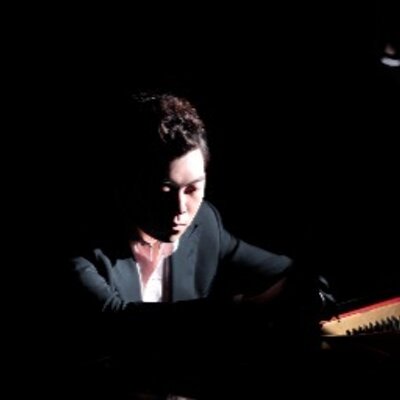
Saturday’s fine concert from Paul Dyer and his chamber orchestra was controlled by visiting virtuoso Riccardo Minasi, billed as the ‘fearless Italian Baroque violin’ – which is fine, if you have an apt attribution of what it is to be fearless.  For sure, Minasi bolts into action at the opening bar to every allegro; in his negotiation of rapid semiquaver figuration, nothing stands in the way; even with mediocre material, he remains in full-throttle delivery mode, urging his Brandenburg colleagues to maintain their impetus.

This style of performance is not exclusive to Minasi, but it is hard to find in many other period performances.  An outstanding instance of this approach first struck me when Il Giardino Armonico played their initial tour in Hamer Hall, a program in which machismo and individual flamboyance refreshed many well-worn pages.  Minasi operates with less flashiness but the results he brings out are similarly dust-free.  Mind you, the Brandenburgers have a head start in this style, as artistic director Dyer asks for the same clarity and vigour from his forces in every program that he himself leads.

Minasi compiled a set of nine works for his visit, all written by composers who flourished in Naples and who lived and flourished during that impossible-to-pin-down period of the Late Baroque.  Some of the names were familiar – Durante, Jommelli, Leonardo Leo; others were complete novelties, so much so that Dyer indicated that some of these scores by de Majo, Ragazzi, Manna and Fiorenza were possibly being heard outside Naples for the first time.  Arcane they might have been in provenance but their impact was continuously benign, the usual developmental tropes showing, and giving in to, the potential for shifting unexpectedly; Durante’s G minor Concerto No. 2 maintained this surprise element throughout its admittedly brief length.

Sharing the workload to some extent, Minasi brought members of the ABO strings to prominence in the evening’s second half with a 4-violin concerto by Leo in which he and guest concertmaster Shaun Lee-Chen performed in duo-opposition to Matt Bruce and Ben Dollman,  The final Allegro to this remarkably appealing score produced the evening’s most brilliant playing, a style galant promenade loaded with compressed energy and delivered with a flawless sheen.  Much the same immediacy and elegance followed in a three-violin sinfonia by Nicola Fiorenza, Minasi and Dollman partnering Matthew Greco in a small treasure, all too brief in its last three movements.

Other moments had their drawbacks.  Both horns and oboes were exposed in an E flat sinfonia by Gennaro Manna, the woodwind pitching noticeably off-centre in the work’s Trio; the brass were required to carry out some rapid trilling in this piece’s first movement which sounded laboured.  But then the program’s final offering, Jommelli’s Sinfonia from the oratorio La Betulia liberata found both oboes generating an excellent spritzig timbre while the sinfonia from Domenico Sarro’s Demofoonte remains in the memory for a series of sustained single-note crescendos from the horns, the string ferment riding the blast.

Minasi made a strong apologist for this neglected music from Naples which, like much of the South then as now, has always been denied a fair shake of the national parmesan cheese dispenser.   In this enterprise, he enjoyed unstinting support from the ABO musicians who played with a confidence and flair that reflected the character of their gifted, personable guest.

New settings for old vices

SEVEN DEADLY SINS

Victorian Opera

Hamer Hall

November 6, 2015

Meow Meow

In an ambitious exercise, the state company juxtaposed Weill/Brecht’s sung ballet – the last significant partnership between playwright and composer – with a freshly-composed Australian cabaret that visited the seven canonical major sins on the nation’s capital cities.  Julian Langdon wrote a prologue and epilogue for these modern-day Seven Deadly Sins as well as illustrating gluttonous Adelaide; Mark Viggiani took on Hobart’s envy and angry Perth; Brisbane’s association with sloth was allocated to Ian Whitney, who also had the unenviable task of populating the lustful landscape in Sydney; Jessica Wells tried to persuade us of Melbourne’s innate greed through the person of John Wren, but then had the night’s easiest run with a romp through prideful Canberra as personified by Howard, Rudd, Gillard and Abbott.

As with any challenging cabaret, the segments varied substantially in content, with plenty of pastiche from each writer. And writers they were in both senses, providing the texts for their own music, albeit collaborating in workshops to develop the whole enterprise.  While each composer gave good musical service with well-regulated instrumentation and generally comfortable vocal writing, the librettos varied in effectiveness and relevance to the vices they were intending to depict.  Viggiani’s choose-a-wife contest for baritone Matthew Tng‘s amiable Prince Alfredo held suggestions of the Princess Mary/Prince Frederik romance, but his condensation of Perth’s idiosyncratic ire to the Rinehart/Hancock family split failed to make many points about the vice itself, the slapstick depiction of all three characters in the triangle coming across as relatively heavy-handed.

Whitney’s two scenes also made a sharp contrast.  In Brisbane denizens Pete and Joh (what’s in a name?), he gained from the services of baritones Nathan Lay and Tng as two exhausted layabouts, while soprano Cristina Russo as a Milton-spouting Angel relished the score’s only lyrical vocal lines.  When it came to the bed-hopping character of Sydney’s self-obsessed chattering classes, the overlapping lines of all seven characters generated a clever verbal depiction of swinging relationships, Elizabeth Lewis‘ anything-goes Helene a solidly crafted presence in a setting where most other vocal lines were confined to scraps.

Under Tahu Matheson, Orchestra Victoria escorted the singers through their tasks with equanimity, from  various Latin and Viennese take-offs to the circus-like superficiality of Jessica Wells’ mockery of Canberra’s political flotsam where costuming, mimicry and all-too-familiar verbal tropes took attention away from the musical underpinning.  Along the way through the night’s backside-numbing first part, the orchestra also took on Wells’ grim, sonorously weighty depiction of a depressed, working class Melbourne in thrall to John Wren’s betting stables and touts.

All of the singers involved were students from the Master of Music in Opera Performance course from  Melbourne University’s Conservatorium of Music; two of them – baritone Lay and impressive tenor Michael Petruccelli – also appeared in the night’s second part, the sung ballet that starred Weimar Republic cabaret expert Meow Meow in the lead role of Anna which, in more conventional productions, is split between a singer and a dancer.  As part of the male quartet representing Anna’s family, both young students gave firm service alongside tenor Carlos E. Barcenas and bass Jeremy Kleeman, the quartet aggressive, remorselessly stentorian on occasions in handling the chorale-type writing that punctuates Anna’s travels in search of wealth.

Matheson headed a larger instrumental body for Weill’s score which impressed for its consistent emotional content. The creators left very little time for their audiences to resent being preached to, no matter how dexterously, about the evils associated with success in a capitalistic world but the scenes, though often discrete, moved into each other without theatrical or musical jerks. While the intent of the work is clearly didactic, its moral, rather than coming over coated in a sugary cocoon of comforting platitudes, remains grim and unavoidable, right up to the bitter if quiescent final bars.

Dominating the stage, Meow Meow gave an impressive depiction of Anna, making a splendid impact in the Boston scene where Anna 2 encounters lust in the form of an attractive if poor man, and her other half has to persuade her to do right by the money-expecting family and stay with her rich lover, harnessing lust to the greater good.  The singer handled this brief but telling segment with unaffected warmth, not actually milking the situation for its sentiment of regret but communicating simply the double standards in operation as Anna encounters yet another sin in a different civic setting.

Both Deadly Sins were staged with surtitles, most helpful in the case of Brecht’s text which was sung in German.   Given the staging circumstances – a fairly small ribbon for action front-of-stage with the orchestra as backdrop, the family quartet singing from Hamer Hall’s rear wall – Cameron Menzies‘ direction depended largely on Meow Meow’s histrionic talents.  By and large, the satire’s onward drive worked fairly well, despite too much emphasis for this observer on the cabaret fall-back of semi-sexual spasms and jerks.

Still, the production’s flaw stemmed from these straitened operating circumstances.  Despite the lead artist’s best endeavours, the work makes best sense if there are two Annas: one, the no-nonsense and hard-headed negotiating singer; the other, a more flighty, temperamentally unreliable dancer who actually does the hard work to get the truism-touting, corrupt family its home in Louisiana.   In this space, a dancer would have been forced to work under improbable restraints, but the lack of one – let alone a corps – lessened the construct’s dramatic impact.

Birdsong from the North

ALAN HOLLEY

Australian Voices

Salon, Melbourne Recital Centre

November 5, 2015

This series – a collaboration between the Recital Centre and the Australian National Academy of Music –  has tended to air music by composers whose names are familiar or well-established.  While Sydney-based Alan Holley is verging on the age requirement for a senior Australian creative figure, his music has rarely travelled to Melbourne; at least, in my experience.  All the more welcome, then, that Thursday evening gave an audience of enthusiasts the chance to hear a variety of works covering Holley’s activity over the past eleven years.

                                                                   Salon, Melbourne Recital Centre

Thanks to the expertise of a chain of talented young ANAM musicians and the committed direction of curator/trumpeter David Elton, we experienced two of Holley’s larger-framed constructs, interspersed with some solos from Elton alongside a few short pieces that served to illustrate the writer’s skill in finding congenial frames of operation for wind and brass instruments in particular.  Canzona for Ligeti begins with an off-stage horn solo – and, no matter what you do, the shade of Britten’s Serenade casts a long shadow – before a short and dynamic tribute written on the Hungarian composer’s death.  Clear in its linear interplay and texturally warm and spiky in turn, this set a fairly high standard of expectation for the rest of the night’s content.

Comprising a mixed nonet – five strings, three wind, horn – loaded with dream juxtaposes musical images of Australia’s first white settlers with the country’s indigenous peoples, the intellectual/emotional landscapes of both races spelled out in a score notable for some eloquent bass clarinet contributions from Luke Carbon.  Here again, Holley employed a varied sound palette, best exemplified by some striking low wind textures supporting a reticent string group.

Elton himself performed Ornithologia, splitting its two parts (in reverse order) at either end of a piano trio, the estuaries of time, which, like the nonet, marked a new e. e. cummings period in the composer’s style of nomenclature.   The trumpet solo gave the first overt reference to Holley’s preoccupation with birdsong, an influence that colours his work – well, the instances we heard here – and Elton’s eloquent performance gave an object lesson in rapidity of articulation as well as demonstrating an unshakable grip on the piece’s sequence of abrupt sonic explosions.

As for the birds, Holley uses a limited and local number of them.  There are no Messiaen-like ornate chromatically complex flurries; rather more suggestions than direct imitation although, to be even-handed, a world of difference in intention lies between the Calling section of Ornithologia and the French composer’s obsessively detailed Oiseaux exotiques.  Holley, unlike Messiaen, presents as more inclined to use what is available rather than to search out the more arcane sounds of rarer species.  Certainly, birdsong adds to the colour, the context even of Holley’s works’ progress, but its use  is not all-engrossing for the listener.

The piano trio opens with long solos for two of the participants; when the instruments coalesce, your attention tends to wander as the contrapuntal interplay is less engaging than Holley’s exploration of individual lines; as a result, I tended to focus on Iona Allan‘s violin or Alexandra Partridge‘s cello as distinct threads rather than looking for the score’s ensemble tension.  In this program’s context, the estuaries of time opened bravely enough but wore out their welcome, the pools they led to rather brackish despite the interpreters’ clear dedication to the task.

The last work of the night, The Winged Viola, was the earliest written, in 2004.  Soloist Gregory Daniel met its challenges with fine equanimity, his line piercingly clean in the Salon’ close situation.  Like the trio, this is a substantial work and deserved earlier placement; as it was, the lyrical curves and sprightly moments of technical brilliance impressed for their clarity, although the later-written scores already heard held more polished, more tautly enunciated content.  Less importantly, this chamber concerto came onto the scene well after the scheduled finishing time of the recital; enervating for those of us with a commitment later yesterday evening.

Happy 80th, Nigel

FROM SORROWING EARTH

Arcko Symphonic Ensemble

Iwaki Auditorium, Southbank

October 31, 2015

Nigel Butterley

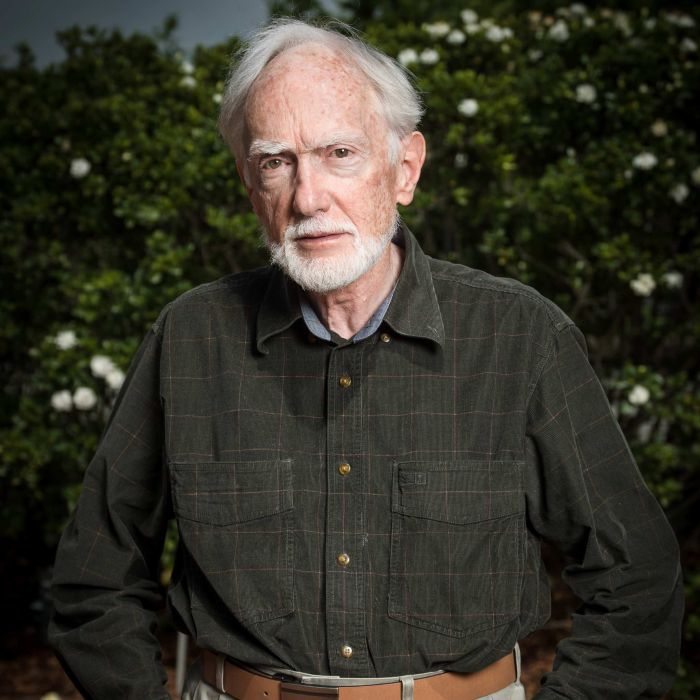
This ambitious concert’s title refers to Nigel Butterley‘s 1991 score, a kind of symphony in one movement which can be read as a lengthy meditation on the planet’s destruction or in even more concrete terms as an active threnody on environmental ruin, albeit a plaint where the listener is eventually offered some grounds for optimism.

n fact, this night celebrated Butterley’s 80th birthday, which actually took place in May this year. Currently, the octogenarian is one of the few survivors of that optimistic period in Australian composition history when we attempted to catch up with the rest of the world after years of rehashing what passed for modern 50 years before.  Butterley’s Sydney-based contemporaries Richard Meale and Peter Sculthorpe have left the scene, their direct descendant David Ahern preceding them by several years.

From that 1960s period of ferment, apart from Ross Edwards,  Butterley’s remaining peers seem to be Melbourne residents, notably George Dreyfus, seven years his senior, and Helen Gifford; both are still productive, if relics of an active era here that mirrored Sydney’s world and included George Tibbits, Felix Werder and Keith Humble.  Agreed, the national musical history doesn’t start and end with these composers but their impact was considerable and more encouraged by the ABC and other concert-promoting bodies than seems to be the case today.  Certainly, their premieres were more keenly anticipated and more widely discussed than similar events in these piping times of benign indifference and undiscriminating tolerance.

Yesterday’s event, a partnership between Arcko Symphonic and ABC Classic FM, served a higher purpose than just recycling scraps from Butterley’s oeuvre.  Alongside an audition of In the Head the Fire, a still-gripping aural composite that won the 1966 Prix Italia, and the night’s-title symphony, the program saw the premiere of From Joyous Leaves, a freshly minted piano concerto by Elliott Gyger, this work taking its framework from Butterley’s 1981 piano solo, Uttering Joyous Leaves.

Zubin Kanga took us into this mesh gradually with an authoritative account of the short solo, idiosyncratic in its vocabulary but impressive for its bursts of deft spikiness; a complex construct but packed with devices and flourishes that document yet again the composer’s brilliant writing for keyboard. Later, in Gyger’s concerto, Kanga gave a gritty demonstration of unflinching insight, negotiating page after page of restless, demanding action.  Following the score’s opening statement for three violas, the pianist entered the work’s scheme and remained a constant presence for a remarkably long time.

One of the concerto’s features is the use of a prepared piano, bringing up memories of Butterley’s own performances of Cage’s Sonatas and Interludes.  The work moves with restless impetus and, using a chamber orchestra of woodwind sextet, brass quartet, two percussion with an often-near-inaudible celeste, and 13 strings, you are confronted with a succession of calculatedly juxtaposed colours, even from the piano which oscillates between normal sounds and the gamelan-like texture of the prepared strings.  A great deal is given to the listener in aural information and, before the tutti which disrupts the soloist’s urgent declamations, the concerto comes close to overload.

I’m not sure that simply playing the recorded performance of In the Head the Fire worked as a concert-going experience.  Yes, it was rewarding to hear the work in well-amplified conditions but these days most of us can achieve pretty much the same impact in our own homes.  Still, what else can you do with a work that wa recorded in different sites, its effect dependent on superimposed tracks and some sonic distortion?  Or perhaps it simply seemed out of place in the concert’s live performance context.

The symphony showed the extended Arcko forces in good form, director Timothy Phillips giving the work’s long paragraphs plenty of breadth.  For much of its length, From Sorrowing Earth moves forward steadily, but several agitated moments interrupt its measured progress; both wind and brass maintained an evenness and cohesion of ensemble that infused these livelier moments with real bite.   In the close acoustic of the Iwaki Auditorium, the general balance would have gained from greater string numbers, particularly both groups of violins which were liable to disappear in ardent full-orchestra pages.

Suggestive of the plainchant soaring over the last movement of Laudes, Butterley’s seminal octet and first major success which exposed many of us to his individual voice, the symphony eventually reaches a point of concord where the strife and stridency are replaced by block chords moving in parallel: a calm processional, an organum for the late 20th century.

For some of us, this would have been the first time we were hearing this striking and concentrated score live; the only recorded performance I can trace was made by the Melbourne Symphony Orchestra under Isaiah Jackson in September 1992.  Its reappearance many years later, delivered with exemplary dedication by the Arcko players, must have pleased its creator.  For Butterley’s admirers, this all-too-short tour d’horizon served to reinforce our admiration and affection for a personable, ever-rewarding creative voice: a timely tribute to his intellectual integrity in furthering the development of Australia’s musical progress.

Mastery at close quarters

VIOLIN SONATAS

Daniel de Borah & Friends

Melbourne Recital Centre

October 27, 2015

Daniel de Borah

Part of the Recital Centre’s Local Heroes all-embracing chain of recitals, pianist de Borah’s initiative acts as a sort of complement to Kathryn Selby’s long-lived series where musical colleagues join in ensembles either on an ad hoc basis or in an ongoing relationship.  Selby’s environment is usually that of the piano trio or quartet while de Borah gravitates to the duo format – his friends including another pianist, another singer or instrumentalist.

For yesterday’s program, the associate artist was Adam Chalabi: a familiar face as one-time leader of Orchestra Victoria, then that body’s artistic director, Head of Strings at the Australian National Academy of Music in 2012, currently first violin in the Tinalley String Quartet and a professor in violin at the University of Queensland.

Rather than picking over repertoire gems, the duo took on two differing but neglected sonatas.  Mozart K. 379 in G is hardly calculated to appeal to a violinist; the keyboard has all the running, particularly in the second-movement variations.  Chalabi’s strongly-voiced output gave de Borah’s active piano part a fair amount of competition but, for much of the work’s length, the string instrument runs in second place.  Which might explain why only a few of Mozart’s works in this form appear with any frequency. Elisabeth Sellars performed the set at St. Michael’s Church in Collins St. nine years ago but I doubt if this particular sonata has seen much light since then.

De Borah made a deft apologist for this small-framed piece gifted with many repeated sections.  His performing style serves as an object lesson; supple wrist work, each note carefully searched out, the hand curved in the time-honoured, teacher-approved style yet capable of sonorous and vehement passages without physical histrionics.

The violinist had all the running in what followed: The Lark Ascending, Vaughan Williams’ spare pastoral romance with its atmospheric, emotionally centred cadenzas that soar to impossibly high Ds. Most often, we hear this poem to the English countryside in the later violin-plus-orchestra format, in halls where kind acoustics help the soloist in the fluttering and swoops that illustrate Meredith’s rhapsodic lyric.  Chalabi span a strong, uncluttered thread with telling confidence, keeping his powder dry for the chain of double-stops at the score’s Largamente climax.  Even in the close quarters of the Salon, you could find few flaws in this artist’s pitch and firm right-hand address.

Continuing the Edwardian vein, the duo gave exposure to another rarity in Elgar’s E minor Sonata, among the composer’s last works and pretty contemporaneous with Vaughan Williams’ rural meditation. By contrast, this sonata looks four-square on the page, inclined to direct statements and sturdy development of set material.  De Borah and Chalabi infused it with vigorous character, in particular the expansive if plain-speaking first movement.  Even more success came with the final Allegro’s energetic canvas, interrupted by a reminiscence of the central Romance’s central theme.   After the pellmell drive and busyness of a Brahms-thick textural expedition, this retrospective moment demonstrated the musicians’ clear-minded skill in treating difficult material.  A standout recital from two performers in their prime.

Split, but not at the ends

INDIVISIBLE VIOLIN & PIANO

Ji Won Kim and Young Kwon Choi

Salon, Melbourne Recital Centre

October 25, 2015

Both of these artists have considerable reputations.   Ji Won Kim took out the 2009 ABC Symphony Australia Young Performer Award and is currently a member of the Melbourne Symphony Orchestra’s first violins, emerging more often than many of her colleagues to front the odd concerto or recital.

Ji Won Kim (image: mso.com.au)

In 2012, South Korean pianist Young Kwon Choi gained the ABC Symphony Australia Young Performer Award in the piano section as well as capturing the Paul Landa Prize under the auspices of  Arts Council Australia and Musica Viva, since when he has performed and studied in the UK and Germany and is now resident and active in Seoul.

Young Kwon Choi (image: twitter.com)

For this collaboration, both artists began and ended indivisibly enough through duets, albeit constructs of wildly differing quality.   In between the Brahms G Major Sonata and Wieniawski’s Fantaisie brillante, the two went their separate ways.   Kim allied herself with Caleb Wright, a viola colleague from the MSO, for Johan Halvorsen’s Passacaglia, lifted from Handel’s Keyboard Suite No. 7 and extended when the arranger felt that the original variations needed amplification.  Both artists demonstrated impressive technical assurance, the fusion of lines well-contrived in the early Handelian pages, Kim relishing the firm flashiness of the latter variations.

For his part, Choi played the Chopin Ballade in F minor, the most intricately constructed and densely textured in the set of four.  Not that the work misfired, but the executant hurtled through pages that might have gained from more considered handling, particularly in the central development where the intended excitement relied on action-packed cascades of semiquavers while the intellectual changes rang thin.

The duo’s realization of the Brahms sonata, apart from a small fumble in the final Allegro molto moderato, came over with fine warmth of timbre and mutual responsiveness, Kim’s line a clear voice right from the warm-hearted opening, while Choi dovetailed with sensitivity in the work’s lyrically controlled paragraphs.

Wieniawski’s fantasy is an unabashed virtuoso exhibition for the violin based on themes from Gounod’s opera Faust.  Like most of the breed, it sounds exhilarating for the quick succession of technical fireworks that dominate its more vivid sections, notably the variant on Mephistopheles’ rollicking Calf of Gold aria-with-chorus and the Kermesse theme.  Kim vaulted through its demands with infectious brio, also finding a studied warmth for the piece’s central meditation on Gounod’s Act 3 love-duet.

In the recital’s short time-span, Kim and Choi began with the program’s finest music to represent the indivisible aspect of their partnership, but from then on their ways parted and even the flashy final duet proved something of a one-sided business with Kim occupying the limelight.  Nevertheless, the audience responded positively to the  musicians’ output and the exercise made an auspicious signpost in a fairly new initiative – well, new to me: the Marigold Southey Signature Series.

Bach celebrates the Reformation

St. John’s Lutheran Church, Southbank

EIN FESTE BURG     

St John’s Bach Orchestra and Choir

St. John’s Lutheran Church, Southbank

October 25, 2015

In two years, the Reformation’s central act – Luther’s nailing of his 95 Theses to the door of Wittenberg’s Schlosskirche  – will be 500 years old, and it’s not stretching possibilities to foresee that Bach’s cantatas will form a significant part of those celebrations.

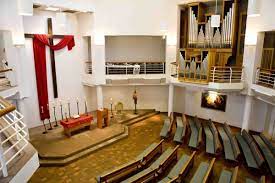
At this city’s most prominent Lutheran church, Graham Lieschke continues to promote and oversee regular performances of these musical statements of faith.  For today – Reformation Sunday – he presented No. 80 which uses Luther’s most famous hymn as its basis: a familiar tune that Bach transforms immediately into a polyphonic marvel as the opening chorus piles vocal and instrumental lines on each other, the composer testifying to his faith with a skill of construction and emotional enthusiasm that sweeps away all doubt.

At Southgate, these cantatas are inserted into the regular Sunday liturgy, a constant framework into which Bach inserted his own musical sermons.   In these more theologically relaxed times, the interposed cantata brings an extraordinary focus to the day’s liturgical observations, as well as to the readings and gospel which set the service’s tenor.  This morning’s cantata content spoke clearly to the concept of the spiritual war between God and the Devil expressed in military metaphors of bulwarks, fortresses, flags, battlefields, armaments, freedom and victory.

The St. John’s Choir gave a fair account of the opening movement, if inclined to be swamped by the ornate orchestration for oboe and trumpet trios, timpani, a bustling string body, and organ and harpsichord enjoying separate parts.  Singer numbers seem to have shrunk over the past few years and – as with most local bodies – the tenors sounded faint, especially in this initial complex.  But the later chorale verses  came across with  more aggression and verve.

A few bleeps from the period trumpets emerged in the work’s finale, although the lines are taxingly positioned.  Both oboists Kailen Cresp and Andrew Angus enjoyed more success with their solo contributions and the string corps show competence but a surprising lack of bounce, generating the work’s supporting weave but leaving it dynamically inert.

As usual, Lieschke benefited from a quartet of able young soloists.  Soprano Caitlin Vincent owns a clear-speaking instrument, even across its range for her counter-melody in bass Jeremy Kleeman‘s Alles, was von Gott geboren  aria. and her own very exposed Komm in mein Herzenshaus solo.  Kleeman made the most of an extended, ardent recitative but the morning’s most effective solo work came from alto Maximilian Riebl and tenor Jacob Lawrence in the cantata’s penultimate duet Wie selig sind doch die: mutually considerate, well balanced in vocal timbre, accurate in rhythmic definition and pitching.

The St. John’s  series continues on Sunday November 29, the run-up to Christmas being marked with Schwingt freudig euch empor, Cantata No. 36, written to celebrate the start of Advent in 1731 and hymning Bach’s great faith with impregnable certainty and infectious joy.