Top of the town in Shepparton

AUSTRALIAN NATIONAL PIANO AWARD 2016

Move Records MCD 560

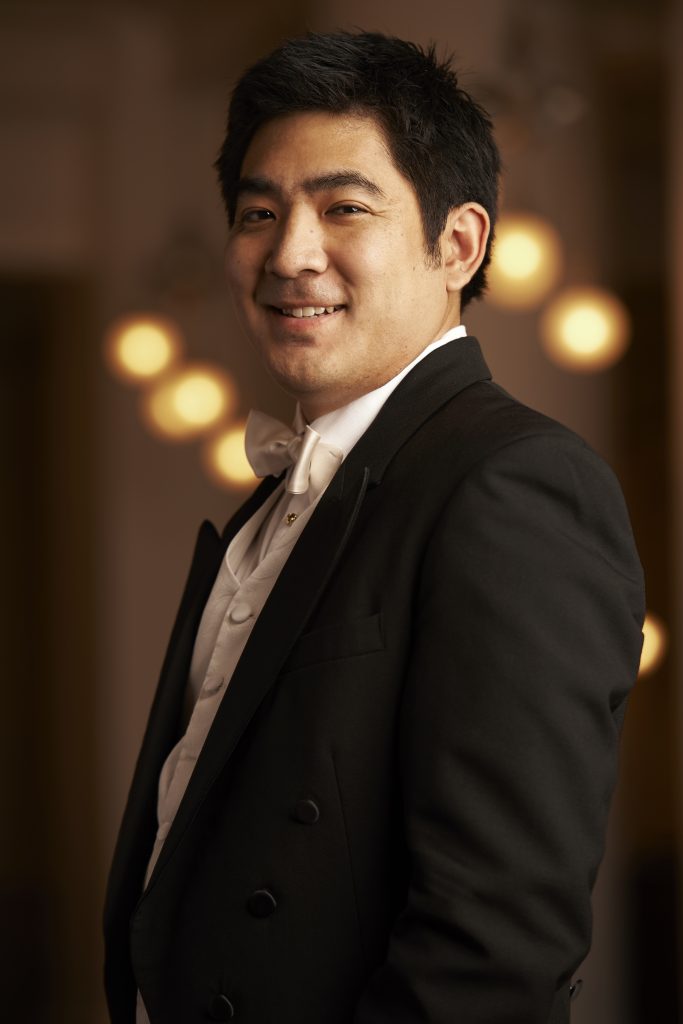
                                                                   Oliver She, Tony Lee, Peter de Jager

According to the booklet that accompanies this CD, ‘the winners deserve the same acclaim accorded to top national athletes.’   Considering the current crop of sportspeople who occupy the headlines whenever Australia hits the big-time, I suppose we can take the comparison as well-intentioned but you’d hope that the three place-winners at last year’s Shepparton competition would be prepared to forego the company or example of Nick Kyrgios, Bernard Tomic or – to juggle with the term ‘top national athletes’   Shane Warne.

In fact, the three musicians featured on this album display a kind of discipline and authority under pressure that even gifted sports-persons can only dream of acquiring.   Those hoops that competitors are required to jump through can’t slowly diminish into the near distance like those for the Sydney Piano Competition where the number of prizes for specific abilities stretches from the Opera House to South Head.    This national award  –  and it is just that: to enter, you have to be a citizen, not a laurel-gathering visitor  –  focuses on an entrant’s abilities as shown in solo recital format,    An Australian work has to appear in a candidate’s repertoire, but the choice of core material is wide open: Baroque, Classical, 19th century Romantic, French impressionist, music written between 1900 and 1950, and works written in or after 1951.

New South Wales musician Tony Lee (24 at the time) won the first prize in the 2016 event.   He is a veteran in competitions in this country, France and Norway and on the present recording (made during live performances) he plays Scriabin’s two-movement Sonata No. 4 in F sharp Major, Saint-Saens’ Danse macabre as arranged by Liszt and then revamped by Horowitz, Chopin’s posthumous E Major Waltz (not the E minor one, as the CD has it listed) and the same composer’s Mazurka in C sharp minor Op. 50 No. 3.

In 2013, Lee won first prize in the Under 24 division of the 13th Scriabin International Piano Competition, so he came to Shepparton with his credentials for the Russian composer well-established.   The performance of the Fourth Sonata has an admirable drive, especially in the Prestissimo volando second movement where the pianist executes a dazzling tour de force, realizing all the detail with fine discipline yet still responding to this music’s neurasthenic core.

Lee suits himself about parts of the slow opening Andante, freely adopting several interpretations of the direction con voglia found in my score, to the point where I can’t hear the lower right hand notes in bars 33 and 34; but the approach is impressively confident and takes full advantage of the composer’s rhythmic flexibility.   The sonata’s second section flies along, Lee managing the long bursts of athletic movement and twitchy melodic particles with admirable musicianship  –  inserting short pauses, changing his weight of attack, giving adequate measure to the relieving moments (the few of them there are) but reading the score with discrimination, even when it reaches its bombastic climax at bar 144 and the shades of Tchaikovsky and Rachmaninov become fused in a powerful polemic on the work’s first theme.

Saint-Saens’ tone poem, especially after two legendary pianists have applied themselves to it, makes another brilliant exhibition.   This work is very familiar and stands up fairly well to the interpolations added to its already exhilarating momentum and Lee handles it with plenty of 19th century virtuosic flair.   I could find only one moment where a momentary faltering occurred; the rest is a dazzling exercise, nowhere more so than in the chromatic riot that starts to build up at bar 431.   For the purist, not all the notes are there and careful attention shows up some points where there are a few subterranean additions; in this, Lee is only following in his distinguished predecessors’ footsteps and the results are formidable.

Both Chopin tracks are amiable enough.   There is one miscalculation in the waltz in the right hand at bar 50 but the trills are as crisp as you could desire.   Across the mazurka, the pianist exercises his God-given right to rubato but he impresses as one of the few pianists who thinks that taking time over one phrase means you have to make it up further down the track.   So his reading is a fine combination of the ruminative and the assertive, effectively and sensitively carried off.   By this stage, Lee has demonstrated a telling sympathy with the 19th century Romantic division of the competition’s repertoire (yes, I know the Scriabin was written in 1903 but its language sits unsteadily on the 20th century cusp).

In second place came Peter de Jager, a familiar face around the Melbourne traps from his contributions to ANAM events and occasional appearances at the Recital Centre.   His offerings on this disc are idiosyncratic to say the least, far more adventurous than you would expect at a competition of this nature, although I’m no authority on what the other entrants performed.   This musician is dedicated  –  among his other interests  –   to contemporary music and is a composer in his own right, so two of the works he presents here are post-1951.   He begins with Lyapunov‘s Transcendental Study No. 10, sub-titled Lezghinka and a refined version of that Caucasian dance (for unrefined, you can find a lezghinka in Khachaturian’s Gayane score).    De Jager’s attack is not as tumultuously rapid as that of some other pianists but you can hear every note in this Allegro con fuoco.   The pianist’s command of the composer’s sophisticated setting/adornment of two unremarkable melodies is excellent, the first toccata descending-scale motive given without the mindless martellato punchiness that it usually suffers.

The central section, when the key changes from B minor to D flat Major, finds de Jager indulging in some late Russian Romanticism.   Lyapunov formed part of Balakirev’s circle and this tune has an inflection that recalls both Prince Igor and Scheherazade; indeed, the melody could have been a candidate for adoption into Kismet if the composer had been somebody else.   But the study makes a fine contrast with Lee’s Danse macabre; not surprising as the composer’s aim in these studies was to finish the work begun but not completed by Liszt through his own similarly named exercises in pianistic impossibility.

Next comes the only Australian work on the CD: Chris Dench‘s tiento de medio registro alto from the composer’s Phase Portraits Book 1, the piece itself occupying Dench from 1978 to 2003.   The score states that the work is ‘after Francisco de Peraza’, who is probably the 16th century Salamanca-born composer to whom is ascribed one work:  a Medio registro alto (de) Premier Tono, although the work’s authorship remains a dubious quantity among the scholars. Dench’s brief fantasia is a ferocious-looking complex on paper, packed with metrical subdivisions that recall early scores of Boulez and Stockhausen, although not as insanely demanding.   De Jager makes light of its terrors and those summoned up by the score’s irregular scalar rushes from one node to another.   The work is awash with sustained textures, its connection to Peraza’s little piece escapes me (no surprise there), and its performance complements the preceding track’s calisthenics.

The silver medallist ends his group with Stephen Hough‘s arrangement of My Favourite Things from Rodgers and Hammerstein‘s The Sound of Music.  Another fleet-fingered display piece which is dispatched with a good deal more determination than Hough himself invests in it, this song setting  works as a pleasant encore, which is how Hough uses it, I think.   But its whimsicality goes a-begging here.

Of the three artists featured, de Jager gets the least amount of playing time; Lee has a tad over 24 minutes, Oliver She enjoys 23-and-a-half minutes, but de Jager clocks in at just a bit over a quarter-of-an-hour.

After this mixed bag, third place winner She comes to us with one work only: Beethoven’s C Major Sonata, the Waldstein  –  that unforgiving, deceptive behemoth with its many temptations to take the easy path and substitute glitter for power.   Stretching back into the past, She is bolstered in his enterprise by the interpretative wealth of great Waldstein interpreters  –  Solomon, Schnabel, Kempff, Richter. Arrau, Brendel  –  and every so often he breaks through into a stretch of originality that takes you by surprise.   For example, he achieves a refreshing continuity and felicity of phrasing in the 12 bars or so that conclude the first movement’s exposition and, by the time we reach the recapitulation proper, he is at home with the work so that the semiquaver patterns show few signs of blurring and the sonata’s surging action is expertly maintained, even if the three fermate before the final rush to judgement are a touch overlong.

The Introduzione is given an appropriately slow pace, its measured progress marred by a muffed melody note at the start of bar 10.   However, from bar 19 to the attacca, She shows excellent discretion in dynamic restraint and  –  apart from an odd shuffle in the left hand on the first beat of bar 21  –  the climax and decrescendo cap a worthwhile realization of this incongruous page-and-a-bit.

A few more glancing errors creep into the Rondo but nothing too disturbing.   The pianist intends  –  as do we all  –  to keep the semiquaver ripples at the start on a very soft level, but the first movement’s opening blurring recurs; if you turn up the volume very high, you can hear the notes are all there but, in live performance, you’d have to be very close to She to discern them clearly.   Happily, the interludes are enunciated with precise lucidity, notably the C minor one that begins at bar 175 and the riot of triplets taking flight at bar 344.   She has no hesitation in taking the Prestissimo at a cracking speed; the wonder is that he perseveres with it, keeping his nerve at the glissando octaves from bar 465 to 474 and keeping the pressure on himself at bar 484 and not slowing down, unlike many pianists who, for unknown reasons, take the arrival of crotchet triplets in the left hand as a signifier of a change in metre.

You’d be hard pressed to disagree with the final ranking of this competition, judging by this CD’s content.   It was recorded a little over a year ago on September 9 and 10, 2016; I presume in the final rounds so that each of the three pianists was working at full capacity.  Thanks to the ABC recording staff and the Award administration, we have a picture, albeit a second-hand one, of the event’s climactic points and a reassuring illustration of the state of the country’s pianism.

Diffident but persistent

GRIEG AND BEYOND

Australian Chamber Orchestra

Hamer Hall

Sunday September 10 and Monday September 11, 2017

                                                                                Henning Kraggerud

I’m not a fan of that musician who feels the need for talk and so gives his real work an oral preamble.   All too often, such a speech wastes time and that particular commodity is becoming more precious to some of us as the years bound on.   Further, all too often what you hear is instantly forgettable or essentially trite or  –  worse   –  a repeat of information found in the program notes.   For a few, this preliminary oral exordium is an ego-bolstering exhibition conducted with the silent encouragement of defenceless listeners, a meandering monologue that can even turn into an attempt to do a Seinfeld and show a try-hard humorous facet to the artistic persona.   While having its points as soul-destroying meta-theatre, the introductory talk can amount to little more than ambient buzzing, the kind of useless fodder you get from announcers presenting a concert or recital from their incubating sound-booths.

Even worse is the interview, where the conductor interrogates a soloist or composer about what’s coming up.   The stilted instance of Paul Dyer talking to horn player Bart Aerbeydt about his natural instrument during last Sunday’s Australian Brandenburg Orchestra event was a case in point where dialogue disappears and oral give-and-take goes missing; mind you, in that particular interview, matters were somewhat redeemed by the instrumentalist pulling out a few party tricks and flip lines to spice up yet another demonstration of the horn’s natural harmonic series and note production methods.

For most of the time, I’m left inwardly groaning at these pseudo-Parkinson preliminary obstacles that wind up with all the non-sequitur awkwardness of a ‘One on One’ clip.   At rare intervals, a light will shine, the most notable when a conductor like Brett Kelly asks a young composer about his latest score –  as at the Cybec New Music concerts each January from the Melbourne Symphony Orchestra, where the chance for a moment of worthwhile information is strongest.    And you can strike the aware musician who knows just how long is enough; Markus Stenz was an excellent exponent of the rapid communication of just sufficient information to keep you  .  .  .  well, if not engrossed, then mollified.

Guest director and soloist in the latest ACO subscription series, Norwegian violinist/composer/arranger Kraggerud prefaced every one of the five works on his Grieg-Plus program with an explication, not getting off to the best of starts with the In Folk Style, one of Grieg’s Two Nordic Melodies.   This was a pseudo-folksong sent to the composer by a diplomat which Grieg subjected to some variations and restatements; nothing very original and, in places (like Letters C and E) failing to impress as little more than composition by the numbers.   The conductor-leader’s introduction  –  soft-spoken, courteous and prepared  –  proved mildly interesting for the speaker’s fluency and naive charm, even if he made more of this specific triviality than it deserved.

Ross EdwardsEntwinings is enjoying its world premiere on this tour.   In two movements, the work proposes both a juxtaposition and a link between the natural world and our civilization although the most attractive section of the score, the opening Animato, holds more interest for its Maninyas-type suggestions and the bird-like sounds that eventually dominate the texture and round out the aural imagery, the whole fore-fathered in atmosphere by Sculthorpe’s Irkanda exercises.   In the following Lento magico, Edwards employs a chorale-type statement to open and conclude a chain of sequences, the emotional language more worked-out than in the initial movement: less suggestive of the bush and wild-life, the accent less on pantheistic rhapsody and more on the civic world, the narrative sustaining your interest for its inner variety of approach as well as being a gift in multiple textures and techniques for the well-rehearsed ACO.

Kraggerud has turned all three of Grieg’s violin sonatas into concertos, to flesh out the number of Scandinavian exercises in the form  –  although, if you look hard enough, there are several available apart from the towering Sibelius in D minor.   This concert’s offering, No. 3 in C minor, isn’t a full orchestration  –  no brass, no percussion, only single woodwind to punctuate the string texture  –  but the results are forceful enough.   There’s not much any musician can do to spice up Grieg’s orthodox melodic divisions; still the same two-bar phrases that obtain through most of the composer’s works, very evident in the opening Allegro, but on Sunday this predictable four-squaredness was mitigated to a large extent by the orchestra’s enthusiastic address.

The guest violinist was heard here in fully exposed voice for the first time.   His sound-colour is admirably pointed and clear with an individual lyric timbre in higher-string passages of play, most obvious in the middle movement at the sideways move from E to E flat Major at bar 209.   The long restatement of Grieg’s opening theme high on the soloist’s E string made for a moving display of emotional wealth of feeling and impeccably shaped performance skill.   In the final Hall-of-the-Mountain-King allegro, where Grieg oscillates between dance-like thumping and smooth simple melody, Kraggerud splashed around his technical agility with carefully moderated abandon, the most memorable passage coming at the shift to A flat for the central trio where a low-lying melody line for the soloist was supported by cellos and bass: an outstanding realization of another heart-on-sleeve moment from this most approachable and complication-free of writers.

The Topelius Variations (from Topelius’ Time) commemorated the 19th century Finnish writer in a sequence of connected episodes that also paid a kind of homage to Grieg’s Holberg Suite.   As its composer, Kraggerud had a fair bit to communicate to us before he started on this score, which is receiving its Australian premiere on this tour, but, by the time he’d finished, I was expecting something a good deal more taxing than the reality turned out to be.   While he varies his basic material, not sticking to one theme to treat, Kraggerud veers towards the folk-tune-style of lyric with which to play around.   His variants may occasionally veer into complex territory but as a rule they make for easy absorption; even the rhythmic difficulties  –  a time-signature of 19/16, we were promised   –   didn’t seem to make extreme demands on the ACO  –  or on us.

To end, the ACO took us back to Grieg: the arrangement by Richard Tognetti of the String Quartet Op. 27.   It’s been a while since I heard the ensemble play this piece but it has been bred into the players’ bones  –  quite a few of them, at any rate  –  because they recorded it in 2012.   Kraggerud exerted minimal control for this piece.   At first, I suspected because the musicians had an intimate familiarity with its performance problems.   But really, the guest engaged in very little overt direction; nothing like Tognetti’s habit of conducting with his bow for significant cues.   Mind you, little on this program required any semaphoring, with the possible exception of the new Edwards work, but I can’t recall Kraggerud taking time out to make many directional gestures for that piece, either.   As well, the musicians had already given six accounts of this program in Sydney, Wollongong and Canberra before hitting Hamer Hall, so they were more than adequately played in.

The quartet ran its course with maximal flourish, in particular the symphonic first movement with a wealth of declamation and spirited rhetoric.   In fact, much of the work is well-suited to string orchestral guise, including the smart, syncopated Intermezzo and the saltarello finale, even if the actual material wears out its welcome many minutes before the G Major coda.

As promised, we had plenty of Grieg at this afternoon’s event, the Topelius piece probably suiting the ‘Beyond’ promise, although how much further Kraggerud takes his heritage is questionable; an amiable work, yes, but not as far advanced as you might expect, considering the musical earthquakes that have taken place since the Norwegian master’s death in 1907.   A lot has happened over the last 110 years, but this new piece looks back in more ways than one.   However, Entwinings took us some steps into the 20th century and it was heartening to hear another Edwards work, just two days after the Melbourne Chamber Orchestra had aired his Tyalgum Mantras with striking elan at the Deakin Edge.

The long and the short

TOWARDS ETERNITY

Melbourne Chamber Orchestra

Deakin Edge, Federation Square

Friday September 8, 2017


                                                                                 Merewyn Bramble

A deftly organized program is a treasure beyond price these days.   Whether or not this latest offering from the MCO was all the work of soloist Genevieve Lacey‘s doesn’t matter; whoever put it together had a nice sense of proportion, Friday night’s entertainment constructed in two almost equal halves that reflected each other without too much close mirror-imaging.

Both halves of the evening began in medieval mode – first, with the Leonin/Perotin motet. Viderunt omnes arranged by Lacey for three cellos and double bass; later, a continuation of the species, Notum fecit in an adaptation for four violins. The latter made for a sobering experience, coming close to the night’s title than the opening gambit which once again gave cause for wonder at how conjunct were popular and religious musics in the 12th century and what a feeble echo comes from the auditoria of Hillsong and its ilk in these latter days.   The experience also rolled back many years of memory to student days when Dr. Percy Jones endeavoured to interest us laggards in the intricacies of organum and conductus – and how little actual knowledge remains.

After the Viderunt omnes, a string quartet of violins William Hennessy and Rachael Beesley, viola Merewyn Bramble and cello Michael Dahlenburg moved without a break into the penultimate movement, O Albion, of Thomas AdesArcadiana which carried through an ultra-restrained pastoralism that might have caused little surprise in 1198 Notre Dame, so subtle was the slide from the motet’s meditative last pages to Ades’ placid sound scape.   This in turn gave place to a madrigal, Cipriano da Rore‘s Ancor che col partire, with two divisions by Giovanni Bassano – which brought Lacey to the stage playing the top line: a stream of expressiveness in the middle of a non-vibrato (well, very little) string halo, followed by variants with the strings pizzicato, then with mutes.

This made for a sensible trans-generational journey before the night moved on a century to Vivaldi’s Recorder Concerto in C minor, one of the multitude in the composer’s catalogue that I’ve never come across.  By contrast, in the program’s second half,  Lacey presented Sammartini‘s F Major Concerto, the writer’s best (only?)-known work.

Balancing the night’s opening, after interval, following the sober Notum fecit, the second stanza of Viderunt omnes merged into Ross Edwards’ Tyalgum Mantras in an arrangement I’ve not come across: solo violins at every corner of the Deakin Edge space, two central cellos, Lacey’s recorder, three violas, a group of four violins – all contributing their individual voices to the Australian composer’s own pastorale that showed a clear debt to Sculthorpe with its sustained pedal notes and shared melismata duties.   This in turn mutated into John Dunstable‘s Quam pulchra es arranged for three violas – Bramble, Katie Yap, Matthew Laing – which capped off this second group gambit with remarkable success, thanks to the performers’ sensitively-melded negotiation of the British composer’s clear-speaking polyphony.

The two Baroque recorder concertos gave Lacey another opportunity to remind us of her instrumental and interpretative brilliance.   They don’t look adventurous on paper, but the Vivaldi concerto’s first movement solos challenge any interpreter to smooth out some demanding leaps, keep faith with the underpinning metre through syncopations, and enunciate several demi-semiquaver exposed near-cadenzas.   With Lacey, you sense no performance tension but rather an awareness of the composition’s coherence, thanks in part to the recorder being written in to the outer movements’ tutti passages for both works.    But the efficiency of this soloist emerged best in the three rapid-fire solos of the concluding Sammartini gigue-like Allegro assai, notably the precision of the sequence of trills that punctuate vaulting pairs of semiquavers.   This work presents as more gracious than that of the Venetian master but then it doesn’t travel very far; its simplicity from a galant-style opening is sustained because Sammartini doesn’t travel far from his home-key.   Even the chromatic descents of the middle siciliano fail to lead far from a central A minor/C Major harmonic spindle.   But the solo line is light and buoyant in its movement, Lacey carrying it off with elegant spiritedness.

Hennessy led his forces into interval with Beethoven’s Grosse Fuge.   Unlike the customary take-no-prisoners mode of attack, this reading pleased for its lucid delivery, even in those passages of maximal inner strife.   The two elements that surprised from this experience were the power of the two violas  –  Bramble and Yap in bracingly concerted voice  –  and the surprising dearth of interest delivered in the central Meno mosso e moderato where everyone seemed happy enough to observe the pianissimo marking throughout but otherwise did little shading work with this material.   Elsewhere, the musicians coped best with the movement’s broader dynamic passages  –  the sterner the fugue itself, the more involving this account   –   but some relieving moments misfired, like the soft trills that intervene at Bar 710.

Ending the night, Hennessy and his forces played the Fantasia on a theme of Thomas Tallis by Vaughan Williams: another vision of the eternal to set alongside that of Beethoven’s vision of a divine architect.   This lacked the massive washes of fabric that a full orchestra can generate with its 50 or 60 participants but it came close to being one of the most successful readings I’ve heard of this superb score.   The second orchestra made vivid work of the manual-changing moments, starting four bars before Letter F, despite the presence of only one player at each desk.   Bramble and leader Hennessy gave splendid service in the quartet fantasy at the work’s heart, and later made a joy of the spine-tingling duet a bar after Letter U.   In fact, the only question mark arose at the start of Hennessy’s last solo F minor arpeggio but I wasn’t alert enough to put a name to the specific note.   Still, it hardly mattered in the context of this excellent demonstration of the MCO’s grace under pressure and responsiveness to the director’s insightful preparation.

Finishing up properly

CREDO

Mimir Chamber Music Festival

Melba Hall, University of Melbourne

Sunday September 3, 2017

                                                                                     Brant Taylor

And so we say farewell to Mimir for 2017.   The festival’s concluding recital on Sunday afternoon played to an enthusiastic if under-sized crowd, happily ensconced in the comfort of Melba Hall, these lower numbers possibly explained by the coincidence of Fathers’ Day, although I don’t know how many of us take that fabricated celebration seriously when the options are to manufacture jollity for a few hours or to listen to top-notch chamber music-making. This concordance of dates has been a problem over the last few years with the Music in the Round Festival at the Abbotsford Convent, but this time that celebration has been transferred to the last Friday in the month rather than the first; let’s see what difference this makes to MITR’s attendance figures.

A familiar quartet ensemble first presented Mozart, the D Major K. 499; Jun Iwasaki and Curt Thompson violins, Joan DerHovsepian viola, and the exhaustively employed Brant Taylor doing cello duty as he has for every item throughout all three main Mimir recitals.  The ensemble did not play a repeat of the first movement’s exposition which meant less exposure to a well-rounded ensemble output, Iwasaki projecting as forthright a top line as ever while urging his colleagues through a slim development where his part has most of the interest.

For unknown reasons, DerVorsepian gained prominence in the following Menuetto, prominent in the mix although the score shows no reason why this should be so; still, it gave interest to an unexceptionable if bland few pages.   As with the other slow movements at Friday’s recital, this work’s Adagio sounded assertive from all quarters; nobody was really prepared to supply much sugar with this dish.   The performers were well agreed on their use of vibrato, abstaining from excess; but then, there wasn’t much room for indulgence in this volatile movement with quite a good deal of ornate action from all parties, although Iwasaki enjoyed the lion’s share.   At all events, the outcome was fittingly free from sweetness, the dulcet giving place to the crisply deliberate.

The last movement is a molto allegro but this exercise held several passages of scrambling; not so much shown by intonation problems, although these weren’t entirely absent, but more by coping with Mozart’s sudden modulation checks and jumps in atmosphere.   Indeed, it was hard to make rhythmic sense of the first 18 bars or so as the emphasis was on metrical sleight-of-hand, so that you weren’t quite certain of the prevalence of triplets until they became texturally solid in bar 22.   Enthusiasm and rapidity were the movement’s characteristics but the players’ impetus made the chromatic sliding that started at bar 186 sound as though a touch more rehearsal time would have clarified the composer’s intentions.

Flying the standard of democratic hope, the same personnel gave most of us our first encounter with US composer Kevin PutsCredo, a four-movement construct that made its various images harder to imbibe because the players worked through it without a break.   This attaca procedure always leaves me unhappy and uncertain; what I think I have decided to be the end of one particular segment might in fact be nothing of the kind but simply the composer taking a new breath before revisiting the same scenario.    For instance, Puts begins with a scene set in a store in New York, The Violin Guru of Katonah, where clients come to play their instruments to the specialist who then carries out repairs.   The movement starts with harmonics and atmospheric rustling sounds before settling into a display piece for the first violin while his peers play simple underpinning chords.   Puts proposes that he quotes specific violin pieces during this dazzling display and, although you heard fleeting references to 19th century concertos  –  perhaps  – nothing stuck around long enough to be recognizable.   Fair enough: the composer’s point is to suggest flashes of virtuosic light rather than simply set up a forum for Guess the Tune.

But, before you’re quite aware how it was done, you are into the second phase, Infrastructure: a new picture, this one of an industrial landscape in Pittsburgh.   You know you have arrived because the players drum out zesty rhythmic patterns and hard-edged dissonances to suggest the mechanical age.   It’s not high on the brutalist level of Mosolov or Honegger but the inhuman landscape surges up, unmistakable.   The third stage, Intermezzo: Learning to Dance, begins with a soft lullaby motion, a simple lyric involving euphonic chords in the best Vaughan Williams vogue; simple juxtapositions suggest the innocence of a scene where a mother teaches her daughter dancing, Taylor’s cello significant for an ascending scalar melody of benign nature.

And somehow we move syncretically into the Credo movement, announced by a presto involving everyone in a moto perpetuo that builds excitement, then stops for what is heading towards a one-note meditation for Iwasaki’s line.   But then, in democratic style, Taylor takes on the prominent role, succeeded by DerHovsepian, and Thompson brings up the rear, with all eventually involved in a slow declaration, a statement of aspirations, I suppose, which gradually dies away, fading to black.   From what I could make out, this last segment is the work’s most substantial  –  and its most voluble.   If it is a statement of belief, Puts is speaking in optimistic terms, even if it takes him some time to have his say; you look in vain for the brusque determination of a Ruggles or Harris, two sterling exemplars of self-revelation without indulgence.   But then I might have the structural delineation all wrong; I don’t think so, but it’s quite possible.

Despite the confusion that it presents to those of us who over-compensate for our ignorance, Credo maintained your interest, not least for the command shown by all involved of the work’s emotional landscapes, and the full-throated generosity of their participation.

Australian pianist Kristian Chong started the program’s final offering: the magniloquent Brahms Trio Op. 8 in B Major. His partners were the omnipresent Taylor and violinist Stephen Rose.   Here was a very compelling account of a work that grabs you by the throat every time you hear it.   Chong’s opening statements enjoyed an uncluttered delivery, without any clagging from an over-employed sustaining pedal but taking the score’s open features at face value.   The strings’ entry into the action mirrored this approach with an exemplary amalgamation, strong in contour so that every phrase was shaped and delivered with care.   While you could admire the clarity of ensemble in a score that suffers more than most from superimposed temperament, the artistry of all concerned welled out from about bar 181 onward where the key signature returns to normal and the trio carves its way back to the main first subject en clair: a passage of extraordinary clarity after the development’s long hegira, where eventually peace came dropping slow.

Chong kept his attack sotto voce for much of the Scherzo, saving his full force for those moments where it counted most  –   in the ample Trio.   The only error I could pick came in the later stages of the scherzo repeat, somewhere about bar 409 where the right hand quavers momentarily faltered.   Taylor’s voice glowed in the great Adagio, notably in the lengthy G sharp minor solo that begins at bar 32, a moving digression from the preceding chorale antiphon.  And Taylor began the last Allegro with an impressive display of sublimated strength.   All three musicians cooperated in a compelling build-up of tension before the splendid relief of the D Major second subject bursting in at bar 64; an electrifying moment in this considered and temperate version of the trio,  Chong resisting the common temptation to take over by keeping his declamatory moments temperate.   Here also I found only one questionable piano passage at about bar 218, during the return of this subordinate theme, now in the home key.

You have to feel envious of musicians fortunate enough to be asked to perform this generous and rich masterpiece, even if it winds up being oversold by ensembles who seize on its innate weight, dynamic shifts, juxtaposition of inspired melodies and gripping chromatic exploration, in order to generate a simple-minded dramatic ferocity.   Here we enjoyed the labours of players who aimed for clarity above all, typified by Rose’s cogent and intensely sympathetic line, best instanced by his shaping of the long high-set path of the first movement’s Tranquillo: one of this afternoon’s most powerful stretches.

Hold nothing back

SERENADE

Mimir Chamber Music Festival

Melba Hall, University of Melbourne

Friday September 1, 2017

                                                                                      Jun Iwasaki

Back for a fifth year, this chamber music festival, originating in Texas, has settled on the Conservatorium of Music in Sydney Road for a far-too-brief week of seminars, tutorials and exhibition recitals.   Most of the participants are familiar, especially the core US string quartet – violinists, Jun Iwasaki and Stephen Rose, violist Joan DerHovsepian, cellist Brant Taylor  –  all overseen by Curt Thompson, Head of Strings in the Music Faculty.   Another returning artist is Melbourne pianist Kristian Chong, with colleague Benjamin Martin also appearing in two programs to flesh out the repertoire.   The newly-appointed Associate Professor of Double Bass, Robert Nairn, made a one-off contribution during the festival’s middle recital, assisting to realise a work new to most of us.

Beginning this second recital, the US musicians played that challenging serenade for string quartet, the Italian by Hugo Wolf.   For perhaps the first time in my experience of the score, first violin Stephen Rose regularly surrendered primacy to his colleagues, the top violin line overwhelmed by its companions, in particular a well-roused Iwasaki who dominated the group’s output except at climactic flights, as at bars 161-5 where the first violin operates an octave above its partner, or at the long crescendo beginning in bar 470 where Rose – for a time – had all the running.

To be fair, the interpretation improved after the mid-movement cello recitative from a voluble Taylor, and the move to F sharp minor and its consequents proved to be a light-footed delight.   True to its spirit, the work came over as vital, ironically humorous and the performers gave a crystal-clear account of the score’s metrical games, the quicksilver interplay deftly accomplished and, if the product began as sonically imbalanced, you could not fault the quartet’s underlying consciousness of mutual responsibility.

Martin and Nairn joined Curt Thompson’s violin, DerHovsepian and Taylor for the Piano Quintet in C minor by Vaughan Williams.   This, composed in 1903, is the first chamber work listed in the composer’s catalogue but it remained unpublished until 2002.   Despite British sponsorship and enthusiasm as well as its handy partnership with Schubert’s Trout which uses the same instrumentation, the quintet has not proved popular  –  a pity, as its language is heartfelt and its ambitions come to a splendid conclusion in a mobile and emotionally engrossing Fantasia.

The point has been hammered home by every commentator I’ve come across that the score owes much to Brahms – which, after you’ve heard the first two chords, is stating the bleeding obvious.   More so than in most Brahms chamber compositions, the keyboard dominates and its attack seemed disproportionate on this evening, particularly when a string trio interlude followed, as at bar 139 with a move to Andante sostenuto.   But a look at the score shows that Martin was simply following orders and Vaughan Williams wanted a fair dollop throughout of fortissimo and triple forte dynamics from the pianist.   The following Andante, however, was much more satisfying, both for its own content and for the expansiveness allowed to the players.   An undercurrent of the repeated chord stasis found in the composer’s contemporaneous song Silent Noon enriched this appealing pastoral, a well-justified comparison observed by annotator Michael Kennedy.   An opening piano solo was succeeded by the first of several melting moments for strings at bar 30 and, after a very mobile middle section with a powerful allargando climax, the return of this euphonious calm rounded out a splendid passage of play.

The variations/fantasia begin with an antiphon between piano and strings, the material a simple-enough melody harmonised in full common chords, anticipating so many of the composer’s most well-known music.   Both sound-sources generated a powerful timbre without straining, each variation clearly given its own context, although you’d have had to be comatose not to appreciate the Brahmsian sweep of the change announced by Martin’s powerful move to E flat minor at bar 67 and the concerted strings’ vehement responses, all capped by a potent clamour at bar 216 where strings and piano lined up for an enthusiastic D flat affirmation of the main theme’s last strophe before the work fades out with a touching descending C Major carillon in the bass.

While a large part of the Mimir week comprises performances and examinations of standard repertoire, it’s the resuscitation of a score like this Vaughan Williams that adds value to the festival experience.   Further to this, you have the inestimable advantage of hearing such a composition handled with confident mastery, not only from the well-exercised Martin but also from that admirable central string trio with Thompson and DerHovsepian splendidly matched in their frequent octave or unison duets.

Dvorak in G Major Op. 106 brought up the rear, one of the last two of the composer’s string quartets.   Here, Iwasaki took the first chair and the combination with Rose sitting at second worked to much more congenial effect than had been the case with Wolf’s serenade.   Even so, some signs of strain emerged in a strident section, about 22 bars before Figure 10 in my score, where the violins are operating in thirds for about 16 bars and intonation was momentarily suspect.   More significantly, from the start the players were over-hefty; even DerHovsepian went for the jugular in the more hectic pages of an otherwise benign Adagio.

This break-through dynamic also obtained in the Molto vivace, the outer scherzo sections given with a certain compulsiveness of address; the central Trio came across as even more of a relief than expected.   This tautness worked to better effect in the finale with its happily hectic drive oscillating with burbling lyricism, the episodes featuring melodic material that for some reason brought to mind that annoying scrap of faux-calypso, Yellow Bird.   More to the point, you felt that the labourers in this particular vineyard were on a time limit, urging through the movement, especially from Figure 7 at the Allegro con fuoco return.   The effect was exciting to experience and to a large effect justifiable because, to be fair, the matter that Dvorak presents in these pages is hardly the stuff of transporting elevation.   But the outcome of the reading was to leave you with unalloyed admiration for the executants’ deliberation and precision under (generally self-applied) pressure.

Prize-winner’s bombardment

Andrey Gugnin

Camberwell Grammar School Performing Arts Centre

Tuesday August 29, 2017

                                                                                   Andrey Gugnin

Coming to the end of a packed cross-country tour that would cripple most performers, the Sydney International Piano Competition winner for 2016 made his solitary Melbourne appearance at a lavishly appointed auditorium in the city’s private school eastern suburbs belt.   Camberwell Boys Grammar has enjoyed a building acceleration over the past few decades and its Performing Arts Centre auditorium holds a grandiose attractiveness, including an imposing front-of-house space, fairly comfortable conditions for its audiences, and a wide stage which, for this event, had a reflecting screen behind the performer  –  the sort of thing you see at Selby & Friends recitals or pretty much everything at the Australian National Academy of Music.

The hall also boasts a thick carpet that covers the foyer steps and the interior, with an emasculating loss of resonance as a consequence.   Not that you can do much else in an environment where schoolboys are the natural inhabitants, along with their innate propensities for noise-making.   Not only did Gugnin have to make allowances for a muffling acoustic, but also he was saddled with an uneven instrument  –  a Fazioli grand?  –   that showed at its best in this night’s action-packed second half rather than in the staid Bach-and-Schubert opening gambits where the player’s softer passages held little textural interest.   A pity that we couldn’t have heard the school’s own Steinway, but then that company wasn’t sponsoring this tour.

Tuesday found Gugnin working through the larger of the two programs he has been taking on tour, opening with the Bach Adagio in G Major, a transcription for keyboard of the first movement from the composer’s C Major Sonata for solo violin.   This is a worthy settling-down piece, two pages’ worth of little activity that winds up on a dominant chord which took this particular audience by surprise, so that Gugnin was able to move without a ripple into the Schubert D Major Sonata.

Despite the handicap of his operating conditions, the prize-winner made a good deal out of this experience.   He followed an individual path across all four movements, finding a satisfying dynamic interplay across the score by refraining from the over-histrionic, so that the outer movements came across as restrained in temperament, more consistent in atmosphere than you usually hear from young interpreters.   For instance, the usual shift at the Un poco piu lento passages conveyed its message by relying on the modulatory jump in each case, rather than by confronting the listener with a pounding fortissimo.

For the concluding Rondo, Gugnin demonstrated a welcome insight, keeping the temperature low even when the movement reached its higher stages of ferment – the long central G Major episode – and not making a meal of the juxtaposed changes in dynamic enunciation.   Just as impressive work came at the final pages when the composer decorates his perky theme with chains of irrepressible semiquavers, right up to the simple, moving last three bars.   Gugnin showed his grasp of this movement, one that pivots on a touching combination of fluency and unaffected charm, a duality you find in the countryside Schubert, his personality not over-awed by his great contemporary.

Certain sections of the central Con moto pages were carried out with fine control, but here the instrument/hall combination made itself most prominent.   Both opening and closing passages are muted and the pianist was unable to give them room to breathe as his sound deteriorated quickly.   The action-packed middle section fared a good deal better, treated with an impressive impetus but – a trademark of this reading – not hammered home in the two-hands full chord punctuating exclamations.   If Gugnin reserved his power for the Allegro vivace, you could understand why: the scherzo itself has a remarkable buoyancy that surges out at the double-bar half-way through where the pianist blazed into action, pulling back for the simplicity of the movement’s trio, giving here an object lesson in maintaining a melody’s distinctive path over a relentlessly full chordal support.

The night’s second half was almost completely all-Russian, beginning with Shostakovich’s Sonata No. 1 of 1926, a highly impressive piece that is rarely heard because of its relentless physical demands and the unremitting percussive dissonance of its processes.   Here, Gugnin exploded into action with a fierce energy that made a brilliant apologia for a score basically unconcerned with its own portability, one of the young composer’s works that shows no signs of the orthodoxy of coming decades.

Michael Kieran Harvey featured as the odd man out in this recital’s second half, his G-Spot Tornado making a welcome appearance.   Extracted from the Australian composer/pianist’s 48 Fugues for Frank Zappa (which is, in fact, nothing of the sort), the piece is, after a portentous opening apostrophe, a moto perpetuo conceived as a dazzling and brilliantly conceived homage to Zappa’s original.   Gugnin made an excellent business of this toccata, at ease with its syncopations and the simple melody that flashes across the hectic, unstoppable accompaniment.   Although it lacked something of Harvey’s own flamboyance, this version sustained its interpretative grip and burbling effervescence.

Leonid Desyatnikov is not a name that you come across often, if at all.   Born in the Ukraine, he made his name as a film-music composer, then moved to the opera stage and theatre, providing a wealth of incidental music.   Gugnin presented his Reminiscences of the Theatre, seven characteristic pieces that could have come from any minor early 20th century French composer.   None of these bagatelles presented technical challenges similar to those of the two preceding works, but they had an agreable charm, the faster movements very much indebted to bitonality  –  that never-failing gift from Stravinsky to his countrymen.   As well as mainstream material, Gugnin has recorded some recherche Russian material – Arno Babadjanian’s Six Pictures, for instance, alongside both Shostakovich piano concertos  –  but this set of Reminiscences comes pretty close to salon music, albeit a touch more spiky than the usual run.

To end his program, the pianist played the Trois mouvements de Petrouchka, Stravinsky’s 1921 deconstruction of his own ballet for the delectation of Arthur Rubinstein.   Here, Gugnin produced a remarkable demonstration of intelligent virtuosity, the Danse russe much more telling than the customary percussive battering-ram but packed with deftly articulated detail, the player keeping a constant weather-eye out for the occasional close-to-swamped melody.   Both this set of pages and the following Chez Petrouchka came close to ideal in this pianist’s vision, the outlines lucid with some remarkable vaults across the keyboard that helped to explain why this pianist had won quite a few international competitions before he landed in Sydney.

Gugnin made a fine start on the finale, La semaine grasse, notable for a shimmering ripple imitating the string texture that features at the opening to this scene.   The trouble with the piece is that there is too much; where the orchestra offers textural change in the original ballet, this re-imagining preserves too much of the lavish material from the original scene and the piano-writing winds up sounding heavy-handed.   Further, the conclusion to this and the later concert version has a crassness of imagination when compared to the brilliantly achieved conclusion of the actual ballet  –  an unanswered question that bemused Diaghilev.

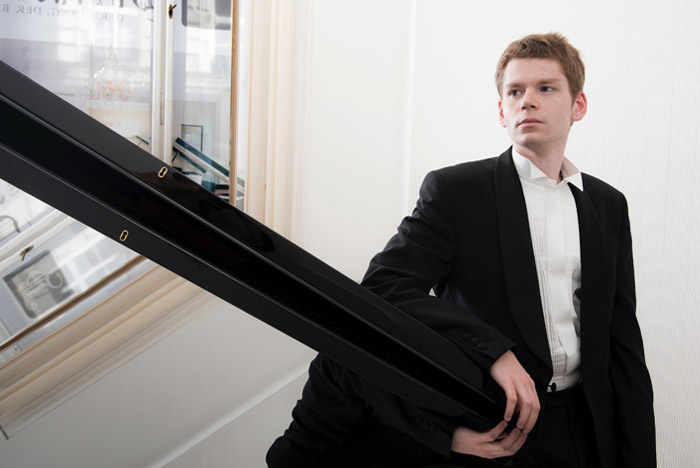
By the time Gugnin reached the end of his Shrovetide Fair, I’d had enough and the recital had run well overtime. However, it completed a highly informative event that let us hear at first-hand what the Sydney jury had seen in Gugnin that singled him out.   I have to confess that the performer’s appearance had me fooled; from the publicity shots, including the one reproduced above, he looks remarkably young  –  possibly a late teenager.   He is, in fact, 30 and has a physical stature that argues for familiarity with gym work.    In the end, apart from his physical presence, Gugnin is  an impressive figure to see in operation and obviously has the requisite talent to further a career that is already packed with appearances cross the globe.

Honest attempt at the improbable

LOHENGRIN

Melbourne Opera

Robert Blackwood Hall

Saturday August 19, 2017

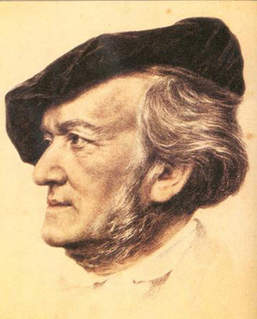
                                                                                   Richard Wagner

The great advantage about getting to the last performance of anything is that you get the chance to garner the wisdom of your colleagues, read what they have to say about the event, retain what their findings have been while you sample the goods yourself, then have a rich backdrop of opinion on which to draw to justify your own.

Well, it could work like that except that, more often than not, the views of other writers tend to act as mental retardant; you can get distracted by too much unanimity about a singer’s worth or a generous communal appraisal of an orchestral contribution, or you can be startled into irrational action by the amount of space that fellow-writers give to ephemera – the costumes, lighting, scenery and directorial imprint.

So it has been with this Wagner work which enjoyed a three-night run in the Regent Theatre before this final performance in Monash University’s hall, rather than in its Alexander venue.

Without cavil, I shared the universal approval of all six main principals, could almost go along with the approbation given to the company’s expanded orchestra, was mainly in agreement with the encomiums heaped on the chorus.  Yet it was hard to share in some of the minor enthusiasms that fleshed out several of the post-premiere notices.  Partly this was due to the change in venue.   I’ve not been inside the Regent Theatre for years; not since a younger Hugh Jackman appeared as Joe Gillis in Lloyd Webber’s one-and-a-half hit show Sunset Boulevard.   Without doubt, this Collins St. venue would have suited the opera more comfortably than did the university hall, although the latter had the asset of a long walkway from which choruses could be sung, brass ensembles could bray and even Philip Calcagno‘s Herald could carry out some proclaiming.

Here was one of the production’s unexpected surprises.   The Herald has the opera’s opening words, is the focus when Elsa’s appeal for a champion goes out, sets up the order of combat, then pronounces the changed state of affairs in Brabant before the wedding scene  –  Calcagno’s best moment,  his baritone well-pitched to the space and firm in its chain of announcements.

For the title role, Melbourne Opera brought back Marius Vlad, last year’s Tannhauser.   His tenor is a reliable quantity, only one passage in the lengthy Act 3 duet giving a short frisson of concern.   He negotiated the set pieces –  that rhapsodic self-introduction-of-sorts, Nun sei bedankt; the powerful summation of his final appeal to Elsa in Hochstes Vertrau’n; the blazoning power of In fernem Land where all becomes clear.   Accurate in intonation and, relative to some of his peers, observant of Wagner’s metre, Vlad does not power through his work; when set alongside some of the noted heldentenors who can bellow to order, his timbre is inclined to be nasal rather than gutsy.

Unlike many other observers, however, I thought that the tenor shone brightest in ensembles, notably the duets with Elsa: the first encounter beginning at Zum Kampf fur eine Magd which swept you up rapidly into their mutual, hastily organized commitment; the interchanges that constitute the last scene of Act 2 where Lohengrin turns the tables on Ortrud and Telramund; but especially the closest thing the score has to a love duet, Das susse Lied verhallt.

Of course, Vlad’s success in these segments was shared with Helena Dix‘s Elsa, the soprano establishing a viable character immediately from her character’s awkward entry onto the scene when you might have thought she was catatonic before launching into Einsam in truben Tagen.   By the time her desperate prayer started at Du trugest zu ihm, Dix had contrived to move beyond the usual depiction of Elsa as more than a tad deranged, making a persuasive case for the heroine’s belief in her champion’s advent.

Later, Cox gave excellent service as the blissful beloved in Act 2 with a splendidly phrased reading of Euch Luften rising above the conspiratorial duet that interrupted its flow, and even managing to make Elsa seem less unctuous than usual during the character’s charitable adoption of Ortrud’s case.   Yet her most valuable contribution came in the later stages of the final act where her gradual progression from placid lyrical responsiveness to irrational insistence by way of self-pity brought on the inevitable tragedy.   Dix has a fine vocal armoury for roles like this with a firm projection informed by a supple command of Wagner’s semi-long phrases and a musicality that accommodates the occasional decorative inlay without over-emphasizing its presence.

Hrolfur Saemundsson initially carried all before him as Telramund, the accusations and nasty one-liners in Act 1 thrown off with exemplary energy and explosiveness.   You might have expected a continuation on the same level in the long duet that opens Act 2 but the baritone here appeared to be dramatically monochromatic, not conveying the swings between rage and depression that the action requires.   Matters improved for his confrontation at the Minster door, Den dort im Glanz, which achieved the necessary disruption of action and emotional backdrop with laudable vocal brawn.

Yet the outstanding figure in the principal quartet was Sarah Sweeting‘s Ortrud.   Not much more than an arrogant cipher at the opera’s opening with a bare six lines in ensemble work, the singer could do little but posture.   But the extended duet of recrimination and revenge that opens the second act gave this singer plenty of scope as she manipulated her husband and laid the groundwork for Elsa’s downfall.   Indeed, it is hard to recall any part of the production that succeeded as powerfully as Ortrud’s Entweihte Gotter! exhortation, launched at the audience with sense-heightening aggression.

It was complemented by Sweeting’s second bout of vituperation in this act, beginning at Zuruck, Elsa! which, like Saemundsson’s challenge a few moments later, brought a halt to the sweet self-satisfaction at work for everyone else. Here, the impact of Ortrud’s defence of her husband and challenge to Lohengrin’s anonymity proved engrossing, the notes articulated with exemplary precision and barely leashed ferocity.

As King Henry the Fowler, bass Eddie Muliaumaseali’i followed the rest of the cast under Suzanne Chaundy‘s direction and gave a direct account of the part, the only problem arising during his pre-combat solo, Mein Herr und Gott, where the top F flat sounded underdone.   But the King’s contributions to the concluding scenes in both later acts proved stalwart and comfortably handled.

This final performance was conducted by Greg Hocking who worked through the score with level-headed competence. The tempo for the opera’s Vorspiel seemed rather hasty for a real Langsam but the principals stayed within respectable boundaries and the choir stuck to their work without ignoring the pit.   Only a fairly lengthy wind-supported passage in Act 2 threatened to come adrift but a soldier-on ethic came into play until order was resumed.   Hocking had two offstage brass quartets operating  –  one above the stage, the other to the rear above the stalls.   The forces involved were somewhat under those stipulated by Wagner but, like the chorus, the executants worked efficiently: on cue and on the note.

Because the Blackwood Hall has no pit, we heard the orchestra very well but there were few passages where you would have preferred a softer dynamic from the body.   The clarinets sounded unpolished next to their fellow woodwind; the trombones and horns in the main orchestra tended to drag in slower-moving tutti passages; and you would have preferred more strings at the moments of highest ferment.   But the general combination impressed as an honourable engagement with a score that bristles with difficulties, particularly dynamic contrasts and variable textures.

It’s a possibility that the chorus assembled for this production was the best that the company has presented for many years, although I haven’t seen every work from Melbourne Opera over the past decade.   The double men’s chorus made a satisfying impression across the night, notably in those stentorian swatches of fabric that the composer splashes out at festive and bellicose moments in the drama: a credit to their preparation by Raymond Lawrence.   Yes, the male singers gained markedly from the hall’s lively acoustic reaction to their combination, but the female corps also generated a full-bodied sonority in support of Elsa during Act 1 and, singing from the hall’s upper walkway, the Treulich gefuhrt processional to the bridal chamber.

The set was a minimal one: a set of stage-long steps  –  and this stage is very long  –  with video projections for backdrop.   The two appearances of Lohengrin’s swan pleased most of my colleagues, but I thought the wing-beating flurries and the animal’s actual appearance odd in the production’s down-to-earth, naturalistic setting.

Further, the appearance of the missing young duke, Gottfried, at the end  –  the swan turned human  –  also struck a mystifying note as the character looked traumatized, not that capable of taking over his realm, let alone leading his forces into battle against the marauding Hungarians.

But this opera is an improbability from start to finish.   Some commentators make much of the proposed struggle between the old gods and Christianity, between Lohengrin and Ortrud.   Others see it as a study of women’s frailty, or of the patriarchal system at its worst.   My Wagnerian guru, George Bernard Shaw, points out the fundamental flaw in the opera itself, one that bedevilled Wagner into many revisions, and that is the improbability of demanding that Elsa be held to the promise that she makes to the hero  –  not to ask his name or provenance.   To their credit, at the end of this night, both Vlad and Dix managed to attract equal sympathy, both victims and touchingly human in different ways, even the noli me tangere prude of a knight.

But I found the whole exercise very satisfying, enough of a composite entity to ensure that you glossed over problems both in music and presentation, even if you couldn’t quite forget them.   It was a long night  –  what Wagner night isn’t?  –  but it seemed to move steadily forward without any stretches of tedium, probably because the production team, cast and musicians took the work at face value and invested it with honesty and their best abilities.   You can’t ask for anything more.

September Diary

Friday September 1

SERENADE

Mimir 2

Melba Hall, University of Melbourne at 7:30 pm

The middle recital for the Mimir Festival –  that chamber music exercise sponsored by the Conservatorium of Music/Faculty of Music/College of the Arts, etc – features the main guests from the home organisation in Fort Worth, America: performers whom we have come to know and love over the past few years since the Con’s Head of Strings, Curt Thompson, brought the enterprise that he founded to our town.  Tonight’s offerings will include Thompson taking first violin in Vaughan Williams’ C minor Piano Quintet, alongside regular visitor violist Joan DerHovsepian and cellist Brant Taylor, who I think has been here before.  Rob Nairn, newly appointed to the Faculty of Music, will take the double bass line and well-known local Benjamin Martin, Thompson’s colleague in the Firebird Trio, will perform the keyboard part.   To begin, Stephen Rose and Jun Iwasaki take the violin parts in Wolf’s Italian Serenade, and the conclusion consists of Dvorak’s G Major String Quartet Op. 106 with Rose and Iwasaki swapping chairs.


Sunday September 3

TOWARDS ETERNITY

Melbourne Chamber Orchestra

Melbourne Recital Centre at 2:30 pm

With an ambitious, New Age-leaning title, this afternoon’s music has been curated by recorder queen Genevieve Lacey and takes in a lot of repertoire.  The MCO starts with a scrap from the fabulous double of Leonin and Perotin, a pairing that for generations of music students meant polyphony had finally arrived; it’s the Viderunt omnes organum and some doubles on the chant’s second part – none of it sung but arranged for the available forces by Lacey.  Then comes Cipriano de Rore’s four-voice madrigal Ancor che col partire; well, divisions (or diminutions, as the French put it so confusingly) on it by Bassano. British one-time wunderkind Thomas Ades is represented by the penultimate movement, O Albion, of his 1994 string quartet Arcadiana.  Vivaldi’s C minor Recorder Concerto brings Lacey to the spotlight, where she will be immediately eclipsed by the following Grosse Fuge by Beethoven.  Ross Edwards’ Tyalgum Mantras was originally written for shakuhachi, didjeridu and percussion; it’s probable that it will be heard here in another instrumental format.  Dunstable’s brief three-part motet Quam pulchra es comes in for the Lacey treatment, just before another recorder concerto, Sammartini in F.  To polish off the experience, William Hennessy leads his forces in  Vaughan Williams’ Fantasia on a theme of Thomas Tallis.  Big program?  You’re not kidding and much of it has ‘eternal’ pretensions, except the two concertos which don’t present any metaphysical depths, as far as I can recall.

This program will be repeated at the Deakin Edge, Federation Square on Friday September 8 at 7:30 pm.


Sunday September 3

BEST THINGS

Australian Boys Choir

Fitzroy Town Hall at 3 pm

All the material to be presented in this event is Australian-made, including two premieres. Both the core boys choir and the senior Vocal Consort participate in Sydney-based writer Alice Chance’s Two Best Things, which is concerned with the choices that have to be made by those unfortunate enough to have to flee from bush fires: what do you take with you? The other first hearing will be for Before Time Was, a setting of words by local poet/psychotherapist/publisher/journalist Max Dunn; the music has been written by the choir’s director, Noel Ancell.  Other works come from veteran Eric Austin Phillips. Iain Grandage, Paul Stanhope and Joseph Twist.  It’s quite an adventurous undertaking and one that you can wait a long time to hear: all home-grown sounds from a choir of young people – and serious music, not populist pap.


Sunday September 3

CREDO

Mimir 3

Melba Hall, University of Melbourne at 3 pm

For the final significant event in this year’s chamber music festival, the performing personnel remain the same for two of the three works programmed.  Jun Iwasaki and Curt Thompson are the violinists, Joan DerHovsepian violist and Brant Taylor the cello for Mozart’s Hoffmeister D Major Quartet K. 499, as well as the afternoon’s title work by St. Louis-born Kevin Puts.  Written in 2007 and premiered by the Miro Quartet, Credo is one of the composer’s more widely performed pieces although, as far as I can trace, this could well be its first airing in this city.   Ending the festival with burnished power will be the Brahms Piano Trio No. 1 in B Major with violinist Stephen Rose, Taylor on cello and Melbourne’s own Kristian Chong handling the gloriously satisfying piano part.  These ‘show’ or demonstration recitals are always remarkably fine examples of their type, underlining the solid foundations of musical practice in the United States and the pleasures to be uncovered by experts in all-too-familiar scores.


Saturday September 9

HAYDN, MOZART & FRIENDS

Australian Brandenburg Orchestra

Melbourne Recital Centre at 7 pm

There’s certainly Mozart in this exercise – the last horn concerto and a harmoniemusik from Il Seraglio – and you don’t have to look far for Haydn in the celebrated Cello Concerto No. 1.   But the friends are represented by one character: Christian Cannabich, who was definitely an acquaintance/friend of Mozart.  Soloist in the horn concerto is Bart Aerbeydt from Belgium and the Freiburg Baroque Orchestra; he’ll have his work cut out for him in this most famous concerto of its type.  For the Haydn work, the soloist is the ABO’s principal, Jamie Hey who is also up against a very familiar score which has rattled many a top-notch interpreter.  Cannabich’s Sinfonia in E Flat is an unknown quantity; he wrote 75 in this form and, while I’ve heard one in this particular key, there’s no surety that he didn’t write more.  As for the harmoniemusik, you’d have to assume that this is Mozart’s own compilation for wind octet ( or is it quartet?) of material from his own opera, written to capitalise on a popular form of arrangements before some morality-lacking fly-by-night cashed in on it.

This program will be re-presented on Sunday September 10 at 5 pm.


Sunday September 10

GRIEG AND BEYOND

Australian Chamber Orchestra

Hamer Hall at 2:30 pm

Norwegian violinist/arranger/composer Henning Kraggerud is directing and taking the soloist role in this afternoon of three works by Norway’s most famous musical figure.  The concert begins with the first of the two Nordic Melodies, In Folk Style – a piece of some melancholy D minor-infused charm which shows that there’s not much you can do with a folk-song except play it over and over in different colours.  Into the mix comes Ross Edwards, whose Entwinings will enjoy its world premiere, contributing to the anticipated ‘arcadian feel’ of the ACO’s latest concert experience.  Kraggerud then fronts the Grieg Violin Concerto, which is the soloist’s own arrangement of the Violin Sonata No. 3 in C minor; he has apparently given the same treatment to Grieg’s other two sonatas. Kraggerud then presents his own Topelius-Variations (From Topelius’ Time), which presumably refers to the 19th century Finnish author.  Last of all comes Richard Tognetti’s arrangement of the Grieg String Quartet which the ACO has recorded to plenty of press acclaim.

This program will be performed again on Monday September 11 at 7:30 pm.


Thursday September 14

BRAHMS PIANO QUARTET

Melbourne Chamber Orchestra

Melbourne Recital Centre at  6 pm

A single-work recital; not unheard-of, but increasingly rare,  Three of the MCO’s senior citizens –  violin William Hennessy, viola Stefanie Farrands, cello Michael Dahlenburg – are to collaborate with pianist Louisa Breen in the Brahms No. 2:  the most substantial and almost certainly the longest of the composer’s chamber works.  This event is billed in the MRC three-monthly handbook as lasting two hours; can’t see it myself, unless the ensemble are going to play it twice in the best Schoenberg/New Music tradition.  Or perhaps somebody is going to give a long exegesis on the composer.  Or possibly a time-consuming supper is being provided!


Friday September 15

BLACK RIDER: THE CASTING OF THE MAGIC BULLETS

Victorian Opera

Merlyn Theatre, The Coopers Malthouse at 7:30 pm

Based on the same legend as Der Freischutz, this work depicts another predictable Faustian pact with the Devil.  To a libretto by William S. Burroughs, everyone’s favourite senior Beat writer, and with music (and song lyrics, it would seem) by American folk-song expert Tom Waits, the story follows a familiar path, except there is no redemption at the end. The cast is headed by Kanen Breen as the hopeless marksman-clerk Wilhelm, Meow Meow as the Devil incarnate Pegleg, and Dimity Shepherd as Wilhelm’s beloved Katchen.   Paul Capsis either sings the role of Ensemble or is part of it.   Phoebe Briggs conducts, Matthew Lutton directs, and the staging comes from Zoe Atkinson.  Other cast members include Jacqui (Jacqueline?) Dark as Helen, Richard Piper as Bertram, Le Gateau/Chocolat as the Duke/Old Uncle, and Winston Hillyer as Robert.  A true voyage of discovery for those among us who have never seen the work, which is a co-production with the Malthouse Theatre.  Obviously, both companies believe there is a large audience for the piece because the season goes on for some weeks.

Later performances will take place on Saturday September 16 at 7:30 pm,  Monday September 18 at 6:30 pm, Tuesday September 19 at 6:30 pm, Thursday September 21 at 7:30 pm, Friday September 22 at 7:30 pm, Saturday September 23 at 3 pm and at 7:30 pm, Tuesday 26 September at 6:30 pm, Wednesday September 27 at 7:30 pm, Thursday September 28 at 7:30 pm, Friday September 29 at 7:30 pm, Saturday September 30 at 7:30 pm, Sunday October 1 at 5 pm, Tuesday October 3 at 6:30 pm, Wednesday October 4 at 7:30 pm, Thursday October 5 at 7:30 pm, Friday October 6 at 7:30 pm, Saturday October 7 at 3 pm and at 7:30 pm, Sunday October 8 at 5 pm.


Friday September 15

CATHEDRAL BRASS

Australian National Academy of Music

St. Patrick’s Cathedral at 7:30 pm

Getting outside the confines of the South Melbourne Town Hall and ANAM’s offices, some brass and percussion musicians are mounting a one-night stand in the city’s Catholic cathedral.  One of this year’s visiting authorities at the Academy, trombonist Michael Mulcahy from the Chicago Symphony Orchestra, is directing this night’s music-making, which begins in splendid fashion with Giovanni Gabrieli’s  Sacrae symphoniae of 1597 and 1615; probably not the lot – 45 choral works and 16 purely instrumental ones – but those extracts chosen should resonate to fine effect in this building.  The centre-piece comes in Nielsen’s Symphony No. 3, the Sinfonia espansiva in an arrangement for organ (Calvin Bowman), brass and percussion.  Concluding in similar Nordic mode, the brass/percussion combination is re-applied to a version of Sibelius’ Finlandia call to arms.


Sunday September 17

SHOSTAKOVICH 13: BABI YAR

Zelman Symphony

Hamer Hall at 2 pm

A long time between performances.  I seem to recall this work being performed many years ago in the Melbourne Town Hall by the Melbourne Symphony Orchestra, possibly under John Hopkins.  But, like Yevtushenko’s poetry which provides the texts, the symphony/cantata has been forgotten.  This year’s observation of the 75th anniversary of the Nazi massacre near Kiev has brought about this performance which will be conducted by Mark Shiell, with Adrian Tamburini entrusted with the bass soloist’s part.  A 200-voice male choir is promised.  Also to be played is Elena Kats-Chernin’s  Night and Now for flute and orchestra with Sally Walker playing the solo part, as she has for every performance since the piece’s 2015 premiere in Darwin.  Crossway for Orchestra by young Australian Harry Sdraulig prefaces the concert’s main works and apparently refers to  the events of World War Two as seen through a younger generation’s eyes, while Kats-Chernin’s work has to do with her upbringing in Tashkent.


Sunday September 17

GREAT MOMENTS OF SONG

Team of Pianists

Rippon Lea at 6:30 pm

Darryl Coote represents the Team at this final recital for the year in the National Trust’s showpiece mansion.   His guests are that Everywhere Mezzo, Sally-Anne Russell, and tenor Robert Macfarlane.   In a real test of stamina, Russell will negotiate Elgar’s Sea Pictures without the soothing gift of the orchestral accompaniment; but then, the composer often performed his own piano version.  Also being well-exercised, Macfarlane has Schumann’s Dichterliebe in his care: 16 priceless Heine settings, well-suited to the expanded salon setting of Rippon Lea’s ballroom.  The singers combine later for some Schumann duets, and Coote gets the limelight to himself for Haydn’s every-popular F minor Variations.


Tuesday September 19

Nicolas Altstaedt & Aleksander Madzar

Melbourne Recital Centre at 7 pm

I can’t find any mention of these two musicians working together as regular partners.  Not that the lack of a steady artistic relationship should make much difference to professionals but their pairing for this tour seems something of an odd ad hoc arrangement.  In their Program I, they begin with the Debussy Cello Sonata, a cow of a work to balance correctly. Then come Nadia Boulanger’s Three Pieces for cello and piano from 1914, with Barber’s early Cello Sonata to follow.  Before embarking on Shostakovich’s Cello Sonata Op. 40 (from the composer’s 28th year), the duo plays a new work, as yet untitled, by Jakub Jankowski; the Adelaide composer referred to this piece as a ‘cello sonata’ in an interview during April this year, so I suppose that will be the fourth of its genre in this program that showcases a semi-cross-generational musical collaboration.

On Saturday September 23, Altstaedt and Madzar present their Program II which is identical to the first one except Britten’s Cello Sonata replaces that by Barber. and Brahms in F Major replaces the Shostakovich.


Thursday September 21

MSO PLAYS RAVEL

Melbourne Symphony Orchestra

Hamer Hall at 8 pm

Yes, they do: the whole second half is Ravel – the Piano Concerto in  G and La valse.  For the concerto, Jean-Efflam Bavouzet will be the light-fingered soloist while the choreographic poem is to be directed by Andre de Ridder. who has been seen in Sydney and Adelaide but not here, I believe.  He is, God help us, the ‘rock world’s conductor of choice’, which could mean that he’s so far above anybody else in that field that he shines, or it could signify that he can adapt himself to the elementary with few signs of slumming.  The night opens with Mozart’s optimistic Symphony No. 34 and that will be followed by a curiosity in Unsuk Chin’s Mannequin – Tableaux vivants.  A four-part work, it is based on E.T.A. Hoffmann’s tale The Sandman; Chin has used four sequences from the novel, three of which are familiar as text elements from Offenbach’s most famous opera. The South Korean composer’s score asks for a large orchestra, including a massive percussion battery and the piece is here receiving its Australian premiere – which is nice as it was premiered in England two years ago and the MSO was one of its commissioners.

This program will be played again at Geelong’s Costa Hall on Friday September 22 at 7:30 pm, and it returns to Hamer Hall at 2 pm on Saturday September 23.


Sunday September 24

MUSIC IN THE ROUND

Abbotsford Convent at 11 am

To the satisfaction of some of us, this one-day festival has been moved from its usual siting on Father’s Day – which means we won’t have to run home for the mandatory hours of family celebrations without a ghost of a chance (despite one’s best intentions) of coming back for some end-of-day recitals.  The action involves several regular contributors, as well as some unknown quantities.  But the name of the game is choice – a real one, not the fake sort that the Prime Minister promotes; as the hours pass by, you have the option of calling in on one of three or four simultaneous recitals.   The Arcadia Winds ensemble offer Barber’s Summer Music and Nielsen’s Wind Quintet on either side of Australian composer Lachlan Skipworth’s Echoes and Lines, a new piece currently being promoted by the Arcadians.  You can hear the Brahms Piano Quartet No. 2 with the same personnel as on Thursday September 14 above.  Stefan Cassomenos plays Liszt’s arrangement of the Beethoven A Major Symphony; Anna Goldsworthy serves up a grab bag of a Bach prelude-and-fugue double, some Schubert Impromptus, Prokofiev’s Five Sarcasms, and the Rigoletto Paraphrase by Liszt.  MITR’s organiser Chris Howlett takes up his cello and, accompanied by Rhodri Clarke, plays Rachmaninov’s Sonata and the lollipop Romance. The Melbourne Symphony Orchestra’s Sophie Rowell plays a Telemann fantasia, a Biber passacaglia and Julian Yu’s update on it.  Goldner Quartet member Julian Smiles presents Hindemith’s Sonata for solo cello, the second Bach suite, and Bloch’s Suite No. 1 for solo cello,  One of the MITR Young Performers for this year, Caleb Wong from ANAM, is to play the Bach E flat Cello Suite and Kodaly’s Solo Cello Suite.  The other, Jackie Wong, will also play Bach – the Sonata in G minor BWV 1001 –  and Prokofiev’s Sonata for Solo Violin.


Saturday September 30

AMERICAN TRIPTYCH: STEVEN SCHICK

Australian National Academy of Music

South Melbourne Town Hall at 7:30 pm

A notable American percussionist who teaches at the University of California, San Diego, Schick is conducting masterclasses, observing the centenary of the birth of US great Lou Harrison, and generally making ANAM more aware of its inner rhythms.  This night’s menu features four US composers, so I don’t know where the night’s titular set-of-three reference applies.  Ives frames the occasion, which opens with the inspired clangour of From the Steeples and the Mountains and concludes with the almost-not-there The Unanswered Question.  Varese is also heard twice: first, in Offrandes which asks for a small orchestra as well as percussion and a soprano; then, the great Deserts, probably in the non-tape, shorter version.  At the heart of the program sits Harrison’s Concerto for violin with percussion orchestra which took some 18/19 years to complete and is rarely heard because of the eclectic variety of instruments required to accompany the athletic soloist – who is, at the time of writing, unidentified.  For good measure, Schick has thrown in Red Arc/Blue Veil by  John Luther Adams – a work for piano, mallet percussion and processed sounds. Put simply, this is one of ANAM’s most ambitious programs for the year, packed with demanding matter and a solid test of the participating musicians’ talents.


Saturday September 30

MSO PLAYS LA MER

Melbourne Symphony Orchestra

Hamer Hall at 8 pm

One of those works that flashes out new facets every time you hear it, Debussy’s three-movement marine panorama is a joy from start to finish.  Dutch conductor Otto Tausk has conducted in Tasmania, South Australia and Western Australia, but not here, I think.  The 47-year-old is enjoying a remarkably active career and is currently in the process of taking over the Vancouver Symphony Orchestra from Bramwell Tovey.  By way of a leap into the ocean, Tausk conducts Stravinsky’s Scherzo fantasque, an early work that attracted the attention of Diaghilev (and we know where that led) and was influenced in part by Debussy.  Then, the concert makes one of those extraordinary changes of pace that rarely feature these days on MSO programs.  Israeli-Palestinian pianist Saleem Abboud Ashkar takes on the Brahms D minor Concerto to swing us away from ephemeral billows and spume and plunge us into the nitty-gritty of solid, hard-achieved (for the composer) certainty of purpose in a mighty musical monolith.

This program will be repeated on Monday October 2 at 6:30 pm.


It’s all in the title

THE SINGING VIOLIN

Australian Brandenburg Orchestra

Concert Hall, Queensland Performing Arts Centre

Tuesday August 8, 2017


                                                                                 Dmitry Sinkovsky

I managed to catch the Russian violinist/countertenor at his final tour date with the ABO in Brisbane.   An agreeable experience early in the night as South Brisbane train station is almost inside the foyer of QPAC; getting back to Burleigh Heads with parts of the line closed for repairs proved not so easy – a half-hour longer than the concert itself – but Sinkovsky was worth the effort.   Also, hearing something worthwhile in the city’s premier music venue after a large number of years made me even more appreciative of the acoustic clarity found in the Elisabeth Murdoch Hall.

The last time I was in QPAC, during one of the first Brisbane Festivals, the musical diet included Lorin Maazel conducting Mahler and a concert performance of Korngold’s Die tote Stadt.   I believe the hall has been remodelled since then; it certainly seems to be narrower and – an increasingly common characteristic of fashionable ambience in these times – darker.    Furthermore, performers have plenty of air space to fill and, while this venue might not be as broad in the beam as Hamer Hall, it is just as unfortunate for chamber ensembles.   While the ABO presents a champagne-crisp sound in Melbourne’s Recital Centre, the Brisbane acoustic is stodgy by comparison.

For its program, the orchestra played seven works, four of them involving Sinkovsky as directing soloist: concertos by Telemann, Leclair, Locatelli and Vivaldi – Baroque material well-suited to show the Brandenburgers at their best.   As punctuation marks, artistic director Paul Dyer headed a ciaconna from a four-violin concerto by Jacques Aubert, a concerto for two horns by Vivaldi, and the second-last of the six Introduttioni teatrali by Locatelli – all consistent with and complementary to the evening’s central components.

Without any prefatory spiel from Dyer, the Brandenburg strings launched into the Aubert chaconne which gave some of the ensemble’s main players a battery of solos, none more so than concertmaster Shaun Lee-Chen who handled some rapid-fire passages with confidence.   As you’d expect, the piece is top-heavy in texture and activity but made for a well-judged warm-up, the players generating animation in an atmosphere that made them sound uncharacteristically soupy.   Nevertheless, Dyer invested the plain notes with personality, particularly in his attention-grabbing final bars.

Appearing first in Telemann’s per Signor Pisendel Violin Concerto in B flat, Sinkovsky demonstrated his finely spun line during an excellent initial largo, soaring over three levels of accompaniment.   In fact, as the night moved forward, you realised that this player worked best in long lyrical solos rather than in crackling fast allegro or vivace movements.  The key lay in the concert’s title: his instrumental voice impresses most when it gets the opportunity to sing, much more so than when fluttering through barrages of semiquaver patterns.   In this Telemann, details of the solo line got lost in the fierce drive of the second movement where the orchestra attracted attention for the alternating dynamic juxtapositions of their tutti outbursts.   In the end, the work itself impressed more for its interesting content, especially Telemann’s modulation shifts, than for the demands required of its soloist,

Dyer and Sinkovsky followed an initiative shown in the preceding Aubert by introducing surprises in attack and dynamic contrasts, deliberately slowing down the relentless chugging drive and attenuating the predictable composite texture before launching back into a hefty ritornello.   The reading proved very entertaining and well-prepared but I’m afraid the promised technical obstacle course seemed fairly run-of-the-mill stuff and a long way short of the electrifying experience projected by the fulsome program notes.

Daryl Poulsen and Doree Dixon played the requisite solos for that double horn Vivaldi concerto. Both players used crooked instruments, I believe  –  which has the fine effect of giving you the correct, authentic period sound but tests the executants pretty sorely.   The opening allegro made for hard labour, even in the movement’s unremarkable chains of F Major trills and arpeggios.   Vivaldi’s intermediate largo comprised a duet for Tommie Andersson‘s theorbo and Jamie Hey‘s cello in which the latter enjoyed all the attention.   The finale again tested both soloists who were, I think, inconvenienced anyway by the over-rapid tempo in both faster movements.   As with a fair few essays at projecting an original-instruments sound, you wonder about the point of it all if the results are not clear and exact, even more so when the actual music is uninteresting, as this was; filler, even by Telemann’s standards.

Leclair’s D Major Violin Concerto from the composer’s Op. 7 set of six gave Sinkovsky a more flattering landscape to work in, thanks to its fine combination of challenging content and pointed showmanship.   Yet again, the soloist appeared most impressive in the central adagio where his shapely outlining of Leclair’s melodic chain made for one of this concert’s finer moments.   I wasn’t over-enamoured with the orchestra’s approach, in particular the ducks-and-drakes games carried out on the tempos and dynamics.   This rather arch and contrived interpretation smacked of over-drawing an interpretative floridity that Sinkovsky himself entertained in the finale’s concluding solo flurries alongside an accelerando that I couldn’t see adding much to the work’s effectiveness.   It would have been better to leave the score to make its own points without infusing it with an overdose of Sydney-tinctured cosmetics.

The evening’s second half began with an address from Dyer, postponed from the night’s opening and none the more welcome for its banality and irrelevance.   With relief, we turned to Locatelli’s E flat Major Concerto Grosso with the suggestive nickname of Il pianto d’Arianna: six movements, including a multi-partite first one, all tracing the various emotional moods of the Cretan princess left behind on Naxos by her innately careless/ thoughtless lover Theseus.   The composer covers a lot of territory, the most moving section a non-vibrato grave at the work’s heart which eschews the soloist’s services.   You could find fault with several over-pregnant pauses that peppered the concluding largo but Sinkovsky brought into play some moving, soft melismatic lyricism during the earlier movements, enough to raise admiration for his powers of judgement and articulation.

The slight Locatelli Introduction proved to be a lot of fuss over very little, Dyer indulging in a welter of attention-grabbing jumping up and down from his harpsichord for furious direction of the bleedingly obvious across three movements of frippery living up to its titular description, the best part of the construct a central trio for violin, viola and cello.

To conclude, Sinkovsky led Vivaldi’s Il favorito Violin Concerto in E minor where the opening movement enjoyed a bit of retooling when the emphatic arpeggio main figure and its consequent development gave way to a sudden change in approach that slowed to unexpurgated languor so that Sinkovsky could give free exercise to the ornate solo decoration; understandable but rather jarring given the movement’s structural context.   Using the upper strings only, Vivaldi constructed an elegant central andante without theatrics but a captivating sequence of effects to display the soloist’s flexibility and pitching precision – right up Sinkovsky’s artistic alley.

The Russian-born violinist is a highly talented musician, expert in this music and technically assured in his execution of it.   For all that, his performance personality is some shades less flamboyant than you’d expect.   Of course, he can handle the rapid-fire ornamentation and seamless bars of vaulting passage work that much of this night’s music contained.   Yet he’s not a performer who shows at his best in flamboyant gestures or casting aside caution.   I’d like to hear him again (which is more than I can say of most performers) but in a different context; possibly in a smaller ensemble and playing trio sonatas rather than concertos.

Nevertheless, the Brisbane audience should have been gratified by most of this evening’s performances and the ABO’s unfailingly enthusiastic commitment to their work.

A double one-hander

CONNECTION 2: SUITE LIFE

Cook & Co.

Clifton Arts Precinct, Richmond

Tuesday July 25, 2017

                                                                                   Josephine Vains

All the connections in this slight playlet (which strangely included an interval) were conducted over the phone.   One of the entertainment’s two main forces, Leah Filley played a young cello-playing musician who talks with various acquaintances and family after her return from study overseas as she attempts to carve out a career in Australia.

Punctuating these generally one-sided phone conversations, Josephine Vains supplied a more physical connection on the set.   Her role was to provide interludes in the form of movements from each of the Bach Cello Suites – the Prelude to No. 1, Allemande to No. 2, all the way through to the Gigue concluding the final D Major opus.   Vains played from the organ loft above the Richmond Uniting Church’s altar wall; in an all-wood building, her projection was excellent, each note telling and vivid.   Pace Filley’s efforts, these musical breaks gave the evening most of its emotional colour and interest.

The trouble with Suite Life  –  second in a series of three productions in this Connections series  –  lies in its all-too-predictable dialogue/monologue.   The cello-playing musician wakes to a phone-call from her teacher in Spain, whose voice is amplified through the Clifton Centre’s sound system; she may be audible, but comprehensible?   I think I caught one word in four, possibly because of the thick Iberian-imitating accent adopted by the speaker.   Add to this the unremarkable nature of the text  –  elderly maternal know-all versus young, tolerant ingenue  –   and your tolerance was stretched to the point of something approaching discomfort.

In the next scene, the cellist talks with a clearly irritating friend (unheard by us) about their work, specifically our heroine’s preparation of the Borodin String Quartet No. 2.   She then rings one of her former professors, who has retired but still takes calls from importunate ex-students,  to ask him about a piece she is preparing for recital.   He feeds her a one-liner and that’s that.   So far, so superficial.   Yet you hold your horses, refraining from judgment because the situation depicted is possible: musicians are notoriously un-intellectual and monomaniacal, most of them incapable of sustaining a conversation that stretches beyond their own interests.

The Spanish teacher’s son, Jose, calls to inform our girl that her inspiring teacher has breathed her last  –  which leads to the remarkable claim by the former student that she’ll be there for the funeral; obviously, freelance instrumental work pays better than you’d thought.

Then comes a scene where the protagonist delivers some random observations  –  direct to the audience  –  on Bach. Yes, we’ve been hearing his music for some time throughout Suite Life and an observation or three would not be amiss.  But the address is packed with unconnected banalities – what sort of a dancer he would have been (judging by the cello suites, not so hot),  the size of his family – and its relationship to the musician herself is tenuous.   Finally, the cellist has a conversation of mind-numbing cliches with her mother before setting off to a gig, at which she will apparently play her teacher’s instrument and so release the music that is inside the cello itself.   Shades of Michaelangelo releasing the image from the marble.

I enjoyed Vains’ playing, chiefly the E flat Major suite’s Sarabande that ushered in the interval space.   Each sinuous melodic curve came down from the player’s lofty position with an unanticipated energy, the acoustic so responsive you could appreciate the hiss of bow on string and the player’s considered left-hand positioning.   For the more mobile dances, like the final C minor Gavotte and the portly Gigue, Vains went as far as any player should in observing a steady pulse, but the main impression I took away from this composite suite was of her instrument’s physicality and the labour involved in urging out Bach’s real and implied polyphony.