Competent but uneasy

KARIN SCHAUPP & FLINDERS QUARTET

Musica Viva Australia

Queensland Conservatorium Theatre, Griffith University

Tuesday March 7, 2023

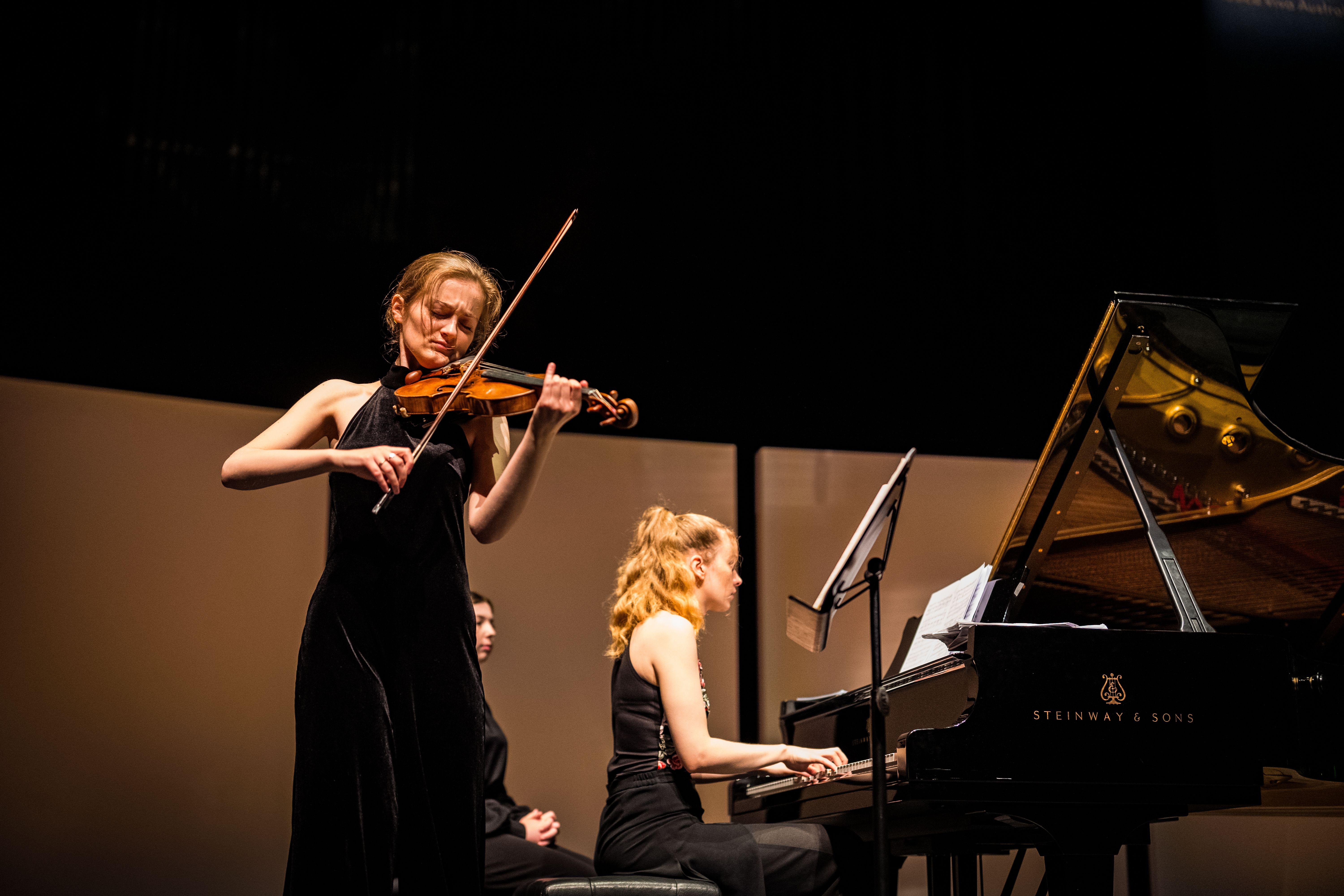
Karin Schaupp

Please excuse the disproportionately large snap above of Musica Viva’s guest guitarist; I’ve lost control over the size of inserted photographs on this WordPress system. Still, there’s little argument that the Brisbane artist was the pivotal figure in Tuesday night’s recital, the penultimate in a series of 8 outings in the usual MV national tour, albeit one that had suffered from the alarums and excursions that COVID and its variants have imposed on us all. At this point, we were hearing a program that – barring its final outing in Adelaide – was as finely honed as possible.

Several points in the evening showed plenty of ensemble finesse; at other stages, the level of accomplishment drooped. Flinders Quartet followers would be well aware of the accomplished ensemble output of viola Helen Ireland and ccllist Zoe Knighton, both foundation members of this 23-year-old group. From the violin lines, however, I detected occasional uncertainty – not just in pitch but in uniformity of production and what I can only call ‘mirroring’: that agreement in all particulars that typifies an ideal duo. Many of us would have been hearing this configuration of performers for the first time. Second violin Wilma Smith has been a stalwart of Melbourne’s musical life for many years and has accumulated an impressive curriculum vitae; Thibaud Pavlovic-Hobba is a less familiar quantity, although I seem to recall his first appearances with the Australian Chamber Orchestra in about 2014/15. But I can’t recall hearing him at close quarters.

What I thought was going to be an introductory romp, Carulli’s A Major Guitar Concerto Op. 8, seemed to offer unaccountable problems. Maybe it was the reduced personnel in use – no oboes, horns or double-bass – or the absence of the second movement polonaise, but the fabric proved imperfect, violin octaves occasionally not exactly in tune and even Schaupp having trouble generating a consistently perceptible line in semiquaver scales and then handling with requisite fluidity that odd triplet passage of four bars that breaks up Carulli’s rhythmic strait-jacket.

Richard Charlton’s Southern Cross Dreaming, a solo for Schaupp, is an amiable miniature and comfortable for the instrument. So it should be: it was written for Schaupp, at Schaupp’s suggestion; she premiered it in 2012 and her performance is also available on CD. Comfort music, then. At its heart, the piece is a tremolo study and its connection to the constellation is a matter of your own emotional reaction. Charlton’s use of ‘dreaming’ suggests a mesmerised state, rather than any Aboriginal connotations, and I was happy to collaborate.

My paternal aunt had an old LP of Segovia playing in Castelnuovo-Tedesco’s Guitar Quintet of 1950. But since that time. it hasn’t shown up on any guitar+string quartet recitals I’ve attended (admittedly, they’ve been few in number). Reacquaintance didn’t reinforce an inherited dislike for the score’s astringency; indeed, the initial Allegro showed this ensemble at its best with a fine clarity from everyone and a delicious piquancy at each return of the first subject of this formal but infectiously happy set of pages. The succeeding Andante featured Ireland’s line prominently, perhaps over-emphatic and ripe with vibrato but managed without the self-indulgence that the direction mesto often brings. But I feel that none of the other movements – including the sprightly Scherzo and final Allegro – maintains your interest as fully as the first.

Certainly, a good deal happens and the composer is lavish with his material, especially in the Spanish inflections of the third movement. Added to which, the melding of guitar and strings is remarkably balanced and fair, Schaupp a consistent strand in the concerted passages and making the most of Castelnuovo-Tedesco’s deftly abrasive solo stretches. It’s an attractive work in competent hands and, if this performance wasn’t as vividly definite as you hear it on some recordings (Pepe Romero, I’m thinking of you), these players worked their way through it with assurance and something approaching enjoyment.

The Italian writer’s composition might have been the program’s most substantial element, but its central point arrived after interval with Carl Vine’s new composition Endless, a latter-day deploration on the death of architect/environmentalist Jennifer Bates, killed in a Newcastle hit-and-run disaster in December 2016. The score for this recital’s instrumental resources was commissioned by Kathryn Bennett, the victim’s mother. Possibly deploration suggests something morbid, definitely morose; there is little in Vine’s pages that suggests gloom. Melancholy, perhaps, but even in the meditative pages that surround the score’s central dance celebrating Bates’ passion for salsa, the work avoids requiem mode.

As you’d anticipate, the instrumental fabric is expertly managed, the guitar treated as a fulcrum voice from the outset while the full ensemble is put to active work in the dance section. The effect is not simply bipartite – the professional and the dancer – but a carefully welded musical portrait where one aspect folds into the other. In the final sections where Vine attempts to represent the ‘endless knot’ of Buddhist belief, a concept sympathetic to Bates’ credo, the instrumental layering and foregrounding of individual lines makes a telling emotional impact for reasons that are inexplicable; the moment isn’t exactly religious or suggestive of transcendence, but as a final salute, a hopeful farewell, it makes a powerful impression of that state where the fire and the rose are one.

The Flinders gave an airing to Imogen Holst’s one-movement Phantasy Quartet of 1928. This served the purpose of showing the players at ease in a generous score that took its various bases from the folk-infused examples of Vaughan Williams and other British bucolic composers. Fortunately, the composer had inherited her father’s ear for relieving astringency so that listeners aren’t swamped in sweetness. Did it add much to your depth of chamber music experience? Probably not, but this writer is overdue for exposure; even ABC Classic FM got onto the bandwagon the other day through an airing of the Fanfare for the Grenadier Guards – no, not a substantial contribution to Holst’s renaissance but an attempt, if measly, in this week of International Women’s Day.

To finish, the group performed the last two movements – Grave assai and Fandango – from Boccherini’s Guitar Quintet in D Major G. 448, which the Flinders and Schaupp recorded in 2010 with different violinists. The slow movement is really a 9-bar introduction to the dance which has the occasional infectious bite even if its repetitions start to oppress. Cellist Knighton is still taking up the castanets for part of the fandango, just as when I last saw this group perform the full quartet at Montsalvat in Eltham. Even in these non-too-difficult pages (for the strings), the upper lines didn’t come across to the back of the hall as dynamically balanced, although their pitching proved efficient enough.

As you can see, this was a multifaceted program, beginning and ending with guitar classics, two Australian compositions set alongside a 20th century repertoire staple for this combination and a curiosity from British music’s back blocks. For all the variety, it struck me that the participants were still not comfortable in all their offerings, despite the long association between three of them and the substantial preparation time enforced on the whole group by our country’s chain of medical disasters.

As if it were one voyce

KUNG FU CELLIST – Y-SQUARED

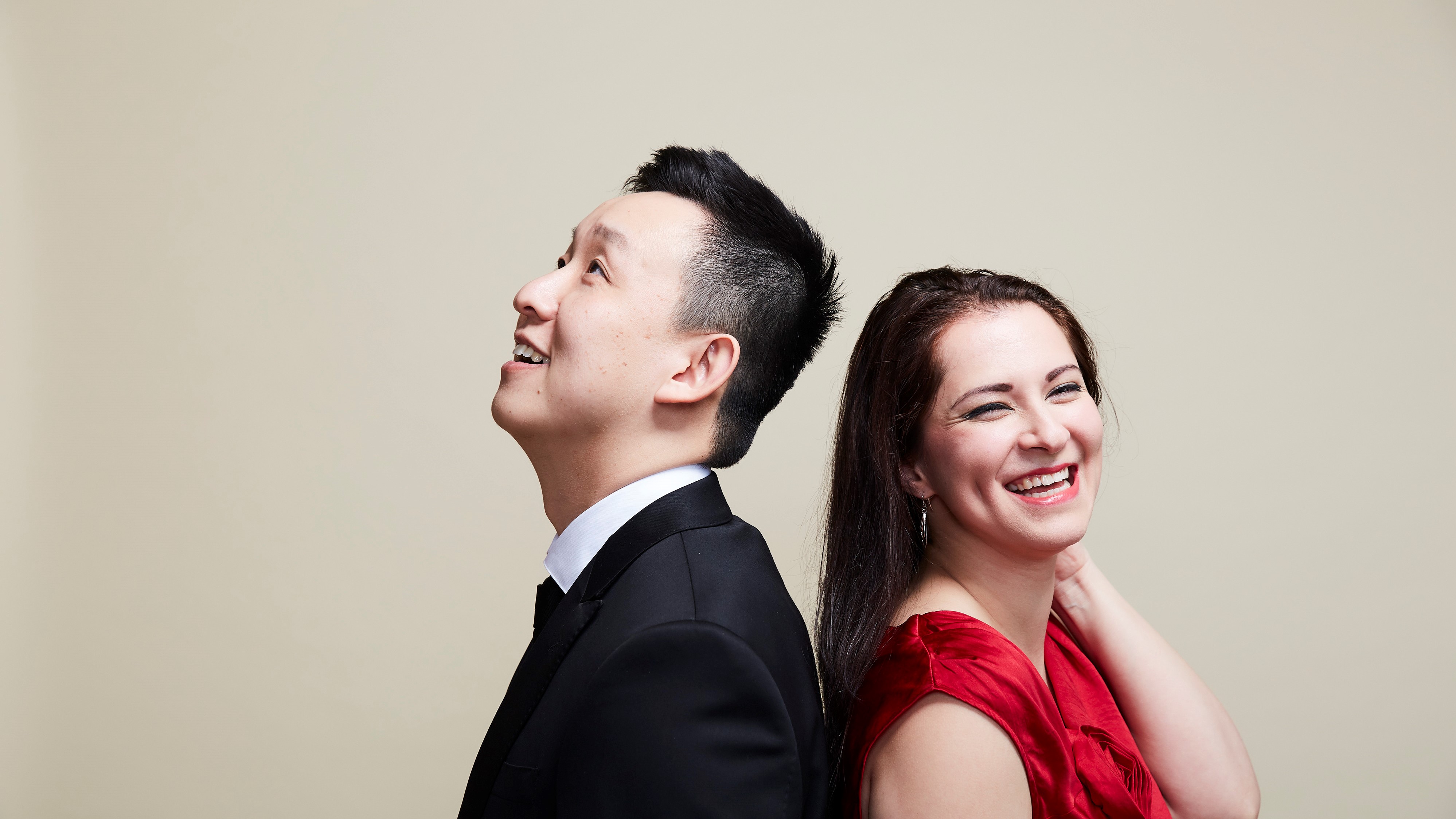
Yelian He & Yasmin Rowe

Australian Digital Concert Hall

February 22, 2023 at 6 pm

Yelian He, Yasmin Rowe

This cello/piano duo has been going strong since 2008 under the appellation Y-Squared. In a surprise announcement at the Primrose Potter Salon between Beethoven and Schumann works, He announced that, after 15 years, he and Rowe are taking their collaboration to another level and are getting married. This was a rather understated occasion; nobody flew into manufactured ecstasy; nobody whooped or hollered in the traditional Love Island acknowledgement of such information; the partners smiled at the applause but kept their composures – and almost immediately got on with the program. I can’t tell you how much I admired this restraint which delighted after years and years of manufactured emotional exhibitions in the poorest Hollywood tradition, now exaggerated to ludicrousness on reality television.

Still, such control seemed to be a continuation or reinforcement of the couple’s artistic output. They opened their evening with Beethoven’s Twelve Variations on the theme ‘Ein Madchen oder Weibchen’, Papageno’s Act 2 aria in Mozart’s The Magic Flute. As with much in the rest of the program, this performance proved to be refined and elegant although, to be fair, He had little of gravity to do with most of the virtuosic running left to the piano; well, this is only to be expected, given Beethoven’s prowess which was in full swing at the probable time of composition – 1796. From the outset, this interpretation impressed for its sprightliness, evident in the theme’s announcement, and in the bounce with which Rowe infused her solo Variation 1’s demi-semiquavers.

He relished the opportunity to urge out an accurate, carefully wound Variation 2, while Rowe’s left hand gave us a faultless, highly active account of Variation 3. A clever division of labour on Beethoven’s part followed, then another piano-dominated 16 bars’ worth. Variation 7 again gave He little to do, the sole point of interest Rowe’s hiatus-point trills, carried off of a fine evenness. Ditto Variation 8, although the cello was rarely silent but confined to bass support while the keyboard generally worked on two treble staves. I enjoyed the slurred syncopation of Variation 9 from both musicians, chiefly because they made sense of the section’s rhythm while giving full weight to the bar-lines’ presence. As for the two minore blocks, Rowe handled the first one’s opening 8 bars with fine sensitivity and a lightly applied rubato, while He produced a mellifluous bass lyric in Variation 11, the pianist maintaining a present but non-insistent treble tinkling. With the change of time signature to 3/4 for Variation 12, a more even spread of responsibility proved welcome, with a deft and clean account of the work’s last 10 bars that concluded the work with placid softness.

After their engagement news, the duo launched into Schumann’s Op. 73 Fantasiestucke and again you were confronted with a seamless interpretation of welcome maturity. He produced a finely burnished timbre for the opening Zart, his line balanced and carefully woven, avoiding any suggestions of fitful temperament or tantrums; in firm balance, Rowe was an excellent partner for the controlled restlessness of her triplet patterns, almost continuous up to the last nine bars – both executants working in fine synchronicity of attack and emotional congruence. Similarly, in the following Lebhaft, the performance showed admirable fluency in treating the same metrical contrast across the first part, up to the central repeated segment although a rare articulation error from He disrupted the first note of this central section’s second part (in the repeat, I think).

Once again, Rowe demonstrated a sterling consciousness of appropriate dynamic levels in the final Rasch, the piano a reinforcement of the rapid cello upward arpeggios and a background to the movement’s second-phrase lyric. This trait is notable in a Schumann chamber music pianist where many players seem to think they have right of way because of the writing’s solidity; Rowe looks for elegance rather than loquacity; for example in the middle segment where the tonality changes to A minor (if anything) and the cello sings a relieving, quiet melody over more semi-urgent triplets.

My only query came with an introduced pause 11 bars into the Coda when an abridgement of the upward-leaping arpeggio pattern shifts into a flattened-out version of the beginning’s answering strophe. It just seemed an odd refinement to admit when the direction Schneller has just been introduced for a gripping rush towards the ebullient, can’t-come-quick-enough conclusion.

We then enjoyed some highly appropriate Salon music in Elgar’s Salut d’amour which I don’t think I’ve heard live since my mother gave up the violin. A fine melody seems to be its main attraction; certainly there’s not much for the pianist to do, except for maintaining the andantino pace. And He produced a caressing line, achieved without over-stretching his vibrato and keeping our attention fixed on his quietly insistent phrasing. It made for an amiable interlude, a blast from our Victorian/Edwardian past, probably best reserved for an encore – like the Frank Bridge Serenade that eventually fulfilled that function.

But the last offering in the duo’s printed program was Poulenc’s Cello Sonata which was constructed well before the composer’s four woodwind scores in the same genre. Again, I can’t recall a previous live performance that I’ve attended. Maybe I’ve been lucky because this four-movement construct falls into tedium in its outer Allegro and Presto movements. Yet again, the distinctive feature of this interpretation was its fluent facility; all the cello’s technical ducks and drakes, all the piano’s dissonances seemed ironed out with few harmonic frissons available to spice up a busy environment. Something odd happened at the A flat trills around Number 10 in the Heugel 1953 edition; I can’t be specific but I think it came from the cello line – going back to find the place proved fruitless but I believe some unexpected if slight irregularity sprang up.

Both parties gave us a fetchingly voluptuous passage beginning at Number 18 where the composer insists that his interpreters must not slow down to take relish in a sudden purple passage after all that Tempo di marcia insistence. At some point, I began thinking that Rowe was using her sustaining pedal a good deal; but the score pretty well instructed her to produce plenty of washes. Still, the movement is garrulous right up to this point; dedicatee Fournier might have called for a dash of brevity, apart from advising the composer on technical problems and potentialities. Happily, the following F sharp Major Cavatine displayed many passages of smooth sailing, beginning with the sans presser melody emerging in the cello at Number 1, even if a momentary blip came with He’s assault on the top G at Number 4, the production coming across as uncertain on what is probably the highest note in the cello part across these pages. Against that, place the impressively controlled sweep of colour with the reapplication of the mute at the Excessivement calme marking 13 bars from the movement’s chaste conclusion.

Rowe showed herself in light touch across the Ballabile, even with those full chords and octaves subsumed in the general aura of balletic bounding. Once again, you had to be impressed by the unshakeable congruence of these players in the outer sections where the instruments double each other with no room for hesitation. On top of that, He and Rowe convinced you of the good humour that runs through these pages where the percussive and intimate leggiero walk hand in hand. A full-bodied account of the finale’s 10-bar Largo introduction preceded an abrupt shift to rhythmic busyness at the arrival of the main body’s Presto subito; the players burbled along efficiently, although a C sharp minor chord at Number 11 struggled to make its desired effect. But there’s little defence against the movement’s central content between Numbers 13 and 18 where the action relaxes and the underpinning impetus disappears. It’s hard to describe how welcome were the returned triplets and how depressing the reversion to Gymnopedies country at Number 20 before the rounding-off stately five-bar Largo,

Poulenc’s product is a hard one to like, even when faced with a performance as expert as this one was. At the end, you know you’ve been through a substantial experience, one that gives its performers much room to demonstrate their skills. But, at the same time, you retain very little in terms of instrumental interplay, well-shaped melodies, rhythmic acuity, piquant harmonic layering. You can see and hear that the universally applied ternary format has been employed well enough, but the centre cannot hold your interest in a least two of the movements.

We all wish the newly-affianced our best wishes in their relationship which is clearly an artistic success already. They have shown themselves willing in their work, particularly in facing this evening’s French challenge; I’m anticipating calm seas and a prosperous voyage as they move on to more agreable Francophone peaks: Debussy, Ravel, Honegger, Saint-Saens, Faure – even the Franck Violin Sonata was approved for cello transcription by the (Belgian-born) composer. They’re definitely a duo worth following; in this instance, presenting an hour-long recital with remarkably few technical flaws and a wealth of interpretative insight.

Experts, but best in Bernstein

SIGNUM SAXOPHONE QUARTET & KRISTIAN WINTHER

Musica Viva

Griffith University Conservatorium of Music Theatre

Thursday November 24, 2022

(L to R) Guerino Bellarosa, Alan Luzar, Jacopo Taddei, Blaz Kemperle

Last visitors for the year from Musica Viva, this quartet of saxophones gave us a program totally made up of transcriptions. Just what you’d expect: the amount of music written for such an ensemble must be pretty small. Also what you might have anticipated was that some of these transplantations worked well enough while with others you had to wonder why someone had gone to the bother of doing such reframing. As a general observation, the evening’s second half satisfied a good deal more than the two works that we heard before interval but, regardless of the music performed, you couldn’t doubt the versatility and professionalism of these musicians.

Which is saying something, given that one of the Signum members wasn’t on this tour: Hayrapet Arakelyan, the usual alto player, was absent, his place taken by Jacopo Taddei. But then, the group isn’t (and won’t be) what it was; Arakelyan himself only joined up in 2018 and, according to his Facebook site, he has recently resigned from the Signum body.. Founded in 2006 while its members were all studying in Cologne, its original cast probably included Luzar (tenor) and Kemperle (soprano); but Bellarosa (baritone) joined the group in 2016. Before that, (according to Google and YouTube), in 2013 on a visit to India and at a recital in Turin, the alto was being played by Eric Nestler (the North Texas University academic?), the baritone by David Brand (untraceable). So the inferred idea that the group has been a consistent entity for 16 years, ever since their student days, doesn’t hold much water.

As I’ve said, such a varied background made it more impressive that their offerings on this night turned out to be so balanced and polished. Still, their introductory gambit, Bach’s Italian Concerto (as re-organized by Katsuki Tochio), depended over-much on Kemperle who yielded the top line only in the second half of the work’s Andante – for a while. And even the soprano was hard pressed on some thickly textured moments (if you can call anything in this piece anything less than pellucid) as in bars 53 to 64 of the Presto where I found it difficult to pick out who was playing what; and also earlier in the opening Allegro during a few whirling build-up moments as at bar 124. Nevertheless, the whole score proved to be an amiable romp, packed with buoyant good spirits and an ideal introduction to the sonorously homogeneous world of such a group.

Mind you, this was the final recital in the Signum’s Australian adventure (their first, apparently; well, certainly in this personnel format): Number Nine of nine, and that speaks of a goodly number of public performances to get themselves into fully operational mode.

Kurt Weill’s Violin Concerto of 1924 followed, as arranged by our own Jessica Wells for the available instruments. So what did we miss, in terms of timbres? An awful lot, as it turns out: pairs of flutes, clarinets and bassoons as well as an oboe; two horns and a trumpet; double-basses, at least two of them; and a substantial battery of timpani, xylophone, triangle, cymbals, side drum and bass drum. At that time of his life, Weill wasn’t accommodating anyone and this concerto is a fierce declaration, the solo line extremely challenging and putting the score on a level with subsequent and greater achievements in the form; e.g. by Berg (1935), Schoenberg (1936), and Bartok 2 (1937/8).

The result was to blunt the original’s dynamism as all the necessary bite came from soloist Kristian Winther. His explosions of activity in the opening Andante con moto, like the merciless chain of semiquavers from bar 45 to bar 68 were accompanied by a bland support with a uniform sound-colour, even from the baritone’s bass-substitute. Later, the fiery explosion at bar 104 that climaxes at bar 112 after a striking four measures (almost) of double-stops impressed as dampened, lacking in vitality from wind choir and side-drum punctuation. But you could go on like this for a long time, regretting the necessary absence of the composer’s ‘sound’ and spiky instrumental complexity. What we were given was a version and, like Rimsky’s modifications of Boris, you can rail but eventually have to put up with the transformations, mainly for the sake of hearing this neglected work live.

Of course, certain parts worked very well, like the trumpet and soloist duets in the second movement’s Cadenza with Taddei (I think) taking up the brass line. As for Winther’s unaccompanied bursts, these were splendidly achieved with exemplary control and minimal attention-grabbing for the effort involved. And the deftness of ensemble from all in the Serenata section, particularly the woodwind and horn choir counter-weighting the soloist in the segment’s first half, pleased for its lightness of attack. I’d like to say the same about the last Allegro molto movement but here again the saxophones’ weight and timbral uniformity came across loud and clear when the score (original) asks for bounces rather than the punches we got. Winther was put through a grinding battery of technical tests, as were the Signum players and the interpretation preserved its unexpectedly bracing atonal energy to the final timpani strokes from Bellarosa.

We were then treated to an unexpected encore – Bloch’s Prayer, the first of his From Jewish Life trilogy for cello. Nice and throbbingly heartfelt, I’m sure, but . . . why? To show a more accessible Jewish music of 1924 than Weill’s strident concerto? Of all the oddities on this program, this insertion struck me as the big one, but the Conservatorium theatre audience (what there was of it) greeted its modal keening with something approaching relief.

The Signums (Signa?) greeted us after interval with their own arrangement of Gershwin’s Three Preludes for piano of 1926. As with the Bach, you found much here to admire: energy, familiarity with the idiom, a delineation of most of the rhythmic subtleties, and a reliance on Kemperle’s uppermost line (as well as his occasional over-blowing that amounted to flutter-tonguing). Some details in the first Allegro ben ritmico were flubbery round the edges, like the semiquaver triplets in bars 20 and 29, and you might have expected mor vehemence at the prelude’s bar 50 climax.

As for the bluesy Andante con moto, it was no such thing but more a slow adagio; however, it shared around the honours and you could relish each member’s vibrato in music that suited the instruments. As anticipated, the concluding Allegro worked least well of the set; put simply, there’s no replacing the piano’s percussiveness in places like the martellato demi-semiquavers at bar 49, or the spry arpeggiated chords at bar 20, or the (sometimes) penetrating brilliance of the final 8 bars. Not that any of this did Gershwin any serious damage but you missed the original’s sparks and coiled-spring ambience in the outer movements, the last in particular.

If for nothing else, we can thank the Signum ensemble for its delivery of Bernstein’s Symphonic Dances from West Side Story. Once again, these weren’t the original excerpts-with-modifications as arranged by the composer: in this version by Sylvain Dedenon, some pieces survived, others were omitted and replaced by numbers from the musical. The relicts were the Prologue, Cool (but not the fugue), Mambo and Somewhere; the omissions were the Scherzo, Cha-Cha, Meeting Scene, Rumble and Finale; in their place appeared Something’s Coming, Tonight, America and I Feel Pretty. Even so, what the players put out succeeded without question, more than anything else heard on this occasion.

This might have been because of Bernstein’s own score – its nature and its detail – which uses saxophones and their sound colours to fine effect. But the French composer’s instrumentation also brought out the best in what was available, beginning with excellent layering work in the Prologue (complete with finger-snapping) and ending with a satisfying version of the frenetic to round out the celebration, not ending in curtain-fall depression as does the musical itself (and Bernstein’s dances). Indeed, the only problem with this last-mentioned was the inability to mimic the composer’s screeching trumpet top line in its upper register at the most vehement stage. I think most of us welcomed the introduction of Tonight, which is a feast for saxophone players at all levels of register, but I wasn’t that happy about I Feel Pretty which sticks out from the original score as contrived and dependent on strings to underpin its full mawkishness, so reminiscent of The Sound of Music. Further, without the fugue, Cool impresses as rather ordinary jazz, dated even by 1957 standards.

Michel Camilo’s Caribe was originally scheduled to end this occasion; instead, we heard Correa’s hackneyed Spain, arranged by Slovenian jazz master-musician Izidor Leitinger. After the worrying theft – sorry, reconstruction – of Rodrigo’s Concierto de Aranjuez slow movement – the Signum players entered into the main (original) body of the piece with an excellent demonstration of syncopated block chords and a confident, thrusting impetus. I don’t think much of the piece itself but that’s obviously my loss because plenty of players and audiences can’t get enough of it.

One of the performers – Kemperle or Luzar – addressed us near the end and sort of promised an encore: their last work before flying home the next morning. But having already lived through my Bloch, I didn’t stick around to hear this addition. Yes, it was something like suffering from a case of surfeit – of the Signum sound, which is certainly agreable for a while but over-rich over two hours.

Clap yo’ hands

MOZART MENDELSSOHN BEETHOVEN

Tinalley String Quartet

Concourse Concert Hall, Chatswood

Thursday November 3, 2022

(L to R) Adam Chalabi, Lerida Delbridge, Justin Williams, Patrick Murphy

I’ll never understand audiences, even after a lifetime of sitting among them through all kinds of musical events. My current prime instance of incomprehension was to do with this recital from the Tinalleys, given for the Sydney Mozart Society which runs a worthwhile series each year. Put simply, these experienced musicians presented a program to satisfy conservative tastes and carried out their task to a fine standard: three perceptive interpretations with remarkably few quibbling points. Yet the responses from this pack of patrons proved to be half-hearted. Are they used to better? I’d suggest not, given what I’ve heard from Sydney’s chamber music scene. But there you go; I just hope that the group wasn’t too let down by the lack of enthusiasm that met their dealings with Mozart K. 421 in D minor, Mendelssohn’s Op.80 written as the composer neared his end, and Beethoven’s Harp Op. 74.

I’ve been reviewing the Tinalley players since their beginning – or close to it. Second violin Lerida Delbridge and viola Justin Williams are surviving founders from the ensemble’s establishment in 2003; cello Michelle Wood, also a founder, only left in 2017 which, to me, is yesterday. I barely remember former first violins Kristian Winther and Ayano Ninomiya but neither was in the position for very long; a year or two each, possibly. And foundation member Emma Skillington’s occupation of the second violin chair till 2006 while Delridge was on first has completely receded into the ever-encroaching mists. Current cello Patrick Murphy I’ve encountered in his previous life as a member of the Tankstream Quartet, while the most intense exposure I’ve had with Adam Chalabi has come through his pit work leading Orchestra Victoria. To put the current state of play into some contemporary perspective, Chalabi, Delbridge and Williams have been Tinalley collaborators for well over a decade, with Murphy the Johnny-come-lately in 2018.

More surprising is the group’s association with Queensland at which state’s university it has been Quartet in Residence since 2018. Chalabi is Associate Professor of Violin at UQ; Murphy is Cello Performance Fellow at the same institution. Further south, Williams holds the post of assistant principal with the Sydney Symphony Orchestra where Delbridge is assistant concertmaster. Since moving here, I’ve heard very few samples of music-making from the University of Queensland; its competition, Griffith University’s Conservatorium, is much better placed in terms of access – well, for those of us who travel a fair way for our music. So, nothing from the Tinalley for some time before I left Melbourne at the end of 2019 – just before everyone pulled in their aesthetic horns. A true pleasure, then, to find the group undiminished despite personnel vagaries (slight) and performance opportunities (also light-on).

In this full-bodied program, the players aimed high. Their Mozart came across with a welcome brisk coherence, evident in a clipped reading of bars 15 to 16 where togetherness is all. But then the entire exposition to this initial Allegro moderato maintained involvement on both sides, in no small measure due to the Australian Digital Concert Hall‘s exemplary miking of the players in this half-empty, resonant space. Each player emerged from the mixture with character, like Williams during the development in an urgent, edgy line. Indeed, this section passed all too rapidly (Mozart’s fault) before the last pages, Chalabi in excellent form across his triplets beginning at bar 98. Sadly, the group eschewed the temptation to repeat the ‘second half’, as they might have done, if my Barenreiter edition speaks truly.

Similarly, the group didn’t observe the Andante‘s repeat possibilities but, by the time we arrived at bar 66, the prevailing synchronization level was high (where better? The movement is here at its final reprise) and the only flaw I found was in missing the low G of Delbridge’s bar 83. You could appreciate the Concourse Theatre’s echo in the following Allegretto, alongside Chalabi’s care with the Trio, that section’s resonant second-half duet with Williams delighting even more the second time around, as did the dynamic relief at the chromatic slips from bar 23 during the Menuetto‘s reprise. Just when you got used to the abstention from repetitions in the finale variations, the players offered one in the second half of Variation 4! Yet again, the approach proved attractively crisp with respect shown for the score’s inbuilt balance, so that Chalabi didn’t feel the need to saw out his semiquavers in Variation 1 and his duet-of-sorts with Delbridge across Variation 2 where their cross-hatched fortepiano accents proved an illustration of cohesion in action. Across these pages, the only defect I heard came somewhere in Williams’ chromatic ascent in bar 91, almost forgotten by the enunciative consonance between both violins in their octave work during Variation 4.

A deftly ambiguous Piu allegro brought this work home, that brilliant fade to grey over the last 9 bars carried out with restraint underlining the composer’s remarkable lack of flamboyance – or rather, his maintaining of the melody’s quiet desperation up to its final flickers. I found this to be splendid music-making but the Society greeted the end of play with tepid applause.

Then, the Tinalleys made the jump of 64 years to Mendelssohn’s last string quartet in which the dark canvas has been alleged to represent the composer’s grief on the death of his sister Fanny. As an elegy, the work isn’t right because you don’t find many traces of resignation or emotional distance (except insofar as Mendelssohn was unable to move into deep tragedy with conviction), but it does convey agitation and a well-mannered despair. To be honest, I don’t understand Felix’s devotion to Fanny – or any such intense devoted-sibling relationship – especially as both brother and sister had families of their own and his emotional collapse on learning of her passing belongs to a sensibility that strikes me as over-ripe. Nevertheless, this Op. 80 is his last major work and a considerable creation, regardless of its gestational sources.

Right from the opening flurries, this interpretation showed determination, the musicians disciplined in their scrubbing semiquavers and vaulting triplets. Chalabi’s high B flats at the Allegro vivace assai‘s climax proved true and gripping while Murphy’s minim-rich line under his colleague’s subsiding antics before the key change to F Major came across with persuasive richness. As well, the Presto final pages showed a boldness and mutual confidence that did fine service to a passage in which the composer comes close to non-straitened anger. Not much wrong with the Allegro assai although the sforzando markings that, in my edition, are peppered across this scherzo were not remarkably different from their surroundings which stayed at a forte level most of the time. More high-quality duet work came from Williams and Murphy in octave duet for the Trio but, yet again, the group impressed most with their quietly lugubrious recall of that Trio in this movement’s concluding 38 bars.

Every so often, Williams’ viola tended to overpower Delbridge in dialogue passages across the Adagio to this work but my main problem with this section was a reticence in Chalabi’s line at the mid-movement change of key, particularly at the top line’s exposed moments. Against that, set the tenderness brought into play during the final passage following Murphy’s descending scale solo: a moment where the emotional wrench is reined in but intensely moving. To finish, Mendelssohn uses brief motives for an Allegro molto, here given as much fluency as practical, these musicians wresting full power from the rhythmically conjunct duets and trios that occupy much of the action. Indeed, the movement maintained its excitement, the circumscribed energy close to emotionally moving for its straining against Mendelssohn’s innate self-control. Yet again, the Society enjoyed a worthy rendition that brought out the score’s best features with fine skill; and, once more, the response proved lukewarm.

And so to the big-boned Beethoven work which came into being about half-way between the composition of this program’s other two elements. No second-half falling-away here: the Tinalleys preserved their discipline, well exemplified by the rhythmic precision of the Poco adagio‘s 7-bar sentence leading into the first movement’s main body. The complex sounded a tad unsettled in the violins’ first alternating pizzicati dialogue but the ensemble work proved remarkably lucid; for example, in the duet of extremes between first violin and cello that starts at bar 96 and continues almost until the recapitulation. But all credit to Chalabi for his handling of the Bach-reminiscent semiquaver spinning that occupies central position in the movement’s buoyant coda: as accurate as I’ve heard and avoiding all suggestion of patterns for their own sake.

Sweetness without over-sugaring typified the Adagio which was finely paced and exact, down to the soft chords that conclude the first episode of this rondo. Delbridge distinguished herself with a careful density of texture at her bar 94 entry, taking over an accompanying figure from Williams who sounded over-demonstrative by comparison. Despite that, the group treated this lyric with consideration and achieving over its length a placid eloquence. By contrast, the following Presto impressed as urgent, scouring the ear with its brusqueries. Even more insistent were the two Trio outbursts which gave you the sense that they would tip into an uncontrollable sprawl at any second – just what you want when handling a quasi prestissimo.

Chalabi announced the Allegretto‘s theme very carefully; too much so for me as some notes disappeared because the first note of each phrase was over-pronounced. But the six variations were deftly treated as Beethoven shared the limelight in this movement: every player gets a guernsey. Only one bar left an uneasy impression: the first violin’s concluding flourish to the first half of Variation V. But, one brief transmission disruption aside, this quartet concluded with convincing freshness, notable in the last allegro unison rush of semiquaver exuberance.

And you realized at night’s end why the group had been judicious in its choices of what to repeat and what to leave with one run-through. This was a solid night’s work, just fitting into the usual two-hour program length that used to be normal practice but is rare in our current era of the short-change. It doesn’t need to be hammered again, but I will: this eloquent reading was met with slightly more applause than had greeted its programmatic predecessors, but not nearly enough to show sufficient acknowledgement of the Tinalley players’ level of professionalism and insight. I’ve got uncomfortable memories of Bernard Heinze scolding a Sydney Town Hall audience for its inertia after he’d conducted the first Australian performance (I think) of Walton’s Symphony No. 2. But that was in part the result of a mediocre run-through of a tiring score, while this Beethoven interpretation was undeniably excellent. If for nothing else, we need to reinforce our musicians’ self-esteem, particularly when they are functioning at a high standard in their craft.

No change

SCHUBERT’S TROUT

Australian Chamber Orchestra

Concert Hall, Queensland Performing Arts Centre

Monday September 26, 2022

Olli Mustonen

In one of the ACO’s more chaste excursions, five members of the ensemble participated in this latest series event in Brisbane: violinists Satu Vanska and Liisa Pallandi, viola Stefanie Farrands, cellist Timo-Veikko Valve and double bass Maxime Bibeau. Presiding over the program sat pianist/composer Olli Mustonen – a favoured guest of this orchestra and whom I’ve also heard presenting a Beethoven concerto or two with the Melbourne Symphony Orchestra – not the happiest of memories. On this night, he led a string quartet through Milhaud’s La creation du monde, then headed an outline of his own Piano Quintet which has been heard here before. After interval, Pallandi dipped out and Bibeau came onboard for the big Schubert quintet.

As soon as the French ballet score began, it all came back: the pianist’s idiosyncratic attracting your attention with extravagant hand motions way above the keyboard, the insistent dynamic dominance of proceedings, and the eccentric singling out of notes for emphasis while others recede or disappear completely. Excuses can be made for the piano’s hogging attention: it represents the missing 14 other instruments in the original score, even if it doesn’t have all their notes entrusted to its care. In fact, what we heard was Milhaud’s own arrangement of the five-movement work.

You could shut your eyes and ignore the manual flamboyance easily enough. But you couldn’t ignore the jerkiness imposed on the central Romance where the phrasing’s sense disappeared. Nor was there a way of avoiding the insistent dominance brought into play during the Scherzo; half the time, the quartet might as well have stayed at home – a pity as, from what could be gleaned, the players were well-matched (what would you expect, given their professional relationship?).

Mustonen’s quintet of 2015, to its credit, gives room for the string lines to make a considerable mark. Still, the piano part has a good number of florid virtuosic flights in a work which shows that Shostakovich didn’t live in vain. You’re faced with aggressive passages of high energy in the opening Drammatico e passionate where percussive cascades are contrasted with lush common chords for the strings, the whole heading towards a powerful conclusion. The following Quasi una passacaglia: Andantino struck me as being a good deal more than quasi; it made a fine contrast to the preceding pages as Mustonen’s attention turned towards a more lyrical scenario. Still, the variants almost fell into predictability in some segments where the actual scoring sounded repetitious; so some firm explosions came as welcome interludes in a format that presented as eloquent and, in some ways, as traditional as some later chamber works by Britten.

Mustonen labels his finale Misterioso but that descriptor seems to apply to the strings which generate some suggestive textures. As in the first movement, the impetus comes from the piano which yet again reaches some eloquent clangorous heights and urges the movement into rhythmic ferocity. Both here, and in the passacaglia, you come across Mustonen’s tendency to write plain diatonic passages in direct juxtaposition with grinding dissonances; despite the latter, I suspect that you could analyse this quintet – well, a large part of it – along orthodox harmonic lines. Which is not to decry the composer’s language which is a stage further along the historical road than, say, Shostakovich’s Op. 57.

I had to move at the start of the Schubert A Major Quintet; a brace of biddies behind me continued to whisper/chat after the work had started – the sort of inconsiderate behaviour that makes me blind with fury. But you can’t take it out on the socially subnormal – well, not in mid-performance. Having settled further back in the Concert Hall, I found Mustonen tinting the opening Allegro vivace by continuing with his peculiarities, vide the piano’s statement starting at bar 40 which moved in and out of focus as his outline favoured some notes more than others. This in a piece where the contours are so lucid that you don’t really have to shape them. Still, the string combination – Vanska, Farrands, Valve, Bibeau – was an unalloyed pleasure for its direct speech and fluent delivery without dynamic abruptness, making the exposition’s repeat very welcome.

Farrands and Valve gave us a glowing partnership in their duet at the change of key to F sharp minor in the Andante‘s bar 24, and again at the reprise of bar 84. B ut then, this whole movement was delivered by all with persuasive eloquence. Across the following Scherzo: Presto, Mustonen had an unnerving approach to his part’s frequent fp markings – the first note firm, the second two in the group almost non-existent. But the movement’s outer segments held your attention for their inbuilt vitality and bite; this is, of course, the music that the Australian Digital Concert Hall uses as a prelude to each of its broadcasts.

On to the famous lied and its variations. An appealing grace of delivery from the strings prefaced a reading of considerable merit. Not that it was free of some odd piano passages but the first variation, where the tune is entrusted to the piano playing it at the octave, came over with unexpected equilibrium. Later, Variation III with its demi-semiquaver bravura for the piano was handled flawlessly, each note audible and sparkling. Mustonen pounded out his fortissimo (well, they are marked thus in my old Boosey & Hawkes edition) chords in Variation IV, making Valve and Bibeau surplus to requirements. But his articulation in the final Allegretto, where the piano is entrusted with the lied‘s triplet-happy accompaniment, made for sheer delight, this segment an interpretative gem with just the right level of optimistic buoyancy.

Yet again, the ACO string representatives delighted with their restrained resilience across the concluding Allegro giusto with Mustonen emerging and disappearing throughout, then giving a ‘straight’ reading with the delectable triplet chains from bar 135 to 170, and later across bars 371 to 406. Indeed, much of the versicle-and-response pattern of this movement worked very well, the respective dynamic levels of strings and keyboard telling reflectors of each other – nowhere more effectively than in the last sample from bar 457 to 465, with that uplifting brief gallop to the end that brushes away (temporarily) several reservations.

So, another unsettling recital (for me) from Mustonen. Not that there’s much point in rehashing old problems: he’s now 55 and set in his musical behavioural practices. Judging by the QPAC audience response at the end of the Trout interpretation, he has plenty of admirers and you can find it hard to kick overlong against the vox populi – never forgetting the incredibly successful careers of David Helfgott and Andre Rieu, among others too numerous to mention. You just have to admit your bafflement – as you do when faced with the ongoing presences of Eddie McGuire, Scott Cam, Karl Stefanovic, John Laws and their peers: that perennial gang of home-grown mediocrities, who happily stand as cultural gurus for Monday night’s crones in the stalls’ F row.

The lieder recital at its best

WEAVERS OF SONG

Miriam Allan & Erin Helyard

Elizabeth Murdoch Hall, Melbourne Recital Centre

Wednesday September 21, 2022

Miriam Allan

Finishing this year’s Great Performers series from the Recital Centre, Allan and Helyard’s program was broadcast by the Australian Digital Concert Hall network. The night comprised six Haydn songs, six Schubert lieder, a brief set of six variations by Mozart, another set of six variations by Mozart’s friend Josepha Auernhammer on his Der Volgelfanger bin ich ja aria, and three of the D.780 Moments musicaux. An unexpected, quickly applied encore turned up Mozart’s Abendempfindung, the composer’s longest song and a somewhat stagey finale to the Allan/Helyard musical partnership before the Australian-born soprano returns, I assume, to her home in England and the fortepianist lays down his mantle as the Recital Centre’s artist-in-residence.

The event proved to be rich in eloquence, neither artist handling the Haydn pieces with prissiness or studied restraint, such as we’ve heard too often from British female singers who have accepted the odd idea that this particular composer needs kid-glove treatment and the more sexless you can make your line, the better. That approach can’t work in something as rambunctious as The Sailor’s Song which came across with plenty of vim and bravado, a close cousin to Rule Britannia and that bulldoggie Henry Wood that appears at every Last Night of the Proms. Most of the other Haydn works enjoyed full-bodied handling, the set opening with She never told her love which, thanks to its powerful accompaniment solos, gave us time to adjust to the clangour of Helyard’s instrument. Allan didn’t have the happiest of openings, with a slight production falter on the first syllable; still, the piece came over with a firm blend of melancholy and regret, true to Viola’s intent behind her lines.

Another familiar song, My mother bids me bind my hair, gave us an opportunity to admire Allan’s breath control and line-shaping in a pretty substantial score; not to mention her attention to details like the quaver rests across And while I spin my flaxen thread. Helyard linked these opening three songs with improvised (I think) post-/preludes, taking us from A Pastoral Song to O tuneful Voice where Allan moved to a rich dramatic vein, reaching a climax with a cadenza at with a vestal’s care and preserving a sense of purpose through all those repetitions of that it may ne’er decay on the last page.

For the second bracket of three Haydns, Allan began with The Wanderer and a full Gothic interpretation, Helyard’s fortepiano ominously doubling the vocal line for a goodly amount of time. Not that this reinforcement is uncommon in these six songs; vide A Pastoral Song, and The Spirit’s Song, this latter matching The Wanderer for intensity, notably from the fortepiano’s impressive loud chords, e.g. bars 4 and 6, with Allan wringing as much drama from this scena as possible without falling into Grand Guignol overkill at those suspenseful fermata points. It made for a well-judged contrast with The Sailor’s Song that concluded the evening’s Haydn expedition with amiable buoyancy.

Helyard’s rendition of Auernhammer’s busy variations distinguished itself for a certain piquancy of address, one where the introduction of a decelerando or six broke up some predictable matter. However, each section had its original touches, although the return of the song’s last 10 bars finishing off each variation was a very welcome return to base camp. The performer’s precision was hard to fault, with only a left hand mishap at the start of Variation 6 raising an eyebrow – and the insertion of a final solitary bass G (well, it isn’t in my old Artaria edition).

A few mishaps marred the delivery of Mozart’s work – in the theme itself and in the first two variations. But Variation 3 sounded immaculate, spice added through some clever ornamentation. By the time Helyard arrived at the second half of the last variation, he felt comfortable enough to take liberties with the score and toyed with its demi-semiquavers and his instrument’s expressive capabilities. Not particularly taxing Mozart, but holding individual flights at every turn of the page, the whole finishing with a reassuringly even-handed coda.

For her Schubert bracket, Allan included three master-songs and three entertainments. She opened with Auf dem Wasser zu singen with firm undercurrents in play and a tendency to emphasize each bar’s heavy accents; hence, the pleasure to be found in her long notes on Tanzet, Atmet and Selber. In these operating conditions, the fortepiano depicted heavy water rather than the usual ripples. Another slight attacking flaw emerged at the noun in the first phrase of Du bist die Ruh, yet the following pages’ vocal line flowed past with compelling commitment and clear sympathy, the whole rising to a passionate highpoint at the first erhellt while its repetition was given with appropriate restraint. Both performers made a definite character out of Standchen, Helyard’s mandolin/guitar stand-in more percussive than the smooth burbling we are accustomed to from your everyday piano. It was hard to understand why Allan didn’t give full value to the first note of Ach! sie flehen dich unless it was to heighten the expostulation’s drama (really?). But the interpretation as a complete unit made a considerable impact for its hard edges (even if Helyard muffled/muted his postlude) and rich breadth of timbre.

Trauer der Liebe is a small semi-gem which moved slowly enough to give us a more concentrated exposure to Allan’s curvaceous phrasing. Helyard made a change into triplets for the third stanza, reverting to the regulation music in the 5th last bar, thereby keeping himself and us entertained in fairly bland surroundings. Minnelied, also a page long, was given straight, without any problems apart from something odd in the keyboard during the second-last bar of Stanza 1. Here is another charming lyric, in this reading a vocalist’s delight because of the accompaniment’s lack of distinction. Another three-stanza, one-page lied is Seligkeit, a familiar, sunny delight-in-life creation, treated to a bounce-rich reading with both musicians who freshened up their last run-through with some innovations.

The Schubert songs were divided in half by Helyard’s performance of the Moments musicaux Nos. 2, 3 and 4. Of these pieces, the No. 2 in A flat Major impressed me as one of the recital’s highpoints because of the player’s ability to shape repetitious phrases and clauses with a skillful malleability and his command of shape in its several sections, ending with a moving final 18 bars in A flat in which the repeated chords and their subterranean variants made for one of those occasions when Schubert takes you close to the ideal. For the familiar F minor Allegro moderato, Helyard inserted a piece of paper into his fortepiano’s bass reaches, thereby producing an occasional side-drum rattle, even if the declared intention was to imitate a bassoon.

I’d never heard in live performance the No. 4 Moderato in C sharp minor; having experienced it, I can see why it doesn’t attract keyboard players as much as its predecessor. However, the middle D flat pages were a small revelation, not least for Helyard’s careful outlining of their inbuilt grace and tenderness, And the final five bars of this moment are a fine and moving creation/summation, here realized with touching skill and empathy.

I seem to recall Helyard saying that he and Allan have been presenting this program for some time, this night in Melbourne the end of their mutual endeavours. I, for one, was very pleased to have heard the program which, despite my nitpicking, was packed with excellent music-making. The whole exercise served as a counter-argument to that trite observation about ‘those who can’t, teach’; both these musicians are distinguished teachers and, simultaneously, top-notch performers.

Back, in great shape

IN THE SHADOW OF WAR

Selby & Friends

Australian Digital Concert Hall

Elder Conservatorium, Adelaide

Wednesday September 7, 2022

Sophie Rowell, Timo-Veikko Valve, Kathryn Selby

Back on internet viewing in these post-COVID days (ho ho), the Selby & Friends franchise re-boarded the Australian Digital Concert Hall armada for this broadcast from Adelaide’s Elder Hall – one of the regular venues on the organization’s interstate touring schedule. Violinist Grace Clifford was scheduled to appear in this round but was injured, so her place was taken very ably by co-concertmaster of the Melbourne Symphony Orchestra, Sophie Rowell, revisiting her chamber music days when she led the Tankstream/Australian String Quartet. Valve has been an S&F regular cellist guest for some years now; just as reliable and informative here as he is at the principal desk of the Australian Chamber Orchestra.

Two of the programmed works had direct reference to war. The Shostakovich E minor Piano Trio is a searing document decrying the evils of World War Two, with all the insight of a musician who partly lived through them by way of the siege of Leningrad. His use of Jewish-inflected melodies in the finale bore witness to the composer’s awareness of the Nazi obscenities revealed in the Allied armies’ march on Berlin. Matthew Hindson’s 1915 was written for the Benaud Trio in 2015 and refers to the state of mind of a young man who has enlisted, as well as depicting the loss and devastation that the Great War caused to so many. A different take, then, to the opening strophes in Peter Weir’s 1981 Gallipoli film where Mel Gibson and Mark Lee represented the popular vision that we have of this conflict by joining up with something approaching glee.

The program’s most lengthy work, Schubert’s E flat Piano Trio, was explained into bellicose context by several means. Two that stuck in my mind were the reminder that the composer lived in Napoleonic times. Yes, he did but it would seem that the conflict registered little on him; he was 12 when hostilities stopped and Austria partnered Napoleon during the invasion of Russia; after which, Francis I/II’s Empire was neutral until the French emperor was defeated and exiled. I’m not getting the picture of a young musician dodging rifle fire and/or conscription – or even having much consciousness of international or local conflict. The second proposition involved finding military suggestions in the trio’s Andante con moto. You might find a march there – a pretty slow one – but the suggestions to me across these pages are more aligned with the depressing trudge of the Winterreise narrator.

You can detect an earnest grief in Hindson’s short piece which commemorates the Gallipoli campaign from one aspect, one which has been adopted by this country as near-compulsory. The loss of close to 9,000 Australians in that Churchillian folly was – and is – a national disaster but one that should rouse more aggressive passions than sorrow, even viewed from this temporal distance. It may be that Hindson is speaking for the survivors, like Wacka in Seymour’s play The One Day of the Year, that character’s central soliloquy in turn speaking for those who fought on the Turkish peninsula through those soul-destroying days.

1915 is an elegy in C minor, not that distant in emotional colour from many other deplorations – neither as flashy as Britten, nor as depressing as Bloch. The composer has a fondness for using violin and cello in unison/at the octave and has constructed a well-shaped threnody that has a fullness of timbre alongside several relieving effects, like some quietly piercing violin harmonics, and the suggestion near the end of a bugle call hovering over the gloom. The piece occupies a clear-cut emotional territory, carrying out its mission of communicating the sorrow felt by families and any young man who blithely signed up only to face death and mutilation on all sides. In the end, as the historians tell us, it was a trade war in which Australia became senselessly if dutifully involved. Oh, well; now that the English Queen has died, any links with her fading royal house must surely dissipate, particularly when we’re faced with the absurdity of what will replace her.

Speaking of depression, the Russian composer’s trio is very well-known, particularly to those of us exposed to chamber music competitions where the work exercises a huge attraction to competitors, if not their audiences. Valve handled the opening harmonics solo well enough, although I wasn’t convinced by his octave leap in bar 5. Rowell displayed a fine firmness of attack at her high-pitched melodic outline 16 bars after the Moderato‘s opening. But the players all gave this section a fierce handling which proved most persuasive, thanks to its unanimity of purpose: the sense that the timbral fabric was of a piece, urged on by three consistent voices.

More ferocity blazed out across the Allegro con brio, Rowell setting a pace that proved exemplary; you were impressed by the prevailing level of energy but not swamped by a pell-mell rush. Selby followed a steady path, her note-chains positioned with care in a reading of feisty aggression – just as it should be, even given the trio-like relieving moments. In the following Largo, Selby gave the 8 dotted semibreves a considerable space in which to resonate, coming close to disconnectedness rather than portentousness. Rowell’s entry proved a relief for her warmth of colour in a lugubrious situation, excellently mirrored by Valve with both instruments close to a synchronised vibrato in the movement’s wrenching duets. The ensemble worked very hard to give full vent to the passion underpinning these pages, loosening intensity with fine discernment when realizing their two G Major bars leading into the finale.

I found the group’s handling of the Allegretto to be enthralling, particularly with those savage pizzicati before the piano’s arrival at bar 30 where the temperament changes from cute klezmer to vehement anger. Rowell’s use of rubato was consistent with Selby’s application of the same technique, offering variety to the regularity of pulse that typifies this segment’s opening. During these pages you became more aware of the excellent recording work carried out by ADCH technicians, each line clear and individual, even when Selby shifted into powerful top gear, throwing caution out the door and rarely faltering in her bravado. For once, we heard the conclusion in a proper context – without sentimentality or exemplifying frailty but loaded with strong despair and resignation. The effect was to bring the composer’s internal torment to the fore as he chafed against state restrictions and came to realize that his own country’s regime was of the same type which gave the world Treblinka and Majdanek.

There’s little to say of the big Schubert score’s treatment. It tired the performers, as you’d expect, but their balance and stamina carried them through, even across the work’s disappointing and lengthy final Allegro moderato. Fortunately, the players repeated the first movement’s exposition so that we could relish the delicacy of treatment given to the stretch from bar 48 to bar 90. Another telling extended passage came with Selby’s triplets and their sustained equanimity throughout the development. Later, Valve generated the shock of the performance at bar 298 with a remarkably gruff sustained G sharp. Slight section-interleaving pauses were employed, the emphasis on the work’s malleability (at least in this movement) with a suggestion of the composer’s Moments musicaux between bars 584 and 621, just before the main theme’s last statement.

As for the militarily suggestive Andante con moto, the players set up a stately march pace, the piece’s progress dotted with pleasures like a tender change to E flat Major in bar 41 and a further eloquent move to C Major proper at bar 129 with an ideally paced ritardando in operation across the last seven bars. The only flaw I encountered came at Rowell’s unhappy high E concluding bar 161, although the leap up to it is awkward. As for the canons at work in the Allegro moderato, you could not ask for a more mellifluous handling; later, you could superimpose a military flavour to the Trio‘s A flat waltz movement which broke through the gentle veneer of its surrounds with refined brutality.

Again, you heard moments of excellent craftsmanship in the finale. That trademark transference at the L’istesso tempo of bar 73 came across with illuminating lightness of attack; Selby’s repeated chords from bar 191 to bar 205 enjoyed a restrained resonance, yielding space to the strings’ octave melody; all executants contributed to a joyful Romantic surge across bars 264 to 273. But it was hard to maintain interest beyond bar 762 (!) when the main theme’s treatment smacked of filling in time; mind you, that’s just how that moment strikes me and there are plenty of others who see no fault in Schubert’s ‘heavenly length’.

Those of us unable to encounter Selby & Friends in live performance (the country’s north, west and extreme south) would have welcomed this broadcast, most importantly to hear that the body’s high achievement standards have not fallen off across the long interruption that has interfered with normal music transmission. Further, it is one of this ensemble’s splendid attractions that the Friends all fit so easily into Selby’s administrative and artistic frameworks.

We’ve heard better

FLINDERS QUARTET & VATCHE JAMBAZIAN

Sydney Mozart Society/Australian Digital Concert Hall

Concourse Theatre, Chatswood

Tuesday August 23, 2022

Vatche Jambazian

A program of familiarities offering no surprises: Haydn, Mozart, Brahms – and played straight through without an interval. Which would have been testing for the concentration powers of any intellectually frolicsome members in the Sydney Mozart Society, which organization sponsored the event, bringing one of Melbourne’s favourite chamber ensembles to the North Shore, then allying them with one of the Harbour City’s bright-spark pianists. We heard the last of Haydn’s Op. 20 set, that in A Major; then an a quattro version of Mozart’s Piano Concerto K. 414, the earlier of the A Major couple; and the String Quartet No. 1 by Brahms in C minor (for a change of key). A most satisfying entertainment for the true musical conservatives among us – well, on paper.

But the reality was pretty rough and ready in its delivery style. Actually, that’s a bit too polite: a more proper estimation would be ‘scruffy’, with a cavalier regard for detail even as early as bars 8 to 10 in the first Allegro where Thibaud Pavlovic-Hobba‘s first violin semiquavers were smothered under some low-lying chord support. And it wasn’t much better the second time around, although by then both violins had roused discontent with some ragged intonational pairing further into the exposition. Throughout, the emphasis rested on a sort of rusticity with little polish or finesse applied, as in the aggressive opening to the recapitulation. For all that, I was disappointed that the movement’s larger second part wasn’t repeated.

It seems unfair to single out the first violin line but it is dominant in this work; so, when it falters, the performance’s ambience is weakened, as at the uncertain repeated E crotchets between bars 19 and 20 of the Adagio, and a poor assault on bar 21’s top F sharp. By about half way through, the reading’s aggressive style had taken over, become the norm and you reconciled with the Concourse’s lively acoustic. Second violin Wilma Smith‘s descending thirds starting at bar 65 proved uneasy in execution but Helen Ireland‘s viola striding arpeggios at bar 55 and onwards gave the work’s progress some welcome solidity. Something went awry with the first violin’s B sharp in the third last bar, marring an otherwise amiable resolution.

Once again, both violins were not sufficiently synchronised at a pivotal bar 8 of the Menuetto, although the repeat showed an improvement. In fact, this part of the work worked better than others because it could take some brisk handling, although I found the Trio‘s second half clumsily treated – a case of bucolic overkill. Fortunately, the final Fuga held some cerebral pleasure, mainly for its internal workings (even if these aren’t that strenuous), and for the moveable feast whereby the first subject’s four-semiquaver group enjoyed both regular and clipped handling.

When Jambazian joined in for the Mozart, errors still occurred, if not so prominently. The violin lines at the octave in bars 13 to 15 of the first movement sounded disjunct in tuning but the opening tutti as a whole showed improvement as the score moved forward. The pianist matched his quartet-orchestra in determination although he could pull out the lapidary stops as well, e.g. the 8 bar solo at bar 152, and the delicate figuration later beginning at bar 224.. Still, mistakes arose for no apparent reason with the B notes at bar 14 of the cadenza, and a mis-step further on at bar 32. Just as in the Haydn, the Allegro‘s closing bars came over as willing but ragged.

You could say that matters improved during the Andante; certainly, the violin duo worked to bracing effect in the unison bars 15 to 18, a passage that shone out for its singular eloquence, even if a repeat at bars 51 to 55 was less unified in pitching Jambazian observed a disciplined attack but the movement’s fluency was disturbed by a transmission blackout which had to be compensated for in a later viewing (the ADCH ticket purchase means you can review the whole performance for 72 hours after the initial transmission). I didn’t see what was gained by the arpeggiation of the E minor chord in bar 76: the melody restatement post-mini cadenza was proceeding amiably when this idiosyncrasy came up: slight but uncalled-for, I would have thought. Still, the post-major cadenza finishing-off was fairly clean.

Jambazian took a hearty approach to the Rondeau when he entered at bar 21, rising to hyper-metallic by bar 81. An odd error blunted the player’s output, e.g. bar 91, and the thistledown-light syncopations at bars 122-3 were over-emphatic. Mind you, the player sustained this style into his reading of Cadenza B which here prefigured Beethoven, although an inexplicable arpeggio flaw at bar 17 made the near-truculent flame flicker. Mozart’s light-stepping finale would have gained from less heavily-applied power from all participants; at the end, you wondered where the expected light and grace had gone.

A more suitable fit for the Flinders’ energy came with the Brahms C minor Quartet where flexing took over pretty early in the opening Allegro; luckily, the exposition repeat gave a better indication of the ensemble’s talents although that middle B in Smith’s bar 7 triple stop didn’t sit comfortably in the mesh. But, for all of the enthusiasm shown, the dynamic became overwhelmingly heavy, as at bar 52 and in the urgency of Brahms’ development which often bordered on hysterical. When the temperature cooled, strange things happened like a palpably wrong note in the violin 1/viola octave unison at bar 162. And moments that you anticipate with relish, like the wrenching violins’ duet between bars 178 and 181, misfired because of an absence of lyricism. Occasionally, Pavlovic-Hobba inserted a portamento that recalled a delivery style from a bygone age (he was alone, it seemed, in exercising this individuality), but he gave a splendid account of himself in the final burst of high-octane fervour across bars 231 to 239.

Not that you hadn’t noticed her until now, but Zoe Knighton‘s cello solo at bar 7 of the Poco adagio made for a welcome burst of moderately applied lushness. But the whole group came pretty close to fulfilling expectations right from the start of this romanze, notably in detailed work, like the alternating arpeggios across bars 61-63. Ireland’s viola emerged in fine voice during the following Allegretto molto; unusually effective in this busy, if not cluttered, environment. I admired the carefully shared switches between Pavlovic-Hobba and Ireland from bar 38, even if you might have asked for more vibrato on the sustained notes.

A firm and bold account of the finale’s opening statement – all two bars of it – prefaced the ensemble’s double-faceted interpretation which held some fine passages of play juxtaposed with others that were unsatisfactory because of faulty articulation and dynamics that held little common currency as the lines hurtled forwards. Still, that underlying impulse was maintained and a carefully outlined sweep from bar 219 to the concluding cadence made for a more impressive demonstration than might otherwise have been expected, given the push-through impetus that obtained for this movement’s more thickly-textured moments.

I’ve heard the Flinders at work for many years now – right from the start, in fact, when Erica Kennedy and Matthew Tomkins began the group in partnership with survivors Ireland and Knighton. Other changes to the violin personnel have come about over the years, although nothing nearly as drastic has taken place as it has with the Australian String Quartet where, in comparison, Nothing beside remains. We know that COVID has brought discontinuity to musicians on all sides and in all lands, but ample rehearsal preparation time has returned as a concomitant of public performance. Judging by this night’s display, the Flinders have quite a way to go before they reach the level of homogeneity that obtained in the group’s earlier years. This will be particularly important when the possibility/probability of programming transparencies like Haydn and Mozart arises, although it appears that the rest of the ensemble’s year is headed for a more meat-and-three-veg diet.

Movement at the station, going . . . ?

AUSTRALIAN FESTIVAL OF CHAMBER MUSIC: JAMES COOK UNIVERSITY OPENING NIGHT CONCERT

NEW BEGINNINGS

Australian Digital Concert Hall

Townsville Civic Theatre

Friday July 29, 2022

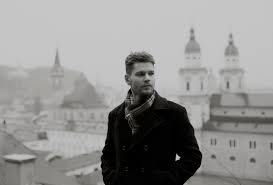
Peteris Vasks

I’ve been to the Townsville Chamber Music week, way back in the days when newspaper had money – and so did festivals. It must have been in the earlier manifestations; as it’s been going for 30 years, that would put it back in the middle 1990s, I suppose. The place struck me as rough and ready, and not just because of the off-duty military looking for a Saturday night fight in the centre of town. It was a laid-back sort of place; so much so, that I found myself walking in a land rights demonstration because I was labouring under the misapprehension that everybody walked in the middle of the road.. Was it held in July/August in those times? I just remember the weather being stinking hot so that walking around in search of venues was a major effort.

As for music, I recall a master class being given by a cranky Charmian Gadd, dissatisfied (and showing it) at the poor preparation of some participants. A major concert in the Civic Centre escapes into the dim recesses of the memory, but a reading of the Brahms Horn Trio in a church on Sunday morning was a valuable introduction to a work that I’d never heard till then.

For this year’s opening night concert, an impressive number turned up, even if (as with so many chamber music events these days) the patrons were mainly elderly. What they heard was varied in quality and very long. Pace Jack Liebeck and his administrative team, this initial program was a farrago in standard of works and standard of execution. As for us spectators-from-afar, the event proved to be slippery: even with the program notes, you didn’t know what was coming next, or – more importantly – why.

Artistic director Liebeck came on stage after the inevitable voice-over salute to First Nations peoples and gave a speech that might have been better prepared instead of the stumble that it turned out to be. He told us that the first piece, Nginda Ngarrini Bi Ngya by Deborah Cheetham, would/could not be performed because the composer/soprano was ill. OK; not the best of openings but bearable. He also told us that a visiting artist, Turkish cellist Jamal Aliyev, was also unavailable but his place would be taken by Michael Goldschlager, one-time member of the Macquarie Trio before that university took away its patronage of the ensemble. Actually, this change would have passed unnoticed by most because Goldschlager’s name led one published list of personnel for this opening night schedule.

So we started with the original second piece: Milhaud’s ballet La creation du monde, in the version for piano and string quartet minus the viola which is replaced by a saxophone – or not: this reading found Daniel de Borah on keyboard with violinists Elizabeth Layton and Natsuko Yoshimoto, cellist Trish Dean, and Paul Dean on clarinet. One recording with Previn as pianist uses a standard string quartet; some others go in for the clarinet-for-viola substitute. Whatever the reality, this version made for agreeable listening. testifying to the composer’s discovery of jazz and use of it to his fullest. No surprises besides some cuts to the original chamber orchestra score and, of course, the interest in seeing how Milhaud dealt out his gifts to this limited number of executants.

It’s of its time – 1923 – and to contemporary ears sounds rather dated, with lots of Gershwin-type flourishes and similarities, like the ghost of the Prelude No. 2 arising in the Romance. But the rhythmic blurts and syncopations present no problems for players of this calibre and the score is repetitious enough for you to feel unchallenged as it follows its comfortable, slightly swinging path through a slightly elliptical fugue to the precise vigour of the Final‘s fast episodes. For an ad hoc group, these players generated a fair interpretation.

Next came the Gran Sestetto Concertante, an anonymous arrangement for string sextet of Mozart’s magnificently assured Sinfonia concertante for violin and viola of 1779. Well, that was what the program promised but Liebeck forgot to say in his initial address, that the entertainment would feature only the middle Andante movement – so the Gran bit disappeared. For this oddity, Liebeck and Corey Cerovsek played the violin lines, Simon Oswell and Benjamin Roskams the violas, Elina Faskhi and Julian Smiles the dual cellos. This C minor gem was seen through with diligence and a tendency to hard-hitting, notably in those passages where not much is happening melodically and everyone is marking time (for example, bars 53 to 57, bar 126 up to the cadenza accompagnata).

Apart from these to chugging bursts, the only other faults to be heard came from Liebeck himself with a pair of squeaks: one in bar 27, the other at bar 112. It’s a fair arrangement, no matter who put it together: everybody gets a guernsey at some stage, particularly Faskhi whose first cello part enjoyed the initial violin solo and engaged with other gifts along the way. The absent orchestral parts – pairs of horns and oboes – provide chords and reinforcements mainly, with only a few points where either set breaks out into something else; so the loss in timbre seems minimal. Still, the colours are there in the original’s background and, if you know and love the sinfonia, you feel the lack.

A complete change of pace followed when mezzo-soprano Lotte Betts-Dean sang two numbers with pianist Kristian Chong giving her the blandest of supports: Cole Porter’s Begin the Beguine, and The Inchworm from Frank Loesser’s music for the King Vidor film Hans Christian Andersen. For the first, Betts-Dean’s voice held a plummy richness which worked against the seductiveness of the song itself, as did the all-stops power of the climactic So don’t let them begin the beguine. However, it was a pleasurable change to hear a real voice giving this song an airing, after nearly 90 years of scungy, slovenly readings from every Thomasina, Dick and Harry. Similarly, in the Danny Kaye song, this singer made the leaps accurately, the song very flattering to her production technique and her expressive ability. Nice to hear, but stretching the definition of chamber music.

A festival minor specialty followed in Berio’s Opus Number Zoo, a wind quintet that asks its performers to speak the text as well as play the score. In four movements, the work carries its heavier messages lightly, here performed by flute Alison Mitchell, oboe Emmanuel Cassimatis, clarinet Dean, bassoon David Mitchell, and horn Peter Luff. As the music originally comes from Berio’s younger days, you look in vain for anything resembling the chamber music for which his name resonated as an innovator – Circles, the Sequenze, Thema (Omaggio a Joyce), Recital I. Much of it sounded uncomplicated, with the possible exception of The Fawn movement where the despair at man’s inhumanity to man is more stringently expressed.

But it’s very quick and full of action as the musicians shared the spoken lines, rather than having one player laden with textual responsibility. By and large, the necessary legerdemain (in the odd-numbered movements) was maintained, and the work held some surprises; for instance, it took me a while to realise that Mitchell was playing an alto during the last Tom Cats piece. I suppose the work appeared as a precursor to the evening’s finale, although Rhoda Levine’s libretto/poems were superior to pretty much everything spoken during the Saint-Saens.

After an extended interval (meant to be 20 minutes, according to the transmitted communication, but stretching out for at least half-an hour while the Townsvilleans re-discovered their seats/the building), we heard the night’s best music-making when the Goldner Quartet performed Peteris Vasks’ String Quartet No. 3. Right from the start, you were aware of the ensemble’s security, even in the linear balance that obtained in the short hymn-like chord chains above or below a drone that framed the score’s discussion. As the initial Moderato progressed, the Goldners’ settled personality reassured, their mutual confidence a gift to the music itself.

This reliability came into higher focus in the following Allegro energico where rough open fifths and dislocated rhythmic pulses demonstrated these musicians’ preparation and integrity of interpretation, even turning the two folksy interludes into something more impressive than bucolic dross or fiedel whining. Speaking of twos, the group generated a pair of powerful highpoints in the threnody-like Adagio. Even more telling skill came across in this movement’s polyphonic webs: tough writing where material is packed together with weight that approaches suffocation.

In his finale, Vasks brings in bird imitations – simple trills and susurrations that meld with the opening movement’s hymn chains. A burst of folk-music stamping, then back to the hymn+trills; some more Latvian hoedown before a hohepunkt, and the work fades into silence through its opening material. Vasks suggests that his work is linked to the twin concepts of Christmas and peace; his vision is a personal one in that this feast-day is pretty fraught, and his prospects for a universal armistice remain open-ended. So, while affecting in its emotional language, the quartet is unsettling, despite its luminous final bars, disrupted by a ridiculously prominent cough from a patron during the second-last bar (where do they dig these people up?)

We came, at last, to the Carnival of the Animals. The two pianists whose work is central to the score were Chong and Daniel Grimwood. Mitchell and Dean returned as woodwind soloists; the string quintet comprised violins Layton and Brigid Coleridge, viola Oswell, cello Goldschlager, and double bass Phoebe Russell. In charge of the percussion, Jacob Enoka played xylophone and possibly a glockenspiel for the original’s glass harmonica; to be honest, I was looking at the score for the entire performance. Damien Beaumont provided the prefatory verses to each movement, and I wish he hadn’t; I don’t know who wrote them but the effort was misplaced because of a lack of wit, rhyme, and self-restraint (a few of them were longer than the music they preceded).

This wasn’t the cleanest of renditions, but I suppose you’d have to expect that with necessarily insufficient rehearsal time to prepare this deceptive work. Something odd happened in the contrary-motion glissandi in bar 11 – or was it simple clumsiness? Nothing disturbed the Lion’s March or the Hens and Roosters. The Wild Asses piano duet only came apart at one obvious point; then Chong supplied a deftly graduated support of triplets for Russell in the Tortoises pages. Elephant and Kangaroos passed painlessly.

Aquarium proved delicate although someone had problems settling into the first bar’s rhythmic mesh. Personages with long ears is marked ad lib; both violinists took full advantage. In the pretty simple Cuckoo in the deep woods, the pianos were out of sync at about bar 8/9 and the last chord failed to impress as a united effort. Mitchell skittered through Aviary without dropping a note, as far as I could tell. Chong and Grimwood went for broad humour in Pianists, deliberately hitting wrong notes and getting out of time with each other; for me, the fun lies in the executants’ ability to become automata.

Fossils brought Enoka’s xylophone into the sound-world, even though that instrument’s part is repetitive and simple. Then Goldschlager played a sensitive, restrained The Swan, although some stretches to the line’s top notes were achieved with effort, like the top D just before Figure I in the Durand edition. And the Finale bounced along with no apparent flaws, apart from a disjunction six or seven bars before Figure 7. The night ended at 10:45 pm, leaving me satiated, but not in a totally satisfied way.

As I say, this program was a mash-up, not helped by a lack of determination in certain pieces, especially the final offering. It was hard to avoid the impression that this program lacked any cohesion; it was as though pieces were being given on spec, to see how they would go. Somehow, the whole exercise struck me as provincial, rudderless, pitched at an unnecessarily low level (typified by Beaumont’s twee commentary). You have to hope that later events prove more coherent in their essentials; we’re all celebrating that we’ve been allowed out of detention, but that shouldn’t mean that, as a fine entertainer once said to us, anything goes.

******************************

The above was written before I looked at upcoming programs in the festival. Now that I’ve seen what’s on offer, I’ve been too harsh: those over this weekend also have an everybody-in ambience, as though available participants dictate the events – which is as strange as Liebeck’s request for patrons to vote on their favourite piece of chamber music, with an aim of programming the most acclaimed works at the next festival. My money’s on the over-familiar like the Archduke and the Trout – anything with a nickname – the American, Dumky, Spring, Kreutzer. I’m almost prepared to lay money that Hindemith, Bartok, Schoenberg, Stravinsky will not get nominated. In fact, my gamble would probably extend to any living composer.

Masterwork with Oz seasoning

A WINTER’S JOURNEY

Allan Clayton & Kate Golla

Concert Hall, Queensland Performing Arts Centre

Thursday July 14, 2022

Allan Clatyton

This latest Musica Viva touring program could have been more than unappealing. Well, it proved to be so for many patrons who stayed away in droves. Or did they? Hard to tell in Brisbane’s Concert Hall, which is much more capacious than the organization’s usual haunt in the Griffith University Conservatorium of Music. Did somebody in administration think that the northern capital’s music-lovers would come out in numbers to enjoy Schubert’s gloomy song-cycle? Was there a book running on the popular appeal of a young English tenor? Or did some off-site official bank on public curiosity about a wedding between German Romanticism and the paintings of Fred Williams?

As far as I can tell, Brisbane is the only city that has been upgraded in potential capacity this way; every other Winterreise is being performed in the usual spaces. Moving from a hall with a maximum capacity of 750 to one that holds 1600 is one of the more striking instances I know of great expectations. I didn’t attempt to count on Thursday evening – bad-mannered and depressing at the same time – but the place would have been about a third full. I couldn’t see any patrons in the upper reaches of the Concert Hall and in the stalls we were well spread out; even then, with not much occupation at the fringes.

Possibly it’s one thing to mount Winterreise in Melbourne where self-consciousness is unremarkable; or in Sydney, a town where awareness of self is strangely attractive in a city so inured to promotion of personality from the womb on; or in Adelaide and Perth in whose cultural reaches individual self-love is abnegated in favour of Church and State respectively. Brisbane, as they say, is different: a smaller pool for clientele, a chamber music audience that is dutiful but elderly, a set of patrons who take more pleasure in short bursts than in sustained essays (we were warned in a pre-recital voice-over that the 24 songs should not be interrupted by applause, just in case any of us went ape over Der Lindenbaum or Fruhlingstraum).

Whatever the local peculiarities are, we heard a fine performance from Clayton and his almost-faultless accompanist Golla. While the tenor prowled the stage and Golla sat and played, stately at the pianoforte, paintings by Fred Williams were projected on screens behind the performers, presumably to give an Australian wanderer’s perspective on trolling through the countryside, albeit reflecting a happier, more positive personality than that of Muller’s rejected lover, as well as a series of landscapes some centuries and 10,000 miles away from the imaginary originals. I think most of us would be receptive of Williams’ visions of this country, even without Patrick McCaughey telling us what and how to think about them. But marrying them with the cycle’s aesthetic content proved challenging, not least because Muller’s poems are often very physically suggestive, reliant on solid objects in the world as well as on mood and psychological deviation.

Lindy Hume directed the 70-minute-long spectacle; not able to do much with Golla, she put Clayton to work by using the stage’s width and sending him roaming around the backdrop screens. But she didn’t descend to nonsensical mimicry as was carried out by Simon Keenlyside when he participated in a staged Winterreise for the 2004 Melbourne International Arts Festival where one of the low points was having the baritone pose as a lime tree. Mind you, at one point Clayton came close, settling in for a sleep under the piano (possibly during Das Wirtshaus, although that’s unlikely as the poet finds no rest there; more likely it was Rast). But the emphasis was mainly on the tenor’s vocal powers of suggestion, rather than physical flourishes. Still, one in particular impressed when Clayton simulated quickly pulling a curtain across the backdrop as a placid Williams painting changed into a wild vertical expressionist panel-triptych, perhaps for Der sturmische Morgen.

Sorry for the overuse of ‘probably’, ‘possibly’, etc., but my memory is becoming unreliable as the decades creep past. In normal conditions, you can see enough in a venue to scratch out some notes for later reference; when the lights go out for a visual presentation like this one, you’ve got little-to-no hope of recording anything. Nor are you helped when the relevant program-booklet pages are black with white print – which is illegible anyway under these conditions. So you’re left to fall back on memory alone which, even at one day’s distance, is chancy. Nonetheless, video designer David Bergman kept his background projection movements quiet in general, paintings melding into each other with considerable skill; to my shame, I recognized only three of them and one was the early Balwyn landscape of 1946, although many of the other 18 (from across the following 30 years) were familiar in style, if not content.

So I’ve got few comments on individual songs. Clayton and Golla made a firm opening with a steady Gute Nacht that took a few tempo liberties, maintaining its pulse and balancing between a trudge and a march. At this early stage, you could appreciate the tenor’s clean production and the pianist’s unobtrusive determination that didn’t labour the details. Even more impressive, Die Post proved to be memorable for Clayton’s communication of self-exasperation; something I’ve not seen before as most singers head for jaunty exhilaration, even though the stanza-concluding Mein Herz?/! is best read as impatience at approaching and inevitable disappointment – as in this Clayton vision.

During the familiar Der Lindenbaum, we witnessed some instances of this singer’s unexpected moves, including an almost-not-there soft volume at Hier findest du deine Ruh’!, as well as an avoidance of bluster in the cold wind stanza’s modulation. Across the 24 lieder, Clayton showed an impressive control in the larger-framed works like the urgent Ruckblick, the subterranean menace that permeates Im Dorfe, and the hope-destructive repeated notes that eventually consume all in Der Wegweiser.

I get impatient with writers who manage to find some sort of uplift in Der Leiermann, the cycle’s concluding song. No matter which way you turn, neither poet nor composer offers redemption or a light breaking through: it’s despair contemplating itself in the bleakest of landscapes. And that’s exactly what I took from Clayton and Golla’s reading where their voice/piano alternation made a powerful conclusion to this atmospherically consistent interpretation. It obviously impressed this audience which greeted the fade-to-black with an initial tentativeness that swelled rapidly into infectious enthusiasm.

Finally, the conceptual elephant: what, if anything, do the paintings contribute? Eye candy is the kindest I can think of: they don’t challenge much, and even those that branch away from the trademark straight tree-trunks like the two Sherbrooke forest works from 1961 or dabs of scrub in the You Yangs landscape still border on the figurative, like one of the two Mount Kosciusko studies. Whatever conceptualizing lay behind super-imposing these backdrops, there was no intention of illustrating or visually complementing the lieder; rather, the intention appears to have been to present us with a familiar environment in which to site the cycle. For me, this didn’t work, music and paintings occupying utterly different strata and never the twain did meet – well, very rarely.

An additional chauvinism-reinforcing observance came in the form of 24 poems (of sorts) by Judith Nangala Crispin, Musica Viva Australia’s Artist in Residence, printed in the program booklet. These stanzas depict Williams wandering around the Kosciuszko (take your pick) landscape pursuing a white emu, presumably to paint rather than to eat. You assume that the questing, determined artist stands in for Muller’s pseudo-Werther, while the animal represents the jilting lover. Imagery and landscape details are piled on thick to give us a new Winterreise, one that has nothing in common with the original. But I assume that was the whole point: to escape the European cliche/trope and depict your typical Australian artist, ploughing through the mulga in search of a bunyip substitute. It’s all an interesting adjunct but such a juxtaposition across time and space stretches my limited imagination to breaking point.

You could, easily enough, shut your eyes and just listen to the Clayton/Golla Experience – which I did for a time, starting at Der greise Kopf. And thereby relished – undistracted – the duo’s stellar combination of restraint and vehemence. For my part, the score itself works against any ethnic transubstantiations or contemporary parallel-drawing. It’s a puzzlement: go along and see/hear for yourself.