PEKKA SUUSISTO; LEGENDS AND LUMINARIES
Australian Chamber Orchestra
Hamer Hall, Arts Centre Melbourne
Sunday October 11, 2026
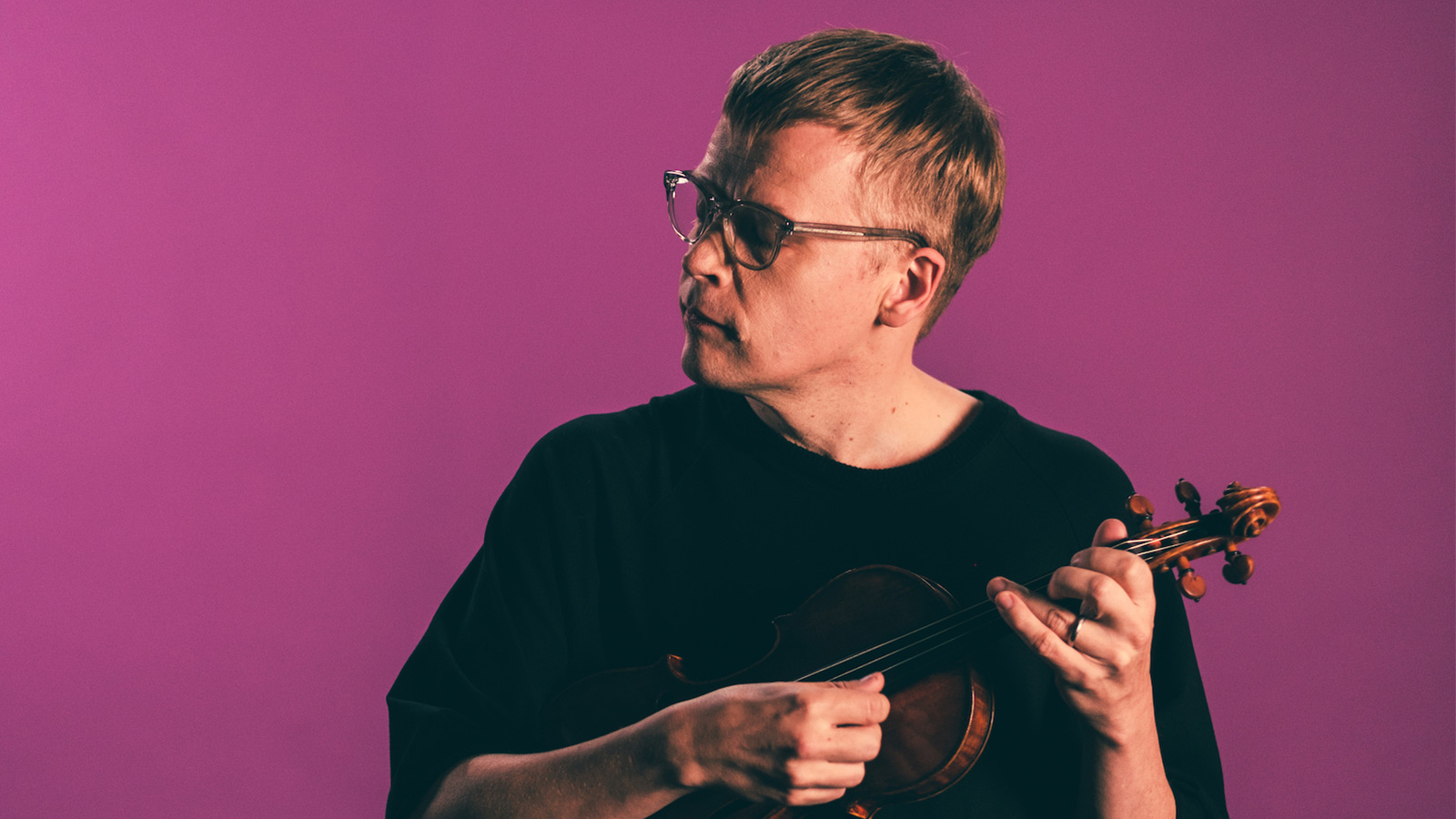
Pekka Suusisto
It mightn’t have brought in the punters, but this latest program from the Australian Chamber Orchestra turned into a very engaging experience, not least because of the quality of one of the compositions in the centre of the program: Shrink: Concerto for Violin and Strings by American writer Nico Muhly, co-commissioned by the ACO in 2019 and dedicated to this afternoon’s guest director, Finnish violinist Pekka Kuusisto. West Coast Sky Eternal from 2023 by another American, Ellen Reid, didn’t register with as much intellectual or emotional impact as its atmospherics got in the way.
More orthodox matter began and ended the program. Kuusisto started with selections from Mozart’s The Magic Flute of 1791, arranged for strings by I don’t know who. This compendium opened with the overture, then some Act 1 extracts in the touching duet for Pamina and Papageno Bei Mannern, followed by Tamino’s Wie stark ist nicht aria, and the duet-(Pamina, Papageno)-plus-chorus Das klinget so herrlich. We switched to Act 2 for for Monostatos’ Alles fuhlt, the March of the Priests, everything winding up with the Queen of the Night’s powerful Der Holle Rache.
As far as I could tell, all of these were given in full with only a small amount of decoration to liven up the top violin part. And it was agreable to hear (mostly) music that slips past as secondary in the surroundings of Dies Bildnis, Der Vogelfanger bin ich ja, In diesen heil’gen Hallen, Ach, ich fuhl’s, Papagena! Papagena! and O Isis und Osiris – all the show-stoppers that we have come to know and love from those decades when both the state and national companies mounted this opera year in, year out. What purpose did this outing serve? Well, not much in terms of information because, as you’d expect, we missed the vital colours provided by pairs of woodwinds, horns and trumpets, not to mention the three trombones, timpani and rather significant glockenspiel for the Das klinget. And the voices.
Perhaps this set of extracts was a means of settling orchestra (and audience?), although this was the fifth performance in a run of eleven. Or Kuusisto might have been using these familiar pages to settle some guest-newcomers into the ranks: two violins and three violas . . . in which respect he enjoyed moderate success. The most obvious result for this listener was the tendency to sing along (mentally) with what the ensemble was producing and admiring its cohesion (if not pitching), at the same time being disconcerted by the absence of specific timbres at vital moments.
As for the concert’s final work,this brought home the necessity for those extra violas – six were playing, Thibaud Pavlovic-Hobba moving from his usual violin and somebody else whom I didn’t identify. This came about for Mendelssohn’s String Quintet in B flat of 1845 which asks (not irrationally) for two viola lines. So Kuusisto peopled this string orchestra arrangement with five first violins, four seconds, six violas split into two groups of three, three cellos and the solitary double bass of Maxime Bibeau.
As usual, you have to take a few minutes – well, about five – to get used to the absence of bite that prevails in any of these expansion exercises where individuality is sacrificed for volume. This was made more difficult from the opening Allegro‘s first bars when the thrumming semiquavers that obtain across all lines except the top one for the first 14 bars became a featureless buzz and the work’s initial texture sounded clogged. When Mendelssohn moved on to a more fluent texture involving linear interplay, the atmospherics improved, especially as the two viola lines enjoyed a forefronting that was absent from the cello-double bass layers for the greater part of these pages.
Which characteristic also continued in the brief Andante scherzando where you look for any independent action in the bottom line and find maybe a couple of bars where it was not doubled or was just playing the support role. Meanwhile, the upper voices picked a genteel path or four through this G minor minuet with some fine cadential nodes handled with an exemplary piano and preparatory rallentando. As could be said about that moment in the D minor Adagio where the second violins and first violas return us to the main theme after two bars of exposed filling from the firsts. But a more telling passage came when the participants dropped to the original’s five for a cello solo, just before we arrived at some shimmering demi-semiquaver single notes, reminiscent in part of the first movement’s opening; the reduction to a quintet yielding a remarkable sample of linear clarity.
Traces of Tognetti-style athleticism burst out with the concluding Allegro and the upper strings (well, everything without a bass clef) began a busy dialogue that actually didn’t amount to much beyond genial chatter. You can find plenty of this middling-level matter in all sorts of Mendelssohn scores, particularly the chamber music, but your interest can be sustained by the proficiency of the performers. And this was the case here where the first violins expended their end-of-concert energy lavishly enough while the cellos and double bass were occasionally given a bar or half-a-bar’s worth of clear-speaking.
Prior to the concert, I listened to a performance of scraps from Reid’s work which starts in the empyrean, sinks to ground level for encounters with base mechanicals, then returns skywards for emotional uplift. The Kronos Quartet play a version online (with the last word of the title changed to Forever) that struck me as highly amplified and echo-rich, supporting a screen vision presenting latter-day lava lamp shapes. The score begins with sustained notes and chords, not too high, suggesting a type of disturbed Californian placidity, puncutated by a few glissandi and suggestions of quarter-tones.
Down on the ground, the rhythmic dispoisitons sharpen up and the harmonic language becomes discordant and angular; not happy times. We also enjoyed some Bartok snaps and plenty of random pizzicato passages before a general adoption of that device alongside some hefty doses of saltando, with a kind of false dawn before the real thing. The following return to the heights struck me as being less pure in texture than at the start, certainly not as persuasive as a state – more a momentary relief from tension.
Apparently, Reid was experiencing some disturbances in her life, positive and negative, which led to the generation of this work. You have to hope that the compositional experience was fruitful for her emotional life; but then, you wish the same for every composer who bares him/herself, from Caccini to Amy Beach. It’s just that some writers can achieve that complex with more sophistication than most. In which respect, Nico Muhly’s seven-year-old concerto proved an unexpectedly satisfying pleasure.
The composer posits his three movements as explorations of intervals: ninths, sixths, turns. Each section has its own character, yet the composer’s expressive energy comes across as a constant. In the opening, I went listening for the nominated interval (which was easier to hear from Kuusisto than the supporting band) but soon was more impressed by the scouring brightness of the instrumental fabric. Muhly’s delight in offering his performers this bracing texture shone out across the work’s duration, including a sterling duet for the soloist and principal violin Helena Rathbone.
I could be wrong but it sounded as though the work was pauseless, with a bracing cadenza before its finale. The composer’s exploration of sixths proved less striking than the dissertations on either side but what gave me most cause for pleasure was the composer’s generosity with his performers’ skill – not just Kuusisto’s, which is considerable – and an honest engagement with his audience through content that offered itself as an aural experience without any need to tittilate or shock. It’s a concerto from our times that I’d be very happy to hear again, not necessarily leaving the experience for as long as another seven years.

