BEETHOVEN’S PASTORAL
Australian Chamber Orchestra
Hamer Hall, Arts Centre Melbourne
Sunday November 22, 2026
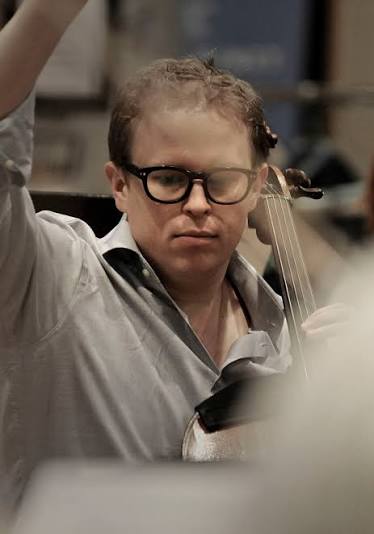
Timo-Veikko Valve
Coming to the end of its touring season, the Australian Chamber Orchestra discarded its habituial penchant for programmatic adventure and unexpected juxtapositions. Instead, we went back to the days of predictable concert format: overture, concerto, symphony. Still, this afternoon held two significant differences. First, all the works we heard were by Beethoven. Second, while the overture (Coriolan) and symphony (No. 6, Pastoral) are standard items in any concert, the middle work was not.
You rarely hear the Triple Concerto in C of 1803-4 – well, in comparison with the last three piano concertos or the concerto for violin – but nearly everything about it is appealing, including the division of labour among the soloists: violin, cello, piano. Its opening Allegro is stirringly buoyant, packed wih enough majestic tropes to bring the E flat Concerto’s later pages (of the first movement) to mind. When we come to the central Largo, a mere 53 bars in length, the piano trio of soloists are given ample exposure with slim orchestral underpinning or interruption to disturb their musings. And the concluding polonaise-of-sorts remains one of the composer’s happier (not heaven-storming) compositional stretches.
You could have few objections to artistic director/concertmaster Richard Tognetti‘s control of the 1807 overture, apart from an expansion in length of the opening two bars of unison C in the strings. These semibreve pairs occur three times at the work’s start and recur at bar 276, just before the work sinks to pizzicato nothingness, and I suppose such added weight adds to the relief of tension when they end in brusque chords. Tognetti isn’t alone in this practice, but it strikes me as over-egging an already electrifying effect.
But the main body of the score remained suitably severe and tender in turns, with an imprssive depth coming from the expanded string forces – 4 more violins, 2 more violas and an extra cello and double bass. By design, the end of the overture morphed into the quiet opening of the concerto, the only problem being that these were two different uses of piano: one tragic, the other anticipatory. As proved obligatory from this set-up with all soloists in place at the concert’s opening, keyboard contributor Konstantin Shamray had to sit through the Op. 62, waiting patiently for his entry at bar 97 of the concerto.
With regard to the progress of this work, only a few matters detracted from its excellence. The most significant was the positioning of Shamray – centre-stage, with his back to the audience, and with no reflecting board/lid. As usual, in this big air-volume space, his sound went straight up, rather than out to us. You can understand why this arrangement found favour: all the musicians could see Tognetti’s direction. But was that an over-riding necessity? It seems to me that much of this work plays itself, without much call for directional flailing.
Even having the piano lid open on a short stick, the instrument in its usual side-on position, would have been preferable. As things turned out, the piano impressed as a muted version of the real thing. Speaking of which, Tognetti engaged in some self-muting of his own, hauling in his dynamic level at certain points and surrendering his place to both Shamray and the ACO’s principal cellist Timo-Veikko Valve, who was a consistently secure voice throughout. For all the unexpected ups-and-downs in output, I found the Piu allegro at bar 514 immensely satisfying, in particular the bravado that starts with the communal trills on G from the soloists, eight bars from the first movement’s end.
In the Largo that followed, we came to some excellently shaped and eloquent playing, beginning with Valve’s ardent initial statement from bar 4 to bar 20 – one of the performnance’s highpoints – and continuing in the piano trio sections that make up the body of these pages. Special mention must be made of an enthralling patch where only the horns underpin the central trio, bars 33 to 39, Tognetti soaring over the complex with flawless phrasing in partnership with Valve, their 10th and eventual octaves a testament to their long partnership in this body.
As expected, the Polacca last movement proved to be a delight that kept on improving, reaching an apex in controlled bravura from everybody at the minor keys’ variants that stretch from bar 164 to bar 212. Certainly, the composer keeps the entertainment going longer than is justified by the dearth of development, especially when the soloists go into quaver triplets near the end – lumpy potato territory – but the orchestra entered each tutti with undiminished willingness and the soloists sustained their energy right up to the insistent final C Major scales.
I was worried that we might have been headed for a total re-think of the F Major Symphony No. 6 with a rather long fermata for strings in bar 4 of the opening Allegro. But no: the movement proceeded calmly with a well-balanced output from the ACO’s woodwind guests who maintained an unruffled regularity of tempo. In fact, it was only during the later pages that I became aware of the unusual reedy timbre of Jane Gower‘s period bassoon and the slightly flat pitching of the flute in its solo exposure beginning at bar 498.
Tognetti’s second movement brook proved full of swirling movement rather than placid eddies and the ACO strings maintained a strong hold on these pages’ overall direction, especially the semiquaver undercurrents that persist in their middle voices. Sadly, the concluding two bursts of bird-calls showed more pitch problems for first flute and oboe, although the two clarinets’ cuckoo sounded more reliable.
Tognetti gave us a fast, driving Scherzo and a vehement Trio/Allegro which impressed as a highly aggressive country dance. First horn Anneke Scott made laudably secure work of her solo at bar 133 which, for once, sounded calm and carefree. But, because of the verve and heftiness on display in this movement, the following Storm was robbed of its thunder to a certain extent, although the eventual arrival of the trombone pair at the climax made an impact in the clear texture of this performance.
No surprises emerged in the finale which came over with an infectious lilt and steady pulse, largely due to the disciplined string group. When in full cry, as at bar 25, the brass sextet made a brave showing without cowing everyone else. Still, this was a more pressing song of gratitude than you hear in other performances where the emphasis is on lilting lassitude after stress. Following the various passes and sublimated explorations in this rondo, the last extended response from the cellos and double basses eleven bars from the end struck me as a fitting summation of the best moments in this rendition for its unanimity in articulation and dynamic, and its liberal sweep.

