Shaky start, brilliant finish

MOZART, MYTHS AND MANTRAS

Sophie Rowell and Kristian Chong

Hamer Hall

Thursday November 26, 2020

Sophie Rowell

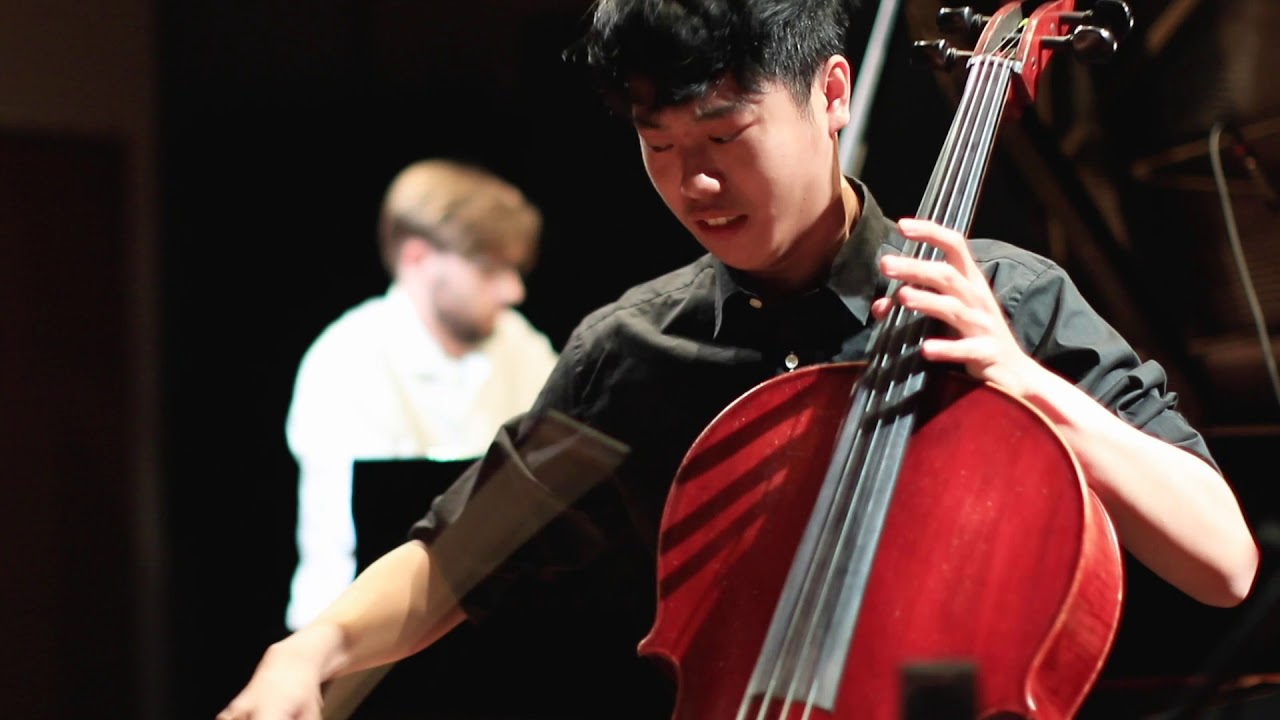
In his opening address to this recital, Melbourne Digital Concert Hall co-founder Christopher Howlett welcomed us – remotely – back to Hamer Hall. Fine, even if the venue isn’t one you’d choose for a duo recital. Still, Rowell and Chong faced back-of-stage rather than having to project out across to the hall proper. Great to see the place was being woken up from a long snooze (or has it? I haven’t been following Melbourne Symphony Orchestra pandemic events, unjustifiably assuming that they have been as lame as those mounted by the Queensland Symphony Orchestra), but the backdrop of all those empty seats proved a tad unsettling

Anyway, here we were in the old (?) familiar space with two fine musicians presenting a program of Mozart’s K. 454 B flat Violin Sonata, Szymanowski’s Op. 30 Mythes, and three arrangements of songs by Calvin Bowman, taken from the Melbourne composer’s seven encounters with American poet William Jay Smith. Plenty of meat here, even if the cuts differed markedly in character and effect.

A risk that only top-level partnerships should take – I’m thinking of Szeryng and Haebler, Oistrakh and Yampolsky, Francescatti and Casadesus – is to kick off your program with Mozart. The violin sonatas are a minefield for their interpreters; not the notes, but the way you deliver them. For instance, most modern-day musicians find it necessary to avoid emphasis, observing the facility of Mozart’s inventiveness by giving it kid gloves treatment. Which works if you play on period instruments but not when you have the resources of the modern violin and its steel strings, not to mention the ringing power of Hamer Hall’s big Kawai.

All of which is a preface to saying that parts of this Mozart K.454’s first movement misfired, chiefly because Rowell attempted some soft dynamics and the results sounded tentative, nervous, wavering. Chong had a better time of it but that’s largely because of the way the movement is written for the piano – with a mellifluous and safe fluency – and because it’s so much easier to play around successfully with dynamics and touch gradations on a piano than it is on a violin.

Even in the opening Largo‘s 13-bar stretch, the string line melted away in contrast with the slashing triple-stop chords of the instrument’s initial phrases; when the piano situation first came up, the bow barely hit the string and the results failed to carry or contribute. So the pendant Allegro proved very welcome for its change of emotional terrain. Rowell’s high Cs in bars 31 and 33 might have gained from more intensity, as would her exposed subsidiary theme treatment starting at bar 50: not an exceptional tune but quietly eloquent, not just quiet. For all this nitpicking, the body of the movement proceeded successfully, Chong rarely missing a note in his frequent semiquaver scale patterns.

Mozart’s Andante with its awkward two-bar phrases would have benefitted from a more determined violin approach, which might have made a less featureless creature of the B flats across bars 13 and 14; even subsidiary voices need character. An almost evanescent third F at the move to B flat minor in bar 49 was counterweighted by a fine tritone leap beginning bar 95; when the piece asked for some grit, things came alive.

You couldn’t ask for plainer sailing than this sonata’s Allegretto finale, despite its little chromatic slips in the second phrase. Chong sustained his buoyancy of output, slightly marred by an exposed revisiting of the main theme in a solo between bars 90 and 98 when a few notes went missing. One of the few thick moments, that between bars 223 and 230 with three concurrent lines in operation, came off with laudable clarity and Rowell’s running triplets from bar 251 to bar 258 could not be faulted for their even delivery: a fine final gesture after a work that missed out on achieving continuous comfort for its executants and their audience.

About the Bowman songs in this particular duo format, I’ve little to report. The organist/pianist/composer has found his own voice somewhere close to the English pastoral writers with no qualms about producing orthodox melodies supported by suitable accompaniments. What these arrangements did show was the unabashed romantic colour to them all, nowhere better than in Rowell’s rich account of Now touch the air softly, for which Bowman has provided a melody (G Major?) that touches the heart with its folk tune-like simplicity and has a fluent grace that fits the poem in the best way: as though both were written by the same hand.

No, there were no words here but Rowell gave the melody line a fine energy, on the move and of a piece with the voice of the poem’s lover who is speaking on a similar plane as that in Burns’ A Red, Red Rose. I couldn’t find Smith’s verses to The Early Morning but Bowman set it with another finely-formed lyric, interspersed pauses giving you the passing impression of an irregular metre. Again, this piece gave all its room for the violin’s breadth of colour although Chong was kept in play with an accompaniment of no little variety. A repeated note begins the tune for The Night which is another song (in A flat? My pitch sense is mouldering in these latter days) packed with carefully arched phrases. Again, I couldn’t find the text but even so you could luxuriate in the appealing, full-bodied ardour projected by Rowell in music of no great difficulty but aimed directly at Bowman’s large and appreciative audiences.

To close, Rowell and Chong performed Szymanowski’s 3 Mythes which has been acclaimed as one of the pivotal violin works of he 20th century and which I, for one, was hearing live for the first time. It may be astonishing to the composer’s enthusiasts that the work hasn’t spread into common usage but, from a discography I consulted, the only names from recordings of Mythes that resonated were those of David Oistrakh and Ida Haendel. At the time of its creation, and many years later, Szymanowski claimed that he and violinist Pawel Kochanski – the dedicatee’s husband and first interpreter of the suite – had invented a new style of violin composition. For the time – 1915 – he was probably right because the score is a compendium of special effects and production modes.

But its challenges have to be forgotten if the three pieces are to make an emotional impression. And I found it hard to get past the technical brilliance, in which tasks Rowell was impressively successful. The opening La fontaine d’Arethusa begins with a shimmering water effect in the keyboard before a high melody emerges in the violin. This sets the scene for a wealth of cascades and spouts from both instruments, particularly a rich field for Chong at Number 2 in the score and later, for Rowell, the use of eerie violin harmonics at Number 4. Changes are rung right across the remainder of the work, climaxing in an action-packed crescendo at the A tempo con passione marking that leads to sforzandi/fff in both instruments, then a return to the opening textures. It’s gripping to experience but finally impressed me as a series of frissons of varying magnitudes. The atmosphere is loaded with suggestions, rhapsodic and ample-beamed, but even this excellent partnership could not disguise the introverted aura of the hothouse.

Again, in Narcisse, the violin is sent into a high tessitura, taxingly so with the entry after a change to Poco piu animato, then again after Number 3, and at the highpoint half a dozen bars before Number 6. Chong’s keyboard is gifted with more meat in this movement than post-Jeux d’eau plashing, Szymanowski peppering the part with multi-note chords that eventually require three staves. It all made for a solid and satisfying demonstration, the performers at ease with fulfilling the writer’s intentions and, even if the air again proved over-heated, the subject matter was appropriate.

I thoroughly enjoyed the third piece, Dryades et Pan, chiefly for its restlessness – again, pertinent to the music’s scenario – and seeing Rowell weave a confident way through one of the most technically difficult parts I’ve come across in pre-serial composition. Both artists realized the importance of Szymanowski’s touch-and-release processes in these pages and, in spite of the racing ferment, the paramount need for space and clarity. You couldn’t wish for cleaner harmonics – natural and artificial – from Rowell, nor a more assured hand in the chains of trills and scrubbing bars full of double-stopped hemi-demi-semiquavers.

So much of this movement satisfied fully, even at highly dangerous and challenging points. Whether the narrative impetus was complete in itself or whether Rowell and Chong infused the movement with an abundance of personality, it was improbably difficult to make out because the animato direction was obeyed willingly, and hiatus points – like the Pan flute interlude and some rapid cadenzas – flew past. In sum, an exhilarating conclusion to an hour which – eventually – showed us this duo’s powers of interpretation and interdependent technical control.

Still on top

A FINAL OFFERING

Selby & Friends

Angel Place Recital Hall, Sydney

Saturday November 7, 2020

Susie Park

Nothing here to bring the blush of shame to the cheek of modesty: a very orthodox chamber music without surprises from Kathryn Selby and three familiar guests – violinist Susie Park, violist Stefanie Farrands and cellist Timo-Veikko Valve. All of these musicians are part of our continent’s musical life, but Valve leads this particular pack – or so it seems to me – in the breadth of his appearances. His omnipresence rivals that of Brett Dean in the violist/composer’s years presiding at the Australian National Academy of Music, during which time he participated in a plethora of activities.

This whole evening played to our lust for the well-known: Schubert’s Adagio/Notturno in E flat, the E minor Trio No. 2 by Shostakovich, and Schumann’s E flat Piano Quartet. As with the works, so with the performers – all of them in happy collegiality with very few signs of ensemble troubles. Which fortunate outcome you’d expect as all have participated in Selby’s recitals before.

As for the Schubert oddment – a not-too-distant relative of the String Quintet’s Adagio – it was treated with excellent sympathy, avoiding the temptation to sandpaper all the edges during the main theme’s treatments. Only the demisemiquaver at the end of many bars received a smoothing out, rather than bringing into play a short recurrent surprise, a brief interruption to the mellifluous melody. But you’d be clutching at straws to make much of this. Both of the proud internal episodes were handled with tempered vehemence, Selby’s triplets seamless as far as I could tell and the close lines of Park and Valve exemplary in dynamic unanimity and empathetic phrasing.

Coming into the Russian score, Valve worked through the opening six unaccompanied bars of harmonics without showing the stress that most other cellists communicate in this passage, an executive tension that doesn’t end with the violin’s appearance. A few high As near the end of this solo sounded near to danger but the final ascent before normal relations resumed spoke securely enough: Shostakovich’s eldritch summons fulfilled, the drama of sorrow, rage and resignation could proceed. This group favoured an emphatic delineation of the first Allegro‘s highpoint, not getting ahead of themselves – probably because they were conscious of what was coming up – with Selby establishing and maintaining a tempo that rejected the temptation of a cheap accelerando.

This broad outline was complemented by striking instances of telling synchronicity, like the strings’ creeping chromatic scales, the block-against-block interplay of violin-plus-cello against keyboard, Park’s fine juxtaposition of smooth phrases with multiple-stop scrapes, Valve’s well-crafted ability to remain audible and more than just a presence through the fraught climaxes. Later, in the second movement, the pace was mindful of the composer’s non troppo qualifier, which meant that every spicy dissonance and lavish swathe in those G Major interludes could be imbibed fully, without your being rushed across the work’s surface in a frantic presto.

No problems with the Largo: a threnody for the strings over a series of repeated piano chords and the closest thing I know to a contemporary Mourner’s Kaddish. This found both Park and Valve in fine form for the canons and duets that ruminate in muted language on tragedy (the death of dedicatee Sollertinsky? Babiy Yar 1941? The Odessa rioting of 1831? There’s a lot to pick from). Particularly moving was the eloquent accomplishment of the movement’s last nine bars, especially the beyond-grief harmonics in the final bar – one of the score’s finest moments.

With the purposeful Jewish-coloured content of the final Allegretto, it seems as though the composer is celebrating life or survival. He’s not: this is fierce music, as poundingly inevitable as the second movement but more wrenching and sardonic, soon seen in bar 28 where the strings alternate pizzicato quadruple stops – here, mightily impressive in character. Park added to the vehemence with a series of biting glissandi between D and E as she dealt with the movement’s main theme 16 bars after the caustic quadruple string chords stopped alternating.

Valve brought some humanity into the mix when the time signature changed to 5/8 and he surged through the soaring lament here under Park’s biting commentary. Even more gripping execution came in the movement’s core as the inter-linear welter increased and the instruments seemed to be chaffing against any restrictions before the change to an E Major key signature and a cascade of piano figuration relieved the crisis. Finally, it is hard to praise enough the players’ striking and emotionally valid interpretation of the work’s final subsidence which could be a benediction except for what has led to this point, in particular the composer’s reminiscence of his Adagio that begins 16 bars from the end and leads us to a chastening final vision.

Here was a finely spun version that ran across the complete work, intellectually consistent and contriving to keep its emotional reins taut while still rewarding you with a continuous current of tense pathos.

Finally, Farrands joined the party for Schumann’s welcome instance of life affirmation. His Piano Quartet, more than the Piano Quintet, speaks with a buoyant accent; even its working-out pages have a relish that, if it’s not actually rare, is remarkably jaunty. After the brief sostenuto, the first Allegro showed how the addition of an extra string voice can exert an influence on the balance, Selby being too polite by far for the first and fifth bars of the first subject. Park began impressively and enjoyed the prominences that Schumann gave her, but Selby made an unanswerable case for the piano’s dominance, even in slight details like her right-hand staccato scales 16 bars before Letter C in my aged Peters Edition score.

Indeed, the more you listen to this video, the higher your esteem for these musicians grows. Their accents are crisp, dynamic mirroring exact to a fault, octave and unison duets (or trios) precise, sense of place in the ensemble remarkably faithful and consistent. Have you ever noticed how much of the development to this movement is in the minor? Practically all of it. Yet these people made this harmonic oddity unremarkable, honing in on the underlying delight in motion even through some mighty predictable modulations.

For the Scherzo and its two Trios, you might have had an expectation of heftiness; it’s as though most interpreters can’t get their minds out of the bierhaus. The opening unison pattering from Selby and Valve set a higher bar with a delicacy that brought to mind Mendelssohn operating on a less fragile plane than usual. There are no real forte indications outside that fetching, syncopated Trio II and the executants aimed for quick-touch delivery in the Scherzo pages. Farrands distinguished herself with a clear-speaking solo in Trio I, but probably the most impressive feat in these pages came from the unfussed account of the second Trio which proved to be agreably fluent despite nearly everything being out of kilter with the pulse.

Everybody shares the honours in the following Andante cantabile, pages that are notable for the variants in accompaniment that Schumann contrives rather than for the sentimental melody over which he dawdles. Each of the strings took at least one turn in treating it and the results proved carefully shaped and mellow in timbre. But the movement shines in its coda which verges on the self-indulgent but endears itself for a kind of bare-threaded placidity.

And so to the Vivace finale with its endless repetitions of an irresistible opening motif: three chords, then a semiquaver rush to a quick cadence. As in the Piano Quintet, the composer indulges in plenty of fugato, even if in the quartet the exercises are less beefy in character. Once again, you could not fault the ensemble, least of all in those passages where Selby’s right hand went off the beat for half a bar’s worth. As well, some stretches gleamed, like the octave duet between Park and Farrands that begins 4 bars after Letter H following the key change to A flat Major and resumes shortly before the change back to the movement’s tonic: two lines soaring through the underpinning mesh with unwavering integrity.

This work is filled with optimism, not complex in its format or eccentric in thematic treatments; making a sharp contrast with the Shostakovich trio and finishing up this recital with something approaching jocularity.

After the first decade or so, you accept that Selby & Friends affairs will feature top-notch musicians; more often than not, even in these times of crisis and deprivation, you can also count on interpretations packed with insightful information and confident breadth of vision. Next year might see this organization back on its regular touring round, involved in live performances only. If that’s the case, we in the north will certainly miss these videos which have provided excellent sustenance over the long months of this unsettled year.

A master and an also-ran

OZART & ABEL

Melbourne Digital Concert Hall

Australian Romantic & Classical Orchestra

Cell Block Theatre, Darlinghurst

Friday October 23, 2020

(L to R) Julia Russoniello, Matthew Greco, Karina Schmitz, Simon Martyn-Ellis, Georgia Browne, Kirsty McCahon, Daniel Yeadon

We’ve had one Australian Romantic & Classical Orchestra recital/concert already in the Melbourne Digital series; now it’s the turn of the ensemble’s Sydney chapter to keep the Richard Gill flag flying, in which undertaking they were helped considerably by having Georgia Browne‘ s flute as either top line or stage-front in this program of which three-quarters was completely new to me. The organizers gave us a familiar Mozart in the D Major Flute Quartet K. 285 but balanced this with an early string quartet, K.157 in C Major. This brace was book-ended by two Carl Friedrich Abel scores: a three-movement (like everything on this night) flute quartet in A Major, unhappily juxtaposed with a work of the same genre by the younger master; and the Flute Concerto No. 5 in G Major, one of a set of six that are probably grist to every flautist’s mill these days.

A product of the Bach house through his studentship at St. Thomas’ School in Leipzig during Johann Sebastian’s years there, Abel was well known in his lifetime, notably for a time by association with Johann Christian Bach with whom he established a concert series in London. He also met the 8-year-old Mozart in that city when he himself was about 40 – which is a nice, if fleeting connection with which to yoke these two writers. But Browne has a stronger relationship with Abel’s music than most of her peers, as she has recorded this G Major Concerto (and several other flute-dominated works by this composer) with the Icelandic ensemble, Nordic Affect.

As the night turned out, Browne made the best of all possible cases for Abel through her fluent technical control and an unfailing search for variety of timbre and shape, even in the unabashedly learned pages of the concerto’s opening Allegro. As a sample of ensemble work, this score proved to be the night’s least satisfying – not because of the ARCO musicians’ expertise, but mainly because of a lack of substance from the string quintet and its one-line-per-instrument lack of ‘bloom’, as I’ve heard expert acousticians describe it. You had precision in spades, each note on the dot, but vibrato or open with no mellowing shades at all. Yes, we’ve been here before: this purity of output is a period music enthusiast’s nirvana and it is irrelevant in faster music, but middle movements from Andante down can be a trial.

It’s probably because of the continual close suggestions of a chest of viols, as though every work played here found its antecedent in a Lawes suite. This might suit some writers but you’d have to question the approach in a work like Mozart’s delectably optimistic flute quartets. Compositions where the sinews stand out – like Art of Fugue or A Musical Offering – benefit from this no-nonsense treatment but its apologists argue for a wider historical range of application than just the Baroque. At all events, one side of the argument is proposed by this organization, which is consistent in its application across the repertoire.

In the concerto, Simon Martyn-Ellis‘ theorbo took on the continuo function; in this situation, his contribution came across very clearly and made its presence felt throughout in this musician’s one appearance on the program. The same could be said of Kirsty McCahon‘s bass which, as always, contributed an enthusiastic line in support of her higher-pitched companions’ caperings, including those of cellist Daniel Yeadon. Even the reedy-textured violins of Matthew Greco and Julia Russoniello took on an infectious bounce in the first movement’s initial strutting tutti.

But the delight of this program constituent came in Browne’s appearance as a fore-grounded soloist in her own right, not as the top line of a quartet. Her first appearance was lengthy and, as the piece progressed, the flute’s elaborations on the opening march theme dominated proceedings. But Browne took all the tricks with an ideal placement of each note while Abel puts his soloist through a range of technical and breath-control tests; nothing flamboyant, but ever-demanding. He even managed to insert some thematic variants which Mozart might have been happy to imitate. I don’t know who wrote the cadenzas for this concerto – probably not Abel, if other manuscripts are any guide – but this one turned out sufficiently voluble and just long enough.

I think the middle Adagio was in G minor; whatever the case, these pages tested Browne’s sustaining power. She dominated the texture even more here but had to work hard because of the longer time for sweeping bow strokes allowed to the strings. To leader Greco’s credit, the pace proved sensible for all concerned; not over-weighty or insistent. Again, Browne’s cadenza brimmed with good judgement – but then, so did the ensemble’s approach, particularly in the treatment of ornamentation which emerged as it should: without fanfare or obviously basted onto a line, but just a slight disturbance in the Force.

Just how lively this ensemble can sound emerged when the Presto finale flurried into action, the results justifying the observation that this group (maybe just this section of the ARCO personnel?) sounds at its most convincing when the tempo is rapid. However, the flute gets total exposure when the tuttis end and Abel indulges in reams of rapid-fire sequence work. There’s an odd mix of the utterly predictable (thanks to repetitions, he being capable of three of a set phrase when Mozart would have been happy with two, at most) and a (in context) startling novelty, like a modulation which, in the normal run of events, was unanticipated.

Even against the light weight of a string quintet and theorbo combination, the period flute that Browne used was sometimes hard pressed to be heard, particularly when the instrument was operating inside its lowest fifth. But, in the main, the flute carved out its path with an appealing breathy quality, climaxing in yet another cadenza – which seemed unnecessary, given the amount of exercise the soloist had to put in throughout this movement. And the small ensemble brought the exercise to a gratifying end with a congenial solidarity.

Abel’s Flute Quartet in A Major Op. 12 No. 2 opened the recital with Browne taking top place above Greco, viola Karina Schmitz and Yeadon. Her breath allocation made an interesting study across the opening measures of the first Un poco Allegro; indeed, it continued throughout a somewhat jumpy line that reached a finely couched oasis at a sustained E across bars 76 and 77. As far as I can tell, Browne’s transpositions – actually, translocations would be a better term – were kept to a minimum.

Browne’s melding into the fabric during the following Adagio ma non troppo showed at its subtlest during the repeated E semiquavers across bars 21 to 23. She also gave us an elegant taste of the galant in her negotiation of the appoggiaturas in bars 34 and 36, while Greco’s violin entered into a delectable partnership with Browne at bars 51-53 to put a suitable cap on proceedings. With the Tempo di Menuetto, Abel sets up a melody that is deftly shaped as a comparable piece by Mozart, but it moves into ordinariness at bars 5 and 6 when the sheen of direct speech goes astray. Greco found it hard to tamp down his attack in this movement, although Browne maintained a soft dynamic for the most part, so he’s not totally responsible for his own prominence. This last rondo is amiable without much content – a certain fluffiness around the edges made it unmemorable in itself, if a fitting vehicle to introduce the musicians without much stress brought into play.

Mozart’s own quartet coming straight after Abel’s gave Browne even more opportunity to demonstrate the breathy purity of her output while Greco, Schmitz and Yeadon brought as a counterweight their trademark lack of vibrato and open-string fear. You could pick up on phrasing differences between flute and strings (violin and viola) at certain points but more distracting was the tendency by the upper strings to employ a crescendo/diminuendo effect all over the shop. And you missed some sparks from the violin’s 2nds in places like bar 115, even if Schmitz compensated for this with her own contributions between bars 132 and 135. I missed the repetitions of both halves in this movement but that absence was not confined to this movement which nonetheless revealed a firmness and unanimity of ensemble from all involved.

Thanks to the strings’ pizzicati, the Adagio is a gift for the flautist who holds our interest across all 34 bars. Browne maintained an even melodic flow with no abrupt dynamic shifts. typified by a carefully prepared soft high D at the end of bar 21. But then, across this night none of her high notes grated. In the brilliantly happy Rondeau, Greco sounded scratchy at the throwaway gesture in bar 20 but made a more secure showing at its reappearance in bar 99; he also failed to etch a definite path through the bars’ 133-139 partial episode. You could not fault Schmitz or Yeadon in this exhilarating movement which reached a delectable pianissimo for all in the last main theme restatement beginning at bar 231, the whole set of pages taken at a brisk, not breathless, pace.

Of all players on this occasion, Yeadon had the most trouble with his tuning, his instrument affected by Sydney’s seasonal humidity. Consequently, he had to spend some time getting ready for the Mozart string quartet; then he and the other members of the group – Greco, Russoniello Schmitz – did not show at their best in a slip-shod account of the 1772 composition’s first strophes. In fact, the ensemble’s balance sounded unsettled, as in the recessed contributions from Russoniello in bars 25 to 28. A major signpost in the violins’ triple- and double-stops at bar 60 came across as laboured, although a similar construction in the last bar presented with much more acuity. Finally, I didn’t see what was gained by the insertion of a short violin cadenza at bar 74.

The group did repeat the first part of the Andante; a kind structural concession that stood out on this evening. Yet, in spite of the sensibility shown in this movement, the combined texture at points like bars 16 to 21 sounded like a piano accordion in timbre, possibly because of the octave unison between first and second violins not helped by the viola’s bland arpeggio filler. Once again, Russoniello went missing between bars 57 and 64 despite having the principal matter (what there is of it) in her part.

Greco showed to better advantage from the outset of the Presto finale as he and Russoniello were kept busy by the brisk pace and the score’s racy character, the first violin’s address best illustrated by his biting attack in the section from bar 85 onward. Despite commentators directing you to hear operatic traces in this work because Mozart was writing these quartets at the same time as Lucio Silla, this movement is memorable for its lavish use of syncopation which tends to attract the attention of performers more than giving primacy to melodic development; not that there’s much of that in these rapid-fire pages, here gifted with some suitable abruptness at the final chord.

It’s an immature work and streets away from what was going to turn up ten years later in the quartets dedicated to Haydn. But it made for an indication of what Mozart could do with inspirations that were short-stemmed. It might have gained from a less timbrally astringent handling but, as a rule, pieces of near-juvenilia need top-notch performers to lift them out of the second or third tier level they occupy in a great composer’s output.

But ARCO deserves our thanks for this exercise because, although it might not make Abel converts of us all, the occasion gave us the opportunity to revel in Browne’s expertly honed performance skills and her ability to take an also-ran score and turn it into a miniature gem.

The long and the short

NEW SOUNDS

Alex Raineri and Angus Wilson

Brisbane Music Festival

Saturday October 10, 2020

Angus Wilson

So what do we do from now on? This is the last of the recitals in this Festival sequence – the end of music-making in Brisbane for the year . . . well, the production of music that is reliable, serious and regular by nature. Yes, you expect some other bodies to put up their hands to present the odd program, and so some of them have done. But we have come to rely on Alex Raineri and his organization to supply us with fortnightly events of musical value. From here on, the Melbourne Digital Concert Hall has the field all to itself as far as generating streamed material of consequence goes.

Raineri has a big reputation for interpreting contemporary music and his wind-up for 2020 played to this strength. The night featured first performances of four Australian compositions, all written by Raineri’s peers and colleagues associated with the avant-garde Kupka’s Piano enterprise: Samantha Wolf, Jakob Bragg, Hannah Reardon-Smith and Jodie Rottle. These works featured piano and percussion – usually vibraphone, handled by Angus Wilson who is another Kupka associate.

Agreable as it was to hear these fresh works, they were all – deliberately, or by chance – brief. So the duo gave at least half of their allotted time to an import in John Luther Adams’ ten-year-old Four Thousand Holes which requires two-to-six musicians but also has a continuous electronic underpinning. This non-live component doesn’t actually do much except swell and diminish, ending as it began after a half-hour-plus round-the-block hegira. The human contributors to this reading were Raineri on piano – staying at the keyboard throughout, I think, rather than making forays under the lid – and Wilson handling vibraphone and glockenspiel, following the composer’s requirement for ‘metallic percussion sounds’.

This performance was bedevilled near its beginning by several cuts in transmission: some of them short, then later dilating to the point where the broadcaster had to put up a web-site frame. After the transmission was completed, Raineri posted a tape of the complete recital for those feeling short-changed by these missing fragments. I dutifully went back to hear the first moves in Adams’ work – never look a gift horse, etc. – but this extra exposure achieved very little in my case. To be frank, I rather enjoyed the moments of unintentional disruption; probably a generational overload of Cage-ean yearning for any signs of Zen in music, according to which there are no mistakes or flaws, even if there are. But I delighted in those passages where the sound came back intact while the players were freeze-framed in action.

As for what the live performers had to do, the essentials seemed to be plenty of chords from the piano, mainly major, and single notes from the percussion, although I’m probably wrong about that because Wilson kept two sticks/mallets ready in both hands; still, it seemed to me that his function was essentially pointillist while the piano amplified the ongoing electronic stream with chords that drifted in and out of consonance with it.

Actually, the in-and-out breaths of this sonorous back-cloth became annoying, possibly because of an absence of variety – harmonic, polyphonic, rhythmic: you name it – but chiefly because the mesh wound up sounding like an accordion and, given the unadventurous nature of its construction, a particularly elementary. Young Talent Time-reminiscent one. You’d suppose that all these long periods of stasis would engender a sympathy with Adams’ emotional landscape, which involves the wide open spaces of America’s northernmost state, residence in which shaped the composer’s aesthetic aspirations.

Wilson used both keyboards, sometimes by themselves, sometimes at the same time but the chief memory of his activity remains those single note patterns. Yet, even when his dynamic was at its most compelling and Raineri’s chords ranged widest, the work’s process and progress comprised a haze, scintillations breaking through but not intended to jar against the prevailing sound continuum. After a while, you were tempted to abandon hope of any analysis and just suppress the critical, sinking into the repetitions and the glowing taped-sound stratum. All that was missing was a chain of visuals, like sub-Arctic landscapes of snow and ice-filled vistas until the instruments stopped and the tape drew to its elongated diminuendo conclusion (in E Major?).

You are in sync with Adams or you’re not; he isn’t of the same ilk as the big-name minimalists and ‘modernists’ who can often enrage with their futility or pretension, but he works on a Cinemascope level in which the natural world fundamental is idealised. It’s easy to go along with this cosmic humming, the musical equivalent of a lengthy ‘Om’, but I’ve been suspicious for many years of works that ask you to ignore all that you know and surrender to a benign intellectual coma. For all that, both players did the composer excellent service with a reading that outstripped two other recorded interpretations that I’ve heard recently, their superior in exerting personality and finding space in an aural area where both were difficult to achieve.

Each of the Australian premieres was preceded by a taped short address from its composer, most of them revisiting topics that had already been made public in Raineri’s interviews, published on the internet some days before the event itself. Wolf’s Bull in A China Shop set piano and vibraphone in bitonal competition, the most interesting moments coming when both instruments played the same melody line in their own specific tonalities – the effect rather like an organ Mixture stop. You were hard pressed to find anything aggressively taurine here, particularly during the substantial middle section reminiscent of Pagodes that moved into a vibraphone ostinato supporting 5th-heavy piano chords. A moderate degree of deftness appeared in the final ‘fast’ section that had more than a touch of Bernstein in his dance mode about it.

Both players worked inside the piano for Bragg’s Nest of gravel in which the sounds produced related strongly to the composer’s desire to suggest the granular and dessicated. Wilson mounted a slightly grating ostinato with wire-brush strokes on the upper strings, graduating from one hand to two in the piece’s later reaches. Raineri contributed his own bevy of scrapes on the lower range of the instrument, using a variety of wood and (I think) plastic strips as well as various sticks while complementing his scrapes and block glissandi with punctuating stopped notes. The physical presentation looked device-heavy as we were confronted with a wide gamut of effects. Whether the whole thing lived up to its backdrop aims of illuminating COVID-19 lockdown life and the constricted world of refugees still imprisoned on fast-decaying Pacific islands depends on your response to auditory stimuli, of which this brief score offered a sizeable amount.

Reardon-Smith’s three questions of scale appeared to be over too soon for anything much to land. Her first movement, three ants carry a dead wasp/east coast-west coast fires, had Raineri operating inside his piano with a long stick ending in a knob, producing single notes both struck and stopped. Wilson’s vibraphone confined itself to single notes. The composer’s debt to Morton Feldman seemed most apparent in this section. The next segment, the continuous trickle of my cat’s drinking fountain/the port of beirut explosion, impressed for its unsettling mobility. Here, the pianist scratched out sounds with two drum-sticks and both players interchanged range areas to produce a mobile fretwork of sonorities, Wilson’s contribution enriched by two cow-bells. At its climax, the work simply stopped, the narrative halting with nothing left to say.

Finally, mould growing inside an unopened tub of coconut yoghurt/we have all run out of medicare-supported therapy sessions saw Raineri at the keyboard for an array of single notes, indulging in a pin-pricking intersection with the vibraphone. The content of this movement moved between the frantic, including one wild piano passage, and the refined. Wilson’s cowbells weren’t struck but patted and tapped near the end, the piano mirroring this reticence with isolated blips.

These comments are quickly-noted gleanings from a run-through that left little time for awareness of much beyond texture. Added to that, you were confronted with the same problem as the Adams work presents: how much do you invest in any composer-derived information? Reardon-Smith’s movement titles split into halves where one is highly personal, the other broader in its implications – even the last with its reference to a national health crisis. But does either half help you to understand the composer’s intentions? It’s an open question to which – of course – there’s no definite answer.

Last of the Australian quartet, Rottle’s Public Figure springs from the composer’s interest on how personalities use the internet and associated media to make their names. Another score for piano and vibraphone, it revealed some early dexterity with both instruments playing the same notes in unison, then just after each other, the piano’s right hand and the vibraphone working into catchy off-beat rhythms before Wilson picked up a large string-instrument bow to create an all-too-familiar unearthly effect, then gave the same soft treatment to a stray cymbal.

Raineri moved inside his piano for some short glissandi while the bowed vibraphone helped generate a cleverly atmospheric interlude – soft, with threadbare action – before the piano regained authority against a brushed cymbal and, from nowhere, emerged a five-note motif that brought memories of Close Encounters of the Third Kind to this irreverent mind. I started to wonder about the tuning in some of the piano’s lower notes but was taken aback by the subtle, inconclusive ending: a parable of the quest for public recognition, maybe.

Here was an ambitious program, a striking ending to the Festival’s 10-event series. It’s hard to emphasize to onlookers how much we are indebted to Raineri – and his guests – for keeping live music-making alive here. With limited resources, he has presented a splendid variety of programs in which we were lucky to enjoy several excellent interpretations. This final one had the added benefit of giving a small showcase to four young local voices, in which endeavour Wilson and Raineri demonstrated an unflinching probity, despite the physical (and, one hopes, transitory) handicap that the percussionist had to endure and the shared necessity of coping with such disparate creations.

A blessing, lullabies and a prayer

KARIN SCHAUPP

Musica Viva

Saturday August 22

                                                                 Karin Schaupp

‘Schaupp has been a stalwart of this country’s guitar world for close to 40 years: in her own right as a soloist, as a concerto performer with state orchestras, and as a collaborator with musicians like Umberto Clerici and the Flinders Quartet.   On Saturday evening, she presented this no-frills recital from her home with nobody else but a recording technician in the room with her.   Great to see that Musica Viva has embraced the new model of mounting spartan events: one performer providing her own space and not playing too much in case of mental overload in a time of musical famine.

Schaupp’s choice of diet spanned a wide time range, opening with a brace of Scarlatti sonatas and taking in some modern classics of the guitar repertoire, with a side-step to Australian composer Richard Charlton’s Suspended in a Sunbeam, written for this performer last year.    Of course, some of these pieces have become familiar from the artist’s CDs: Scarlatti’s Keyboard Sonata K. 208 (L. 238), Brahms’ Wiegenlied and Llobet’s El Noy de la Mare (the lullabies), Una Limosna por el Amor de Dios by Barrios, and Leo Brouwer’s Elogio de la Danza.   These date from at least a decade ago in Schaupp’s recording career; apart from the freshly-minted Charlton piece, the program’s other unrecorded works came as no surprise:  the BWV 1000 Fugue in A minor for lute by Bach, and an extra Scarlatti sonata, K 322 (L. 483), which was more successful as a guitar transcription than the other sonata by this composer performed here.

After a Musica Viva-lauding address by a ‘suit’ whom I didn’t recognize, being distracted by negotiating volume and access to scores,  Schaupp began operations with one of those remembrances or salutes to indigenous land rights – a gesture that has quickly become a behavioural cliché which could even be well-intentioned but which never fails to annoy because of its tokenism.   Remember those sad white people in Clifton Hill who put plaques on their houses noting that their lots really belonged to the Wurundjeri Woi Wurrung, only to have some Aboriginal people knocking on doors and laying claim to those boastful houses?   They were invited in for cups of tea, which says all you need to know about the depth of such acknowledgements.

Both the Scarlatti works were arranged by Schaupp herself and the ‘Adagio e cantabile‘ K. 208 made for an amiable opening with both repeats observed.   My only quibble was the avoiding of the 5-note chord that ends bar 13; well, not so much an avoiding but an impossibility, given the instrument’s low operating level at that point.  The faster K. 322 is better-known among keyboard players and is gifted with one of those trademark Scarlatti passages of courtly play from bar 36 to the half-way point, and again from bar 73 to the end; the harmonic transparency at these points came over with particularly gratifying clarity in Schaupp’s interpretation

Are you uncertain about the provenance of Bach’s works for lute?  Join the club.  Before the Early Music Brigade got under way, Segovia cruelled the authenticists’ pitch by transposing, transcribing and transliterating a good deal of Bach’s music.   He didn’t leave Scarlatti untouched either, making a popularly-used guitar version of the L. 483, the second of Schaupp’s offerings.

The G minor Fugue, well-known in a violin version, is taken up a tone by most guitarists, I believe; Bach might have moved it himself, for all I know.   Schaupp played a pretty clean reading with some passing glitches in bars 44 and 47 but with an otherwise sustained accuracy, reaching a well-prepared climactic point at bar 59 and onward, then realising the smothered tension of the suspensions in bars 93 and 94 before the sudden near-cadenza in the penultimate measure.   Here was a measured interpretation without imposed theatrics or a resonance-besotted bass line; rather, the lines were delivered with balance and dynamic control.

Schaupp’s husband, Giac Giacomantonio, arranged the Brahms piece for her and expanded the song to three verses.   No surprises here, even if the piano accompaniment’s slight syncopations  did not appear to survive the move.   With the arrival of its companion piece by Llobet, we entered the realm of straight guitar music, this work and what followed all original compositions.   Not that there is much more to the Spanish composer’s Catalan folk-song arrangement than there is to the Brahms lied: one page divided into two halves, one work in 6/8 and the other in 3/4, both placid in emotion (as you’d expect).    It was hard to determine why Schaupp seemed so anxious to get off the final D of bar 6, or why the lower notes of the thirds that end bar 5 didn’t resonate.   But then, I didn’t register whether or not they appeared at the bar 7 repetition.   A simple piece, but a pleasure to come across something which takes into account the instrument’s potential for colour and chord spacing.

With Brouwer’s two-movement Elogio, Schaupp jumped into a contemporary stream; even though the work dates from 1964, the Cuban composer speaks an adventurous language which takes dissonances in its stride. at odd points verging on twelve-tone writing although pedal points and the first movement’s Major 7th characteristic argues for a tendency towards a tonal centre.   The executant employed plenty of rubato in the opening Lento, which is a kind of tribute to dance in its juxtaposed flashes of motion and near-stasis, the whole comprising a mobile core surrounded by pairs of ten bars showing relative quiescence. 

Brouwer’s second movement obstinato deals, like the first, in gruppetti, but here much more aggressively.   The entire movement hurtles forward, notably in the central Vivace in 2/4 which reaches a climax in a vehement repeated rasgueado chord before returning to the rapid, metre-changing material that began the movement, followed by a vivace coda. Schaupp displayed an excellent command of this demanding work, at ease with its many  jumps in emotional and technical content, building an impressive structure in each movement while showing no hesitation in vaulting between Brouwer’s juxtapositions of the frenetic with one-line meditation.

Charlton’s work takes its inspiration from a 1994 Carl Sagan speech about the Earth and its position in the cosmos.   The Australian composer subtitles his piece Thoughts on the ‘Pale Blue Dot, as photographed by Voyager 1, and he interpolates in the music a text of his own composition with two brief Sagan excerpts.   Charlton gives his performer (guitarist and speaker in one, preferably, as here) leeway to pronounce the words over pauses or repeated patterns; Schaupp, the work’s dedicatee and commissioner, showed a reassuring ease with the score.   A good deal of its progress is spasmodic, the accompaniment to the text tersely episodic but hard to take in because the words get in the way.  Charlton inserts two passages where the speaking stops and the musical content presents as more sequential and lyrical.    You come across some moving passages, as when the composer returns to lyricism after the speaker comments on the ‘cosmic dark’ of our universe, and at the work’s end where the last chords present an affirmation of our small-scale existence on the rim of infinity.

Barrios’ tremolo study seems to be a rite of passage for every aspiring guitarist but it has an underlying sweetness of melody that complements the middle fingers’ exercise work.  I liked Schaupp’s interpretation which gave a necessary stress to the middle-range arpeggios – the tune, if you like – rather than belting out the bass dotted minims that open nearly every bar, or over-emphasizing the efficiency of her top tremolo.   Mind you, she had given us her view of the work in a prefatory talk, finding a ‘prayer’ in this music.  Which may well be the case, if only for the consolatory turn to E Major at bar 56 and he ‘Amen’ coda at bar 72.   Certainly, it brought this brief recital to a satisfying conclusion: rounding out a trip from the firm benediction of a brilliantly constructed fugue to the touching vision of an old woman asking for alms  –  all too relevant a backdrop to this year of disasters.